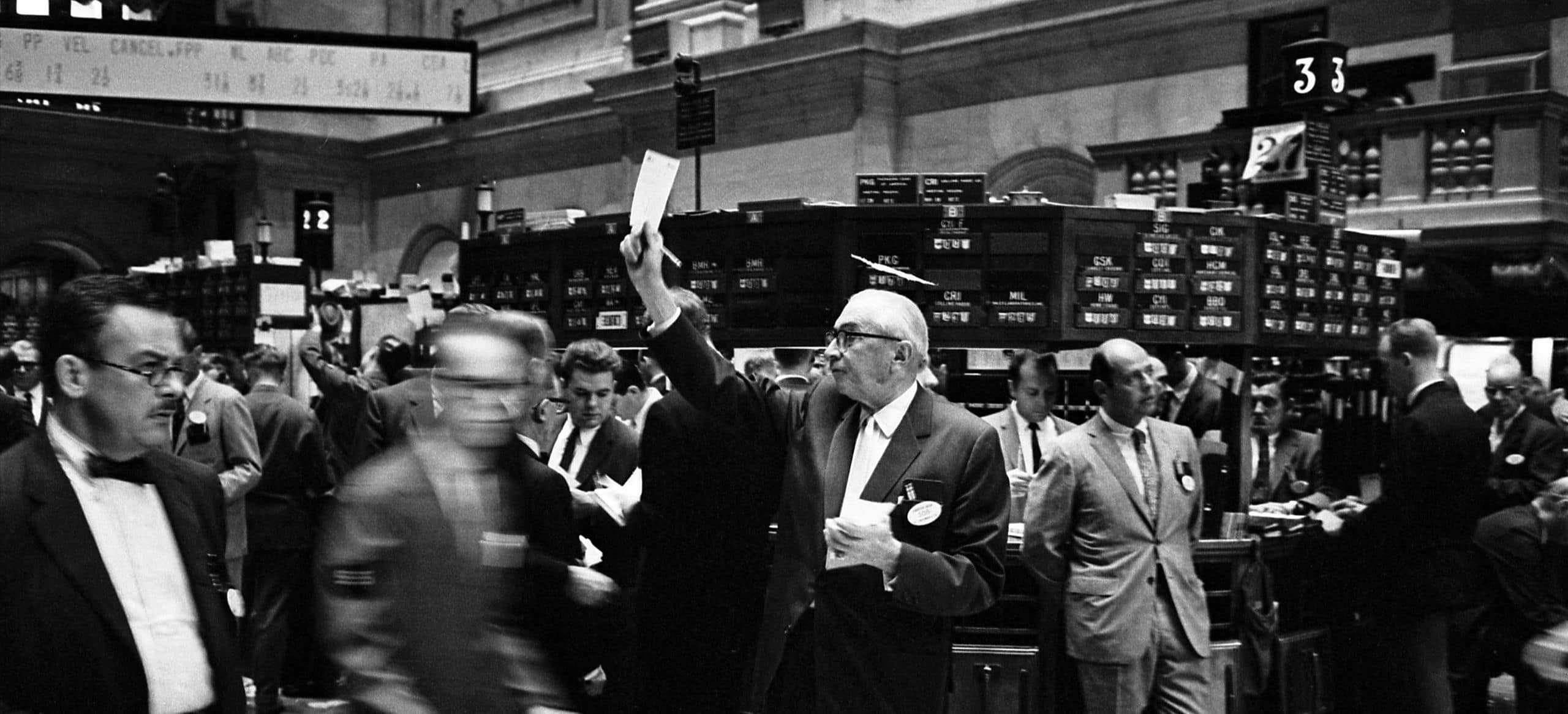
Our newest blogger, Centroid24's Rani Sawaf, provides an in-depth look into the realm of risk management, analyzing the preventive steps that brokers should take to deal better with the next financial storm.
Rani Sawaf, CEO of Centroid Solutions Ltd.
ABOUT THE AUTHOR: Rani Sawaf is the CEO of Centroid Solutions Ltd. (Switzerland).
It has proven difficult to anticipate new events despite the fact that they are all driven from exposure to market risks. Although we will discover more about the exact reasons in the coming weeks, we can for sure say that it will not all have been down to bad luck.
Risk Management – a Mind Set and a CEO Responsibility
Risk management, as a discipline in its own right, is first and foremost a mindset that takes into account business continuity as an integral component of company performance. Looking at it from this angle, it is clear that financial risk management, with its direct impact on shareholder value, is ultimately the responsibility of the CEO.
Together with the risk committee, the onus is on the CEO to ensure that the appropriate risk framework is in place as part of corporate governance and regulatory requirements. In addition, he has to define guidelines in line the with the board of directors' risk appetite and, above all, to define the limits beyond which risks become unacceptable for the company and thus require an immediate risk mitigation plan. Many CEOs, however, don’t feel at ease with the discipline of risk management and prefer to delegate such tasks.
When it comes to the implementation and monitoring of risk management guidelines, the task typically falls on the risk officer. It is also very common to see a chief dealer or a treasury officer managing the risk arising from positions generated by client portfolios (in addition to their core responsibilities causing a potential conflict of interests).
In both cases, two real problems facing top management are access to decision risk metrics which are easy to understand and delays in the communication of the effective current risk exposure from the dealing room, often due to the lack of real-time and independent information and reports.
The Wide Spectrum of Risk Management Understanding
Looking at how the risk is dealt with within the brokerage industry, we can identify three categories of brokers. In the first, we have brokerage firms that do not or cannot quantify, monitor and report their market risks. In the second category, we note a large number of companies who “manually” compute certain basic risk measures as their exposure. Conducting such an exercise is surely better than having nothing, but it bears many disadvantages.
It is laborious, consuming precious resources (hidden costs). Its validity is also time limited and it's often reduced to simple measures (no “real” risk measures, but rather an exposure). Furthermore, manual calculation is much more likely to be subject to errors (known as operational risk) potentially leading to wrong decisions that could be very costly and, at worst, fatal. Finally, a minority of brokers use dedicated risk management tools with various levels of sophistication.
How to assess risk?
A question that we are tempted to ask is: “Could an automated system have prevented such an event?” Answering this obliges us to review, in the first instance, what risk management implies. The basis of risk management is the ability to measure exposure and risk as well as the profit & loss (P&L).
A much-used and recommended measure in the financial industry is the value-at-risk (VaR). The VaR95% of a portfolio indicates the potential loss of a current portfolio within a probability of 95%. Thus, by definition, the VaR95% is not designed to cover all eventualities, excluding particularly extreme events in the financial industry (so-called “fat-tail”).
So, does this make it useless? If we consider driving using a speedometer and wearing a seat belt is useless, then I would agree: We would be relying on our perception of speed and would most likely get caught by a radar or, more annoyingly, miss the next sharp curve.
Measure Your Exposure and P&L... Round the Clock
The first basic principle is to know the level of financial risk exposure and the potential loss that could occur in any one day on an ongoing basis. Using the VaR95% as a risk measure, we would consider possible daily currency variations to be in the order of four-to-five percent. An automated real-time computation of the VaR95% enables brokerage firms to take the appropriate measures for most occurrences.
Further, this allows us to react faster and monitor the evolution of exposure over time. But it does not “prevent” very large market moves in the amplitude of EUR/CHF from 1.20 to parity. For that, forex brokers must, together with VaR, have additional risk measures in place, such as being able to conduct stress-test simulations based on various scenarios to complement the VaR95%.
This is where subjective judgement and experience comes into play, and it is the role of the top management and risk committee together with the dealing room to imagine the “unlikely” or even the apparently “impossible” in order to have risk mitigation action plans--if not to eliminate risk, at least to contain it. A scenario such as the Swiss National Bank abandoning support of the CHF support is (was) a potential scenario.
Although admittedly such a scenario would have been considered very extreme and its impact potentially quite difficult to eliminate, a brokerage firm with a strong risk management culture, risk frameworks and appropriate technology in place would have been in a much stronger position to contain and minimize the fallout of such an event.
With the knowledge of the current net exposure and P&L, it would have then been possible to compute the “unacceptable risks” in relation to their return and to act accordingly based on the capital adequacy ratio, either by increasing capital or by reducing risk.
Internalize Risk within Performance
We are all smarter after the fact, in particular, if we were able to learn. A move toward real-time information and tracking of exposure is a major step in the right direction. A step further would be to put in place mechanisms where scenarios are regularly reviewed and enhanced to simulate stress tests and to compute quantitative potential risk exposure.
Risk management (including allowance for extraordinary market moves) can then be an intrinsic element when defining performance, and preventive mechanisms can be established to react quickly when required.
Recent events has made it clear that the management of risk is critical and should therefore be at the heart of managing a forex brokerage business to--unsurprisingly--achieve a better long-term profitability. The good news is that the technology to achieve this is now accessible to all brokers.
It has proven difficult to anticipate new events despite the fact that they are all driven from exposure to market risks. Although we will discover more about the exact reasons in the coming weeks, we can for sure say that it will not all have been down to bad luck.
Risk Management – a Mind Set and a CEO Responsibility
Risk management, as a discipline in its own right, is first and foremost a mindset that takes into account business continuity as an integral component of company performance. Looking at it from this angle, it is clear that financial risk management, with its direct impact on shareholder value, is ultimately the responsibility of the CEO.
Together with the risk committee, the onus is on the CEO to ensure that the appropriate risk framework is in place as part of corporate governance and regulatory requirements. In addition, he has to define guidelines in line the with the board of directors' risk appetite and, above all, to define the limits beyond which risks become unacceptable for the company and thus require an immediate risk mitigation plan. Many CEOs, however, don’t feel at ease with the discipline of risk management and prefer to delegate such tasks.
When it comes to the implementation and monitoring of risk management guidelines, the task typically falls on the risk officer. It is also very common to see a chief dealer or a treasury officer managing the risk arising from positions generated by client portfolios (in addition to their core responsibilities causing a potential conflict of interests).
In both cases, two real problems facing top management are access to decision risk metrics which are easy to understand and delays in the communication of the effective current risk exposure from the dealing room, often due to the lack of real-time and independent information and reports.
The Wide Spectrum of Risk Management Understanding
Looking at how the risk is dealt with within the brokerage industry, we can identify three categories of brokers. In the first, we have brokerage firms that do not or cannot quantify, monitor and report their market risks. In the second category, we note a large number of companies who “manually” compute certain basic risk measures as their exposure. Conducting such an exercise is surely better than having nothing, but it bears many disadvantages.
It is laborious, consuming precious resources (hidden costs). Its validity is also time limited and it's often reduced to simple measures (no “real” risk measures, but rather an exposure). Furthermore, manual calculation is much more likely to be subject to errors (known as operational risk) potentially leading to wrong decisions that could be very costly and, at worst, fatal. Finally, a minority of brokers use dedicated risk management tools with various levels of sophistication.
How to assess risk?
A question that we are tempted to ask is: “Could an automated system have prevented such an event?” Answering this obliges us to review, in the first instance, what risk management implies. The basis of risk management is the ability to measure exposure and risk as well as the profit & loss (P&L).
A much-used and recommended measure in the financial industry is the value-at-risk (VaR). The VaR95% of a portfolio indicates the potential loss of a current portfolio within a probability of 95%. Thus, by definition, the VaR95% is not designed to cover all eventualities, excluding particularly extreme events in the financial industry (so-called “fat-tail”).
So, does this make it useless? If we consider driving using a speedometer and wearing a seat belt is useless, then I would agree: We would be relying on our perception of speed and would most likely get caught by a radar or, more annoyingly, miss the next sharp curve.
Measure Your Exposure and P&L... Round the Clock
The first basic principle is to know the level of financial risk exposure and the potential loss that could occur in any one day on an ongoing basis. Using the VaR95% as a risk measure, we would consider possible daily currency variations to be in the order of four-to-five percent. An automated real-time computation of the VaR95% enables brokerage firms to take the appropriate measures for most occurrences.
Further, this allows us to react faster and monitor the evolution of exposure over time. But it does not “prevent” very large market moves in the amplitude of EUR/CHF from 1.20 to parity. For that, forex brokers must, together with VaR, have additional risk measures in place, such as being able to conduct stress-test simulations based on various scenarios to complement the VaR95%.
This is where subjective judgement and experience comes into play, and it is the role of the top management and risk committee together with the dealing room to imagine the “unlikely” or even the apparently “impossible” in order to have risk mitigation action plans--if not to eliminate risk, at least to contain it. A scenario such as the Swiss National Bank abandoning support of the CHF support is (was) a potential scenario.
Although admittedly such a scenario would have been considered very extreme and its impact potentially quite difficult to eliminate, a brokerage firm with a strong risk management culture, risk frameworks and appropriate technology in place would have been in a much stronger position to contain and minimize the fallout of such an event.
With the knowledge of the current net exposure and P&L, it would have then been possible to compute the “unacceptable risks” in relation to their return and to act accordingly based on the capital adequacy ratio, either by increasing capital or by reducing risk.
Internalize Risk within Performance
We are all smarter after the fact, in particular, if we were able to learn. A move toward real-time information and tracking of exposure is a major step in the right direction. A step further would be to put in place mechanisms where scenarios are regularly reviewed and enhanced to simulate stress tests and to compute quantitative potential risk exposure.
Risk management (including allowance for extraordinary market moves) can then be an intrinsic element when defining performance, and preventive mechanisms can be established to react quickly when required.
Recent events has made it clear that the management of risk is critical and should therefore be at the heart of managing a forex brokerage business to--unsurprisingly--achieve a better long-term profitability. The good news is that the technology to achieve this is now accessible to all brokers.
Italy’s Consob Tightens Net on AI-Fueled Scams With Fresh Website Bans
Featured Videos
FP Markets Winner Spotlight 🏆 | Global Broker of the Year 2025 #Trading #Broker #Innovation #Shorts
FP Markets Winner Spotlight 🏆 | Global Broker of the Year 2025 #Trading #Broker #Innovation #Shorts
FP Markets Winner Spotlight 🏆 | Global Broker of the Year 2025 #Trading #Broker #Innovation #Shorts
FP Markets Winner Spotlight 🏆 | Global Broker of the Year 2025 #Trading #Broker #Innovation #Shorts
FP Markets takes the spotlight as Global Broker of the Year 2025 at the Finance Magnates Awards.
Martin Stoilov, Head of Client Experience, shares that trust, innovation, and people played a key role in the company’s success, supported by a strong foundation of integrity and client-centricity.
Following this milestone, FP Markets continues to focus on growth, technology investment, and its core values of transparency and excellence.
👉 Be part of FM Awards 2026: https://awards.financemagnates.com/#nominate
FP Markets takes the spotlight as Global Broker of the Year 2025 at the Finance Magnates Awards.
Martin Stoilov, Head of Client Experience, shares that trust, innovation, and people played a key role in the company’s success, supported by a strong foundation of integrity and client-centricity.
Following this milestone, FP Markets continues to focus on growth, technology investment, and its core values of transparency and excellence.
👉 Be part of FM Awards 2026: https://awards.financemagnates.com/#nominate
FP Markets takes the spotlight as Global Broker of the Year 2025 at the Finance Magnates Awards.
Martin Stoilov, Head of Client Experience, shares that trust, innovation, and people played a key role in the company’s success, supported by a strong foundation of integrity and client-centricity.
Following this milestone, FP Markets continues to focus on growth, technology investment, and its core values of transparency and excellence.
👉 Be part of FM Awards 2026: https://awards.financemagnates.com/#nominate
FP Markets takes the spotlight as Global Broker of the Year 2025 at the Finance Magnates Awards.
Martin Stoilov, Head of Client Experience, shares that trust, innovation, and people played a key role in the company’s success, supported by a strong foundation of integrity and client-centricity.
Following this milestone, FP Markets continues to focus on growth, technology investment, and its core values of transparency and excellence.
👉 Be part of FM Awards 2026: https://awards.financemagnates.com/#nominate
In this video, we review @HolaPrimeMarketsOfficial, a multi-asset forex and CFDs broker offering different account types, trading platforms, and flexible trading conditions.
We cover the broker’s overall offering, including account options, trading environment, platforms like MT4 and MT5, and additional services such as managed accounts and fast withdrawals.
Watch the full video to see if Hola Prime Markets fits your trading needs.
📣 Stay up to date with the latest in finance and trading. Follow Finance Magnates for industry news, insights, and global event coverage.
Connect with us:
🔗 LinkedIn: /financemagnates
👍 Facebook: /financemagnates
📸 Instagram: https://www.instagram.com/financemagnates
🐦 X: https://x.com/financemagnates
🎥 TikTok: https://www.tiktok.com/tag/financemagnates
▶️ YouTube: /@financemagnates_official
#HolaPrime #ForexBroker #CFDTrading #FinanceMagnates #Trading #Forex #BrokerReview
In this video, we review @HolaPrimeMarketsOfficial, a multi-asset forex and CFDs broker offering different account types, trading platforms, and flexible trading conditions.
We cover the broker’s overall offering, including account options, trading environment, platforms like MT4 and MT5, and additional services such as managed accounts and fast withdrawals.
Watch the full video to see if Hola Prime Markets fits your trading needs.
📣 Stay up to date with the latest in finance and trading. Follow Finance Magnates for industry news, insights, and global event coverage.
Connect with us:
🔗 LinkedIn: /financemagnates
👍 Facebook: /financemagnates
📸 Instagram: https://www.instagram.com/financemagnates
🐦 X: https://x.com/financemagnates
🎥 TikTok: https://www.tiktok.com/tag/financemagnates
▶️ YouTube: /@financemagnates_official
#HolaPrime #ForexBroker #CFDTrading #FinanceMagnates #Trading #Forex #BrokerReview
In this video, we review @HolaPrimeMarketsOfficial, a multi-asset forex and CFDs broker offering different account types, trading platforms, and flexible trading conditions.
We cover the broker’s overall offering, including account options, trading environment, platforms like MT4 and MT5, and additional services such as managed accounts and fast withdrawals.
Watch the full video to see if Hola Prime Markets fits your trading needs.
📣 Stay up to date with the latest in finance and trading. Follow Finance Magnates for industry news, insights, and global event coverage.
Connect with us:
🔗 LinkedIn: /financemagnates
👍 Facebook: /financemagnates
📸 Instagram: https://www.instagram.com/financemagnates
🐦 X: https://x.com/financemagnates
🎥 TikTok: https://www.tiktok.com/tag/financemagnates
▶️ YouTube: /@financemagnates_official
#HolaPrime #ForexBroker #CFDTrading #FinanceMagnates #Trading #Forex #BrokerReview
In this video, we review @HolaPrimeMarketsOfficial, a multi-asset forex and CFDs broker offering different account types, trading platforms, and flexible trading conditions.
We cover the broker’s overall offering, including account options, trading environment, platforms like MT4 and MT5, and additional services such as managed accounts and fast withdrawals.
Watch the full video to see if Hola Prime Markets fits your trading needs.
📣 Stay up to date with the latest in finance and trading. Follow Finance Magnates for industry news, insights, and global event coverage.
Connect with us:
🔗 LinkedIn: /financemagnates
👍 Facebook: /financemagnates
📸 Instagram: https://www.instagram.com/financemagnates
🐦 X: https://x.com/financemagnates
🎥 TikTok: https://www.tiktok.com/tag/financemagnates
▶️ YouTube: /@financemagnates_official
#HolaPrime #ForexBroker #CFDTrading #FinanceMagnates #Trading #Forex #BrokerReview
In this video, we review @HolaPrimeMarketsOfficial, a multi-asset forex and CFDs broker offering different account types, trading platforms, and flexible trading conditions.
We cover the broker’s overall offering, including account options, trading environment, platforms like MT4 and MT5, and additional services such as managed accounts and fast withdrawals.
Watch the full video to see if Hola Prime Markets fits your trading needs.
📣 Stay up to date with the latest in finance and trading. Follow Finance Magnates for industry news, insights, and global event coverage.
Connect with us:
🔗 LinkedIn: /financemagnates
👍 Facebook: /financemagnates
📸 Instagram: https://www.instagram.com/financemagnates
🐦 X: https://x.com/financemagnates
🎥 TikTok: https://www.tiktok.com/tag/financemagnates
▶️ YouTube: /@financemagnates_official
#HolaPrime #ForexBroker #CFDTrading #FinanceMagnates #Trading #Forex #BrokerReview
In this video, we review @HolaPrimeMarketsOfficial, a multi-asset forex and CFDs broker offering different account types, trading platforms, and flexible trading conditions.
We cover the broker’s overall offering, including account options, trading environment, platforms like MT4 and MT5, and additional services such as managed accounts and fast withdrawals.
Watch the full video to see if Hola Prime Markets fits your trading needs.
📣 Stay up to date with the latest in finance and trading. Follow Finance Magnates for industry news, insights, and global event coverage.
Connect with us:
🔗 LinkedIn: /financemagnates
👍 Facebook: /financemagnates
📸 Instagram: https://www.instagram.com/financemagnates
🐦 X: https://x.com/financemagnates
🎥 TikTok: https://www.tiktok.com/tag/financemagnates
▶️ YouTube: /@financemagnates_official
#HolaPrime #ForexBroker #CFDTrading #FinanceMagnates #Trading #Forex #BrokerReview
Hola Prime Review: What You Need to Know | Full Breakdown by Finance Magnates
Hola Prime Review: What You Need to Know | Full Breakdown by Finance Magnates
Hola Prime Review: What You Need to Know | Full Breakdown by Finance Magnates
Hola Prime Review: What You Need to Know | Full Breakdown by Finance Magnates
Hola Prime Review: What You Need to Know | Full Breakdown by Finance Magnates
Hola Prime Review: What You Need to Know | Full Breakdown by Finance Magnates
In this video, we review @HolaPrime_Global, a proprietary trading firm offering evaluation programs and performance-based payouts in simulated market environments.
We cover how the challenge model works, including account types, profit splits (up to 95%), trading rules, and what it takes to reach a funded account. You’ll also learn about available platforms like MT4, MT5, cTrader, and more, along with insights into payouts, support, and trading conditions.
Watch the full video to see if Hola Prime fits your trading style.
📣 Stay up to date with the latest in finance and trading. Follow Finance Magnates for industry news, insights, and global event coverage.
Connect with us:
🔗 LinkedIn: /financemagnates
👍 Facebook: /financemagnates
📸 Instagram: https://www.instagram.com/financemagnates
🐦 X: https://x.com/financemagnates
🎥 TikTok: https://www.tiktok.com/tag/financemagnates
▶️ YouTube: /@financemagnates_official
#HolaPrime #PropFirm #Trading #FinanceMagnates #Forex #FuturesTrading #TradingReview #PropFirmReview
In this video, we review @HolaPrime_Global, a proprietary trading firm offering evaluation programs and performance-based payouts in simulated market environments.
We cover how the challenge model works, including account types, profit splits (up to 95%), trading rules, and what it takes to reach a funded account. You’ll also learn about available platforms like MT4, MT5, cTrader, and more, along with insights into payouts, support, and trading conditions.
Watch the full video to see if Hola Prime fits your trading style.
📣 Stay up to date with the latest in finance and trading. Follow Finance Magnates for industry news, insights, and global event coverage.
Connect with us:
🔗 LinkedIn: /financemagnates
👍 Facebook: /financemagnates
📸 Instagram: https://www.instagram.com/financemagnates
🐦 X: https://x.com/financemagnates
🎥 TikTok: https://www.tiktok.com/tag/financemagnates
▶️ YouTube: /@financemagnates_official
#HolaPrime #PropFirm #Trading #FinanceMagnates #Forex #FuturesTrading #TradingReview #PropFirmReview
In this video, we review @HolaPrime_Global, a proprietary trading firm offering evaluation programs and performance-based payouts in simulated market environments.
We cover how the challenge model works, including account types, profit splits (up to 95%), trading rules, and what it takes to reach a funded account. You’ll also learn about available platforms like MT4, MT5, cTrader, and more, along with insights into payouts, support, and trading conditions.
Watch the full video to see if Hola Prime fits your trading style.
📣 Stay up to date with the latest in finance and trading. Follow Finance Magnates for industry news, insights, and global event coverage.
Connect with us:
🔗 LinkedIn: /financemagnates
👍 Facebook: /financemagnates
📸 Instagram: https://www.instagram.com/financemagnates
🐦 X: https://x.com/financemagnates
🎥 TikTok: https://www.tiktok.com/tag/financemagnates
▶️ YouTube: /@financemagnates_official
#HolaPrime #PropFirm #Trading #FinanceMagnates #Forex #FuturesTrading #TradingReview #PropFirmReview
In this video, we review @HolaPrime_Global, a proprietary trading firm offering evaluation programs and performance-based payouts in simulated market environments.
We cover how the challenge model works, including account types, profit splits (up to 95%), trading rules, and what it takes to reach a funded account. You’ll also learn about available platforms like MT4, MT5, cTrader, and more, along with insights into payouts, support, and trading conditions.
Watch the full video to see if Hola Prime fits your trading style.
📣 Stay up to date with the latest in finance and trading. Follow Finance Magnates for industry news, insights, and global event coverage.
Connect with us:
🔗 LinkedIn: /financemagnates
👍 Facebook: /financemagnates
📸 Instagram: https://www.instagram.com/financemagnates
🐦 X: https://x.com/financemagnates
🎥 TikTok: https://www.tiktok.com/tag/financemagnates
▶️ YouTube: /@financemagnates_official
#HolaPrime #PropFirm #Trading #FinanceMagnates #Forex #FuturesTrading #TradingReview #PropFirmReview
In this video, we review @HolaPrime_Global, a proprietary trading firm offering evaluation programs and performance-based payouts in simulated market environments.
We cover how the challenge model works, including account types, profit splits (up to 95%), trading rules, and what it takes to reach a funded account. You’ll also learn about available platforms like MT4, MT5, cTrader, and more, along with insights into payouts, support, and trading conditions.
Watch the full video to see if Hola Prime fits your trading style.
📣 Stay up to date with the latest in finance and trading. Follow Finance Magnates for industry news, insights, and global event coverage.
Connect with us:
🔗 LinkedIn: /financemagnates
👍 Facebook: /financemagnates
📸 Instagram: https://www.instagram.com/financemagnates
🐦 X: https://x.com/financemagnates
🎥 TikTok: https://www.tiktok.com/tag/financemagnates
▶️ YouTube: /@financemagnates_official
#HolaPrime #PropFirm #Trading #FinanceMagnates #Forex #FuturesTrading #TradingReview #PropFirmReview
In this video, we review @HolaPrime_Global, a proprietary trading firm offering evaluation programs and performance-based payouts in simulated market environments.
We cover how the challenge model works, including account types, profit splits (up to 95%), trading rules, and what it takes to reach a funded account. You’ll also learn about available platforms like MT4, MT5, cTrader, and more, along with insights into payouts, support, and trading conditions.
Watch the full video to see if Hola Prime fits your trading style.
📣 Stay up to date with the latest in finance and trading. Follow Finance Magnates for industry news, insights, and global event coverage.
Connect with us:
🔗 LinkedIn: /financemagnates
👍 Facebook: /financemagnates
📸 Instagram: https://www.instagram.com/financemagnates
🐦 X: https://x.com/financemagnates
🎥 TikTok: https://www.tiktok.com/tag/financemagnates
▶️ YouTube: /@financemagnates_official
#HolaPrime #PropFirm #Trading #FinanceMagnates #Forex #FuturesTrading #TradingReview #PropFirmReview
Axi Winner Spotlight 🏆 | Global Most Innovative Broker 2025 #Innovation #Trading #Fintech #Broker
Axi Winner Spotlight 🏆 | Global Most Innovative Broker 2025 #Innovation #Trading #Fintech #Broker
Axi Winner Spotlight 🏆 | Global Most Innovative Broker 2025 #Innovation #Trading #Fintech #Broker
Axi Winner Spotlight 🏆 | Global Most Innovative Broker 2025 #Innovation #Trading #Fintech #Broker
Axi Winner Spotlight 🏆 | Global Most Innovative Broker 2025 #Innovation #Trading #Fintech #Broker
Axi Winner Spotlight 🏆 | Global Most Innovative Broker 2025 #Innovation #Trading #Fintech #Broker
Axi takes the spotlight at the Finance Magnates Awards, winning Global Most Innovative Broker 2025.
Olivia Xenofontos and Ivanna Openko share how the team will feel: proud, motivated, and ready to keep delivering.
They also describe the night as well-organized, focused, and enjoyable for all.
👉 Be part of FM Awards 2026.
Axi takes the spotlight at the Finance Magnates Awards, winning Global Most Innovative Broker 2025.
Olivia Xenofontos and Ivanna Openko share how the team will feel: proud, motivated, and ready to keep delivering.
They also describe the night as well-organized, focused, and enjoyable for all.
👉 Be part of FM Awards 2026.
Axi takes the spotlight at the Finance Magnates Awards, winning Global Most Innovative Broker 2025.
Olivia Xenofontos and Ivanna Openko share how the team will feel: proud, motivated, and ready to keep delivering.
They also describe the night as well-organized, focused, and enjoyable for all.
👉 Be part of FM Awards 2026.
Axi takes the spotlight at the Finance Magnates Awards, winning Global Most Innovative Broker 2025.
Olivia Xenofontos and Ivanna Openko share how the team will feel: proud, motivated, and ready to keep delivering.
They also describe the night as well-organized, focused, and enjoyable for all.
👉 Be part of FM Awards 2026.
Axi takes the spotlight at the Finance Magnates Awards, winning Global Most Innovative Broker 2025.
Olivia Xenofontos and Ivanna Openko share how the team will feel: proud, motivated, and ready to keep delivering.
They also describe the night as well-organized, focused, and enjoyable for all.
👉 Be part of FM Awards 2026.
Axi takes the spotlight at the Finance Magnates Awards, winning Global Most Innovative Broker 2025.
Olivia Xenofontos and Ivanna Openko share how the team will feel: proud, motivated, and ready to keep delivering.
They also describe the night as well-organized, focused, and enjoyable for all.
👉 Be part of FM Awards 2026.
Recognition that matters.
Built on transparency.
Driven by the industry.
The Finance Magnates Awards 2026.
Nominations are now open.
🔗 https://awards.financemagnates.com/?utm_source=SM&utm_medium=social&utm_campaign=recognition-matters
Recognition that matters.
Built on transparency.
Driven by the industry.
The Finance Magnates Awards 2026.
Nominations are now open.
🔗 https://awards.financemagnates.com/?utm_source=SM&utm_medium=social&utm_campaign=recognition-matters
Recognition that matters.
Built on transparency.
Driven by the industry.
The Finance Magnates Awards 2026.
Nominations are now open.
🔗 https://awards.financemagnates.com/?utm_source=SM&utm_medium=social&utm_campaign=recognition-matters
Recognition that matters.
Built on transparency.
Driven by the industry.
The Finance Magnates Awards 2026.
Nominations are now open.
🔗 https://awards.financemagnates.com/?utm_source=SM&utm_medium=social&utm_campaign=recognition-matters
Recognition that matters.
Built on transparency.
Driven by the industry.
The Finance Magnates Awards 2026.
Nominations are now open.
🔗 https://awards.financemagnates.com/?utm_source=SM&utm_medium=social&utm_campaign=recognition-matters
Recognition that matters.
Built on transparency.
Driven by the industry.
The Finance Magnates Awards 2026.
Nominations are now open.
🔗 https://awards.financemagnates.com/?utm_source=SM&utm_medium=social&utm_campaign=recognition-matters