The race to Cyprus despite CySEC’s changing attitude towards the industry is still going on, as many providers are reportedly on CYSEC’s waiting list for their investment firm license. This has taken away the industry’s attention from other potential jurisdictions which are likely to fit the needs of the industry.
Central and Eastern Europe Lucrative Countries
As is known to all, MiFID provides a regulatory framework for the licensing and supervision of all investment firms providing investment services for all types of financial products. This framework includes standardized minimal requirements such as own funds / capital requirements, the need to establish a substantive physical presence in the country granting you your license, reporting duties to regulator and clients, and many obligations we can summarize as proper business conduct.
Nonetheless, the MIFID framework does not address each and every aspect of importance to forex and binary options providers. Some of these aspects include, for example, taxation, especially corporate income tax, setup costs and ongoing maintenance costs (offices, employees), quality and competence of the local work force, the size and aptitude of the local banking and financial system, the local regulator’s attitude towards the industry and its experience licensing and overseeing it, to name a few.
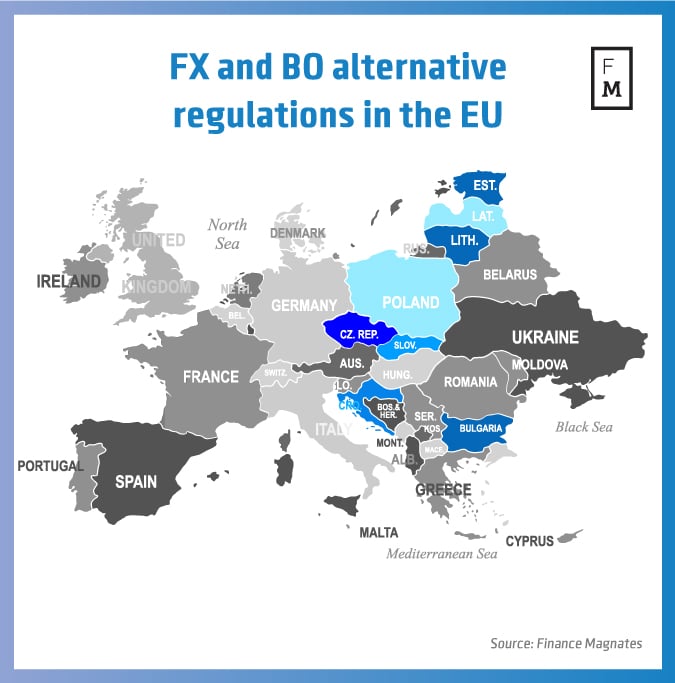
The EU, especially amongst its members in Central and Eastern Europe, includes many jurisdictions worthy of the industry’s attention. Namely, these are Estonia, Latvia, Lithuania, Bulgaria, Croatia, Slovakia, Poland and the Czech Republic.
Estonia - the Financial Supervision Commission of Estonia has issued several forex broker licenses to local providers. Estonia enjoys many advantages such as a developed financial sector, a transparent regulatory environment, highly skilled employees (despite having only 1.3 million inhabitants) including many English speakers. Additionally, Estonia benefits from a favorable tax system as the corporate income tax is 0% (20% when distributing dividends).
Latvia - the FCMC has issued several IBS licenses to forex providers. Latvia enjoys many advantages such as a developed financial sector, a transparent regulatory environment, highly skilled employees, including many English speakers.
Lithuania - the Bank of Lithuania has issued several financial broker licenses and is willing to issue such licenses to forex providers as well. Lithuania enjoys many advantages such as a developed financial sector, a transparent regulatory environment, highly skilled employees, including many English speakers. Additionally, the requirement for the domiciling of directors is relatively flexible as in some cases directors may not be required to be based in Lithuania.
Bulgaria - the Financial Supervision Commission of Bulgaria has issued several investment intermediary licenses to local binary options providers. Bulgaria enjoys many advantages such as a regulator experienced in supervising forex providers, highly skilled employees, including many English speakers. Additionally, Bulgaria benefits from a favorable tax system as the corporate income tax is only 10% and attractive setup and legal costs compared to other EU jurisdictions.
Croatia - HANFA has issued several brokerage houses licenses to local forex providers. Croatia enjoys many advantages such as a regulator experienced in supervising forex providers, highly skilled employees, including many English speakers, and its proximity to Western Europe. Additionally, Croatia benefits from attractive setup and legal costs.
David Woliner
Slovakia - the national Bank of Slovakia (NBS) has issued several securities trader licenses and is willing to issue such licenses to forex providers as well. Slovakia enjoys several advantages such as prime location in Central Europe and competitive set up and legal costs. Additionally, the requirement for the domiciling of directors is relatively flexible as in some cases directors are not required to be based in Slovakia.
Poland - the Polish FSA has issued several brokerage houses licenses to local forex providers. Poland enjoys many advantages such as a regulator experienced in supervising forex providers, highly skilled employees, including many English speakers, a highly developed banking and financial sector (Poland is ranked 4th in the EU in numbers of total financial institutions, credit institutions and payment services providers established in the country) and a prime location between Eastern and Western Europe.
The Czech Republic - the Czech National Bank has issued several investment firm licenses to local forex providers. The Czech Republic enjoys many advantages such as a regulator experienced in supervising forex providers, highly skilled employees, including many English speakers, a highly-developed banking and financial sector and a prime location on between Eastern and Western Europe.
All the above mentioned jurisdictions may be considered uncharted waters, at least to some extent. Then again, so was Cyprus a few years ago. Therefore, if you are looking to set up an forex or binary options business in the EU, the eight jurisdictions named above are noteworthy jurisdictions you should consider alongside Cyprus.
This article was written by David Woliner, Head of Financial Regulation at Ben Basat, Porat & Co Law Firm.
The race to Cyprus despite CySEC’s changing attitude towards the industry is still going on, as many providers are reportedly on CYSEC’s waiting list for their investment firm license. This has taken away the industry’s attention from other potential jurisdictions which are likely to fit the needs of the industry.
Central and Eastern Europe Lucrative Countries
As is known to all, MiFID provides a regulatory framework for the licensing and supervision of all investment firms providing investment services for all types of financial products. This framework includes standardized minimal requirements such as own funds / capital requirements, the need to establish a substantive physical presence in the country granting you your license, reporting duties to regulator and clients, and many obligations we can summarize as proper business conduct.
Nonetheless, the MIFID framework does not address each and every aspect of importance to forex and binary options providers. Some of these aspects include, for example, taxation, especially corporate income tax, setup costs and ongoing maintenance costs (offices, employees), quality and competence of the local work force, the size and aptitude of the local banking and financial system, the local regulator’s attitude towards the industry and its experience licensing and overseeing it, to name a few.
The EU, especially amongst its members in Central and Eastern Europe, includes many jurisdictions worthy of the industry’s attention. Namely, these are Estonia, Latvia, Lithuania, Bulgaria, Croatia, Slovakia, Poland and the Czech Republic.
Estonia - the Financial Supervision Commission of Estonia has issued several forex broker licenses to local providers. Estonia enjoys many advantages such as a developed financial sector, a transparent regulatory environment, highly skilled employees (despite having only 1.3 million inhabitants) including many English speakers. Additionally, Estonia benefits from a favorable tax system as the corporate income tax is 0% (20% when distributing dividends).
Latvia - the FCMC has issued several IBS licenses to forex providers. Latvia enjoys many advantages such as a developed financial sector, a transparent regulatory environment, highly skilled employees, including many English speakers.
Lithuania - the Bank of Lithuania has issued several financial broker licenses and is willing to issue such licenses to forex providers as well. Lithuania enjoys many advantages such as a developed financial sector, a transparent regulatory environment, highly skilled employees, including many English speakers. Additionally, the requirement for the domiciling of directors is relatively flexible as in some cases directors may not be required to be based in Lithuania.
Bulgaria - the Financial Supervision Commission of Bulgaria has issued several investment intermediary licenses to local binary options providers. Bulgaria enjoys many advantages such as a regulator experienced in supervising forex providers, highly skilled employees, including many English speakers. Additionally, Bulgaria benefits from a favorable tax system as the corporate income tax is only 10% and attractive setup and legal costs compared to other EU jurisdictions.
Croatia - HANFA has issued several brokerage houses licenses to local forex providers. Croatia enjoys many advantages such as a regulator experienced in supervising forex providers, highly skilled employees, including many English speakers, and its proximity to Western Europe. Additionally, Croatia benefits from attractive setup and legal costs.
David Woliner
Slovakia - the national Bank of Slovakia (NBS) has issued several securities trader licenses and is willing to issue such licenses to forex providers as well. Slovakia enjoys several advantages such as prime location in Central Europe and competitive set up and legal costs. Additionally, the requirement for the domiciling of directors is relatively flexible as in some cases directors are not required to be based in Slovakia.
Poland - the Polish FSA has issued several brokerage houses licenses to local forex providers. Poland enjoys many advantages such as a regulator experienced in supervising forex providers, highly skilled employees, including many English speakers, a highly developed banking and financial sector (Poland is ranked 4th in the EU in numbers of total financial institutions, credit institutions and payment services providers established in the country) and a prime location between Eastern and Western Europe.
The Czech Republic - the Czech National Bank has issued several investment firm licenses to local forex providers. The Czech Republic enjoys many advantages such as a regulator experienced in supervising forex providers, highly skilled employees, including many English speakers, a highly-developed banking and financial sector and a prime location on between Eastern and Western Europe.
All the above mentioned jurisdictions may be considered uncharted waters, at least to some extent. Then again, so was Cyprus a few years ago. Therefore, if you are looking to set up an forex or binary options business in the EU, the eight jurisdictions named above are noteworthy jurisdictions you should consider alongside Cyprus.
This article was written by David Woliner, Head of Financial Regulation at Ben Basat, Porat & Co Law Firm.
FTMO Says Monthly Rewards Near $15 Million in September
Featured Videos
AvaTrade to Acquire Most of FXCM; NAGA Raises $8M
AvaTrade to Acquire Most of FXCM; NAGA Raises $8M
AvaTrade to Acquire Most of FXCM; NAGA Raises $8M
AvaTrade to Acquire Most of FXCM; NAGA Raises $8M
Today’s financial news recap covers AvaTrade agrees to acquire most of FXCM, NAGA secures eight million dollars in new financing, and Wise seeks a tax settlement in the UK.
Finance Magnates Daily Recap brings you the latest news from forex and CFD brokers, fintech, payments, cryptocurrency, digital assets, trading platforms, financial regulation and global markets.
Get the key company news, executive moves, deals, regulatory updates and market developments of the day, in just a few minutes. New episodes published every weekday.
Read more: https://www.financemagnates.com
#FinanceMagnates #ForexNews #FintechNews
Today’s financial news recap covers AvaTrade agrees to acquire most of FXCM, NAGA secures eight million dollars in new financing, and Wise seeks a tax settlement in the UK.
Finance Magnates Daily Recap brings you the latest news from forex and CFD brokers, fintech, payments, cryptocurrency, digital assets, trading platforms, financial regulation and global markets.
Get the key company news, executive moves, deals, regulatory updates and market developments of the day, in just a few minutes. New episodes published every weekday.
Read more: https://www.financemagnates.com
#FinanceMagnates #ForexNews #FintechNews
Today’s financial news recap covers AvaTrade agrees to acquire most of FXCM, NAGA secures eight million dollars in new financing, and Wise seeks a tax settlement in the UK.
Finance Magnates Daily Recap brings you the latest news from forex and CFD brokers, fintech, payments, cryptocurrency, digital assets, trading platforms, financial regulation and global markets.
Get the key company news, executive moves, deals, regulatory updates and market developments of the day, in just a few minutes. New episodes published every weekday.
Read more: https://www.financemagnates.com
#FinanceMagnates #ForexNews #FintechNews
Today’s financial news recap covers AvaTrade agrees to acquire most of FXCM, NAGA secures eight million dollars in new financing, and Wise seeks a tax settlement in the UK.
Finance Magnates Daily Recap brings you the latest news from forex and CFD brokers, fintech, payments, cryptocurrency, digital assets, trading platforms, financial regulation and global markets.
Get the key company news, executive moves, deals, regulatory updates and market developments of the day, in just a few minutes. New episodes published every weekday.
Read more: https://www.financemagnates.com
#FinanceMagnates #ForexNews #FintechNews
XTB Adds Overnight US Stock Trading; Nasdaq Ventures Invests in One Trading
XTB Adds Overnight US Stock Trading; Nasdaq Ventures Invests in One Trading
XTB Adds Overnight US Stock Trading; Nasdaq Ventures Invests in One Trading
XTB Adds Overnight US Stock Trading; Nasdaq Ventures Invests in One Trading
XTB Adds Overnight US Stock Trading; Nasdaq Ventures Invests in One Trading
XTB Adds Overnight US Stock Trading; Nasdaq Ventures Invests in One Trading
Today’s financial news recap covers XTB expands overnight US stock trading, Fortrade reports higher revenue, Nasdaq backs One Trading, and Vest Labs raises 13 million dollars.
Finance Magnates Daily Recap brings you the latest news from forex and CFD brokers, fintech, payments, cryptocurrency, digital assets, trading platforms, financial regulation and global markets.
Get the key company news, executive moves, deals, regulatory updates and market developments of the day, in just a few minutes. New episodes published every weekday.
Read more: https://www.financemagnates.com
#FinanceMagnates #ForexNews #FintechNews
Today’s financial news recap covers XTB expands overnight US stock trading, Fortrade reports higher revenue, Nasdaq backs One Trading, and Vest Labs raises 13 million dollars.
Finance Magnates Daily Recap brings you the latest news from forex and CFD brokers, fintech, payments, cryptocurrency, digital assets, trading platforms, financial regulation and global markets.
Get the key company news, executive moves, deals, regulatory updates and market developments of the day, in just a few minutes. New episodes published every weekday.
Read more: https://www.financemagnates.com
#FinanceMagnates #ForexNews #FintechNews
Today’s financial news recap covers XTB expands overnight US stock trading, Fortrade reports higher revenue, Nasdaq backs One Trading, and Vest Labs raises 13 million dollars.
Finance Magnates Daily Recap brings you the latest news from forex and CFD brokers, fintech, payments, cryptocurrency, digital assets, trading platforms, financial regulation and global markets.
Get the key company news, executive moves, deals, regulatory updates and market developments of the day, in just a few minutes. New episodes published every weekday.
Read more: https://www.financemagnates.com
#FinanceMagnates #ForexNews #FintechNews
Today’s financial news recap covers XTB expands overnight US stock trading, Fortrade reports higher revenue, Nasdaq backs One Trading, and Vest Labs raises 13 million dollars.
Finance Magnates Daily Recap brings you the latest news from forex and CFD brokers, fintech, payments, cryptocurrency, digital assets, trading platforms, financial regulation and global markets.
Get the key company news, executive moves, deals, regulatory updates and market developments of the day, in just a few minutes. New episodes published every weekday.
Read more: https://www.financemagnates.com
#FinanceMagnates #ForexNews #FintechNews
Today’s financial news recap covers XTB expands overnight US stock trading, Fortrade reports higher revenue, Nasdaq backs One Trading, and Vest Labs raises 13 million dollars.
Finance Magnates Daily Recap brings you the latest news from forex and CFD brokers, fintech, payments, cryptocurrency, digital assets, trading platforms, financial regulation and global markets.
Get the key company news, executive moves, deals, regulatory updates and market developments of the day, in just a few minutes. New episodes published every weekday.
Read more: https://www.financemagnates.com
#FinanceMagnates #ForexNews #FintechNews
Today’s financial news recap covers XTB expands overnight US stock trading, Fortrade reports higher revenue, Nasdaq backs One Trading, and Vest Labs raises 13 million dollars.
Finance Magnates Daily Recap brings you the latest news from forex and CFD brokers, fintech, payments, cryptocurrency, digital assets, trading platforms, financial regulation and global markets.
Get the key company news, executive moves, deals, regulatory updates and market developments of the day, in just a few minutes. New episodes published every weekday.
Read more: https://www.financemagnates.com
#FinanceMagnates #ForexNews #FintechNews
CMC Founder Downplays Volatility Hit; Devexperts Names CEO
CMC Founder Downplays Volatility Hit; Devexperts Names CEO
CMC Founder Downplays Volatility Hit; Devexperts Names CEO
CMC Founder Downplays Volatility Hit; Devexperts Names CEO
CMC Founder Downplays Volatility Hit; Devexperts Names CEO
CMC Founder Downplays Volatility Hit; Devexperts Names CEO
Today’s financial news recap covers low volatility pressures brokers, Devexperts names a new CEO, Saxo cuts onboarding time, and OKX reaches a 25 billion dollar valuation.
Finance Magnates Daily Recap brings you the latest news from forex and CFD brokers, fintech, payments, cryptocurrency, digital assets, trading platforms, financial regulation and global markets.
Get the key company news, executive moves, deals, regulatory updates and market developments of the day, in just a few minutes. New episodes published every weekday.
Read more: https://www.financemagnates.com
#FinanceMagnates #ForexNews #FintechNews
Today’s financial news recap covers low volatility pressures brokers, Devexperts names a new CEO, Saxo cuts onboarding time, and OKX reaches a 25 billion dollar valuation.
Finance Magnates Daily Recap brings you the latest news from forex and CFD brokers, fintech, payments, cryptocurrency, digital assets, trading platforms, financial regulation and global markets.
Get the key company news, executive moves, deals, regulatory updates and market developments of the day, in just a few minutes. New episodes published every weekday.
Read more: https://www.financemagnates.com
#FinanceMagnates #ForexNews #FintechNews
Today’s financial news recap covers low volatility pressures brokers, Devexperts names a new CEO, Saxo cuts onboarding time, and OKX reaches a 25 billion dollar valuation.
Finance Magnates Daily Recap brings you the latest news from forex and CFD brokers, fintech, payments, cryptocurrency, digital assets, trading platforms, financial regulation and global markets.
Get the key company news, executive moves, deals, regulatory updates and market developments of the day, in just a few minutes. New episodes published every weekday.
Read more: https://www.financemagnates.com
#FinanceMagnates #ForexNews #FintechNews
Today’s financial news recap covers low volatility pressures brokers, Devexperts names a new CEO, Saxo cuts onboarding time, and OKX reaches a 25 billion dollar valuation.
Finance Magnates Daily Recap brings you the latest news from forex and CFD brokers, fintech, payments, cryptocurrency, digital assets, trading platforms, financial regulation and global markets.
Get the key company news, executive moves, deals, regulatory updates and market developments of the day, in just a few minutes. New episodes published every weekday.
Read more: https://www.financemagnates.com
#FinanceMagnates #ForexNews #FintechNews
Today’s financial news recap covers low volatility pressures brokers, Devexperts names a new CEO, Saxo cuts onboarding time, and OKX reaches a 25 billion dollar valuation.
Finance Magnates Daily Recap brings you the latest news from forex and CFD brokers, fintech, payments, cryptocurrency, digital assets, trading platforms, financial regulation and global markets.
Get the key company news, executive moves, deals, regulatory updates and market developments of the day, in just a few minutes. New episodes published every weekday.
Read more: https://www.financemagnates.com
#FinanceMagnates #ForexNews #FintechNews
Today’s financial news recap covers low volatility pressures brokers, Devexperts names a new CEO, Saxo cuts onboarding time, and OKX reaches a 25 billion dollar valuation.
Finance Magnates Daily Recap brings you the latest news from forex and CFD brokers, fintech, payments, cryptocurrency, digital assets, trading platforms, financial regulation and global markets.
Get the key company news, executive moves, deals, regulatory updates and market developments of the day, in just a few minutes. New episodes published every weekday.
Read more: https://www.financemagnates.com
#FinanceMagnates #ForexNews #FintechNews
Today’s financial news recap covers Trade Nation buys FXCM's UK client book, Trading 212 reports higher revenue, the CFTC's move to allow perpetual index futures.
Finance Magnates Daily Recap brings you the latest news from forex and CFD brokers, fintech, payments, cryptocurrency, digital assets, trading platforms, financial regulation and global markets.
Get the key company news, executive moves, deals, regulatory updates and market developments of the day, in just a few minutes. New episodes published every weekday.
Read more: https://www.financemagnates.com
#FinanceMagnates #ForexNews #FintechNews
Today’s financial news recap covers Trade Nation buys FXCM's UK client book, Trading 212 reports higher revenue, the CFTC's move to allow perpetual index futures.
Finance Magnates Daily Recap brings you the latest news from forex and CFD brokers, fintech, payments, cryptocurrency, digital assets, trading platforms, financial regulation and global markets.
Get the key company news, executive moves, deals, regulatory updates and market developments of the day, in just a few minutes. New episodes published every weekday.
Read more: https://www.financemagnates.com
#FinanceMagnates #ForexNews #FintechNews
Today’s financial news recap covers Trade Nation buys FXCM's UK client book, Trading 212 reports higher revenue, the CFTC's move to allow perpetual index futures.
Finance Magnates Daily Recap brings you the latest news from forex and CFD brokers, fintech, payments, cryptocurrency, digital assets, trading platforms, financial regulation and global markets.
Get the key company news, executive moves, deals, regulatory updates and market developments of the day, in just a few minutes. New episodes published every weekday.
Read more: https://www.financemagnates.com
#FinanceMagnates #ForexNews #FintechNews
Today’s financial news recap covers Trade Nation buys FXCM's UK client book, Trading 212 reports higher revenue, the CFTC's move to allow perpetual index futures.
Finance Magnates Daily Recap brings you the latest news from forex and CFD brokers, fintech, payments, cryptocurrency, digital assets, trading platforms, financial regulation and global markets.
Get the key company news, executive moves, deals, regulatory updates and market developments of the day, in just a few minutes. New episodes published every weekday.
Read more: https://www.financemagnates.com
#FinanceMagnates #ForexNews #FintechNews
Today’s financial news recap covers Trade Nation buys FXCM's UK client book, Trading 212 reports higher revenue, the CFTC's move to allow perpetual index futures.
Finance Magnates Daily Recap brings you the latest news from forex and CFD brokers, fintech, payments, cryptocurrency, digital assets, trading platforms, financial regulation and global markets.
Get the key company news, executive moves, deals, regulatory updates and market developments of the day, in just a few minutes. New episodes published every weekday.
Read more: https://www.financemagnates.com
#FinanceMagnates #ForexNews #FintechNews
Today’s financial news recap covers Trade Nation buys FXCM's UK client book, Trading 212 reports higher revenue, the CFTC's move to allow perpetual index futures.
Finance Magnates Daily Recap brings you the latest news from forex and CFD brokers, fintech, payments, cryptocurrency, digital assets, trading platforms, financial regulation and global markets.
Get the key company news, executive moves, deals, regulatory updates and market developments of the day, in just a few minutes. New episodes published every weekday.
Read more: https://www.financemagnates.com
#FinanceMagnates #ForexNews #FintechNews
Your career isn’t a linear path.
Your career isn’t a linear path.
Your career isn’t a linear path.
Your career isn’t a linear path.
Your career isn’t a linear path.
Your career isn’t a linear path.
Roles change. Career goals change. Sometimes you want a completely new challenge.
But the skills and knowledge you build along the way can stay with you and give you something to build on.
For Jeff Patterson, that continued growth is key to long-term career development.
You bring the skills. FM Academy helps you build the knowledge.
#FMAcademy #FinanceMagnates #FinanceCareers #ProfessionalDevelopment #Fintech
Roles change. Career goals change. Sometimes you want a completely new challenge.
But the skills and knowledge you build along the way can stay with you and give you something to build on.
For Jeff Patterson, that continued growth is key to long-term career development.
You bring the skills. FM Academy helps you build the knowledge.
#FMAcademy #FinanceMagnates #FinanceCareers #ProfessionalDevelopment #Fintech
Roles change. Career goals change. Sometimes you want a completely new challenge.
But the skills and knowledge you build along the way can stay with you and give you something to build on.
For Jeff Patterson, that continued growth is key to long-term career development.
You bring the skills. FM Academy helps you build the knowledge.
#FMAcademy #FinanceMagnates #FinanceCareers #ProfessionalDevelopment #Fintech
Roles change. Career goals change. Sometimes you want a completely new challenge.
But the skills and knowledge you build along the way can stay with you and give you something to build on.
For Jeff Patterson, that continued growth is key to long-term career development.
You bring the skills. FM Academy helps you build the knowledge.
#FMAcademy #FinanceMagnates #FinanceCareers #ProfessionalDevelopment #Fintech
Roles change. Career goals change. Sometimes you want a completely new challenge.
But the skills and knowledge you build along the way can stay with you and give you something to build on.
For Jeff Patterson, that continued growth is key to long-term career development.
You bring the skills. FM Academy helps you build the knowledge.
#FMAcademy #FinanceMagnates #FinanceCareers #ProfessionalDevelopment #Fintech
Roles change. Career goals change. Sometimes you want a completely new challenge.
But the skills and knowledge you build along the way can stay with you and give you something to build on.
For Jeff Patterson, that continued growth is key to long-term career development.
You bring the skills. FM Academy helps you build the knowledge.
#FMAcademy #FinanceMagnates #FinanceCareers #ProfessionalDevelopment #Fintech