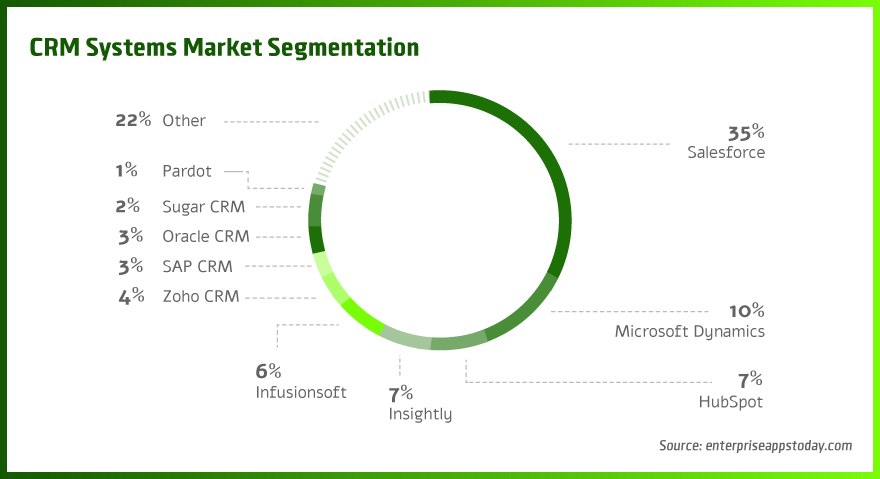
An excerpt from Dan Leubitz's article in the fourth QIR of 2015. Dan analyzes in detail all the relevant factors to consider when choosing a CRM, and examines the state of the market today.
Bloomberg
Properly considered and thought out, your new CRM will serve as the cornerstone of your company’s sales success. Implement it improperly, however, and you probably should have just stayed with the Rolodex.
Nostalgia for the 1980s is at a steady growth. Brands and cultural icons of the day have come roaring back into the spotlight as children of the 80s look to recapture, or at least reminisce about, their youth.
Up until this time, salespeople in offices everywhere were still spinning through Rolodexes and making notes on pieces of paper to be kept in customer files and folders. The process was completely disjointed and even the best salespeople in their industries would occasionally let leads and opportunities slip through the cracks.
Two men in Dallas, Texas; Pat Sullivan and Mike Muhney, saw an opportunity in all of this. In 1986, they founded Conductor Software and released a product that revolutionized the business as we know it.
ACT!, originally meaning Activity Control Technology and later becoming known as Automated Contact Tracking, was released in 1987 as the first piece of software designed to manage sales processes and customer engagements from a computer. This type of software would evolve into what we now know as CRM, or Customer Relationship Management.
In short, CRM takes the impact made by a single worker, or in the case of forex markets, a trader, and amplifies that employee’s productivity by creating and fostering a collaborative and multi-departmental workflow that is centered around one task: keeping customers in the sales funnel.
The CRM allows for and encourages many-to-one and many-to-many contacts, all within a single interface. Ideally, a forex organization’s CRM will account for virtually every aspect of that organization’s day-to-day customer-interactive operations.
Sales leads get funneled to the brokers who can execute on them. Support agents access and utilize critical customer data allowing them to tend to that customer’s needs at that exact moment.
centered around one task: keeping customers in the sales funnel
A good CRM even allows for activities initiated by those outside of a corporate organization; almost like an extranet. Once signed up, traders and other users can interact directly with your internal brokerage agents; immediately tending to withdrawal requests and other account activity, as well as any technical issues that might creep up.
In this industry, traders start to struggle when customer data resides in multiple silos. A good CRM will allow a sales team, and the individuals that make up that team, to consolidate the information from all of the different silos that they have access to. Each member of the team can also enrich the information that everyone uses every single time contact is made with that customer.
Choosing the Right CRM
The CRM market is broad and vast and there are no inherently “bad” CRM suites out there. However, an organization can implement the wrong CRM for its particular needs.
As such, it is imperative to find the right CRM solution for your organization, such that can increase team productivity while simultaneously raising customer satisfaction. The wrong CRM, or implementing the wrong features of the right CRM, can have the exact opposite effect. Customers and sales personnel can become frustrated as processes break and sales opportunities go missed.
Always remember that, at its core, your CRM is nothing but a database with an attractive front-end to make it easy to use. Using this approach and basing your research specifically on what you need out of the database itself, it becomes much easier to ask yourself the questions that will focus your search and find the best CRM for your company. Recommended questions might be:
What fields are necessary for us to capture the information we need?
Who is responsible for entering this data?
Who needs to be able to read and view this data?
What other applications or use-case scenarios might exist for integrating the CRM into other environments?
Have we dedicated enough time to properly implementing our CRM?
Do we know how much all of this is really going to cost? Not just to do it but to do it properly?
This article is an excerpt from the Q4 2015 issue which is out now! To benefit from the full article and other research products, contact our sales team at: qir@financemagnates.com
Properly considered and thought out, your new CRM will serve as the cornerstone of your company’s sales success. Implement it improperly, however, and you probably should have just stayed with the Rolodex.
Nostalgia for the 1980s is at a steady growth. Brands and cultural icons of the day have come roaring back into the spotlight as children of the 80s look to recapture, or at least reminisce about, their youth.
Up until this time, salespeople in offices everywhere were still spinning through Rolodexes and making notes on pieces of paper to be kept in customer files and folders. The process was completely disjointed and even the best salespeople in their industries would occasionally let leads and opportunities slip through the cracks.
Two men in Dallas, Texas; Pat Sullivan and Mike Muhney, saw an opportunity in all of this. In 1986, they founded Conductor Software and released a product that revolutionized the business as we know it.
ACT!, originally meaning Activity Control Technology and later becoming known as Automated Contact Tracking, was released in 1987 as the first piece of software designed to manage sales processes and customer engagements from a computer. This type of software would evolve into what we now know as CRM, or Customer Relationship Management.
In short, CRM takes the impact made by a single worker, or in the case of forex markets, a trader, and amplifies that employee’s productivity by creating and fostering a collaborative and multi-departmental workflow that is centered around one task: keeping customers in the sales funnel.
The CRM allows for and encourages many-to-one and many-to-many contacts, all within a single interface. Ideally, a forex organization’s CRM will account for virtually every aspect of that organization’s day-to-day customer-interactive operations.
Sales leads get funneled to the brokers who can execute on them. Support agents access and utilize critical customer data allowing them to tend to that customer’s needs at that exact moment.
centered around one task: keeping customers in the sales funnel
A good CRM even allows for activities initiated by those outside of a corporate organization; almost like an extranet. Once signed up, traders and other users can interact directly with your internal brokerage agents; immediately tending to withdrawal requests and other account activity, as well as any technical issues that might creep up.
In this industry, traders start to struggle when customer data resides in multiple silos. A good CRM will allow a sales team, and the individuals that make up that team, to consolidate the information from all of the different silos that they have access to. Each member of the team can also enrich the information that everyone uses every single time contact is made with that customer.
Choosing the Right CRM
The CRM market is broad and vast and there are no inherently “bad” CRM suites out there. However, an organization can implement the wrong CRM for its particular needs.
As such, it is imperative to find the right CRM solution for your organization, such that can increase team productivity while simultaneously raising customer satisfaction. The wrong CRM, or implementing the wrong features of the right CRM, can have the exact opposite effect. Customers and sales personnel can become frustrated as processes break and sales opportunities go missed.
Always remember that, at its core, your CRM is nothing but a database with an attractive front-end to make it easy to use. Using this approach and basing your research specifically on what you need out of the database itself, it becomes much easier to ask yourself the questions that will focus your search and find the best CRM for your company. Recommended questions might be:
What fields are necessary for us to capture the information we need?
Who is responsible for entering this data?
Who needs to be able to read and view this data?
What other applications or use-case scenarios might exist for integrating the CRM into other environments?
Have we dedicated enough time to properly implementing our CRM?
Do we know how much all of this is really going to cost? Not just to do it but to do it properly?
This article is an excerpt from the Q4 2015 issue which is out now! To benefit from the full article and other research products, contact our sales team at: qir@financemagnates.com
Dan Leubitz is the CTO of INNITEL.
INNITEL specializes in design and implementation of single and multi-site complex communication systems and custom software integrations. CTO of Innitel Telecom, Leading provider of VoIP services and integrations.
Interactive Brokers Sees 31% Account Growth While Trading Activity Slips from March
Featured Videos
FM Daily Brief - 4 May 2026
FM Daily Brief - 4 May 2026
FM Daily Brief - 4 May 2026
FM Daily Brief - 4 May 2026
Today's lead: spot FX volumes are retreating from March's war-driven peaks as the Iran ceasefire cools dollar trade. Also ahead: a Dubai-based broker sets out its gold volume targets for the rest of H1, and Australia's crypto licensing deadline moves closer with a 10% turnover penalty in play. It's Monday, the fourth of May 2026. You're listening to the Finance Magnates Daily Brief.
Today's lead: spot FX volumes are retreating from March's war-driven peaks as the Iran ceasefire cools dollar trade. Also ahead: a Dubai-based broker sets out its gold volume targets for the rest of H1, and Australia's crypto licensing deadline moves closer with a 10% turnover penalty in play. It's Monday, the fourth of May 2026. You're listening to the Finance Magnates Daily Brief.
Today's lead: spot FX volumes are retreating from March's war-driven peaks as the Iran ceasefire cools dollar trade. Also ahead: a Dubai-based broker sets out its gold volume targets for the rest of H1, and Australia's crypto licensing deadline moves closer with a 10% turnover penalty in play. It's Monday, the fourth of May 2026. You're listening to the Finance Magnates Daily Brief.
Today's lead: spot FX volumes are retreating from March's war-driven peaks as the Iran ceasefire cools dollar trade. Also ahead: a Dubai-based broker sets out its gold volume targets for the rest of H1, and Australia's crypto licensing deadline moves closer with a 10% turnover penalty in play. It's Monday, the fourth of May 2026. You're listening to the Finance Magnates Daily Brief.
iForex's CEO tells Finance Magnates the cost of their IPO delay. Also ahead: the US prediction markets legal battle splits in two, and the FCA greenlights onchain funds. It's Friday, the first of May 2026. You're listening to the Finance Magnates Daily Brief.
iForex's CEO tells Finance Magnates the cost of their IPO delay. Also ahead: the US prediction markets legal battle splits in two, and the FCA greenlights onchain funds. It's Friday, the first of May 2026. You're listening to the Finance Magnates Daily Brief.
iForex's CEO tells Finance Magnates the cost of their IPO delay. Also ahead: the US prediction markets legal battle splits in two, and the FCA greenlights onchain funds. It's Friday, the first of May 2026. You're listening to the Finance Magnates Daily Brief.
iForex's CEO tells Finance Magnates the cost of their IPO delay. Also ahead: the US prediction markets legal battle splits in two, and the FCA greenlights onchain funds. It's Friday, the first of May 2026. You're listening to the Finance Magnates Daily Brief.
iForex's CEO tells Finance Magnates the cost of their IPO delay. Also ahead: the US prediction markets legal battle splits in two, and the FCA greenlights onchain funds. It's Friday, the first of May 2026. You're listening to the Finance Magnates Daily Brief.
iForex's CEO tells Finance Magnates the cost of their IPO delay. Also ahead: the US prediction markets legal battle splits in two, and the FCA greenlights onchain funds. It's Friday, the first of May 2026. You're listening to the Finance Magnates Daily Brief.
Not All Video Reviews Are Created Equal | Finance Magnates
Not All Video Reviews Are Created Equal | Finance Magnates
Not All Video Reviews Are Created Equal | Finance Magnates
Not All Video Reviews Are Created Equal | Finance Magnates
Not All Video Reviews Are Created Equal | Finance Magnates
Not All Video Reviews Are Created Equal | Finance Magnates
We deliver fast, structured, neutral reviews covering regulation, platforms, leverage, payouts, and risk across brokers, prop firms, and fintech platforms.
Book your Finance Magnates video review: https://lnkd.in/dDubZJ2S
#FinanceMagnates #BrokerReview #PropTrading #Fintech #Forex #Crypto #CFD #TradingPlatforms #DigitalAssets
We deliver fast, structured, neutral reviews covering regulation, platforms, leverage, payouts, and risk across brokers, prop firms, and fintech platforms.
Book your Finance Magnates video review: https://lnkd.in/dDubZJ2S
#FinanceMagnates #BrokerReview #PropTrading #Fintech #Forex #Crypto #CFD #TradingPlatforms #DigitalAssets
We deliver fast, structured, neutral reviews covering regulation, platforms, leverage, payouts, and risk across brokers, prop firms, and fintech platforms.
Book your Finance Magnates video review: https://lnkd.in/dDubZJ2S
#FinanceMagnates #BrokerReview #PropTrading #Fintech #Forex #Crypto #CFD #TradingPlatforms #DigitalAssets
We deliver fast, structured, neutral reviews covering regulation, platforms, leverage, payouts, and risk across brokers, prop firms, and fintech platforms.
Book your Finance Magnates video review: https://lnkd.in/dDubZJ2S
#FinanceMagnates #BrokerReview #PropTrading #Fintech #Forex #Crypto #CFD #TradingPlatforms #DigitalAssets
We deliver fast, structured, neutral reviews covering regulation, platforms, leverage, payouts, and risk across brokers, prop firms, and fintech platforms.
Book your Finance Magnates video review: https://lnkd.in/dDubZJ2S
#FinanceMagnates #BrokerReview #PropTrading #Fintech #Forex #Crypto #CFD #TradingPlatforms #DigitalAssets
We deliver fast, structured, neutral reviews covering regulation, platforms, leverage, payouts, and risk across brokers, prop firms, and fintech platforms.
Book your Finance Magnates video review: https://lnkd.in/dDubZJ2S
#FinanceMagnates #BrokerReview #PropTrading #Fintech #Forex #Crypto #CFD #TradingPlatforms #DigitalAssets
FM Daily Brief - 30 April 2026
FM Daily Brief - 30 April 2026
FM Daily Brief - 30 April 2026
FM Daily Brief - 30 April 2026
FM Daily Brief - 30 April 2026
FM Daily Brief - 30 April 2026
iForex posts its first annual results as a listed broker. Also ahead: CFI Financial secures a Brazil license, and prediction markets have a big week, with new ETF launches and fresh Polymarket loss data. It's Thursday, the thirtieth of April 2026. You're listening to the Finance Magnates Daily Brief.
iForex posts its first annual results as a listed broker. Also ahead: CFI Financial secures a Brazil license, and prediction markets have a big week, with new ETF launches and fresh Polymarket loss data. It's Thursday, the thirtieth of April 2026. You're listening to the Finance Magnates Daily Brief.
iForex posts its first annual results as a listed broker. Also ahead: CFI Financial secures a Brazil license, and prediction markets have a big week, with new ETF launches and fresh Polymarket loss data. It's Thursday, the thirtieth of April 2026. You're listening to the Finance Magnates Daily Brief.
iForex posts its first annual results as a listed broker. Also ahead: CFI Financial secures a Brazil license, and prediction markets have a big week, with new ETF launches and fresh Polymarket loss data. It's Thursday, the thirtieth of April 2026. You're listening to the Finance Magnates Daily Brief.
iForex posts its first annual results as a listed broker. Also ahead: CFI Financial secures a Brazil license, and prediction markets have a big week, with new ETF launches and fresh Polymarket loss data. It's Thursday, the thirtieth of April 2026. You're listening to the Finance Magnates Daily Brief.
iForex posts its first annual results as a listed broker. Also ahead: CFI Financial secures a Brazil license, and prediction markets have a big week, with new ETF launches and fresh Polymarket loss data. It's Thursday, the thirtieth of April 2026. You're listening to the Finance Magnates Daily Brief.
FM Daily Brief - 29 April 2026
FM Daily Brief - 29 April 2026
FM Daily Brief - 29 April 2026
FM Daily Brief - 29 April 2026
FM Daily Brief - 29 April 2026
FM Daily Brief - 29 April 2026
XTB and Robinhood both post first-quarter earnings. But the numbers point in very different directions. Also ahead: Capital.com pushes into three new markets and signals a move into payments.
It's Wednesday, the 29th of April 2026. You're listening to the Finance Magnates Daily Brief.
XTB and Robinhood both post first-quarter earnings. But the numbers point in very different directions. Also ahead: Capital.com pushes into three new markets and signals a move into payments.
It's Wednesday, the 29th of April 2026. You're listening to the Finance Magnates Daily Brief.
XTB and Robinhood both post first-quarter earnings. But the numbers point in very different directions. Also ahead: Capital.com pushes into three new markets and signals a move into payments.
It's Wednesday, the 29th of April 2026. You're listening to the Finance Magnates Daily Brief.
XTB and Robinhood both post first-quarter earnings. But the numbers point in very different directions. Also ahead: Capital.com pushes into three new markets and signals a move into payments.
It's Wednesday, the 29th of April 2026. You're listening to the Finance Magnates Daily Brief.
XTB and Robinhood both post first-quarter earnings. But the numbers point in very different directions. Also ahead: Capital.com pushes into three new markets and signals a move into payments.
It's Wednesday, the 29th of April 2026. You're listening to the Finance Magnates Daily Brief.
XTB and Robinhood both post first-quarter earnings. But the numbers point in very different directions. Also ahead: Capital.com pushes into three new markets and signals a move into payments.
It's Wednesday, the 29th of April 2026. You're listening to the Finance Magnates Daily Brief.