A look at some of the most common content marketing mistakes - avoid them to improve.
flickr: DigitalRalph
This article was written by Yael Warman, Content Manager at Leverate.
Content marketing has become a vital component in businesses’ marketing strategies and its value and focus is rapidly rising, with 78% of CMOs considering custom content as the future of marketing.
With content marketing taking such a center stage role, guaranteeing that you design, develop and implement a successful content marketing campaign is of utmost importance. Let’s take a look at some of the most common mistakes content marketers make, so you can avoid them and improve your chances of achieving your set goals.
1. Forgetting to set goals
How can you even attempt to achieve your goals if you don’t even have them set?
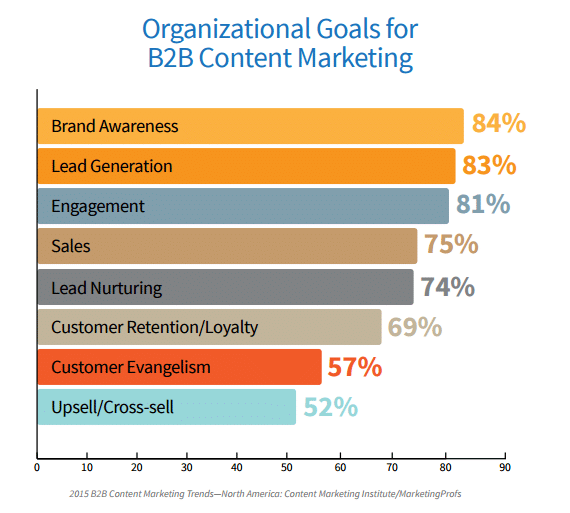
Like any other aspect of your marketing strategy, content needs to have clear, quantifiable and measurable goals. Most B2B marketers aim at brand awareness as their number one goal, and while that is a great thing you can achieve through content, because developing high-quality pieces can showcase your company’s expertise in your field, it is hardly its only achievable objective.
The reality is that you can KPI the sh*#t out of your content strategy. Building brand loyalty through credibility, educating your customer base or prospective clientele, engaging and connecting with your audience and even recruitment of talented individuals who might identify with your vision and culture, are all great goals a company can set to achieve through content marketing.
Leverate
2. Not having a plan
For content to serve a purpose and be effective, it needs to follow a plan. Research your target audience and what their actual needs are.
Once armed with information, plan the direction in which you want your content strategy to go 6 months to a year down the line. Set up an editorial calendar including your daily and weekly postings. This creates a commitment that helps you stay focused long term and gives you a visual understanding of what you are doing.
3. Not paying enough attention to distribution
You may have developed the most interesting piece of content, but if you fail to distribute it properly to your audience, your content strategy will fail.
You should have a plan to distribute your content through multiple channels, some paid, some earned and some owned by your company, and each channel should speak its own language and serve its own purpose. For example, if you are using social media to promote your blog posts, make sure the messages posted in each social network to introduce your blog post, speak the language of that social network.
4. Not posting frequently enough
Companies that publish quality content regularly see the biggest returns in terms of web traffic and lead generation.
Publishing with the same frequency every month is also an important factor, as customers want to see something new every time they visit your website or social media pages and they begin to expect your pieces.
5. Not having a purpose
The fact that someone is reading, seeing or listening to your content doesn’t mean much unless you can guide them to take the action you want them to take.
As we stated above, your content strategy should have a clear objective and every piece of content you develop should help you serve that objective, so depending on what that objective is, use simple and straight-to-the-point language to let your audience know what their next action should be.
Is it signing up to your newsletter, is it subscribing to your e-mail list, is it liking your social media page or downloading an asset? Besides a clear CTA, I like including a 'what’s in it for you' to entice my audience to follow the action.
6. Not squeezing the juice out of SEO
Often times I come across an article so chock full of keywords that it is so obviously trying to achieve ranking rather that convey a valuable message, that it honestly turns me away from the actual content.
That is not to say however, that content and SEO cannot be good friends. With a little bit of research to determine the right keywords you want your content to rank for, a few structural adjustments are all it takes to optimize your content for search engines.
It makes little sense for you to create top-notch content if nobody is going to read it. Improving your content in order to help search engines discover it will help your company increase web traffic and lower the cost of customer acquisition. Find the keywords that best match your strategy and include them consistently throughout your pieces.
7. Not giving visuals enough importance
Adding infographics, pictures and a visually appealing layout to your content pieces goes a long way.
Entire platforms are built on the knowledge that humans’ primitive brain is best appealed to visually, such as Instagram and Pinterest.
Research has revealed that content containing images gets 94% more views than content that does not include images, regardless of industry or topic. Content that includes imagery also gets shared 35% more than content without visuals.
Some image best practices include using lifestyle photography instead of clipart, close-up pictures rather than unidentifiable subjects and images that portray a representation of your audience and that matches the content. Because the average person reads only 20% of the text appearing on a typical website, using infographics to convey a message is a powerful tool.
Even the way in which the text is displayed, the type and font size, the spacing and paragraphs breaks are important things to consider to make your content pieces more appealing to your audience.
8. Not using enough media variety
Audiences today consume content in all shapes and forms and are constantly hungry for more.
There are plenty of ways in which you can get your message across and the more different types of content you use, the more powerful your content marketing efforts will be. Speak to your target market using blogs, articles, white papers, e-books and case studies. Develop how-to guides and 'best of' lists.
Make up your own memes. Have a weekly or monthly podcast. Think of content as an ever-changing animal and adapt it to convey different messages through different media.
9. Not focusing on quality
While putting your brand out there through content relies largely on the number of pieces you develop and distribute, you should never sacrifice quality for quantity.
As superficial as it may sound, one grammatical mistake or spelling error will have readers focusing on that rather than your message and will flush your efforts down the drain.
Titles are a particularly crucial component of your content. Having a great piece of content with a title that does it no justice or that is not catchy enough will take away from your content.
Audiences are likely to click on catchy titles. Countdowns (top 10s for example), negative keywords (worst or never are more clickable than always or best), and posing questions are great, proven ways to get your content clicked on.
Broken links on your content are an obvious no-no, but I can’t tell you the number of times in which an interesting article has prompted me to click on a link in search of additional, valuable information, only to end up in browser’s error page. Test your links if you are including any in your content (and you should be including them).
10. Making your content salesy as opposed to informational
While increased web-traffic and click-through rates are great achievements from a content marketing strategy, they should be considered a byproduct.
A content strategy that is designed specifically to increase traffic and conversion will end up being shamelessly promotional, and your audience will see right through your intentions, which decreases your opportunities for building brand loyalty.
Promotional links and other mentions of how great your company is at fixing that particular problem you are laying out in your blog, as subtle as you may think they sound, will come off as spammy, diminish your credibility and quality of the content and will not result in as much increased traffic as you may hope it would.
Readers in this day and age are smart and sophisticated and won’t drink the Kool-Aid just because you serve it. Show off your brand by providing content that is valuable to them, not you and the results will come in as a result of your efforts. Trust me on that. I do this for a living.
This article was written by Yael Warman, Content Manager at Leverate.
Content marketing has become a vital component in businesses’ marketing strategies and its value and focus is rapidly rising, with 78% of CMOs considering custom content as the future of marketing.
With content marketing taking such a center stage role, guaranteeing that you design, develop and implement a successful content marketing campaign is of utmost importance. Let’s take a look at some of the most common mistakes content marketers make, so you can avoid them and improve your chances of achieving your set goals.
1. Forgetting to set goals
How can you even attempt to achieve your goals if you don’t even have them set?
Like any other aspect of your marketing strategy, content needs to have clear, quantifiable and measurable goals. Most B2B marketers aim at brand awareness as their number one goal, and while that is a great thing you can achieve through content, because developing high-quality pieces can showcase your company’s expertise in your field, it is hardly its only achievable objective.
The reality is that you can KPI the sh*#t out of your content strategy. Building brand loyalty through credibility, educating your customer base or prospective clientele, engaging and connecting with your audience and even recruitment of talented individuals who might identify with your vision and culture, are all great goals a company can set to achieve through content marketing.
Leverate
2. Not having a plan
For content to serve a purpose and be effective, it needs to follow a plan. Research your target audience and what their actual needs are.
Once armed with information, plan the direction in which you want your content strategy to go 6 months to a year down the line. Set up an editorial calendar including your daily and weekly postings. This creates a commitment that helps you stay focused long term and gives you a visual understanding of what you are doing.
3. Not paying enough attention to distribution
You may have developed the most interesting piece of content, but if you fail to distribute it properly to your audience, your content strategy will fail.
You should have a plan to distribute your content through multiple channels, some paid, some earned and some owned by your company, and each channel should speak its own language and serve its own purpose. For example, if you are using social media to promote your blog posts, make sure the messages posted in each social network to introduce your blog post, speak the language of that social network.
4. Not posting frequently enough
Companies that publish quality content regularly see the biggest returns in terms of web traffic and lead generation.
Publishing with the same frequency every month is also an important factor, as customers want to see something new every time they visit your website or social media pages and they begin to expect your pieces.
5. Not having a purpose
The fact that someone is reading, seeing or listening to your content doesn’t mean much unless you can guide them to take the action you want them to take.
As we stated above, your content strategy should have a clear objective and every piece of content you develop should help you serve that objective, so depending on what that objective is, use simple and straight-to-the-point language to let your audience know what their next action should be.
Is it signing up to your newsletter, is it subscribing to your e-mail list, is it liking your social media page or downloading an asset? Besides a clear CTA, I like including a 'what’s in it for you' to entice my audience to follow the action.
6. Not squeezing the juice out of SEO
Often times I come across an article so chock full of keywords that it is so obviously trying to achieve ranking rather that convey a valuable message, that it honestly turns me away from the actual content.
That is not to say however, that content and SEO cannot be good friends. With a little bit of research to determine the right keywords you want your content to rank for, a few structural adjustments are all it takes to optimize your content for search engines.
It makes little sense for you to create top-notch content if nobody is going to read it. Improving your content in order to help search engines discover it will help your company increase web traffic and lower the cost of customer acquisition. Find the keywords that best match your strategy and include them consistently throughout your pieces.
7. Not giving visuals enough importance
Adding infographics, pictures and a visually appealing layout to your content pieces goes a long way.
Entire platforms are built on the knowledge that humans’ primitive brain is best appealed to visually, such as Instagram and Pinterest.
Research has revealed that content containing images gets 94% more views than content that does not include images, regardless of industry or topic. Content that includes imagery also gets shared 35% more than content without visuals.
Some image best practices include using lifestyle photography instead of clipart, close-up pictures rather than unidentifiable subjects and images that portray a representation of your audience and that matches the content. Because the average person reads only 20% of the text appearing on a typical website, using infographics to convey a message is a powerful tool.
Even the way in which the text is displayed, the type and font size, the spacing and paragraphs breaks are important things to consider to make your content pieces more appealing to your audience.
8. Not using enough media variety
Audiences today consume content in all shapes and forms and are constantly hungry for more.
There are plenty of ways in which you can get your message across and the more different types of content you use, the more powerful your content marketing efforts will be. Speak to your target market using blogs, articles, white papers, e-books and case studies. Develop how-to guides and 'best of' lists.
Make up your own memes. Have a weekly or monthly podcast. Think of content as an ever-changing animal and adapt it to convey different messages through different media.
9. Not focusing on quality
While putting your brand out there through content relies largely on the number of pieces you develop and distribute, you should never sacrifice quality for quantity.
As superficial as it may sound, one grammatical mistake or spelling error will have readers focusing on that rather than your message and will flush your efforts down the drain.
Titles are a particularly crucial component of your content. Having a great piece of content with a title that does it no justice or that is not catchy enough will take away from your content.
Audiences are likely to click on catchy titles. Countdowns (top 10s for example), negative keywords (worst or never are more clickable than always or best), and posing questions are great, proven ways to get your content clicked on.
Broken links on your content are an obvious no-no, but I can’t tell you the number of times in which an interesting article has prompted me to click on a link in search of additional, valuable information, only to end up in browser’s error page. Test your links if you are including any in your content (and you should be including them).
10. Making your content salesy as opposed to informational
While increased web-traffic and click-through rates are great achievements from a content marketing strategy, they should be considered a byproduct.
A content strategy that is designed specifically to increase traffic and conversion will end up being shamelessly promotional, and your audience will see right through your intentions, which decreases your opportunities for building brand loyalty.
Promotional links and other mentions of how great your company is at fixing that particular problem you are laying out in your blog, as subtle as you may think they sound, will come off as spammy, diminish your credibility and quality of the content and will not result in as much increased traffic as you may hope it would.
Readers in this day and age are smart and sophisticated and won’t drink the Kool-Aid just because you serve it. Show off your brand by providing content that is valuable to them, not you and the results will come in as a result of your efforts. Trust me on that. I do this for a living.
Yael Warman is a creative writer with a strong background in marketing and advertising. Yael has been a writer for over 10 years and has worked for clients in various industries as well as her own companies and is currently the Content Manager at Leverate. Yael Warman is a creative writer with a strong background in marketing and advertising. Yael has been a writer for over 10 years and has worked for clients in various industries as well as her own companies and is currently the Content Manager at Leverate.
FTMO Says Monthly Rewards Near $15 Million in September
Featured Videos
AvaTrade to Acquire Most of FXCM; NAGA Raises $8M
AvaTrade to Acquire Most of FXCM; NAGA Raises $8M
AvaTrade to Acquire Most of FXCM; NAGA Raises $8M
AvaTrade to Acquire Most of FXCM; NAGA Raises $8M
Today’s financial news recap covers AvaTrade agrees to acquire most of FXCM, NAGA secures eight million dollars in new financing, and Wise seeks a tax settlement in the UK.
Finance Magnates Daily Recap brings you the latest news from forex and CFD brokers, fintech, payments, cryptocurrency, digital assets, trading platforms, financial regulation and global markets.
Get the key company news, executive moves, deals, regulatory updates and market developments of the day, in just a few minutes. New episodes published every weekday.
Read more: https://www.financemagnates.com
#FinanceMagnates #ForexNews #FintechNews
Today’s financial news recap covers AvaTrade agrees to acquire most of FXCM, NAGA secures eight million dollars in new financing, and Wise seeks a tax settlement in the UK.
Finance Magnates Daily Recap brings you the latest news from forex and CFD brokers, fintech, payments, cryptocurrency, digital assets, trading platforms, financial regulation and global markets.
Get the key company news, executive moves, deals, regulatory updates and market developments of the day, in just a few minutes. New episodes published every weekday.
Read more: https://www.financemagnates.com
#FinanceMagnates #ForexNews #FintechNews
Today’s financial news recap covers AvaTrade agrees to acquire most of FXCM, NAGA secures eight million dollars in new financing, and Wise seeks a tax settlement in the UK.
Finance Magnates Daily Recap brings you the latest news from forex and CFD brokers, fintech, payments, cryptocurrency, digital assets, trading platforms, financial regulation and global markets.
Get the key company news, executive moves, deals, regulatory updates and market developments of the day, in just a few minutes. New episodes published every weekday.
Read more: https://www.financemagnates.com
#FinanceMagnates #ForexNews #FintechNews
Today’s financial news recap covers AvaTrade agrees to acquire most of FXCM, NAGA secures eight million dollars in new financing, and Wise seeks a tax settlement in the UK.
Finance Magnates Daily Recap brings you the latest news from forex and CFD brokers, fintech, payments, cryptocurrency, digital assets, trading platforms, financial regulation and global markets.
Get the key company news, executive moves, deals, regulatory updates and market developments of the day, in just a few minutes. New episodes published every weekday.
Read more: https://www.financemagnates.com
#FinanceMagnates #ForexNews #FintechNews
XTB Adds Overnight US Stock Trading; Nasdaq Ventures Invests in One Trading
XTB Adds Overnight US Stock Trading; Nasdaq Ventures Invests in One Trading
XTB Adds Overnight US Stock Trading; Nasdaq Ventures Invests in One Trading
XTB Adds Overnight US Stock Trading; Nasdaq Ventures Invests in One Trading
XTB Adds Overnight US Stock Trading; Nasdaq Ventures Invests in One Trading
XTB Adds Overnight US Stock Trading; Nasdaq Ventures Invests in One Trading
Today’s financial news recap covers XTB expands overnight US stock trading, Fortrade reports higher revenue, Nasdaq backs One Trading, and Vest Labs raises 13 million dollars.
Finance Magnates Daily Recap brings you the latest news from forex and CFD brokers, fintech, payments, cryptocurrency, digital assets, trading platforms, financial regulation and global markets.
Get the key company news, executive moves, deals, regulatory updates and market developments of the day, in just a few minutes. New episodes published every weekday.
Read more: https://www.financemagnates.com
#FinanceMagnates #ForexNews #FintechNews
Today’s financial news recap covers XTB expands overnight US stock trading, Fortrade reports higher revenue, Nasdaq backs One Trading, and Vest Labs raises 13 million dollars.
Finance Magnates Daily Recap brings you the latest news from forex and CFD brokers, fintech, payments, cryptocurrency, digital assets, trading platforms, financial regulation and global markets.
Get the key company news, executive moves, deals, regulatory updates and market developments of the day, in just a few minutes. New episodes published every weekday.
Read more: https://www.financemagnates.com
#FinanceMagnates #ForexNews #FintechNews
Today’s financial news recap covers XTB expands overnight US stock trading, Fortrade reports higher revenue, Nasdaq backs One Trading, and Vest Labs raises 13 million dollars.
Finance Magnates Daily Recap brings you the latest news from forex and CFD brokers, fintech, payments, cryptocurrency, digital assets, trading platforms, financial regulation and global markets.
Get the key company news, executive moves, deals, regulatory updates and market developments of the day, in just a few minutes. New episodes published every weekday.
Read more: https://www.financemagnates.com
#FinanceMagnates #ForexNews #FintechNews
Today’s financial news recap covers XTB expands overnight US stock trading, Fortrade reports higher revenue, Nasdaq backs One Trading, and Vest Labs raises 13 million dollars.
Finance Magnates Daily Recap brings you the latest news from forex and CFD brokers, fintech, payments, cryptocurrency, digital assets, trading platforms, financial regulation and global markets.
Get the key company news, executive moves, deals, regulatory updates and market developments of the day, in just a few minutes. New episodes published every weekday.
Read more: https://www.financemagnates.com
#FinanceMagnates #ForexNews #FintechNews
Today’s financial news recap covers XTB expands overnight US stock trading, Fortrade reports higher revenue, Nasdaq backs One Trading, and Vest Labs raises 13 million dollars.
Finance Magnates Daily Recap brings you the latest news from forex and CFD brokers, fintech, payments, cryptocurrency, digital assets, trading platforms, financial regulation and global markets.
Get the key company news, executive moves, deals, regulatory updates and market developments of the day, in just a few minutes. New episodes published every weekday.
Read more: https://www.financemagnates.com
#FinanceMagnates #ForexNews #FintechNews
Today’s financial news recap covers XTB expands overnight US stock trading, Fortrade reports higher revenue, Nasdaq backs One Trading, and Vest Labs raises 13 million dollars.
Finance Magnates Daily Recap brings you the latest news from forex and CFD brokers, fintech, payments, cryptocurrency, digital assets, trading platforms, financial regulation and global markets.
Get the key company news, executive moves, deals, regulatory updates and market developments of the day, in just a few minutes. New episodes published every weekday.
Read more: https://www.financemagnates.com
#FinanceMagnates #ForexNews #FintechNews
CMC Founder Downplays Volatility Hit; Devexperts Names CEO
CMC Founder Downplays Volatility Hit; Devexperts Names CEO
CMC Founder Downplays Volatility Hit; Devexperts Names CEO
CMC Founder Downplays Volatility Hit; Devexperts Names CEO
CMC Founder Downplays Volatility Hit; Devexperts Names CEO
CMC Founder Downplays Volatility Hit; Devexperts Names CEO
Today’s financial news recap covers low volatility pressures brokers, Devexperts names a new CEO, Saxo cuts onboarding time, and OKX reaches a 25 billion dollar valuation.
Finance Magnates Daily Recap brings you the latest news from forex and CFD brokers, fintech, payments, cryptocurrency, digital assets, trading platforms, financial regulation and global markets.
Get the key company news, executive moves, deals, regulatory updates and market developments of the day, in just a few minutes. New episodes published every weekday.
Read more: https://www.financemagnates.com
#FinanceMagnates #ForexNews #FintechNews
Today’s financial news recap covers low volatility pressures brokers, Devexperts names a new CEO, Saxo cuts onboarding time, and OKX reaches a 25 billion dollar valuation.
Finance Magnates Daily Recap brings you the latest news from forex and CFD brokers, fintech, payments, cryptocurrency, digital assets, trading platforms, financial regulation and global markets.
Get the key company news, executive moves, deals, regulatory updates and market developments of the day, in just a few minutes. New episodes published every weekday.
Read more: https://www.financemagnates.com
#FinanceMagnates #ForexNews #FintechNews
Today’s financial news recap covers low volatility pressures brokers, Devexperts names a new CEO, Saxo cuts onboarding time, and OKX reaches a 25 billion dollar valuation.
Finance Magnates Daily Recap brings you the latest news from forex and CFD brokers, fintech, payments, cryptocurrency, digital assets, trading platforms, financial regulation and global markets.
Get the key company news, executive moves, deals, regulatory updates and market developments of the day, in just a few minutes. New episodes published every weekday.
Read more: https://www.financemagnates.com
#FinanceMagnates #ForexNews #FintechNews
Today’s financial news recap covers low volatility pressures brokers, Devexperts names a new CEO, Saxo cuts onboarding time, and OKX reaches a 25 billion dollar valuation.
Finance Magnates Daily Recap brings you the latest news from forex and CFD brokers, fintech, payments, cryptocurrency, digital assets, trading platforms, financial regulation and global markets.
Get the key company news, executive moves, deals, regulatory updates and market developments of the day, in just a few minutes. New episodes published every weekday.
Read more: https://www.financemagnates.com
#FinanceMagnates #ForexNews #FintechNews
Today’s financial news recap covers low volatility pressures brokers, Devexperts names a new CEO, Saxo cuts onboarding time, and OKX reaches a 25 billion dollar valuation.
Finance Magnates Daily Recap brings you the latest news from forex and CFD brokers, fintech, payments, cryptocurrency, digital assets, trading platforms, financial regulation and global markets.
Get the key company news, executive moves, deals, regulatory updates and market developments of the day, in just a few minutes. New episodes published every weekday.
Read more: https://www.financemagnates.com
#FinanceMagnates #ForexNews #FintechNews
Today’s financial news recap covers low volatility pressures brokers, Devexperts names a new CEO, Saxo cuts onboarding time, and OKX reaches a 25 billion dollar valuation.
Finance Magnates Daily Recap brings you the latest news from forex and CFD brokers, fintech, payments, cryptocurrency, digital assets, trading platforms, financial regulation and global markets.
Get the key company news, executive moves, deals, regulatory updates and market developments of the day, in just a few minutes. New episodes published every weekday.
Read more: https://www.financemagnates.com
#FinanceMagnates #ForexNews #FintechNews
Today’s financial news recap covers Trade Nation buys FXCM's UK client book, Trading 212 reports higher revenue, the CFTC's move to allow perpetual index futures.
Finance Magnates Daily Recap brings you the latest news from forex and CFD brokers, fintech, payments, cryptocurrency, digital assets, trading platforms, financial regulation and global markets.
Get the key company news, executive moves, deals, regulatory updates and market developments of the day, in just a few minutes. New episodes published every weekday.
Read more: https://www.financemagnates.com
#FinanceMagnates #ForexNews #FintechNews
Today’s financial news recap covers Trade Nation buys FXCM's UK client book, Trading 212 reports higher revenue, the CFTC's move to allow perpetual index futures.
Finance Magnates Daily Recap brings you the latest news from forex and CFD brokers, fintech, payments, cryptocurrency, digital assets, trading platforms, financial regulation and global markets.
Get the key company news, executive moves, deals, regulatory updates and market developments of the day, in just a few minutes. New episodes published every weekday.
Read more: https://www.financemagnates.com
#FinanceMagnates #ForexNews #FintechNews
Today’s financial news recap covers Trade Nation buys FXCM's UK client book, Trading 212 reports higher revenue, the CFTC's move to allow perpetual index futures.
Finance Magnates Daily Recap brings you the latest news from forex and CFD brokers, fintech, payments, cryptocurrency, digital assets, trading platforms, financial regulation and global markets.
Get the key company news, executive moves, deals, regulatory updates and market developments of the day, in just a few minutes. New episodes published every weekday.
Read more: https://www.financemagnates.com
#FinanceMagnates #ForexNews #FintechNews
Today’s financial news recap covers Trade Nation buys FXCM's UK client book, Trading 212 reports higher revenue, the CFTC's move to allow perpetual index futures.
Finance Magnates Daily Recap brings you the latest news from forex and CFD brokers, fintech, payments, cryptocurrency, digital assets, trading platforms, financial regulation and global markets.
Get the key company news, executive moves, deals, regulatory updates and market developments of the day, in just a few minutes. New episodes published every weekday.
Read more: https://www.financemagnates.com
#FinanceMagnates #ForexNews #FintechNews
Today’s financial news recap covers Trade Nation buys FXCM's UK client book, Trading 212 reports higher revenue, the CFTC's move to allow perpetual index futures.
Finance Magnates Daily Recap brings you the latest news from forex and CFD brokers, fintech, payments, cryptocurrency, digital assets, trading platforms, financial regulation and global markets.
Get the key company news, executive moves, deals, regulatory updates and market developments of the day, in just a few minutes. New episodes published every weekday.
Read more: https://www.financemagnates.com
#FinanceMagnates #ForexNews #FintechNews
Today’s financial news recap covers Trade Nation buys FXCM's UK client book, Trading 212 reports higher revenue, the CFTC's move to allow perpetual index futures.
Finance Magnates Daily Recap brings you the latest news from forex and CFD brokers, fintech, payments, cryptocurrency, digital assets, trading platforms, financial regulation and global markets.
Get the key company news, executive moves, deals, regulatory updates and market developments of the day, in just a few minutes. New episodes published every weekday.
Read more: https://www.financemagnates.com
#FinanceMagnates #ForexNews #FintechNews
Your career isn’t a linear path.
Your career isn’t a linear path.
Your career isn’t a linear path.
Your career isn’t a linear path.
Your career isn’t a linear path.
Your career isn’t a linear path.
Roles change. Career goals change. Sometimes you want a completely new challenge.
But the skills and knowledge you build along the way can stay with you and give you something to build on.
For Jeff Patterson, that continued growth is key to long-term career development.
You bring the skills. FM Academy helps you build the knowledge.
#FMAcademy #FinanceMagnates #FinanceCareers #ProfessionalDevelopment #Fintech
Roles change. Career goals change. Sometimes you want a completely new challenge.
But the skills and knowledge you build along the way can stay with you and give you something to build on.
For Jeff Patterson, that continued growth is key to long-term career development.
You bring the skills. FM Academy helps you build the knowledge.
#FMAcademy #FinanceMagnates #FinanceCareers #ProfessionalDevelopment #Fintech
Roles change. Career goals change. Sometimes you want a completely new challenge.
But the skills and knowledge you build along the way can stay with you and give you something to build on.
For Jeff Patterson, that continued growth is key to long-term career development.
You bring the skills. FM Academy helps you build the knowledge.
#FMAcademy #FinanceMagnates #FinanceCareers #ProfessionalDevelopment #Fintech
Roles change. Career goals change. Sometimes you want a completely new challenge.
But the skills and knowledge you build along the way can stay with you and give you something to build on.
For Jeff Patterson, that continued growth is key to long-term career development.
You bring the skills. FM Academy helps you build the knowledge.
#FMAcademy #FinanceMagnates #FinanceCareers #ProfessionalDevelopment #Fintech
Roles change. Career goals change. Sometimes you want a completely new challenge.
But the skills and knowledge you build along the way can stay with you and give you something to build on.
For Jeff Patterson, that continued growth is key to long-term career development.
You bring the skills. FM Academy helps you build the knowledge.
#FMAcademy #FinanceMagnates #FinanceCareers #ProfessionalDevelopment #Fintech
Roles change. Career goals change. Sometimes you want a completely new challenge.
But the skills and knowledge you build along the way can stay with you and give you something to build on.
For Jeff Patterson, that continued growth is key to long-term career development.
You bring the skills. FM Academy helps you build the knowledge.
#FMAcademy #FinanceMagnates #FinanceCareers #ProfessionalDevelopment #Fintech