As China's currency becomes internationlized, the largest issued bond coming from a Multilateral organization backed by 184 member countries is set to issue in March for 1 billion RMB ($165 Million) in London.
On Tuesday this week, the International Finance Corporation (IFC), a member of the World Bank Group, announced it will issue a 1 billion reminbi-denominated bond (equivalent of nearly $165 million) in London, to increase foreign investment in China and support the internationalization of the Chinese currency - the yuan (CNY).
U.K Hot for RMB, European Central Bank Official Follows with Speech
The very next day during a speech at the Renminbi Forum Luxembourg, by Yves Mersch, Member of the Executive Board of the European Central Bank (ECB), in Luxembourg, the topic of China progressing towards financial market liberalization was discussed.
A transcript of the talk was published by the ECB, and focused also on the internationalization of China’s currency, the Renminbi (RMB), which has risen in the rank of global currency market share, as it has become more freely traded –yet still not 100% floated, although the permissible range that it could trade within was widened in 2012.
Emerging Currencies from Emerging Markets
Russia, another key member of the BRICS consortium of advanced emerging market economies, has also taken action to freely float its currency in recent years, with the latest changes in the last quarter of 2013.
The issuance by the IFC, which will be the largest of its kind made by a multilateral institution and issued on the London Stock Exchange over the next month, with HSBC, ICBC and JP Morgan named as lead arrangers for the bond.
Forex Magnates reported earlier in February when the Australian Stock Exchange (ASX) secured RMB settlement service for its asset suite via the Bank of China, after we reported in late January that the Monetary Authority of Singapore (MAS) had opened its registration process under the RNQFII program to investor off-shore RMB in China's Stock Markets.
News of the IFC deal in London appears to have caught the attention of the ECB as well, as the benefits expected from the internationalization of China’s currency could have benefits for EU-based investors, among other global markets.
IFC is an independent organization with 184 member countries and coordinates activities with other organizations in the world bank group.
IFC Vice President and Treasurer Jingdong Hua
“IFC is committed to supporting the deepening of China’s capital markets,” said IFC Vice President and Treasurer, Jingdong Hua. “This issuance will help demonstrate the strong demand from international investors for offshore renminbi bonds, while providing an alternative source of renminbi funding for investment in the country.”
The World Bank Member - IFC, had previously pioneered the international issuance of renminbi-denominated bonds in China (Panda bonds) and Hong Kong (Dim Sum bonds), and was also the first to set up a program to regularly issue offshore renminbi-denominated discount notes, according to a description in the press release.
Xavier Rolet, CEO, London Stock Exchange Group
Commenting in the IFC announcement regarding the 1 billion RMB-denominated bond, Xavier Rolet, CEO of London Stock Exchange Group said, “London’s position as a leading international financial center is reflected in its ability to offer investors a wide range of innovative products providing access to asset classes around the world via a transparent, regulated market. China is one of the world’s largest and fastest growing economies and the new 1 billion renminbi-denominated bond, issued by IFC, listed on London Stock Exchange, provides investors with the opportunity to have direct exposure to this currency.”
IFC supports the development of China’s financial sector by working with the government to create a regulatory and legal environment that supports the growth of financial services, promotes the microfinance industry, strengthens commercial banks and develops the country's financial and capital markets. Mature financial and capital markets allow companies to efficiently raise financing so they can grow and create jobs.
In China, IFC focuses on private sector investments that help fight climate change, enable rural development and promote sustainable Chinese investments overseas. Since 1985, IFC has invested about $7 billion (around 42 billion yuan) in more than 270 projects in the country, including nearly 3 billion yuan in local currency investments.
Hong Kong an Important Gateway to China
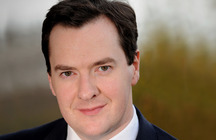
George Osborne, Chancellor and Chief Financial Minister of the United Kingdom
"Almost a tenth of all our exports into China flow via Hong Kong. That’s a huge proportion. And almost two thirds of all Chinese outward investment comes through here in one form or another. But Hong Kong has this special position because of its own inherent strengths. Three hundred British firms base their regional headquarters here, not just because of Hong Kong’s prosperity. But also because of Hong Kong’s stable government and strong legal system. As my colleague, the Foreign Secretary, said this month: Hong Kong’s success is underpinned by its autonomy, rights and freedoms - guaranteed by the Joint Declaration- and the best way to preserve Hong Kong’s strengths is through a transition to universal suffrage which meets the aspirations of the people of Hong Kong. How that is achieved is for the people of Hong Kong, and the governments of Hong Kong and China to decide. What I want Britain to do is to build on this special relationship with Hong Kong, so that together we can be a bridge – and not a barrier – to trade between mainland China and the world."
Renminbi Could Be Contender to Challenge the U.S. Dollar
During yesterday's speech in Luxembourg by the ECB's Mersch, some key points on China's economy were reiterated and with regards to the modernization of its currency, as can be seen in the following excerpt below.
Also mentioned by Mr. Mersch in the speech, "Due to the size of China's economy and its importance in global trade and, potentially, finance, the renminbi might ultimately come to challenge the US dollar."
"[...]As China has gained in international stature, some people have asked whether it can maintain its economic dynamism. A decline in growth (from over 10% in 2010 to slightly below 8% at the end of 2013) coupled with the persistence of domestic imbalances suggests that further reforms are needed. In particular, the composition of domestic demand continues to be highly skewed towards investment (now standing at 47% of GDP). At the same time, growth has become increasingly reliant on credit, with total financing to the private sector growing to about 180% of GDP at the end of 2013 from 115% in 2008. Financial leverage on this scale is much higher than in other countries with a similar level of development. Moreover, much of the credit growth has taken place outside the formal banking system, a development which needs to be monitored closely to minimise risks to financial stability.
Yves Mersch, Member of Executive Board, European Central Bank
The Chinese authorities are well aware of these challenges and, in November 2013, presented a comprehensive reform programme aimed at making growth more sustainable. An essential element is the progressive development and liberalisation of domestic financial markets so as to give a greater role to market forces in determining interest rates and allocating credit. Allowing those forces to play a more important role will increase the liquidity of China's financial markets as well as the variety of instruments traded. Over the last few years, we have already seen a rise in the number and variety of financial instruments that are being traded on China's domestic markets, be they bonds, at various maturities and with different ratings, derivative products or different currencies.
As for currencies, China's decision to introduce direct trading between the euro and the renminbi in the Shanghai foreign exchange market could, beyond its symbolic value of signalling stronger relations, bring benefits for the euro area and China. It could do several things - enhance price discovery for the currency pair, encourage a decline in transaction costs, facilitate the access of European banks to the Chinese onshore foreign exchange market, and it could allow the euro area to benefit from the rising importance of the renminbi. However, should trading volumes remain low, some of these advantages, such as lower trading costs, might prove elusive."[...]
On Tuesday this week, the International Finance Corporation (IFC), a member of the World Bank Group, announced it will issue a 1 billion reminbi-denominated bond (equivalent of nearly $165 million) in London, to increase foreign investment in China and support the internationalization of the Chinese currency - the yuan (CNY).
U.K Hot for RMB, European Central Bank Official Follows with Speech
The very next day during a speech at the Renminbi Forum Luxembourg, by Yves Mersch, Member of the Executive Board of the European Central Bank (ECB), in Luxembourg, the topic of China progressing towards financial market liberalization was discussed.
A transcript of the talk was published by the ECB, and focused also on the internationalization of China’s currency, the Renminbi (RMB), which has risen in the rank of global currency market share, as it has become more freely traded –yet still not 100% floated, although the permissible range that it could trade within was widened in 2012.
Emerging Currencies from Emerging Markets
Russia, another key member of the BRICS consortium of advanced emerging market economies, has also taken action to freely float its currency in recent years, with the latest changes in the last quarter of 2013.
The issuance by the IFC, which will be the largest of its kind made by a multilateral institution and issued on the London Stock Exchange over the next month, with HSBC, ICBC and JP Morgan named as lead arrangers for the bond.
Forex Magnates reported earlier in February when the Australian Stock Exchange (ASX) secured RMB settlement service for its asset suite via the Bank of China, after we reported in late January that the Monetary Authority of Singapore (MAS) had opened its registration process under the RNQFII program to investor off-shore RMB in China's Stock Markets.
News of the IFC deal in London appears to have caught the attention of the ECB as well, as the benefits expected from the internationalization of China’s currency could have benefits for EU-based investors, among other global markets.
IFC is an independent organization with 184 member countries and coordinates activities with other organizations in the world bank group.
IFC Vice President and Treasurer Jingdong Hua
“IFC is committed to supporting the deepening of China’s capital markets,” said IFC Vice President and Treasurer, Jingdong Hua. “This issuance will help demonstrate the strong demand from international investors for offshore renminbi bonds, while providing an alternative source of renminbi funding for investment in the country.”
The World Bank Member - IFC, had previously pioneered the international issuance of renminbi-denominated bonds in China (Panda bonds) and Hong Kong (Dim Sum bonds), and was also the first to set up a program to regularly issue offshore renminbi-denominated discount notes, according to a description in the press release.
Xavier Rolet, CEO, London Stock Exchange Group
Commenting in the IFC announcement regarding the 1 billion RMB-denominated bond, Xavier Rolet, CEO of London Stock Exchange Group said, “London’s position as a leading international financial center is reflected in its ability to offer investors a wide range of innovative products providing access to asset classes around the world via a transparent, regulated market. China is one of the world’s largest and fastest growing economies and the new 1 billion renminbi-denominated bond, issued by IFC, listed on London Stock Exchange, provides investors with the opportunity to have direct exposure to this currency.”
IFC supports the development of China’s financial sector by working with the government to create a regulatory and legal environment that supports the growth of financial services, promotes the microfinance industry, strengthens commercial banks and develops the country's financial and capital markets. Mature financial and capital markets allow companies to efficiently raise financing so they can grow and create jobs.
In China, IFC focuses on private sector investments that help fight climate change, enable rural development and promote sustainable Chinese investments overseas. Since 1985, IFC has invested about $7 billion (around 42 billion yuan) in more than 270 projects in the country, including nearly 3 billion yuan in local currency investments.
Hong Kong an Important Gateway to China
George Osborne, Chancellor and Chief Financial Minister of the United Kingdom
"Almost a tenth of all our exports into China flow via Hong Kong. That’s a huge proportion. And almost two thirds of all Chinese outward investment comes through here in one form or another. But Hong Kong has this special position because of its own inherent strengths. Three hundred British firms base their regional headquarters here, not just because of Hong Kong’s prosperity. But also because of Hong Kong’s stable government and strong legal system. As my colleague, the Foreign Secretary, said this month: Hong Kong’s success is underpinned by its autonomy, rights and freedoms - guaranteed by the Joint Declaration- and the best way to preserve Hong Kong’s strengths is through a transition to universal suffrage which meets the aspirations of the people of Hong Kong. How that is achieved is for the people of Hong Kong, and the governments of Hong Kong and China to decide. What I want Britain to do is to build on this special relationship with Hong Kong, so that together we can be a bridge – and not a barrier – to trade between mainland China and the world."
Renminbi Could Be Contender to Challenge the U.S. Dollar
During yesterday's speech in Luxembourg by the ECB's Mersch, some key points on China's economy were reiterated and with regards to the modernization of its currency, as can be seen in the following excerpt below.
Also mentioned by Mr. Mersch in the speech, "Due to the size of China's economy and its importance in global trade and, potentially, finance, the renminbi might ultimately come to challenge the US dollar."
"[...]As China has gained in international stature, some people have asked whether it can maintain its economic dynamism. A decline in growth (from over 10% in 2010 to slightly below 8% at the end of 2013) coupled with the persistence of domestic imbalances suggests that further reforms are needed. In particular, the composition of domestic demand continues to be highly skewed towards investment (now standing at 47% of GDP). At the same time, growth has become increasingly reliant on credit, with total financing to the private sector growing to about 180% of GDP at the end of 2013 from 115% in 2008. Financial leverage on this scale is much higher than in other countries with a similar level of development. Moreover, much of the credit growth has taken place outside the formal banking system, a development which needs to be monitored closely to minimise risks to financial stability.
Yves Mersch, Member of Executive Board, European Central Bank
The Chinese authorities are well aware of these challenges and, in November 2013, presented a comprehensive reform programme aimed at making growth more sustainable. An essential element is the progressive development and liberalisation of domestic financial markets so as to give a greater role to market forces in determining interest rates and allocating credit. Allowing those forces to play a more important role will increase the liquidity of China's financial markets as well as the variety of instruments traded. Over the last few years, we have already seen a rise in the number and variety of financial instruments that are being traded on China's domestic markets, be they bonds, at various maturities and with different ratings, derivative products or different currencies.
As for currencies, China's decision to introduce direct trading between the euro and the renminbi in the Shanghai foreign exchange market could, beyond its symbolic value of signalling stronger relations, bring benefits for the euro area and China. It could do several things - enhance price discovery for the currency pair, encourage a decline in transaction costs, facilitate the access of European banks to the Chinese onshore foreign exchange market, and it could allow the euro area to benefit from the rising importance of the renminbi. However, should trading volumes remain low, some of these advantages, such as lower trading costs, might prove elusive."[...]
Italy’s Consob Tightens Net on AI-Fueled Scams With Fresh Website Bans
Featured Videos
FP Markets Winner Spotlight 🏆 | Global Broker of the Year 2025 #Trading #Broker #Innovation #Shorts
FP Markets Winner Spotlight 🏆 | Global Broker of the Year 2025 #Trading #Broker #Innovation #Shorts
FP Markets Winner Spotlight 🏆 | Global Broker of the Year 2025 #Trading #Broker #Innovation #Shorts
FP Markets Winner Spotlight 🏆 | Global Broker of the Year 2025 #Trading #Broker #Innovation #Shorts
FP Markets takes the spotlight as Global Broker of the Year 2025 at the Finance Magnates Awards.
Martin Stoilov, Head of Client Experience, shares that trust, innovation, and people played a key role in the company’s success, supported by a strong foundation of integrity and client-centricity.
Following this milestone, FP Markets continues to focus on growth, technology investment, and its core values of transparency and excellence.
👉 Be part of FM Awards 2026: https://awards.financemagnates.com/#nominate
FP Markets takes the spotlight as Global Broker of the Year 2025 at the Finance Magnates Awards.
Martin Stoilov, Head of Client Experience, shares that trust, innovation, and people played a key role in the company’s success, supported by a strong foundation of integrity and client-centricity.
Following this milestone, FP Markets continues to focus on growth, technology investment, and its core values of transparency and excellence.
👉 Be part of FM Awards 2026: https://awards.financemagnates.com/#nominate
FP Markets takes the spotlight as Global Broker of the Year 2025 at the Finance Magnates Awards.
Martin Stoilov, Head of Client Experience, shares that trust, innovation, and people played a key role in the company’s success, supported by a strong foundation of integrity and client-centricity.
Following this milestone, FP Markets continues to focus on growth, technology investment, and its core values of transparency and excellence.
👉 Be part of FM Awards 2026: https://awards.financemagnates.com/#nominate
FP Markets takes the spotlight as Global Broker of the Year 2025 at the Finance Magnates Awards.
Martin Stoilov, Head of Client Experience, shares that trust, innovation, and people played a key role in the company’s success, supported by a strong foundation of integrity and client-centricity.
Following this milestone, FP Markets continues to focus on growth, technology investment, and its core values of transparency and excellence.
👉 Be part of FM Awards 2026: https://awards.financemagnates.com/#nominate
In this video, we review @HolaPrimeMarketsOfficial, a multi-asset forex and CFDs broker offering different account types, trading platforms, and flexible trading conditions.
We cover the broker’s overall offering, including account options, trading environment, platforms like MT4 and MT5, and additional services such as managed accounts and fast withdrawals.
Watch the full video to see if Hola Prime Markets fits your trading needs.
📣 Stay up to date with the latest in finance and trading. Follow Finance Magnates for industry news, insights, and global event coverage.
Connect with us:
🔗 LinkedIn: /financemagnates
👍 Facebook: /financemagnates
📸 Instagram: https://www.instagram.com/financemagnates
🐦 X: https://x.com/financemagnates
🎥 TikTok: https://www.tiktok.com/tag/financemagnates
▶️ YouTube: /@financemagnates_official
#HolaPrime #ForexBroker #CFDTrading #FinanceMagnates #Trading #Forex #BrokerReview
In this video, we review @HolaPrimeMarketsOfficial, a multi-asset forex and CFDs broker offering different account types, trading platforms, and flexible trading conditions.
We cover the broker’s overall offering, including account options, trading environment, platforms like MT4 and MT5, and additional services such as managed accounts and fast withdrawals.
Watch the full video to see if Hola Prime Markets fits your trading needs.
📣 Stay up to date with the latest in finance and trading. Follow Finance Magnates for industry news, insights, and global event coverage.
Connect with us:
🔗 LinkedIn: /financemagnates
👍 Facebook: /financemagnates
📸 Instagram: https://www.instagram.com/financemagnates
🐦 X: https://x.com/financemagnates
🎥 TikTok: https://www.tiktok.com/tag/financemagnates
▶️ YouTube: /@financemagnates_official
#HolaPrime #ForexBroker #CFDTrading #FinanceMagnates #Trading #Forex #BrokerReview
In this video, we review @HolaPrimeMarketsOfficial, a multi-asset forex and CFDs broker offering different account types, trading platforms, and flexible trading conditions.
We cover the broker’s overall offering, including account options, trading environment, platforms like MT4 and MT5, and additional services such as managed accounts and fast withdrawals.
Watch the full video to see if Hola Prime Markets fits your trading needs.
📣 Stay up to date with the latest in finance and trading. Follow Finance Magnates for industry news, insights, and global event coverage.
Connect with us:
🔗 LinkedIn: /financemagnates
👍 Facebook: /financemagnates
📸 Instagram: https://www.instagram.com/financemagnates
🐦 X: https://x.com/financemagnates
🎥 TikTok: https://www.tiktok.com/tag/financemagnates
▶️ YouTube: /@financemagnates_official
#HolaPrime #ForexBroker #CFDTrading #FinanceMagnates #Trading #Forex #BrokerReview
In this video, we review @HolaPrimeMarketsOfficial, a multi-asset forex and CFDs broker offering different account types, trading platforms, and flexible trading conditions.
We cover the broker’s overall offering, including account options, trading environment, platforms like MT4 and MT5, and additional services such as managed accounts and fast withdrawals.
Watch the full video to see if Hola Prime Markets fits your trading needs.
📣 Stay up to date with the latest in finance and trading. Follow Finance Magnates for industry news, insights, and global event coverage.
Connect with us:
🔗 LinkedIn: /financemagnates
👍 Facebook: /financemagnates
📸 Instagram: https://www.instagram.com/financemagnates
🐦 X: https://x.com/financemagnates
🎥 TikTok: https://www.tiktok.com/tag/financemagnates
▶️ YouTube: /@financemagnates_official
#HolaPrime #ForexBroker #CFDTrading #FinanceMagnates #Trading #Forex #BrokerReview
In this video, we review @HolaPrimeMarketsOfficial, a multi-asset forex and CFDs broker offering different account types, trading platforms, and flexible trading conditions.
We cover the broker’s overall offering, including account options, trading environment, platforms like MT4 and MT5, and additional services such as managed accounts and fast withdrawals.
Watch the full video to see if Hola Prime Markets fits your trading needs.
📣 Stay up to date with the latest in finance and trading. Follow Finance Magnates for industry news, insights, and global event coverage.
Connect with us:
🔗 LinkedIn: /financemagnates
👍 Facebook: /financemagnates
📸 Instagram: https://www.instagram.com/financemagnates
🐦 X: https://x.com/financemagnates
🎥 TikTok: https://www.tiktok.com/tag/financemagnates
▶️ YouTube: /@financemagnates_official
#HolaPrime #ForexBroker #CFDTrading #FinanceMagnates #Trading #Forex #BrokerReview
In this video, we review @HolaPrimeMarketsOfficial, a multi-asset forex and CFDs broker offering different account types, trading platforms, and flexible trading conditions.
We cover the broker’s overall offering, including account options, trading environment, platforms like MT4 and MT5, and additional services such as managed accounts and fast withdrawals.
Watch the full video to see if Hola Prime Markets fits your trading needs.
📣 Stay up to date with the latest in finance and trading. Follow Finance Magnates for industry news, insights, and global event coverage.
Connect with us:
🔗 LinkedIn: /financemagnates
👍 Facebook: /financemagnates
📸 Instagram: https://www.instagram.com/financemagnates
🐦 X: https://x.com/financemagnates
🎥 TikTok: https://www.tiktok.com/tag/financemagnates
▶️ YouTube: /@financemagnates_official
#HolaPrime #ForexBroker #CFDTrading #FinanceMagnates #Trading #Forex #BrokerReview
Hola Prime Review: What You Need to Know | Full Breakdown by Finance Magnates
Hola Prime Review: What You Need to Know | Full Breakdown by Finance Magnates
Hola Prime Review: What You Need to Know | Full Breakdown by Finance Magnates
Hola Prime Review: What You Need to Know | Full Breakdown by Finance Magnates
Hola Prime Review: What You Need to Know | Full Breakdown by Finance Magnates
Hola Prime Review: What You Need to Know | Full Breakdown by Finance Magnates
In this video, we review @HolaPrime_Global, a proprietary trading firm offering evaluation programs and performance-based payouts in simulated market environments.
We cover how the challenge model works, including account types, profit splits (up to 95%), trading rules, and what it takes to reach a funded account. You’ll also learn about available platforms like MT4, MT5, cTrader, and more, along with insights into payouts, support, and trading conditions.
Watch the full video to see if Hola Prime fits your trading style.
📣 Stay up to date with the latest in finance and trading. Follow Finance Magnates for industry news, insights, and global event coverage.
Connect with us:
🔗 LinkedIn: /financemagnates
👍 Facebook: /financemagnates
📸 Instagram: https://www.instagram.com/financemagnates
🐦 X: https://x.com/financemagnates
🎥 TikTok: https://www.tiktok.com/tag/financemagnates
▶️ YouTube: /@financemagnates_official
#HolaPrime #PropFirm #Trading #FinanceMagnates #Forex #FuturesTrading #TradingReview #PropFirmReview
In this video, we review @HolaPrime_Global, a proprietary trading firm offering evaluation programs and performance-based payouts in simulated market environments.
We cover how the challenge model works, including account types, profit splits (up to 95%), trading rules, and what it takes to reach a funded account. You’ll also learn about available platforms like MT4, MT5, cTrader, and more, along with insights into payouts, support, and trading conditions.
Watch the full video to see if Hola Prime fits your trading style.
📣 Stay up to date with the latest in finance and trading. Follow Finance Magnates for industry news, insights, and global event coverage.
Connect with us:
🔗 LinkedIn: /financemagnates
👍 Facebook: /financemagnates
📸 Instagram: https://www.instagram.com/financemagnates
🐦 X: https://x.com/financemagnates
🎥 TikTok: https://www.tiktok.com/tag/financemagnates
▶️ YouTube: /@financemagnates_official
#HolaPrime #PropFirm #Trading #FinanceMagnates #Forex #FuturesTrading #TradingReview #PropFirmReview
In this video, we review @HolaPrime_Global, a proprietary trading firm offering evaluation programs and performance-based payouts in simulated market environments.
We cover how the challenge model works, including account types, profit splits (up to 95%), trading rules, and what it takes to reach a funded account. You’ll also learn about available platforms like MT4, MT5, cTrader, and more, along with insights into payouts, support, and trading conditions.
Watch the full video to see if Hola Prime fits your trading style.
📣 Stay up to date with the latest in finance and trading. Follow Finance Magnates for industry news, insights, and global event coverage.
Connect with us:
🔗 LinkedIn: /financemagnates
👍 Facebook: /financemagnates
📸 Instagram: https://www.instagram.com/financemagnates
🐦 X: https://x.com/financemagnates
🎥 TikTok: https://www.tiktok.com/tag/financemagnates
▶️ YouTube: /@financemagnates_official
#HolaPrime #PropFirm #Trading #FinanceMagnates #Forex #FuturesTrading #TradingReview #PropFirmReview
In this video, we review @HolaPrime_Global, a proprietary trading firm offering evaluation programs and performance-based payouts in simulated market environments.
We cover how the challenge model works, including account types, profit splits (up to 95%), trading rules, and what it takes to reach a funded account. You’ll also learn about available platforms like MT4, MT5, cTrader, and more, along with insights into payouts, support, and trading conditions.
Watch the full video to see if Hola Prime fits your trading style.
📣 Stay up to date with the latest in finance and trading. Follow Finance Magnates for industry news, insights, and global event coverage.
Connect with us:
🔗 LinkedIn: /financemagnates
👍 Facebook: /financemagnates
📸 Instagram: https://www.instagram.com/financemagnates
🐦 X: https://x.com/financemagnates
🎥 TikTok: https://www.tiktok.com/tag/financemagnates
▶️ YouTube: /@financemagnates_official
#HolaPrime #PropFirm #Trading #FinanceMagnates #Forex #FuturesTrading #TradingReview #PropFirmReview
In this video, we review @HolaPrime_Global, a proprietary trading firm offering evaluation programs and performance-based payouts in simulated market environments.
We cover how the challenge model works, including account types, profit splits (up to 95%), trading rules, and what it takes to reach a funded account. You’ll also learn about available platforms like MT4, MT5, cTrader, and more, along with insights into payouts, support, and trading conditions.
Watch the full video to see if Hola Prime fits your trading style.
📣 Stay up to date with the latest in finance and trading. Follow Finance Magnates for industry news, insights, and global event coverage.
Connect with us:
🔗 LinkedIn: /financemagnates
👍 Facebook: /financemagnates
📸 Instagram: https://www.instagram.com/financemagnates
🐦 X: https://x.com/financemagnates
🎥 TikTok: https://www.tiktok.com/tag/financemagnates
▶️ YouTube: /@financemagnates_official
#HolaPrime #PropFirm #Trading #FinanceMagnates #Forex #FuturesTrading #TradingReview #PropFirmReview
In this video, we review @HolaPrime_Global, a proprietary trading firm offering evaluation programs and performance-based payouts in simulated market environments.
We cover how the challenge model works, including account types, profit splits (up to 95%), trading rules, and what it takes to reach a funded account. You’ll also learn about available platforms like MT4, MT5, cTrader, and more, along with insights into payouts, support, and trading conditions.
Watch the full video to see if Hola Prime fits your trading style.
📣 Stay up to date with the latest in finance and trading. Follow Finance Magnates for industry news, insights, and global event coverage.
Connect with us:
🔗 LinkedIn: /financemagnates
👍 Facebook: /financemagnates
📸 Instagram: https://www.instagram.com/financemagnates
🐦 X: https://x.com/financemagnates
🎥 TikTok: https://www.tiktok.com/tag/financemagnates
▶️ YouTube: /@financemagnates_official
#HolaPrime #PropFirm #Trading #FinanceMagnates #Forex #FuturesTrading #TradingReview #PropFirmReview
Axi Winner Spotlight 🏆 | Global Most Innovative Broker 2025 #Innovation #Trading #Fintech #Broker
Axi Winner Spotlight 🏆 | Global Most Innovative Broker 2025 #Innovation #Trading #Fintech #Broker
Axi Winner Spotlight 🏆 | Global Most Innovative Broker 2025 #Innovation #Trading #Fintech #Broker
Axi Winner Spotlight 🏆 | Global Most Innovative Broker 2025 #Innovation #Trading #Fintech #Broker
Axi Winner Spotlight 🏆 | Global Most Innovative Broker 2025 #Innovation #Trading #Fintech #Broker
Axi Winner Spotlight 🏆 | Global Most Innovative Broker 2025 #Innovation #Trading #Fintech #Broker
Axi takes the spotlight at the Finance Magnates Awards, winning Global Most Innovative Broker 2025.
Olivia Xenofontos and Ivanna Openko share how the team will feel: proud, motivated, and ready to keep delivering.
They also describe the night as well-organized, focused, and enjoyable for all.
👉 Be part of FM Awards 2026.
Axi takes the spotlight at the Finance Magnates Awards, winning Global Most Innovative Broker 2025.
Olivia Xenofontos and Ivanna Openko share how the team will feel: proud, motivated, and ready to keep delivering.
They also describe the night as well-organized, focused, and enjoyable for all.
👉 Be part of FM Awards 2026.
Axi takes the spotlight at the Finance Magnates Awards, winning Global Most Innovative Broker 2025.
Olivia Xenofontos and Ivanna Openko share how the team will feel: proud, motivated, and ready to keep delivering.
They also describe the night as well-organized, focused, and enjoyable for all.
👉 Be part of FM Awards 2026.
Axi takes the spotlight at the Finance Magnates Awards, winning Global Most Innovative Broker 2025.
Olivia Xenofontos and Ivanna Openko share how the team will feel: proud, motivated, and ready to keep delivering.
They also describe the night as well-organized, focused, and enjoyable for all.
👉 Be part of FM Awards 2026.
Axi takes the spotlight at the Finance Magnates Awards, winning Global Most Innovative Broker 2025.
Olivia Xenofontos and Ivanna Openko share how the team will feel: proud, motivated, and ready to keep delivering.
They also describe the night as well-organized, focused, and enjoyable for all.
👉 Be part of FM Awards 2026.
Axi takes the spotlight at the Finance Magnates Awards, winning Global Most Innovative Broker 2025.
Olivia Xenofontos and Ivanna Openko share how the team will feel: proud, motivated, and ready to keep delivering.
They also describe the night as well-organized, focused, and enjoyable for all.
👉 Be part of FM Awards 2026.
Recognition that matters.
Built on transparency.
Driven by the industry.
The Finance Magnates Awards 2026.
Nominations are now open.
🔗 https://awards.financemagnates.com/?utm_source=SM&utm_medium=social&utm_campaign=recognition-matters
Recognition that matters.
Built on transparency.
Driven by the industry.
The Finance Magnates Awards 2026.
Nominations are now open.
🔗 https://awards.financemagnates.com/?utm_source=SM&utm_medium=social&utm_campaign=recognition-matters
Recognition that matters.
Built on transparency.
Driven by the industry.
The Finance Magnates Awards 2026.
Nominations are now open.
🔗 https://awards.financemagnates.com/?utm_source=SM&utm_medium=social&utm_campaign=recognition-matters
Recognition that matters.
Built on transparency.
Driven by the industry.
The Finance Magnates Awards 2026.
Nominations are now open.
🔗 https://awards.financemagnates.com/?utm_source=SM&utm_medium=social&utm_campaign=recognition-matters
Recognition that matters.
Built on transparency.
Driven by the industry.
The Finance Magnates Awards 2026.
Nominations are now open.
🔗 https://awards.financemagnates.com/?utm_source=SM&utm_medium=social&utm_campaign=recognition-matters
Recognition that matters.
Built on transparency.
Driven by the industry.
The Finance Magnates Awards 2026.
Nominations are now open.
🔗 https://awards.financemagnates.com/?utm_source=SM&utm_medium=social&utm_campaign=recognition-matters