

Chief marketing officers (CMOs) at online trading firms are leaving their jobs faster than ever, with new data from FYI showing the median tenure has dropped to just 17.5 months across the industry.
CFD Industry CMO Tenure Drops to Lowest Level Since 2014
The findings come from an analysis of 50 data points covering 40 individual CMOs across 38 companies in the CFD and online trading space between 2014 and 2024. The research, which examined LinkedIn profiles and announcements, paints a picture of an industry where marketing leadership struggles to gain traction.
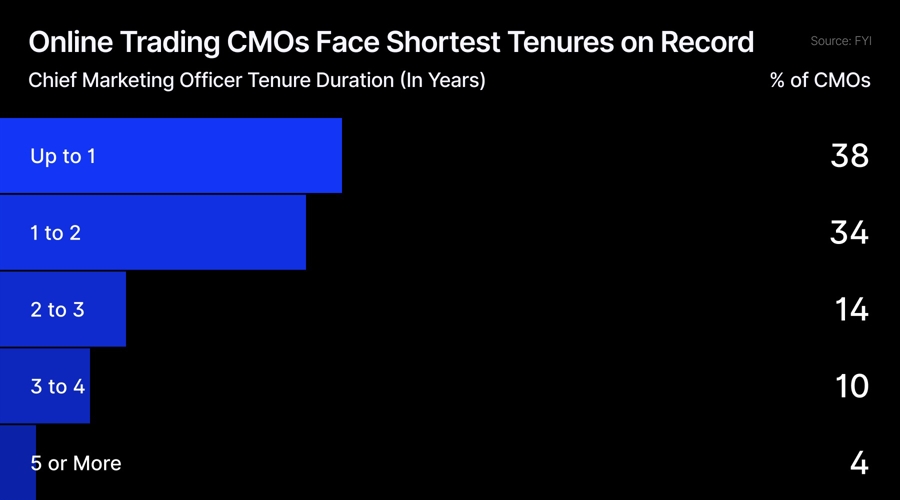
Nearly 40% of the CMOs studied lasted less than one year in their roles, while only 4% managed to stay five years or longer. The average tenure of 22.4 months is pulled higher by a handful of longer-serving executives, but the median tells a starker story.
“2024 showing the lowest average tenure in the entire dataset” suggests the problem is getting worse, not better. The data shows no correlation between company size and CMO turnover, with both large brokers and smaller firms experiencing similar churn rates.

“Our aim was to understand how long CMOs usually stay in these roles, why it’s so hard for them to last long-term and what this says about leadership and marketing in the online trading industry,” Christian Görgen from Marketing Agency FYI commented on the report’s findings.
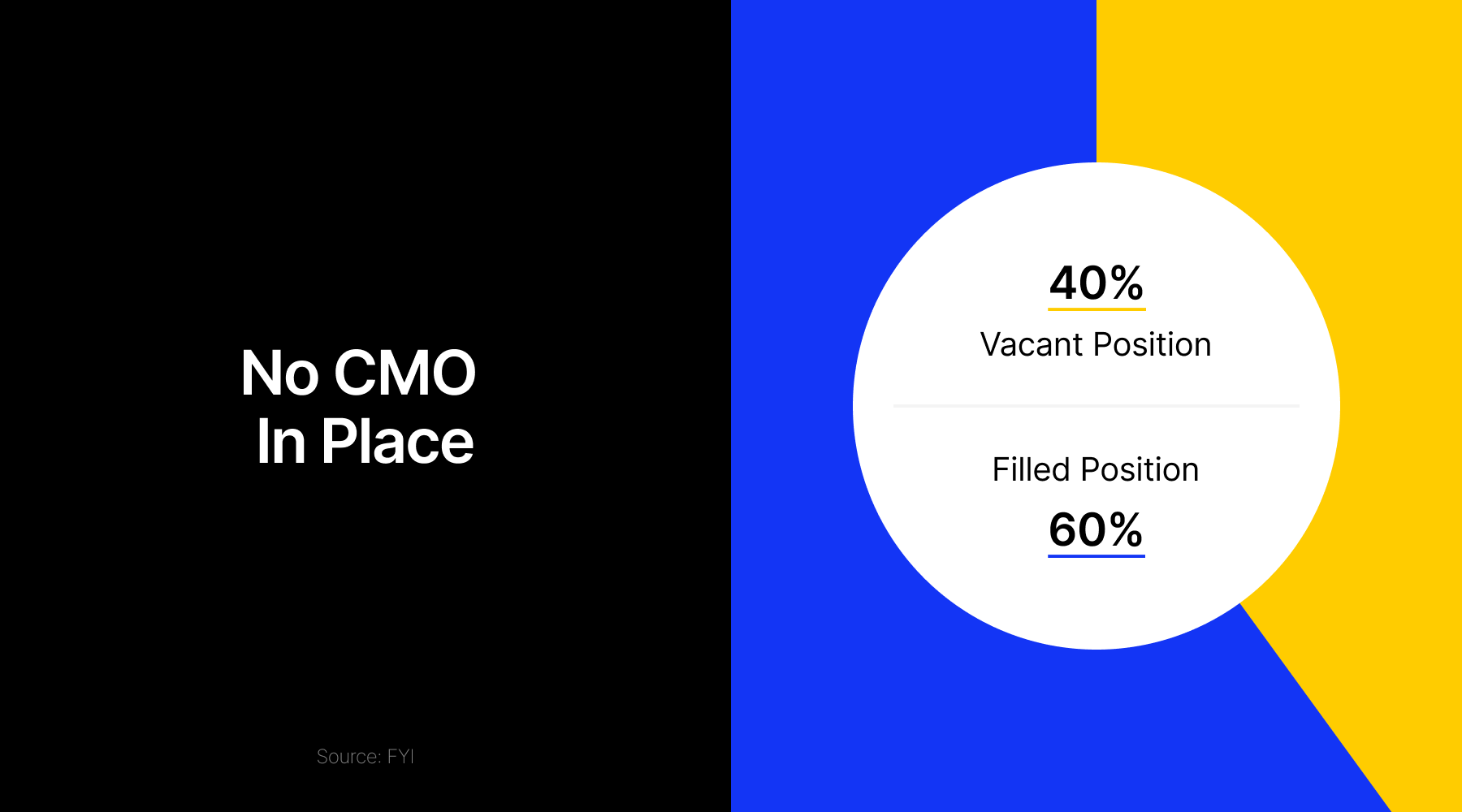
Perhaps more telling is what happens after these marketing chiefs leave: 40% of the brokers analyzed currently have no CMO in place following their previous executive's departure. Of the 40 brokers investigated, 16 had no one holding the official Chief Marketing Officer title at the time of review.
Industry Structure Creates Impossible Expectations
The research points to fundamental misalignment between what CMOs can deliver and what trading firm founders expect. Unlike technology startups that focus on user engagement metrics, CFD brokers prioritize traditional financial KPIs like customer acquisition cost and lifetime value.
“Founders want rapid user growth and quick revenue, often within months. But marketing isn't something you can switch on overnight,” Görgen adds. This creates a cycle where CMOs are brought in when growth stalls, expected to deliver immediate results, then removed when quick fixes don't materialize.
Especially since the CMO position is now the third-best-paid role in the industry, according to the latest data. Only financial and technology executives earn more. The average salary is currently €200,000 in Cyprus and nearly €230,000 in Dubai.

The competitive landscape doesn't help. Cyprus financial regulator CySEC lists 247 approved domains as of July 2025, with most offering similar services: multi-asset access, fast execution, and tight spreads. This commoditization makes differentiation difficult and puts additional pressure on marketing teams to find unique angles.
The research also highlights how heavily the industry relies on affiliate marketing, with brokers often paying 25% to over 50% of their revenue to affiliates and introducing brokers. While some affiliates provide legitimate value, the analysis describes a “darker side” involving “fake traffic, shady referrals and recycled client books.”
Successful Marketing Leaders Buck Traditional Mold
The few CMOs who do succeed in online trading don't fit the typical marketing executive profile. The research found that effective marketing leaders in this space “tend to be hands-on, highly technical, and closely aligned with the trading side of the business.”
Many come from within the company or have backgrounds in business, computer science, or trading rather than traditional marketing disciplines. “They follow structured frameworks, focus on execution, and know when to turn up the volume,” the analysis states.
This suggests the industry may need to rethink what it looks for in marketing leadership, moving away from brand-focused executives toward more operationally-minded professionals who understand the technical aspects of trading platforms.
The research concludes that traditional CMO models aren't working in online trading, and that sustainable change requires treating marketing as part of core business strategy rather than a support function brought in during growth emergencies.


