>
HSBC Profit Down 17% in 2014 as CEO's Secret Swiss Account Revealed
HSBC Profit Down 17% in 2014 as CEO's Secret Swiss Account Revealed
Monday,23/02/2015|10:59GMTby
Kenny Mariasin
HSBC's annual report was published Monday revealing profits as down 17% for the company in 2014. The report is published amid discovery of CEO Stuart Gulliver's secret Swiss HSBC account housing £5 million in bonuses.
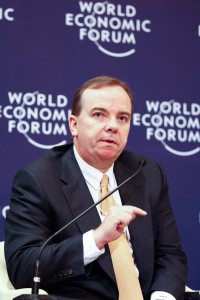
HSBC CEO Stuart Gulliver
HSBC's 2014 earnings results were reported by the company on Monday. The company reported profit before tax as down 17% in 2014 at $ 18,680 million. The report attributes this to "significant items including fines, settlements, UK customer redress and associated provisions."
As well, there was a decrease of $10,655 million in customer accounts from 2013 to $1,350,642 million.
CEO Stuart Gulliver's accompanying statement touched on a number of the challenges the company faced, not least of which its rate-fixing scandal.
He said, "HSBC was badly let down by a few individuals whose actions do not reflect the vast majority of employees who uphold the values and standards expected of the bank."
Group chairman Douglas Flint had this to say on rebuilding trust: "Restoration of trust in our industry remains a significant challenge as further misdeeds are uncovered but it is a challenge we must meet successfully.
"We owe this not just to society but to our staff to ensure they can be rightly proud of the organisation to which they have committed their careers." He goes on to call the misconduct as a painful strike at the heart of the company's identity.
Gulliver’s lawyers reminded the press that Gulliver was (and still is) tax domiciled in Hong Kong and that Hong Kong tax was paid on this income in full accordance with the law. Speaking to the Guardian, they explained that Gulliver “wanted his taxed bonus earnings to remain private from his then colleagues in Hong Kong, which they would not have done if he had kept them in an HSBC Hong Kong account.”
But his lawyers declined to answer why a Panamanian company was necessary, given that Swiss-held accounts already offered secrecy. The HSBC spokeswoman tried to allay concerns, “The Swiss account was set up in 1998 in the name of a Panamanian company for reasons of confidentiality and this had no other purpose and provided no tax or other advantage.”
Hong Kong Connection
A Swiss bank account under a shell Panamanian company might sound fishy but both Gulliver’s lawyers and the bank’s spokeswomen assert that no foul play is involved. Gulliver is a non-domiciled UK resident, having lived in Hong Kong since the 1980s. In Hong Kong, he became a permanent resident with right of abode along with his wife.
Despite his having moved back to the UK in 2003, the bank’s spokeswoman asserts that “Hong Kong continues to be their home.”
More importantly, the representative makes plain that full UK taxes have been paid “on the entirety of his worldwide earnings less a credit for tax paid additionally in Hong Kong (where he is also tax resident) on that part of the same earnings doubly taxed [since 2003].”
“It should not be a surprise that Mr Gulliver, who has spent the majority of his nearly 35-year career at HSBC in Hong Kong, has made his home there,” the representative adds. HSBC, she reminds, was “founded as the Hongkong and Shanghai Banking Corporation.”
Taking the opportunity to fluff up Gulliver’s feathers, the representative recounts, “When he was appointed Group CEO effective Jan 1, 2011 Mr Gulliver moved the CEO's office to London.
"His predecessor as CEO was based in Hong Kong. Mr Gulliver could have returned to Hong Kong in his new role and he would have then ceased being UK tax resident. But he decided it was in the best interests of the company to move the CEO's office to London.”
This, of course, still doesn't address why a Panamanian account (let alone two) was necessary.
Leak
This reveal comes as part of a massive leak in 2010 that uncovered the Swiss subsidiary’s illegal activity from 2005 to 2007, although the damaging revelations only caused a storm after a flurry of press attention recently.
The leak exposed the subsidiary colluding with hundreds of clients to conceal undeclared accounts. The bank even provided services to criminals and corrupt businessmen, handing out bricks of cash in various currencies.
As part of their media response, HSBC purchased a full-page ad for a formal apology letter in several UK newspapers. The advertisement came in the form of an open letter written and signed by HSBC Chief Executive Officer Stuart Gulliver saying, among other things, that recent coverage has been “painful.”
In trying to reassure customers and staff, whom the letter was initially meant for, Gulliver said that the Swiss branch of the international bank had since been completely overhauled and that HSBC had “absolutely no appetite to do business with clients who are evading their taxes or who fail to meet [their] financial crime compliance standards.”
It will be interesting to see what comes of this newest leak out of Europe's biggest bank.
HSBC CEO Stuart Gulliver
HSBC's 2014 earnings results were reported by the company on Monday. The company reported profit before tax as down 17% in 2014 at $ 18,680 million. The report attributes this to "significant items including fines, settlements, UK customer redress and associated provisions."
As well, there was a decrease of $10,655 million in customer accounts from 2013 to $1,350,642 million.
CEO Stuart Gulliver's accompanying statement touched on a number of the challenges the company faced, not least of which its rate-fixing scandal.
He said, "HSBC was badly let down by a few individuals whose actions do not reflect the vast majority of employees who uphold the values and standards expected of the bank."
Group chairman Douglas Flint had this to say on rebuilding trust: "Restoration of trust in our industry remains a significant challenge as further misdeeds are uncovered but it is a challenge we must meet successfully.
"We owe this not just to society but to our staff to ensure they can be rightly proud of the organisation to which they have committed their careers." He goes on to call the misconduct as a painful strike at the heart of the company's identity.
Gulliver’s lawyers reminded the press that Gulliver was (and still is) tax domiciled in Hong Kong and that Hong Kong tax was paid on this income in full accordance with the law. Speaking to the Guardian, they explained that Gulliver “wanted his taxed bonus earnings to remain private from his then colleagues in Hong Kong, which they would not have done if he had kept them in an HSBC Hong Kong account.”
But his lawyers declined to answer why a Panamanian company was necessary, given that Swiss-held accounts already offered secrecy. The HSBC spokeswoman tried to allay concerns, “The Swiss account was set up in 1998 in the name of a Panamanian company for reasons of confidentiality and this had no other purpose and provided no tax or other advantage.”
Hong Kong Connection
A Swiss bank account under a shell Panamanian company might sound fishy but both Gulliver’s lawyers and the bank’s spokeswomen assert that no foul play is involved. Gulliver is a non-domiciled UK resident, having lived in Hong Kong since the 1980s. In Hong Kong, he became a permanent resident with right of abode along with his wife.
Despite his having moved back to the UK in 2003, the bank’s spokeswoman asserts that “Hong Kong continues to be their home.”
More importantly, the representative makes plain that full UK taxes have been paid “on the entirety of his worldwide earnings less a credit for tax paid additionally in Hong Kong (where he is also tax resident) on that part of the same earnings doubly taxed [since 2003].”
“It should not be a surprise that Mr Gulliver, who has spent the majority of his nearly 35-year career at HSBC in Hong Kong, has made his home there,” the representative adds. HSBC, she reminds, was “founded as the Hongkong and Shanghai Banking Corporation.”
Taking the opportunity to fluff up Gulliver’s feathers, the representative recounts, “When he was appointed Group CEO effective Jan 1, 2011 Mr Gulliver moved the CEO's office to London.
"His predecessor as CEO was based in Hong Kong. Mr Gulliver could have returned to Hong Kong in his new role and he would have then ceased being UK tax resident. But he decided it was in the best interests of the company to move the CEO's office to London.”
This, of course, still doesn't address why a Panamanian account (let alone two) was necessary.
Leak
This reveal comes as part of a massive leak in 2010 that uncovered the Swiss subsidiary’s illegal activity from 2005 to 2007, although the damaging revelations only caused a storm after a flurry of press attention recently.
The leak exposed the subsidiary colluding with hundreds of clients to conceal undeclared accounts. The bank even provided services to criminals and corrupt businessmen, handing out bricks of cash in various currencies.
As part of their media response, HSBC purchased a full-page ad for a formal apology letter in several UK newspapers. The advertisement came in the form of an open letter written and signed by HSBC Chief Executive Officer Stuart Gulliver saying, among other things, that recent coverage has been “painful.”
In trying to reassure customers and staff, whom the letter was initially meant for, Gulliver said that the Swiss branch of the international bank had since been completely overhauled and that HSBC had “absolutely no appetite to do business with clients who are evading their taxes or who fail to meet [their] financial crime compliance standards.”
It will be interesting to see what comes of this newest leak out of Europe's biggest bank.
Would You Bet on the COVID Lab-Leak Theory? Prediction Markets Now Trade the Past
Featured Videos
CMC Founder Downplays Volatility Hit; Devexperts Names CEO
CMC Founder Downplays Volatility Hit; Devexperts Names CEO
CMC Founder Downplays Volatility Hit; Devexperts Names CEO
CMC Founder Downplays Volatility Hit; Devexperts Names CEO
Today’s financial news recap covers low volatility pressures brokers, Devexperts names a new CEO, Saxo cuts onboarding time, and OKX reaches a 25 billion dollar valuation.
Finance Magnates Daily Recap brings you the latest news from forex and CFD brokers, fintech, payments, cryptocurrency, digital assets, trading platforms, financial regulation and global markets.
Get the key company news, executive moves, deals, regulatory updates and market developments of the day, in just a few minutes. New episodes published every weekday.
Read more: https://www.financemagnates.com
#FinanceMagnates #ForexNews #FintechNews
Today’s financial news recap covers low volatility pressures brokers, Devexperts names a new CEO, Saxo cuts onboarding time, and OKX reaches a 25 billion dollar valuation.
Finance Magnates Daily Recap brings you the latest news from forex and CFD brokers, fintech, payments, cryptocurrency, digital assets, trading platforms, financial regulation and global markets.
Get the key company news, executive moves, deals, regulatory updates and market developments of the day, in just a few minutes. New episodes published every weekday.
Read more: https://www.financemagnates.com
#FinanceMagnates #ForexNews #FintechNews
Today’s financial news recap covers low volatility pressures brokers, Devexperts names a new CEO, Saxo cuts onboarding time, and OKX reaches a 25 billion dollar valuation.
Finance Magnates Daily Recap brings you the latest news from forex and CFD brokers, fintech, payments, cryptocurrency, digital assets, trading platforms, financial regulation and global markets.
Get the key company news, executive moves, deals, regulatory updates and market developments of the day, in just a few minutes. New episodes published every weekday.
Read more: https://www.financemagnates.com
#FinanceMagnates #ForexNews #FintechNews
Today’s financial news recap covers low volatility pressures brokers, Devexperts names a new CEO, Saxo cuts onboarding time, and OKX reaches a 25 billion dollar valuation.
Finance Magnates Daily Recap brings you the latest news from forex and CFD brokers, fintech, payments, cryptocurrency, digital assets, trading platforms, financial regulation and global markets.
Get the key company news, executive moves, deals, regulatory updates and market developments of the day, in just a few minutes. New episodes published every weekday.
Read more: https://www.financemagnates.com
#FinanceMagnates #ForexNews #FintechNews
Today’s financial news recap covers Trade Nation buys FXCM's UK client book, Trading 212 reports higher revenue, the CFTC's move to allow perpetual index futures.
Finance Magnates Daily Recap brings you the latest news from forex and CFD brokers, fintech, payments, cryptocurrency, digital assets, trading platforms, financial regulation and global markets.
Get the key company news, executive moves, deals, regulatory updates and market developments of the day, in just a few minutes. New episodes published every weekday.
Read more: https://www.financemagnates.com
#FinanceMagnates #ForexNews #FintechNews
Today’s financial news recap covers Trade Nation buys FXCM's UK client book, Trading 212 reports higher revenue, the CFTC's move to allow perpetual index futures.
Finance Magnates Daily Recap brings you the latest news from forex and CFD brokers, fintech, payments, cryptocurrency, digital assets, trading platforms, financial regulation and global markets.
Get the key company news, executive moves, deals, regulatory updates and market developments of the day, in just a few minutes. New episodes published every weekday.
Read more: https://www.financemagnates.com
#FinanceMagnates #ForexNews #FintechNews
Today’s financial news recap covers Trade Nation buys FXCM's UK client book, Trading 212 reports higher revenue, the CFTC's move to allow perpetual index futures.
Finance Magnates Daily Recap brings you the latest news from forex and CFD brokers, fintech, payments, cryptocurrency, digital assets, trading platforms, financial regulation and global markets.
Get the key company news, executive moves, deals, regulatory updates and market developments of the day, in just a few minutes. New episodes published every weekday.
Read more: https://www.financemagnates.com
#FinanceMagnates #ForexNews #FintechNews
Today’s financial news recap covers Trade Nation buys FXCM's UK client book, Trading 212 reports higher revenue, the CFTC's move to allow perpetual index futures.
Finance Magnates Daily Recap brings you the latest news from forex and CFD brokers, fintech, payments, cryptocurrency, digital assets, trading platforms, financial regulation and global markets.
Get the key company news, executive moves, deals, regulatory updates and market developments of the day, in just a few minutes. New episodes published every weekday.
Read more: https://www.financemagnates.com
#FinanceMagnates #ForexNews #FintechNews
Today’s financial news recap covers Trade Nation buys FXCM's UK client book, Trading 212 reports higher revenue, the CFTC's move to allow perpetual index futures.
Finance Magnates Daily Recap brings you the latest news from forex and CFD brokers, fintech, payments, cryptocurrency, digital assets, trading platforms, financial regulation and global markets.
Get the key company news, executive moves, deals, regulatory updates and market developments of the day, in just a few minutes. New episodes published every weekday.
Read more: https://www.financemagnates.com
#FinanceMagnates #ForexNews #FintechNews
Today’s financial news recap covers Trade Nation buys FXCM's UK client book, Trading 212 reports higher revenue, the CFTC's move to allow perpetual index futures.
Finance Magnates Daily Recap brings you the latest news from forex and CFD brokers, fintech, payments, cryptocurrency, digital assets, trading platforms, financial regulation and global markets.
Get the key company news, executive moves, deals, regulatory updates and market developments of the day, in just a few minutes. New episodes published every weekday.
Read more: https://www.financemagnates.com
#FinanceMagnates #ForexNews #FintechNews
Your career isn’t a linear path.
Your career isn’t a linear path.
Your career isn’t a linear path.
Your career isn’t a linear path.
Your career isn’t a linear path.
Your career isn’t a linear path.
Roles change. Career goals change. Sometimes you want a completely new challenge.
But the skills and knowledge you build along the way can stay with you and give you something to build on.
For Jeff Patterson, that continued growth is key to long-term career development.
You bring the skills. FM Academy helps you build the knowledge.
#FMAcademy #FinanceMagnates #FinanceCareers #ProfessionalDevelopment #Fintech
Roles change. Career goals change. Sometimes you want a completely new challenge.
But the skills and knowledge you build along the way can stay with you and give you something to build on.
For Jeff Patterson, that continued growth is key to long-term career development.
You bring the skills. FM Academy helps you build the knowledge.
#FMAcademy #FinanceMagnates #FinanceCareers #ProfessionalDevelopment #Fintech
Roles change. Career goals change. Sometimes you want a completely new challenge.
But the skills and knowledge you build along the way can stay with you and give you something to build on.
For Jeff Patterson, that continued growth is key to long-term career development.
You bring the skills. FM Academy helps you build the knowledge.
#FMAcademy #FinanceMagnates #FinanceCareers #ProfessionalDevelopment #Fintech
Roles change. Career goals change. Sometimes you want a completely new challenge.
But the skills and knowledge you build along the way can stay with you and give you something to build on.
For Jeff Patterson, that continued growth is key to long-term career development.
You bring the skills. FM Academy helps you build the knowledge.
#FMAcademy #FinanceMagnates #FinanceCareers #ProfessionalDevelopment #Fintech
Roles change. Career goals change. Sometimes you want a completely new challenge.
But the skills and knowledge you build along the way can stay with you and give you something to build on.
For Jeff Patterson, that continued growth is key to long-term career development.
You bring the skills. FM Academy helps you build the knowledge.
#FMAcademy #FinanceMagnates #FinanceCareers #ProfessionalDevelopment #Fintech
Roles change. Career goals change. Sometimes you want a completely new challenge.
But the skills and knowledge you build along the way can stay with you and give you something to build on.
For Jeff Patterson, that continued growth is key to long-term career development.
You bring the skills. FM Academy helps you build the knowledge.
#FMAcademy #FinanceMagnates #FinanceCareers #ProfessionalDevelopment #Fintech
IG Group Tech Chiefs Exit; Pepperstone Revenue Grows
IG Group Tech Chiefs Exit; Pepperstone Revenue Grows
IG Group Tech Chiefs Exit; Pepperstone Revenue Grows
IG Group Tech Chiefs Exit; Pepperstone Revenue Grows
IG Group Tech Chiefs Exit; Pepperstone Revenue Grows
IG Group Tech Chiefs Exit; Pepperstone Revenue Grows
Today’s financial news recap covers IG Group loses two technology chiefs, Pepperstone reports double-digit growth, and eToro backs a euro stablecoin.
Finance Magnates Daily Recap brings you the latest news from forex and CFD brokers, fintech, payments, cryptocurrency, digital assets, trading platforms, financial regulation and global markets.
Get the key company news, executive moves, deals, regulatory updates and market developments of the day, in just a few minutes. New episodes published every weekday.
Read more: https://www.financemagnates.com
#FinanceMagnates #ForexNews #FintechNews
Today’s financial news recap covers IG Group loses two technology chiefs, Pepperstone reports double-digit growth, and eToro backs a euro stablecoin.
Finance Magnates Daily Recap brings you the latest news from forex and CFD brokers, fintech, payments, cryptocurrency, digital assets, trading platforms, financial regulation and global markets.
Get the key company news, executive moves, deals, regulatory updates and market developments of the day, in just a few minutes. New episodes published every weekday.
Read more: https://www.financemagnates.com
#FinanceMagnates #ForexNews #FintechNews
Today’s financial news recap covers IG Group loses two technology chiefs, Pepperstone reports double-digit growth, and eToro backs a euro stablecoin.
Finance Magnates Daily Recap brings you the latest news from forex and CFD brokers, fintech, payments, cryptocurrency, digital assets, trading platforms, financial regulation and global markets.
Get the key company news, executive moves, deals, regulatory updates and market developments of the day, in just a few minutes. New episodes published every weekday.
Read more: https://www.financemagnates.com
#FinanceMagnates #ForexNews #FintechNews
Today’s financial news recap covers IG Group loses two technology chiefs, Pepperstone reports double-digit growth, and eToro backs a euro stablecoin.
Finance Magnates Daily Recap brings you the latest news from forex and CFD brokers, fintech, payments, cryptocurrency, digital assets, trading platforms, financial regulation and global markets.
Get the key company news, executive moves, deals, regulatory updates and market developments of the day, in just a few minutes. New episodes published every weekday.
Read more: https://www.financemagnates.com
#FinanceMagnates #ForexNews #FintechNews
Today’s financial news recap covers IG Group loses two technology chiefs, Pepperstone reports double-digit growth, and eToro backs a euro stablecoin.
Finance Magnates Daily Recap brings you the latest news from forex and CFD brokers, fintech, payments, cryptocurrency, digital assets, trading platforms, financial regulation and global markets.
Get the key company news, executive moves, deals, regulatory updates and market developments of the day, in just a few minutes. New episodes published every weekday.
Read more: https://www.financemagnates.com
#FinanceMagnates #ForexNews #FintechNews
Today’s financial news recap covers IG Group loses two technology chiefs, Pepperstone reports double-digit growth, and eToro backs a euro stablecoin.
Finance Magnates Daily Recap brings you the latest news from forex and CFD brokers, fintech, payments, cryptocurrency, digital assets, trading platforms, financial regulation and global markets.
Get the key company news, executive moves, deals, regulatory updates and market developments of the day, in just a few minutes. New episodes published every weekday.
Read more: https://www.financemagnates.com
#FinanceMagnates #ForexNews #FintechNews
Today’s financial news recap covers IG Group expects lower Q3 revenue, MetaQuotes adds Benzinga news, Match-Trader launches an MCP, and brokers weigh build versus buy.
Finance Magnates Daily Recap brings you the latest news from forex and CFD brokers, fintech, payments, cryptocurrency, digital assets, trading platforms, financial regulation and global markets.
Get the key company news, executive moves, deals, regulatory updates and market developments of the day, in just a few minutes. New episodes published every weekday.
Read more: https://www.financemagnates.com
#FinanceMagnates #ForexNews #FintechNews
Today’s financial news recap covers IG Group expects lower Q3 revenue, MetaQuotes adds Benzinga news, Match-Trader launches an MCP, and brokers weigh build versus buy.
Finance Magnates Daily Recap brings you the latest news from forex and CFD brokers, fintech, payments, cryptocurrency, digital assets, trading platforms, financial regulation and global markets.
Get the key company news, executive moves, deals, regulatory updates and market developments of the day, in just a few minutes. New episodes published every weekday.
Read more: https://www.financemagnates.com
#FinanceMagnates #ForexNews #FintechNews
Today’s financial news recap covers IG Group expects lower Q3 revenue, MetaQuotes adds Benzinga news, Match-Trader launches an MCP, and brokers weigh build versus buy.
Finance Magnates Daily Recap brings you the latest news from forex and CFD brokers, fintech, payments, cryptocurrency, digital assets, trading platforms, financial regulation and global markets.
Get the key company news, executive moves, deals, regulatory updates and market developments of the day, in just a few minutes. New episodes published every weekday.
Read more: https://www.financemagnates.com
#FinanceMagnates #ForexNews #FintechNews
Today’s financial news recap covers IG Group expects lower Q3 revenue, MetaQuotes adds Benzinga news, Match-Trader launches an MCP, and brokers weigh build versus buy.
Finance Magnates Daily Recap brings you the latest news from forex and CFD brokers, fintech, payments, cryptocurrency, digital assets, trading platforms, financial regulation and global markets.
Get the key company news, executive moves, deals, regulatory updates and market developments of the day, in just a few minutes. New episodes published every weekday.
Read more: https://www.financemagnates.com
#FinanceMagnates #ForexNews #FintechNews
Today’s financial news recap covers IG Group expects lower Q3 revenue, MetaQuotes adds Benzinga news, Match-Trader launches an MCP, and brokers weigh build versus buy.
Finance Magnates Daily Recap brings you the latest news from forex and CFD brokers, fintech, payments, cryptocurrency, digital assets, trading platforms, financial regulation and global markets.
Get the key company news, executive moves, deals, regulatory updates and market developments of the day, in just a few minutes. New episodes published every weekday.
Read more: https://www.financemagnates.com
#FinanceMagnates #ForexNews #FintechNews
Today’s financial news recap covers IG Group expects lower Q3 revenue, MetaQuotes adds Benzinga news, Match-Trader launches an MCP, and brokers weigh build versus buy.
Finance Magnates Daily Recap brings you the latest news from forex and CFD brokers, fintech, payments, cryptocurrency, digital assets, trading platforms, financial regulation and global markets.
Get the key company news, executive moves, deals, regulatory updates and market developments of the day, in just a few minutes. New episodes published every weekday.
Read more: https://www.financemagnates.com
#FinanceMagnates #ForexNews #FintechNews