Conflicts from Ukraine to Iran change global FX, with daily swings wiping out monthly profits.
Fintech Grain has tripled its growth in this new reality, as companies seek AI-powered solutions to navigate choppy market waters.
Currency
markets are experiencing their most turbulent period in almost two decades,
with daily swings of 2–6% wiping out entire months of trading profits. Geopolitical tensions from Ukraine to the Middle East reshape global financial
dynamics.
Why the Dollar's Old Rules
Don't Work in Today's Volatile Markets
The
volatility surge is forcing businesses to rethink their foreign exchange
strategies, particularly as traditional correlations break down. The dollar no
longer reliably rises when markets fall, while Japan's hawkish monetary policy
shift and Europe's defense spending ramp-up add new variables to an already
complex equation.
“We're
clearly in the early stages of a prolonged period of uncertainty, which is
driving volatility across financial markets, particularly in FX,” commented Grain,
the Tel Aviv-based fintech that processes over $150 million monthly across more
than 50 currencies.
The
company, co-founded by former Barclays Israel COO Michal Beinish, has seen
transaction volumes grow at an annualized rate of over 3x as businesses
struggle with conventional hedging tools that executives describe as
“expensive, blunt, and often too slow” to handle rapid market shifts.
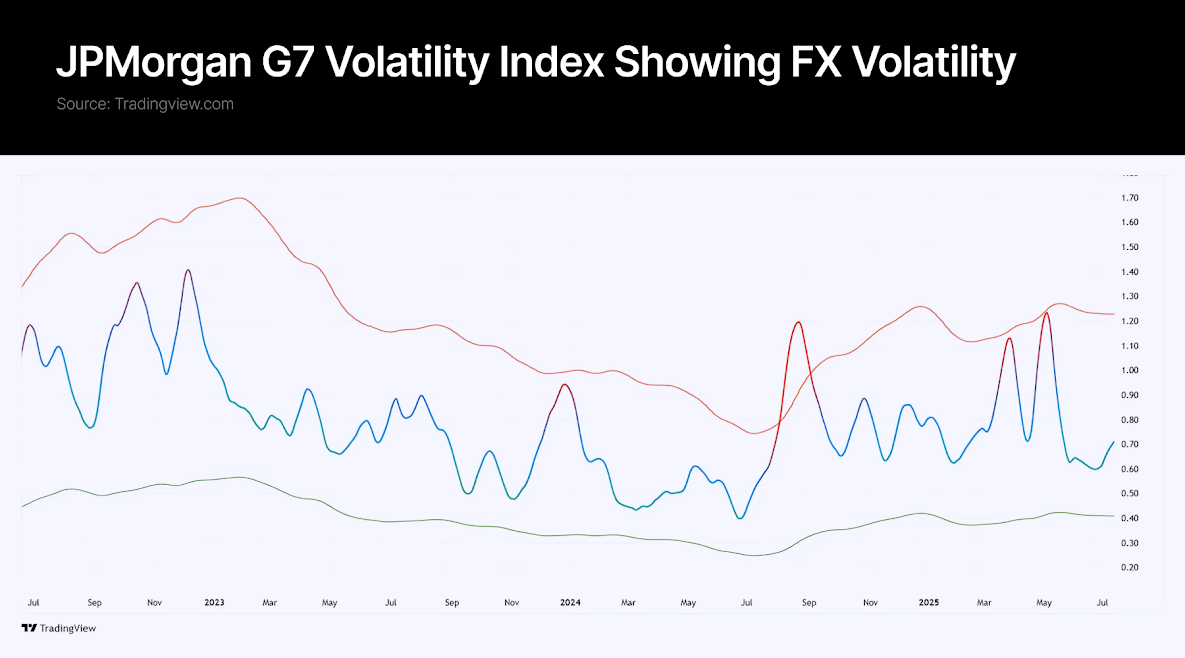
JPMorgan G7 volatility index
Middle East Conflicts
Ripple Through Global Markets
For
companies operating across borders, a single currency move triggered by
tariffs, elections, or rate decisions can erase an entire month's gains.
Traditional hedging approaches are falling short as correlations weaken and
uncertainty spreads to formerly stable G10 currencies.

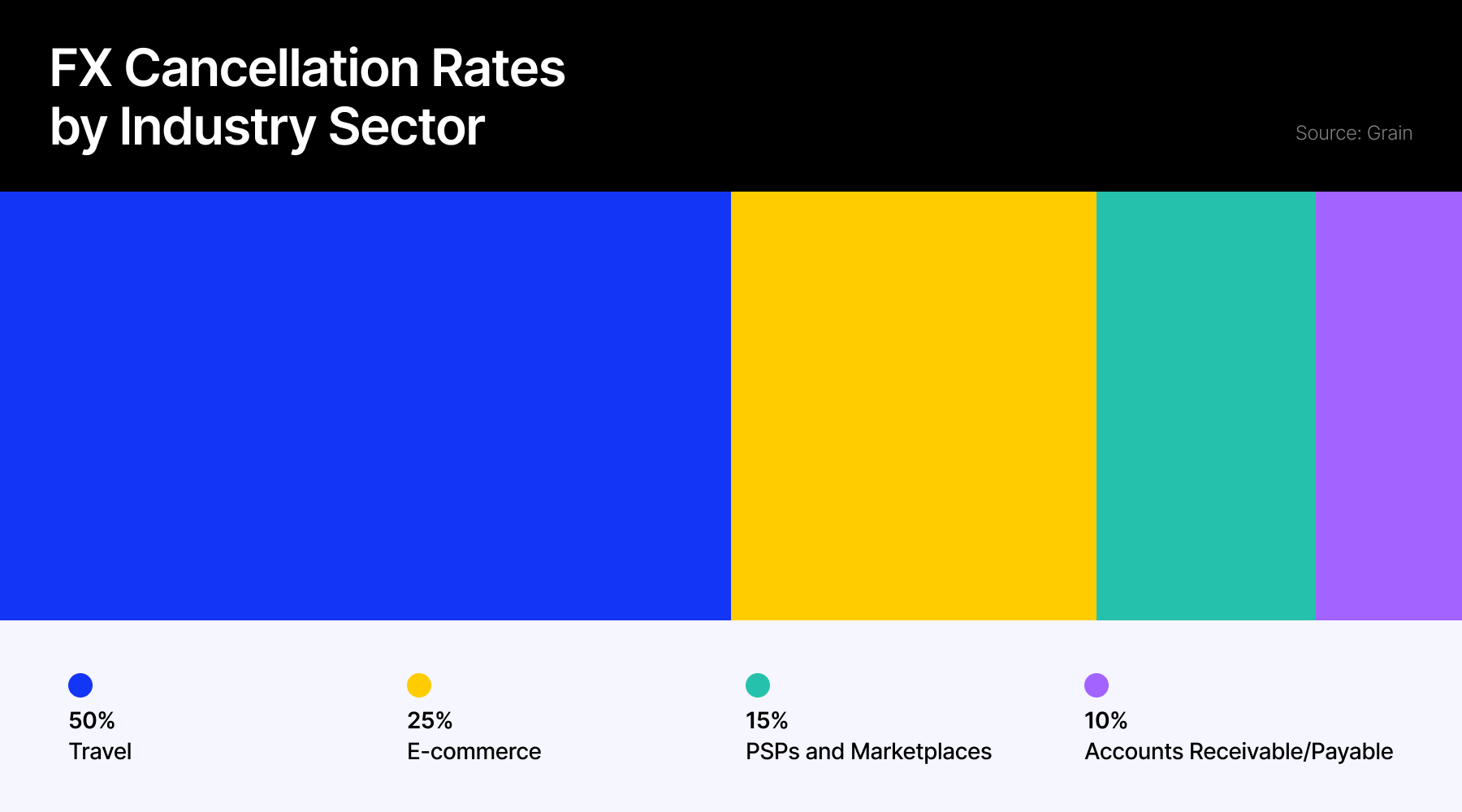
The
company's data reveals telling patterns about how geopolitical stress affects
cross-border commerce. Grain observes cancellation rates of approximately 50%
in travel, 25% in e-commerce, 15% in payment service providers and
marketplaces, and 10% in accounts receivable/payable use cases.
“As
geopolitical tensions rise, we've observed a growing correlation between
cancellation rates and FX market volatility,” Golan noted. The company
processes up to 200 million transactions daily for some customers, giving it
unusual visibility into real-time market behavior.
The fintech
uses artificial intelligence and machine learning to assume FX risk in
scenarios traditionally considered unsolvable at scale, absorbing
mark-to-market risk on cancellations so customers don't need to post collateral
or manage exposure themselves.
AI-Powered Pricing Adapts
to Volatility
Grain's
pricing engine analyzes real-time behavioral data and live market inputs to
personalize FX rates for individual users. Two users may receive rates that
differ by up to 30% based purely on risk and reliability assessments.
The
company's approach of integrating directly into customer systems provides
visibility into transaction flows, allowing it to aggregate risk across
portfolios and unlock pricing efficiency that can deliver FX savings up to 5%
per transaction.
Businesses Seek New
Solutions
The
prolonged uncertainty is accelerating adoption of automated, data-driven FX
risk management tools as businesses realize that static approaches leave them
vulnerable to market shifts and competitive pressure.
“Prolonged
uncertainty is accelerating the shift toward automated, data-driven, and
AI-powered FX risk management. But more importantly, it's highlighting FX as a
powerful competitive lever,” Golan said.
The company
serves payment service providers, marketplaces, accounts payable and receivable
platforms, fintechs, and payroll providers with globally distributed customer
bases. Its FX volume spreads fairly evenly across the four major trading
sessions in Tokyo, London, New York, and Sydney, with a skew toward the Western
Hemisphere.
“We're
seeing rising demand across the board, including in traditionally ‘stable’
currencies like those in the G10. Businesses are realizing that static, legacy
approaches to FX management leave them vulnerable to market shifts and
competitive pressure,” Grain’s CEO concluded.
Currency
markets are experiencing their most turbulent period in almost two decades,
with daily swings of 2–6% wiping out entire months of trading profits. Geopolitical tensions from Ukraine to the Middle East reshape global financial
dynamics.
Why the Dollar's Old Rules
Don't Work in Today's Volatile Markets
The
volatility surge is forcing businesses to rethink their foreign exchange
strategies, particularly as traditional correlations break down. The dollar no
longer reliably rises when markets fall, while Japan's hawkish monetary policy
shift and Europe's defense spending ramp-up add new variables to an already
complex equation.
“We're
clearly in the early stages of a prolonged period of uncertainty, which is
driving volatility across financial markets, particularly in FX,” commented Grain,
the Tel Aviv-based fintech that processes over $150 million monthly across more
than 50 currencies.
The
company, co-founded by former Barclays Israel COO Michal Beinish, has seen
transaction volumes grow at an annualized rate of over 3x as businesses
struggle with conventional hedging tools that executives describe as
“expensive, blunt, and often too slow” to handle rapid market shifts.
JPMorgan G7 volatility index
Middle East Conflicts
Ripple Through Global Markets
For
companies operating across borders, a single currency move triggered by
tariffs, elections, or rate decisions can erase an entire month's gains.
Traditional hedging approaches are falling short as correlations weaken and
uncertainty spreads to formerly stable G10 currencies.
The
company's data reveals telling patterns about how geopolitical stress affects
cross-border commerce. Grain observes cancellation rates of approximately 50%
in travel, 25% in e-commerce, 15% in payment service providers and
marketplaces, and 10% in accounts receivable/payable use cases.
“As
geopolitical tensions rise, we've observed a growing correlation between
cancellation rates and FX market volatility,” Golan noted. The company
processes up to 200 million transactions daily for some customers, giving it
unusual visibility into real-time market behavior.
The fintech
uses artificial intelligence and machine learning to assume FX risk in
scenarios traditionally considered unsolvable at scale, absorbing
mark-to-market risk on cancellations so customers don't need to post collateral
or manage exposure themselves.
AI-Powered Pricing Adapts
to Volatility
Grain's
pricing engine analyzes real-time behavioral data and live market inputs to
personalize FX rates for individual users. Two users may receive rates that
differ by up to 30% based purely on risk and reliability assessments.
The
company's approach of integrating directly into customer systems provides
visibility into transaction flows, allowing it to aggregate risk across
portfolios and unlock pricing efficiency that can deliver FX savings up to 5%
per transaction.
Businesses Seek New
Solutions
The
prolonged uncertainty is accelerating adoption of automated, data-driven FX
risk management tools as businesses realize that static approaches leave them
vulnerable to market shifts and competitive pressure.
“Prolonged
uncertainty is accelerating the shift toward automated, data-driven, and
AI-powered FX risk management. But more importantly, it's highlighting FX as a
powerful competitive lever,” Golan said.
The company
serves payment service providers, marketplaces, accounts payable and receivable
platforms, fintechs, and payroll providers with globally distributed customer
bases. Its FX volume spreads fairly evenly across the four major trading
sessions in Tokyo, London, New York, and Sydney, with a skew toward the Western
Hemisphere.
“We're
seeing rising demand across the board, including in traditionally ‘stable’
currencies like those in the G10. Businesses are realizing that static, legacy
approaches to FX management leave them vulnerable to market shifts and
competitive pressure,” Grain’s CEO concluded.
Damian Chmiel is a Senior Analyst & Editor at Finance Magnates with more than 15 years of experience in the CFD and online trading industry. Active as both a trader and journalist since 2010, he focuses on broker coverage, fintech innovation, and regulatory developments across Europe, the Middle East, and Asia.
His work includes interviews with C-level leaders at major brokerages and fintech platforms, as well as co-authoring Finance Magnates’ quarterly industry benchmarking reports. Damian’s reporting is data-driven, market-aware, and grounded in direct industry engagement. His analysis and commentary have also been cited by external media outlets, including Investing.com, Binance, The Asset, Stockhead, and Dispatch.
Education:
MA in Finance and Accounting, Cracow University of Economics
Today’s Tuesday, the 9th of June 2026, and these are our main stories: eToro’s customer assets climbed back above $20 billion, Prop trading model in prediction markets, and Leverate launched a new AI assistant for brokers and traders.
War Stories: Lessons from 20 Years in Markets (the pain, the pitfalls and the profits)
The trades that taught me the most aren't the ones that worked. They're the ones that didn't — or the ones I almost caught and didn't have the nerve to ride. In this session, I'll tell you about the Brexit miss, the SNB shocker that nearly handed me a 5400% return, the BoJ surprise that punched me in the gut, and a few wins along the way. Each story carries a lesson, but the lessons aren't the point. Everyone who trades long enough collects a portfolio of moments like these; what separates the people who stay in the game is what they do with them.
The Engine and the Fuel: How AI & Data Drives African Future
If AI is the engine, data is the fuel. Without quality, accessible data, AI cannot work well; and without the right mindset, data remains just numbers instead of insight. In this session, leading experts will explore how AI and data are democratizing opportunities for businesses and personal growth. Discover practical ways to make AI accessible today, anticipate its transformative impact on African markets, and learn actionable steps to prepare for what's next. Let's talk about:
-How AI and data drive business efficiency and innovation in trading and fintech
-AI tools to elevate trading or business strategies
-How to access and maximise the power of data and AI
-Emerging AI and data trends in Africa and their economic ripple effects
If AI is the engine, data is the fuel. Without quality, accessible data, AI cannot work well; and without the right mindset, data remains just numbers instead of insight. In this session, leading experts will explore how AI and data are democratizing opportunities for businesses and personal growth. Discover practical ways to make AI accessible today, anticipate its transformative impact on African markets, and learn actionable steps to prepare for what's next. Let's talk about:
-How AI and data drive business efficiency and innovation in trading and fintech
-AI tools to elevate trading or business strategies
-How to access and maximise the power of data and AI
-Emerging AI and data trends in Africa and their economic ripple effects
If AI is the engine, data is the fuel. Without quality, accessible data, AI cannot work well; and without the right mindset, data remains just numbers instead of insight. In this session, leading experts will explore how AI and data are democratizing opportunities for businesses and personal growth. Discover practical ways to make AI accessible today, anticipate its transformative impact on African markets, and learn actionable steps to prepare for what's next. Let's talk about:
-How AI and data drive business efficiency and innovation in trading and fintech
-AI tools to elevate trading or business strategies
-How to access and maximise the power of data and AI
-Emerging AI and data trends in Africa and their economic ripple effects
If AI is the engine, data is the fuel. Without quality, accessible data, AI cannot work well; and without the right mindset, data remains just numbers instead of insight. In this session, leading experts will explore how AI and data are democratizing opportunities for businesses and personal growth. Discover practical ways to make AI accessible today, anticipate its transformative impact on African markets, and learn actionable steps to prepare for what's next. Let's talk about:
-How AI and data drive business efficiency and innovation in trading and fintech
-AI tools to elevate trading or business strategies
-How to access and maximise the power of data and AI
-Emerging AI and data trends in Africa and their economic ripple effects
If AI is the engine, data is the fuel. Without quality, accessible data, AI cannot work well; and without the right mindset, data remains just numbers instead of insight. In this session, leading experts will explore how AI and data are democratizing opportunities for businesses and personal growth. Discover practical ways to make AI accessible today, anticipate its transformative impact on African markets, and learn actionable steps to prepare for what's next. Let's talk about:
-How AI and data drive business efficiency and innovation in trading and fintech
-AI tools to elevate trading or business strategies
-How to access and maximise the power of data and AI
-Emerging AI and data trends in Africa and their economic ripple effects
If AI is the engine, data is the fuel. Without quality, accessible data, AI cannot work well; and without the right mindset, data remains just numbers instead of insight. In this session, leading experts will explore how AI and data are democratizing opportunities for businesses and personal growth. Discover practical ways to make AI accessible today, anticipate its transformative impact on African markets, and learn actionable steps to prepare for what's next. Let's talk about:
-How AI and data drive business efficiency and innovation in trading and fintech
-AI tools to elevate trading or business strategies
-How to access and maximise the power of data and AI
-Emerging AI and data trends in Africa and their economic ripple effects
Inside My Best Trade with Jimmy Moyaha
Most market post-mortems describe what happened to prices. Few describe what happened in the trading room while the position was open: the entry conviction, the moments that tested it, and the exit decision that closed the book.
This session brings one seasoned trader to the stage for an unfiltered account of the position that still defines how they think about markets.
Attendees will walk away with:
-A first-hand account of how a conviction trade is built, from thesis and entry through position management and exit
-Understanding of what turns a market observation into a live position, and what holds it when conditions shift
-Insight into how timing, execution quality, and market structure shaped the final result
-Perspective on what the trade revealed about edge, risk tolerance, and when to hold through a position moving against you
-Clarity on what separates a well-built trade from a well-timed one
Most market post-mortems describe what happened to prices. Few describe what happened in the trading room while the position was open: the entry conviction, the moments that tested it, and the exit decision that closed the book.
This session brings one seasoned trader to the stage for an unfiltered account of the position that still defines how they think about markets.
Attendees will walk away with:
-A first-hand account of how a conviction trade is built, from thesis and entry through position management and exit
-Understanding of what turns a market observation into a live position, and what holds it when conditions shift
-Insight into how timing, execution quality, and market structure shaped the final result
-Perspective on what the trade revealed about edge, risk tolerance, and when to hold through a position moving against you
-Clarity on what separates a well-built trade from a well-timed one
Most market post-mortems describe what happened to prices. Few describe what happened in the trading room while the position was open: the entry conviction, the moments that tested it, and the exit decision that closed the book.
This session brings one seasoned trader to the stage for an unfiltered account of the position that still defines how they think about markets.
Attendees will walk away with:
-A first-hand account of how a conviction trade is built, from thesis and entry through position management and exit
-Understanding of what turns a market observation into a live position, and what holds it when conditions shift
-Insight into how timing, execution quality, and market structure shaped the final result
-Perspective on what the trade revealed about edge, risk tolerance, and when to hold through a position moving against you
-Clarity on what separates a well-built trade from a well-timed one
Most market post-mortems describe what happened to prices. Few describe what happened in the trading room while the position was open: the entry conviction, the moments that tested it, and the exit decision that closed the book.
This session brings one seasoned trader to the stage for an unfiltered account of the position that still defines how they think about markets.
Attendees will walk away with:
-A first-hand account of how a conviction trade is built, from thesis and entry through position management and exit
-Understanding of what turns a market observation into a live position, and what holds it when conditions shift
-Insight into how timing, execution quality, and market structure shaped the final result
-Perspective on what the trade revealed about edge, risk tolerance, and when to hold through a position moving against you
-Clarity on what separates a well-built trade from a well-timed one
Most market post-mortems describe what happened to prices. Few describe what happened in the trading room while the position was open: the entry conviction, the moments that tested it, and the exit decision that closed the book.
This session brings one seasoned trader to the stage for an unfiltered account of the position that still defines how they think about markets.
Attendees will walk away with:
-A first-hand account of how a conviction trade is built, from thesis and entry through position management and exit
-Understanding of what turns a market observation into a live position, and what holds it when conditions shift
-Insight into how timing, execution quality, and market structure shaped the final result
-Perspective on what the trade revealed about edge, risk tolerance, and when to hold through a position moving against you
-Clarity on what separates a well-built trade from a well-timed one
Most market post-mortems describe what happened to prices. Few describe what happened in the trading room while the position was open: the entry conviction, the moments that tested it, and the exit decision that closed the book.
This session brings one seasoned trader to the stage for an unfiltered account of the position that still defines how they think about markets.
Attendees will walk away with:
-A first-hand account of how a conviction trade is built, from thesis and entry through position management and exit
-Understanding of what turns a market observation into a live position, and what holds it when conditions shift
-Insight into how timing, execution quality, and market structure shaped the final result
-Perspective on what the trade revealed about edge, risk tolerance, and when to hold through a position moving against you
-Clarity on what separates a well-built trade from a well-timed one
Agentic Inequality: Democratizing Financial Access Through AI & Blockchain
As crypto and CFD trading continue to expand across Africa, access to advanced tools and market insights remains uneven. This session explores how AI and blockchain can bridge that gap by empowering informal traders and underserved communities to participate more effectively in digital financial markets. The discussion will focus on practical applications of technology to improve accessibility, education, and investment outcomes in both formal and informal sectors.
In this discussion, we will explore:
-The role of AI in democratizing access to trading tools, insights, and strategy development
-How crypto and blockchain can enable broader participation beyond traditional financial systems
-Addressing access barriers: infrastructure, education, and affordability in underserved communities
-Opportunities for brokers and platforms to tap into the informal trading economy
As crypto and CFD trading continue to expand across Africa, access to advanced tools and market insights remains uneven. This session explores how AI and blockchain can bridge that gap by empowering informal traders and underserved communities to participate more effectively in digital financial markets. The discussion will focus on practical applications of technology to improve accessibility, education, and investment outcomes in both formal and informal sectors.
In this discussion, we will explore:
-The role of AI in democratizing access to trading tools, insights, and strategy development
-How crypto and blockchain can enable broader participation beyond traditional financial systems
-Addressing access barriers: infrastructure, education, and affordability in underserved communities
-Opportunities for brokers and platforms to tap into the informal trading economy
As crypto and CFD trading continue to expand across Africa, access to advanced tools and market insights remains uneven. This session explores how AI and blockchain can bridge that gap by empowering informal traders and underserved communities to participate more effectively in digital financial markets. The discussion will focus on practical applications of technology to improve accessibility, education, and investment outcomes in both formal and informal sectors.
In this discussion, we will explore:
-The role of AI in democratizing access to trading tools, insights, and strategy development
-How crypto and blockchain can enable broader participation beyond traditional financial systems
-Addressing access barriers: infrastructure, education, and affordability in underserved communities
-Opportunities for brokers and platforms to tap into the informal trading economy
As crypto and CFD trading continue to expand across Africa, access to advanced tools and market insights remains uneven. This session explores how AI and blockchain can bridge that gap by empowering informal traders and underserved communities to participate more effectively in digital financial markets. The discussion will focus on practical applications of technology to improve accessibility, education, and investment outcomes in both formal and informal sectors.
In this discussion, we will explore:
-The role of AI in democratizing access to trading tools, insights, and strategy development
-How crypto and blockchain can enable broader participation beyond traditional financial systems
-Addressing access barriers: infrastructure, education, and affordability in underserved communities
-Opportunities for brokers and platforms to tap into the informal trading economy
As crypto and CFD trading continue to expand across Africa, access to advanced tools and market insights remains uneven. This session explores how AI and blockchain can bridge that gap by empowering informal traders and underserved communities to participate more effectively in digital financial markets. The discussion will focus on practical applications of technology to improve accessibility, education, and investment outcomes in both formal and informal sectors.
In this discussion, we will explore:
-The role of AI in democratizing access to trading tools, insights, and strategy development
-How crypto and blockchain can enable broader participation beyond traditional financial systems
-Addressing access barriers: infrastructure, education, and affordability in underserved communities
-Opportunities for brokers and platforms to tap into the informal trading economy
As crypto and CFD trading continue to expand across Africa, access to advanced tools and market insights remains uneven. This session explores how AI and blockchain can bridge that gap by empowering informal traders and underserved communities to participate more effectively in digital financial markets. The discussion will focus on practical applications of technology to improve accessibility, education, and investment outcomes in both formal and informal sectors.
In this discussion, we will explore:
-The role of AI in democratizing access to trading tools, insights, and strategy development
-How crypto and blockchain can enable broader participation beyond traditional financial systems
-Addressing access barriers: infrastructure, education, and affordability in underserved communities
-Opportunities for brokers and platforms to tap into the informal trading economy