Brent surged ~$78/bbl as US hit nuclear sites; futures dipped on global market jitters.
Iran votes to close the Strait of Hormuz, but risks cutting its own exports.
Markets assume a short conflict; if Hormuz stays open, volatility may fade.
If Iran closes the Strait of Hormuz, oil prices will certainly soar (Bloomberg).
With US strikes hitting Tehran and threats swirling around the Strait of
Hormuz, investors are weighing geopolitics against portfolio stability and the potential for soaring oil prices.
Asia wasn’t immune. Markets from Tokyo to Sydney shed modest gains as
the risk premium climbed. Japan even saw its defense sector rallying amid
renewed geopolitical concern.
The Hormuz Card: Oil Drama or Serious Threat?
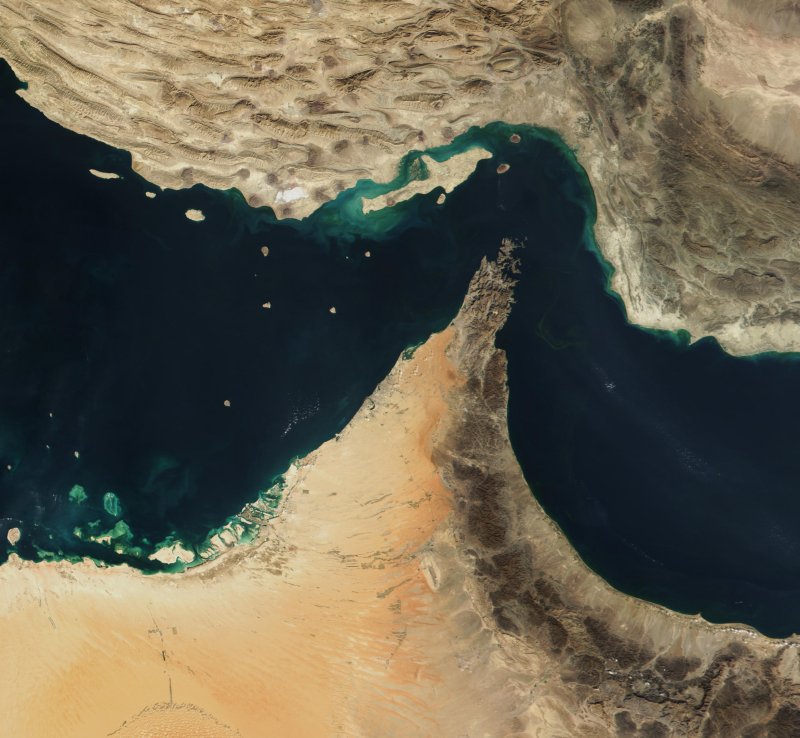
By Jacques Descloitres, MODIS Land Rapid Response Team, NASA/GSFC, Public Domain, Wikimedia Commons.
Here’s where things get spicy: Iran’s parliament backed a plan to close
the Strait of Hormuz—a chokepoint for ~20% of the world’s daily
oil movements. But approvals still require the green light from the Supreme
National Security Council. If executed, the impact would be seismic: oil would
soar, and where it ended up would be anyone’s guess. That spike would cascade
through refinery costs, insurance premiums, and consumer prices.
BREAKING: Iranian parliament has just voted to close the Strait of Hormuz.
- 20% of global oil passes through the Strait
HERE’s what to expect if successful:
- Oil Prices could spike by 30–50%+ almost immediately
Yet, analysts are skeptical about whether Tehran would actually shut
the passage. This naval route is vital for Iran’s own oil exports, especially
to China—a move to close it would be economic self‑sabotage. The US and allies
have naval forces deployed nearby, and Iran lacks legal cover to block the
strait outright.
Market Outlook: Fear vs. Fundamentals
Most analysts expect this to be a short‑lived flare‑up rather than a
protracted war. “Not crazy” oil forecasts from veteran strategists suggest
prices will retreat once the initial panic fades. Defense
stocks have popped, but broader markets are trading with guarded optimism.
Plus500's Founder Has An Outlandish Piece of Advice
While the Israeli broker is expanding its presence in the US and offers extensive oil and other energy contracts in the country, its founder, Alon Gonen, has become something of an internet personality with his market moving piece of advice.
"The enemy of my enemy is my friend," he said in a video posted on LinkedIn. "The regime opponents in Iran are enemies of the Iranian regime. That means they are our friends."
"Israel should bomb the prisons in Iran — in a way that allows the prisoners to escape. This would create a wave of euphoria among the Persian people, something that could truly bring down the Persian regime."
Tech, Trade & Trendspotting
In tech-heavy sectors, firms tied to oil logistics, shipping insurance,
and semiconductor supply chains could feel ripple effects. Elevated crude
prices mean higher transportation costs—possibly pressuring margins in e‑commerce
and manufacturing sectors. Similarly, alternative energy firms or pipelines
bypassing Hormuz might draw investor attention as geopolitical insurance plays
take hold.
That was quick:
Within 1 hour of oil markets opening, the surge in prices has been almost completely erased.
That's right, oil prices are now up just +0.5% after the US bombed Iran.
Hormuz traffic: So far, commercial shipping keeps flowing—watch
satellite data and tanker insurance premiums.
U.S. response: Additional military deployments or sanctions could tone it
down, or pour gas on the fire.
Seasonal demand: Summer fuel consumption in the northern hemisphere
could exacerbate price swings.
Brace, Don’t Panic?
Oil is in a volatility tailspin—but not a free-fall. High prices suit
defense suppliers and energy traders buying coverage. But equities, especially
in tech and manufacturing, are treading water amid uncertainty. The smart play
for now? Don’t bet the ranch—banks and big-spenders will watch Tehran more than
Trump.
With US strikes hitting Tehran and threats swirling around the Strait of
Hormuz, investors are weighing geopolitics against portfolio stability and the potential for soaring oil prices.
Asia wasn’t immune. Markets from Tokyo to Sydney shed modest gains as
the risk premium climbed. Japan even saw its defense sector rallying amid
renewed geopolitical concern.
The Hormuz Card: Oil Drama or Serious Threat?
By Jacques Descloitres, MODIS Land Rapid Response Team, NASA/GSFC, Public Domain, Wikimedia Commons.
Here’s where things get spicy: Iran’s parliament backed a plan to close
the Strait of Hormuz—a chokepoint for ~20% of the world’s daily
oil movements. But approvals still require the green light from the Supreme
National Security Council. If executed, the impact would be seismic: oil would
soar, and where it ended up would be anyone’s guess. That spike would cascade
through refinery costs, insurance premiums, and consumer prices.
BREAKING: Iranian parliament has just voted to close the Strait of Hormuz.
- 20% of global oil passes through the Strait
HERE’s what to expect if successful:
- Oil Prices could spike by 30–50%+ almost immediately
Yet, analysts are skeptical about whether Tehran would actually shut
the passage. This naval route is vital for Iran’s own oil exports, especially
to China—a move to close it would be economic self‑sabotage. The US and allies
have naval forces deployed nearby, and Iran lacks legal cover to block the
strait outright.
Market Outlook: Fear vs. Fundamentals
Most analysts expect this to be a short‑lived flare‑up rather than a
protracted war. “Not crazy” oil forecasts from veteran strategists suggest
prices will retreat once the initial panic fades. Defense
stocks have popped, but broader markets are trading with guarded optimism.
Plus500's Founder Has An Outlandish Piece of Advice
While the Israeli broker is expanding its presence in the US and offers extensive oil and other energy contracts in the country, its founder, Alon Gonen, has become something of an internet personality with his market moving piece of advice.
"The enemy of my enemy is my friend," he said in a video posted on LinkedIn. "The regime opponents in Iran are enemies of the Iranian regime. That means they are our friends."
"Israel should bomb the prisons in Iran — in a way that allows the prisoners to escape. This would create a wave of euphoria among the Persian people, something that could truly bring down the Persian regime."
Tech, Trade & Trendspotting
In tech-heavy sectors, firms tied to oil logistics, shipping insurance,
and semiconductor supply chains could feel ripple effects. Elevated crude
prices mean higher transportation costs—possibly pressuring margins in e‑commerce
and manufacturing sectors. Similarly, alternative energy firms or pipelines
bypassing Hormuz might draw investor attention as geopolitical insurance plays
take hold.
That was quick:
Within 1 hour of oil markets opening, the surge in prices has been almost completely erased.
That's right, oil prices are now up just +0.5% after the US bombed Iran.
Hormuz traffic: So far, commercial shipping keeps flowing—watch
satellite data and tanker insurance premiums.
U.S. response: Additional military deployments or sanctions could tone it
down, or pour gas on the fire.
Seasonal demand: Summer fuel consumption in the northern hemisphere
could exacerbate price swings.
Brace, Don’t Panic?
Oil is in a volatility tailspin—but not a free-fall. High prices suit
defense suppliers and energy traders buying coverage. But equities, especially
in tech and manufacturing, are treading water amid uncertainty. The smart play
for now? Don’t bet the ranch—banks and big-spenders will watch Tehran more than
Trump.
Louis Parks has lived and worked in and around the Middle East for much of his professional career. He writes about the meeting of the tech and finance worlds.
Will Bitcoin Price Fall Below $50K? BTC Drops to 4-Month Low Near $61,300 in a 13% Three-Day Slide
Featured Videos
FM Daily Brief – 9 June 2026
Today’s Tuesday, the 9th of June 2026, and these are our main stories: eToro’s customer assets climbed back above $20 billion, Prop trading model in prediction markets, and Leverate launched a new AI assistant for brokers and traders.
War Stories: Lessons from 20 Years in Markets (the pain, the pitfalls and the profits)
The trades that taught me the most aren't the ones that worked. They're the ones that didn't — or the ones I almost caught and didn't have the nerve to ride. In this session, I'll tell you about the Brexit miss, the SNB shocker that nearly handed me a 5400% return, the BoJ surprise that punched me in the gut, and a few wins along the way. Each story carries a lesson, but the lessons aren't the point. Everyone who trades long enough collects a portfolio of moments like these; what separates the people who stay in the game is what they do with them.
The Engine and the Fuel: How AI & Data Drives African Future
If AI is the engine, data is the fuel. Without quality, accessible data, AI cannot work well; and without the right mindset, data remains just numbers instead of insight. In this session, leading experts will explore how AI and data are democratizing opportunities for businesses and personal growth. Discover practical ways to make AI accessible today, anticipate its transformative impact on African markets, and learn actionable steps to prepare for what's next. Let's talk about:
-How AI and data drive business efficiency and innovation in trading and fintech
-AI tools to elevate trading or business strategies
-How to access and maximise the power of data and AI
-Emerging AI and data trends in Africa and their economic ripple effects
If AI is the engine, data is the fuel. Without quality, accessible data, AI cannot work well; and without the right mindset, data remains just numbers instead of insight. In this session, leading experts will explore how AI and data are democratizing opportunities for businesses and personal growth. Discover practical ways to make AI accessible today, anticipate its transformative impact on African markets, and learn actionable steps to prepare for what's next. Let's talk about:
-How AI and data drive business efficiency and innovation in trading and fintech
-AI tools to elevate trading or business strategies
-How to access and maximise the power of data and AI
-Emerging AI and data trends in Africa and their economic ripple effects
If AI is the engine, data is the fuel. Without quality, accessible data, AI cannot work well; and without the right mindset, data remains just numbers instead of insight. In this session, leading experts will explore how AI and data are democratizing opportunities for businesses and personal growth. Discover practical ways to make AI accessible today, anticipate its transformative impact on African markets, and learn actionable steps to prepare for what's next. Let's talk about:
-How AI and data drive business efficiency and innovation in trading and fintech
-AI tools to elevate trading or business strategies
-How to access and maximise the power of data and AI
-Emerging AI and data trends in Africa and their economic ripple effects
If AI is the engine, data is the fuel. Without quality, accessible data, AI cannot work well; and without the right mindset, data remains just numbers instead of insight. In this session, leading experts will explore how AI and data are democratizing opportunities for businesses and personal growth. Discover practical ways to make AI accessible today, anticipate its transformative impact on African markets, and learn actionable steps to prepare for what's next. Let's talk about:
-How AI and data drive business efficiency and innovation in trading and fintech
-AI tools to elevate trading or business strategies
-How to access and maximise the power of data and AI
-Emerging AI and data trends in Africa and their economic ripple effects
If AI is the engine, data is the fuel. Without quality, accessible data, AI cannot work well; and without the right mindset, data remains just numbers instead of insight. In this session, leading experts will explore how AI and data are democratizing opportunities for businesses and personal growth. Discover practical ways to make AI accessible today, anticipate its transformative impact on African markets, and learn actionable steps to prepare for what's next. Let's talk about:
-How AI and data drive business efficiency and innovation in trading and fintech
-AI tools to elevate trading or business strategies
-How to access and maximise the power of data and AI
-Emerging AI and data trends in Africa and their economic ripple effects
If AI is the engine, data is the fuel. Without quality, accessible data, AI cannot work well; and without the right mindset, data remains just numbers instead of insight. In this session, leading experts will explore how AI and data are democratizing opportunities for businesses and personal growth. Discover practical ways to make AI accessible today, anticipate its transformative impact on African markets, and learn actionable steps to prepare for what's next. Let's talk about:
-How AI and data drive business efficiency and innovation in trading and fintech
-AI tools to elevate trading or business strategies
-How to access and maximise the power of data and AI
-Emerging AI and data trends in Africa and their economic ripple effects
Inside My Best Trade with Jimmy Moyaha
Most market post-mortems describe what happened to prices. Few describe what happened in the trading room while the position was open: the entry conviction, the moments that tested it, and the exit decision that closed the book.
This session brings one seasoned trader to the stage for an unfiltered account of the position that still defines how they think about markets.
Attendees will walk away with:
-A first-hand account of how a conviction trade is built, from thesis and entry through position management and exit
-Understanding of what turns a market observation into a live position, and what holds it when conditions shift
-Insight into how timing, execution quality, and market structure shaped the final result
-Perspective on what the trade revealed about edge, risk tolerance, and when to hold through a position moving against you
-Clarity on what separates a well-built trade from a well-timed one
Most market post-mortems describe what happened to prices. Few describe what happened in the trading room while the position was open: the entry conviction, the moments that tested it, and the exit decision that closed the book.
This session brings one seasoned trader to the stage for an unfiltered account of the position that still defines how they think about markets.
Attendees will walk away with:
-A first-hand account of how a conviction trade is built, from thesis and entry through position management and exit
-Understanding of what turns a market observation into a live position, and what holds it when conditions shift
-Insight into how timing, execution quality, and market structure shaped the final result
-Perspective on what the trade revealed about edge, risk tolerance, and when to hold through a position moving against you
-Clarity on what separates a well-built trade from a well-timed one
Most market post-mortems describe what happened to prices. Few describe what happened in the trading room while the position was open: the entry conviction, the moments that tested it, and the exit decision that closed the book.
This session brings one seasoned trader to the stage for an unfiltered account of the position that still defines how they think about markets.
Attendees will walk away with:
-A first-hand account of how a conviction trade is built, from thesis and entry through position management and exit
-Understanding of what turns a market observation into a live position, and what holds it when conditions shift
-Insight into how timing, execution quality, and market structure shaped the final result
-Perspective on what the trade revealed about edge, risk tolerance, and when to hold through a position moving against you
-Clarity on what separates a well-built trade from a well-timed one
Most market post-mortems describe what happened to prices. Few describe what happened in the trading room while the position was open: the entry conviction, the moments that tested it, and the exit decision that closed the book.
This session brings one seasoned trader to the stage for an unfiltered account of the position that still defines how they think about markets.
Attendees will walk away with:
-A first-hand account of how a conviction trade is built, from thesis and entry through position management and exit
-Understanding of what turns a market observation into a live position, and what holds it when conditions shift
-Insight into how timing, execution quality, and market structure shaped the final result
-Perspective on what the trade revealed about edge, risk tolerance, and when to hold through a position moving against you
-Clarity on what separates a well-built trade from a well-timed one
Most market post-mortems describe what happened to prices. Few describe what happened in the trading room while the position was open: the entry conviction, the moments that tested it, and the exit decision that closed the book.
This session brings one seasoned trader to the stage for an unfiltered account of the position that still defines how they think about markets.
Attendees will walk away with:
-A first-hand account of how a conviction trade is built, from thesis and entry through position management and exit
-Understanding of what turns a market observation into a live position, and what holds it when conditions shift
-Insight into how timing, execution quality, and market structure shaped the final result
-Perspective on what the trade revealed about edge, risk tolerance, and when to hold through a position moving against you
-Clarity on what separates a well-built trade from a well-timed one
Most market post-mortems describe what happened to prices. Few describe what happened in the trading room while the position was open: the entry conviction, the moments that tested it, and the exit decision that closed the book.
This session brings one seasoned trader to the stage for an unfiltered account of the position that still defines how they think about markets.
Attendees will walk away with:
-A first-hand account of how a conviction trade is built, from thesis and entry through position management and exit
-Understanding of what turns a market observation into a live position, and what holds it when conditions shift
-Insight into how timing, execution quality, and market structure shaped the final result
-Perspective on what the trade revealed about edge, risk tolerance, and when to hold through a position moving against you
-Clarity on what separates a well-built trade from a well-timed one
Agentic Inequality: Democratizing Financial Access Through AI & Blockchain
As crypto and CFD trading continue to expand across Africa, access to advanced tools and market insights remains uneven. This session explores how AI and blockchain can bridge that gap by empowering informal traders and underserved communities to participate more effectively in digital financial markets. The discussion will focus on practical applications of technology to improve accessibility, education, and investment outcomes in both formal and informal sectors.
In this discussion, we will explore:
-The role of AI in democratizing access to trading tools, insights, and strategy development
-How crypto and blockchain can enable broader participation beyond traditional financial systems
-Addressing access barriers: infrastructure, education, and affordability in underserved communities
-Opportunities for brokers and platforms to tap into the informal trading economy
As crypto and CFD trading continue to expand across Africa, access to advanced tools and market insights remains uneven. This session explores how AI and blockchain can bridge that gap by empowering informal traders and underserved communities to participate more effectively in digital financial markets. The discussion will focus on practical applications of technology to improve accessibility, education, and investment outcomes in both formal and informal sectors.
In this discussion, we will explore:
-The role of AI in democratizing access to trading tools, insights, and strategy development
-How crypto and blockchain can enable broader participation beyond traditional financial systems
-Addressing access barriers: infrastructure, education, and affordability in underserved communities
-Opportunities for brokers and platforms to tap into the informal trading economy
As crypto and CFD trading continue to expand across Africa, access to advanced tools and market insights remains uneven. This session explores how AI and blockchain can bridge that gap by empowering informal traders and underserved communities to participate more effectively in digital financial markets. The discussion will focus on practical applications of technology to improve accessibility, education, and investment outcomes in both formal and informal sectors.
In this discussion, we will explore:
-The role of AI in democratizing access to trading tools, insights, and strategy development
-How crypto and blockchain can enable broader participation beyond traditional financial systems
-Addressing access barriers: infrastructure, education, and affordability in underserved communities
-Opportunities for brokers and platforms to tap into the informal trading economy
As crypto and CFD trading continue to expand across Africa, access to advanced tools and market insights remains uneven. This session explores how AI and blockchain can bridge that gap by empowering informal traders and underserved communities to participate more effectively in digital financial markets. The discussion will focus on practical applications of technology to improve accessibility, education, and investment outcomes in both formal and informal sectors.
In this discussion, we will explore:
-The role of AI in democratizing access to trading tools, insights, and strategy development
-How crypto and blockchain can enable broader participation beyond traditional financial systems
-Addressing access barriers: infrastructure, education, and affordability in underserved communities
-Opportunities for brokers and platforms to tap into the informal trading economy
As crypto and CFD trading continue to expand across Africa, access to advanced tools and market insights remains uneven. This session explores how AI and blockchain can bridge that gap by empowering informal traders and underserved communities to participate more effectively in digital financial markets. The discussion will focus on practical applications of technology to improve accessibility, education, and investment outcomes in both formal and informal sectors.
In this discussion, we will explore:
-The role of AI in democratizing access to trading tools, insights, and strategy development
-How crypto and blockchain can enable broader participation beyond traditional financial systems
-Addressing access barriers: infrastructure, education, and affordability in underserved communities
-Opportunities for brokers and platforms to tap into the informal trading economy
As crypto and CFD trading continue to expand across Africa, access to advanced tools and market insights remains uneven. This session explores how AI and blockchain can bridge that gap by empowering informal traders and underserved communities to participate more effectively in digital financial markets. The discussion will focus on practical applications of technology to improve accessibility, education, and investment outcomes in both formal and informal sectors.
In this discussion, we will explore:
-The role of AI in democratizing access to trading tools, insights, and strategy development
-How crypto and blockchain can enable broader participation beyond traditional financial systems
-Addressing access barriers: infrastructure, education, and affordability in underserved communities
-Opportunities for brokers and platforms to tap into the informal trading economy