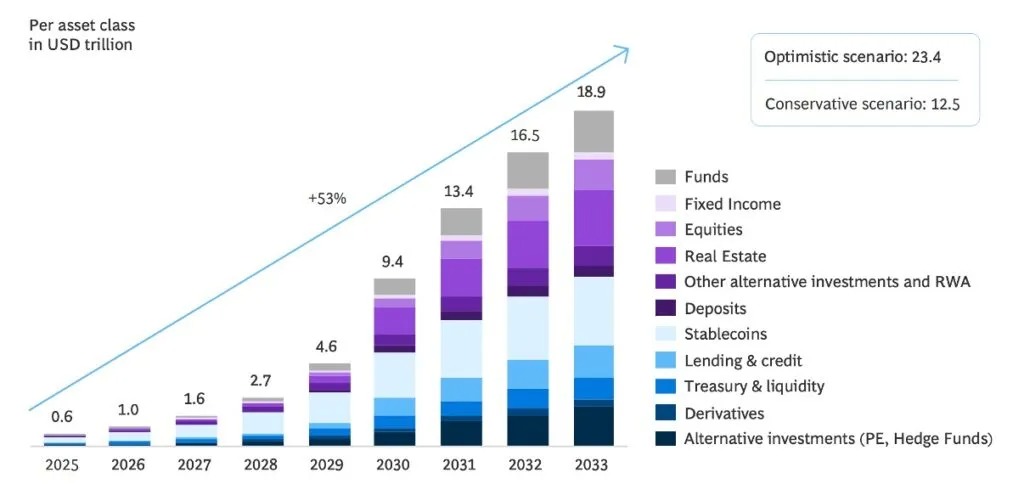
Shares listed on the blockchain have become a new trend, gaining traction among major platforms such as Kraken, Robinhood, and eToro.
Supporters see them as "the next big thing," with growth potential reaching up to $19 trillion by 2033.
While they promise global access and instant settlement, critics argue they're essentially repackaged derivatives with counterparty risks
Imagine
trading Apple stock at 3 AM on a Sunday, using your Tesla shares as collateral
in a DeFi protocol, or buying fractional ownership of SpaceX through your
crypto wallet. This isn't science fiction – it's the reality of tokenized
stocks in 2025, where traditional Wall Street meets cutting-edge blockchain
technology.
Digital stock tokens
blur the lines between crypto and traditional investing. Major crypto exchanges like Kraken, Bybit, and even platforms from the retail trading world like Robinhood or eToro are launching tokenized equity platforms, transforming the way retail investors will access the market.
1. What Are Tokenized
Stocks?
Tokenized
stocks are digital representations of real company shares, living on blockchain
networks rather than traditional exchanges. Think of them as crypto twins of
actual stocks – each token typically represents one share (or fraction) of a
company, fully backed by real shares held in custody.
When you
purchase a tokenized Apple stock, a licensed custodian holds the actual Apple
share in reserve while you receive a blockchain token that mirrors its price
movements. These digital equity tokens can trade on crypto exchanges, integrate
with DeFi protocols, and transfer between wallets – capabilities impossible
with traditional brokerage accounts.
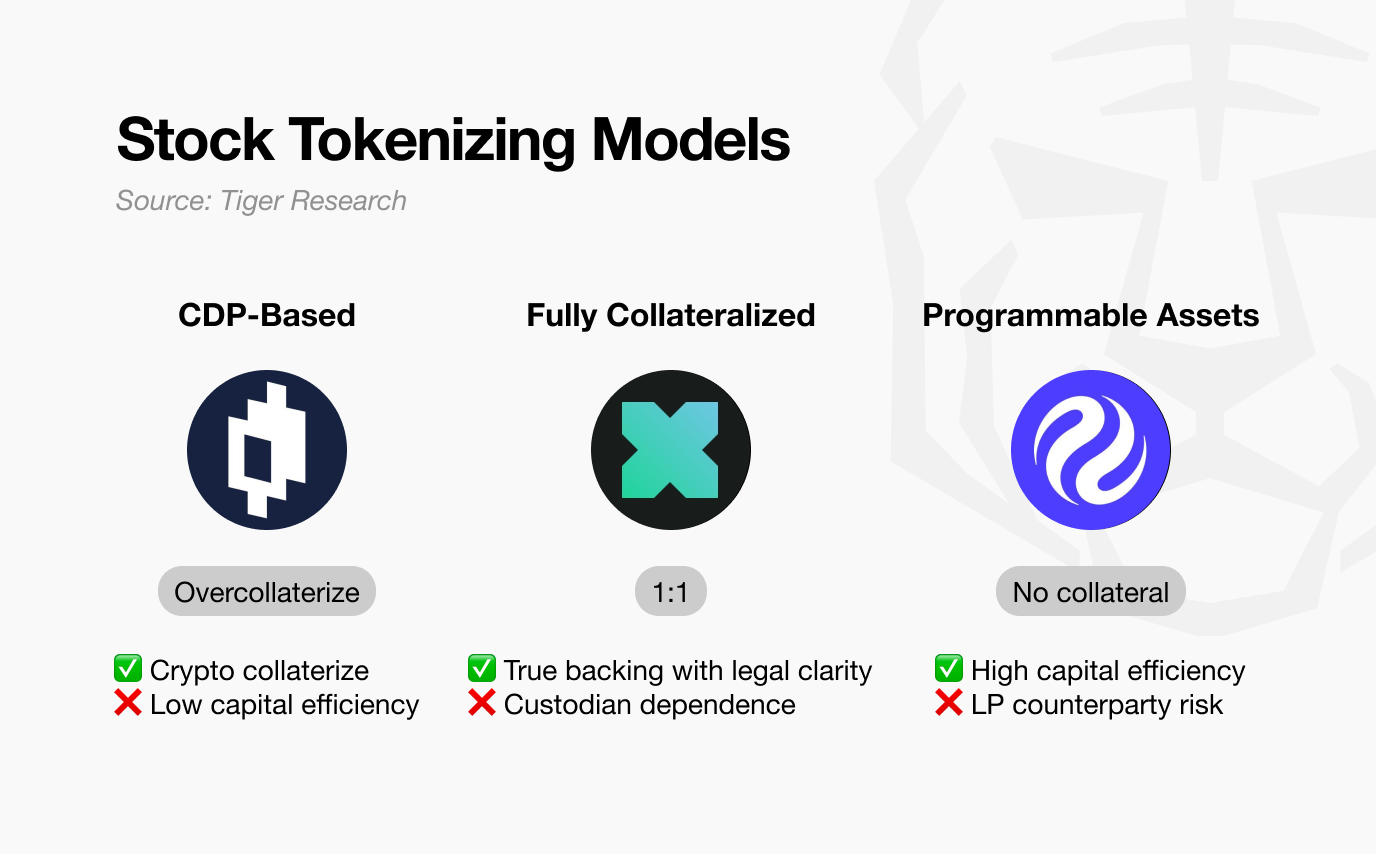
Source: Tiger Research
2. Who's Leading the
Tokenized Stock Revolution?
The
tokenized equity space exploded in 2025, with crypto exchanges and traditional
brokers racing to capture market share.
Kraken and
Bybit launched simultaneously in
June 2025, offering over 60 U.S. stock tokens branded as
"xStocks." Partnering with Swiss firm Backed Finance, they tokenized
blue-chip names like Apple, Tesla, NVIDIA, and S&P 500 ETFs on the Solana
blockchain. KuCoin
quickly followed, integrating xStocks for USDT trading pairs, while Bitget
joined the party with seamless wallet transfers and DeFi compatibility.
Even Gemini
entered through a partnership with FINRA-approved startup Dinari, while CMC
Markets hinted at tokenized asset launches via CMC CapX. The roster spans
from crypto-native exchanges to traditional brokers, all seeking to bridge Wall
Street and blockchain technology.
3. Why Tokenized Stocks
Are Exploding Now
Infrastructure
maturity played a key role. High-performance blockchain networks like Solana
and Ethereum Layer-2 solutions now offer fast, low-cost transactions suitable
for financial applications. Unlike earlier attempts (Binance's short-lived 2021
experiment), current offerings launch through compliant, licensed entities in
crypto-friendly jurisdictions like Switzerland and EU member states.
Global
demand for round-the-clock
market access drives adoption. Retail investors worldwide want to trade
U.S. stocks outside
traditional 9:30 AM-4:00 PM EST windows. Backed Finance's xStocks surpassed
$300 million in trading volume within four weeks of launch, demonstrating
pent-up appetite for blockchain-based equity trading.
4. What Are The Benefits?
Always-On Markets Meet DeFi
Tokenized
stocks promise several advantages over traditional equity trading, starting
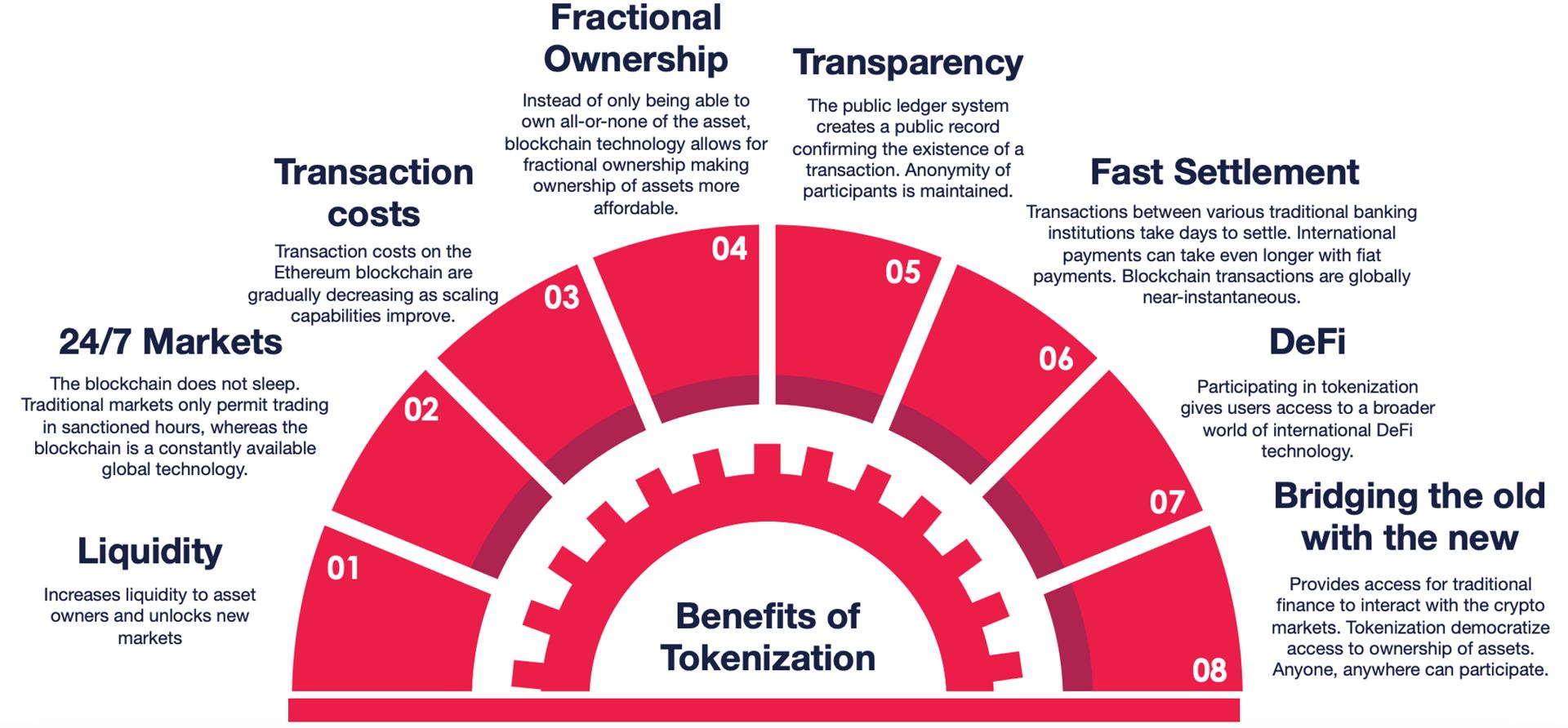
with extended trading hours. Instead of being locked into 6.5-hour market
windows, these tokens trade 24 hours a day, 5 days a week (24/5), covering
Asian and European time zones when U.S. markets are closed.
Instant
settlement represents another breakthrough. While traditional stocks require
T+2 settlement (two business days), blockchain transactions clear in seconds
with no intermediaries. Kraken emphasizes this speed advantage, noting trades
execute on-chain immediately rather than waiting for clearing houses.
Fractional
ownership becomes seamless through blockchain divisibility, though many
traditional brokers already offer fractional shares. Lower fees emerge through
blockchain efficiency – Bitget advertises users pay only gas fees without
brokerage commissions for stock token trades.
Source: Easy Equities
5. "Wrapper"
Products With Hidden Dangers
Despite the
excitement, tokenized stocks face significant criticism from industry experts
who question their fundamental value proposition.
Critics
argue these tokens are essentially contracts for difference (CFDs) rebranded
for the crypto era. As Anton Golub, the Chief Business Officer at Dubai-based
crypto exchange Freedx bluntly
stated, "It's a wrapper… not real equity." Token holders rely
entirely on issuer promises and custody arrangements – if that trust chain
breaks, there's no direct recourse to underlying shares.
Liquidity
concerns plague off-hours trading. While 24/5 access sounds attractive, market
makers struggle to hedge stock exposure when underlying markets are closed.
This creates artificial pricing with wide spreads during weekends and overnight
sessions, potentially making the promised round-the-clock trading illusory when
volumes disappear.
6. Europe, Not the U.S.,
in the Lead
Europe
leads adoption due to accommodating regulatory frameworks. The EU lacks
accredited-investor restrictions preventing retail participation in security
tokens, while jurisdictions like Lithuania (where
Robinhood obtained its crypto license) provide EU passport access for
cross-border services.
Kraken,
Bybit, and KuCoin restrict tokenized equities to non-U.S. users, operating
through entities in crypto-friendly jurisdictions. Switzerland's regulatory
clarity makes it attractive for issuers like Backed Finance to tokenize assets
with proper legal backing.
Solana
emerges as the preferred blockchain for tokenized stocks due to high throughput
and low transaction costs. Kraken, Bybit, and Backed Finance chose Solana for
xStocks, enabling fast settlement and DeFi integration capabilities.
Ethereum
remains important through Layer-2 solutions like Arbitrum, which powers
Robinhood's tokenized equity platform. eToro
plans ERC-20 tokenized shares on mainnet Ethereum, betting on network
effects and DeFi ecosystem maturity.
Platform
Issuer
Launch
status
No. of stocks / ETFs at start
Tech
Who can
use it?
Kraken
xStocks
Live (phased
rollout)
60+ U.S.
stocks & ETFs
ERC-20 tokens bridged to Solana
Non-U.S.
users
Bybit
xStocks
Live
60+ U.S.
stocks & ETFs
ERC-20 tokens bridged to Solana
Non-U.S.
users
Robinhood
Stock tokens
Pilot this
summer
200+ U.S.
stocks & ETFs
Arbitrum L2
EU residents
Gemini
via Dinari
Live
Rolling launch, first share MSTR
ERC-20 on
Base & Arbitrum
EU residents
Dinari
dShares
(direct dApp)
Live (FINRA
approved)
40+ U.S.
stocks & ETFs
ERC-20 on
Base & Arbitrum
Non-U.S.
users
Backed
Finance
xStocks
(issuer)
Live
60+ U.S.
stocks & ETFs
ERC-20 tokens bridged to Solana
Any venue that integrates them
9. New Investment Strategies
Tokenized
stocks enable novel investment approaches impossible with traditional
portfolios. DeFi yield farming using equity tokens as collateral creates new
income streams, while 24/7 trading allows responsive position management across
global time zones.
Portfolio
diversification benefits from seamless crypto-equity integration within single
platforms. Investors can balance Bitcoin holdings with tokenized Tesla shares
without multiple brokerage relationships or complex fund transfers.
Risk
management requires understanding counterparty exposure, regulatory changes,
and liquidity variations during off-hours trading. Dollar-cost averaging
becomes possible through programmable blockchain transactions, enabling
automated investment strategies.
10. Tokenized Stocks Will
Become “The Next Big Thing”
Tokenized
stocks represent early steps toward fully on-chain financial markets where
traditional asset classes integrate seamlessly with crypto ecosystems. 24/7
global markets may become standard expectations as geographical and temporal
barriers dissolve.
The
question isn't whether tokenized stocks will succeed, but how quickly
traditional financial markets will adapt to blockchain-native investor
expectations for seamless, global, always-on trading experiences.
Imagine
trading Apple stock at 3 AM on a Sunday, using your Tesla shares as collateral
in a DeFi protocol, or buying fractional ownership of SpaceX through your
crypto wallet. This isn't science fiction – it's the reality of tokenized
stocks in 2025, where traditional Wall Street meets cutting-edge blockchain
technology.
Digital stock tokens
blur the lines between crypto and traditional investing. Major crypto exchanges like Kraken, Bybit, and even platforms from the retail trading world like Robinhood or eToro are launching tokenized equity platforms, transforming the way retail investors will access the market.
1. What Are Tokenized
Stocks?
Tokenized
stocks are digital representations of real company shares, living on blockchain
networks rather than traditional exchanges. Think of them as crypto twins of
actual stocks – each token typically represents one share (or fraction) of a
company, fully backed by real shares held in custody.
When you
purchase a tokenized Apple stock, a licensed custodian holds the actual Apple
share in reserve while you receive a blockchain token that mirrors its price
movements. These digital equity tokens can trade on crypto exchanges, integrate
with DeFi protocols, and transfer between wallets – capabilities impossible
with traditional brokerage accounts.
Source: Tiger Research
2. Who's Leading the
Tokenized Stock Revolution?
The
tokenized equity space exploded in 2025, with crypto exchanges and traditional
brokers racing to capture market share.
Kraken and
Bybit launched simultaneously in
June 2025, offering over 60 U.S. stock tokens branded as
"xStocks." Partnering with Swiss firm Backed Finance, they tokenized
blue-chip names like Apple, Tesla, NVIDIA, and S&P 500 ETFs on the Solana
blockchain. KuCoin
quickly followed, integrating xStocks for USDT trading pairs, while Bitget
joined the party with seamless wallet transfers and DeFi compatibility.
Even Gemini
entered through a partnership with FINRA-approved startup Dinari, while CMC
Markets hinted at tokenized asset launches via CMC CapX. The roster spans
from crypto-native exchanges to traditional brokers, all seeking to bridge Wall
Street and blockchain technology.
3. Why Tokenized Stocks
Are Exploding Now
Infrastructure
maturity played a key role. High-performance blockchain networks like Solana
and Ethereum Layer-2 solutions now offer fast, low-cost transactions suitable
for financial applications. Unlike earlier attempts (Binance's short-lived 2021
experiment), current offerings launch through compliant, licensed entities in
crypto-friendly jurisdictions like Switzerland and EU member states.
Global
demand for round-the-clock
market access drives adoption. Retail investors worldwide want to trade
U.S. stocks outside
traditional 9:30 AM-4:00 PM EST windows. Backed Finance's xStocks surpassed
$300 million in trading volume within four weeks of launch, demonstrating
pent-up appetite for blockchain-based equity trading.
4. What Are The Benefits?
Always-On Markets Meet DeFi
Tokenized
stocks promise several advantages over traditional equity trading, starting
with extended trading hours. Instead of being locked into 6.5-hour market
windows, these tokens trade 24 hours a day, 5 days a week (24/5), covering
Asian and European time zones when U.S. markets are closed.
Instant
settlement represents another breakthrough. While traditional stocks require
T+2 settlement (two business days), blockchain transactions clear in seconds
with no intermediaries. Kraken emphasizes this speed advantage, noting trades
execute on-chain immediately rather than waiting for clearing houses.
Fractional
ownership becomes seamless through blockchain divisibility, though many
traditional brokers already offer fractional shares. Lower fees emerge through
blockchain efficiency – Bitget advertises users pay only gas fees without
brokerage commissions for stock token trades.
Source: Easy Equities
5. "Wrapper"
Products With Hidden Dangers
Despite the
excitement, tokenized stocks face significant criticism from industry experts
who question their fundamental value proposition.
Critics
argue these tokens are essentially contracts for difference (CFDs) rebranded
for the crypto era. As Anton Golub, the Chief Business Officer at Dubai-based
crypto exchange Freedx bluntly
stated, "It's a wrapper… not real equity." Token holders rely
entirely on issuer promises and custody arrangements – if that trust chain
breaks, there's no direct recourse to underlying shares.
Liquidity
concerns plague off-hours trading. While 24/5 access sounds attractive, market
makers struggle to hedge stock exposure when underlying markets are closed.
This creates artificial pricing with wide spreads during weekends and overnight
sessions, potentially making the promised round-the-clock trading illusory when
volumes disappear.
6. Europe, Not the U.S.,
in the Lead
Europe
leads adoption due to accommodating regulatory frameworks. The EU lacks
accredited-investor restrictions preventing retail participation in security
tokens, while jurisdictions like Lithuania (where
Robinhood obtained its crypto license) provide EU passport access for
cross-border services.
Kraken,
Bybit, and KuCoin restrict tokenized equities to non-U.S. users, operating
through entities in crypto-friendly jurisdictions. Switzerland's regulatory
clarity makes it attractive for issuers like Backed Finance to tokenize assets
with proper legal backing.
Solana
emerges as the preferred blockchain for tokenized stocks due to high throughput
and low transaction costs. Kraken, Bybit, and Backed Finance chose Solana for
xStocks, enabling fast settlement and DeFi integration capabilities.
Ethereum
remains important through Layer-2 solutions like Arbitrum, which powers
Robinhood's tokenized equity platform. eToro
plans ERC-20 tokenized shares on mainnet Ethereum, betting on network
effects and DeFi ecosystem maturity.
Platform
Issuer
Launch
status
No. of stocks / ETFs at start
Tech
Who can
use it?
Kraken
xStocks
Live (phased
rollout)
60+ U.S.
stocks & ETFs
ERC-20 tokens bridged to Solana
Non-U.S.
users
Bybit
xStocks
Live
60+ U.S.
stocks & ETFs
ERC-20 tokens bridged to Solana
Non-U.S.
users
Robinhood
Stock tokens
Pilot this
summer
200+ U.S.
stocks & ETFs
Arbitrum L2
EU residents
Gemini
via Dinari
Live
Rolling launch, first share MSTR
ERC-20 on
Base & Arbitrum
EU residents
Dinari
dShares
(direct dApp)
Live (FINRA
approved)
40+ U.S.
stocks & ETFs
ERC-20 on
Base & Arbitrum
Non-U.S.
users
Backed
Finance
xStocks
(issuer)
Live
60+ U.S.
stocks & ETFs
ERC-20 tokens bridged to Solana
Any venue that integrates them
9. New Investment Strategies
Tokenized
stocks enable novel investment approaches impossible with traditional
portfolios. DeFi yield farming using equity tokens as collateral creates new
income streams, while 24/7 trading allows responsive position management across
global time zones.
Portfolio
diversification benefits from seamless crypto-equity integration within single
platforms. Investors can balance Bitcoin holdings with tokenized Tesla shares
without multiple brokerage relationships or complex fund transfers.
Risk
management requires understanding counterparty exposure, regulatory changes,
and liquidity variations during off-hours trading. Dollar-cost averaging
becomes possible through programmable blockchain transactions, enabling
automated investment strategies.
10. Tokenized Stocks Will
Become “The Next Big Thing”
Tokenized
stocks represent early steps toward fully on-chain financial markets where
traditional asset classes integrate seamlessly with crypto ecosystems. 24/7
global markets may become standard expectations as geographical and temporal
barriers dissolve.
The
question isn't whether tokenized stocks will succeed, but how quickly
traditional financial markets will adapt to blockchain-native investor
expectations for seamless, global, always-on trading experiences.
Damian Chmiel is a Senior Analyst & Editor at Finance Magnates with more than 15 years of experience in the CFD and online trading industry. Active as both a trader and journalist since 2010, he focuses on broker coverage, fintech innovation, and regulatory developments across Europe, the Middle East, and Asia.
His work includes interviews with C-level leaders at major brokerages and fintech platforms, as well as co-authoring Finance Magnates’ quarterly industry benchmarking reports. Damian’s reporting is data-driven, market-aware, and grounded in direct industry engagement. His analysis and commentary have also been cited by external media outlets, including Investing.com, Binance, The Asset, Stockhead, and Dispatch.
Education:
MA in Finance and Accounting, Cracow University of Economics
Today’s Friday, the 5th of June 2026, and these are our main stories: The5ers-backed CFD brokerage’s Seychelles licence, Poland–Ukraine forex fraud raids, and China’s offshore broker exit deadline.
Industry Talks | Vinay Trivedi | CEO, SGX CurrencyNode | FM Singapore Summit 2026
Here is our conversation with Vinay Trivedi, CEO of SGX CurrencyNode, on Singapore's growing role in global FX markets, exchange innovation, and the future of institutional liquidity.
We begin with Singapore's rise as one of the world's leading foreign exchange centers and discuss the role SGX plays in an ecosystem traditionally dominated by OTC trading. Vinay explains how SGX has expanded its footprint across exchange-traded and OTC markets, building a comprehensive suite of solutions spanning execution, distribution, risk management, market data, and liquidity provision.
The conversation then turns to innovation and digital assets. Vinay shares how SGX has embraced blockchain initiatives, collaborated on tokenization projects, and launched institutional crypto derivatives to bridge the gap between traditional finance and digital asset markets. We explore how exchanges can adapt to emerging technologies while maintaining the infrastructure, governance, and trust expected by institutional participants.
We also discuss the relationship between SGX and the retail trading ecosystem. Vinay outlines the exchange's efforts to support broker growth through education, technology, and liquidity solutions, while highlighting the importance of retail participation in building vibrant and sustainable capital markets.
Finally, we look ahead to the second half of the year and the challenges facing market participants in an increasingly volatile environment. From geopolitical uncertainty and commodity price swings to shifting macroeconomic trends, Vinay explains why the industry's focus must remain on providing resilient infrastructure, deep liquidity, and efficient risk management tools for every segment of the market.
Here is our conversation with Vinay Trivedi, CEO of SGX CurrencyNode, on Singapore's growing role in global FX markets, exchange innovation, and the future of institutional liquidity.
We begin with Singapore's rise as one of the world's leading foreign exchange centers and discuss the role SGX plays in an ecosystem traditionally dominated by OTC trading. Vinay explains how SGX has expanded its footprint across exchange-traded and OTC markets, building a comprehensive suite of solutions spanning execution, distribution, risk management, market data, and liquidity provision.
The conversation then turns to innovation and digital assets. Vinay shares how SGX has embraced blockchain initiatives, collaborated on tokenization projects, and launched institutional crypto derivatives to bridge the gap between traditional finance and digital asset markets. We explore how exchanges can adapt to emerging technologies while maintaining the infrastructure, governance, and trust expected by institutional participants.
We also discuss the relationship between SGX and the retail trading ecosystem. Vinay outlines the exchange's efforts to support broker growth through education, technology, and liquidity solutions, while highlighting the importance of retail participation in building vibrant and sustainable capital markets.
Finally, we look ahead to the second half of the year and the challenges facing market participants in an increasingly volatile environment. From geopolitical uncertainty and commodity price swings to shifting macroeconomic trends, Vinay explains why the industry's focus must remain on providing resilient infrastructure, deep liquidity, and efficient risk management tools for every segment of the market.
Here is our conversation with Vinay Trivedi, CEO of SGX CurrencyNode, on Singapore's growing role in global FX markets, exchange innovation, and the future of institutional liquidity.
We begin with Singapore's rise as one of the world's leading foreign exchange centers and discuss the role SGX plays in an ecosystem traditionally dominated by OTC trading. Vinay explains how SGX has expanded its footprint across exchange-traded and OTC markets, building a comprehensive suite of solutions spanning execution, distribution, risk management, market data, and liquidity provision.
The conversation then turns to innovation and digital assets. Vinay shares how SGX has embraced blockchain initiatives, collaborated on tokenization projects, and launched institutional crypto derivatives to bridge the gap between traditional finance and digital asset markets. We explore how exchanges can adapt to emerging technologies while maintaining the infrastructure, governance, and trust expected by institutional participants.
We also discuss the relationship between SGX and the retail trading ecosystem. Vinay outlines the exchange's efforts to support broker growth through education, technology, and liquidity solutions, while highlighting the importance of retail participation in building vibrant and sustainable capital markets.
Finally, we look ahead to the second half of the year and the challenges facing market participants in an increasingly volatile environment. From geopolitical uncertainty and commodity price swings to shifting macroeconomic trends, Vinay explains why the industry's focus must remain on providing resilient infrastructure, deep liquidity, and efficient risk management tools for every segment of the market.
Here is our conversation with Vinay Trivedi, CEO of SGX CurrencyNode, on Singapore's growing role in global FX markets, exchange innovation, and the future of institutional liquidity.
We begin with Singapore's rise as one of the world's leading foreign exchange centers and discuss the role SGX plays in an ecosystem traditionally dominated by OTC trading. Vinay explains how SGX has expanded its footprint across exchange-traded and OTC markets, building a comprehensive suite of solutions spanning execution, distribution, risk management, market data, and liquidity provision.
The conversation then turns to innovation and digital assets. Vinay shares how SGX has embraced blockchain initiatives, collaborated on tokenization projects, and launched institutional crypto derivatives to bridge the gap between traditional finance and digital asset markets. We explore how exchanges can adapt to emerging technologies while maintaining the infrastructure, governance, and trust expected by institutional participants.
We also discuss the relationship between SGX and the retail trading ecosystem. Vinay outlines the exchange's efforts to support broker growth through education, technology, and liquidity solutions, while highlighting the importance of retail participation in building vibrant and sustainable capital markets.
Finally, we look ahead to the second half of the year and the challenges facing market participants in an increasingly volatile environment. From geopolitical uncertainty and commodity price swings to shifting macroeconomic trends, Vinay explains why the industry's focus must remain on providing resilient infrastructure, deep liquidity, and efficient risk management tools for every segment of the market.
Here is our conversation with Vinay Trivedi, CEO of SGX CurrencyNode, on Singapore's growing role in global FX markets, exchange innovation, and the future of institutional liquidity.
We begin with Singapore's rise as one of the world's leading foreign exchange centers and discuss the role SGX plays in an ecosystem traditionally dominated by OTC trading. Vinay explains how SGX has expanded its footprint across exchange-traded and OTC markets, building a comprehensive suite of solutions spanning execution, distribution, risk management, market data, and liquidity provision.
The conversation then turns to innovation and digital assets. Vinay shares how SGX has embraced blockchain initiatives, collaborated on tokenization projects, and launched institutional crypto derivatives to bridge the gap between traditional finance and digital asset markets. We explore how exchanges can adapt to emerging technologies while maintaining the infrastructure, governance, and trust expected by institutional participants.
We also discuss the relationship between SGX and the retail trading ecosystem. Vinay outlines the exchange's efforts to support broker growth through education, technology, and liquidity solutions, while highlighting the importance of retail participation in building vibrant and sustainable capital markets.
Finally, we look ahead to the second half of the year and the challenges facing market participants in an increasingly volatile environment. From geopolitical uncertainty and commodity price swings to shifting macroeconomic trends, Vinay explains why the industry's focus must remain on providing resilient infrastructure, deep liquidity, and efficient risk management tools for every segment of the market.
Here is our conversation with Vinay Trivedi, CEO of SGX CurrencyNode, on Singapore's growing role in global FX markets, exchange innovation, and the future of institutional liquidity.
We begin with Singapore's rise as one of the world's leading foreign exchange centers and discuss the role SGX plays in an ecosystem traditionally dominated by OTC trading. Vinay explains how SGX has expanded its footprint across exchange-traded and OTC markets, building a comprehensive suite of solutions spanning execution, distribution, risk management, market data, and liquidity provision.
The conversation then turns to innovation and digital assets. Vinay shares how SGX has embraced blockchain initiatives, collaborated on tokenization projects, and launched institutional crypto derivatives to bridge the gap between traditional finance and digital asset markets. We explore how exchanges can adapt to emerging technologies while maintaining the infrastructure, governance, and trust expected by institutional participants.
We also discuss the relationship between SGX and the retail trading ecosystem. Vinay outlines the exchange's efforts to support broker growth through education, technology, and liquidity solutions, while highlighting the importance of retail participation in building vibrant and sustainable capital markets.
Finally, we look ahead to the second half of the year and the challenges facing market participants in an increasingly volatile environment. From geopolitical uncertainty and commodity price swings to shifting macroeconomic trends, Vinay explains why the industry's focus must remain on providing resilient infrastructure, deep liquidity, and efficient risk management tools for every segment of the market.
Industry Talks | Philip Huang | CRO, Orient Futures Singapore | FM Singapore Summit 2026
Here is our conversation with Philip Huang, Chief Risk Officer at Orient Futures Singapore, on navigating market volatility, modern risk management, and Singapore's growing role as a global liquidity hub.
We begin by reflecting on the heightened volatility seen across commodities and energy markets in recent months. Philip shares how risk frameworks were stress-tested during periods of geopolitical uncertainty, why correlations breaking down is one of the toughest challenges for risk teams, and what stood out most to him was the composure and preparedness displayed by market participants throughout the turbulence.
The discussion then turns to the evolving nature of risk management. Drawing on insights from a private industry roundtable, Philip explains why successful risk functions increasingly require a combination of quantitative expertise, technological understanding, and strong governance. We explore the growing role of AI, automation, and human oversight, and why effective risk management is becoming a multidisciplinary discipline rather than a collection of isolated specializations.
We also examine Singapore's position in the global liquidity landscape. Philip discusses how the city-state has developed a distinct identity compared to other major financial centers, driven by institutional participation, regulatory stability, and a market structure that continues to attract sophisticated participants from across the region.
Finally, we look ahead to the second half of the year and the challenges risk teams are preparing for. Philip shares how simulation exercises, stress-testing programs, and forward-looking risk indicators are becoming increasingly important as firms adapt to an environment where volatility remains the norm and resilience is a competitive advantage.
Here is our conversation with Philip Huang, Chief Risk Officer at Orient Futures Singapore, on navigating market volatility, modern risk management, and Singapore's growing role as a global liquidity hub.
We begin by reflecting on the heightened volatility seen across commodities and energy markets in recent months. Philip shares how risk frameworks were stress-tested during periods of geopolitical uncertainty, why correlations breaking down is one of the toughest challenges for risk teams, and what stood out most to him was the composure and preparedness displayed by market participants throughout the turbulence.
The discussion then turns to the evolving nature of risk management. Drawing on insights from a private industry roundtable, Philip explains why successful risk functions increasingly require a combination of quantitative expertise, technological understanding, and strong governance. We explore the growing role of AI, automation, and human oversight, and why effective risk management is becoming a multidisciplinary discipline rather than a collection of isolated specializations.
We also examine Singapore's position in the global liquidity landscape. Philip discusses how the city-state has developed a distinct identity compared to other major financial centers, driven by institutional participation, regulatory stability, and a market structure that continues to attract sophisticated participants from across the region.
Finally, we look ahead to the second half of the year and the challenges risk teams are preparing for. Philip shares how simulation exercises, stress-testing programs, and forward-looking risk indicators are becoming increasingly important as firms adapt to an environment where volatility remains the norm and resilience is a competitive advantage.
Here is our conversation with Philip Huang, Chief Risk Officer at Orient Futures Singapore, on navigating market volatility, modern risk management, and Singapore's growing role as a global liquidity hub.
We begin by reflecting on the heightened volatility seen across commodities and energy markets in recent months. Philip shares how risk frameworks were stress-tested during periods of geopolitical uncertainty, why correlations breaking down is one of the toughest challenges for risk teams, and what stood out most to him was the composure and preparedness displayed by market participants throughout the turbulence.
The discussion then turns to the evolving nature of risk management. Drawing on insights from a private industry roundtable, Philip explains why successful risk functions increasingly require a combination of quantitative expertise, technological understanding, and strong governance. We explore the growing role of AI, automation, and human oversight, and why effective risk management is becoming a multidisciplinary discipline rather than a collection of isolated specializations.
We also examine Singapore's position in the global liquidity landscape. Philip discusses how the city-state has developed a distinct identity compared to other major financial centers, driven by institutional participation, regulatory stability, and a market structure that continues to attract sophisticated participants from across the region.
Finally, we look ahead to the second half of the year and the challenges risk teams are preparing for. Philip shares how simulation exercises, stress-testing programs, and forward-looking risk indicators are becoming increasingly important as firms adapt to an environment where volatility remains the norm and resilience is a competitive advantage.
Here is our conversation with Philip Huang, Chief Risk Officer at Orient Futures Singapore, on navigating market volatility, modern risk management, and Singapore's growing role as a global liquidity hub.
We begin by reflecting on the heightened volatility seen across commodities and energy markets in recent months. Philip shares how risk frameworks were stress-tested during periods of geopolitical uncertainty, why correlations breaking down is one of the toughest challenges for risk teams, and what stood out most to him was the composure and preparedness displayed by market participants throughout the turbulence.
The discussion then turns to the evolving nature of risk management. Drawing on insights from a private industry roundtable, Philip explains why successful risk functions increasingly require a combination of quantitative expertise, technological understanding, and strong governance. We explore the growing role of AI, automation, and human oversight, and why effective risk management is becoming a multidisciplinary discipline rather than a collection of isolated specializations.
We also examine Singapore's position in the global liquidity landscape. Philip discusses how the city-state has developed a distinct identity compared to other major financial centers, driven by institutional participation, regulatory stability, and a market structure that continues to attract sophisticated participants from across the region.
Finally, we look ahead to the second half of the year and the challenges risk teams are preparing for. Philip shares how simulation exercises, stress-testing programs, and forward-looking risk indicators are becoming increasingly important as firms adapt to an environment where volatility remains the norm and resilience is a competitive advantage.
Here is our conversation with Philip Huang, Chief Risk Officer at Orient Futures Singapore, on navigating market volatility, modern risk management, and Singapore's growing role as a global liquidity hub.
We begin by reflecting on the heightened volatility seen across commodities and energy markets in recent months. Philip shares how risk frameworks were stress-tested during periods of geopolitical uncertainty, why correlations breaking down is one of the toughest challenges for risk teams, and what stood out most to him was the composure and preparedness displayed by market participants throughout the turbulence.
The discussion then turns to the evolving nature of risk management. Drawing on insights from a private industry roundtable, Philip explains why successful risk functions increasingly require a combination of quantitative expertise, technological understanding, and strong governance. We explore the growing role of AI, automation, and human oversight, and why effective risk management is becoming a multidisciplinary discipline rather than a collection of isolated specializations.
We also examine Singapore's position in the global liquidity landscape. Philip discusses how the city-state has developed a distinct identity compared to other major financial centers, driven by institutional participation, regulatory stability, and a market structure that continues to attract sophisticated participants from across the region.
Finally, we look ahead to the second half of the year and the challenges risk teams are preparing for. Philip shares how simulation exercises, stress-testing programs, and forward-looking risk indicators are becoming increasingly important as firms adapt to an environment where volatility remains the norm and resilience is a competitive advantage.
Here is our conversation with Philip Huang, Chief Risk Officer at Orient Futures Singapore, on navigating market volatility, modern risk management, and Singapore's growing role as a global liquidity hub.
We begin by reflecting on the heightened volatility seen across commodities and energy markets in recent months. Philip shares how risk frameworks were stress-tested during periods of geopolitical uncertainty, why correlations breaking down is one of the toughest challenges for risk teams, and what stood out most to him was the composure and preparedness displayed by market participants throughout the turbulence.
The discussion then turns to the evolving nature of risk management. Drawing on insights from a private industry roundtable, Philip explains why successful risk functions increasingly require a combination of quantitative expertise, technological understanding, and strong governance. We explore the growing role of AI, automation, and human oversight, and why effective risk management is becoming a multidisciplinary discipline rather than a collection of isolated specializations.
We also examine Singapore's position in the global liquidity landscape. Philip discusses how the city-state has developed a distinct identity compared to other major financial centers, driven by institutional participation, regulatory stability, and a market structure that continues to attract sophisticated participants from across the region.
Finally, we look ahead to the second half of the year and the challenges risk teams are preparing for. Philip shares how simulation exercises, stress-testing programs, and forward-looking risk indicators are becoming increasingly important as firms adapt to an environment where volatility remains the norm and resilience is a competitive advantage.
Industry Talks | Vidushan Premathiratne | Founder, 8 Circle & TechLabs | FM Singapore Summit 2026
Here is our conversation with Vidushan Premathiratne, Founder of 8 Circle and TechLabs, on startup growth, business development, AI opportunities, and the evolving digital asset ecosystem.
We begin with Vidushan's work across both ventures, from participating in the Bank of England's digital securities and digital pound initiatives through TechLabs to helping businesses accelerate growth through curated introductions, investor connections, and strategic networking with Eight Circle.
The discussion then turns to one of the most persistent challenges facing startups: go-to-market execution. Vidushan explains why customer acquisition remains harder than product development in the AI era, how founders can better identify decision-makers within target organizations, and why face-to-face interactions continue to outperform digital channels when it comes to building trust and closing deals.
We also explore the opportunities emerging from AI and agentic workflows. Vidushan shares his perspective on where startups can still create meaningful value, from workflow automation and digital transformation to AI-powered research, customer acquisition, and localized solutions tailored to specific markets across Asia.
Finally, we discuss stablecoins and digital asset adoption in the region. Vidushan outlines why cross-border payments and remittances remain one of the strongest use cases for stablecoin infrastructure, how regulatory and compliance challenges are being addressed, and why Singapore continues to position itself as a leading hub for innovation at the intersection of finance and technology.
Here is our conversation with Vidushan Premathiratne, Founder of 8 Circle and TechLabs, on startup growth, business development, AI opportunities, and the evolving digital asset ecosystem.
We begin with Vidushan's work across both ventures, from participating in the Bank of England's digital securities and digital pound initiatives through TechLabs to helping businesses accelerate growth through curated introductions, investor connections, and strategic networking with Eight Circle.
The discussion then turns to one of the most persistent challenges facing startups: go-to-market execution. Vidushan explains why customer acquisition remains harder than product development in the AI era, how founders can better identify decision-makers within target organizations, and why face-to-face interactions continue to outperform digital channels when it comes to building trust and closing deals.
We also explore the opportunities emerging from AI and agentic workflows. Vidushan shares his perspective on where startups can still create meaningful value, from workflow automation and digital transformation to AI-powered research, customer acquisition, and localized solutions tailored to specific markets across Asia.
Finally, we discuss stablecoins and digital asset adoption in the region. Vidushan outlines why cross-border payments and remittances remain one of the strongest use cases for stablecoin infrastructure, how regulatory and compliance challenges are being addressed, and why Singapore continues to position itself as a leading hub for innovation at the intersection of finance and technology.
Here is our conversation with Vidushan Premathiratne, Founder of 8 Circle and TechLabs, on startup growth, business development, AI opportunities, and the evolving digital asset ecosystem.
We begin with Vidushan's work across both ventures, from participating in the Bank of England's digital securities and digital pound initiatives through TechLabs to helping businesses accelerate growth through curated introductions, investor connections, and strategic networking with Eight Circle.
The discussion then turns to one of the most persistent challenges facing startups: go-to-market execution. Vidushan explains why customer acquisition remains harder than product development in the AI era, how founders can better identify decision-makers within target organizations, and why face-to-face interactions continue to outperform digital channels when it comes to building trust and closing deals.
We also explore the opportunities emerging from AI and agentic workflows. Vidushan shares his perspective on where startups can still create meaningful value, from workflow automation and digital transformation to AI-powered research, customer acquisition, and localized solutions tailored to specific markets across Asia.
Finally, we discuss stablecoins and digital asset adoption in the region. Vidushan outlines why cross-border payments and remittances remain one of the strongest use cases for stablecoin infrastructure, how regulatory and compliance challenges are being addressed, and why Singapore continues to position itself as a leading hub for innovation at the intersection of finance and technology.
Here is our conversation with Vidushan Premathiratne, Founder of 8 Circle and TechLabs, on startup growth, business development, AI opportunities, and the evolving digital asset ecosystem.
We begin with Vidushan's work across both ventures, from participating in the Bank of England's digital securities and digital pound initiatives through TechLabs to helping businesses accelerate growth through curated introductions, investor connections, and strategic networking with Eight Circle.
The discussion then turns to one of the most persistent challenges facing startups: go-to-market execution. Vidushan explains why customer acquisition remains harder than product development in the AI era, how founders can better identify decision-makers within target organizations, and why face-to-face interactions continue to outperform digital channels when it comes to building trust and closing deals.
We also explore the opportunities emerging from AI and agentic workflows. Vidushan shares his perspective on where startups can still create meaningful value, from workflow automation and digital transformation to AI-powered research, customer acquisition, and localized solutions tailored to specific markets across Asia.
Finally, we discuss stablecoins and digital asset adoption in the region. Vidushan outlines why cross-border payments and remittances remain one of the strongest use cases for stablecoin infrastructure, how regulatory and compliance challenges are being addressed, and why Singapore continues to position itself as a leading hub for innovation at the intersection of finance and technology.
Here is our conversation with Vidushan Premathiratne, Founder of 8 Circle and TechLabs, on startup growth, business development, AI opportunities, and the evolving digital asset ecosystem.
We begin with Vidushan's work across both ventures, from participating in the Bank of England's digital securities and digital pound initiatives through TechLabs to helping businesses accelerate growth through curated introductions, investor connections, and strategic networking with Eight Circle.
The discussion then turns to one of the most persistent challenges facing startups: go-to-market execution. Vidushan explains why customer acquisition remains harder than product development in the AI era, how founders can better identify decision-makers within target organizations, and why face-to-face interactions continue to outperform digital channels when it comes to building trust and closing deals.
We also explore the opportunities emerging from AI and agentic workflows. Vidushan shares his perspective on where startups can still create meaningful value, from workflow automation and digital transformation to AI-powered research, customer acquisition, and localized solutions tailored to specific markets across Asia.
Finally, we discuss stablecoins and digital asset adoption in the region. Vidushan outlines why cross-border payments and remittances remain one of the strongest use cases for stablecoin infrastructure, how regulatory and compliance challenges are being addressed, and why Singapore continues to position itself as a leading hub for innovation at the intersection of finance and technology.
Here is our conversation with Vidushan Premathiratne, Founder of 8 Circle and TechLabs, on startup growth, business development, AI opportunities, and the evolving digital asset ecosystem.
We begin with Vidushan's work across both ventures, from participating in the Bank of England's digital securities and digital pound initiatives through TechLabs to helping businesses accelerate growth through curated introductions, investor connections, and strategic networking with Eight Circle.
The discussion then turns to one of the most persistent challenges facing startups: go-to-market execution. Vidushan explains why customer acquisition remains harder than product development in the AI era, how founders can better identify decision-makers within target organizations, and why face-to-face interactions continue to outperform digital channels when it comes to building trust and closing deals.
We also explore the opportunities emerging from AI and agentic workflows. Vidushan shares his perspective on where startups can still create meaningful value, from workflow automation and digital transformation to AI-powered research, customer acquisition, and localized solutions tailored to specific markets across Asia.
Finally, we discuss stablecoins and digital asset adoption in the region. Vidushan outlines why cross-border payments and remittances remain one of the strongest use cases for stablecoin infrastructure, how regulatory and compliance challenges are being addressed, and why Singapore continues to position itself as a leading hub for innovation at the intersection of finance and technology.
Industry Talks | Luke Boland | Head of Fintech Coverage, Standard Chartered | FM Singapore Summit 26
Here is our conversation with Luke Boland, Global Head of Fintech Coverage at Standard Chartered, on the evolving relationship between traditional banking and digital assets.
We begin by discussing how banks' attitudes toward crypto and digital assets have changed over the past few years. Luke explains Standard Chartered's journey from banking the ecosystem to actively building infrastructure across key markets, and how the bank sees itself as a bridge between traditional finance and the crypto-native world.
The conversation then explores the challenges and opportunities facing banks as digital asset adoption accelerates. Luke shares why stablecoins have emerged as one of the most compelling use cases, how client demand continues to shape the bank's strategy, and what lessons the wider banking sector can learn from the rapid evolution of blockchain-based financial services.
We also dive into real-world applications beyond the hype cycle, including digital asset custody, collateral management, and partnerships between global financial institutions and crypto exchanges. Luke discusses how Standard Chartered is helping institutional clients access digital asset markets while maintaining the security, governance, and trust expected from a global bank.
Finally, we look ahead to the next phase of financial innovation, with a focus on stablecoins, on-chain financial infrastructure, and the future of payments. Luke shares insights into Standard Chartered's recent Hong Kong stablecoin initiative and explains why the bank believes that a growing share of financial services will ultimately move on-chain.
Here is our conversation with Luke Boland, Global Head of Fintech Coverage at Standard Chartered, on the evolving relationship between traditional banking and digital assets.
We begin by discussing how banks' attitudes toward crypto and digital assets have changed over the past few years. Luke explains Standard Chartered's journey from banking the ecosystem to actively building infrastructure across key markets, and how the bank sees itself as a bridge between traditional finance and the crypto-native world.
The conversation then explores the challenges and opportunities facing banks as digital asset adoption accelerates. Luke shares why stablecoins have emerged as one of the most compelling use cases, how client demand continues to shape the bank's strategy, and what lessons the wider banking sector can learn from the rapid evolution of blockchain-based financial services.
We also dive into real-world applications beyond the hype cycle, including digital asset custody, collateral management, and partnerships between global financial institutions and crypto exchanges. Luke discusses how Standard Chartered is helping institutional clients access digital asset markets while maintaining the security, governance, and trust expected from a global bank.
Finally, we look ahead to the next phase of financial innovation, with a focus on stablecoins, on-chain financial infrastructure, and the future of payments. Luke shares insights into Standard Chartered's recent Hong Kong stablecoin initiative and explains why the bank believes that a growing share of financial services will ultimately move on-chain.
Here is our conversation with Luke Boland, Global Head of Fintech Coverage at Standard Chartered, on the evolving relationship between traditional banking and digital assets.
We begin by discussing how banks' attitudes toward crypto and digital assets have changed over the past few years. Luke explains Standard Chartered's journey from banking the ecosystem to actively building infrastructure across key markets, and how the bank sees itself as a bridge between traditional finance and the crypto-native world.
The conversation then explores the challenges and opportunities facing banks as digital asset adoption accelerates. Luke shares why stablecoins have emerged as one of the most compelling use cases, how client demand continues to shape the bank's strategy, and what lessons the wider banking sector can learn from the rapid evolution of blockchain-based financial services.
We also dive into real-world applications beyond the hype cycle, including digital asset custody, collateral management, and partnerships between global financial institutions and crypto exchanges. Luke discusses how Standard Chartered is helping institutional clients access digital asset markets while maintaining the security, governance, and trust expected from a global bank.
Finally, we look ahead to the next phase of financial innovation, with a focus on stablecoins, on-chain financial infrastructure, and the future of payments. Luke shares insights into Standard Chartered's recent Hong Kong stablecoin initiative and explains why the bank believes that a growing share of financial services will ultimately move on-chain.
Here is our conversation with Luke Boland, Global Head of Fintech Coverage at Standard Chartered, on the evolving relationship between traditional banking and digital assets.
We begin by discussing how banks' attitudes toward crypto and digital assets have changed over the past few years. Luke explains Standard Chartered's journey from banking the ecosystem to actively building infrastructure across key markets, and how the bank sees itself as a bridge between traditional finance and the crypto-native world.
The conversation then explores the challenges and opportunities facing banks as digital asset adoption accelerates. Luke shares why stablecoins have emerged as one of the most compelling use cases, how client demand continues to shape the bank's strategy, and what lessons the wider banking sector can learn from the rapid evolution of blockchain-based financial services.
We also dive into real-world applications beyond the hype cycle, including digital asset custody, collateral management, and partnerships between global financial institutions and crypto exchanges. Luke discusses how Standard Chartered is helping institutional clients access digital asset markets while maintaining the security, governance, and trust expected from a global bank.
Finally, we look ahead to the next phase of financial innovation, with a focus on stablecoins, on-chain financial infrastructure, and the future of payments. Luke shares insights into Standard Chartered's recent Hong Kong stablecoin initiative and explains why the bank believes that a growing share of financial services will ultimately move on-chain.
Here is our conversation with Luke Boland, Global Head of Fintech Coverage at Standard Chartered, on the evolving relationship between traditional banking and digital assets.
We begin by discussing how banks' attitudes toward crypto and digital assets have changed over the past few years. Luke explains Standard Chartered's journey from banking the ecosystem to actively building infrastructure across key markets, and how the bank sees itself as a bridge between traditional finance and the crypto-native world.
The conversation then explores the challenges and opportunities facing banks as digital asset adoption accelerates. Luke shares why stablecoins have emerged as one of the most compelling use cases, how client demand continues to shape the bank's strategy, and what lessons the wider banking sector can learn from the rapid evolution of blockchain-based financial services.
We also dive into real-world applications beyond the hype cycle, including digital asset custody, collateral management, and partnerships between global financial institutions and crypto exchanges. Luke discusses how Standard Chartered is helping institutional clients access digital asset markets while maintaining the security, governance, and trust expected from a global bank.
Finally, we look ahead to the next phase of financial innovation, with a focus on stablecoins, on-chain financial infrastructure, and the future of payments. Luke shares insights into Standard Chartered's recent Hong Kong stablecoin initiative and explains why the bank believes that a growing share of financial services will ultimately move on-chain.
Here is our conversation with Luke Boland, Global Head of Fintech Coverage at Standard Chartered, on the evolving relationship between traditional banking and digital assets.
We begin by discussing how banks' attitudes toward crypto and digital assets have changed over the past few years. Luke explains Standard Chartered's journey from banking the ecosystem to actively building infrastructure across key markets, and how the bank sees itself as a bridge between traditional finance and the crypto-native world.
The conversation then explores the challenges and opportunities facing banks as digital asset adoption accelerates. Luke shares why stablecoins have emerged as one of the most compelling use cases, how client demand continues to shape the bank's strategy, and what lessons the wider banking sector can learn from the rapid evolution of blockchain-based financial services.
We also dive into real-world applications beyond the hype cycle, including digital asset custody, collateral management, and partnerships between global financial institutions and crypto exchanges. Luke discusses how Standard Chartered is helping institutional clients access digital asset markets while maintaining the security, governance, and trust expected from a global bank.
Finally, we look ahead to the next phase of financial innovation, with a focus on stablecoins, on-chain financial infrastructure, and the future of payments. Luke shares insights into Standard Chartered's recent Hong Kong stablecoin initiative and explains why the bank believes that a growing share of financial services will ultimately move on-chain.