>
Behind the Scenes of China’s Retail Fueled Stock Market
Thursday,13/08/2015|11:06GMTby
Barry Ng
Finance Magnates analyzes the unique factors that led to China's stock market doubling from November 2014 to June 2015, before tumbling 30%.
Bloomberg
Recently, financial news has been flooded with headlines of China’s market crash. But what exactly caused this event to happen?
Since June, over $3.25 trillion dollars has been lost in the Chinese market crash. Most of that money was lost by ordinary Chinese citizens. In retrospect, the fact that retail investors held most of the stocks in China may have played a major role in the crash.
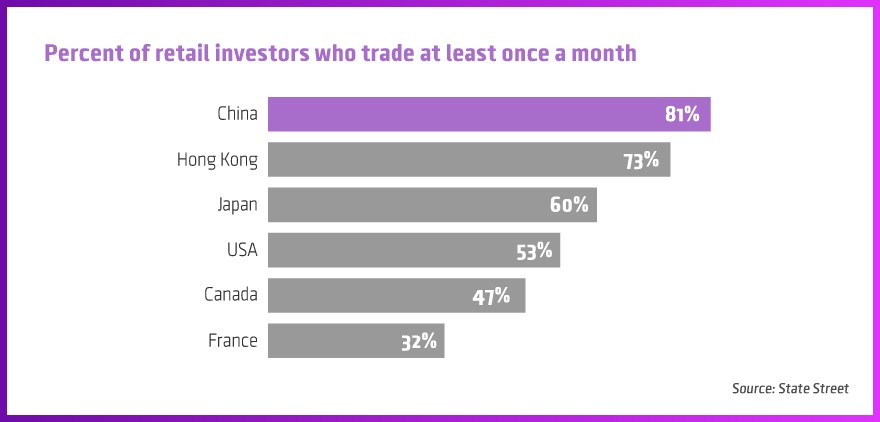
Of all of the major markets in the world, the Chinese market is unique in that 85% of investors in the Chinese securities market are retail investors. That figure compares to 38% in the US. Additionally, retail investors have a tendency to trade more frequently, with 81% stating that they trade at least once a month.
The vast majority of the new Chinese investors have no prior education or experience in investing, and often simply follow the crowd, buying when the market performs well and selling when it does not. This mentality, along with frequent trading amplifies movements in the market, with the most recent more than doubling on the Shanghai Composite Index from November 2014 to June 2015 and subsequent 30% crash being no exception.
Due to strict quotas and regulations placed upon foreign investors in China wishing to buy shares of Chinese companies, the Chinese market has one of the smallest global exposures out of the major economies. Foreign investors now make up roughly 1.5% of the total amount of money invested in the Chinese market.
Foreign investors now make up roughly 1.5% of the total amount of money invested in the Chinese market
The low amount of foreign investors contributes to two factors affecting Chinese stocks. Firstly, due to the low contribution of foreign participants, price movements in the Chinese stock market aren’t meaningfully correlated to other global stock markets. Secondly, the lack of foreign investors reduces the overall intuitional funds in the market. This factor allows retail investors to become a greater percentage of the overall trading in Chinese stocks.
Margin Trading and Interest Rate Cuts
The isolation of the Chinese market allowed it to be relatively unaffected during the Asian market crisis of 1997. However, the Chinese government has recently been releasing its capital control in an effort to encourage domestic investment. An example is the approval of margin investing in 2010. During the recent market rally and fall, the government attributed margin trading as a contributing factor affecting stocks. As a result, once prices began to fall in June, the Chinese government began to clamp down on margin investing.
In addition to the margin regulation, the People's Bank of China cut interest rates in an effort to fuel growth when the economy slowed in November of 2014. The rate cuts became an initial catalyst for higher stock prices, as it led to positive economic sentiment. The decrease in interest rates also attributed to lower expenses for margin investing.
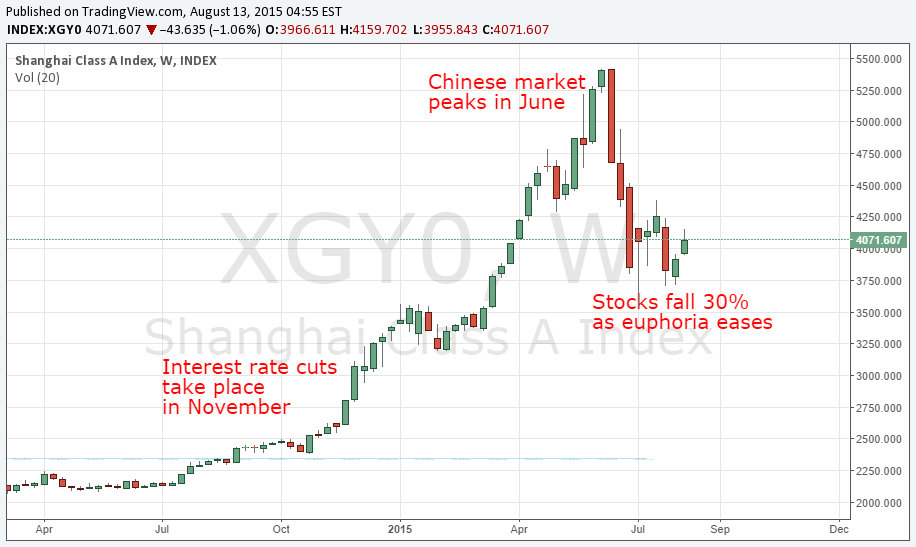
During the recent crash, the government once again slashed interest rates in an effort to rescue the market and return some of the demand that had helped trigger the initial rally that began in November 2014.
Quite simply, growth had already been slowing by the end of 2014, and the government’s attempts at revitalizing it and sustaining market growth may have played a role in building the market up for the crash.
The high amount of retail investors and lack of foreign investors simply added to the chaos and made the market harder to control when regulations had loosened. These unique features of the Chinese market precipitated this financial catastrophe, and also make the future of the Chinese market hard to predict.
Recently, financial news has been flooded with headlines of China’s market crash. But what exactly caused this event to happen?
Since June, over $3.25 trillion dollars has been lost in the Chinese market crash. Most of that money was lost by ordinary Chinese citizens. In retrospect, the fact that retail investors held most of the stocks in China may have played a major role in the crash.
Of all of the major markets in the world, the Chinese market is unique in that 85% of investors in the Chinese securities market are retail investors. That figure compares to 38% in the US. Additionally, retail investors have a tendency to trade more frequently, with 81% stating that they trade at least once a month.
The vast majority of the new Chinese investors have no prior education or experience in investing, and often simply follow the crowd, buying when the market performs well and selling when it does not. This mentality, along with frequent trading amplifies movements in the market, with the most recent more than doubling on the Shanghai Composite Index from November 2014 to June 2015 and subsequent 30% crash being no exception.
Due to strict quotas and regulations placed upon foreign investors in China wishing to buy shares of Chinese companies, the Chinese market has one of the smallest global exposures out of the major economies. Foreign investors now make up roughly 1.5% of the total amount of money invested in the Chinese market.
Foreign investors now make up roughly 1.5% of the total amount of money invested in the Chinese market
The low amount of foreign investors contributes to two factors affecting Chinese stocks. Firstly, due to the low contribution of foreign participants, price movements in the Chinese stock market aren’t meaningfully correlated to other global stock markets. Secondly, the lack of foreign investors reduces the overall intuitional funds in the market. This factor allows retail investors to become a greater percentage of the overall trading in Chinese stocks.
Margin Trading and Interest Rate Cuts
The isolation of the Chinese market allowed it to be relatively unaffected during the Asian market crisis of 1997. However, the Chinese government has recently been releasing its capital control in an effort to encourage domestic investment. An example is the approval of margin investing in 2010. During the recent market rally and fall, the government attributed margin trading as a contributing factor affecting stocks. As a result, once prices began to fall in June, the Chinese government began to clamp down on margin investing.
In addition to the margin regulation, the People's Bank of China cut interest rates in an effort to fuel growth when the economy slowed in November of 2014. The rate cuts became an initial catalyst for higher stock prices, as it led to positive economic sentiment. The decrease in interest rates also attributed to lower expenses for margin investing.
During the recent crash, the government once again slashed interest rates in an effort to rescue the market and return some of the demand that had helped trigger the initial rally that began in November 2014.
Quite simply, growth had already been slowing by the end of 2014, and the government’s attempts at revitalizing it and sustaining market growth may have played a role in building the market up for the crash.
The high amount of retail investors and lack of foreign investors simply added to the chaos and made the market harder to control when regulations had loosened. These unique features of the Chinese market precipitated this financial catastrophe, and also make the future of the Chinese market hard to predict.
The US Prediction-Markets Fight Just Split Into Two Opposite Lawsuits. Plus500 Sits In The Middle
Featured Videos
FM Daily Brief - 1 May 2026
iForex's CEO tells Finance Magnates the cost of their IPO delay. Also ahead: the US prediction markets legal battle splits in two, and the FCA greenlights onchain funds. It's Friday, the first of May 2026. You're listening to the Finance Magnates Daily Brief.
Not All Video Reviews Are Created Equal | Finance Magnates
We deliver fast, structured, neutral reviews covering regulation, platforms, leverage, payouts, and risk across brokers, prop firms, and fintech platforms.
Book your Finance Magnates video review: https://lnkd.in/dDubZJ2S
#FinanceMagnates #BrokerReview #PropTrading #Fintech #Forex #Crypto #CFD #TradingPlatforms #DigitalAssets
We deliver fast, structured, neutral reviews covering regulation, platforms, leverage, payouts, and risk across brokers, prop firms, and fintech platforms.
Book your Finance Magnates video review: https://lnkd.in/dDubZJ2S
#FinanceMagnates #BrokerReview #PropTrading #Fintech #Forex #Crypto #CFD #TradingPlatforms #DigitalAssets
We deliver fast, structured, neutral reviews covering regulation, platforms, leverage, payouts, and risk across brokers, prop firms, and fintech platforms.
Book your Finance Magnates video review: https://lnkd.in/dDubZJ2S
#FinanceMagnates #BrokerReview #PropTrading #Fintech #Forex #Crypto #CFD #TradingPlatforms #DigitalAssets
We deliver fast, structured, neutral reviews covering regulation, platforms, leverage, payouts, and risk across brokers, prop firms, and fintech platforms.
Book your Finance Magnates video review: https://lnkd.in/dDubZJ2S
#FinanceMagnates #BrokerReview #PropTrading #Fintech #Forex #Crypto #CFD #TradingPlatforms #DigitalAssets
We deliver fast, structured, neutral reviews covering regulation, platforms, leverage, payouts, and risk across brokers, prop firms, and fintech platforms.
Book your Finance Magnates video review: https://lnkd.in/dDubZJ2S
#FinanceMagnates #BrokerReview #PropTrading #Fintech #Forex #Crypto #CFD #TradingPlatforms #DigitalAssets
We deliver fast, structured, neutral reviews covering regulation, platforms, leverage, payouts, and risk across brokers, prop firms, and fintech platforms.
Book your Finance Magnates video review: https://lnkd.in/dDubZJ2S
#FinanceMagnates #BrokerReview #PropTrading #Fintech #Forex #Crypto #CFD #TradingPlatforms #DigitalAssets
FM Daily Brief - 30 April 2026
iForex posts its first annual results as a listed broker. Also ahead: CFI Financial secures a Brazil license, and prediction markets have a big week, with new ETF launches and fresh Polymarket loss data. It's Thursday, the thirtieth of April 2026. You're listening to the Finance Magnates Daily Brief.
FM Daily Brief - 29 April 2026
XTB and Robinhood both post first-quarter earnings. But the numbers point in very different directions. Also ahead: Capital.com pushes into three new markets and signals a move into payments.
It's Wednesday, the 29th of April 2026. You're listening to the Finance Magnates Daily Brief.
XTB and Robinhood both post first-quarter earnings. But the numbers point in very different directions. Also ahead: Capital.com pushes into three new markets and signals a move into payments.
It's Wednesday, the 29th of April 2026. You're listening to the Finance Magnates Daily Brief.
XTB and Robinhood both post first-quarter earnings. But the numbers point in very different directions. Also ahead: Capital.com pushes into three new markets and signals a move into payments.
It's Wednesday, the 29th of April 2026. You're listening to the Finance Magnates Daily Brief.
XTB and Robinhood both post first-quarter earnings. But the numbers point in very different directions. Also ahead: Capital.com pushes into three new markets and signals a move into payments.
It's Wednesday, the 29th of April 2026. You're listening to the Finance Magnates Daily Brief.
XTB and Robinhood both post first-quarter earnings. But the numbers point in very different directions. Also ahead: Capital.com pushes into three new markets and signals a move into payments.
It's Wednesday, the 29th of April 2026. You're listening to the Finance Magnates Daily Brief.
XTB and Robinhood both post first-quarter earnings. But the numbers point in very different directions. Also ahead: Capital.com pushes into three new markets and signals a move into payments.
It's Wednesday, the 29th of April 2026. You're listening to the Finance Magnates Daily Brief.
FM Daily Brief - 28 April 2026
Startrader posts three-point-one trillion dollars in first-quarter volume — up three hundred and forty percent from a year ago. Also ahead: Fintokei claims sub-second trader payouts, and eToro opens its premium subscription tier to all investors.