
The news that the regulatory agency is preparing to put a cap on leverage for retail traders in the UK has startled brokers and investors in broking companies that are catering to retail traders. Brokers that have significant exposure to the UK market, including CMC Markets, IG Group, Plus500 and GAIN Capital (via City Index), have lost a combined market cap of over $2 billion.
Being the largest by capitalization, IG Group has suffered the most, losing £1.1 billion of its stock value. Following closely was CMC Markets with £200 million, Plus500 with £163 million and GAIN Capital with $30 million.
The size of the UK retail trading industry is justifying such an intervention - according to the FCA providers of rolling forex and CFDs have held close to £3.5 billion of client money funds. With 82 percent of the retail traders losing money over their lifespan as traders, the news really shouldn't come as a surprise to the industry.
The suitability of retail investors to use high leverage has long been a debate amongst brokers that have been advocating a more conservative approach vs the wild west honchos that are making the markets with high leverage and are pocketing what their clients lose.
While brokers that are sending their clients’ order to the market have been advocating a more restrictive approach, many market makers have been aggressively capitalizing on the lack of trading experience of their clients.
The obvious conflict of interest was going to mandate regulatory action sooner or later. Judging from the reaction of the stock market, most industry aficionados expected the regulators to intervene later.
Japan and the US Already Have Higher Leverage
In the aftermath of the global financial crisis in 2008 a set of regulatory reforms across the globe has mandated substantial changes to the industry. The main outcome for retail traders was felt the most in Japan and in the United States.
While the U.S. market has suffered greatly, brokers in Japan to this date are posting the highest trading volumes numbers. The main issues for the US market that has basically been destroyed by the enactment of the Dodd-Frank Act in the aftermath of the financial crisis of 2008 is related to the substantial capital requirements for retail forex brokers.
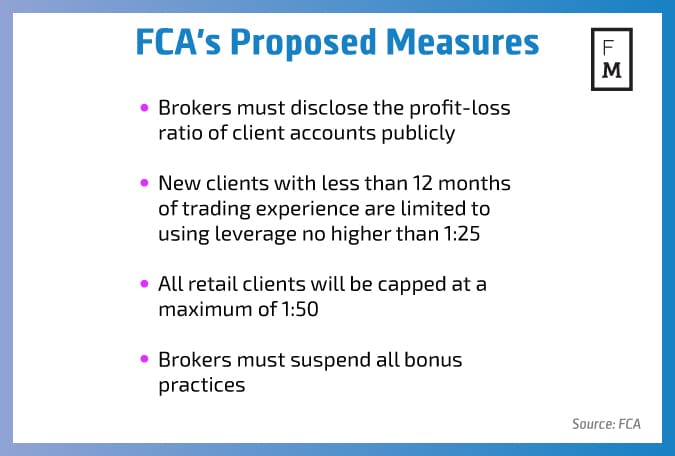
The biggest players in the market survived, but competition has suffered greatly and US traders are getting trading conditions that are worse than their European peers. The changes to the legislative framework in Japan and in the US have had substantial impacts on brokers, but if we look at Japan, where the maximum leverage is capped at 1:25, the trading volumes have been consistently rebounding throughout the years in line with the volatility of the Japanese yen.
Beware ‘the Wild Wild West’
While the regulated brokerages in the European Union are likely to face unified trading conditions or minor differences between countries, the brokers that are regulated offshore could well thrive under the new regulatory regime.
Being regulated offshore waives a number of client protections and some clients will be keen to seek higher leverage and will open trading accounts outside of the UK and the EU. Sacrificing their client fund security and the deposit insurance schemes that a number of regulators are mandating will be their own doing.
A number of companies that are not regulated or are regulated outside of Europe will most likely look for loopholes in the prospective advertisement bans in France, Belgium and the Netherlands. Regulators are still unclear as to how to enact such policy measures as the advertisement ban. They will need to make sure that the legal industry has enough incentives to continue operating and will prevent offshore companies from on-boarding European and UK clients.
This difficult task should be one of the main points that companies raise with the FCA during the consultation period that is set to expire on the 7th of March. The UK regulator is giving forex and CFDs brokers 3 months to send feedback on the proposed changes to the regulatory framework.
If the companies don’t show the FCA that some aspects of the limitations that it has announced today can backfire, the industry could be affected more than we already expect.
The news that the regulatory agency is preparing to put a cap on leverage for retail traders in the UK has startled brokers and investors in broking companies that are catering to retail traders. Brokers that have significant exposure to the UK market, including CMC Markets, IG Group, Plus500 and GAIN Capital (via City Index), have lost a combined market cap of over $2 billion.
Being the largest by capitalization, IG Group has suffered the most, losing £1.1 billion of its stock value. Following closely was CMC Markets with £200 million, Plus500 with £163 million and GAIN Capital with $30 million.
The size of the UK retail trading industry is justifying such an intervention - according to the FCA providers of rolling forex and CFDs have held close to £3.5 billion of client money funds. With 82 percent of the retail traders losing money over their lifespan as traders, the news really shouldn't come as a surprise to the industry.
The suitability of retail investors to use high leverage has long been a debate amongst brokers that have been advocating a more conservative approach vs the wild west honchos that are making the markets with high leverage and are pocketing what their clients lose.
While brokers that are sending their clients’ order to the market have been advocating a more restrictive approach, many market makers have been aggressively capitalizing on the lack of trading experience of their clients.
The obvious conflict of interest was going to mandate regulatory action sooner or later. Judging from the reaction of the stock market, most industry aficionados expected the regulators to intervene later.
Japan and the US Already Have Higher Leverage
In the aftermath of the global financial crisis in 2008 a set of regulatory reforms across the globe has mandated substantial changes to the industry. The main outcome for retail traders was felt the most in Japan and in the United States.
While the U.S. market has suffered greatly, brokers in Japan to this date are posting the highest trading volumes numbers. The main issues for the US market that has basically been destroyed by the enactment of the Dodd-Frank Act in the aftermath of the financial crisis of 2008 is related to the substantial capital requirements for retail forex brokers.
The biggest players in the market survived, but competition has suffered greatly and US traders are getting trading conditions that are worse than their European peers. The changes to the legislative framework in Japan and in the US have had substantial impacts on brokers, but if we look at Japan, where the maximum leverage is capped at 1:25, the trading volumes have been consistently rebounding throughout the years in line with the volatility of the Japanese yen.
Beware ‘the Wild Wild West’
While the regulated brokerages in the European Union are likely to face unified trading conditions or minor differences between countries, the brokers that are regulated offshore could well thrive under the new regulatory regime.
Being regulated offshore waives a number of client protections and some clients will be keen to seek higher leverage and will open trading accounts outside of the UK and the EU. Sacrificing their client fund security and the deposit insurance schemes that a number of regulators are mandating will be their own doing.
A number of companies that are not regulated or are regulated outside of Europe will most likely look for loopholes in the prospective advertisement bans in France, Belgium and the Netherlands. Regulators are still unclear as to how to enact such policy measures as the advertisement ban. They will need to make sure that the legal industry has enough incentives to continue operating and will prevent offshore companies from on-boarding European and UK clients.
This difficult task should be one of the main points that companies raise with the FCA during the consultation period that is set to expire on the 7th of March. The UK regulator is giving forex and CFDs brokers 3 months to send feedback on the proposed changes to the regulatory framework.
If the companies don’t show the FCA that some aspects of the limitations that it has announced today can backfire, the industry could be affected more than we already expect.
iForex posts its first annual results as a listed broker. Also ahead: CFI Financial secures a Brazil license, and prediction markets have a big week, with new ETF launches and fresh Polymarket loss data. It's Thursday, the thirtieth of April 2026. You're listening to the Finance Magnates Daily Brief.
FM Daily Brief - 29 April 2026
XTB and Robinhood both post first-quarter earnings. But the numbers point in very different directions. Also ahead: Capital.com pushes into three new markets and signals a move into payments.
It's Wednesday, the 29th of April 2026. You're listening to the Finance Magnates Daily Brief.
XTB and Robinhood both post first-quarter earnings. But the numbers point in very different directions. Also ahead: Capital.com pushes into three new markets and signals a move into payments.
It's Wednesday, the 29th of April 2026. You're listening to the Finance Magnates Daily Brief.
XTB and Robinhood both post first-quarter earnings. But the numbers point in very different directions. Also ahead: Capital.com pushes into three new markets and signals a move into payments.
It's Wednesday, the 29th of April 2026. You're listening to the Finance Magnates Daily Brief.
XTB and Robinhood both post first-quarter earnings. But the numbers point in very different directions. Also ahead: Capital.com pushes into three new markets and signals a move into payments.
It's Wednesday, the 29th of April 2026. You're listening to the Finance Magnates Daily Brief.
XTB and Robinhood both post first-quarter earnings. But the numbers point in very different directions. Also ahead: Capital.com pushes into three new markets and signals a move into payments.
It's Wednesday, the 29th of April 2026. You're listening to the Finance Magnates Daily Brief.
XTB and Robinhood both post first-quarter earnings. But the numbers point in very different directions. Also ahead: Capital.com pushes into three new markets and signals a move into payments.
It's Wednesday, the 29th of April 2026. You're listening to the Finance Magnates Daily Brief.
FM Daily Brief - 28 April 2026
Startrader posts three-point-one trillion dollars in first-quarter volume — up three hundred and forty percent from a year ago. Also ahead: Fintokei claims sub-second trader payouts, and eToro opens its premium subscription tier to all investors.
FM Daily Brief - 27 April 2026
Finance Magnates spoke with IG Group's MENA CEO. Also ahead: EC Markets posts a record five-point-one-three trillion dollar first quarter. Plus Hola Prime brings in Deloitte to audit prop firm payouts.