63% of Brokers Now Use Integrated CRM, Trading and Liquidity to Speed Launches, Study Finds

Wednesday, 17/12/2025 | 16:20 GMT by Jared Kirui
  • According to B2Broker, daily OTC FX turnover has reached $9.6 trillion, while crypto OTC spot volumes have risen 138% year-on-year.
  • The forex CRM market, valued at $485 million last year, is projected to grow up to 920 million by 2033.
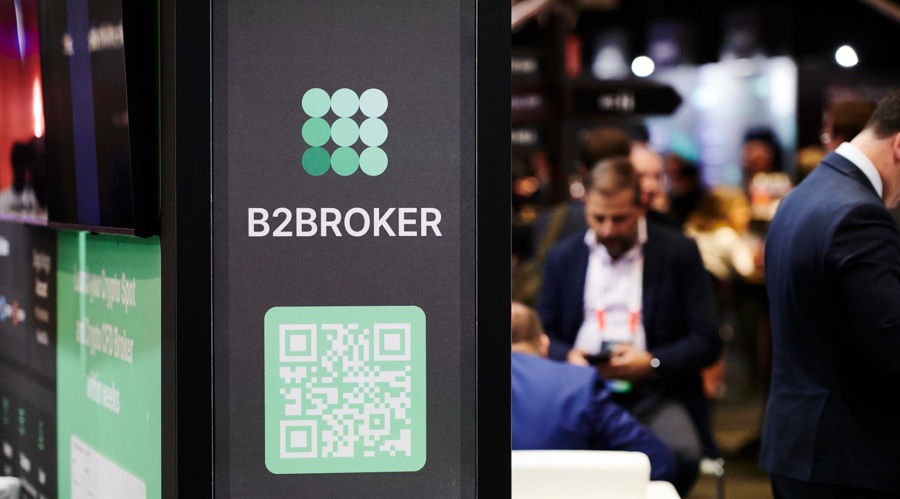
B2BROKER booth at FMLS:24

B2Broker, a global fintech solutions provider, reports that the move toward fully unified infrastructures is already changing how brokers enter and operate in the market.

In its latest analysis, 63% of brokers now launch with an integrated CRM, trading platform , and liquidity stack instead of stitching tools together, enabling them to go live in about 10 working days and sharply cutting time-to-market.

Daily OTC FX turnover has surged to 9.6 trillion dollars, while crypto OTC spot volumes have grown 138% year on year, and centralized and decentralized venues each process trillions in spot and derivatives volume.

The Drive Toward Convergence

According to the report, newer brokers tend to focus on turnkey deployment to secure rapid market access, while more mature players increasingly seek modular, API-first architectures that can support proprietary front ends.

The dataset spans a roughly 70/30 mix of emerging and established firms, revealing distinct infrastructure priorities at different stages of growth.

Fragmented technology stacks can reportedly no longer serve modern institutions effectively. Disconnected CRMs, risk modules, and KYC systems often create duplicate data, slow operations, and undermine decision-making, while the lack of synchronized data prevents brokers from seeing full client profiles or managing risk in real time.

Historically, institutions grew by adding modular tools for new functions, from trading terminals to back-office compliance dashboards. But every addition increased integration costs, maintenance risks, and data fragmentation. It merges CRM, trading, liquidity, and reporting into one ecosystem.

Further reading: 80% of CFD Brokers Plan Futures Pivot as Regulatory Squeeze and US Competition Intensify

This structure allows data to move bidirectionally, from onboarding to execution, without manual transfer or reconciliation.

Trading Architecture and Market Performance

In the race between complexity and control, integration wins. A unified infrastructure doesn’t simply enhance speed or lower costs; it reshapes how institutions build trust, manage liquidity, and comply with global standards.

Meanwhile, recent B2Broker estimates valued the forexCRM segment at around USD 484.6 million in 2024, with forecasts approaching USD 918–920 million by 2033.

The data reflects a growing dependence on integrated onboarding, compliance, account management, and retention workflows. This growth underscores a structural shift: technology that once supported basic administration now underpins core business resilience and scalability.

By 2025, industry analysis shows that CRMs no longer act as optional add-ons but function as the backbone of brokerage infrastructure.

Firms increasingly rely on CRM ecosystems to automate KYC/AML checks, route leads, operate multi-account wallet setups, reconcile payments, manage IB and partner networks, and consolidate analytics in a single environment.

B2Broker, a global fintech solutions provider, reports that the move toward fully unified infrastructures is already changing how brokers enter and operate in the market.

In its latest analysis, 63% of brokers now launch with an integrated CRM, trading platform , and liquidity stack instead of stitching tools together, enabling them to go live in about 10 working days and sharply cutting time-to-market.

Daily OTC FX turnover has surged to 9.6 trillion dollars, while crypto OTC spot volumes have grown 138% year on year, and centralized and decentralized venues each process trillions in spot and derivatives volume.

The Drive Toward Convergence

According to the report, newer brokers tend to focus on turnkey deployment to secure rapid market access, while more mature players increasingly seek modular, API-first architectures that can support proprietary front ends.

The dataset spans a roughly 70/30 mix of emerging and established firms, revealing distinct infrastructure priorities at different stages of growth.

Fragmented technology stacks can reportedly no longer serve modern institutions effectively. Disconnected CRMs, risk modules, and KYC systems often create duplicate data, slow operations, and undermine decision-making, while the lack of synchronized data prevents brokers from seeing full client profiles or managing risk in real time.

Historically, institutions grew by adding modular tools for new functions, from trading terminals to back-office compliance dashboards. But every addition increased integration costs, maintenance risks, and data fragmentation. It merges CRM, trading, liquidity, and reporting into one ecosystem.

Further reading: 80% of CFD Brokers Plan Futures Pivot as Regulatory Squeeze and US Competition Intensify

This structure allows data to move bidirectionally, from onboarding to execution, without manual transfer or reconciliation.

Trading Architecture and Market Performance

In the race between complexity and control, integration wins. A unified infrastructure doesn’t simply enhance speed or lower costs; it reshapes how institutions build trust, manage liquidity, and comply with global standards.

Meanwhile, recent B2Broker estimates valued the forexCRM segment at around USD 484.6 million in 2024, with forecasts approaching USD 918–920 million by 2033.

The data reflects a growing dependence on integrated onboarding, compliance, account management, and retention workflows. This growth underscores a structural shift: technology that once supported basic administration now underpins core business resilience and scalability.

By 2025, industry analysis shows that CRMs no longer act as optional add-ons but function as the backbone of brokerage infrastructure.

Firms increasingly rely on CRM ecosystems to automate KYC/AML checks, route leads, operate multi-account wallet setups, reconcile payments, manage IB and partner networks, and consolidate analytics in a single environment.

About the Author: Jared Kirui
Jared Kirui
  • 2481 Articles
  • 50 Followers
About the Author: Jared Kirui
Jared is an experienced financial journalist passionate about all things forex and CFDs.
  • 2481 Articles
  • 50 Followers

More from the Author

Retail FX

!"#$%&'()*+,-./0123456789:;<=>?@ABCDEFGHIJKLMNOPQRSTUVWXYZ[\]^_`abcdefghijklmnopqrstuvwxyz{|} !"#$%&'()*+,-./0123456789:;<=>?@ABCDEFGHIJKLMNOPQRSTUVWXYZ[\]^_`abcdefghijklmnopqrstuvwxyz{|}