

The conversation around digital assets at the World Economic Forum has shifted from speculative debate to practical implementation.
Global financial leaders framed tokenization and stablecoins as "the name of the game" for 2026. However, the clear consensus emerging from Davos is that the revolution will be institutional, not retail - at least for now.
Wholesale Consensus
Last year, Davos panels debated the future of crypto. This year, however, the discussion focused squarely on how to deploy blockchain-based infrastructure at scale. The key takeaway for brokers and financial institutions is that the most immediate and tangible progress is happening in wholesale markets, far from the consumer-facing hype.
Francois Villeroy de Galhau, Governor of the Bank of France and an ECB Governing Council member, captured the mood perfectly. He acknowledged that stablecoins have become "very fashionable," but "the jury is still out" on use cases beyond the crypto-native ecosystem.
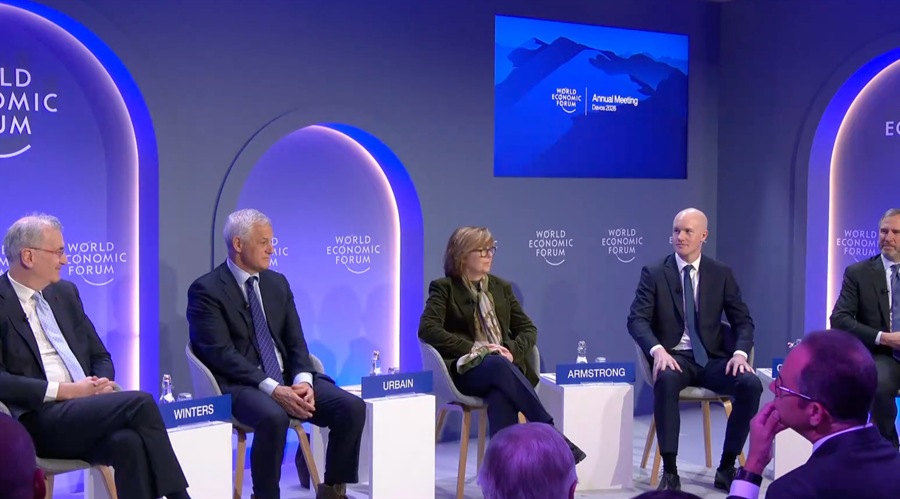
Is Tokenization the Future? @cnbcKaren (@CNBC), @brian_armstrong (@coinbase), @bgarlinghouse (@ripple), Valérie Urbain ( @EuroclearGroup), François Villeroy de Galhau (@banquedefrance), Bill Winters (@StanChart) #WEF26 https://t.co/Ob8n7PCh1T
— World Economic Forum (@wef) January 21, 2026
He pointed to the ECB’s wholesale Central Bank Digital Currency (CBDC) initiatives as the real focus, where tokenization can be tested in controlled, high-value environments such as settlement and collateral management. This "wholesale-first" approach appeared to be a recurring theme.
Valerie Urbane, CEO of settlement giant Euroclear, highlighted an ongoing initiative to tokenize the €300 billion French commercial paper market. The goal, she explained, is not just to test a new product, but to move an entire ecosystem onto new rails to understand how issuance, settlement, and investor participation work together at scale.
Bill Winters, CEO of Standard Chartered, described the industry as being at an "inflection point," but noted a key constraint for global banks and brokers: the path from experimentation to full-scale production will be dictated by regulatory coordination across dozens of jurisdictions, not by technology alone.
- How Tokenised Stocks Are Creating a Parallel 24/7 Market for Equities
- Tokenized Stocks Reach All-Time High $1.2 B While ESMA Flags “Risk of Misunderstanding”
- From Chat to Stock: xStocks Puts Tokenized U.S. Equities Inside TON Wallet on Telegram
Retail Debate
While the institutional focus dominated discussions, the potential for broader retail access was not dismissed entirely. Coinbase CEO Brian Armstrong argued that tokenization holds the promise of bringing high-quality assets to an "unbrokered" global population of billions, hinting at longer-term ambitions.
However, this vision of mass access was met with a firm reality check from regulators. Villeroy de Galhau cautioned that the widespread adoption of privately issued tokenized money, especially from foreign issuers, could create "sovereignty concerns" for national economies. His central message was unambiguous: regulation is not the enemy of innovation, but a "guarantee of trust" necessary for it to succeed.
For brokers and multi-asset platforms, the message from Davos is clear. The near-term action is in market infrastructure, not retail trading products. The strategic debate has shifted to trust, governance, and how to position themselves as the regulated gateways between the old financial world and the new tokenized rails. The era of asking "if" is over; the era of building the "how" has begun.


