New hologram banknotes enhance security and public trust in the yen.
The skyline of Tokyo, Japan
Japan's recent introduction of high-tech banknotes
featuring advanced hologram portraits is more than a measure against
counterfeiting; it is a strategic move aimed at maintaining public confidence
in the yen during a period of economic uncertainty. This
initiative, announced by Prime Minister Fumio Kishida, aligns with Japan's
broader efforts to navigate economic challenges, including the weakening yen
and inflationary pressures.
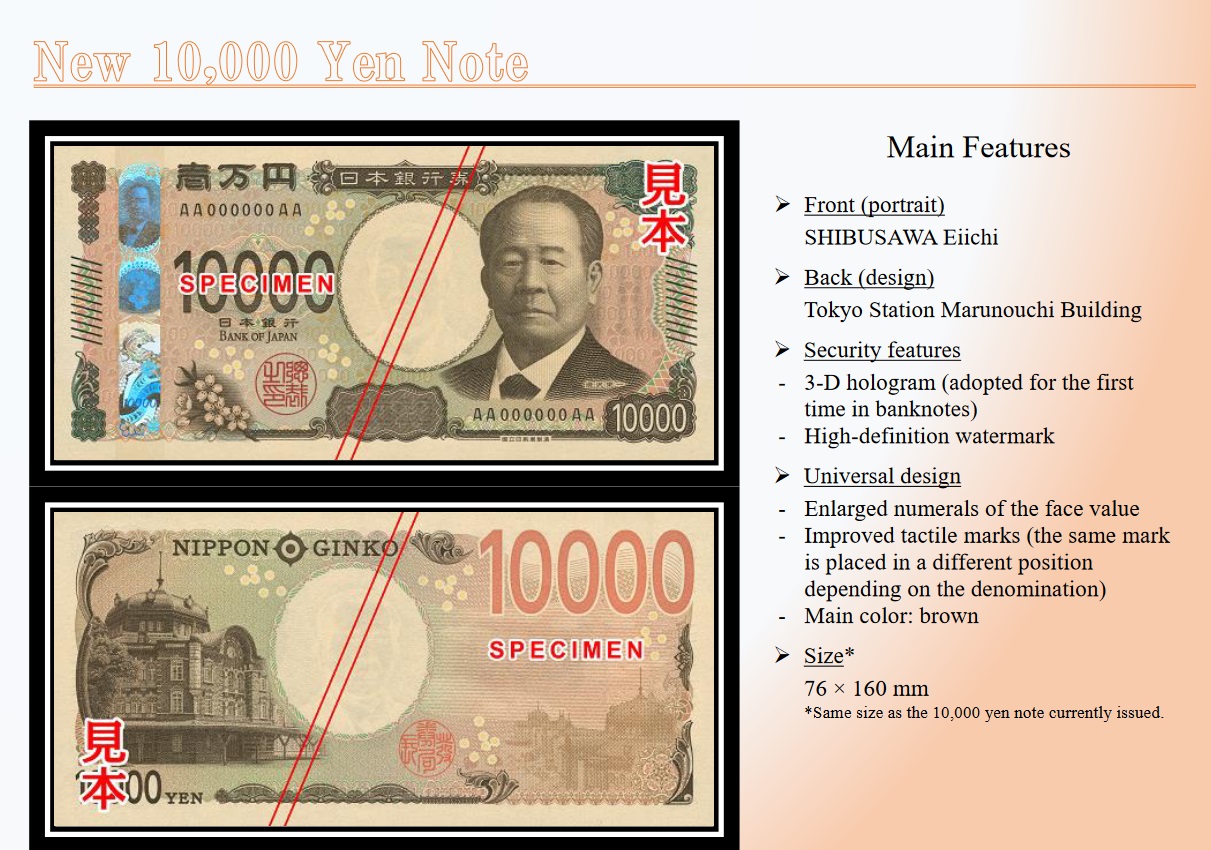
Source: Bank of Japan
Why is Japan Introducing High-Tech Banknotes Now?
Japan is introducing high-tech banknotes as part of a
comprehensive strategy to enhance currency security, maintain public
confidence, and support economic stability. The advanced hologram technology
represents a significant leap in anti-counterfeiting measures, ensuring that
physical currency remains a trusted and secure medium of exchange. This move
also aligns with the government's broader efforts to modernize the economy and
navigate the complexities of a digital financial landscape.
Economic Context:
The Weakened Yen
The introduction of these high-tech banknotes comes at a
critical time for the Japanese economy. Experiencing
significant depreciation, there are several factors causing the weak yen:
Monetary Policy: The Bank of Japan's ultra-loose monetary
policy, designed to stimulate economic growth, has kept interest rates
exceptionally low. This makes the yen less attractive to investors compared to
currencies with higher returns.
Economic Performance: Japan's economic recovery, though
positive, has not kept pace with global peers, affecting investor confidence
and the yen's value.
Global Influences: Geopolitical tensions and shifts in
the global economy have led investors to seek safer or higher-yielding assets,
further weakening the yen.
The depreciation of the yen impacts Japan's economy by
increasing the cost of imports, thereby exacerbating inflation and putting
pressure on consumer spending and business costs.
Strengthening Public Confidence
In this context, the new banknotes play a crucial role in
maintaining confidence in the yen. While digital transactions are on the rise,
cash remains a significant part of the Japanese economy. The high-tech features
of the new banknotes ensure that physical currency remains secure and trusted.
Enhancing the security of physical currency helps reassure
the public and businesses that the yen remains a reliable store of value. This
is particularly important in a time of economic uncertainty, where trust in the
financial system can be easily shaken.
A Technological Leap
in Currency Security
The new banknotes, the first redesign in two decades,
incorporate three-dimensional hologram portraits of notable historical figures
such as Eiichi Shibusawa, Umeko Tsuda, and Shibasaburo Kitasato. These figures
symbolize Japan's dedication to capitalism, women's empowerment, and scientific
innovation. The advanced security features are intended to make counterfeiting
nearly impossible, thus preserving the integrity of Japan's physical currency.
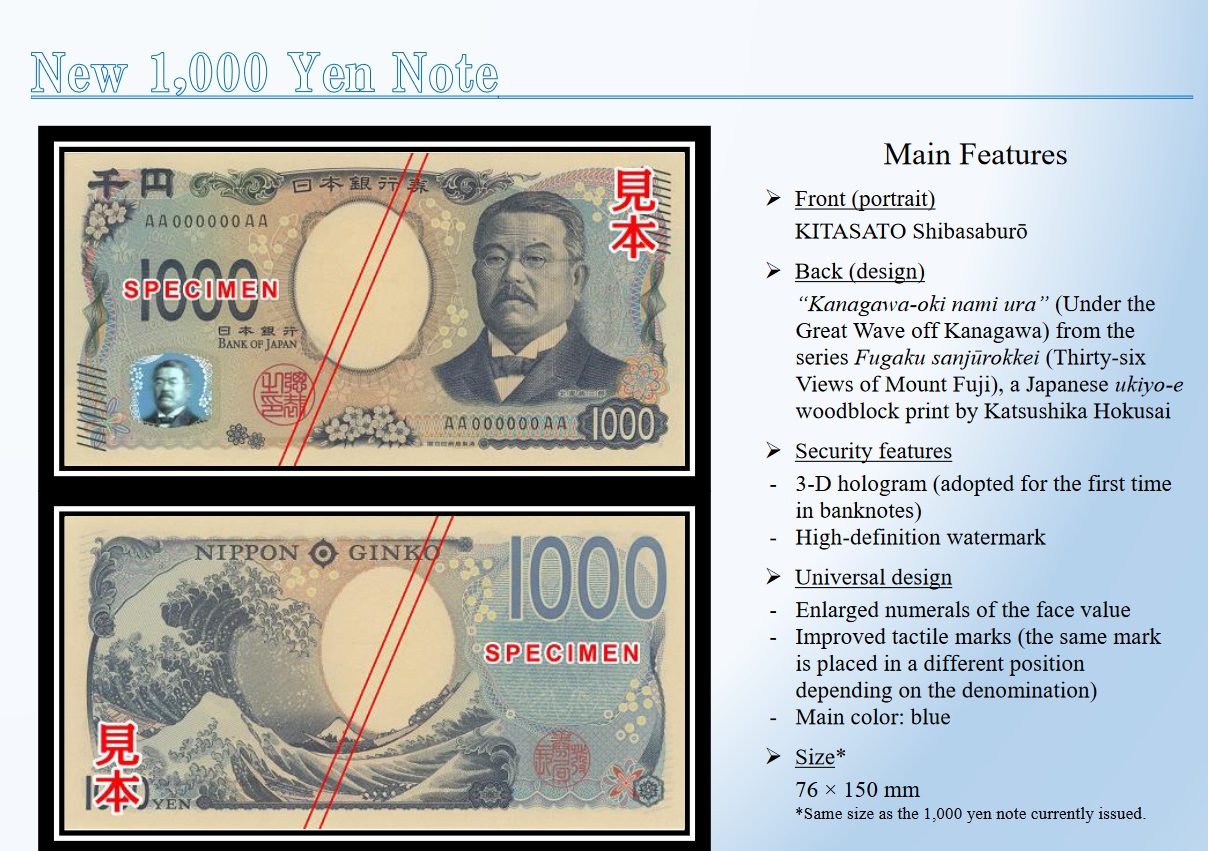
Source: Bank of Japan
Prime Minister Kishida highlighted the importance of these
notes, aligning their release with Japan's economic recovery efforts after
decades of stagnation. By enhancing the security of its currency, Japan aims to
bolster public trust in the yen, even as it promotes a shift towards digital
transactions.
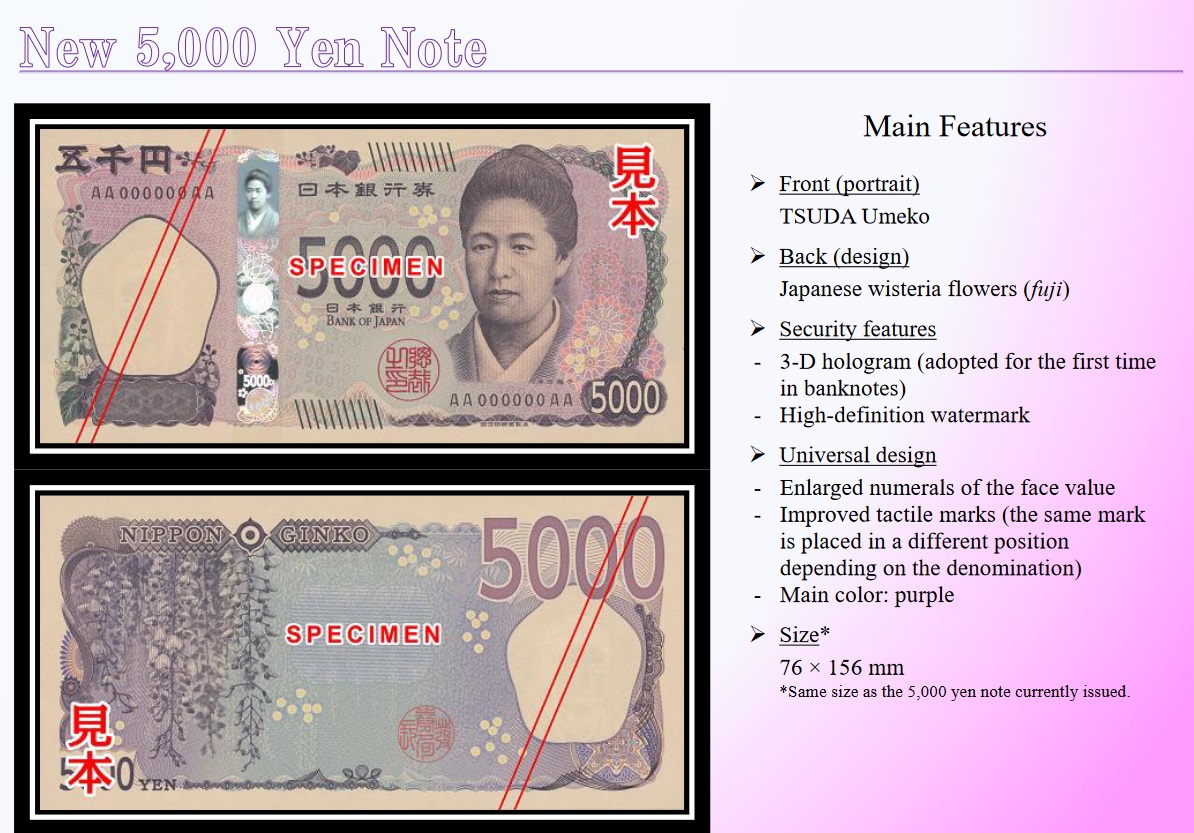
Source: Bank of Japan
How Do the New Banknotes Help in Combating Counterfeiting?
These new banknotes employ cutting-edge holographic
technology to generate three-dimensional portraits that change depending on the
viewing angle. They employ technology, described as a world-first for paper money, is
designed to thwart counterfeiters by making it extremely difficult to replicate
the intricate patterns and holograms.
Japan remains predominantly cash-based due to several cultural and practical reasons such as cultural preference, technological gaps, or an aging population. As such, the National Printing Bureau of Japan has
emphasized that these bills' security features will help maintain the integrity of the
nation's currency, which is crucial for sustaining public trust and economic
stability
Conclusion
Japan's introduction of high-tech bills amid a push towards a cashless society symbolizes a nuanced strategy to reinforce trust in its currency during turbulent economic times. This move should not be viewed in isolation but as part of a broader narrative of how nations adapt to the dual demands of technological advancement and economic stability. By enhancing the physical security of the yen, Japan addresses immediate concerns of counterfeiting and public trust. Simultaneously, the drive towards digital payments represents a forward-looking vision of economic efficiency and global competitiveness.
The juxtaposition of with digital payment initiatives also reflects Japan's unique socio-economic fabric, where traditional practices coexist with cutting-edge innovation. This dual approach can serve as a model for other economies grappling with similar challenges. It underscores a fundamental principle in modern economics: the need to balance innovation with reliability, and technological progress with cultural and practical realities. As Japan navigates its economic recovery, its strategies offer valuable insights into how other nations might fortify their financial systems against both present uncertainties and future disruptions.
Japan's recent introduction of high-tech banknotes
featuring advanced hologram portraits is more than a measure against
counterfeiting; it is a strategic move aimed at maintaining public confidence
in the yen during a period of economic uncertainty. This
initiative, announced by Prime Minister Fumio Kishida, aligns with Japan's
broader efforts to navigate economic challenges, including the weakening yen
and inflationary pressures.
Source: Bank of Japan
Why is Japan Introducing High-Tech Banknotes Now?
Japan is introducing high-tech banknotes as part of a
comprehensive strategy to enhance currency security, maintain public
confidence, and support economic stability. The advanced hologram technology
represents a significant leap in anti-counterfeiting measures, ensuring that
physical currency remains a trusted and secure medium of exchange. This move
also aligns with the government's broader efforts to modernize the economy and
navigate the complexities of a digital financial landscape.
Economic Context:
The Weakened Yen
The introduction of these high-tech banknotes comes at a
critical time for the Japanese economy. Experiencing
significant depreciation, there are several factors causing the weak yen:
Monetary Policy: The Bank of Japan's ultra-loose monetary
policy, designed to stimulate economic growth, has kept interest rates
exceptionally low. This makes the yen less attractive to investors compared to
currencies with higher returns.
Economic Performance: Japan's economic recovery, though
positive, has not kept pace with global peers, affecting investor confidence
and the yen's value.
Global Influences: Geopolitical tensions and shifts in
the global economy have led investors to seek safer or higher-yielding assets,
further weakening the yen.
The depreciation of the yen impacts Japan's economy by
increasing the cost of imports, thereby exacerbating inflation and putting
pressure on consumer spending and business costs.
Strengthening Public Confidence
In this context, the new banknotes play a crucial role in
maintaining confidence in the yen. While digital transactions are on the rise,
cash remains a significant part of the Japanese economy. The high-tech features
of the new banknotes ensure that physical currency remains secure and trusted.
Enhancing the security of physical currency helps reassure
the public and businesses that the yen remains a reliable store of value. This
is particularly important in a time of economic uncertainty, where trust in the
financial system can be easily shaken.
A Technological Leap
in Currency Security
The new banknotes, the first redesign in two decades,
incorporate three-dimensional hologram portraits of notable historical figures
such as Eiichi Shibusawa, Umeko Tsuda, and Shibasaburo Kitasato. These figures
symbolize Japan's dedication to capitalism, women's empowerment, and scientific
innovation. The advanced security features are intended to make counterfeiting
nearly impossible, thus preserving the integrity of Japan's physical currency.
Source: Bank of Japan
Prime Minister Kishida highlighted the importance of these
notes, aligning their release with Japan's economic recovery efforts after
decades of stagnation. By enhancing the security of its currency, Japan aims to
bolster public trust in the yen, even as it promotes a shift towards digital
transactions.
Source: Bank of Japan
How Do the New Banknotes Help in Combating Counterfeiting?
These new banknotes employ cutting-edge holographic
technology to generate three-dimensional portraits that change depending on the
viewing angle. They employ technology, described as a world-first for paper money, is
designed to thwart counterfeiters by making it extremely difficult to replicate
the intricate patterns and holograms.
Japan remains predominantly cash-based due to several cultural and practical reasons such as cultural preference, technological gaps, or an aging population. As such, the National Printing Bureau of Japan has
emphasized that these bills' security features will help maintain the integrity of the
nation's currency, which is crucial for sustaining public trust and economic
stability
Conclusion
Japan's introduction of high-tech bills amid a push towards a cashless society symbolizes a nuanced strategy to reinforce trust in its currency during turbulent economic times. This move should not be viewed in isolation but as part of a broader narrative of how nations adapt to the dual demands of technological advancement and economic stability. By enhancing the physical security of the yen, Japan addresses immediate concerns of counterfeiting and public trust. Simultaneously, the drive towards digital payments represents a forward-looking vision of economic efficiency and global competitiveness.
The juxtaposition of with digital payment initiatives also reflects Japan's unique socio-economic fabric, where traditional practices coexist with cutting-edge innovation. This dual approach can serve as a model for other economies grappling with similar challenges. It underscores a fundamental principle in modern economics: the need to balance innovation with reliability, and technological progress with cultural and practical realities. As Japan navigates its economic recovery, its strategies offer valuable insights into how other nations might fortify their financial systems against both present uncertainties and future disruptions.
SEC Delays Prediction Market ETFs, Signaling Turf Battle with CFTC
Featured Videos
FM Daily Brief - 22 May 2026
You are listening to Finance Magnates Daily Brief. Brought to you by Finance Magnates Intelligence. It’s Friday, the twenty-second of May 2026, and these are our main stories: Interactive Brokers expands its view of prediction markets as an information tool for investors. US prop firms move closer to CFTC oversight structures. And a Polish fintech CEO is detained in the United States.
You are listening to Finance Magnates Daily Brief. Brought to you by Finance Magnates Intelligence. Today's Thursday, the twenty first of May 2026, and these are our main stories: CFD broker CMC Markets and Binance both target SpaceX exposure on the same day, IG Japan pauses retail vanilla options trading, and prediction markets expand across brokers and exchanges.
FM Daily Brief - 20 May 2026
Today’s lead: CFD brokers show a wide divergence in per-account trading activity. Also ahead, a deep dive into IG Group and XTB’s latest numbers. It's Wednesday, 20 May 2026. You're listening to the Finance Magnates Daily Brief.
FM Daily Brief - 19 May 2026
Today's lead: IG Group has lifted its full-year revenue outlook after a strong quarter. Also ahead, Swissquote sets a date for its one-to-ten share split. And CMC Markets’ UK head says neobanks are becoming trading distributors. It’s Tuesday, 19 May 2026. You’re listening to the Finance Magnates Daily Brief.
FM Daily Brief - 18 May 2026
Today’s lead: Cyprus authorities detain suspects in a forex-linked criminal probe. Also ahead: Kraken’s IPO timeline slips further, and CMC Markets expands its Spectre product to retail clients. It’s Monday, 18 May 2026. You’re listening to the Finance Magnates Daily Brief.