Kalshi and Polymarket Move Into Perpetual Futures, Taking On Offshore Exchanges

Wednesday, 22/04/2026 | 13:36 GMT by Tanya Chepkova
  • Both platforms are launching perpetual futures, extending beyond event contracts into the core crypto derivatives market.
  • The move positions them against offshore exchanges, but raises questions about liquidity, pricing, and execution.
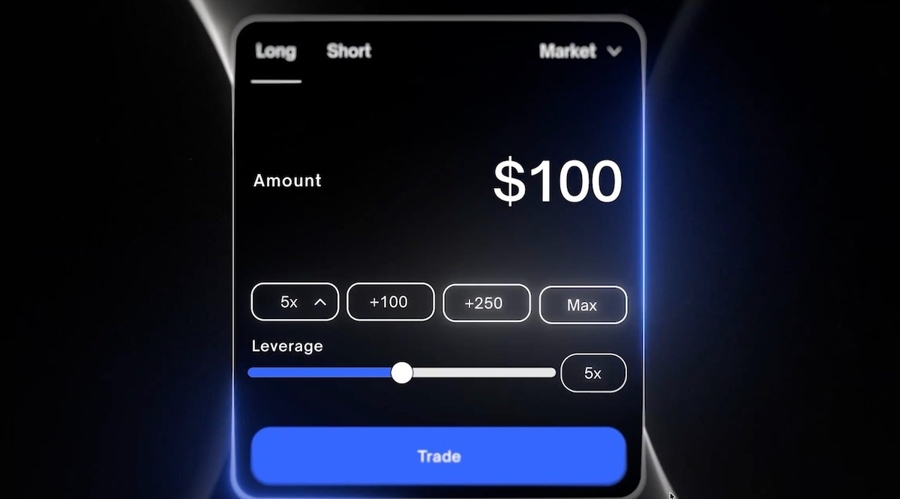
Screenshot from Polymarket video announcing derivatives launch

Kalshi and Polymarket are simultaneously entering the perpetual futures market — a move that takes both platforms well beyond event contracts and into direct competition with the offshore crypto exchanges that currently dominate this space.

Bloomberg reported that Kalshi plans to launch crypto perpetual futures in the coming weeks, citing a person familiar with the matter. Within hours, Polymarket announced its own offering.

The near-simultaneous timing turned what might have been a quiet product launch into a visible race for market share in the most traded crypto derivative.

Both platforms are pivoting from pure prediction markets toward hybrid derivatives exchanges, betting they can pull trading volume away from unregulated international venues.

Two Platforms, Two Different Strategies

The approaches reflect each platform's regulatory position. Kalshi, a CFTC-regulated Designated Contract Market, is planning a phased U.S. launch under the codename "Timeless."

The initial focus is crypto perpetuals — Bitcoin and others — with commodities to follow. The platform will use its recently acquired FCM license to offer margin trading, which matters for institutional participants. Collateral starts in U.S. dollars, with stablecoin support planned for a later phase.

The margin component is also starting to take shape. Kalshi recently received regulatory approval for its affiliated entity, Kinetic Markets, to operate as a Futures Commission Merchant, allowing it to offer partially collateralized trading at the brokerage level. Separate approval from the CFTC is still required for the exchange itself.

Polymarket, which operates primarily outside the U.S. jurisdiction, appears to be going faster and broader. A teaser video showed perpetuals on crypto, stocks, including Nvidia, and commodities.

The international platform allows Polymarket to move quickly with a wider product range, though the regulatory status of these products for U.S. users remains unclear.

The Competitive Logic

The perpetual market is large enough to justify the strategic shift. CFTC Chairman Brian Quintenz's successor, Michael Selig, has stated publicly that bringing perpetual futures under the agency's oversight is a priority — specifically to recapture volume from offshore venues.

Both platforms are also reacting to competition from crypto-native derivatives DEXs like Hyperliquid, which process hundreds of billions in monthly volume without the compliance infrastructure of a regulated exchange.

For Kalshi and Polymarket, this is a bet that brand recognition and existing user bases can translate into meaningful market share in a much larger arena.

Whether regulated or semi-regulated perpetuals can realistically compete with offshore venues on execution, fees, and asset breadth is a separate question — and one neither platform has fully answered yet.

For brokers, clearinghouses, and financial infrastructure providers, the outcome of this race will directly affect how perpetual futures are structured and distributed in the U.S. market over the next few years.

Kalshi and Polymarket are simultaneously entering the perpetual futures market — a move that takes both platforms well beyond event contracts and into direct competition with the offshore crypto exchanges that currently dominate this space.

Bloomberg reported that Kalshi plans to launch crypto perpetual futures in the coming weeks, citing a person familiar with the matter. Within hours, Polymarket announced its own offering.

The near-simultaneous timing turned what might have been a quiet product launch into a visible race for market share in the most traded crypto derivative.

Both platforms are pivoting from pure prediction markets toward hybrid derivatives exchanges, betting they can pull trading volume away from unregulated international venues.

Two Platforms, Two Different Strategies

The approaches reflect each platform's regulatory position. Kalshi, a CFTC-regulated Designated Contract Market, is planning a phased U.S. launch under the codename "Timeless."

The initial focus is crypto perpetuals — Bitcoin and others — with commodities to follow. The platform will use its recently acquired FCM license to offer margin trading, which matters for institutional participants. Collateral starts in U.S. dollars, with stablecoin support planned for a later phase.

The margin component is also starting to take shape. Kalshi recently received regulatory approval for its affiliated entity, Kinetic Markets, to operate as a Futures Commission Merchant, allowing it to offer partially collateralized trading at the brokerage level. Separate approval from the CFTC is still required for the exchange itself.

Polymarket, which operates primarily outside the U.S. jurisdiction, appears to be going faster and broader. A teaser video showed perpetuals on crypto, stocks, including Nvidia, and commodities.

The international platform allows Polymarket to move quickly with a wider product range, though the regulatory status of these products for U.S. users remains unclear.

The Competitive Logic

The perpetual market is large enough to justify the strategic shift. CFTC Chairman Brian Quintenz's successor, Michael Selig, has stated publicly that bringing perpetual futures under the agency's oversight is a priority — specifically to recapture volume from offshore venues.

Both platforms are also reacting to competition from crypto-native derivatives DEXs like Hyperliquid, which process hundreds of billions in monthly volume without the compliance infrastructure of a regulated exchange.

For Kalshi and Polymarket, this is a bet that brand recognition and existing user bases can translate into meaningful market share in a much larger arena.

Whether regulated or semi-regulated perpetuals can realistically compete with offshore venues on execution, fees, and asset breadth is a separate question — and one neither platform has fully answered yet.

For brokers, clearinghouses, and financial infrastructure providers, the outcome of this race will directly affect how perpetual futures are structured and distributed in the U.S. market over the next few years.

About the Author: Tanya Chepkova
Tanya Chepkova
  • 179 Articles
About the Author: Tanya Chepkova
Tanya Chepkova is a News Editor at Finance Magnates with more than 16 years of experience in financial journalism, covering forex, crypto, and digital asset markets. Her work spans daily industry reporting and data-driven, long-form explainers focused on market structure, trading models, and regulatory shifts. Before joining Finance Magnates, she led the editorial team of a cryptocurrency-focused media outlet for six years. Her reporting combines analytical depth with clear storytelling, with particular attention to how structural changes in trading, stablecoin infrastructure, and emerging products such as prediction markets reshape the broader financial ecosystem. She covers global developments and provides additional insight into CIS markets. Areas of Coverage: Crypto and digital asset markets Prediction markets Stablecoins and cross-border payments Industry analysis and long-form explainers
  • 179 Articles

More from the Author

FinTech

!"#$%&'()*+,-./0123456789:;<=>?@ABCDEFGHIJKLMNOPQRSTUVWXYZ[\]^_`abcdefghijklmnopqrstuvwxyz{|} !"#$%&'()*+,-./0123456789:;<=>?@ABCDEFGHIJKLMNOPQRSTUVWXYZ[\]^_`abcdefghijklmnopqrstuvwxyz{|}