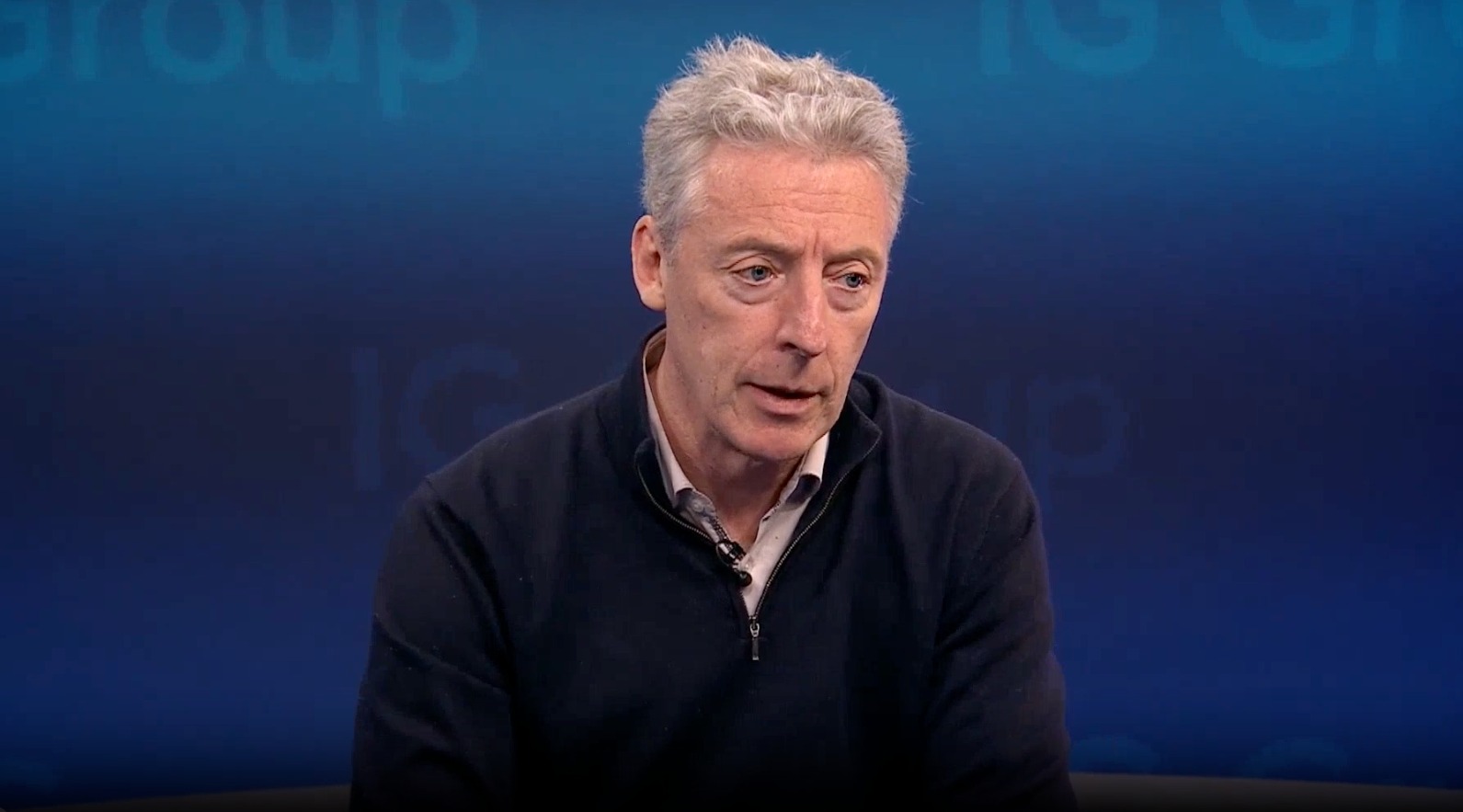
Ermotti replaces Hamers and returns after a two-year break.
Hamers embraced the change and wanted to "serve the interests of the new combination."
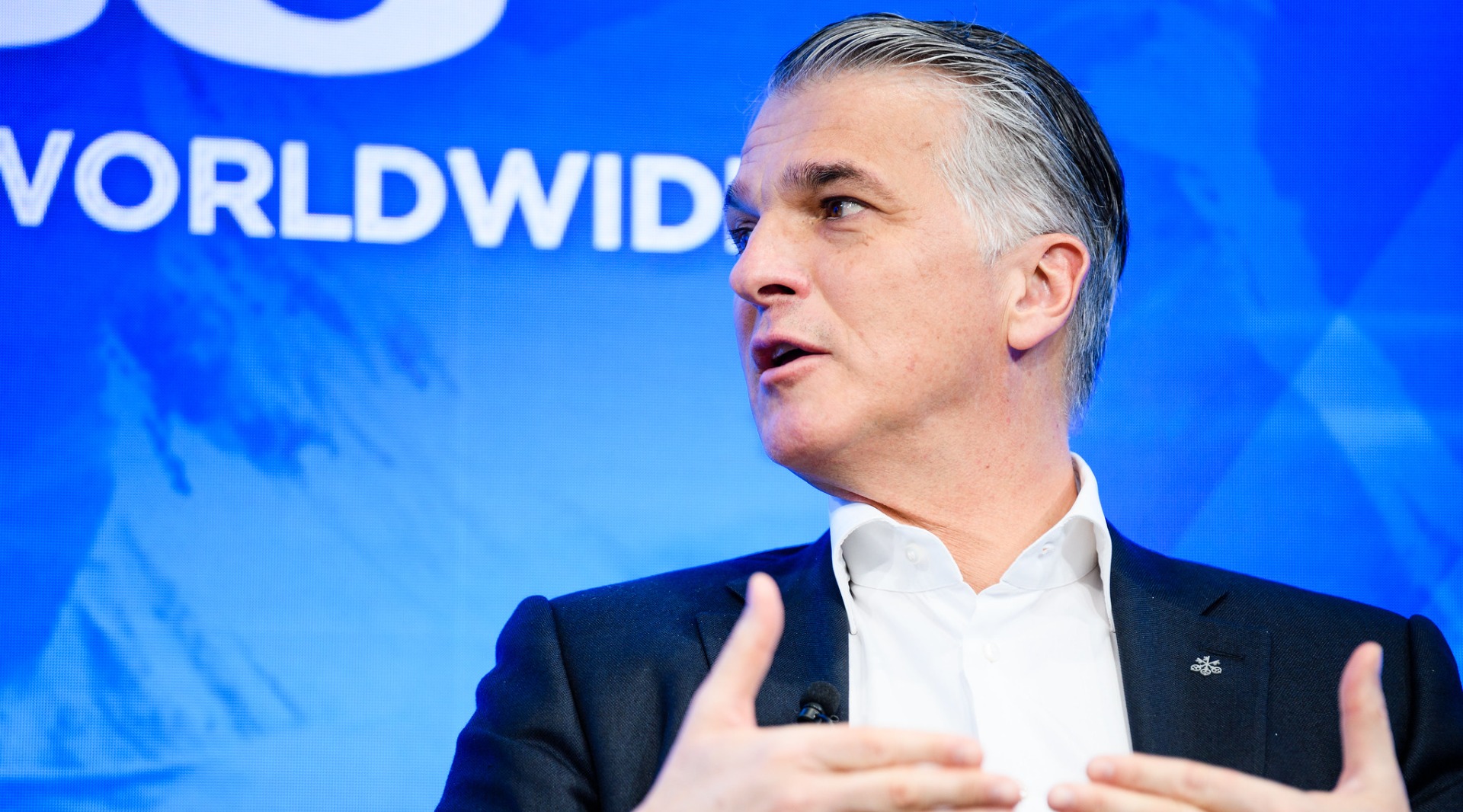
Sertio Ermotti During World Economic Forum in 2017. Source: Flickr
UBS, a
Swiss global investment bank, which agreed to buy troubled Credit Suisse last
week, is bringing back its former CEO, Sergio P. Ermotti, to oversee the
complex acquisition of the banking crisis victim.
UBS' Hamers to Make Place
for Ermotti
Ermotti
held the position of Chairman at UBS for nine years before being replaced by
Ralph Hamers. He has been the Chairman of Swiss Re for the past two years, but
in the wake of Credit Suisse's CHF 3 billion deal, the Board decided he would
be a better helmsman for UBS than Hamers, who currently holds the role.
UBS agreed
to take over the crosstown rival last week after investors lost faith in Credit
Suisse's ability to bounce back from a problematic situation exacerbated by
bank failures in the United States. CS shares fell 67% last year and 72% this
year, responding to the company's deteriorating financial performance, client
asset outflows and controversy over the Swiss lender's actions.
Credit Suisse Shares. Source: Tradingview.com
Ermotti
will be officially appointed as the Group Chief Executive Officer and President of
the Group Executive Board on 5 April 2023, after the Annual General Meeting.
Hamer will remain at UBS and will work with Ermotti as an advisor during the
transition process "to ensure a successful closure of the transaction and
a smooth hand-over."
"I am
of course sorry to leave UBS, but circumstances have changed in ways that none
of us expected. I am stepping aside in the interests of the new combined entity
and its stakeholders, including Switzerland and its financial sector – it has
been a pleasure and privilege to lead this great bank to where it is today,"
Hamers commented in a press release.
Ermotti
expressed his honor to be chosen to lead the bank during a significant time for
all stakeholders and Switzerland. He thanked Hamers for his successful guidance
at UBS. He acknowledged the urgent and challenging nature of the task. In
addition, Emortti emphasized the need for a thorough and systematic evaluation
of all options in the interest of the involved parties.
"I am
conscious of the uncertainty many feel and I promise that, together with my
colleagues, our full attention will be on delivering the best possible outcome
for our clients, our employees, our shareholders and the Swiss government,"
the soon-to-be CEO added.
Deutsche Bank Falls after
Credit Suisse
Credit
Suisse is undeniably a bank with serious problems. In a belatedly released
financial report filed with the US SEC, it indicated "material
weakness," while in its 2022 report released in early February, it showed a CHF 7.3 billion annual loss and an outflow of more than 20% of assets under
management.
When the
market circulated the information that UBS had agreed to take over its troubled
rival, global markets reacted with substantial depreciation. In the first
reaction, Credit Suisse shares lost more than 60%, UBS slid 13%, and the entire
European banking sector fell.
Although it
seemed that the situation would be brought under control and the industry's
problem, which began with the collapse of Silicon Valley Bank (SVB), eased,
disturbing movements last week appeared on the chart of German lending giant
Deutsche Bank. During Friday's session, the bank's shares fell 15% after the
higher credit default swaps.
Deutsche Bank Shares. Source: Tradingview.com
However, as
it turned out, the panic was largely unwarranted, and the stock rebounded this
week after testing a level below EUR 8, which is the lowest since October 2022. It
clearly showed that investors remain intensely uncertain and sensitive to any
news from the banking markets.
UBS, a
Swiss global investment bank, which agreed to buy troubled Credit Suisse last
week, is bringing back its former CEO, Sergio P. Ermotti, to oversee the
complex acquisition of the banking crisis victim.
UBS' Hamers to Make Place
for Ermotti
Ermotti
held the position of Chairman at UBS for nine years before being replaced by
Ralph Hamers. He has been the Chairman of Swiss Re for the past two years, but
in the wake of Credit Suisse's CHF 3 billion deal, the Board decided he would
be a better helmsman for UBS than Hamers, who currently holds the role.
UBS agreed
to take over the crosstown rival last week after investors lost faith in Credit
Suisse's ability to bounce back from a problematic situation exacerbated by
bank failures in the United States. CS shares fell 67% last year and 72% this
year, responding to the company's deteriorating financial performance, client
asset outflows and controversy over the Swiss lender's actions.
Credit Suisse Shares. Source: Tradingview.com
Ermotti
will be officially appointed as the Group Chief Executive Officer and President of
the Group Executive Board on 5 April 2023, after the Annual General Meeting.
Hamer will remain at UBS and will work with Ermotti as an advisor during the
transition process "to ensure a successful closure of the transaction and
a smooth hand-over."
"I am
of course sorry to leave UBS, but circumstances have changed in ways that none
of us expected. I am stepping aside in the interests of the new combined entity
and its stakeholders, including Switzerland and its financial sector – it has
been a pleasure and privilege to lead this great bank to where it is today,"
Hamers commented in a press release.
Ermotti
expressed his honor to be chosen to lead the bank during a significant time for
all stakeholders and Switzerland. He thanked Hamers for his successful guidance
at UBS. He acknowledged the urgent and challenging nature of the task. In
addition, Emortti emphasized the need for a thorough and systematic evaluation
of all options in the interest of the involved parties.
"I am
conscious of the uncertainty many feel and I promise that, together with my
colleagues, our full attention will be on delivering the best possible outcome
for our clients, our employees, our shareholders and the Swiss government,"
the soon-to-be CEO added.
Deutsche Bank Falls after
Credit Suisse
Credit
Suisse is undeniably a bank with serious problems. In a belatedly released
financial report filed with the US SEC, it indicated "material
weakness," while in its 2022 report released in early February, it showed a CHF 7.3 billion annual loss and an outflow of more than 20% of assets under
management.
When the
market circulated the information that UBS had agreed to take over its troubled
rival, global markets reacted with substantial depreciation. In the first
reaction, Credit Suisse shares lost more than 60%, UBS slid 13%, and the entire
European banking sector fell.
Although it
seemed that the situation would be brought under control and the industry's
problem, which began with the collapse of Silicon Valley Bank (SVB), eased,
disturbing movements last week appeared on the chart of German lending giant
Deutsche Bank. During Friday's session, the bank's shares fell 15% after the
higher credit default swaps.
Deutsche Bank Shares. Source: Tradingview.com
However, as
it turned out, the panic was largely unwarranted, and the stock rebounded this
week after testing a level below EUR 8, which is the lowest since October 2022. It
clearly showed that investors remain intensely uncertain and sensitive to any
news from the banking markets.
Damian Chmiel is a Senior Analyst & Editor at Finance Magnates with more than 15 years of experience in the CFD and online trading industry. Active as both a trader and journalist since 2010, he focuses on broker coverage, fintech innovation, and regulatory developments across Europe, the Middle East, and Asia.
His work includes interviews with C-level leaders at major brokerages and fintech platforms, as well as co-authoring Finance Magnates’ quarterly industry benchmarking reports. Damian’s reporting is data-driven, market-aware, and grounded in direct industry engagement. His analysis and commentary have also been cited by external media outlets, including Investing.com, Binance, The Asset, Stockhead, and Dispatch.
Education:
MA in Finance and Accounting, Cracow University of Economics
EBC Financial’s UK CEO David Barrett Steps Down After Six Years
FP Markets Winner Spotlight 🏆 | Global Broker of the Year 2025 #Trading #Broker #Innovation #Shorts
FP Markets Winner Spotlight 🏆 | Global Broker of the Year 2025 #Trading #Broker #Innovation #Shorts
FP Markets takes the spotlight as Global Broker of the Year 2025 at the Finance Magnates Awards.
Martin Stoilov, Head of Client Experience, shares that trust, innovation, and people played a key role in the company’s success, supported by a strong foundation of integrity and client-centricity.
Following this milestone, FP Markets continues to focus on growth, technology investment, and its core values of transparency and excellence.
👉 Be part of FM Awards 2026: https://awards.financemagnates.com/#nominate
FP Markets takes the spotlight as Global Broker of the Year 2025 at the Finance Magnates Awards.
Martin Stoilov, Head of Client Experience, shares that trust, innovation, and people played a key role in the company’s success, supported by a strong foundation of integrity and client-centricity.
Following this milestone, FP Markets continues to focus on growth, technology investment, and its core values of transparency and excellence.
👉 Be part of FM Awards 2026: https://awards.financemagnates.com/#nominate
In this video, we review @HolaPrimeMarketsOfficial, a multi-asset forex and CFDs broker offering different account types, trading platforms, and flexible trading conditions.
We cover the broker’s overall offering, including account options, trading environment, platforms like MT4 and MT5, and additional services such as managed accounts and fast withdrawals.
Watch the full video to see if Hola Prime Markets fits your trading needs.
📣 Stay up to date with the latest in finance and trading. Follow Finance Magnates for industry news, insights, and global event coverage.
Connect with us:
🔗 LinkedIn: /financemagnates
👍 Facebook: /financemagnates
📸 Instagram: https://www.instagram.com/financemagnates
🐦 X: https://x.com/financemagnates
🎥 TikTok: https://www.tiktok.com/tag/financemagnates
▶️ YouTube: /@financemagnates_official
#HolaPrime #ForexBroker #CFDTrading #FinanceMagnates #Trading #Forex #BrokerReview
In this video, we review @HolaPrimeMarketsOfficial, a multi-asset forex and CFDs broker offering different account types, trading platforms, and flexible trading conditions.
We cover the broker’s overall offering, including account options, trading environment, platforms like MT4 and MT5, and additional services such as managed accounts and fast withdrawals.
Watch the full video to see if Hola Prime Markets fits your trading needs.
📣 Stay up to date with the latest in finance and trading. Follow Finance Magnates for industry news, insights, and global event coverage.
Connect with us:
🔗 LinkedIn: /financemagnates
👍 Facebook: /financemagnates
📸 Instagram: https://www.instagram.com/financemagnates
🐦 X: https://x.com/financemagnates
🎥 TikTok: https://www.tiktok.com/tag/financemagnates
▶️ YouTube: /@financemagnates_official
#HolaPrime #ForexBroker #CFDTrading #FinanceMagnates #Trading #Forex #BrokerReview
Hola Prime Review: What You Need to Know | Full Breakdown by Finance Magnates
Hola Prime Review: What You Need to Know | Full Breakdown by Finance Magnates
In this video, we review @HolaPrime_Global, a proprietary trading firm offering evaluation programs and performance-based payouts in simulated market environments.
We cover how the challenge model works, including account types, profit splits (up to 95%), trading rules, and what it takes to reach a funded account. You’ll also learn about available platforms like MT4, MT5, cTrader, and more, along with insights into payouts, support, and trading conditions.
Watch the full video to see if Hola Prime fits your trading style.
📣 Stay up to date with the latest in finance and trading. Follow Finance Magnates for industry news, insights, and global event coverage.
Connect with us:
🔗 LinkedIn: /financemagnates
👍 Facebook: /financemagnates
📸 Instagram: https://www.instagram.com/financemagnates
🐦 X: https://x.com/financemagnates
🎥 TikTok: https://www.tiktok.com/tag/financemagnates
▶️ YouTube: /@financemagnates_official
#HolaPrime #PropFirm #Trading #FinanceMagnates #Forex #FuturesTrading #TradingReview #PropFirmReview
In this video, we review @HolaPrime_Global, a proprietary trading firm offering evaluation programs and performance-based payouts in simulated market environments.
We cover how the challenge model works, including account types, profit splits (up to 95%), trading rules, and what it takes to reach a funded account. You’ll also learn about available platforms like MT4, MT5, cTrader, and more, along with insights into payouts, support, and trading conditions.
Watch the full video to see if Hola Prime fits your trading style.
📣 Stay up to date with the latest in finance and trading. Follow Finance Magnates for industry news, insights, and global event coverage.
Connect with us:
🔗 LinkedIn: /financemagnates
👍 Facebook: /financemagnates
📸 Instagram: https://www.instagram.com/financemagnates
🐦 X: https://x.com/financemagnates
🎥 TikTok: https://www.tiktok.com/tag/financemagnates
▶️ YouTube: /@financemagnates_official
#HolaPrime #PropFirm #Trading #FinanceMagnates #Forex #FuturesTrading #TradingReview #PropFirmReview
Axi Winner Spotlight 🏆 | Global Most Innovative Broker 2025 #Innovation #Trading #Fintech #Broker
Axi Winner Spotlight 🏆 | Global Most Innovative Broker 2025 #Innovation #Trading #Fintech #Broker
Axi takes the spotlight at the Finance Magnates Awards, winning Global Most Innovative Broker 2025.
Olivia Xenofontos and Ivanna Openko share how the team will feel: proud, motivated, and ready to keep delivering.
They also describe the night as well-organized, focused, and enjoyable for all.
👉 Be part of FM Awards 2026.
Axi takes the spotlight at the Finance Magnates Awards, winning Global Most Innovative Broker 2025.
Olivia Xenofontos and Ivanna Openko share how the team will feel: proud, motivated, and ready to keep delivering.
They also describe the night as well-organized, focused, and enjoyable for all.
👉 Be part of FM Awards 2026.
Recognition that matters.
Built on transparency.
Driven by the industry.
The Finance Magnates Awards 2026.
Nominations are now open.
🔗 https://awards.financemagnates.com/?utm_source=SM&utm_medium=social&utm_campaign=recognition-matters
Recognition that matters.
Built on transparency.
Driven by the industry.
The Finance Magnates Awards 2026.
Nominations are now open.
🔗 https://awards.financemagnates.com/?utm_source=SM&utm_medium=social&utm_campaign=recognition-matters