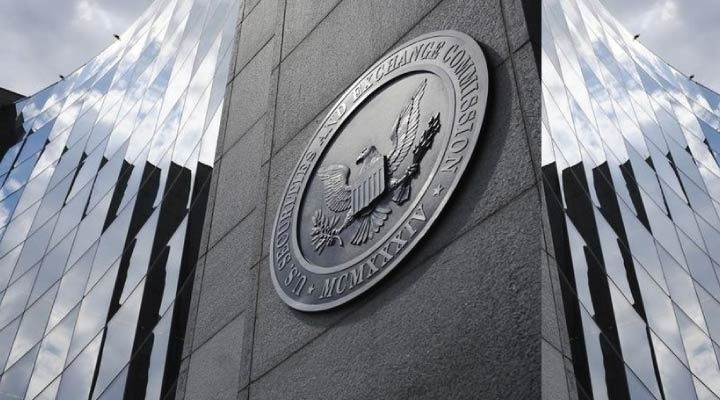
There are clear differences between Binance and Coinbase in their disputes with the SEC.
New crypto legislation can offer a solution, but may be hampered by political divides.
Just one day after the Security and Exchange Commission (SEC) made it known that it was suing the world’s largest crypto exchange Binance, along with its CEO Changpeng Zhao, the regulation agency then went on to sue the largest crypto exchange in the US, Coinbase.
The case being presented against Binance and its CEO details thirteen offenses, including that they “subverted their own controls to secretly allow high-value US customers to continue trading.” Regarding Binance's US trading arms, it's contended that they were offering unregistered securities, that their separation from the main business was essentially just a front, and that they were “operated as a fraud or deceit.” There are other claims that customer deposits were mismanaged, and it was stated that Changpeng Zhao operates a “web of deception.”
Against Coinbase, the allegation is that the platform has acted as an “unregistered broker, exchange and clearing agency.”
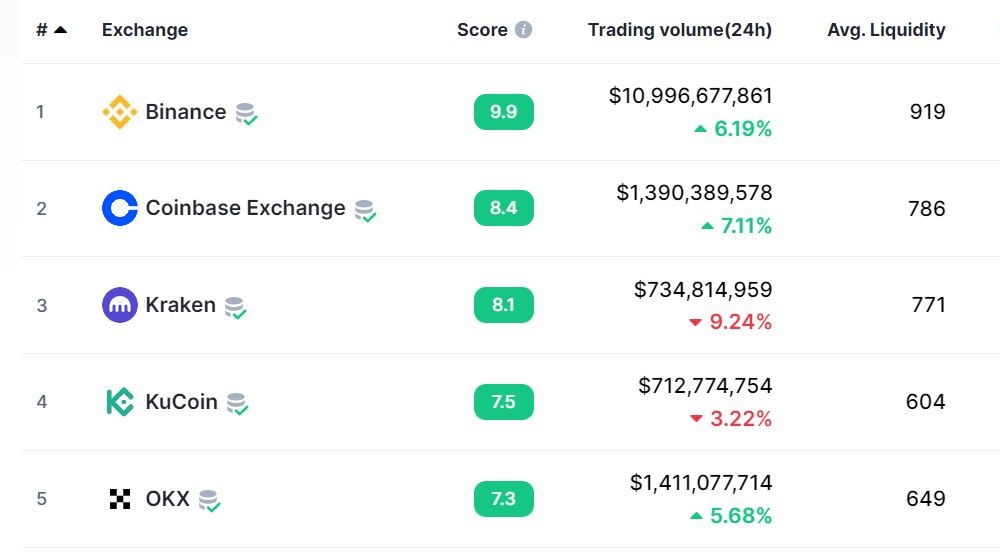
Crypto Spot Exchanges by Volume, from CoinMarketCap
Binance and Coinbase are hugely influential, and the implicit statement of intent being made by the SEC seems clear: yes, it’s coming for crypto, and no, it isn’t interested in a debate about whether or not new frameworks are required in order to integrate crypto with mainstream finance.
In fact, such sentiment is not just implied, it’s been articulated directly by SEC's Chair Gary Gensler, who in an interview with CNBC stated,
“We don’t need more digital currency, we already have digital currency, it’s called the US dollar, it’s called the Euro, it’s called the Yen: they’re all digital right now. We already have digital investments … it’s all digital right now, the investing world”.
These are not the words of a commission chief interested in exploring what differentiates decentralized public blockchains from central bank-administered fiat currencies; this is a message that reads one way only: according to the SEC, existing institutions, and the regulations that protect them, are the only game in town.
What’s more, in an unfolding development, the SEC has filed a motion to freeze crypto assets held by Binance US, leading some observers to wonder how freezing investor assets can be synonymous with offering investor protection.
Problems with the SEC's Position
By going on the offensive against Binance and Coinbase simultaneously, the SEC may have left an impression that both exchanges have operated in a similar manner. It’s also notable that Binance, which is at the end of significantly more egregious allegations, led the news and has set the overall tone.
However, looking at each case, it’s apparent that Binance is being accused of acting in a seriously dishonest manner, with terms such as 'fraud', 'deceit' and 'deception' being employed by the SEC. In contrast, Coinbase can put forward the case that their issues are technical and relate simply to reasonable disagreements about regulation, and Coinbase's CEO Brian Armstrong has in fact stated: “the complaint filed against us is exclusively focused on what is or is not a security.”
Furthermore, the SEC has listed tokens that it labels as securities, including major cryptocurrencies such as those from Cardano, Solana and Polygon, but it hasn’t sued the issuers of those tokens. It seems incongruous to take action against an exchange dealing in an alleged unregistered security but not against the issuer of that asset, and the SEC’s lists are without judicial authority.
However, this doesn’t mean that there aren’t knock-on effects anyway, as evidenced when Dan Gallagher, the Chief Legal Compliance Officer of popular trading app Robinhood (and a former SEC employee), stated with reference to the possibility of delisting crypto tokens named by the SEC that: “We are actively reviewing the SEC analysis to determine what, if any, actions to take in that regard.”
Are Exchanges Waiting on a Political Solution?
The SEC appears to be speeding up its operation against crypto, and this comes just as pro-crypto political action is being initiated in the form of a draft bill (The Digital Asset Market Structure Discussion Draft) from the House Committee on Financial Services and the House Committee on Agriculture, with the proposed legislation focused on bringing in a new framework of crypto regulation.
With current events in mind, a political solution, as represented by the new draft bill. may yet be the most effective solution for the US crypto industry, but, at the same time, politics is a slow process. What’s more, the bill was created by two Republicans (Patrick McHenry and Glenn Thompson), while Democrats have yet to respond.
This last point is a pronounced issue in the US, where the crypto question appears to be breaking along political lines at a moment in which political polarization is markedly intense.
Broadly, it would appear that the Republican camp is more sympathetic to crypto, and there’s a distinct possibility that the road to next year’s presidential elections may serve only to entrench division around this topic.
When discussing the debt ceiling last month, President Biden directly referenced crypto traders in a thoroughly negative context (stating “I’m not going to agree to a deal that protects wealthy tax cheats and crypto traders.”) Previously, his fellow Democrat Elizabeth Warren had declared her intention to raise an “anti-crypto army.”
However, the Republican presidential contender, Ron DeSantis prohibited CBDCs (which are seen as antithetical to Bitcoin and crypto) in the state of Florida, and in Texas, also a red state, lawmakers voted to add the right to hold digital currencies to the state's Bill of Rights.
All in all, if crypto platforms in the US are relying on politics to safeguard the crypto industry, then they may run up against entirely new sets of problems stemming from the rancorously partisan nature of the political arena.
Just one day after the Security and Exchange Commission (SEC) made it known that it was suing the world’s largest crypto exchange Binance, along with its CEO Changpeng Zhao, the regulation agency then went on to sue the largest crypto exchange in the US, Coinbase.
The case being presented against Binance and its CEO details thirteen offenses, including that they “subverted their own controls to secretly allow high-value US customers to continue trading.” Regarding Binance's US trading arms, it's contended that they were offering unregistered securities, that their separation from the main business was essentially just a front, and that they were “operated as a fraud or deceit.” There are other claims that customer deposits were mismanaged, and it was stated that Changpeng Zhao operates a “web of deception.”
Against Coinbase, the allegation is that the platform has acted as an “unregistered broker, exchange and clearing agency.”
Crypto Spot Exchanges by Volume, from CoinMarketCap
Binance and Coinbase are hugely influential, and the implicit statement of intent being made by the SEC seems clear: yes, it’s coming for crypto, and no, it isn’t interested in a debate about whether or not new frameworks are required in order to integrate crypto with mainstream finance.
In fact, such sentiment is not just implied, it’s been articulated directly by SEC's Chair Gary Gensler, who in an interview with CNBC stated,
“We don’t need more digital currency, we already have digital currency, it’s called the US dollar, it’s called the Euro, it’s called the Yen: they’re all digital right now. We already have digital investments … it’s all digital right now, the investing world”.
These are not the words of a commission chief interested in exploring what differentiates decentralized public blockchains from central bank-administered fiat currencies; this is a message that reads one way only: according to the SEC, existing institutions, and the regulations that protect them, are the only game in town.
What’s more, in an unfolding development, the SEC has filed a motion to freeze crypto assets held by Binance US, leading some observers to wonder how freezing investor assets can be synonymous with offering investor protection.
Problems with the SEC's Position
By going on the offensive against Binance and Coinbase simultaneously, the SEC may have left an impression that both exchanges have operated in a similar manner. It’s also notable that Binance, which is at the end of significantly more egregious allegations, led the news and has set the overall tone.
However, looking at each case, it’s apparent that Binance is being accused of acting in a seriously dishonest manner, with terms such as 'fraud', 'deceit' and 'deception' being employed by the SEC. In contrast, Coinbase can put forward the case that their issues are technical and relate simply to reasonable disagreements about regulation, and Coinbase's CEO Brian Armstrong has in fact stated: “the complaint filed against us is exclusively focused on what is or is not a security.”
Furthermore, the SEC has listed tokens that it labels as securities, including major cryptocurrencies such as those from Cardano, Solana and Polygon, but it hasn’t sued the issuers of those tokens. It seems incongruous to take action against an exchange dealing in an alleged unregistered security but not against the issuer of that asset, and the SEC’s lists are without judicial authority.
However, this doesn’t mean that there aren’t knock-on effects anyway, as evidenced when Dan Gallagher, the Chief Legal Compliance Officer of popular trading app Robinhood (and a former SEC employee), stated with reference to the possibility of delisting crypto tokens named by the SEC that: “We are actively reviewing the SEC analysis to determine what, if any, actions to take in that regard.”
Are Exchanges Waiting on a Political Solution?
The SEC appears to be speeding up its operation against crypto, and this comes just as pro-crypto political action is being initiated in the form of a draft bill (The Digital Asset Market Structure Discussion Draft) from the House Committee on Financial Services and the House Committee on Agriculture, with the proposed legislation focused on bringing in a new framework of crypto regulation.
With current events in mind, a political solution, as represented by the new draft bill. may yet be the most effective solution for the US crypto industry, but, at the same time, politics is a slow process. What’s more, the bill was created by two Republicans (Patrick McHenry and Glenn Thompson), while Democrats have yet to respond.
This last point is a pronounced issue in the US, where the crypto question appears to be breaking along political lines at a moment in which political polarization is markedly intense.
Broadly, it would appear that the Republican camp is more sympathetic to crypto, and there’s a distinct possibility that the road to next year’s presidential elections may serve only to entrench division around this topic.
When discussing the debt ceiling last month, President Biden directly referenced crypto traders in a thoroughly negative context (stating “I’m not going to agree to a deal that protects wealthy tax cheats and crypto traders.”) Previously, his fellow Democrat Elizabeth Warren had declared her intention to raise an “anti-crypto army.”
However, the Republican presidential contender, Ron DeSantis prohibited CBDCs (which are seen as antithetical to Bitcoin and crypto) in the state of Florida, and in Texas, also a red state, lawmakers voted to add the right to hold digital currencies to the state's Bill of Rights.
All in all, if crypto platforms in the US are relying on politics to safeguard the crypto industry, then they may run up against entirely new sets of problems stemming from the rancorously partisan nature of the political arena.
Sam White is a writer and journalist from the UK who covers cryptocurrencies and web3, with a particular interest in NFTs and the crossover between art and finance. His work, on a wide variety of topics, has appeared on platforms including The Spectator, Vice and Hacker Noon.
Kraken Steps Up Speed Race with New Equinix Colocation Service for Crypto Traders
FP Markets Winner Spotlight 🏆 | Global Broker of the Year 2025 #Trading #Broker #Innovation #Shorts
FP Markets Winner Spotlight 🏆 | Global Broker of the Year 2025 #Trading #Broker #Innovation #Shorts
FP Markets takes the spotlight as Global Broker of the Year 2025 at the Finance Magnates Awards.
Martin Stoilov, Head of Client Experience, shares that trust, innovation, and people played a key role in the company’s success, supported by a strong foundation of integrity and client-centricity.
Following this milestone, FP Markets continues to focus on growth, technology investment, and its core values of transparency and excellence.
👉 Be part of FM Awards 2026: https://awards.financemagnates.com/#nominate
FP Markets takes the spotlight as Global Broker of the Year 2025 at the Finance Magnates Awards.
Martin Stoilov, Head of Client Experience, shares that trust, innovation, and people played a key role in the company’s success, supported by a strong foundation of integrity and client-centricity.
Following this milestone, FP Markets continues to focus on growth, technology investment, and its core values of transparency and excellence.
👉 Be part of FM Awards 2026: https://awards.financemagnates.com/#nominate
In this video, we review @HolaPrimeMarketsOfficial, a multi-asset forex and CFDs broker offering different account types, trading platforms, and flexible trading conditions.
We cover the broker’s overall offering, including account options, trading environment, platforms like MT4 and MT5, and additional services such as managed accounts and fast withdrawals.
Watch the full video to see if Hola Prime Markets fits your trading needs.
📣 Stay up to date with the latest in finance and trading. Follow Finance Magnates for industry news, insights, and global event coverage.
Connect with us:
🔗 LinkedIn: /financemagnates
👍 Facebook: /financemagnates
📸 Instagram: https://www.instagram.com/financemagnates
🐦 X: https://x.com/financemagnates
🎥 TikTok: https://www.tiktok.com/tag/financemagnates
▶️ YouTube: /@financemagnates_official
#HolaPrime #ForexBroker #CFDTrading #FinanceMagnates #Trading #Forex #BrokerReview
In this video, we review @HolaPrimeMarketsOfficial, a multi-asset forex and CFDs broker offering different account types, trading platforms, and flexible trading conditions.
We cover the broker’s overall offering, including account options, trading environment, platforms like MT4 and MT5, and additional services such as managed accounts and fast withdrawals.
Watch the full video to see if Hola Prime Markets fits your trading needs.
📣 Stay up to date with the latest in finance and trading. Follow Finance Magnates for industry news, insights, and global event coverage.
Connect with us:
🔗 LinkedIn: /financemagnates
👍 Facebook: /financemagnates
📸 Instagram: https://www.instagram.com/financemagnates
🐦 X: https://x.com/financemagnates
🎥 TikTok: https://www.tiktok.com/tag/financemagnates
▶️ YouTube: /@financemagnates_official
#HolaPrime #ForexBroker #CFDTrading #FinanceMagnates #Trading #Forex #BrokerReview
Hola Prime Review: What You Need to Know | Full Breakdown by Finance Magnates
Hola Prime Review: What You Need to Know | Full Breakdown by Finance Magnates
In this video, we review @HolaPrime_Global, a proprietary trading firm offering evaluation programs and performance-based payouts in simulated market environments.
We cover how the challenge model works, including account types, profit splits (up to 95%), trading rules, and what it takes to reach a funded account. You’ll also learn about available platforms like MT4, MT5, cTrader, and more, along with insights into payouts, support, and trading conditions.
Watch the full video to see if Hola Prime fits your trading style.
📣 Stay up to date with the latest in finance and trading. Follow Finance Magnates for industry news, insights, and global event coverage.
Connect with us:
🔗 LinkedIn: /financemagnates
👍 Facebook: /financemagnates
📸 Instagram: https://www.instagram.com/financemagnates
🐦 X: https://x.com/financemagnates
🎥 TikTok: https://www.tiktok.com/tag/financemagnates
▶️ YouTube: /@financemagnates_official
#HolaPrime #PropFirm #Trading #FinanceMagnates #Forex #FuturesTrading #TradingReview #PropFirmReview
In this video, we review @HolaPrime_Global, a proprietary trading firm offering evaluation programs and performance-based payouts in simulated market environments.
We cover how the challenge model works, including account types, profit splits (up to 95%), trading rules, and what it takes to reach a funded account. You’ll also learn about available platforms like MT4, MT5, cTrader, and more, along with insights into payouts, support, and trading conditions.
Watch the full video to see if Hola Prime fits your trading style.
📣 Stay up to date with the latest in finance and trading. Follow Finance Magnates for industry news, insights, and global event coverage.
Connect with us:
🔗 LinkedIn: /financemagnates
👍 Facebook: /financemagnates
📸 Instagram: https://www.instagram.com/financemagnates
🐦 X: https://x.com/financemagnates
🎥 TikTok: https://www.tiktok.com/tag/financemagnates
▶️ YouTube: /@financemagnates_official
#HolaPrime #PropFirm #Trading #FinanceMagnates #Forex #FuturesTrading #TradingReview #PropFirmReview
Axi Winner Spotlight 🏆 | Global Most Innovative Broker 2025 #Innovation #Trading #Fintech #Broker
Axi Winner Spotlight 🏆 | Global Most Innovative Broker 2025 #Innovation #Trading #Fintech #Broker
Axi takes the spotlight at the Finance Magnates Awards, winning Global Most Innovative Broker 2025.
Olivia Xenofontos and Ivanna Openko share how the team will feel: proud, motivated, and ready to keep delivering.
They also describe the night as well-organized, focused, and enjoyable for all.
👉 Be part of FM Awards 2026.
Axi takes the spotlight at the Finance Magnates Awards, winning Global Most Innovative Broker 2025.
Olivia Xenofontos and Ivanna Openko share how the team will feel: proud, motivated, and ready to keep delivering.
They also describe the night as well-organized, focused, and enjoyable for all.
👉 Be part of FM Awards 2026.
Recognition that matters.
Built on transparency.
Driven by the industry.
The Finance Magnates Awards 2026.
Nominations are now open.
🔗 https://awards.financemagnates.com/?utm_source=SM&utm_medium=social&utm_campaign=recognition-matters
Recognition that matters.
Built on transparency.
Driven by the industry.
The Finance Magnates Awards 2026.
Nominations are now open.
🔗 https://awards.financemagnates.com/?utm_source=SM&utm_medium=social&utm_campaign=recognition-matters