Biden administration appears hostile to crypto; Texas and Florida take opposite stance.
UK report compares crypto to gambling, contrasts with stated aims to become a crypto hub.
Regulatory concerns are a growing issue in the cryptocurrency industry, and the gaps that are opening up between different global regions are impossible to ignore.
In the EU, this week saw MiCA regulations signed off, with the rules expected to come into play next year. However, this does not mean that the path to crypto integration in Europe is now entirely clear. MiCA is a start and to some extent a work in progress, and there will no doubt be continuing disagreements between regulators and industry participants.
That said, these steps in Europe represent an attempt at clarity and are in sharp contrast to the situation in the United States, where there is a lack of consistency and a sense of uncertainty.
The Biden Administration Signals Crypto Hostility
Earlier this month, President Biden posted a tweet making reference to closing “tax loopholes that help wealthy crypto investors,” and even included a figure of $18 billion.
However, It’s unclear exactly what he was referring to, or why crypto investors were singled out in particular, as was emphasized by a Community Note that was amended to his tweet. Community Notes are a new Twitter feature that aims to provide potentially misleading tweets with context and correction, and this one explained that regular capital gains taxes already apply to crypto profit and that there is no known crypto loophole.
This comes after, earlier in the year, the US Treasury Department proposed a 30% excise tax on crypto mining as part of the 2023 budget proposal, and it was reported recently that the Department of Justice is to crack down on crypto exchanges, with Eun Young Choi, the Director of the National Cryptocurrency Enforcement Team, stating that:
“We’re seeing the scale and the scope of digital assets being used in a variety of illicit ways grow significantly over the last, say, four years.”
While moving to prevent illegal activity is not out of the ordinary, it’s striking nonetheless that when it comes to crypto, the message communicated by US authorities is only focused on illegal activity and tax increases. Concurrently, there is no official message to suggest that crypto may have benefits to be tapped, or economic value as a growing technology.
And, when it comes to the SEC, which is currently embroiled in high-profile legal disagreements with major crypto exchange Coinbase, there was controversy as a memo shared on Twitter indicated that Democrats within the US House Committee on Financial Services had been instructed to back the position that the SEC should “continue to lead the regulation of the U.S. crypto market.”
Whether or not the SEC is the appropriate agency in this case, or is capable of performing such tasks, seems, apparently, not up for debate. Or at least, not in certain political circles. In the wider business world though, it’s a matter of strong contention, as indicated when the US Chamber of Commerce backed Coinbase and delivered stinging criticism of the SEC through an emphatic amicus brief.
Texas Takes the Opposite Position
In contrast to what’s occurring at the national level in the US, lawmakers in the state of Texas have just voted in favor of a change to the state’s Bill of Rights, in order that (in the words of the resolution):
“the right of the people to own, hold, and use a mutually agreed upon medium of exchange, including cash, coin, bullion, digital currency, or scrip, when trading and contracting for goods and services shall not be infringed. No government shall prohibit or encumber ownership or holding of any form or any amount of money or other currency.”
The key term in that section being, in relation to the crypto industry, 'digital currency', as it seems that if the US is not to establish a clear national approach to cryptocurrencies, then states will act independently.
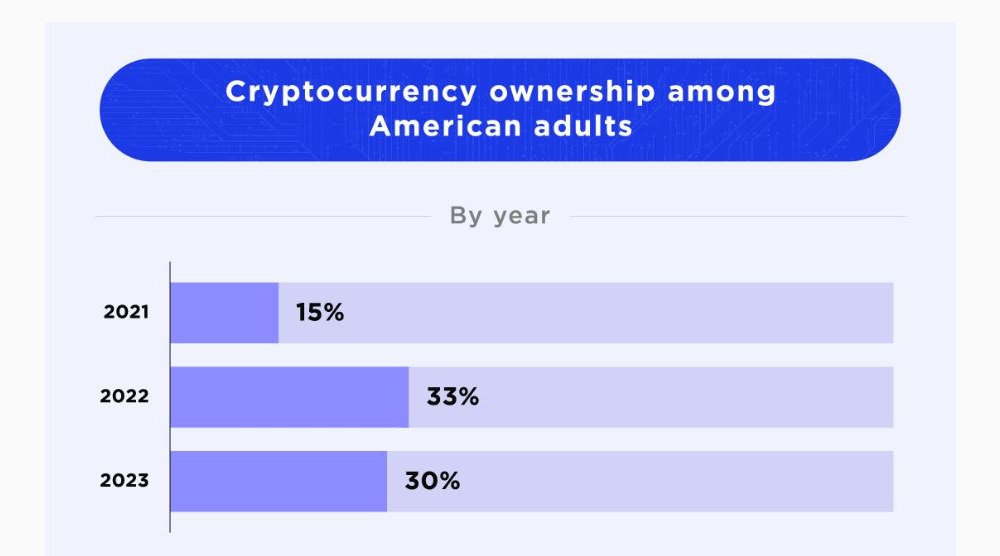
Chart from Security.org
Florida Bans CBDCs
One speculative interpretation of hostility towards crypto from some US authorities is that cryptocurrencies may act as an obstacle in the way of implementing an American CBDC.
In that case, then the state of Florida just sided with crypto, or at least, put an explicitly unapologetic obstacle of its own in the way of an American CBDC, by outright banning the entire possibility.
Governor Ron DeSantis didn’t beat around the bush on the subject, declaring:
“Anyone with their eyes open could see the danger this type of an arrangement would mean for Americans who want to exercise their financial independence and would like to be able to conduct business without having the government know every single transaction they're making in real time.”
And, he indicated an openness towards crypto, stating that the Biden Administration was aiming to “crowd out and eliminate other types of digital assets, like cryptocurrency.”
Crypto Gambling in the UK
Over in the UK, it had appeared that there was an official desire to integrate crypto and become a leading location for web3 development. This was apparent at the beginning of April when the Treasury published an outline of plans “to make Britain a global hub for cryptoasset technology and investment.”
However, this week saw, in direct contrast to this, a report from the Treasury Committee suggesting that the regulation of crypto trading and investment would “create a ‘halo’ effect that leads consumers to believe that this activity is safer than it is, or protected when it is not.”
And the report finishes by recommending that the Government “regulates retail trading and investment activity in unbacked cryptoassets as gambling rather than as a financial service.”
It seems, then, that confusingly mixed messages around regulation are not the sole remit of the United States, as the global wrangle to get to grips with crypto continues to unfold erratically.
Regulatory concerns are a growing issue in the cryptocurrency industry, and the gaps that are opening up between different global regions are impossible to ignore.
In the EU, this week saw MiCA regulations signed off, with the rules expected to come into play next year. However, this does not mean that the path to crypto integration in Europe is now entirely clear. MiCA is a start and to some extent a work in progress, and there will no doubt be continuing disagreements between regulators and industry participants.
That said, these steps in Europe represent an attempt at clarity and are in sharp contrast to the situation in the United States, where there is a lack of consistency and a sense of uncertainty.
The Biden Administration Signals Crypto Hostility
Earlier this month, President Biden posted a tweet making reference to closing “tax loopholes that help wealthy crypto investors,” and even included a figure of $18 billion.
However, It’s unclear exactly what he was referring to, or why crypto investors were singled out in particular, as was emphasized by a Community Note that was amended to his tweet. Community Notes are a new Twitter feature that aims to provide potentially misleading tweets with context and correction, and this one explained that regular capital gains taxes already apply to crypto profit and that there is no known crypto loophole.
This comes after, earlier in the year, the US Treasury Department proposed a 30% excise tax on crypto mining as part of the 2023 budget proposal, and it was reported recently that the Department of Justice is to crack down on crypto exchanges, with Eun Young Choi, the Director of the National Cryptocurrency Enforcement Team, stating that:
“We’re seeing the scale and the scope of digital assets being used in a variety of illicit ways grow significantly over the last, say, four years.”
While moving to prevent illegal activity is not out of the ordinary, it’s striking nonetheless that when it comes to crypto, the message communicated by US authorities is only focused on illegal activity and tax increases. Concurrently, there is no official message to suggest that crypto may have benefits to be tapped, or economic value as a growing technology.
And, when it comes to the SEC, which is currently embroiled in high-profile legal disagreements with major crypto exchange Coinbase, there was controversy as a memo shared on Twitter indicated that Democrats within the US House Committee on Financial Services had been instructed to back the position that the SEC should “continue to lead the regulation of the U.S. crypto market.”
Whether or not the SEC is the appropriate agency in this case, or is capable of performing such tasks, seems, apparently, not up for debate. Or at least, not in certain political circles. In the wider business world though, it’s a matter of strong contention, as indicated when the US Chamber of Commerce backed Coinbase and delivered stinging criticism of the SEC through an emphatic amicus brief.
Texas Takes the Opposite Position
In contrast to what’s occurring at the national level in the US, lawmakers in the state of Texas have just voted in favor of a change to the state’s Bill of Rights, in order that (in the words of the resolution):
“the right of the people to own, hold, and use a mutually agreed upon medium of exchange, including cash, coin, bullion, digital currency, or scrip, when trading and contracting for goods and services shall not be infringed. No government shall prohibit or encumber ownership or holding of any form or any amount of money or other currency.”
The key term in that section being, in relation to the crypto industry, 'digital currency', as it seems that if the US is not to establish a clear national approach to cryptocurrencies, then states will act independently.
Chart from Security.org
Florida Bans CBDCs
One speculative interpretation of hostility towards crypto from some US authorities is that cryptocurrencies may act as an obstacle in the way of implementing an American CBDC.
In that case, then the state of Florida just sided with crypto, or at least, put an explicitly unapologetic obstacle of its own in the way of an American CBDC, by outright banning the entire possibility.
Governor Ron DeSantis didn’t beat around the bush on the subject, declaring:
“Anyone with their eyes open could see the danger this type of an arrangement would mean for Americans who want to exercise their financial independence and would like to be able to conduct business without having the government know every single transaction they're making in real time.”
And, he indicated an openness towards crypto, stating that the Biden Administration was aiming to “crowd out and eliminate other types of digital assets, like cryptocurrency.”
Crypto Gambling in the UK
Over in the UK, it had appeared that there was an official desire to integrate crypto and become a leading location for web3 development. This was apparent at the beginning of April when the Treasury published an outline of plans “to make Britain a global hub for cryptoasset technology and investment.”
However, this week saw, in direct contrast to this, a report from the Treasury Committee suggesting that the regulation of crypto trading and investment would “create a ‘halo’ effect that leads consumers to believe that this activity is safer than it is, or protected when it is not.”
And the report finishes by recommending that the Government “regulates retail trading and investment activity in unbacked cryptoassets as gambling rather than as a financial service.”
It seems, then, that confusingly mixed messages around regulation are not the sole remit of the United States, as the global wrangle to get to grips with crypto continues to unfold erratically.
Sam White is a writer and journalist from the UK who covers cryptocurrencies and web3, with a particular interest in NFTs and the crossover between art and finance. His work, on a wide variety of topics, has appeared on platforms including The Spectator, Vice and Hacker Noon.
SEC Approves Nasdaq Pilot Allowing Investors to Trade Tokenized Stocks
Finance Magnates Awards 2026 – Nominations Now Open
Finance Magnates Awards 2026 – Nominations Now Open
The Finance Magnates Awards 2026 nominations are now open. 🏆
From fintech innovators to leading brokers, this is where the finance industry celebrates its biggest achievements.
Winners will be announced at the Cyprus Gala Dinner on November 6, 2026.
Nominate your brand now.
https://awards.financemagnates.com/?utm_source=linkedin&utm_medium=video&utm_campaign=nominations-open
#FMAwards #FinanceMagnates #FintechAwards #Fintech #FinanceIndustry
The Finance Magnates Awards 2026 nominations are now open. 🏆
From fintech innovators to leading brokers, this is where the finance industry celebrates its biggest achievements.
Winners will be announced at the Cyprus Gala Dinner on November 6, 2026.
Nominate your brand now.
https://awards.financemagnates.com/?utm_source=linkedin&utm_medium=video&utm_campaign=nominations-open
#FMAwards #FinanceMagnates #FintechAwards #Fintech #FinanceIndustry
Finance Magnates Awards 2026 | Nominations Now Open 🏆#Fintech #FMAwards #TradingIndustry
Finance Magnates Awards 2026 | Nominations Now Open 🏆#Fintech #FMAwards #TradingIndustry
Lights on. Cameras ready. 🎬
Finance Magnates Awards 2026 nominations are now open. 🏆
#FMAwards #FinanceMagnates #FintechAwards #Fintech
Lights on. Cameras ready. 🎬
Finance Magnates Awards 2026 nominations are now open. 🏆
#FMAwards #FinanceMagnates #FintechAwards #Fintech
Exness sees trust as the key theme for growth in MENA Trading Growth for 2026
Exness sees trust as the key theme for growth in MENA Trading Growth for 2026
Mohammad Amer, Regional Commercial Director at Exness, sits down to discuss the booming MENA financial trading market. Find out why Dubai is key to the company's growth strategy, how a mobile-first generation is changing expectations, and why trust will be the defining theme for traders in 2026.
In this interview, you'll learn:
* Why Dubai and the MENA region are critical growth markets for fintech and online trading.
* How Exness is addressing the demands of mobile-first, younger traders through engineering, platform stability, and transparent conditions.
* The essential role local talent plays in providing a culturally relevant and compliant user experience.
* Mohammad Amer's outlook on the future of the online trading industry and why stronger controls and systems are necessary.
* Why "trust" isn't just a brand value, but has commercial value—and why he predicts 2026 will be the "Year of Trust."
Key Takeaways:
➡️ The MENA region is rapidly shaping global financial markets.
➡️ New traders expect stability, precise execution, and transparency.
➡️ Local expertise is key to regulatory compliance and user experience.
➡️ Future success belongs to firms capable of meeting rising standards across regulation and platform consistency.
Read the full article at: https://www.financemagnates.com/thought-leadership/exness-sees-trust-as-the-key-theme-for-growth-in-mena-trading-growth-for-2026/
#Exness #MENA #Trading #FinTech #Dubai #OnlineTrading #FinanceMagnates #MohammadAmer #Trust #MobileTrading
Mohammad Amer, Regional Commercial Director at Exness, sits down to discuss the booming MENA financial trading market. Find out why Dubai is key to the company's growth strategy, how a mobile-first generation is changing expectations, and why trust will be the defining theme for traders in 2026.
In this interview, you'll learn:
* Why Dubai and the MENA region are critical growth markets for fintech and online trading.
* How Exness is addressing the demands of mobile-first, younger traders through engineering, platform stability, and transparent conditions.
* The essential role local talent plays in providing a culturally relevant and compliant user experience.
* Mohammad Amer's outlook on the future of the online trading industry and why stronger controls and systems are necessary.
* Why "trust" isn't just a brand value, but has commercial value—and why he predicts 2026 will be the "Year of Trust."
Key Takeaways:
➡️ The MENA region is rapidly shaping global financial markets.
➡️ New traders expect stability, precise execution, and transparency.
➡️ Local expertise is key to regulatory compliance and user experience.
➡️ Future success belongs to firms capable of meeting rising standards across regulation and platform consistency.
Read the full article at: https://www.financemagnates.com/thought-leadership/exness-sees-trust-as-the-key-theme-for-growth-in-mena-trading-growth-for-2026/
#Exness #MENA #Trading #FinTech #Dubai #OnlineTrading #FinanceMagnates #MohammadAmer #Trust #MobileTrading
Paytiko CEO Razi Salih on Why Payment Orchestration is a MUST-HAVE for Brokers in 2026
Paytiko CEO Razi Salih on Why Payment Orchestration is a MUST-HAVE for Brokers in 2026
At iFX Expo Dubai, Finance Magnates spoke with Razi Salih, CEO at Paytiko, about the evolution of the payments ecosystem and why payment orchestration has shifted from an option to a necessity for brokers, prop firms, and exchanges.
Mr. Salih explains how global expansion, the need for deep localisation, and the sheer number of new payment methods, from instant banking to stablecoins, are driving this critical infrastructure shift.
#PaymentOrchestration #Fintech #Brokerage #TradingPayments #RaziSalih #Paytiko #iFXExpoDubai #Stablecoins #AIinFintech
At iFX Expo Dubai, Finance Magnates spoke with Razi Salih, CEO at Paytiko, about the evolution of the payments ecosystem and why payment orchestration has shifted from an option to a necessity for brokers, prop firms, and exchanges.
Mr. Salih explains how global expansion, the need for deep localisation, and the sheer number of new payment methods, from instant banking to stablecoins, are driving this critical infrastructure shift.
#PaymentOrchestration #Fintech #Brokerage #TradingPayments #RaziSalih #Paytiko #iFXExpoDubai #Stablecoins #AIinFintech
Altima CTO Sunil Jadhav: Solving Data Fragmentation & Lag for Brokers & Prop Firms
Altima CTO Sunil Jadhav: Solving Data Fragmentation & Lag for Brokers & Prop Firms
Altima CTO Sunil Jadhav sits down with Finance Magnates to discuss the core technology challenges facing CFD brokers and proprietary trading firms today.
Jadhav explains how the industry's reliance on batch processing and fragmented systems (where CRMs, risk tools, and trading platforms operate with separate 'sources of truth') leads to delayed data and inconsistent operational decisions. He argues that real-time event processing is essential for managing fast-moving trading activity and risk.
Learn how Altima's unified, event-driven architecture, connecting Altima CRM, Altima Prop, IB systems, and risk management through a single backbone, is designed to provide synchronous data and better operational coordination for modern brokerage and prop firm stacks.
Key Topics:
- Broker and Prop Firm Data Challenges
- The problem of delayed data processing (batch processing vs. real-time events)
- Fragmented systems and conflicting data sources
- Altima's unified, event-driven solution architecture
- The concept of a "risk-aware CRM"
- Built-in risk management in Altima Prop
#Altima #financemagnates #iFXDubai #FinTech #BrokerTech #PropFirm #CFDBroker #TradingTechnology #RealTimeData #RiskManagement #CRM #FinancialMarkets #EventDrivenArchitecture
Altima CTO Sunil Jadhav sits down with Finance Magnates to discuss the core technology challenges facing CFD brokers and proprietary trading firms today.
Jadhav explains how the industry's reliance on batch processing and fragmented systems (where CRMs, risk tools, and trading platforms operate with separate 'sources of truth') leads to delayed data and inconsistent operational decisions. He argues that real-time event processing is essential for managing fast-moving trading activity and risk.
Learn how Altima's unified, event-driven architecture, connecting Altima CRM, Altima Prop, IB systems, and risk management through a single backbone, is designed to provide synchronous data and better operational coordination for modern brokerage and prop firm stacks.
Key Topics:
- Broker and Prop Firm Data Challenges
- The problem of delayed data processing (batch processing vs. real-time events)
- Fragmented systems and conflicting data sources
- Altima's unified, event-driven solution architecture
- The concept of a "risk-aware CRM"
- Built-in risk management in Altima Prop
#Altima #financemagnates #iFXDubai #FinTech #BrokerTech #PropFirm #CFDBroker #TradingTechnology #RealTimeData #RiskManagement #CRM #FinancialMarkets #EventDrivenArchitecture