As the end of the year appears on the horizon, a glimmer of the great beyond that is 2021 has begun to take shape.
Finance Magnates asked the experts what is on the menu for the fintech world. Here is what they said.
#1: A Change in Perception
Jackson Mueller, director of policy and government relations at Securrency, told Finance Magnates that one of the most important trends in fintech has to do with the way that people see their own financial lives.
Mueller explained that the pandemic and the resulting shutdowns across the globe “led to more people asking the question ‘what is my financial alternative’?” In other words, when jobs are lost, when the economy crashes, when the concept of ‘money’ as most of us know it is fundamentally changed – what then?
“We’ve already seen an escalation in the use of and comfort level with alternative forms of payments that are not cash-driven or even fiat-based, and the pandemic has sped up this shift even further,” he added.
After all, the wild fluctuations that have rocked the global economy throughout the year have caused a massive change in the perception of the stability of the global financial system.
Jackson Mueller, Director of Policy and Government Relations at Securrency.
Indeed, Mueller said that one 'casualty' of the pandemic has been “the view that our current financial system is more than capable of addressing and responding to abrupt economic shocks driven by the pandemic.”
“In the post-Covid world, it is my hope that lawmakers will take a closer look at how already-stressed payments infrastructures and inadequate means of delivery negatively impacted the economic situation for millions of Americans, further exacerbating the harmful side-effects of Covid-19 beyond just healthcare to economic welfare.”
“Any post-Covid review needs to consider how technological advancements and innovative platforms can play an outsized role in the global response to the next economic shock.”
One of the beneficiaries of this change in the perception of the traditional financial ecosystem is the cryptocurrency space.
Ian Balina, founder and chief executive of Token Metrics, told Finance Magnates that he sees the adoption and recognition of cryptocurrencies as the most important development in fintech in the year ahead. Token Metrics is an AI-driven cryptocurrency research company that uses artificial intelligence to build crypto indices, rankings, and price predictions.
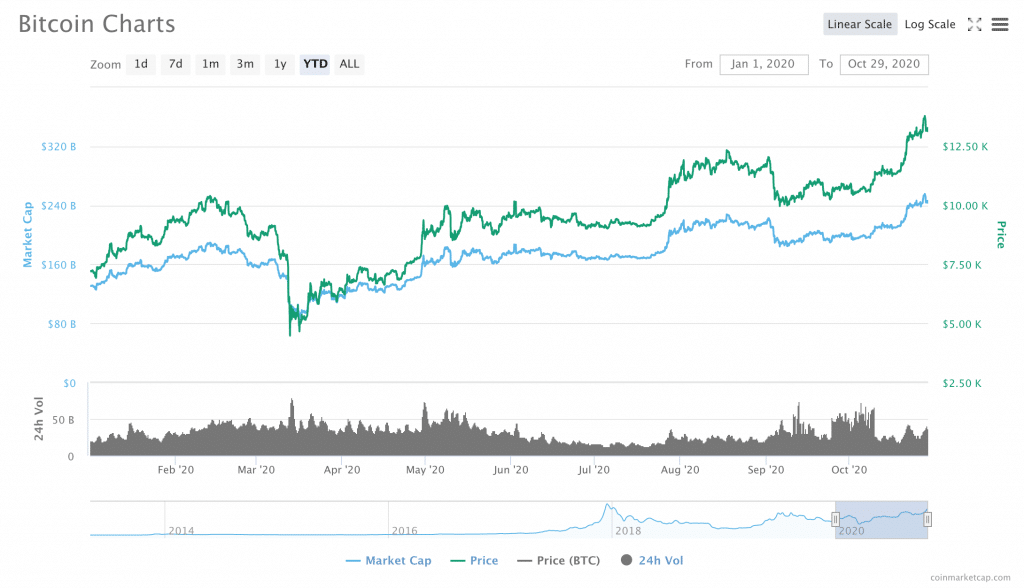
“The most important fintech trends in 2021 will be cryptocurrencies,” Balina said. “We anticipate bitcoin to surpass its prior all-time high and go over $20k per Bitcoin. This will bring on mainstream media attention bitcoin has not received since December 2017.”
Ian Balina, founder and chief executive of Token Metrics.
Balina pointed to several recent high-profile crypto investments from institutional investors as evidence that crypto is poised for a powerful year: “the crypto landscape is a lot more mature, with strong endorsements from prestigious companies like PayPal,Square, Facebook, JP Morgan, and Samsung,” he said.
Gregory Keough, Founder of the DMM Foundation, the organization behind the DeFi Money Market (DMM), also believes that crypto will continue to play an increasingly important role in the year ahead.
Keough also pointed to recent institutional investments by well-known companies as "adding mainstream market validation.
“After the pandemic has passed, digital assets will be much more integrated into our monetary systems, perhaps even forming the basis for the global economy with the adoption of central bank digital currencies (CBDCs) and increasing use of stablecoins like USDC in decentralized finance (DeFi) systems,” Keough said.
Anti Danilevski, chief executive and founder of Kick Ecosystem and KickEX exchange, further commented that
“cryptocurrencies will also continue to spread and gain mass penetration, as these assets are easy to buy and sell, are internationally decentralized, are a great way to hedge risks, and have huge growth potential.”
Gregory Keough, Founder of the DMM Foundation.
#3: P2P-Based Financial Services Will Play a More Important Role Than Ever
Both in and outside of cryptocurrency, a number of analysts have identified the growing popularity and importance of peer-to-peer (p2p) financial services.
Beni Hakak, chief executive and co-founder of LiquidApps, told Finance Magnates that “the growth of peer-to-peer technologies is driving opportunities and empowerment for customers all over the world.”
Hakak specifically pointed to the role of p2p financial services platforms 'developing countries', because of their ability to “give them a path to participate in capital markets and upward social mobility.
“From P2P lending platforms to automated assets exchange, distributed ledger technology has enabled a host of novel applications and business models to flourish,” Hakak said.
“Driving this emergence is an industry-wide shift towards 'lean' distributed systems that don't consume substantial resources and can enable enterprise-scale applications such as high-frequency trading."
Within the cryptocurrency ecosystem, the rise of p2p systems largely refers to the growing prominence of decentralized finance (DeFi) systems for providing services such as asset trading, lending, and earning interest.
“DeFi ease-of-use is constantly improving, and it's only a matter of time before volume and user base could double or even triple in size,” Keough said.
Beni Hakak, chief executive and co-founder of LiquidApps.
#4: Investment Apps Continue to Onboard More and More New Users
DeFi-based cryptocurrency assets also gained huge amounts of popularity during the pandemic as a part of another important trend: Keough pointed out that “online investments have skyrocketed as more people seek out additional sources of passive income and wealth generation.”
Token Metrics’ Ian Balina pointed to the “influx of new retail investors and traders” that has crashed into fintech because of the pandemic. As Keough said, new retail investors are searching for new ways to generate income; for some, the combination of stimulus cash and extra time at home led to first-time sign ups on investment platforms.
For example, “Robinhood experienced viral growth with new investors trading Dogecoin, a meme cryptocurrency, based on content created on TikTok,” Ian Balina said. “This audience of new investors will become the future of investing. Post pandemic, we expect this new class of investors to lean on investment research through social media platforms strongly.”
#5: The Institutionalization of Bitcoin as a 'Corporate Treasury Tool'
In addition to the generally increased level of interest in cryptocurrencies that seems to be growing into 2021, the role of Bitcoin in institutional investing also seems to be becoming increasingly important as we approach the new year.
Seamus Donoghue, vice president of sales and business development at METACO, told Finance Magnates that “the biggest fintech trend will be the development of Bitcoin as the world’s most sought-after collateral,” as well as “its deepening integration with the mainstream financial system.”
Seamus Donoghue, vice president of sales and business development at METACO.
“Whether the pandemic has passed or not, institutional decision processes have adapted to this ‘new normal’ following the first pandemic shock in the spring.” Indeed, “business planning in banks is largely back on track and we see that the institutionalization of crypto is at a significant inflection point.
“Broadening adoption of Bitcoin as a corporate treasury tool, as well as an acceleration in retail and institutional investor interest and stable coins, is emerging as a disruptive force in the payment space will move Bitcoin and more broadly crypto as an asset class into the mainstream in 2021.
“This will drive demand for solutions to securely integrate this new asset class into financial firms’ core infrastructure so they can securely store and manage it as they do any other asset class,” Donoghue said.
Indeed, the integration of cryptocurrencies like Bitcoin into traditional banking systems has been a particularly hot topic in the United States. Earlier this year, the US Office of the Comptroller of the Currency (OCC) published a letter clarifying that national banks and federal savings associations are legally permitted to have custody of cryptocurrency assets.
#6: More Collaboration by Fintech Regulators; The Death of 'Analog Regulations'
In addition to the OCC’s July announcement, Securrency’s Jackson Mueller also sees further important regulatory developments on the fintech horizon in 2021.
“Heading into 2021, and whether or not the pandemic is still around, I think you see a continuation of two trends at the regulatory level that will further enable FinTech development and proliferation,” he said.
“First, a continued focus and effort on the part of state and federal regulators to review analog regulations, particularly regulations that require in-person contact, and incorporating digital alternatives to streamline these requirements.” In other words, regulators will likely continue to review and update requirements that currently oblige certain parties to be physically present.
“Several of these changes currently are temporary in nature, but I anticipate these alternatives will be formally adopted and incorporated into the rulebooks of banking and securities regulators moving forward,” he said.
The second trend that Mueller sees is “a continued effort on the part of regulators to join together to harmonize regulations that are similar in nature, but disparate in the way regulators require firms to adhere to the rule(s).”
“The past several months have evidenced a willingness by financial services regulators at the state or federal level to come together to clarify or harmonize regulatory frameworks or guidance covering issues pertinent to the FinTech space,” Mueller said.
“Given the ‘borderless nature’ of FinTech and the acceleration of industry convergence across several previously siloed verticals, I anticipate seeing more collaborative efforts initiated by regulatory agencies that seek to strike the right balance between responsible innovation and safety and soundness.”
#7: The Continuing 'Fintechization' of Everything
KickEX exchange’s Anti Danilevski pointed to the continuing "fintechization" of “everything and everyone — deliveries, cloud storage services, and so on,” he said.
Indeed, this 'fintechization' has been in progress for several years now. Financial services are everywhere: transportation apps, food-ordering apps, corporate membership accounts, the list goes on and on.
And this trend is not slated to stop anytime soon, as the hunger for data grows ever stronger, having a direct line of access to users’ personal finances has the potential to provide massive new streams of revenue, including highly sensitive (and highly valuable) personal data.
Anti Danilevsky, chief executive and founder of Kick Ecosystem and KickEX exchange.
However, as Daniel P. Simon, chairman of the Museum of American Finance communications board, pointed out to Finance Magnates earlier this year, companies need to b extremely careful before they make the leap into the fintech world.
“Tech wants to move fast and break things, but this mindset doesn’t translate well to finance,” Simon said.
We all know that 2020 has been a total paradigm shift year for the fintech world (not to mention the rest of the world.)
As the end of the year appears on the horizon, a glimmer of the great beyond that is 2021 has begun to take shape.
Finance Magnates asked the experts what is on the menu for the fintech world. Here is what they said.
#1: A Change in Perception
Jackson Mueller, director of policy and government relations at Securrency, told Finance Magnates that one of the most important trends in fintech has to do with the way that people see their own financial lives.
Mueller explained that the pandemic and the resulting shutdowns across the globe “led to more people asking the question ‘what is my financial alternative’?” In other words, when jobs are lost, when the economy crashes, when the concept of ‘money’ as most of us know it is fundamentally changed – what then?
“We’ve already seen an escalation in the use of and comfort level with alternative forms of payments that are not cash-driven or even fiat-based, and the pandemic has sped up this shift even further,” he added.
After all, the wild fluctuations that have rocked the global economy throughout the year have caused a massive change in the perception of the stability of the global financial system.
Jackson Mueller, Director of Policy and Government Relations at Securrency.
Indeed, Mueller said that one 'casualty' of the pandemic has been “the view that our current financial system is more than capable of addressing and responding to abrupt economic shocks driven by the pandemic.”
“In the post-Covid world, it is my hope that lawmakers will take a closer look at how already-stressed payments infrastructures and inadequate means of delivery negatively impacted the economic situation for millions of Americans, further exacerbating the harmful side-effects of Covid-19 beyond just healthcare to economic welfare.”
“Any post-Covid review needs to consider how technological advancements and innovative platforms can play an outsized role in the global response to the next economic shock.”
One of the beneficiaries of this change in the perception of the traditional financial ecosystem is the cryptocurrency space.
Ian Balina, founder and chief executive of Token Metrics, told Finance Magnates that he sees the adoption and recognition of cryptocurrencies as the most important development in fintech in the year ahead. Token Metrics is an AI-driven cryptocurrency research company that uses artificial intelligence to build crypto indices, rankings, and price predictions.
“The most important fintech trends in 2021 will be cryptocurrencies,” Balina said. “We anticipate bitcoin to surpass its prior all-time high and go over $20k per Bitcoin. This will bring on mainstream media attention bitcoin has not received since December 2017.”
Ian Balina, founder and chief executive of Token Metrics.
Balina pointed to several recent high-profile crypto investments from institutional investors as evidence that crypto is poised for a powerful year: “the crypto landscape is a lot more mature, with strong endorsements from prestigious companies like PayPal,Square, Facebook, JP Morgan, and Samsung,” he said.
Gregory Keough, Founder of the DMM Foundation, the organization behind the DeFi Money Market (DMM), also believes that crypto will continue to play an increasingly important role in the year ahead.
Keough also pointed to recent institutional investments by well-known companies as "adding mainstream market validation.
“After the pandemic has passed, digital assets will be much more integrated into our monetary systems, perhaps even forming the basis for the global economy with the adoption of central bank digital currencies (CBDCs) and increasing use of stablecoins like USDC in decentralized finance (DeFi) systems,” Keough said.
Anti Danilevski, chief executive and founder of Kick Ecosystem and KickEX exchange, further commented that
“cryptocurrencies will also continue to spread and gain mass penetration, as these assets are easy to buy and sell, are internationally decentralized, are a great way to hedge risks, and have huge growth potential.”
Gregory Keough, Founder of the DMM Foundation.
#3: P2P-Based Financial Services Will Play a More Important Role Than Ever
Both in and outside of cryptocurrency, a number of analysts have identified the growing popularity and importance of peer-to-peer (p2p) financial services.
Beni Hakak, chief executive and co-founder of LiquidApps, told Finance Magnates that “the growth of peer-to-peer technologies is driving opportunities and empowerment for customers all over the world.”
Hakak specifically pointed to the role of p2p financial services platforms 'developing countries', because of their ability to “give them a path to participate in capital markets and upward social mobility.
“From P2P lending platforms to automated assets exchange, distributed ledger technology has enabled a host of novel applications and business models to flourish,” Hakak said.
“Driving this emergence is an industry-wide shift towards 'lean' distributed systems that don't consume substantial resources and can enable enterprise-scale applications such as high-frequency trading."
Within the cryptocurrency ecosystem, the rise of p2p systems largely refers to the growing prominence of decentralized finance (DeFi) systems for providing services such as asset trading, lending, and earning interest.
“DeFi ease-of-use is constantly improving, and it's only a matter of time before volume and user base could double or even triple in size,” Keough said.
Beni Hakak, chief executive and co-founder of LiquidApps.
#4: Investment Apps Continue to Onboard More and More New Users
DeFi-based cryptocurrency assets also gained huge amounts of popularity during the pandemic as a part of another important trend: Keough pointed out that “online investments have skyrocketed as more people seek out additional sources of passive income and wealth generation.”
Token Metrics’ Ian Balina pointed to the “influx of new retail investors and traders” that has crashed into fintech because of the pandemic. As Keough said, new retail investors are searching for new ways to generate income; for some, the combination of stimulus cash and extra time at home led to first-time sign ups on investment platforms.
For example, “Robinhood experienced viral growth with new investors trading Dogecoin, a meme cryptocurrency, based on content created on TikTok,” Ian Balina said. “This audience of new investors will become the future of investing. Post pandemic, we expect this new class of investors to lean on investment research through social media platforms strongly.”
#5: The Institutionalization of Bitcoin as a 'Corporate Treasury Tool'
In addition to the generally increased level of interest in cryptocurrencies that seems to be growing into 2021, the role of Bitcoin in institutional investing also seems to be becoming increasingly important as we approach the new year.
Seamus Donoghue, vice president of sales and business development at METACO, told Finance Magnates that “the biggest fintech trend will be the development of Bitcoin as the world’s most sought-after collateral,” as well as “its deepening integration with the mainstream financial system.”
Seamus Donoghue, vice president of sales and business development at METACO.
“Whether the pandemic has passed or not, institutional decision processes have adapted to this ‘new normal’ following the first pandemic shock in the spring.” Indeed, “business planning in banks is largely back on track and we see that the institutionalization of crypto is at a significant inflection point.
“Broadening adoption of Bitcoin as a corporate treasury tool, as well as an acceleration in retail and institutional investor interest and stable coins, is emerging as a disruptive force in the payment space will move Bitcoin and more broadly crypto as an asset class into the mainstream in 2021.
“This will drive demand for solutions to securely integrate this new asset class into financial firms’ core infrastructure so they can securely store and manage it as they do any other asset class,” Donoghue said.
Indeed, the integration of cryptocurrencies like Bitcoin into traditional banking systems has been a particularly hot topic in the United States. Earlier this year, the US Office of the Comptroller of the Currency (OCC) published a letter clarifying that national banks and federal savings associations are legally permitted to have custody of cryptocurrency assets.
#6: More Collaboration by Fintech Regulators; The Death of 'Analog Regulations'
In addition to the OCC’s July announcement, Securrency’s Jackson Mueller also sees further important regulatory developments on the fintech horizon in 2021.
“Heading into 2021, and whether or not the pandemic is still around, I think you see a continuation of two trends at the regulatory level that will further enable FinTech development and proliferation,” he said.
“First, a continued focus and effort on the part of state and federal regulators to review analog regulations, particularly regulations that require in-person contact, and incorporating digital alternatives to streamline these requirements.” In other words, regulators will likely continue to review and update requirements that currently oblige certain parties to be physically present.
“Several of these changes currently are temporary in nature, but I anticipate these alternatives will be formally adopted and incorporated into the rulebooks of banking and securities regulators moving forward,” he said.
The second trend that Mueller sees is “a continued effort on the part of regulators to join together to harmonize regulations that are similar in nature, but disparate in the way regulators require firms to adhere to the rule(s).”
“The past several months have evidenced a willingness by financial services regulators at the state or federal level to come together to clarify or harmonize regulatory frameworks or guidance covering issues pertinent to the FinTech space,” Mueller said.
“Given the ‘borderless nature’ of FinTech and the acceleration of industry convergence across several previously siloed verticals, I anticipate seeing more collaborative efforts initiated by regulatory agencies that seek to strike the right balance between responsible innovation and safety and soundness.”
#7: The Continuing 'Fintechization' of Everything
KickEX exchange’s Anti Danilevski pointed to the continuing "fintechization" of “everything and everyone — deliveries, cloud storage services, and so on,” he said.
Indeed, this 'fintechization' has been in progress for several years now. Financial services are everywhere: transportation apps, food-ordering apps, corporate membership accounts, the list goes on and on.
And this trend is not slated to stop anytime soon, as the hunger for data grows ever stronger, having a direct line of access to users’ personal finances has the potential to provide massive new streams of revenue, including highly sensitive (and highly valuable) personal data.
Anti Danilevsky, chief executive and founder of Kick Ecosystem and KickEX exchange.
However, as Daniel P. Simon, chairman of the Museum of American Finance communications board, pointed out to Finance Magnates earlier this year, companies need to b extremely careful before they make the leap into the fintech world.
“Tech wants to move fast and break things, but this mindset doesn’t translate well to finance,” Simon said.
Rachel is a self-taught crypto geek and a passionate writer. She believes in the power that the written word has to educate, connect and empower individuals to make positive and powerful financial choices. She is the Podcast Host and a Cryptocurrency Editor at Finance Magnates.
In this video, we review @HolaPrimeMarketsOfficial, a multi-asset forex and CFDs broker offering different account types, trading platforms, and flexible trading conditions.
We cover the broker’s overall offering, including account options, trading environment, platforms like MT4 and MT5, and additional services such as managed accounts and fast withdrawals.
Watch the full video to see if Hola Prime Markets fits your trading needs.
📣 Stay up to date with the latest in finance and trading. Follow Finance Magnates for industry news, insights, and global event coverage.
Connect with us:
🔗 LinkedIn: /financemagnates
👍 Facebook: /financemagnates
📸 Instagram: https://www.instagram.com/financemagnates
🐦 X: https://x.com/financemagnates
🎥 TikTok: https://www.tiktok.com/tag/financemagnates
▶️ YouTube: /@financemagnates_official
#HolaPrime #ForexBroker #CFDTrading #FinanceMagnates #Trading #Forex #BrokerReview
In this video, we review @HolaPrimeMarketsOfficial, a multi-asset forex and CFDs broker offering different account types, trading platforms, and flexible trading conditions.
We cover the broker’s overall offering, including account options, trading environment, platforms like MT4 and MT5, and additional services such as managed accounts and fast withdrawals.
Watch the full video to see if Hola Prime Markets fits your trading needs.
📣 Stay up to date with the latest in finance and trading. Follow Finance Magnates for industry news, insights, and global event coverage.
Connect with us:
🔗 LinkedIn: /financemagnates
👍 Facebook: /financemagnates
📸 Instagram: https://www.instagram.com/financemagnates
🐦 X: https://x.com/financemagnates
🎥 TikTok: https://www.tiktok.com/tag/financemagnates
▶️ YouTube: /@financemagnates_official
#HolaPrime #ForexBroker #CFDTrading #FinanceMagnates #Trading #Forex #BrokerReview
In this video, we review @HolaPrimeMarketsOfficial, a multi-asset forex and CFDs broker offering different account types, trading platforms, and flexible trading conditions.
We cover the broker’s overall offering, including account options, trading environment, platforms like MT4 and MT5, and additional services such as managed accounts and fast withdrawals.
Watch the full video to see if Hola Prime Markets fits your trading needs.
📣 Stay up to date with the latest in finance and trading. Follow Finance Magnates for industry news, insights, and global event coverage.
Connect with us:
🔗 LinkedIn: /financemagnates
👍 Facebook: /financemagnates
📸 Instagram: https://www.instagram.com/financemagnates
🐦 X: https://x.com/financemagnates
🎥 TikTok: https://www.tiktok.com/tag/financemagnates
▶️ YouTube: /@financemagnates_official
#HolaPrime #ForexBroker #CFDTrading #FinanceMagnates #Trading #Forex #BrokerReview
In this video, we review @HolaPrimeMarketsOfficial, a multi-asset forex and CFDs broker offering different account types, trading platforms, and flexible trading conditions.
We cover the broker’s overall offering, including account options, trading environment, platforms like MT4 and MT5, and additional services such as managed accounts and fast withdrawals.
Watch the full video to see if Hola Prime Markets fits your trading needs.
📣 Stay up to date with the latest in finance and trading. Follow Finance Magnates for industry news, insights, and global event coverage.
Connect with us:
🔗 LinkedIn: /financemagnates
👍 Facebook: /financemagnates
📸 Instagram: https://www.instagram.com/financemagnates
🐦 X: https://x.com/financemagnates
🎥 TikTok: https://www.tiktok.com/tag/financemagnates
▶️ YouTube: /@financemagnates_official
#HolaPrime #ForexBroker #CFDTrading #FinanceMagnates #Trading #Forex #BrokerReview
Hola Prime Review: What You Need to Know | Full Breakdown by Finance Magnates
Hola Prime Review: What You Need to Know | Full Breakdown by Finance Magnates
Hola Prime Review: What You Need to Know | Full Breakdown by Finance Magnates
Hola Prime Review: What You Need to Know | Full Breakdown by Finance Magnates
Hola Prime Review: What You Need to Know | Full Breakdown by Finance Magnates
Hola Prime Review: What You Need to Know | Full Breakdown by Finance Magnates
In this video, we review @HolaPrime_Global, a proprietary trading firm offering evaluation programs and performance-based payouts in simulated market environments.
We cover how the challenge model works, including account types, profit splits (up to 95%), trading rules, and what it takes to reach a funded account. You’ll also learn about available platforms like MT4, MT5, cTrader, and more, along with insights into payouts, support, and trading conditions.
Watch the full video to see if Hola Prime fits your trading style.
📣 Stay up to date with the latest in finance and trading. Follow Finance Magnates for industry news, insights, and global event coverage.
Connect with us:
🔗 LinkedIn: /financemagnates
👍 Facebook: /financemagnates
📸 Instagram: https://www.instagram.com/financemagnates
🐦 X: https://x.com/financemagnates
🎥 TikTok: https://www.tiktok.com/tag/financemagnates
▶️ YouTube: /@financemagnates_official
#HolaPrime #PropFirm #Trading #FinanceMagnates #Forex #FuturesTrading #TradingReview #PropFirmReview
In this video, we review @HolaPrime_Global, a proprietary trading firm offering evaluation programs and performance-based payouts in simulated market environments.
We cover how the challenge model works, including account types, profit splits (up to 95%), trading rules, and what it takes to reach a funded account. You’ll also learn about available platforms like MT4, MT5, cTrader, and more, along with insights into payouts, support, and trading conditions.
Watch the full video to see if Hola Prime fits your trading style.
📣 Stay up to date with the latest in finance and trading. Follow Finance Magnates for industry news, insights, and global event coverage.
Connect with us:
🔗 LinkedIn: /financemagnates
👍 Facebook: /financemagnates
📸 Instagram: https://www.instagram.com/financemagnates
🐦 X: https://x.com/financemagnates
🎥 TikTok: https://www.tiktok.com/tag/financemagnates
▶️ YouTube: /@financemagnates_official
#HolaPrime #PropFirm #Trading #FinanceMagnates #Forex #FuturesTrading #TradingReview #PropFirmReview
In this video, we review @HolaPrime_Global, a proprietary trading firm offering evaluation programs and performance-based payouts in simulated market environments.
We cover how the challenge model works, including account types, profit splits (up to 95%), trading rules, and what it takes to reach a funded account. You’ll also learn about available platforms like MT4, MT5, cTrader, and more, along with insights into payouts, support, and trading conditions.
Watch the full video to see if Hola Prime fits your trading style.
📣 Stay up to date with the latest in finance and trading. Follow Finance Magnates for industry news, insights, and global event coverage.
Connect with us:
🔗 LinkedIn: /financemagnates
👍 Facebook: /financemagnates
📸 Instagram: https://www.instagram.com/financemagnates
🐦 X: https://x.com/financemagnates
🎥 TikTok: https://www.tiktok.com/tag/financemagnates
▶️ YouTube: /@financemagnates_official
#HolaPrime #PropFirm #Trading #FinanceMagnates #Forex #FuturesTrading #TradingReview #PropFirmReview
In this video, we review @HolaPrime_Global, a proprietary trading firm offering evaluation programs and performance-based payouts in simulated market environments.
We cover how the challenge model works, including account types, profit splits (up to 95%), trading rules, and what it takes to reach a funded account. You’ll also learn about available platforms like MT4, MT5, cTrader, and more, along with insights into payouts, support, and trading conditions.
Watch the full video to see if Hola Prime fits your trading style.
📣 Stay up to date with the latest in finance and trading. Follow Finance Magnates for industry news, insights, and global event coverage.
Connect with us:
🔗 LinkedIn: /financemagnates
👍 Facebook: /financemagnates
📸 Instagram: https://www.instagram.com/financemagnates
🐦 X: https://x.com/financemagnates
🎥 TikTok: https://www.tiktok.com/tag/financemagnates
▶️ YouTube: /@financemagnates_official
#HolaPrime #PropFirm #Trading #FinanceMagnates #Forex #FuturesTrading #TradingReview #PropFirmReview
In this video, we review @HolaPrime_Global, a proprietary trading firm offering evaluation programs and performance-based payouts in simulated market environments.
We cover how the challenge model works, including account types, profit splits (up to 95%), trading rules, and what it takes to reach a funded account. You’ll also learn about available platforms like MT4, MT5, cTrader, and more, along with insights into payouts, support, and trading conditions.
Watch the full video to see if Hola Prime fits your trading style.
📣 Stay up to date with the latest in finance and trading. Follow Finance Magnates for industry news, insights, and global event coverage.
Connect with us:
🔗 LinkedIn: /financemagnates
👍 Facebook: /financemagnates
📸 Instagram: https://www.instagram.com/financemagnates
🐦 X: https://x.com/financemagnates
🎥 TikTok: https://www.tiktok.com/tag/financemagnates
▶️ YouTube: /@financemagnates_official
#HolaPrime #PropFirm #Trading #FinanceMagnates #Forex #FuturesTrading #TradingReview #PropFirmReview
In this video, we review @HolaPrime_Global, a proprietary trading firm offering evaluation programs and performance-based payouts in simulated market environments.
We cover how the challenge model works, including account types, profit splits (up to 95%), trading rules, and what it takes to reach a funded account. You’ll also learn about available platforms like MT4, MT5, cTrader, and more, along with insights into payouts, support, and trading conditions.
Watch the full video to see if Hola Prime fits your trading style.
📣 Stay up to date with the latest in finance and trading. Follow Finance Magnates for industry news, insights, and global event coverage.
Connect with us:
🔗 LinkedIn: /financemagnates
👍 Facebook: /financemagnates
📸 Instagram: https://www.instagram.com/financemagnates
🐦 X: https://x.com/financemagnates
🎥 TikTok: https://www.tiktok.com/tag/financemagnates
▶️ YouTube: /@financemagnates_official
#HolaPrime #PropFirm #Trading #FinanceMagnates #Forex #FuturesTrading #TradingReview #PropFirmReview
Axi Winner Spotlight 🏆 | Global Most Innovative Broker 2025 #Innovation #Trading #Fintech #Broker
Axi Winner Spotlight 🏆 | Global Most Innovative Broker 2025 #Innovation #Trading #Fintech #Broker
Axi Winner Spotlight 🏆 | Global Most Innovative Broker 2025 #Innovation #Trading #Fintech #Broker
Axi Winner Spotlight 🏆 | Global Most Innovative Broker 2025 #Innovation #Trading #Fintech #Broker
Axi Winner Spotlight 🏆 | Global Most Innovative Broker 2025 #Innovation #Trading #Fintech #Broker
Axi Winner Spotlight 🏆 | Global Most Innovative Broker 2025 #Innovation #Trading #Fintech #Broker
Axi takes the spotlight at the Finance Magnates Awards, winning Global Most Innovative Broker 2025.
Olivia Xenofontos and Ivanna Openko share how the team will feel: proud, motivated, and ready to keep delivering.
They also describe the night as well-organized, focused, and enjoyable for all.
👉 Be part of FM Awards 2026.
Axi takes the spotlight at the Finance Magnates Awards, winning Global Most Innovative Broker 2025.
Olivia Xenofontos and Ivanna Openko share how the team will feel: proud, motivated, and ready to keep delivering.
They also describe the night as well-organized, focused, and enjoyable for all.
👉 Be part of FM Awards 2026.
Axi takes the spotlight at the Finance Magnates Awards, winning Global Most Innovative Broker 2025.
Olivia Xenofontos and Ivanna Openko share how the team will feel: proud, motivated, and ready to keep delivering.
They also describe the night as well-organized, focused, and enjoyable for all.
👉 Be part of FM Awards 2026.
Axi takes the spotlight at the Finance Magnates Awards, winning Global Most Innovative Broker 2025.
Olivia Xenofontos and Ivanna Openko share how the team will feel: proud, motivated, and ready to keep delivering.
They also describe the night as well-organized, focused, and enjoyable for all.
👉 Be part of FM Awards 2026.
Axi takes the spotlight at the Finance Magnates Awards, winning Global Most Innovative Broker 2025.
Olivia Xenofontos and Ivanna Openko share how the team will feel: proud, motivated, and ready to keep delivering.
They also describe the night as well-organized, focused, and enjoyable for all.
👉 Be part of FM Awards 2026.
Axi takes the spotlight at the Finance Magnates Awards, winning Global Most Innovative Broker 2025.
Olivia Xenofontos and Ivanna Openko share how the team will feel: proud, motivated, and ready to keep delivering.
They also describe the night as well-organized, focused, and enjoyable for all.
👉 Be part of FM Awards 2026.
Recognition that matters.
Built on transparency.
Driven by the industry.
The Finance Magnates Awards 2026.
Nominations are now open.
🔗 https://awards.financemagnates.com/?utm_source=SM&utm_medium=social&utm_campaign=recognition-matters
Recognition that matters.
Built on transparency.
Driven by the industry.
The Finance Magnates Awards 2026.
Nominations are now open.
🔗 https://awards.financemagnates.com/?utm_source=SM&utm_medium=social&utm_campaign=recognition-matters
Recognition that matters.
Built on transparency.
Driven by the industry.
The Finance Magnates Awards 2026.
Nominations are now open.
🔗 https://awards.financemagnates.com/?utm_source=SM&utm_medium=social&utm_campaign=recognition-matters
Recognition that matters.
Built on transparency.
Driven by the industry.
The Finance Magnates Awards 2026.
Nominations are now open.
🔗 https://awards.financemagnates.com/?utm_source=SM&utm_medium=social&utm_campaign=recognition-matters
Recognition that matters.
Built on transparency.
Driven by the industry.
The Finance Magnates Awards 2026.
Nominations are now open.
🔗 https://awards.financemagnates.com/?utm_source=SM&utm_medium=social&utm_campaign=recognition-matters
Recognition that matters.
Built on transparency.
Driven by the industry.
The Finance Magnates Awards 2026.
Nominations are now open.
🔗 https://awards.financemagnates.com/?utm_source=SM&utm_medium=social&utm_campaign=recognition-matters
Tickmill Winner Spotlight | Broker of the Year 2025 (LATAM) 🏆 | Finance Magnates Awards #Trading
Tickmill Winner Spotlight | Broker of the Year 2025 (LATAM) 🏆 | Finance Magnates Awards #Trading
Tickmill Winner Spotlight | Broker of the Year 2025 (LATAM) 🏆 | Finance Magnates Awards #Trading
Tickmill Winner Spotlight | Broker of the Year 2025 (LATAM) 🏆 | Finance Magnates Awards #Trading
Tickmill Winner Spotlight | Broker of the Year 2025 (LATAM) 🏆 | Finance Magnates Awards #Trading
Tickmill Winner Spotlight | Broker of the Year 2025 (LATAM) 🏆 | Finance Magnates Awards #Trading
What helped Tickmill stand out this year?
In this Winner Spotlight, Johnny Khalil, Executive Director at Tickmill Europe, shares how listening closely to clients and delivering strong trading conditions made the difference.
A big thank you to the community whose support continues to drive progress every day.
👉 Think your brand has what it takes? Nominate for the 2026 Finance Magnates Awards: https://awards.financemagnates.com/#nominate
What helped Tickmill stand out this year?
In this Winner Spotlight, Johnny Khalil, Executive Director at Tickmill Europe, shares how listening closely to clients and delivering strong trading conditions made the difference.
A big thank you to the community whose support continues to drive progress every day.
👉 Think your brand has what it takes? Nominate for the 2026 Finance Magnates Awards: https://awards.financemagnates.com/#nominate
What helped Tickmill stand out this year?
In this Winner Spotlight, Johnny Khalil, Executive Director at Tickmill Europe, shares how listening closely to clients and delivering strong trading conditions made the difference.
A big thank you to the community whose support continues to drive progress every day.
👉 Think your brand has what it takes? Nominate for the 2026 Finance Magnates Awards: https://awards.financemagnates.com/#nominate
What helped Tickmill stand out this year?
In this Winner Spotlight, Johnny Khalil, Executive Director at Tickmill Europe, shares how listening closely to clients and delivering strong trading conditions made the difference.
A big thank you to the community whose support continues to drive progress every day.
👉 Think your brand has what it takes? Nominate for the 2026 Finance Magnates Awards: https://awards.financemagnates.com/#nominate
What helped Tickmill stand out this year?
In this Winner Spotlight, Johnny Khalil, Executive Director at Tickmill Europe, shares how listening closely to clients and delivering strong trading conditions made the difference.
A big thank you to the community whose support continues to drive progress every day.
👉 Think your brand has what it takes? Nominate for the 2026 Finance Magnates Awards: https://awards.financemagnates.com/#nominate
What helped Tickmill stand out this year?
In this Winner Spotlight, Johnny Khalil, Executive Director at Tickmill Europe, shares how listening closely to clients and delivering strong trading conditions made the difference.
A big thank you to the community whose support continues to drive progress every day.
👉 Think your brand has what it takes? Nominate for the 2026 Finance Magnates Awards: https://awards.financemagnates.com/#nominate