Do the cryptocurrency markets have any hope for recovery? Why have they fallen so far?
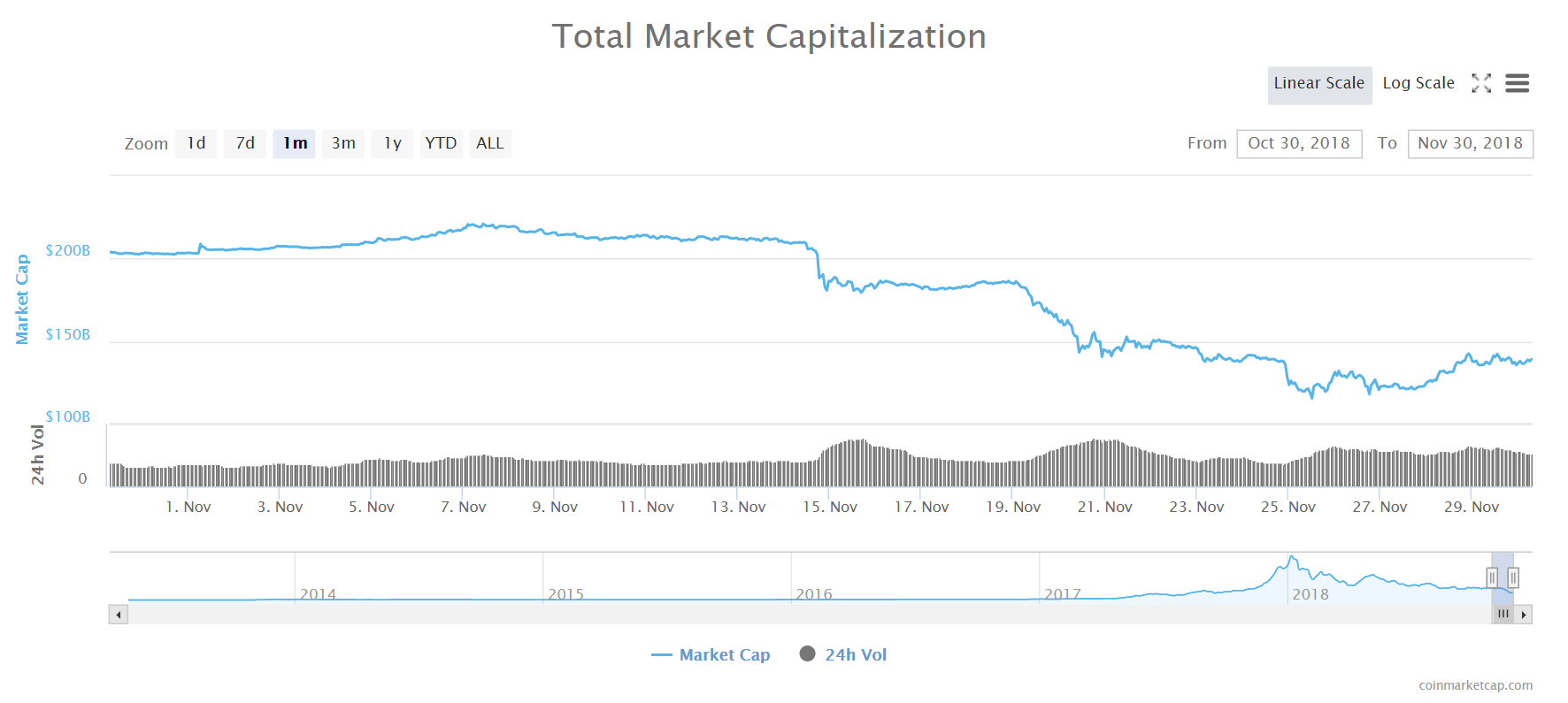
Over the last month, cryptocurrency markets have seen a veritable bloodbath. Riding comfortably at $210 billion for quite some time, the total market capitalization dropped as low as $118 billion earlier this month. At the time of writing, the markets had eased back to $140 billion--an improvement, but still aeons away from where market capitalization was at the start of November.
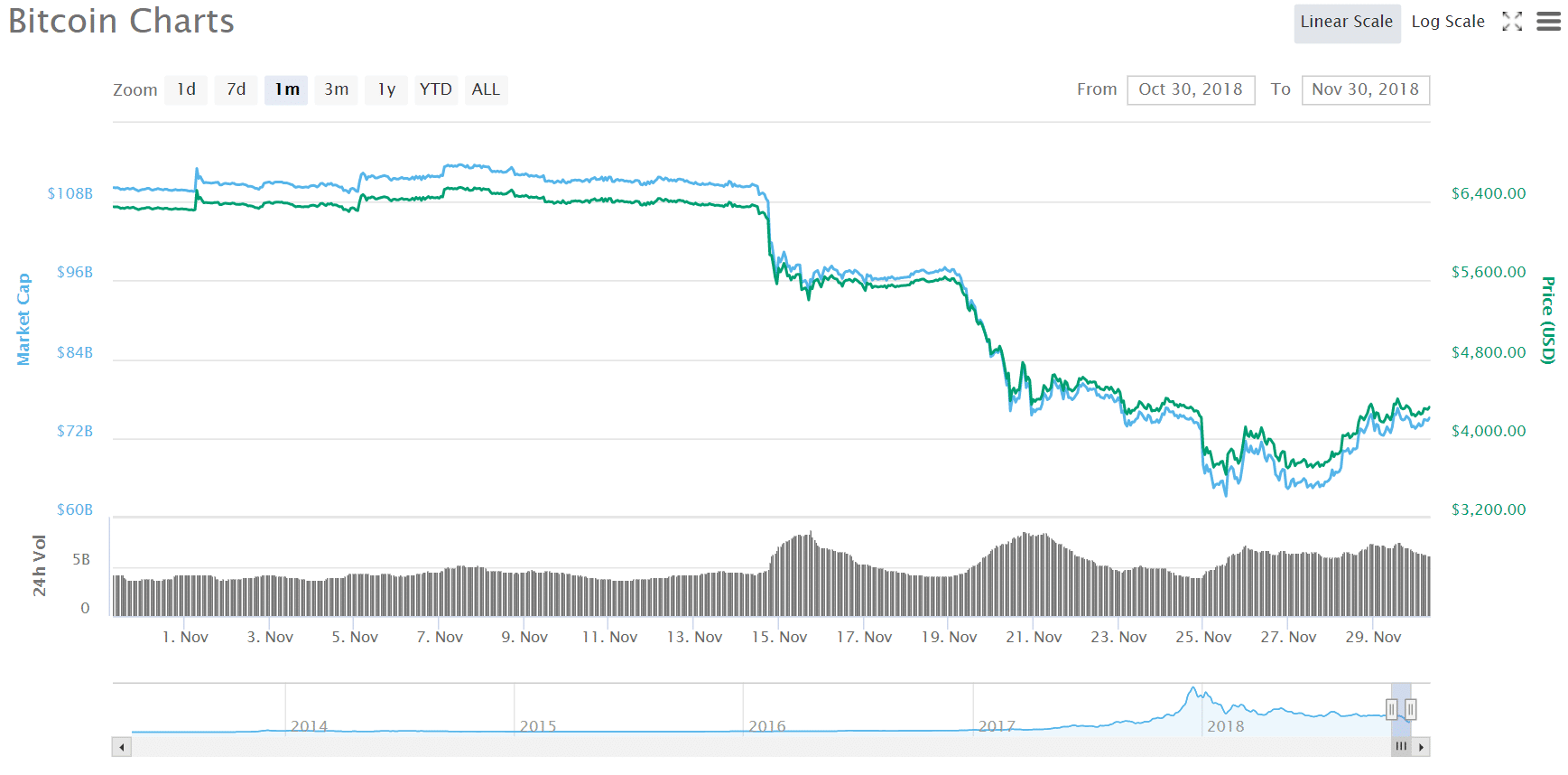
Similarly, the price of Bitcoin fell to heart-breakingly-low rates this month, briefly bottoming out around $3700.
Much of the crash was blamed on the recent Bitcoin Cash hard fork, which caused a massive split in the cryptocurrency community and reportedly caused a number of Bitcoin “whales” to sell off their BTC in order to support the Bitcoin Cash network of their choice. However, it is very difficult to quantify the exact effects that the schism had on the markets at large.
And--perhaps more importantly--will things improve?
”Cryptocurrencies Have a Very Bleak Future”
There are plenty of analysts who say that actually, no, they will not--at least, not anytime soon.
One of them is Robert R. Johnson, Ph.D., CFA, CAIA, and Professor of Finance at Heider College of Business, Creighton University.
Robert Johnson.
“My bottom line is that I think the cryptocurrencies have a very bleak future and that the vast majority of them will fail and should fail. Bitcoin ‘investors’ have seen the value of the cryptocurrency plummet, losing nearly 80% of its value,” he wrote in an email to Finance Magnates.
Johnson explained that he put the word ‘investors’ in quotations because “investors aren’t typically committing funds to bitcoin.” Instead, “speculators are,” he wrote. Johnson believes that these speculators are the reason that the cryptocurrency markets went up in the first place.
Cryptocurrency Prices Were Largely Driven By Speculation
“There is nothing to support bitcoin except the hope that you will be able to sell it to someone for more than you paid for it. There is no store-of-value aspect to a cryptocurrency. It is misnamed as it really isn’t a currency.”
“Speculators... rely on the Greater Fool Theory – that is, that some greater fool will come along and pay you more than your purchase price. Perhaps that is why bitcoin enthusiasts utilize the tools of technical analysis to analyze the bitcoin market -- you can't employ fundamental analysis,” he said.
”Crypto Utility Has Taken Too Long to Mature”
Drew Farnsworth, host of the Good Data podcast, believes that the market crash is largely due to a failure to make cryptocurrency more practical and accessible in a timely manner. “Crypto utility has taken too long to mature and smart people have wised up,” he told Finance Magnates.
Drew Farnsworth.
“Crypto is volatile because most of the investors in crypto are speculative because crypto is still not a viable payment method for most applications. As such, much of the movement in the market is essentially algorithmic. When traders see a shoulder in the curve, they are likely to sell off,” he explained. “Many of them have the intention to immediately buy again once the market hits its trough. Non-algorithmic investors get hammered when this happens.”
Crypto Markets Could Have Been “Puffed Up” By ICO Token Dumpers
Principal Consultant at Rocky Mountain Technical Marketing Jeff Stollman believes that instead of speculators, the price of Bitcoin and other cryptocurrencies was “puffed up because of widespread use by (1) organized crime, (2) terrorists, and (3) wealthy people in countries with strong export controls on wealth such as China.”
Jeff Stollman, RMTM.
“All of these parties had interest in moving their wealth around to make it usable. And I think that wealthy Chinese may have been one of the biggest buyers of cryptos. Buying [into] an ICO with the intention of then selling the tokens in another country makes for an easy way to move large sums of wealth out of a country where its value is limited by local laws and the whims of totalitarian governments to places where it can be freely spent.”
“With the increased enforcement of KYC/AML and the Chinese crackdown on ICOs, much of this demand for ICOs, and crypto currencies more generally, began to dry up,” Stollman explained. “People laundering money did not want to identify themselves as is required to comply with KYC/AML. And with countries banning ICOs, these vehicles for moving money dried up...Once this large source of demand was removed from the market, the only way for the market to adjust was for crypto prices to fall.”
Indeed, it was theorized earlier this year that the massive fall in the price of Ethereum was due to the widespread distribution and subsequent sell-off of ICO tokens months after the ICO boom of late 2017.
So which--if any--of the cryptocurrencies that became popular throughout 2017 and 2018 will survive long-term?
It’s Easier to Pick Losers
Only time will tell. According to Johnson, famed investor Warren Buffett once compared the cryptocurrency markets to the automotive industry in the first half of the 20th century, when there were hundreds of automotive companies; “now, there are only three.”
“In the context of that presentation, Mr. Buffett made the point that picking winners is very difficult, if not impossible, in rapidly emerging technologies. Picking losers is easier. He said the right play during the rise of automobiles in this country would have been to go short horses, had there been a way to do that.”
Johnson also quoted Warren Buffett in his belief that the only way to profit from cryptocurrencies would be “to short the whole basket of cryptocurrencies over a five-year period.” Then, “the results would probably be quite good.”
According to Jeff Stollman, the major difference between the cryptocurrency industry and other famous industry crashes, like the automotive industry and the dotcom bubble, is that “Because dotcom companies built physical assets, the world benefited from their investments. As a prime example, we ended up with lots of fiber to enable high-speed communications that became available at prices below the cost of deploying it,” he said.
However, “in the crypto space, there are no assets who vestiges are reusable. If a crypto goes to zero, it leaves no trace.”
Things Won't Bottom Out Until Next Year, Says Willy Woo
Johnson’s bearish views of the cryptocurrency market echo those of many other analysts in the academic and Wall Street spheres. However, voices from within the crypto community are also ringing the death knell of cryptocurrencies; or at least, a temporary death knell.
One of these is analysts is Willy Woo, a renowned analyst and researcher. Using a number of algorithms that have successfully predicted events in the cryptocurrency markets in the past, Woo says that Bitcoin won’t truly bottom out until the second quarter of 2019--after this point, Woo claims that things will start to improve.
So 30% think the bottom is in, 40% think more bear, and 30% are undecided.
People asked what I think. To me nothing has really changed, apart from some sideways nail biting.
I'll repeat with updates... https://t.co/hhmyWXUoCF
— Willy Woo (@woonomic) November 13, 2018
And of course, there are plenty of voices within the crypto community who continue to sing the praises of Bitcoin and other cryptocurrencies, perhaps in an attempt for damage-control; although the optimism of even some of the most prominent Bitcoin bulls is beginning to fade. Several weeks ago, Bitcoin Bull Mike Novogratz said that Bitcoin wouldn’t surpass $9000 by the end of this year.
By the way, things are shaping up now, well, he wasn’t exactly wrong...
Signs of the Times
So far, the crash has had some very tangible effects on various aspects of the cryptocurrency industry. Last week, reports emerged that cryptocurrency miners in China were selling their leftover mining equipment “by the Kilo.”
However, this mining equipment sell-off could be a good thing. Farnsworth, who has also worked in designing crypto-mining operations, told Finance Magnates that “hopefully the reduction in mining will reduce speculation and help to mitigate volatility.”
“Consolidation is bad for the security of the mining network, which could cause additional market anxiety and trigger additional sell-offs,” he continued. “If hash-rates go down then the little miners will get back into mining.”
David Siemer
David Siemer, CEO of Genesis, also told Finance Magnates that “less hashing power theoretically means a lower level of security on the Bitcoin network.”
However, the sell-off hasn’t been severe enough to produce any kind of heavy results. “Current conditions do not represent a significant decrease overall,” Siemer said.
In any case, Boss Cole (founder of Crypto Boss) does not see anyone attempting to exit the market at this moment in time coming out unscathed. “Those opportunists that joined purely to profit.. and especially those that joined on borrowed money.. are getting flushed out in a gigantic tsunami. Sadly, they are taking out a number of long-term investors and traders that bet big and over extended themselves, along with a number of new projects that only had good intentions,” he told Finance Magnates.
Boss Cole
“This is the cycle. This is how it plays out...because it has to.”
Over the last month, cryptocurrency markets have seen a veritable bloodbath. Riding comfortably at $210 billion for quite some time, the total market capitalization dropped as low as $118 billion earlier this month. At the time of writing, the markets had eased back to $140 billion--an improvement, but still aeons away from where market capitalization was at the start of November.
Similarly, the price of Bitcoin fell to heart-breakingly-low rates this month, briefly bottoming out around $3700.
Much of the crash was blamed on the recent Bitcoin Cash hard fork, which caused a massive split in the cryptocurrency community and reportedly caused a number of Bitcoin “whales” to sell off their BTC in order to support the Bitcoin Cash network of their choice. However, it is very difficult to quantify the exact effects that the schism had on the markets at large.
And--perhaps more importantly--will things improve?
”Cryptocurrencies Have a Very Bleak Future”
There are plenty of analysts who say that actually, no, they will not--at least, not anytime soon.
One of them is Robert R. Johnson, Ph.D., CFA, CAIA, and Professor of Finance at Heider College of Business, Creighton University.
Robert Johnson.
“My bottom line is that I think the cryptocurrencies have a very bleak future and that the vast majority of them will fail and should fail. Bitcoin ‘investors’ have seen the value of the cryptocurrency plummet, losing nearly 80% of its value,” he wrote in an email to Finance Magnates.
Johnson explained that he put the word ‘investors’ in quotations because “investors aren’t typically committing funds to bitcoin.” Instead, “speculators are,” he wrote. Johnson believes that these speculators are the reason that the cryptocurrency markets went up in the first place.
Cryptocurrency Prices Were Largely Driven By Speculation
“There is nothing to support bitcoin except the hope that you will be able to sell it to someone for more than you paid for it. There is no store-of-value aspect to a cryptocurrency. It is misnamed as it really isn’t a currency.”
“Speculators... rely on the Greater Fool Theory – that is, that some greater fool will come along and pay you more than your purchase price. Perhaps that is why bitcoin enthusiasts utilize the tools of technical analysis to analyze the bitcoin market -- you can't employ fundamental analysis,” he said.
”Crypto Utility Has Taken Too Long to Mature”
Drew Farnsworth, host of the Good Data podcast, believes that the market crash is largely due to a failure to make cryptocurrency more practical and accessible in a timely manner. “Crypto utility has taken too long to mature and smart people have wised up,” he told Finance Magnates.
Drew Farnsworth.
“Crypto is volatile because most of the investors in crypto are speculative because crypto is still not a viable payment method for most applications. As such, much of the movement in the market is essentially algorithmic. When traders see a shoulder in the curve, they are likely to sell off,” he explained. “Many of them have the intention to immediately buy again once the market hits its trough. Non-algorithmic investors get hammered when this happens.”
Crypto Markets Could Have Been “Puffed Up” By ICO Token Dumpers
Principal Consultant at Rocky Mountain Technical Marketing Jeff Stollman believes that instead of speculators, the price of Bitcoin and other cryptocurrencies was “puffed up because of widespread use by (1) organized crime, (2) terrorists, and (3) wealthy people in countries with strong export controls on wealth such as China.”
Jeff Stollman, RMTM.
“All of these parties had interest in moving their wealth around to make it usable. And I think that wealthy Chinese may have been one of the biggest buyers of cryptos. Buying [into] an ICO with the intention of then selling the tokens in another country makes for an easy way to move large sums of wealth out of a country where its value is limited by local laws and the whims of totalitarian governments to places where it can be freely spent.”
“With the increased enforcement of KYC/AML and the Chinese crackdown on ICOs, much of this demand for ICOs, and crypto currencies more generally, began to dry up,” Stollman explained. “People laundering money did not want to identify themselves as is required to comply with KYC/AML. And with countries banning ICOs, these vehicles for moving money dried up...Once this large source of demand was removed from the market, the only way for the market to adjust was for crypto prices to fall.”
Indeed, it was theorized earlier this year that the massive fall in the price of Ethereum was due to the widespread distribution and subsequent sell-off of ICO tokens months after the ICO boom of late 2017.
So which--if any--of the cryptocurrencies that became popular throughout 2017 and 2018 will survive long-term?
It’s Easier to Pick Losers
Only time will tell. According to Johnson, famed investor Warren Buffett once compared the cryptocurrency markets to the automotive industry in the first half of the 20th century, when there were hundreds of automotive companies; “now, there are only three.”
“In the context of that presentation, Mr. Buffett made the point that picking winners is very difficult, if not impossible, in rapidly emerging technologies. Picking losers is easier. He said the right play during the rise of automobiles in this country would have been to go short horses, had there been a way to do that.”
Johnson also quoted Warren Buffett in his belief that the only way to profit from cryptocurrencies would be “to short the whole basket of cryptocurrencies over a five-year period.” Then, “the results would probably be quite good.”
According to Jeff Stollman, the major difference between the cryptocurrency industry and other famous industry crashes, like the automotive industry and the dotcom bubble, is that “Because dotcom companies built physical assets, the world benefited from their investments. As a prime example, we ended up with lots of fiber to enable high-speed communications that became available at prices below the cost of deploying it,” he said.
However, “in the crypto space, there are no assets who vestiges are reusable. If a crypto goes to zero, it leaves no trace.”
Things Won't Bottom Out Until Next Year, Says Willy Woo
Johnson’s bearish views of the cryptocurrency market echo those of many other analysts in the academic and Wall Street spheres. However, voices from within the crypto community are also ringing the death knell of cryptocurrencies; or at least, a temporary death knell.
One of these is analysts is Willy Woo, a renowned analyst and researcher. Using a number of algorithms that have successfully predicted events in the cryptocurrency markets in the past, Woo says that Bitcoin won’t truly bottom out until the second quarter of 2019--after this point, Woo claims that things will start to improve.
So 30% think the bottom is in, 40% think more bear, and 30% are undecided.
People asked what I think. To me nothing has really changed, apart from some sideways nail biting.
I'll repeat with updates... https://t.co/hhmyWXUoCF
— Willy Woo (@woonomic) November 13, 2018
And of course, there are plenty of voices within the crypto community who continue to sing the praises of Bitcoin and other cryptocurrencies, perhaps in an attempt for damage-control; although the optimism of even some of the most prominent Bitcoin bulls is beginning to fade. Several weeks ago, Bitcoin Bull Mike Novogratz said that Bitcoin wouldn’t surpass $9000 by the end of this year.
By the way, things are shaping up now, well, he wasn’t exactly wrong...
Signs of the Times
So far, the crash has had some very tangible effects on various aspects of the cryptocurrency industry. Last week, reports emerged that cryptocurrency miners in China were selling their leftover mining equipment “by the Kilo.”
However, this mining equipment sell-off could be a good thing. Farnsworth, who has also worked in designing crypto-mining operations, told Finance Magnates that “hopefully the reduction in mining will reduce speculation and help to mitigate volatility.”
“Consolidation is bad for the security of the mining network, which could cause additional market anxiety and trigger additional sell-offs,” he continued. “If hash-rates go down then the little miners will get back into mining.”
David Siemer
David Siemer, CEO of Genesis, also told Finance Magnates that “less hashing power theoretically means a lower level of security on the Bitcoin network.”
However, the sell-off hasn’t been severe enough to produce any kind of heavy results. “Current conditions do not represent a significant decrease overall,” Siemer said.
In any case, Boss Cole (founder of Crypto Boss) does not see anyone attempting to exit the market at this moment in time coming out unscathed. “Those opportunists that joined purely to profit.. and especially those that joined on borrowed money.. are getting flushed out in a gigantic tsunami. Sadly, they are taking out a number of long-term investors and traders that bet big and over extended themselves, along with a number of new projects that only had good intentions,” he told Finance Magnates.
Boss Cole
“This is the cycle. This is how it plays out...because it has to.”
Rachel is a self-taught crypto geek and a passionate writer. She believes in the power that the written word has to educate, connect and empower individuals to make positive and powerful financial choices. She is the Podcast Host and a Cryptocurrency Editor at Finance Magnates.
Crypto Built More Rails, but the Next Battle Is Over How Much Work a Dollar Can Do
Featured Videos
FP Markets Winner Spotlight 🏆 | Global Broker of the Year 2025 #Trading #Broker #Innovation #Shorts
FP Markets Winner Spotlight 🏆 | Global Broker of the Year 2025 #Trading #Broker #Innovation #Shorts
FP Markets Winner Spotlight 🏆 | Global Broker of the Year 2025 #Trading #Broker #Innovation #Shorts
FP Markets Winner Spotlight 🏆 | Global Broker of the Year 2025 #Trading #Broker #Innovation #Shorts
FP Markets takes the spotlight as Global Broker of the Year 2025 at the Finance Magnates Awards.
Martin Stoilov, Head of Client Experience, shares that trust, innovation, and people played a key role in the company’s success, supported by a strong foundation of integrity and client-centricity.
Following this milestone, FP Markets continues to focus on growth, technology investment, and its core values of transparency and excellence.
👉 Be part of FM Awards 2026: https://awards.financemagnates.com/#nominate
FP Markets takes the spotlight as Global Broker of the Year 2025 at the Finance Magnates Awards.
Martin Stoilov, Head of Client Experience, shares that trust, innovation, and people played a key role in the company’s success, supported by a strong foundation of integrity and client-centricity.
Following this milestone, FP Markets continues to focus on growth, technology investment, and its core values of transparency and excellence.
👉 Be part of FM Awards 2026: https://awards.financemagnates.com/#nominate
FP Markets takes the spotlight as Global Broker of the Year 2025 at the Finance Magnates Awards.
Martin Stoilov, Head of Client Experience, shares that trust, innovation, and people played a key role in the company’s success, supported by a strong foundation of integrity and client-centricity.
Following this milestone, FP Markets continues to focus on growth, technology investment, and its core values of transparency and excellence.
👉 Be part of FM Awards 2026: https://awards.financemagnates.com/#nominate
FP Markets takes the spotlight as Global Broker of the Year 2025 at the Finance Magnates Awards.
Martin Stoilov, Head of Client Experience, shares that trust, innovation, and people played a key role in the company’s success, supported by a strong foundation of integrity and client-centricity.
Following this milestone, FP Markets continues to focus on growth, technology investment, and its core values of transparency and excellence.
👉 Be part of FM Awards 2026: https://awards.financemagnates.com/#nominate
In this video, we review @HolaPrimeMarketsOfficial, a multi-asset forex and CFDs broker offering different account types, trading platforms, and flexible trading conditions.
We cover the broker’s overall offering, including account options, trading environment, platforms like MT4 and MT5, and additional services such as managed accounts and fast withdrawals.
Watch the full video to see if Hola Prime Markets fits your trading needs.
📣 Stay up to date with the latest in finance and trading. Follow Finance Magnates for industry news, insights, and global event coverage.
Connect with us:
🔗 LinkedIn: /financemagnates
👍 Facebook: /financemagnates
📸 Instagram: https://www.instagram.com/financemagnates
🐦 X: https://x.com/financemagnates
🎥 TikTok: https://www.tiktok.com/tag/financemagnates
▶️ YouTube: /@financemagnates_official
#HolaPrime #ForexBroker #CFDTrading #FinanceMagnates #Trading #Forex #BrokerReview
In this video, we review @HolaPrimeMarketsOfficial, a multi-asset forex and CFDs broker offering different account types, trading platforms, and flexible trading conditions.
We cover the broker’s overall offering, including account options, trading environment, platforms like MT4 and MT5, and additional services such as managed accounts and fast withdrawals.
Watch the full video to see if Hola Prime Markets fits your trading needs.
📣 Stay up to date with the latest in finance and trading. Follow Finance Magnates for industry news, insights, and global event coverage.
Connect with us:
🔗 LinkedIn: /financemagnates
👍 Facebook: /financemagnates
📸 Instagram: https://www.instagram.com/financemagnates
🐦 X: https://x.com/financemagnates
🎥 TikTok: https://www.tiktok.com/tag/financemagnates
▶️ YouTube: /@financemagnates_official
#HolaPrime #ForexBroker #CFDTrading #FinanceMagnates #Trading #Forex #BrokerReview
In this video, we review @HolaPrimeMarketsOfficial, a multi-asset forex and CFDs broker offering different account types, trading platforms, and flexible trading conditions.
We cover the broker’s overall offering, including account options, trading environment, platforms like MT4 and MT5, and additional services such as managed accounts and fast withdrawals.
Watch the full video to see if Hola Prime Markets fits your trading needs.
📣 Stay up to date with the latest in finance and trading. Follow Finance Magnates for industry news, insights, and global event coverage.
Connect with us:
🔗 LinkedIn: /financemagnates
👍 Facebook: /financemagnates
📸 Instagram: https://www.instagram.com/financemagnates
🐦 X: https://x.com/financemagnates
🎥 TikTok: https://www.tiktok.com/tag/financemagnates
▶️ YouTube: /@financemagnates_official
#HolaPrime #ForexBroker #CFDTrading #FinanceMagnates #Trading #Forex #BrokerReview
In this video, we review @HolaPrimeMarketsOfficial, a multi-asset forex and CFDs broker offering different account types, trading platforms, and flexible trading conditions.
We cover the broker’s overall offering, including account options, trading environment, platforms like MT4 and MT5, and additional services such as managed accounts and fast withdrawals.
Watch the full video to see if Hola Prime Markets fits your trading needs.
📣 Stay up to date with the latest in finance and trading. Follow Finance Magnates for industry news, insights, and global event coverage.
Connect with us:
🔗 LinkedIn: /financemagnates
👍 Facebook: /financemagnates
📸 Instagram: https://www.instagram.com/financemagnates
🐦 X: https://x.com/financemagnates
🎥 TikTok: https://www.tiktok.com/tag/financemagnates
▶️ YouTube: /@financemagnates_official
#HolaPrime #ForexBroker #CFDTrading #FinanceMagnates #Trading #Forex #BrokerReview
In this video, we review @HolaPrimeMarketsOfficial, a multi-asset forex and CFDs broker offering different account types, trading platforms, and flexible trading conditions.
We cover the broker’s overall offering, including account options, trading environment, platforms like MT4 and MT5, and additional services such as managed accounts and fast withdrawals.
Watch the full video to see if Hola Prime Markets fits your trading needs.
📣 Stay up to date with the latest in finance and trading. Follow Finance Magnates for industry news, insights, and global event coverage.
Connect with us:
🔗 LinkedIn: /financemagnates
👍 Facebook: /financemagnates
📸 Instagram: https://www.instagram.com/financemagnates
🐦 X: https://x.com/financemagnates
🎥 TikTok: https://www.tiktok.com/tag/financemagnates
▶️ YouTube: /@financemagnates_official
#HolaPrime #ForexBroker #CFDTrading #FinanceMagnates #Trading #Forex #BrokerReview
In this video, we review @HolaPrimeMarketsOfficial, a multi-asset forex and CFDs broker offering different account types, trading platforms, and flexible trading conditions.
We cover the broker’s overall offering, including account options, trading environment, platforms like MT4 and MT5, and additional services such as managed accounts and fast withdrawals.
Watch the full video to see if Hola Prime Markets fits your trading needs.
📣 Stay up to date with the latest in finance and trading. Follow Finance Magnates for industry news, insights, and global event coverage.
Connect with us:
🔗 LinkedIn: /financemagnates
👍 Facebook: /financemagnates
📸 Instagram: https://www.instagram.com/financemagnates
🐦 X: https://x.com/financemagnates
🎥 TikTok: https://www.tiktok.com/tag/financemagnates
▶️ YouTube: /@financemagnates_official
#HolaPrime #ForexBroker #CFDTrading #FinanceMagnates #Trading #Forex #BrokerReview
Hola Prime Review: What You Need to Know | Full Breakdown by Finance Magnates
Hola Prime Review: What You Need to Know | Full Breakdown by Finance Magnates
Hola Prime Review: What You Need to Know | Full Breakdown by Finance Magnates
Hola Prime Review: What You Need to Know | Full Breakdown by Finance Magnates
Hola Prime Review: What You Need to Know | Full Breakdown by Finance Magnates
Hola Prime Review: What You Need to Know | Full Breakdown by Finance Magnates
In this video, we review @HolaPrime_Global, a proprietary trading firm offering evaluation programs and performance-based payouts in simulated market environments.
We cover how the challenge model works, including account types, profit splits (up to 95%), trading rules, and what it takes to reach a funded account. You’ll also learn about available platforms like MT4, MT5, cTrader, and more, along with insights into payouts, support, and trading conditions.
Watch the full video to see if Hola Prime fits your trading style.
📣 Stay up to date with the latest in finance and trading. Follow Finance Magnates for industry news, insights, and global event coverage.
Connect with us:
🔗 LinkedIn: /financemagnates
👍 Facebook: /financemagnates
📸 Instagram: https://www.instagram.com/financemagnates
🐦 X: https://x.com/financemagnates
🎥 TikTok: https://www.tiktok.com/tag/financemagnates
▶️ YouTube: /@financemagnates_official
#HolaPrime #PropFirm #Trading #FinanceMagnates #Forex #FuturesTrading #TradingReview #PropFirmReview
In this video, we review @HolaPrime_Global, a proprietary trading firm offering evaluation programs and performance-based payouts in simulated market environments.
We cover how the challenge model works, including account types, profit splits (up to 95%), trading rules, and what it takes to reach a funded account. You’ll also learn about available platforms like MT4, MT5, cTrader, and more, along with insights into payouts, support, and trading conditions.
Watch the full video to see if Hola Prime fits your trading style.
📣 Stay up to date with the latest in finance and trading. Follow Finance Magnates for industry news, insights, and global event coverage.
Connect with us:
🔗 LinkedIn: /financemagnates
👍 Facebook: /financemagnates
📸 Instagram: https://www.instagram.com/financemagnates
🐦 X: https://x.com/financemagnates
🎥 TikTok: https://www.tiktok.com/tag/financemagnates
▶️ YouTube: /@financemagnates_official
#HolaPrime #PropFirm #Trading #FinanceMagnates #Forex #FuturesTrading #TradingReview #PropFirmReview
In this video, we review @HolaPrime_Global, a proprietary trading firm offering evaluation programs and performance-based payouts in simulated market environments.
We cover how the challenge model works, including account types, profit splits (up to 95%), trading rules, and what it takes to reach a funded account. You’ll also learn about available platforms like MT4, MT5, cTrader, and more, along with insights into payouts, support, and trading conditions.
Watch the full video to see if Hola Prime fits your trading style.
📣 Stay up to date with the latest in finance and trading. Follow Finance Magnates for industry news, insights, and global event coverage.
Connect with us:
🔗 LinkedIn: /financemagnates
👍 Facebook: /financemagnates
📸 Instagram: https://www.instagram.com/financemagnates
🐦 X: https://x.com/financemagnates
🎥 TikTok: https://www.tiktok.com/tag/financemagnates
▶️ YouTube: /@financemagnates_official
#HolaPrime #PropFirm #Trading #FinanceMagnates #Forex #FuturesTrading #TradingReview #PropFirmReview
In this video, we review @HolaPrime_Global, a proprietary trading firm offering evaluation programs and performance-based payouts in simulated market environments.
We cover how the challenge model works, including account types, profit splits (up to 95%), trading rules, and what it takes to reach a funded account. You’ll also learn about available platforms like MT4, MT5, cTrader, and more, along with insights into payouts, support, and trading conditions.
Watch the full video to see if Hola Prime fits your trading style.
📣 Stay up to date with the latest in finance and trading. Follow Finance Magnates for industry news, insights, and global event coverage.
Connect with us:
🔗 LinkedIn: /financemagnates
👍 Facebook: /financemagnates
📸 Instagram: https://www.instagram.com/financemagnates
🐦 X: https://x.com/financemagnates
🎥 TikTok: https://www.tiktok.com/tag/financemagnates
▶️ YouTube: /@financemagnates_official
#HolaPrime #PropFirm #Trading #FinanceMagnates #Forex #FuturesTrading #TradingReview #PropFirmReview
In this video, we review @HolaPrime_Global, a proprietary trading firm offering evaluation programs and performance-based payouts in simulated market environments.
We cover how the challenge model works, including account types, profit splits (up to 95%), trading rules, and what it takes to reach a funded account. You’ll also learn about available platforms like MT4, MT5, cTrader, and more, along with insights into payouts, support, and trading conditions.
Watch the full video to see if Hola Prime fits your trading style.
📣 Stay up to date with the latest in finance and trading. Follow Finance Magnates for industry news, insights, and global event coverage.
Connect with us:
🔗 LinkedIn: /financemagnates
👍 Facebook: /financemagnates
📸 Instagram: https://www.instagram.com/financemagnates
🐦 X: https://x.com/financemagnates
🎥 TikTok: https://www.tiktok.com/tag/financemagnates
▶️ YouTube: /@financemagnates_official
#HolaPrime #PropFirm #Trading #FinanceMagnates #Forex #FuturesTrading #TradingReview #PropFirmReview
In this video, we review @HolaPrime_Global, a proprietary trading firm offering evaluation programs and performance-based payouts in simulated market environments.
We cover how the challenge model works, including account types, profit splits (up to 95%), trading rules, and what it takes to reach a funded account. You’ll also learn about available platforms like MT4, MT5, cTrader, and more, along with insights into payouts, support, and trading conditions.
Watch the full video to see if Hola Prime fits your trading style.
📣 Stay up to date with the latest in finance and trading. Follow Finance Magnates for industry news, insights, and global event coverage.
Connect with us:
🔗 LinkedIn: /financemagnates
👍 Facebook: /financemagnates
📸 Instagram: https://www.instagram.com/financemagnates
🐦 X: https://x.com/financemagnates
🎥 TikTok: https://www.tiktok.com/tag/financemagnates
▶️ YouTube: /@financemagnates_official
#HolaPrime #PropFirm #Trading #FinanceMagnates #Forex #FuturesTrading #TradingReview #PropFirmReview
Axi Winner Spotlight 🏆 | Global Most Innovative Broker 2025 #Innovation #Trading #Fintech #Broker
Axi Winner Spotlight 🏆 | Global Most Innovative Broker 2025 #Innovation #Trading #Fintech #Broker
Axi Winner Spotlight 🏆 | Global Most Innovative Broker 2025 #Innovation #Trading #Fintech #Broker
Axi Winner Spotlight 🏆 | Global Most Innovative Broker 2025 #Innovation #Trading #Fintech #Broker
Axi Winner Spotlight 🏆 | Global Most Innovative Broker 2025 #Innovation #Trading #Fintech #Broker
Axi Winner Spotlight 🏆 | Global Most Innovative Broker 2025 #Innovation #Trading #Fintech #Broker
Axi takes the spotlight at the Finance Magnates Awards, winning Global Most Innovative Broker 2025.
Olivia Xenofontos and Ivanna Openko share how the team will feel: proud, motivated, and ready to keep delivering.
They also describe the night as well-organized, focused, and enjoyable for all.
👉 Be part of FM Awards 2026.
Axi takes the spotlight at the Finance Magnates Awards, winning Global Most Innovative Broker 2025.
Olivia Xenofontos and Ivanna Openko share how the team will feel: proud, motivated, and ready to keep delivering.
They also describe the night as well-organized, focused, and enjoyable for all.
👉 Be part of FM Awards 2026.
Axi takes the spotlight at the Finance Magnates Awards, winning Global Most Innovative Broker 2025.
Olivia Xenofontos and Ivanna Openko share how the team will feel: proud, motivated, and ready to keep delivering.
They also describe the night as well-organized, focused, and enjoyable for all.
👉 Be part of FM Awards 2026.
Axi takes the spotlight at the Finance Magnates Awards, winning Global Most Innovative Broker 2025.
Olivia Xenofontos and Ivanna Openko share how the team will feel: proud, motivated, and ready to keep delivering.
They also describe the night as well-organized, focused, and enjoyable for all.
👉 Be part of FM Awards 2026.
Axi takes the spotlight at the Finance Magnates Awards, winning Global Most Innovative Broker 2025.
Olivia Xenofontos and Ivanna Openko share how the team will feel: proud, motivated, and ready to keep delivering.
They also describe the night as well-organized, focused, and enjoyable for all.
👉 Be part of FM Awards 2026.
Axi takes the spotlight at the Finance Magnates Awards, winning Global Most Innovative Broker 2025.
Olivia Xenofontos and Ivanna Openko share how the team will feel: proud, motivated, and ready to keep delivering.
They also describe the night as well-organized, focused, and enjoyable for all.
👉 Be part of FM Awards 2026.
Recognition that matters.
Built on transparency.
Driven by the industry.
The Finance Magnates Awards 2026.
Nominations are now open.
🔗 https://awards.financemagnates.com/?utm_source=SM&utm_medium=social&utm_campaign=recognition-matters
Recognition that matters.
Built on transparency.
Driven by the industry.
The Finance Magnates Awards 2026.
Nominations are now open.
🔗 https://awards.financemagnates.com/?utm_source=SM&utm_medium=social&utm_campaign=recognition-matters
Recognition that matters.
Built on transparency.
Driven by the industry.
The Finance Magnates Awards 2026.
Nominations are now open.
🔗 https://awards.financemagnates.com/?utm_source=SM&utm_medium=social&utm_campaign=recognition-matters
Recognition that matters.
Built on transparency.
Driven by the industry.
The Finance Magnates Awards 2026.
Nominations are now open.
🔗 https://awards.financemagnates.com/?utm_source=SM&utm_medium=social&utm_campaign=recognition-matters
Recognition that matters.
Built on transparency.
Driven by the industry.
The Finance Magnates Awards 2026.
Nominations are now open.
🔗 https://awards.financemagnates.com/?utm_source=SM&utm_medium=social&utm_campaign=recognition-matters
Recognition that matters.
Built on transparency.
Driven by the industry.
The Finance Magnates Awards 2026.
Nominations are now open.
🔗 https://awards.financemagnates.com/?utm_source=SM&utm_medium=social&utm_campaign=recognition-matters