The SEC has created a hostile environment for the crypto industry in the US.
BlackRock’s BTC ETF application has altered the landscape, bolstering the case for crypto.
It wasn’t so long ago (earlier this month) that the US appeared to be following a path of outright hostility towards the crypto industry, seemingly keen to force out crypto-native enterprises even as several other regions around the world were opening their doors to crypto integration.
This, at times, has been seen as a belligerent attitude led by the SEC and aggressive enough for some crypto industry participants, including some influential figures, to speculate that it’s an orchestrated attempt to halt crypto development. In fact, this theory even has a name: Operation Choke Point 2.0 (a reference to a banking investigative operation from 2013 to 2017 by the US Department of Justice that was heavily criticized for allegedly bypassing due process.)
There are also, it should be noted, plenty of observers who dismiss this theory. Plus, it’s true that proponents of the idea that there's a behind-the-scenes anti-crypto campaign tend to overlook the very real irregularities highlighted at some major crypto platforms, which, as in the case of an entity like FTX, have sometimes caused enormous damage to users.
Still though, whichever side of that debate you happen to fall on, what’s becoming clear is that this month has seen an enormous shift in the US crypto landscape, resulting in a dramatic turnaround in sentiment.
A Bleak Start to the Month
June began ominously, with the SEC suing both Binance and Coinbase (ranked, respectively, as the first and third biggest crypto exchanges in the world by average daily volumes) and creating the outward impression of a regulatory body that was on the warpath and gunning for crypto.
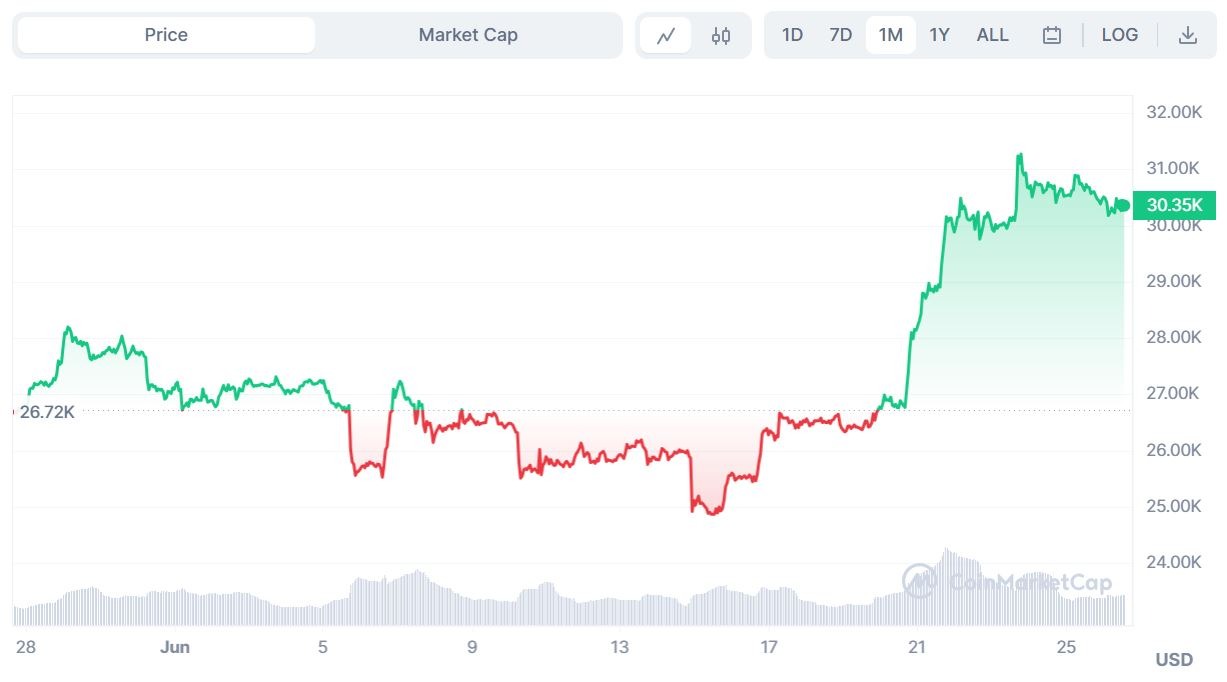
Perhaps at least partly as a result of these events, the price of bitcoin dropped, dipping below the $25,000 mark after an impressively bullish year to date. Moreover, the general sentiment took a hit, as it began to appear that even as other regions of the world were looking seriously at ways to integrate crypto, the US, if the attitude of the SEC was indicative of a wider plan, was willing to cut itself off from the entire industry.
BlackRock Turns The Situation
Against this backdrop, the middle of the month saw BlackRock turn the entire situation on its head, as the world's largest asset management company filed an application to operate a Bitcoin spot ETF. While the SEC has approved Bitcoin futures ETFs in the past, 28 applications for spot ETFs (from entities other than BlackRock) have been rejected.
One can’t help but be struck by BlackRock’s timing, with its application running directly counter to the growing impression of a regulatory environment at war with crypto, and the application raised questions that cross over into politics. Was BlackRock's CEO, Larry Fink, who is seen as supportive of the Democratic Party, using his considerable influence to send a message not only to the SEC, but even to the Democrat administration itself, signaling that Bitcoin, and perhaps crypto more widely, is not a sector that the US should be opting out of or pushing offshore?
Either way, observers noted that of the 576 ETF applications ever made by BlackRock, all but one had been accepted, and the markets certainly received a message, regardless of behind-the-scenes intent, with bitcoin now trading above $30,000.
Bitcoin's price throughout June.
Other Firms Follow
Newly buoyant sentiment has been bolstered by a sequence of further Bitcoin spot ETF applications from other firms, with Fidelity, Invesco, Wisdom Tree and Valkyrie all following BlackRock’s lead. What’s more, the second half of June saw the launch of EDX Markets, a crypto exchange backed by finance industry giants including Citadel, Fidelity and Charles Schwab.
For several years, a narrative around Bitcoin has been that the institutions are coming, and now very suddenly, and at an unexpected moment, this part of the script seemed to be playing out at pace. There was also, recently, a further curious development, as the SEC approved a leveraged Bitcoin futures ETF for the first time, leading critics to wonder at the logic behind approving leveraged futures ahead of a straightforward spot mechanism, and whether this could be indicative of an incoming SEC shift.
Nuance from the Fed
A more nuanced approach to crypto in the US, as compared to the attitude displayed by the SEC, was on display when the Federal Reserve's Chair, Jerome Powell stated last week, while testifying at the House Financial Services Committee, that: “crypto appears to have staying power as an asset class,” and he also explained that: “we do see payment stablecoins as money.”
Additionally, Powell maintained, on the subject of stablecoin issuance, that:
“We believe that it would be appropriate to have a quite robust federal role in what happens in stablecoins going forward, and leaving us with a weak role and allowing a lot of private money creation at the state level would be a mistake.”
The crypto industry has proven to be a volatile arena over the past decade or so, and it’s always been the case that the prevailing mood can alter rapidly, but the effect of BlackRock’s most recent ETF application stands out in particular, suggesting the possibility of a consequential long-term readjustment in American institutional attitudes towards crypto.
It wasn’t so long ago (earlier this month) that the US appeared to be following a path of outright hostility towards the crypto industry, seemingly keen to force out crypto-native enterprises even as several other regions around the world were opening their doors to crypto integration.
This, at times, has been seen as a belligerent attitude led by the SEC and aggressive enough for some crypto industry participants, including some influential figures, to speculate that it’s an orchestrated attempt to halt crypto development. In fact, this theory even has a name: Operation Choke Point 2.0 (a reference to a banking investigative operation from 2013 to 2017 by the US Department of Justice that was heavily criticized for allegedly bypassing due process.)
There are also, it should be noted, plenty of observers who dismiss this theory. Plus, it’s true that proponents of the idea that there's a behind-the-scenes anti-crypto campaign tend to overlook the very real irregularities highlighted at some major crypto platforms, which, as in the case of an entity like FTX, have sometimes caused enormous damage to users.
Still though, whichever side of that debate you happen to fall on, what’s becoming clear is that this month has seen an enormous shift in the US crypto landscape, resulting in a dramatic turnaround in sentiment.
A Bleak Start to the Month
June began ominously, with the SEC suing both Binance and Coinbase (ranked, respectively, as the first and third biggest crypto exchanges in the world by average daily volumes) and creating the outward impression of a regulatory body that was on the warpath and gunning for crypto.
Perhaps at least partly as a result of these events, the price of bitcoin dropped, dipping below the $25,000 mark after an impressively bullish year to date. Moreover, the general sentiment took a hit, as it began to appear that even as other regions of the world were looking seriously at ways to integrate crypto, the US, if the attitude of the SEC was indicative of a wider plan, was willing to cut itself off from the entire industry.
BlackRock Turns The Situation
Against this backdrop, the middle of the month saw BlackRock turn the entire situation on its head, as the world's largest asset management company filed an application to operate a Bitcoin spot ETF. While the SEC has approved Bitcoin futures ETFs in the past, 28 applications for spot ETFs (from entities other than BlackRock) have been rejected.
One can’t help but be struck by BlackRock’s timing, with its application running directly counter to the growing impression of a regulatory environment at war with crypto, and the application raised questions that cross over into politics. Was BlackRock's CEO, Larry Fink, who is seen as supportive of the Democratic Party, using his considerable influence to send a message not only to the SEC, but even to the Democrat administration itself, signaling that Bitcoin, and perhaps crypto more widely, is not a sector that the US should be opting out of or pushing offshore?
Either way, observers noted that of the 576 ETF applications ever made by BlackRock, all but one had been accepted, and the markets certainly received a message, regardless of behind-the-scenes intent, with bitcoin now trading above $30,000.
Bitcoin's price throughout June.
Other Firms Follow
Newly buoyant sentiment has been bolstered by a sequence of further Bitcoin spot ETF applications from other firms, with Fidelity, Invesco, Wisdom Tree and Valkyrie all following BlackRock’s lead. What’s more, the second half of June saw the launch of EDX Markets, a crypto exchange backed by finance industry giants including Citadel, Fidelity and Charles Schwab.
For several years, a narrative around Bitcoin has been that the institutions are coming, and now very suddenly, and at an unexpected moment, this part of the script seemed to be playing out at pace. There was also, recently, a further curious development, as the SEC approved a leveraged Bitcoin futures ETF for the first time, leading critics to wonder at the logic behind approving leveraged futures ahead of a straightforward spot mechanism, and whether this could be indicative of an incoming SEC shift.
Nuance from the Fed
A more nuanced approach to crypto in the US, as compared to the attitude displayed by the SEC, was on display when the Federal Reserve's Chair, Jerome Powell stated last week, while testifying at the House Financial Services Committee, that: “crypto appears to have staying power as an asset class,” and he also explained that: “we do see payment stablecoins as money.”
Additionally, Powell maintained, on the subject of stablecoin issuance, that:
“We believe that it would be appropriate to have a quite robust federal role in what happens in stablecoins going forward, and leaving us with a weak role and allowing a lot of private money creation at the state level would be a mistake.”
The crypto industry has proven to be a volatile arena over the past decade or so, and it’s always been the case that the prevailing mood can alter rapidly, but the effect of BlackRock’s most recent ETF application stands out in particular, suggesting the possibility of a consequential long-term readjustment in American institutional attitudes towards crypto.
Sam White is a writer and journalist from the UK who covers cryptocurrencies and web3, with a particular interest in NFTs and the crossover between art and finance. His work, on a wide variety of topics, has appeared on platforms including The Spectator, Vice and Hacker Noon.
CFTC Seeks Public Input on Proposed Retail Crypto Regulatory Framework
Featured Videos
AvaTrade to Acquire Most of FXCM; NAGA Raises $8M
AvaTrade to Acquire Most of FXCM; NAGA Raises $8M
AvaTrade to Acquire Most of FXCM; NAGA Raises $8M
AvaTrade to Acquire Most of FXCM; NAGA Raises $8M
Today’s financial news recap covers AvaTrade agrees to acquire most of FXCM, NAGA secures eight million dollars in new financing, and Wise seeks a tax settlement in the UK.
Finance Magnates Daily Recap brings you the latest news from forex and CFD brokers, fintech, payments, cryptocurrency, digital assets, trading platforms, financial regulation and global markets.
Get the key company news, executive moves, deals, regulatory updates and market developments of the day, in just a few minutes. New episodes published every weekday.
Read more: https://www.financemagnates.com
#FinanceMagnates #ForexNews #FintechNews
Today’s financial news recap covers AvaTrade agrees to acquire most of FXCM, NAGA secures eight million dollars in new financing, and Wise seeks a tax settlement in the UK.
Finance Magnates Daily Recap brings you the latest news from forex and CFD brokers, fintech, payments, cryptocurrency, digital assets, trading platforms, financial regulation and global markets.
Get the key company news, executive moves, deals, regulatory updates and market developments of the day, in just a few minutes. New episodes published every weekday.
Read more: https://www.financemagnates.com
#FinanceMagnates #ForexNews #FintechNews
Today’s financial news recap covers AvaTrade agrees to acquire most of FXCM, NAGA secures eight million dollars in new financing, and Wise seeks a tax settlement in the UK.
Finance Magnates Daily Recap brings you the latest news from forex and CFD brokers, fintech, payments, cryptocurrency, digital assets, trading platforms, financial regulation and global markets.
Get the key company news, executive moves, deals, regulatory updates and market developments of the day, in just a few minutes. New episodes published every weekday.
Read more: https://www.financemagnates.com
#FinanceMagnates #ForexNews #FintechNews
Today’s financial news recap covers AvaTrade agrees to acquire most of FXCM, NAGA secures eight million dollars in new financing, and Wise seeks a tax settlement in the UK.
Finance Magnates Daily Recap brings you the latest news from forex and CFD brokers, fintech, payments, cryptocurrency, digital assets, trading platforms, financial regulation and global markets.
Get the key company news, executive moves, deals, regulatory updates and market developments of the day, in just a few minutes. New episodes published every weekday.
Read more: https://www.financemagnates.com
#FinanceMagnates #ForexNews #FintechNews
XTB Adds Overnight US Stock Trading; Nasdaq Ventures Invests in One Trading
XTB Adds Overnight US Stock Trading; Nasdaq Ventures Invests in One Trading
XTB Adds Overnight US Stock Trading; Nasdaq Ventures Invests in One Trading
XTB Adds Overnight US Stock Trading; Nasdaq Ventures Invests in One Trading
XTB Adds Overnight US Stock Trading; Nasdaq Ventures Invests in One Trading
XTB Adds Overnight US Stock Trading; Nasdaq Ventures Invests in One Trading
Today’s financial news recap covers XTB expands overnight US stock trading, Fortrade reports higher revenue, Nasdaq backs One Trading, and Vest Labs raises 13 million dollars.
Finance Magnates Daily Recap brings you the latest news from forex and CFD brokers, fintech, payments, cryptocurrency, digital assets, trading platforms, financial regulation and global markets.
Get the key company news, executive moves, deals, regulatory updates and market developments of the day, in just a few minutes. New episodes published every weekday.
Read more: https://www.financemagnates.com
#FinanceMagnates #ForexNews #FintechNews
Today’s financial news recap covers XTB expands overnight US stock trading, Fortrade reports higher revenue, Nasdaq backs One Trading, and Vest Labs raises 13 million dollars.
Finance Magnates Daily Recap brings you the latest news from forex and CFD brokers, fintech, payments, cryptocurrency, digital assets, trading platforms, financial regulation and global markets.
Get the key company news, executive moves, deals, regulatory updates and market developments of the day, in just a few minutes. New episodes published every weekday.
Read more: https://www.financemagnates.com
#FinanceMagnates #ForexNews #FintechNews
Today’s financial news recap covers XTB expands overnight US stock trading, Fortrade reports higher revenue, Nasdaq backs One Trading, and Vest Labs raises 13 million dollars.
Finance Magnates Daily Recap brings you the latest news from forex and CFD brokers, fintech, payments, cryptocurrency, digital assets, trading platforms, financial regulation and global markets.
Get the key company news, executive moves, deals, regulatory updates and market developments of the day, in just a few minutes. New episodes published every weekday.
Read more: https://www.financemagnates.com
#FinanceMagnates #ForexNews #FintechNews
Today’s financial news recap covers XTB expands overnight US stock trading, Fortrade reports higher revenue, Nasdaq backs One Trading, and Vest Labs raises 13 million dollars.
Finance Magnates Daily Recap brings you the latest news from forex and CFD brokers, fintech, payments, cryptocurrency, digital assets, trading platforms, financial regulation and global markets.
Get the key company news, executive moves, deals, regulatory updates and market developments of the day, in just a few minutes. New episodes published every weekday.
Read more: https://www.financemagnates.com
#FinanceMagnates #ForexNews #FintechNews
Today’s financial news recap covers XTB expands overnight US stock trading, Fortrade reports higher revenue, Nasdaq backs One Trading, and Vest Labs raises 13 million dollars.
Finance Magnates Daily Recap brings you the latest news from forex and CFD brokers, fintech, payments, cryptocurrency, digital assets, trading platforms, financial regulation and global markets.
Get the key company news, executive moves, deals, regulatory updates and market developments of the day, in just a few minutes. New episodes published every weekday.
Read more: https://www.financemagnates.com
#FinanceMagnates #ForexNews #FintechNews
Today’s financial news recap covers XTB expands overnight US stock trading, Fortrade reports higher revenue, Nasdaq backs One Trading, and Vest Labs raises 13 million dollars.
Finance Magnates Daily Recap brings you the latest news from forex and CFD brokers, fintech, payments, cryptocurrency, digital assets, trading platforms, financial regulation and global markets.
Get the key company news, executive moves, deals, regulatory updates and market developments of the day, in just a few minutes. New episodes published every weekday.
Read more: https://www.financemagnates.com
#FinanceMagnates #ForexNews #FintechNews
CMC Founder Downplays Volatility Hit; Devexperts Names CEO
CMC Founder Downplays Volatility Hit; Devexperts Names CEO
CMC Founder Downplays Volatility Hit; Devexperts Names CEO
CMC Founder Downplays Volatility Hit; Devexperts Names CEO
CMC Founder Downplays Volatility Hit; Devexperts Names CEO
CMC Founder Downplays Volatility Hit; Devexperts Names CEO
Today’s financial news recap covers low volatility pressures brokers, Devexperts names a new CEO, Saxo cuts onboarding time, and OKX reaches a 25 billion dollar valuation.
Finance Magnates Daily Recap brings you the latest news from forex and CFD brokers, fintech, payments, cryptocurrency, digital assets, trading platforms, financial regulation and global markets.
Get the key company news, executive moves, deals, regulatory updates and market developments of the day, in just a few minutes. New episodes published every weekday.
Read more: https://www.financemagnates.com
#FinanceMagnates #ForexNews #FintechNews
Today’s financial news recap covers low volatility pressures brokers, Devexperts names a new CEO, Saxo cuts onboarding time, and OKX reaches a 25 billion dollar valuation.
Finance Magnates Daily Recap brings you the latest news from forex and CFD brokers, fintech, payments, cryptocurrency, digital assets, trading platforms, financial regulation and global markets.
Get the key company news, executive moves, deals, regulatory updates and market developments of the day, in just a few minutes. New episodes published every weekday.
Read more: https://www.financemagnates.com
#FinanceMagnates #ForexNews #FintechNews
Today’s financial news recap covers low volatility pressures brokers, Devexperts names a new CEO, Saxo cuts onboarding time, and OKX reaches a 25 billion dollar valuation.
Finance Magnates Daily Recap brings you the latest news from forex and CFD brokers, fintech, payments, cryptocurrency, digital assets, trading platforms, financial regulation and global markets.
Get the key company news, executive moves, deals, regulatory updates and market developments of the day, in just a few minutes. New episodes published every weekday.
Read more: https://www.financemagnates.com
#FinanceMagnates #ForexNews #FintechNews
Today’s financial news recap covers low volatility pressures brokers, Devexperts names a new CEO, Saxo cuts onboarding time, and OKX reaches a 25 billion dollar valuation.
Finance Magnates Daily Recap brings you the latest news from forex and CFD brokers, fintech, payments, cryptocurrency, digital assets, trading platforms, financial regulation and global markets.
Get the key company news, executive moves, deals, regulatory updates and market developments of the day, in just a few minutes. New episodes published every weekday.
Read more: https://www.financemagnates.com
#FinanceMagnates #ForexNews #FintechNews
Today’s financial news recap covers low volatility pressures brokers, Devexperts names a new CEO, Saxo cuts onboarding time, and OKX reaches a 25 billion dollar valuation.
Finance Magnates Daily Recap brings you the latest news from forex and CFD brokers, fintech, payments, cryptocurrency, digital assets, trading platforms, financial regulation and global markets.
Get the key company news, executive moves, deals, regulatory updates and market developments of the day, in just a few minutes. New episodes published every weekday.
Read more: https://www.financemagnates.com
#FinanceMagnates #ForexNews #FintechNews
Today’s financial news recap covers low volatility pressures brokers, Devexperts names a new CEO, Saxo cuts onboarding time, and OKX reaches a 25 billion dollar valuation.
Finance Magnates Daily Recap brings you the latest news from forex and CFD brokers, fintech, payments, cryptocurrency, digital assets, trading platforms, financial regulation and global markets.
Get the key company news, executive moves, deals, regulatory updates and market developments of the day, in just a few minutes. New episodes published every weekday.
Read more: https://www.financemagnates.com
#FinanceMagnates #ForexNews #FintechNews
Today’s financial news recap covers Trade Nation buys FXCM's UK client book, Trading 212 reports higher revenue, the CFTC's move to allow perpetual index futures.
Finance Magnates Daily Recap brings you the latest news from forex and CFD brokers, fintech, payments, cryptocurrency, digital assets, trading platforms, financial regulation and global markets.
Get the key company news, executive moves, deals, regulatory updates and market developments of the day, in just a few minutes. New episodes published every weekday.
Read more: https://www.financemagnates.com
#FinanceMagnates #ForexNews #FintechNews
Today’s financial news recap covers Trade Nation buys FXCM's UK client book, Trading 212 reports higher revenue, the CFTC's move to allow perpetual index futures.
Finance Magnates Daily Recap brings you the latest news from forex and CFD brokers, fintech, payments, cryptocurrency, digital assets, trading platforms, financial regulation and global markets.
Get the key company news, executive moves, deals, regulatory updates and market developments of the day, in just a few minutes. New episodes published every weekday.
Read more: https://www.financemagnates.com
#FinanceMagnates #ForexNews #FintechNews
Today’s financial news recap covers Trade Nation buys FXCM's UK client book, Trading 212 reports higher revenue, the CFTC's move to allow perpetual index futures.
Finance Magnates Daily Recap brings you the latest news from forex and CFD brokers, fintech, payments, cryptocurrency, digital assets, trading platforms, financial regulation and global markets.
Get the key company news, executive moves, deals, regulatory updates and market developments of the day, in just a few minutes. New episodes published every weekday.
Read more: https://www.financemagnates.com
#FinanceMagnates #ForexNews #FintechNews
Today’s financial news recap covers Trade Nation buys FXCM's UK client book, Trading 212 reports higher revenue, the CFTC's move to allow perpetual index futures.
Finance Magnates Daily Recap brings you the latest news from forex and CFD brokers, fintech, payments, cryptocurrency, digital assets, trading platforms, financial regulation and global markets.
Get the key company news, executive moves, deals, regulatory updates and market developments of the day, in just a few minutes. New episodes published every weekday.
Read more: https://www.financemagnates.com
#FinanceMagnates #ForexNews #FintechNews
Today’s financial news recap covers Trade Nation buys FXCM's UK client book, Trading 212 reports higher revenue, the CFTC's move to allow perpetual index futures.
Finance Magnates Daily Recap brings you the latest news from forex and CFD brokers, fintech, payments, cryptocurrency, digital assets, trading platforms, financial regulation and global markets.
Get the key company news, executive moves, deals, regulatory updates and market developments of the day, in just a few minutes. New episodes published every weekday.
Read more: https://www.financemagnates.com
#FinanceMagnates #ForexNews #FintechNews
Today’s financial news recap covers Trade Nation buys FXCM's UK client book, Trading 212 reports higher revenue, the CFTC's move to allow perpetual index futures.
Finance Magnates Daily Recap brings you the latest news from forex and CFD brokers, fintech, payments, cryptocurrency, digital assets, trading platforms, financial regulation and global markets.
Get the key company news, executive moves, deals, regulatory updates and market developments of the day, in just a few minutes. New episodes published every weekday.
Read more: https://www.financemagnates.com
#FinanceMagnates #ForexNews #FintechNews
Your career isn’t a linear path.
Your career isn’t a linear path.
Your career isn’t a linear path.
Your career isn’t a linear path.
Your career isn’t a linear path.
Your career isn’t a linear path.
Roles change. Career goals change. Sometimes you want a completely new challenge.
But the skills and knowledge you build along the way can stay with you and give you something to build on.
For Jeff Patterson, that continued growth is key to long-term career development.
You bring the skills. FM Academy helps you build the knowledge.
#FMAcademy #FinanceMagnates #FinanceCareers #ProfessionalDevelopment #Fintech
Roles change. Career goals change. Sometimes you want a completely new challenge.
But the skills and knowledge you build along the way can stay with you and give you something to build on.
For Jeff Patterson, that continued growth is key to long-term career development.
You bring the skills. FM Academy helps you build the knowledge.
#FMAcademy #FinanceMagnates #FinanceCareers #ProfessionalDevelopment #Fintech
Roles change. Career goals change. Sometimes you want a completely new challenge.
But the skills and knowledge you build along the way can stay with you and give you something to build on.
For Jeff Patterson, that continued growth is key to long-term career development.
You bring the skills. FM Academy helps you build the knowledge.
#FMAcademy #FinanceMagnates #FinanceCareers #ProfessionalDevelopment #Fintech
Roles change. Career goals change. Sometimes you want a completely new challenge.
But the skills and knowledge you build along the way can stay with you and give you something to build on.
For Jeff Patterson, that continued growth is key to long-term career development.
You bring the skills. FM Academy helps you build the knowledge.
#FMAcademy #FinanceMagnates #FinanceCareers #ProfessionalDevelopment #Fintech
Roles change. Career goals change. Sometimes you want a completely new challenge.
But the skills and knowledge you build along the way can stay with you and give you something to build on.
For Jeff Patterson, that continued growth is key to long-term career development.
You bring the skills. FM Academy helps you build the knowledge.
#FMAcademy #FinanceMagnates #FinanceCareers #ProfessionalDevelopment #Fintech
Roles change. Career goals change. Sometimes you want a completely new challenge.
But the skills and knowledge you build along the way can stay with you and give you something to build on.
For Jeff Patterson, that continued growth is key to long-term career development.
You bring the skills. FM Academy helps you build the knowledge.
#FMAcademy #FinanceMagnates #FinanceCareers #ProfessionalDevelopment #Fintech