The idea of finding how cryptocurrency is obtained is one that few people truly understand. The concept of mining is something which is still not always clear to the average user. There are many factors to consider when it comes to mining, and it can be quite complex. In this article, we will attempt to break down the ideas behind the technology in the simplest way possible.
What is Mining?
The term "mining" can be accurate in some aspects, but misleading in others. Often, it is assumed that miners either break down, make, or find Cryptocurrencies. In reality, the miners are supposed to solve equations which look after the integrity and security of a crypto network's distributed blockchain ledger which tracks every transaction. In return for completing those calculations, miners are given reward in the currency that they have mined.
There are some similarities to how other resources — such as silver — would be mined: the available supply is gradually getting larger as there is more put into the mining. For cryptocurrency, more resources are required as times progresses as it takes longer and the electricity and power are required to increase.
Reuters
What Kind of Equipment do People Use for Crypto Mining?
In terms of computers, powerful, fast machines that cost large amounts of money are required in order for mining to be efficient and profitable. The appropriate mining software must also be installed.
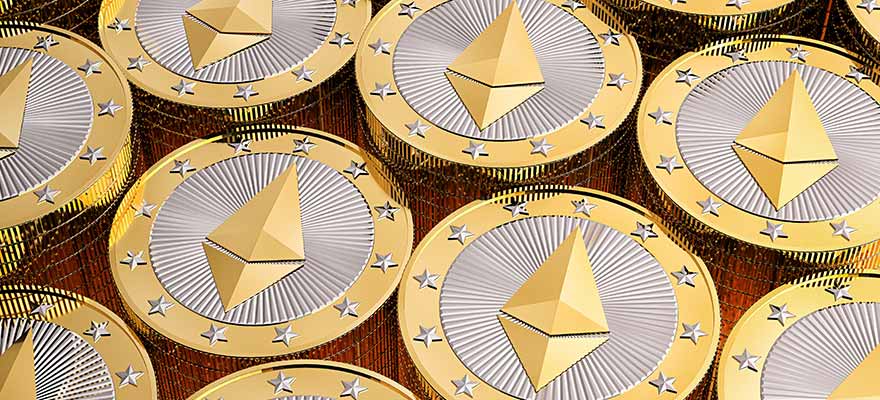
There are numerous options to select for crypto mining. Certain algorithms run on CPUs and GPUs whilst others work on ASICs.--it all depends on the currency. Cryptonight is used for CPUs and GPUs (this is the case with Ethereum) whilst Bitcoin is mined with ASICs.
When Bitcoin and other currencies were starting out, it was possible to mine the algorithms with a simple PC. This involved downloading (or even compiling) the wallet for a specific coin and the right mining software. Then, you would set up the mining software to join the crypto network you choose and let CPU/GPU/ASIC compute the equations. You would want to find the currency before others and every time you find a block, these calculations would restart, so having hardware that can search potential solutions with speed would be useful.
These days, a lot of people do not bother running the wallet software. It takes up a vast amount of disk space, network bandwidth, and isn't needed for mining. Downloading the full Bitcoin Blockchain currently needs about 145GB of disk space, which will take a while to download.
Can I Mine Bitcoin?
As a hobby in your spare time, cryptocurrency mining can create a minor income of roughly a dollar or two each day. Certain currencies are easier to mine than others, and it is possible to make a smal amount of money in the long run.
As a second income, mining is not an effective road to take to make vast amounts of money for the average person. The profits from mining cryptocurrency only become large when someone is willing to invest $3000-$5000 hardware costs at the start, at which time you can earn $50 per day or even more.
Joining a Mining Pool
Mining pools are groups which have several miners who divide their resources to mine together and share their rewards. Because it is getting harder to process and mine every single day, it makes sense to divide up the tasks and work in groups of people to make sure that one is able to get the most effective due to the venture.
The rewards are divide up by how much computational power each individual provides in the mining pool so everyone is looked after fairly, and given the right rewards for their contribution.
The host of a mining pool server normally charges a nominal fee so that can be an aspect to look out for. There is also the question of payouts and security to consider, however, large and popular mining pools such as Antpool or Slush can be worth as they are used by large amounts of people and more likely to be reliable.
Environmental impacts of cryptocurrency mining
The amount of energy that is used by the computers is a massive problem for the environment in the sense that it shows no sign of decreasing. Power and electricity are required, and they can quite easily be used for something else. To use all the power for a cryptocurrency seems counterproductive in some respects given that there are already regular financial options available.
There are talks of using greener means of mining, such as using hydropower to mine the currency, as well as looking at renewable resources. However, at the moment, this is conjecture and it is questionable whether it would be possible to actually make the shift towards green energy in the near future.
The idea of finding how cryptocurrency is obtained is one that few people truly understand. The concept of mining is something which is still not always clear to the average user. There are many factors to consider when it comes to mining, and it can be quite complex. In this article, we will attempt to break down the ideas behind the technology in the simplest way possible.
What is Mining?
The term "mining" can be accurate in some aspects, but misleading in others. Often, it is assumed that miners either break down, make, or find Cryptocurrencies. In reality, the miners are supposed to solve equations which look after the integrity and security of a crypto network's distributed blockchain ledger which tracks every transaction. In return for completing those calculations, miners are given reward in the currency that they have mined.
There are some similarities to how other resources — such as silver — would be mined: the available supply is gradually getting larger as there is more put into the mining. For cryptocurrency, more resources are required as times progresses as it takes longer and the electricity and power are required to increase.
Reuters
What Kind of Equipment do People Use for Crypto Mining?
In terms of computers, powerful, fast machines that cost large amounts of money are required in order for mining to be efficient and profitable. The appropriate mining software must also be installed.
There are numerous options to select for crypto mining. Certain algorithms run on CPUs and GPUs whilst others work on ASICs.--it all depends on the currency. Cryptonight is used for CPUs and GPUs (this is the case with Ethereum) whilst Bitcoin is mined with ASICs.
When Bitcoin and other currencies were starting out, it was possible to mine the algorithms with a simple PC. This involved downloading (or even compiling) the wallet for a specific coin and the right mining software. Then, you would set up the mining software to join the crypto network you choose and let CPU/GPU/ASIC compute the equations. You would want to find the currency before others and every time you find a block, these calculations would restart, so having hardware that can search potential solutions with speed would be useful.
These days, a lot of people do not bother running the wallet software. It takes up a vast amount of disk space, network bandwidth, and isn't needed for mining. Downloading the full Bitcoin Blockchain currently needs about 145GB of disk space, which will take a while to download.
Can I Mine Bitcoin?
As a hobby in your spare time, cryptocurrency mining can create a minor income of roughly a dollar or two each day. Certain currencies are easier to mine than others, and it is possible to make a smal amount of money in the long run.
As a second income, mining is not an effective road to take to make vast amounts of money for the average person. The profits from mining cryptocurrency only become large when someone is willing to invest $3000-$5000 hardware costs at the start, at which time you can earn $50 per day or even more.
Joining a Mining Pool
Mining pools are groups which have several miners who divide their resources to mine together and share their rewards. Because it is getting harder to process and mine every single day, it makes sense to divide up the tasks and work in groups of people to make sure that one is able to get the most effective due to the venture.
The rewards are divide up by how much computational power each individual provides in the mining pool so everyone is looked after fairly, and given the right rewards for their contribution.
The host of a mining pool server normally charges a nominal fee so that can be an aspect to look out for. There is also the question of payouts and security to consider, however, large and popular mining pools such as Antpool or Slush can be worth as they are used by large amounts of people and more likely to be reliable.
Environmental impacts of cryptocurrency mining
The amount of energy that is used by the computers is a massive problem for the environment in the sense that it shows no sign of decreasing. Power and electricity are required, and they can quite easily be used for something else. To use all the power for a cryptocurrency seems counterproductive in some respects given that there are already regular financial options available.
There are talks of using greener means of mining, such as using hydropower to mine the currency, as well as looking at renewable resources. However, at the moment, this is conjecture and it is questionable whether it would be possible to actually make the shift towards green energy in the near future.
Crypto Built More Rails, but the Next Battle Is Over How Much Work a Dollar Can Do
FP Markets Winner Spotlight 🏆 | Global Broker of the Year 2025 #Trading #Broker #Innovation #Shorts
FP Markets Winner Spotlight 🏆 | Global Broker of the Year 2025 #Trading #Broker #Innovation #Shorts
FP Markets takes the spotlight as Global Broker of the Year 2025 at the Finance Magnates Awards.
Martin Stoilov, Head of Client Experience, shares that trust, innovation, and people played a key role in the company’s success, supported by a strong foundation of integrity and client-centricity.
Following this milestone, FP Markets continues to focus on growth, technology investment, and its core values of transparency and excellence.
👉 Be part of FM Awards 2026: https://awards.financemagnates.com/#nominate
FP Markets takes the spotlight as Global Broker of the Year 2025 at the Finance Magnates Awards.
Martin Stoilov, Head of Client Experience, shares that trust, innovation, and people played a key role in the company’s success, supported by a strong foundation of integrity and client-centricity.
Following this milestone, FP Markets continues to focus on growth, technology investment, and its core values of transparency and excellence.
👉 Be part of FM Awards 2026: https://awards.financemagnates.com/#nominate
In this video, we review @HolaPrimeMarketsOfficial, a multi-asset forex and CFDs broker offering different account types, trading platforms, and flexible trading conditions.
We cover the broker’s overall offering, including account options, trading environment, platforms like MT4 and MT5, and additional services such as managed accounts and fast withdrawals.
Watch the full video to see if Hola Prime Markets fits your trading needs.
📣 Stay up to date with the latest in finance and trading. Follow Finance Magnates for industry news, insights, and global event coverage.
Connect with us:
🔗 LinkedIn: /financemagnates
👍 Facebook: /financemagnates
📸 Instagram: https://www.instagram.com/financemagnates
🐦 X: https://x.com/financemagnates
🎥 TikTok: https://www.tiktok.com/tag/financemagnates
▶️ YouTube: /@financemagnates_official
#HolaPrime #ForexBroker #CFDTrading #FinanceMagnates #Trading #Forex #BrokerReview
In this video, we review @HolaPrimeMarketsOfficial, a multi-asset forex and CFDs broker offering different account types, trading platforms, and flexible trading conditions.
We cover the broker’s overall offering, including account options, trading environment, platforms like MT4 and MT5, and additional services such as managed accounts and fast withdrawals.
Watch the full video to see if Hola Prime Markets fits your trading needs.
📣 Stay up to date with the latest in finance and trading. Follow Finance Magnates for industry news, insights, and global event coverage.
Connect with us:
🔗 LinkedIn: /financemagnates
👍 Facebook: /financemagnates
📸 Instagram: https://www.instagram.com/financemagnates
🐦 X: https://x.com/financemagnates
🎥 TikTok: https://www.tiktok.com/tag/financemagnates
▶️ YouTube: /@financemagnates_official
#HolaPrime #ForexBroker #CFDTrading #FinanceMagnates #Trading #Forex #BrokerReview
Hola Prime Review: What You Need to Know | Full Breakdown by Finance Magnates
Hola Prime Review: What You Need to Know | Full Breakdown by Finance Magnates
In this video, we review @HolaPrime_Global, a proprietary trading firm offering evaluation programs and performance-based payouts in simulated market environments.
We cover how the challenge model works, including account types, profit splits (up to 95%), trading rules, and what it takes to reach a funded account. You’ll also learn about available platforms like MT4, MT5, cTrader, and more, along with insights into payouts, support, and trading conditions.
Watch the full video to see if Hola Prime fits your trading style.
📣 Stay up to date with the latest in finance and trading. Follow Finance Magnates for industry news, insights, and global event coverage.
Connect with us:
🔗 LinkedIn: /financemagnates
👍 Facebook: /financemagnates
📸 Instagram: https://www.instagram.com/financemagnates
🐦 X: https://x.com/financemagnates
🎥 TikTok: https://www.tiktok.com/tag/financemagnates
▶️ YouTube: /@financemagnates_official
#HolaPrime #PropFirm #Trading #FinanceMagnates #Forex #FuturesTrading #TradingReview #PropFirmReview
In this video, we review @HolaPrime_Global, a proprietary trading firm offering evaluation programs and performance-based payouts in simulated market environments.
We cover how the challenge model works, including account types, profit splits (up to 95%), trading rules, and what it takes to reach a funded account. You’ll also learn about available platforms like MT4, MT5, cTrader, and more, along with insights into payouts, support, and trading conditions.
Watch the full video to see if Hola Prime fits your trading style.
📣 Stay up to date with the latest in finance and trading. Follow Finance Magnates for industry news, insights, and global event coverage.
Connect with us:
🔗 LinkedIn: /financemagnates
👍 Facebook: /financemagnates
📸 Instagram: https://www.instagram.com/financemagnates
🐦 X: https://x.com/financemagnates
🎥 TikTok: https://www.tiktok.com/tag/financemagnates
▶️ YouTube: /@financemagnates_official
#HolaPrime #PropFirm #Trading #FinanceMagnates #Forex #FuturesTrading #TradingReview #PropFirmReview
Axi Winner Spotlight 🏆 | Global Most Innovative Broker 2025 #Innovation #Trading #Fintech #Broker
Axi Winner Spotlight 🏆 | Global Most Innovative Broker 2025 #Innovation #Trading #Fintech #Broker
Axi takes the spotlight at the Finance Magnates Awards, winning Global Most Innovative Broker 2025.
Olivia Xenofontos and Ivanna Openko share how the team will feel: proud, motivated, and ready to keep delivering.
They also describe the night as well-organized, focused, and enjoyable for all.
👉 Be part of FM Awards 2026.
Axi takes the spotlight at the Finance Magnates Awards, winning Global Most Innovative Broker 2025.
Olivia Xenofontos and Ivanna Openko share how the team will feel: proud, motivated, and ready to keep delivering.
They also describe the night as well-organized, focused, and enjoyable for all.
👉 Be part of FM Awards 2026.
Recognition that matters.
Built on transparency.
Driven by the industry.
The Finance Magnates Awards 2026.
Nominations are now open.
🔗 https://awards.financemagnates.com/?utm_source=SM&utm_medium=social&utm_campaign=recognition-matters
Recognition that matters.
Built on transparency.
Driven by the industry.
The Finance Magnates Awards 2026.
Nominations are now open.
🔗 https://awards.financemagnates.com/?utm_source=SM&utm_medium=social&utm_campaign=recognition-matters