Bitcoin at $126k, Ripple's $1.25 billion play, the US's bullish strategy, and more – a recap of the crypto industry in 2025.
What’s coming in 2026? There are many trends, but one trend stands out.
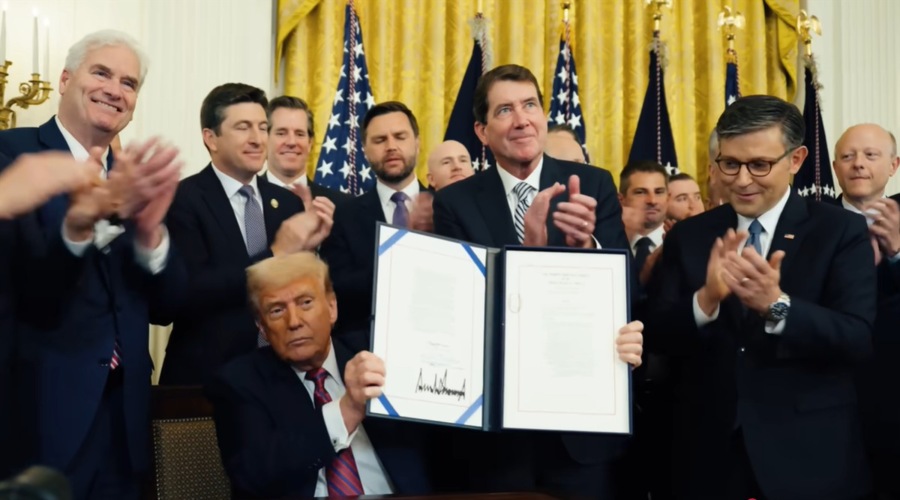
US President Donald Trump signing the GENIUS Act (Photo: Youtube/ The White House)
If you only
watched the price ticker this year, you might think 2025 was just another
boom-and-bust cycle. Bitcoin (BTC) roared to $126,000, headlines screamed about
“digital gold,” and then the inevitable gravity of Q4 set in, bringing
all of us back down to earth.
A lot was
happening behind the charts. From Washington and policy shifts, through London
prime brokerage desks, to European regulation. Here are the top five stories that shaped the cryptocurrency market in 2025 and
that also matter for the CFDs industry:
1. Ripple’s $1.25 Billion
Infrastructure Play
For years,
crypto companies were content to stay in their lane, but Ripple Labs smashed
that convention in April. By acquiring Hidden
Road Partners for $1.25 billion, the blockchain payments firm bought a seat at the adult table of
global finance.
Brad Garlinghouse, CEO, Ripple; Source: LinkedIn
“We are at an inflection point for the next phase of digital asset adoption, the US market is effectively open for the first time due to the regulatory overhang of the former SEC coming to an end, and the market is maturing to address the needs of traditional finance,” said Brad Garlinghouse, CEO of Ripple.
The
regulatory frost in the United States evaporated this year. The pivot began in
March with an executive order creating a Strategic Bitcoin Reserve, halting the
sale of seized assets. But the real structural change came in July. President
Trump signed the GENIUS Act
into law, finally
giving stablecoin issuers a federal playbook.
This ended
the era of “regulation by enforcement” that had paralyzed the sector.
For the first time, U.S. institutions had clear rules of the road, and the
government itself legitimized Bitcoin as a sovereign store of value.
The
psychological impact on the market was immediate, signaling that the world's
largest economy was officially open for digital asset business.
3. Bitcoin’s $126,000 Ceiling
Market
optimism, fueled by the friendly regulatory stance, pushed Bitcoin to a record high of
roughly $126,000 in early October. The rally was a textbook “Trump Trade,” driven by the
strategic reserve announcements and relentless inflows into spot ETFs.
But trees
don't grow to the sky. As the year closes, we’re seeing a harsh 30% correction,
dragging prices back toward the $90,000 handle. The pullback serves as a
reminder that even with sovereign backing, these markets remain ferociously
volatile, rewarding the patient but punishing the latecomers who bought the
top.
Paul Howard, Wincent
“Setting a new all-time-highs (ATHs) for BTC was a welcome
event for the industry, dusting off ghosts from the past and demonstrating that
despite all the setbacks, Bitcoin continues to win interest,” Paul Howard, the Director at Wincent, commented for FinanceMagnates.com. “The advent of new ETFs such as Solana has opened the asset class to new
participants and provided opportunities for hedging and wider involvement from
financial institutions.”
4. MiCA’s Full Weight
Reshapes European Operations
MiCA has
officially been in force for a year, but it continues to spark controversy, and
not all countries have implemented it yet. The regulation has generated significant
debate, including in Poland.
5. Crypto Exchanges Want a
Slice of the CFD Market
For a
decade, FX brokers profited by adding crypto CFDs to their platforms. In 2025,
the crypto exchanges returned fire. Major venues started aggressively offering
CFDs on traditional assets, blurring the distinction between “crypto
exchange” and “broker.”
Bybit was
arguably the most aggressive mover in 2025. They didn't just add a few stocks. They
fully integrated a “TradFi” account that links directly to
MetaTrader 5 (MT5).
Moreover, Bitget
rebranded itself in mid-2025 as a “Universal Exchange” (UEX),
explicitly dropping the “Crypto Exchange” moniker in some marketing
materials. Moreover, in December, the platform launched a private beta of the
Bitget TradFi offering, allowing users to trade CFDs using USDT as a
margin.
What Will 2026 Bring? Bitcoin Price Prediction
I wrote
about Bitcoin prices on FinanceMagnates.com almost every single week, covering both
the sharp gains in the first part of the year and the steep declines in
recent months, including
the so-called death cross and the risk of a correction toward $74,000.
So what
could 2026 bring? According to my latest
technical analysis, the outlook points to a gradual recovery of losses, a
return to all-time highs, and a move into a price discovery phase. Support may
come from strong gold prices and a persistently weak U.S. dollar.
What do
other experts think about Bitcoin? Peter Brandt, a Wall Street and trading
veteran, argues that the price could slide by as much as 80%, potentially
falling to around $25,000. He outlined this view in one of his recent posts on
X.
Bitcoin investors, do you know:
1. Bull cycles have experienced exponential decay 2. BTC's bull cycles have undergone parabolic advances 3. The violation of previous parabolas have all declined <80% 4. The current parabolic advance has been violated
Optimists,
however, remain active in the market. Fundstrat predicts Bitcoin could be worth
ten times more, about $250,000, by the end of 2026, driven by inflows into spot
Bitcoin ETFs.
2025
brought many changes to the cryptocurrency market, and 2026 will certainly try
to match them. It will certainly not be irrelevant for the CFD industry.
If you only
watched the price ticker this year, you might think 2025 was just another
boom-and-bust cycle. Bitcoin (BTC) roared to $126,000, headlines screamed about
“digital gold,” and then the inevitable gravity of Q4 set in, bringing
all of us back down to earth.
A lot was
happening behind the charts. From Washington and policy shifts, through London
prime brokerage desks, to European regulation. Here are the top five stories that shaped the cryptocurrency market in 2025 and
that also matter for the CFDs industry:
1. Ripple’s $1.25 Billion
Infrastructure Play
For years,
crypto companies were content to stay in their lane, but Ripple Labs smashed
that convention in April. By acquiring Hidden
Road Partners for $1.25 billion, the blockchain payments firm bought a seat at the adult table of
global finance.
Brad Garlinghouse, CEO, Ripple; Source: LinkedIn
“We are at an inflection point for the next phase of digital asset adoption, the US market is effectively open for the first time due to the regulatory overhang of the former SEC coming to an end, and the market is maturing to address the needs of traditional finance,” said Brad Garlinghouse, CEO of Ripple.
The
regulatory frost in the United States evaporated this year. The pivot began in
March with an executive order creating a Strategic Bitcoin Reserve, halting the
sale of seized assets. But the real structural change came in July. President
Trump signed the GENIUS Act
into law, finally
giving stablecoin issuers a federal playbook.
This ended
the era of “regulation by enforcement” that had paralyzed the sector.
For the first time, U.S. institutions had clear rules of the road, and the
government itself legitimized Bitcoin as a sovereign store of value.
The
psychological impact on the market was immediate, signaling that the world's
largest economy was officially open for digital asset business.
3. Bitcoin’s $126,000 Ceiling
Market
optimism, fueled by the friendly regulatory stance, pushed Bitcoin to a record high of
roughly $126,000 in early October. The rally was a textbook “Trump Trade,” driven by the
strategic reserve announcements and relentless inflows into spot ETFs.
But trees
don't grow to the sky. As the year closes, we’re seeing a harsh 30% correction,
dragging prices back toward the $90,000 handle. The pullback serves as a
reminder that even with sovereign backing, these markets remain ferociously
volatile, rewarding the patient but punishing the latecomers who bought the
top.
Paul Howard, Wincent
“Setting a new all-time-highs (ATHs) for BTC was a welcome
event for the industry, dusting off ghosts from the past and demonstrating that
despite all the setbacks, Bitcoin continues to win interest,” Paul Howard, the Director at Wincent, commented for FinanceMagnates.com. “The advent of new ETFs such as Solana has opened the asset class to new
participants and provided opportunities for hedging and wider involvement from
financial institutions.”
4. MiCA’s Full Weight
Reshapes European Operations
MiCA has
officially been in force for a year, but it continues to spark controversy, and
not all countries have implemented it yet. The regulation has generated significant
debate, including in Poland.
5. Crypto Exchanges Want a
Slice of the CFD Market
For a
decade, FX brokers profited by adding crypto CFDs to their platforms. In 2025,
the crypto exchanges returned fire. Major venues started aggressively offering
CFDs on traditional assets, blurring the distinction between “crypto
exchange” and “broker.”
Bybit was
arguably the most aggressive mover in 2025. They didn't just add a few stocks. They
fully integrated a “TradFi” account that links directly to
MetaTrader 5 (MT5).
Moreover, Bitget
rebranded itself in mid-2025 as a “Universal Exchange” (UEX),
explicitly dropping the “Crypto Exchange” moniker in some marketing
materials. Moreover, in December, the platform launched a private beta of the
Bitget TradFi offering, allowing users to trade CFDs using USDT as a
margin.
What Will 2026 Bring? Bitcoin Price Prediction
I wrote
about Bitcoin prices on FinanceMagnates.com almost every single week, covering both
the sharp gains in the first part of the year and the steep declines in
recent months, including
the so-called death cross and the risk of a correction toward $74,000.
So what
could 2026 bring? According to my latest
technical analysis, the outlook points to a gradual recovery of losses, a
return to all-time highs, and a move into a price discovery phase. Support may
come from strong gold prices and a persistently weak U.S. dollar.
What do
other experts think about Bitcoin? Peter Brandt, a Wall Street and trading
veteran, argues that the price could slide by as much as 80%, potentially
falling to around $25,000. He outlined this view in one of his recent posts on
X.
Bitcoin investors, do you know:
1. Bull cycles have experienced exponential decay 2. BTC's bull cycles have undergone parabolic advances 3. The violation of previous parabolas have all declined <80% 4. The current parabolic advance has been violated
Optimists,
however, remain active in the market. Fundstrat predicts Bitcoin could be worth
ten times more, about $250,000, by the end of 2026, driven by inflows into spot
Bitcoin ETFs.
2025
brought many changes to the cryptocurrency market, and 2026 will certainly try
to match them. It will certainly not be irrelevant for the CFD industry.
Damian Chmiel is a Senior Analyst & Editor at Finance Magnates with more than 15 years of experience in the CFD and online trading industry. Active as both a trader and journalist since 2010, he focuses on broker coverage, fintech innovation, and regulatory developments across Europe, the Middle East, and Asia.
His work includes interviews with C-level leaders at major brokerages and fintech platforms, as well as co-authoring Finance Magnates’ quarterly industry benchmarking reports. Damian’s reporting is data-driven, market-aware, and grounded in direct industry engagement. His analysis and commentary have also been cited by external media outlets, including Investing.com, Binance, The Asset, Stockhead, and Dispatch.
Education:
MA in Finance and Accounting, Cracow University of Economics
Kraken Steps Up Speed Race with New Equinix Colocation Service for Crypto Traders
Featured Videos
FP Markets Winner Spotlight 🏆 | Global Broker of the Year 2025 #Trading #Broker #Innovation #Shorts
FP Markets Winner Spotlight 🏆 | Global Broker of the Year 2025 #Trading #Broker #Innovation #Shorts
FP Markets Winner Spotlight 🏆 | Global Broker of the Year 2025 #Trading #Broker #Innovation #Shorts
FP Markets Winner Spotlight 🏆 | Global Broker of the Year 2025 #Trading #Broker #Innovation #Shorts
FP Markets takes the spotlight as Global Broker of the Year 2025 at the Finance Magnates Awards.
Martin Stoilov, Head of Client Experience, shares that trust, innovation, and people played a key role in the company’s success, supported by a strong foundation of integrity and client-centricity.
Following this milestone, FP Markets continues to focus on growth, technology investment, and its core values of transparency and excellence.
👉 Be part of FM Awards 2026: https://awards.financemagnates.com/#nominate
FP Markets takes the spotlight as Global Broker of the Year 2025 at the Finance Magnates Awards.
Martin Stoilov, Head of Client Experience, shares that trust, innovation, and people played a key role in the company’s success, supported by a strong foundation of integrity and client-centricity.
Following this milestone, FP Markets continues to focus on growth, technology investment, and its core values of transparency and excellence.
👉 Be part of FM Awards 2026: https://awards.financemagnates.com/#nominate
FP Markets takes the spotlight as Global Broker of the Year 2025 at the Finance Magnates Awards.
Martin Stoilov, Head of Client Experience, shares that trust, innovation, and people played a key role in the company’s success, supported by a strong foundation of integrity and client-centricity.
Following this milestone, FP Markets continues to focus on growth, technology investment, and its core values of transparency and excellence.
👉 Be part of FM Awards 2026: https://awards.financemagnates.com/#nominate
FP Markets takes the spotlight as Global Broker of the Year 2025 at the Finance Magnates Awards.
Martin Stoilov, Head of Client Experience, shares that trust, innovation, and people played a key role in the company’s success, supported by a strong foundation of integrity and client-centricity.
Following this milestone, FP Markets continues to focus on growth, technology investment, and its core values of transparency and excellence.
👉 Be part of FM Awards 2026: https://awards.financemagnates.com/#nominate
In this video, we review @HolaPrimeMarketsOfficial, a multi-asset forex and CFDs broker offering different account types, trading platforms, and flexible trading conditions.
We cover the broker’s overall offering, including account options, trading environment, platforms like MT4 and MT5, and additional services such as managed accounts and fast withdrawals.
Watch the full video to see if Hola Prime Markets fits your trading needs.
📣 Stay up to date with the latest in finance and trading. Follow Finance Magnates for industry news, insights, and global event coverage.
Connect with us:
🔗 LinkedIn: /financemagnates
👍 Facebook: /financemagnates
📸 Instagram: https://www.instagram.com/financemagnates
🐦 X: https://x.com/financemagnates
🎥 TikTok: https://www.tiktok.com/tag/financemagnates
▶️ YouTube: /@financemagnates_official
#HolaPrime #ForexBroker #CFDTrading #FinanceMagnates #Trading #Forex #BrokerReview
In this video, we review @HolaPrimeMarketsOfficial, a multi-asset forex and CFDs broker offering different account types, trading platforms, and flexible trading conditions.
We cover the broker’s overall offering, including account options, trading environment, platforms like MT4 and MT5, and additional services such as managed accounts and fast withdrawals.
Watch the full video to see if Hola Prime Markets fits your trading needs.
📣 Stay up to date with the latest in finance and trading. Follow Finance Magnates for industry news, insights, and global event coverage.
Connect with us:
🔗 LinkedIn: /financemagnates
👍 Facebook: /financemagnates
📸 Instagram: https://www.instagram.com/financemagnates
🐦 X: https://x.com/financemagnates
🎥 TikTok: https://www.tiktok.com/tag/financemagnates
▶️ YouTube: /@financemagnates_official
#HolaPrime #ForexBroker #CFDTrading #FinanceMagnates #Trading #Forex #BrokerReview
In this video, we review @HolaPrimeMarketsOfficial, a multi-asset forex and CFDs broker offering different account types, trading platforms, and flexible trading conditions.
We cover the broker’s overall offering, including account options, trading environment, platforms like MT4 and MT5, and additional services such as managed accounts and fast withdrawals.
Watch the full video to see if Hola Prime Markets fits your trading needs.
📣 Stay up to date with the latest in finance and trading. Follow Finance Magnates for industry news, insights, and global event coverage.
Connect with us:
🔗 LinkedIn: /financemagnates
👍 Facebook: /financemagnates
📸 Instagram: https://www.instagram.com/financemagnates
🐦 X: https://x.com/financemagnates
🎥 TikTok: https://www.tiktok.com/tag/financemagnates
▶️ YouTube: /@financemagnates_official
#HolaPrime #ForexBroker #CFDTrading #FinanceMagnates #Trading #Forex #BrokerReview
In this video, we review @HolaPrimeMarketsOfficial, a multi-asset forex and CFDs broker offering different account types, trading platforms, and flexible trading conditions.
We cover the broker’s overall offering, including account options, trading environment, platforms like MT4 and MT5, and additional services such as managed accounts and fast withdrawals.
Watch the full video to see if Hola Prime Markets fits your trading needs.
📣 Stay up to date with the latest in finance and trading. Follow Finance Magnates for industry news, insights, and global event coverage.
Connect with us:
🔗 LinkedIn: /financemagnates
👍 Facebook: /financemagnates
📸 Instagram: https://www.instagram.com/financemagnates
🐦 X: https://x.com/financemagnates
🎥 TikTok: https://www.tiktok.com/tag/financemagnates
▶️ YouTube: /@financemagnates_official
#HolaPrime #ForexBroker #CFDTrading #FinanceMagnates #Trading #Forex #BrokerReview
In this video, we review @HolaPrimeMarketsOfficial, a multi-asset forex and CFDs broker offering different account types, trading platforms, and flexible trading conditions.
We cover the broker’s overall offering, including account options, trading environment, platforms like MT4 and MT5, and additional services such as managed accounts and fast withdrawals.
Watch the full video to see if Hola Prime Markets fits your trading needs.
📣 Stay up to date with the latest in finance and trading. Follow Finance Magnates for industry news, insights, and global event coverage.
Connect with us:
🔗 LinkedIn: /financemagnates
👍 Facebook: /financemagnates
📸 Instagram: https://www.instagram.com/financemagnates
🐦 X: https://x.com/financemagnates
🎥 TikTok: https://www.tiktok.com/tag/financemagnates
▶️ YouTube: /@financemagnates_official
#HolaPrime #ForexBroker #CFDTrading #FinanceMagnates #Trading #Forex #BrokerReview
In this video, we review @HolaPrimeMarketsOfficial, a multi-asset forex and CFDs broker offering different account types, trading platforms, and flexible trading conditions.
We cover the broker’s overall offering, including account options, trading environment, platforms like MT4 and MT5, and additional services such as managed accounts and fast withdrawals.
Watch the full video to see if Hola Prime Markets fits your trading needs.
📣 Stay up to date with the latest in finance and trading. Follow Finance Magnates for industry news, insights, and global event coverage.
Connect with us:
🔗 LinkedIn: /financemagnates
👍 Facebook: /financemagnates
📸 Instagram: https://www.instagram.com/financemagnates
🐦 X: https://x.com/financemagnates
🎥 TikTok: https://www.tiktok.com/tag/financemagnates
▶️ YouTube: /@financemagnates_official
#HolaPrime #ForexBroker #CFDTrading #FinanceMagnates #Trading #Forex #BrokerReview
Hola Prime Review: What You Need to Know | Full Breakdown by Finance Magnates
Hola Prime Review: What You Need to Know | Full Breakdown by Finance Magnates
Hola Prime Review: What You Need to Know | Full Breakdown by Finance Magnates
Hola Prime Review: What You Need to Know | Full Breakdown by Finance Magnates
Hola Prime Review: What You Need to Know | Full Breakdown by Finance Magnates
Hola Prime Review: What You Need to Know | Full Breakdown by Finance Magnates
In this video, we review @HolaPrime_Global, a proprietary trading firm offering evaluation programs and performance-based payouts in simulated market environments.
We cover how the challenge model works, including account types, profit splits (up to 95%), trading rules, and what it takes to reach a funded account. You’ll also learn about available platforms like MT4, MT5, cTrader, and more, along with insights into payouts, support, and trading conditions.
Watch the full video to see if Hola Prime fits your trading style.
📣 Stay up to date with the latest in finance and trading. Follow Finance Magnates for industry news, insights, and global event coverage.
Connect with us:
🔗 LinkedIn: /financemagnates
👍 Facebook: /financemagnates
📸 Instagram: https://www.instagram.com/financemagnates
🐦 X: https://x.com/financemagnates
🎥 TikTok: https://www.tiktok.com/tag/financemagnates
▶️ YouTube: /@financemagnates_official
#HolaPrime #PropFirm #Trading #FinanceMagnates #Forex #FuturesTrading #TradingReview #PropFirmReview
In this video, we review @HolaPrime_Global, a proprietary trading firm offering evaluation programs and performance-based payouts in simulated market environments.
We cover how the challenge model works, including account types, profit splits (up to 95%), trading rules, and what it takes to reach a funded account. You’ll also learn about available platforms like MT4, MT5, cTrader, and more, along with insights into payouts, support, and trading conditions.
Watch the full video to see if Hola Prime fits your trading style.
📣 Stay up to date with the latest in finance and trading. Follow Finance Magnates for industry news, insights, and global event coverage.
Connect with us:
🔗 LinkedIn: /financemagnates
👍 Facebook: /financemagnates
📸 Instagram: https://www.instagram.com/financemagnates
🐦 X: https://x.com/financemagnates
🎥 TikTok: https://www.tiktok.com/tag/financemagnates
▶️ YouTube: /@financemagnates_official
#HolaPrime #PropFirm #Trading #FinanceMagnates #Forex #FuturesTrading #TradingReview #PropFirmReview
In this video, we review @HolaPrime_Global, a proprietary trading firm offering evaluation programs and performance-based payouts in simulated market environments.
We cover how the challenge model works, including account types, profit splits (up to 95%), trading rules, and what it takes to reach a funded account. You’ll also learn about available platforms like MT4, MT5, cTrader, and more, along with insights into payouts, support, and trading conditions.
Watch the full video to see if Hola Prime fits your trading style.
📣 Stay up to date with the latest in finance and trading. Follow Finance Magnates for industry news, insights, and global event coverage.
Connect with us:
🔗 LinkedIn: /financemagnates
👍 Facebook: /financemagnates
📸 Instagram: https://www.instagram.com/financemagnates
🐦 X: https://x.com/financemagnates
🎥 TikTok: https://www.tiktok.com/tag/financemagnates
▶️ YouTube: /@financemagnates_official
#HolaPrime #PropFirm #Trading #FinanceMagnates #Forex #FuturesTrading #TradingReview #PropFirmReview
In this video, we review @HolaPrime_Global, a proprietary trading firm offering evaluation programs and performance-based payouts in simulated market environments.
We cover how the challenge model works, including account types, profit splits (up to 95%), trading rules, and what it takes to reach a funded account. You’ll also learn about available platforms like MT4, MT5, cTrader, and more, along with insights into payouts, support, and trading conditions.
Watch the full video to see if Hola Prime fits your trading style.
📣 Stay up to date with the latest in finance and trading. Follow Finance Magnates for industry news, insights, and global event coverage.
Connect with us:
🔗 LinkedIn: /financemagnates
👍 Facebook: /financemagnates
📸 Instagram: https://www.instagram.com/financemagnates
🐦 X: https://x.com/financemagnates
🎥 TikTok: https://www.tiktok.com/tag/financemagnates
▶️ YouTube: /@financemagnates_official
#HolaPrime #PropFirm #Trading #FinanceMagnates #Forex #FuturesTrading #TradingReview #PropFirmReview
In this video, we review @HolaPrime_Global, a proprietary trading firm offering evaluation programs and performance-based payouts in simulated market environments.
We cover how the challenge model works, including account types, profit splits (up to 95%), trading rules, and what it takes to reach a funded account. You’ll also learn about available platforms like MT4, MT5, cTrader, and more, along with insights into payouts, support, and trading conditions.
Watch the full video to see if Hola Prime fits your trading style.
📣 Stay up to date with the latest in finance and trading. Follow Finance Magnates for industry news, insights, and global event coverage.
Connect with us:
🔗 LinkedIn: /financemagnates
👍 Facebook: /financemagnates
📸 Instagram: https://www.instagram.com/financemagnates
🐦 X: https://x.com/financemagnates
🎥 TikTok: https://www.tiktok.com/tag/financemagnates
▶️ YouTube: /@financemagnates_official
#HolaPrime #PropFirm #Trading #FinanceMagnates #Forex #FuturesTrading #TradingReview #PropFirmReview
In this video, we review @HolaPrime_Global, a proprietary trading firm offering evaluation programs and performance-based payouts in simulated market environments.
We cover how the challenge model works, including account types, profit splits (up to 95%), trading rules, and what it takes to reach a funded account. You’ll also learn about available platforms like MT4, MT5, cTrader, and more, along with insights into payouts, support, and trading conditions.
Watch the full video to see if Hola Prime fits your trading style.
📣 Stay up to date with the latest in finance and trading. Follow Finance Magnates for industry news, insights, and global event coverage.
Connect with us:
🔗 LinkedIn: /financemagnates
👍 Facebook: /financemagnates
📸 Instagram: https://www.instagram.com/financemagnates
🐦 X: https://x.com/financemagnates
🎥 TikTok: https://www.tiktok.com/tag/financemagnates
▶️ YouTube: /@financemagnates_official
#HolaPrime #PropFirm #Trading #FinanceMagnates #Forex #FuturesTrading #TradingReview #PropFirmReview
Axi Winner Spotlight 🏆 | Global Most Innovative Broker 2025 #Innovation #Trading #Fintech #Broker
Axi Winner Spotlight 🏆 | Global Most Innovative Broker 2025 #Innovation #Trading #Fintech #Broker
Axi Winner Spotlight 🏆 | Global Most Innovative Broker 2025 #Innovation #Trading #Fintech #Broker
Axi Winner Spotlight 🏆 | Global Most Innovative Broker 2025 #Innovation #Trading #Fintech #Broker
Axi Winner Spotlight 🏆 | Global Most Innovative Broker 2025 #Innovation #Trading #Fintech #Broker
Axi Winner Spotlight 🏆 | Global Most Innovative Broker 2025 #Innovation #Trading #Fintech #Broker
Axi takes the spotlight at the Finance Magnates Awards, winning Global Most Innovative Broker 2025.
Olivia Xenofontos and Ivanna Openko share how the team will feel: proud, motivated, and ready to keep delivering.
They also describe the night as well-organized, focused, and enjoyable for all.
👉 Be part of FM Awards 2026.
Axi takes the spotlight at the Finance Magnates Awards, winning Global Most Innovative Broker 2025.
Olivia Xenofontos and Ivanna Openko share how the team will feel: proud, motivated, and ready to keep delivering.
They also describe the night as well-organized, focused, and enjoyable for all.
👉 Be part of FM Awards 2026.
Axi takes the spotlight at the Finance Magnates Awards, winning Global Most Innovative Broker 2025.
Olivia Xenofontos and Ivanna Openko share how the team will feel: proud, motivated, and ready to keep delivering.
They also describe the night as well-organized, focused, and enjoyable for all.
👉 Be part of FM Awards 2026.
Axi takes the spotlight at the Finance Magnates Awards, winning Global Most Innovative Broker 2025.
Olivia Xenofontos and Ivanna Openko share how the team will feel: proud, motivated, and ready to keep delivering.
They also describe the night as well-organized, focused, and enjoyable for all.
👉 Be part of FM Awards 2026.
Axi takes the spotlight at the Finance Magnates Awards, winning Global Most Innovative Broker 2025.
Olivia Xenofontos and Ivanna Openko share how the team will feel: proud, motivated, and ready to keep delivering.
They also describe the night as well-organized, focused, and enjoyable for all.
👉 Be part of FM Awards 2026.
Axi takes the spotlight at the Finance Magnates Awards, winning Global Most Innovative Broker 2025.
Olivia Xenofontos and Ivanna Openko share how the team will feel: proud, motivated, and ready to keep delivering.
They also describe the night as well-organized, focused, and enjoyable for all.
👉 Be part of FM Awards 2026.
Recognition that matters.
Built on transparency.
Driven by the industry.
The Finance Magnates Awards 2026.
Nominations are now open.
🔗 https://awards.financemagnates.com/?utm_source=SM&utm_medium=social&utm_campaign=recognition-matters
Recognition that matters.
Built on transparency.
Driven by the industry.
The Finance Magnates Awards 2026.
Nominations are now open.
🔗 https://awards.financemagnates.com/?utm_source=SM&utm_medium=social&utm_campaign=recognition-matters
Recognition that matters.
Built on transparency.
Driven by the industry.
The Finance Magnates Awards 2026.
Nominations are now open.
🔗 https://awards.financemagnates.com/?utm_source=SM&utm_medium=social&utm_campaign=recognition-matters
Recognition that matters.
Built on transparency.
Driven by the industry.
The Finance Magnates Awards 2026.
Nominations are now open.
🔗 https://awards.financemagnates.com/?utm_source=SM&utm_medium=social&utm_campaign=recognition-matters
Recognition that matters.
Built on transparency.
Driven by the industry.
The Finance Magnates Awards 2026.
Nominations are now open.
🔗 https://awards.financemagnates.com/?utm_source=SM&utm_medium=social&utm_campaign=recognition-matters
Recognition that matters.
Built on transparency.
Driven by the industry.
The Finance Magnates Awards 2026.
Nominations are now open.
🔗 https://awards.financemagnates.com/?utm_source=SM&utm_medium=social&utm_campaign=recognition-matters