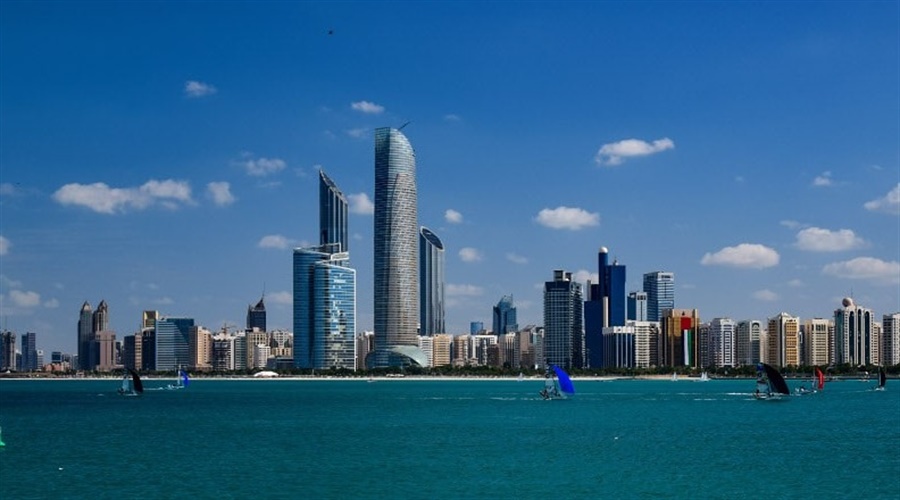
The company has been applying for a license in Abu Dhabi since 2018.
After half a decade, it finally joined the companies licensed in the Middle East.
The Middle
East is becoming an increasingly attractive location for a growing number of
cryptocurrency exchanges. After Binance obtained authorization from the
regulator in Abu Dhabi in November 2022, more companies have begun appearing in the
local market. The latest is Rain Trading Limited, which has received the Financial
Services Permission (FSP) issued by the Abu Dhabi Global Market's (ADGM)
Financial Services Regulatory Authority.
Rain Joins Licensed Firms in Abu Dhabi
Abu Dhabi
and Dubai are among the most populated of the seven administrative regions in
the United Arab Emirates (UAE). Both jurisdictions issue separate permits for
providing financial services, and while Dubai has recently seemed more popular,
Abu Dhabi is also not lagging behind the rising popularity of the
cryptocurrency trend in the Middle East.
Rain
announced yesterday (Tuesday) that it had obtained permission to provide
brokerage and custody services in the digital asset market. It has also
partnered with a local bank to settle client deposits in accordance with local
regulations.
Rain Trading Limited (Rain ADGM) has been granted the first Financial Services Permission (FSP) by Abu Dhabi Global Market’s Financial Services Regulatory Authority to operate a virtual assets brokerage and custody service. pic.twitter.com/EyxCj4HbNy
Rain's CEO,
Joseph Dallago, stated that the fight to get the license lasted for five years.
Rain was one of the first companies to apply for authorization in 2018 when
ADGM presented its virtual asset framework.
Today, Rain is launching in the UAE, as the first licensed retail exchange. This is a 5 year effort, as we were one of the first exchanges to enquire about licensure back in 2018, when the ADGM released their virtual asset framework.
"UAE residents will now be able to fund their accounts in minutes, thanks to a partnership with a local UAE bank. Furthermore, customers are further protected through the supervision of a local regulator and thorough legal framework," Dallago added.
As
mentioned earlier, Binance has been operating in the local market since
November of last year. Previously, it received in-principle approval to provide
its services. In addition to Abu Dhabi, many exchanges are opening up to
the UAE through Dubai, where the Virtual Assets Regulatory Authority (VARA)
licenses are issued. Recently, Bitget, ByBit, and OKX have all received
authorization in the emirate.
For
Binance, the Middle East is becoming an important jurisdiction, especially
in light of regulatory issues in the United States and around the world.
According to Alexa Chehade, the General Manager of Binance Dubai, the UAE could
become the primary target for cryptocurrency firms seeking favorable and
transparent regulations.
Furthermore,
the local market has tremendous potential in terms of the number of retail
investors. This is confirmed by FX/CFD market data, where the number
of investors is constantly growing despite a global downturn.
Source: Investment Trends
In
addition, according to Binance MENA statistics, the majority of cryptocurrency
holders currently live in the UAE. This represents 28% of all residents of the
UAE, meaning that one in four people in the country own cryptocurrencies.
The Middle
East is becoming an increasingly attractive location for a growing number of
cryptocurrency exchanges. After Binance obtained authorization from the
regulator in Abu Dhabi in November 2022, more companies have begun appearing in the
local market. The latest is Rain Trading Limited, which has received the Financial
Services Permission (FSP) issued by the Abu Dhabi Global Market's (ADGM)
Financial Services Regulatory Authority.
Rain Joins Licensed Firms in Abu Dhabi
Abu Dhabi
and Dubai are among the most populated of the seven administrative regions in
the United Arab Emirates (UAE). Both jurisdictions issue separate permits for
providing financial services, and while Dubai has recently seemed more popular,
Abu Dhabi is also not lagging behind the rising popularity of the
cryptocurrency trend in the Middle East.
Rain
announced yesterday (Tuesday) that it had obtained permission to provide
brokerage and custody services in the digital asset market. It has also
partnered with a local bank to settle client deposits in accordance with local
regulations.
Rain Trading Limited (Rain ADGM) has been granted the first Financial Services Permission (FSP) by Abu Dhabi Global Market’s Financial Services Regulatory Authority to operate a virtual assets brokerage and custody service. pic.twitter.com/EyxCj4HbNy
Rain's CEO,
Joseph Dallago, stated that the fight to get the license lasted for five years.
Rain was one of the first companies to apply for authorization in 2018 when
ADGM presented its virtual asset framework.
Today, Rain is launching in the UAE, as the first licensed retail exchange. This is a 5 year effort, as we were one of the first exchanges to enquire about licensure back in 2018, when the ADGM released their virtual asset framework.
"UAE residents will now be able to fund their accounts in minutes, thanks to a partnership with a local UAE bank. Furthermore, customers are further protected through the supervision of a local regulator and thorough legal framework," Dallago added.
As
mentioned earlier, Binance has been operating in the local market since
November of last year. Previously, it received in-principle approval to provide
its services. In addition to Abu Dhabi, many exchanges are opening up to
the UAE through Dubai, where the Virtual Assets Regulatory Authority (VARA)
licenses are issued. Recently, Bitget, ByBit, and OKX have all received
authorization in the emirate.
For
Binance, the Middle East is becoming an important jurisdiction, especially
in light of regulatory issues in the United States and around the world.
According to Alexa Chehade, the General Manager of Binance Dubai, the UAE could
become the primary target for cryptocurrency firms seeking favorable and
transparent regulations.
Furthermore,
the local market has tremendous potential in terms of the number of retail
investors. This is confirmed by FX/CFD market data, where the number
of investors is constantly growing despite a global downturn.
Source: Investment Trends
In
addition, according to Binance MENA statistics, the majority of cryptocurrency
holders currently live in the UAE. This represents 28% of all residents of the
UAE, meaning that one in four people in the country own cryptocurrencies.
Damian Chmiel is a Senior Analyst & Editor at Finance Magnates with more than 15 years of experience in the CFD and online trading industry. Active as both a trader and journalist since 2010, he focuses on broker coverage, fintech innovation, and regulatory developments across Europe, the Middle East, and Asia.
His work includes interviews with C-level leaders at major brokerages and fintech platforms, as well as co-authoring Finance Magnates’ quarterly industry benchmarking reports. Damian’s reporting is data-driven, market-aware, and grounded in direct industry engagement. His analysis and commentary have also been cited by external media outlets, including Investing.com, Binance, The Asset, Stockhead, and Dispatch.
Education:
MA in Finance and Accounting, Cracow University of Economics
Retail Traders Get Tokenized US IPO Allocations at Offer Price as Payward Expands xStocks
Featured Videos
Buying The Deep: Digital Asset Adoption in APAC and Beyond
The persisting price drops test the industry's commitment to crypto adoption. While on-chain innovation is making headway across market mechanics, from stablecoins to tokenization, investors remains cautious.
This session brings together market structure experts and institutional investors to explore how a prolonged bear market affects their long-term strategy, and where the opportunities lie ahead of the next cycle.
Attendees will walk away with:
First-hand account of the bear market's impact on various industry players
Understanding of what custody, connectivity, and settlement gaps still hamper growth in APAC
Insight into how client mandates and operational readiness are shaping who moves and who waits
Perspective on what institutional investors need to move toward actual digital asset capital deployment
The persisting price drops test the industry's commitment to crypto adoption. While on-chain innovation is making headway across market mechanics, from stablecoins to tokenization, investors remains cautious.
This session brings together market structure experts and institutional investors to explore how a prolonged bear market affects their long-term strategy, and where the opportunities lie ahead of the next cycle.
Attendees will walk away with:
First-hand account of the bear market's impact on various industry players
Understanding of what custody, connectivity, and settlement gaps still hamper growth in APAC
Insight into how client mandates and operational readiness are shaping who moves and who waits
Perspective on what institutional investors need to move toward actual digital asset capital deployment
The persisting price drops test the industry's commitment to crypto adoption. While on-chain innovation is making headway across market mechanics, from stablecoins to tokenization, investors remains cautious.
This session brings together market structure experts and institutional investors to explore how a prolonged bear market affects their long-term strategy, and where the opportunities lie ahead of the next cycle.
Attendees will walk away with:
First-hand account of the bear market's impact on various industry players
Understanding of what custody, connectivity, and settlement gaps still hamper growth in APAC
Insight into how client mandates and operational readiness are shaping who moves and who waits
Perspective on what institutional investors need to move toward actual digital asset capital deployment
The persisting price drops test the industry's commitment to crypto adoption. While on-chain innovation is making headway across market mechanics, from stablecoins to tokenization, investors remains cautious.
This session brings together market structure experts and institutional investors to explore how a prolonged bear market affects their long-term strategy, and where the opportunities lie ahead of the next cycle.
Attendees will walk away with:
First-hand account of the bear market's impact on various industry players
Understanding of what custody, connectivity, and settlement gaps still hamper growth in APAC
Insight into how client mandates and operational readiness are shaping who moves and who waits
Perspective on what institutional investors need to move toward actual digital asset capital deployment
This panel explores the key insights and emerging trends shaping modern trading behavior, examining how user expectations are evolving across global markets and what these shifts mean for industry participants.
Funding & Exit in Singapore from Pre-Seed to Liquidity
Singapore's capital infrastructure is wider than its reputation for stability suggests.
Sovereign backing from Temasek and GIC, a growing family office network, sector-specialized venture funds, and a public market pathway through the Singapore Exchange, the city-state supports capital formation at every stage of the lifecycle.
Held in partnership with 8Circle, this session gathers practitioners across the capital stack to examine how Singapore functions as both an investment and an exit destination.
Attendees will walk away with:
Understanding of what makes SGX a credible listing pathway for high-growth companies in 2026
Insight into alternative exit channels: private secondary markets, digital marketplace exits, and strategic acquisitions
Perspective on what founders and capital allocators should be doing at each stage to preserve exit optionality
Singapore's capital infrastructure is wider than its reputation for stability suggests.
Sovereign backing from Temasek and GIC, a growing family office network, sector-specialized venture funds, and a public market pathway through the Singapore Exchange, the city-state supports capital formation at every stage of the lifecycle.
Held in partnership with 8Circle, this session gathers practitioners across the capital stack to examine how Singapore functions as both an investment and an exit destination.
Attendees will walk away with:
Understanding of what makes SGX a credible listing pathway for high-growth companies in 2026
Insight into alternative exit channels: private secondary markets, digital marketplace exits, and strategic acquisitions
Perspective on what founders and capital allocators should be doing at each stage to preserve exit optionality
Singapore's capital infrastructure is wider than its reputation for stability suggests.
Sovereign backing from Temasek and GIC, a growing family office network, sector-specialized venture funds, and a public market pathway through the Singapore Exchange, the city-state supports capital formation at every stage of the lifecycle.
Held in partnership with 8Circle, this session gathers practitioners across the capital stack to examine how Singapore functions as both an investment and an exit destination.
Attendees will walk away with:
Understanding of what makes SGX a credible listing pathway for high-growth companies in 2026
Insight into alternative exit channels: private secondary markets, digital marketplace exits, and strategic acquisitions
Perspective on what founders and capital allocators should be doing at each stage to preserve exit optionality
Singapore's capital infrastructure is wider than its reputation for stability suggests.
Sovereign backing from Temasek and GIC, a growing family office network, sector-specialized venture funds, and a public market pathway through the Singapore Exchange, the city-state supports capital formation at every stage of the lifecycle.
Held in partnership with 8Circle, this session gathers practitioners across the capital stack to examine how Singapore functions as both an investment and an exit destination.
Attendees will walk away with:
Understanding of what makes SGX a credible listing pathway for high-growth companies in 2026
Insight into alternative exit channels: private secondary markets, digital marketplace exits, and strategic acquisitions
Perspective on what founders and capital allocators should be doing at each stage to preserve exit optionality
Singapore's capital infrastructure is wider than its reputation for stability suggests.
Sovereign backing from Temasek and GIC, a growing family office network, sector-specialized venture funds, and a public market pathway through the Singapore Exchange, the city-state supports capital formation at every stage of the lifecycle.
Held in partnership with 8Circle, this session gathers practitioners across the capital stack to examine how Singapore functions as both an investment and an exit destination.
Attendees will walk away with:
Understanding of what makes SGX a credible listing pathway for high-growth companies in 2026
Insight into alternative exit channels: private secondary markets, digital marketplace exits, and strategic acquisitions
Perspective on what founders and capital allocators should be doing at each stage to preserve exit optionality
Singapore's capital infrastructure is wider than its reputation for stability suggests.
Sovereign backing from Temasek and GIC, a growing family office network, sector-specialized venture funds, and a public market pathway through the Singapore Exchange, the city-state supports capital formation at every stage of the lifecycle.
Held in partnership with 8Circle, this session gathers practitioners across the capital stack to examine how Singapore functions as both an investment and an exit destination.
Attendees will walk away with:
Understanding of what makes SGX a credible listing pathway for high-growth companies in 2026
Insight into alternative exit channels: private secondary markets, digital marketplace exits, and strategic acquisitions
Perspective on what founders and capital allocators should be doing at each stage to preserve exit optionality
FM Daily Brief – 10 June 2026
Today’s Wednesday, the 10th of June 2026, and these are our main stories: Bybit’s zero-fee stock CFD push, prop trading access to SpaceX shares, and TradeStation’s European expansion into US markets.
AI Getting Real for Brokers
Brokers and providers moved from the noise phase to treating AI tools as a core product question, with implications on anything from hiring priorities to acquisition strategy.
This session gathers retail brokers, platform builders, and AI tool providers to examine how LLMs change affect client trust, results, and risk.
Attendees will walk away with:
A first-hand account of where AI-driven trading tools generate real client value
Insight into how institutional adoption is raising client expectations and what brokers need to do to keep pace
Clarity on the liability question: when an AI-driven recommendation leads to a bad trade, where does responsibility
Brokers and providers moved from the noise phase to treating AI tools as a core product question, with implications on anything from hiring priorities to acquisition strategy.
This session gathers retail brokers, platform builders, and AI tool providers to examine how LLMs change affect client trust, results, and risk.
Attendees will walk away with:
A first-hand account of where AI-driven trading tools generate real client value
Insight into how institutional adoption is raising client expectations and what brokers need to do to keep pace
Clarity on the liability question: when an AI-driven recommendation leads to a bad trade, where does responsibility
Brokers and providers moved from the noise phase to treating AI tools as a core product question, with implications on anything from hiring priorities to acquisition strategy.
This session gathers retail brokers, platform builders, and AI tool providers to examine how LLMs change affect client trust, results, and risk.
Attendees will walk away with:
A first-hand account of where AI-driven trading tools generate real client value
Insight into how institutional adoption is raising client expectations and what brokers need to do to keep pace
Clarity on the liability question: when an AI-driven recommendation leads to a bad trade, where does responsibility
Brokers and providers moved from the noise phase to treating AI tools as a core product question, with implications on anything from hiring priorities to acquisition strategy.
This session gathers retail brokers, platform builders, and AI tool providers to examine how LLMs change affect client trust, results, and risk.
Attendees will walk away with:
A first-hand account of where AI-driven trading tools generate real client value
Insight into how institutional adoption is raising client expectations and what brokers need to do to keep pace
Clarity on the liability question: when an AI-driven recommendation leads to a bad trade, where does responsibility
Brokers and providers moved from the noise phase to treating AI tools as a core product question, with implications on anything from hiring priorities to acquisition strategy.
This session gathers retail brokers, platform builders, and AI tool providers to examine how LLMs change affect client trust, results, and risk.
Attendees will walk away with:
A first-hand account of where AI-driven trading tools generate real client value
Insight into how institutional adoption is raising client expectations and what brokers need to do to keep pace
Clarity on the liability question: when an AI-driven recommendation leads to a bad trade, where does responsibility
Brokers and providers moved from the noise phase to treating AI tools as a core product question, with implications on anything from hiring priorities to acquisition strategy.
This session gathers retail brokers, platform builders, and AI tool providers to examine how LLMs change affect client trust, results, and risk.
Attendees will walk away with:
A first-hand account of where AI-driven trading tools generate real client value
Insight into how institutional adoption is raising client expectations and what brokers need to do to keep pace
Clarity on the liability question: when an AI-driven recommendation leads to a bad trade, where does responsibility