Lower volatility impacts the use of hedging programs.
But, FX rate complacency has potential to cost corporates dear.
Risk management
A recent survey undertaken on behalf of MillTechFX suggested that many CFOs, treasurers and other senior finance decision-makers don’t have a clear strategy for mitigating FX risk. While 69% of respondents stated that their bottom lines were affected by domestic currency volatility, the proportion hedging their currency risk descended from 89% in 2022 to 70%, and there was also a fall in the average hedge ratio.
Hedging skeptics may have been emboldened by the results of Kyriba’s first quarter currency impact report. It revealed a notable decline of 27% in adverse currency effects experienced by North American companies in Q1 2023 when compared to the previous three-month period.
Corporates Are Willing to Accept FX Risks
Sander de Vries, the Head of the Financial Risk Management advisory practice at Zanders, suggested that for corporations capable of absorbing FX rates fluctuations and willing to accept this risk, it can be logical to leave exposures open. This allows them to allocate scarce treasury resources to more value-adding activities.
“Needless to say, for corporates that can only absorb FX shocks to a limited extent, a strict currency management approach is key,” he stated. “Scaling down hedging programmes by betting on favourable currency pair movements will increase net FX risk and thereby the potential negative financial impact.”
Helen Kane, the Risk & Exposure Fellow at GTreasury, observed that currency hedge programmes at public companies are slow to react to market changes.
“They are instead hedging, for example, simply because it is the third Wednesday of the third month,” she said. “As central bank policies diverge, I expect we will see private companies evaluating the yield curve while public companies do the same old monthly roll, unaware or just indifferent to their cost saving opportunities.”

Helen Kane, Risk & Exposure Fellow at GTreasury
Abhishek Sachdev, the CEO of Vedanta Hedging, refers to a reduction in long-term hedging (beyond 12 months) from mid-cap corporates.
“However, for shorter term durations we have seen an increase in more structured FX trades using leverage and knock-out options, due to the reduced level of volatility we have seen in recent months,” he explained. “This could be to achieve greater FX gains. For example, GBP/USD at the money volatility was around 14% a year ago, whereas it is currently 9%.”
Interest Rate Hike Changed Economics of Hedging
Despite relatively low spot market volatility, there are two key differences compared to previous years according to Michael Quinn, the Group Trading Manager at Monex Europe.
“Firstly, sharp changes in the global interest rate environment have significantly changed the economics of hedging, in particularly allowing exotic currencies to be hedged against major currencies at more commercial levels,” he mentioned.
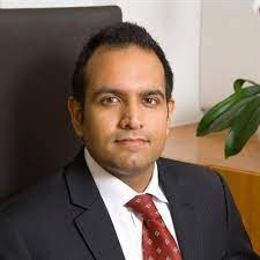
Abhishek Sachdev, CEO at Vedanta Hedging
Secondly, lower volatility makes structured products more attractive. This allows corporates to move away from hedging through traditional vanilla contracts such as forwards, and introduce more dynamic strategies. Overall, this has meant that the level of demand for hedging from corporates might be similar, but the underlying make-up of that hedging has altered significantly.
Quinn stated that it is interesting how little impact the relative value of a currency has on decision-making for corporates regarding hedging.
"It is nearly always driven by the corporate’s underlying budgets,” he contributed. “This is also a key reason why companies have increased their use of structured products to hedge – rather than vanilla strategies – as they are more financially appealing in the current environment.”
According to Eric Huttman, the CEO at MillTechFX, rather than using long-dated FX forwards of up to a year or two, many firms are now locking in rates of up to five months or less to add in an extra layer of flexibility and nimbleness should the market move against them.

Scott Bilter, CFO at Atlas Risk Advisory
The obvious risk in stopping or scaling back a hedging programme on the assumption that currency movements will remain relatively subdued is that the assumption is wrong, noted Scott Bilter, the Chief Financial Officer at Atlas FX. “Volatility doesn’t stay low indefinitely and any hedging strategy should be periodically stress tested to see if it would provide adequate protection in a high volatility environment,” he pointed out. “Hope is not a strategy.”
MillTechFX’s research has found that 68% of North American corporates have been impacted by USD volatility this year, indicating that firms are by no means out of the woods when it comes to the threat of currency movements.
According to de Vries, issues such as data quality and a corporation’s global presence make an accurate and complete overview of FX exposures difficult to achieve.
SMEs Need to Be Cautious of FX Risks
While most SMEs monitor their exposures in core import/export operations, blind spots can emerge during inter-company transfers or payroll processes in various jurisdictions. This may involve unknown but contingent bonuses as well as working capital fluctuations.
“Getting the relevant FX data out of their ERP systems is not something many companies do well on their own, and many lack [the] expertise to interrogate and cleanse whatever exposure data they do manage to get,” suggested Bilter.
Although most established corporates have ERP systems that report exposures on their balance sheets as assets or liabilities and financial planning and analysis processes to capture anticipated activity, Kane observes that treasury organisations often find themselves attempting to hedge exposures beyond planned and forecasted timeframes. Thus, they are often addressing risk that has not yet been quantified.
Finance teams that have visibility into their company’s commercial department are better placed to develop strategies for currency exposure that can not only establish protected levels but boost the bottom line should markets move favourably.
Many corporates have multiple treasury centers across the globe, which makes it difficult to have a complete view of FX exposure since each center will be responsible for its own trading.
Eric Huttman, CEO at MillTechFX
“Operationally, a decentralised approach might make sense for a larger organisation by enabling it to be more responsive to changes in different regional markets, since local teams would have more control,” Huttman commented.
“However, from the perspective of having a clear view of FX exposures, some organisations may consider a centralised treasury the better option,” he concluded. “Under this structure, FX trading can be carried out centrally where treasury accounts are held under a single centre, helping to make it easier to view and manage currency exposures.”
A recent survey undertaken on behalf of MillTechFX suggested that many CFOs, treasurers and other senior finance decision-makers don’t have a clear strategy for mitigating FX risk. While 69% of respondents stated that their bottom lines were affected by domestic currency volatility, the proportion hedging their currency risk descended from 89% in 2022 to 70%, and there was also a fall in the average hedge ratio.
Hedging skeptics may have been emboldened by the results of Kyriba’s first quarter currency impact report. It revealed a notable decline of 27% in adverse currency effects experienced by North American companies in Q1 2023 when compared to the previous three-month period.
Corporates Are Willing to Accept FX Risks
Sander de Vries, the Head of the Financial Risk Management advisory practice at Zanders, suggested that for corporations capable of absorbing FX rates fluctuations and willing to accept this risk, it can be logical to leave exposures open. This allows them to allocate scarce treasury resources to more value-adding activities.
“Needless to say, for corporates that can only absorb FX shocks to a limited extent, a strict currency management approach is key,” he stated. “Scaling down hedging programmes by betting on favourable currency pair movements will increase net FX risk and thereby the potential negative financial impact.”
Helen Kane, the Risk & Exposure Fellow at GTreasury, observed that currency hedge programmes at public companies are slow to react to market changes.
“They are instead hedging, for example, simply because it is the third Wednesday of the third month,” she said. “As central bank policies diverge, I expect we will see private companies evaluating the yield curve while public companies do the same old monthly roll, unaware or just indifferent to their cost saving opportunities.”
Helen Kane, Risk & Exposure Fellow at GTreasury
Abhishek Sachdev, the CEO of Vedanta Hedging, refers to a reduction in long-term hedging (beyond 12 months) from mid-cap corporates.
“However, for shorter term durations we have seen an increase in more structured FX trades using leverage and knock-out options, due to the reduced level of volatility we have seen in recent months,” he explained. “This could be to achieve greater FX gains. For example, GBP/USD at the money volatility was around 14% a year ago, whereas it is currently 9%.”
Interest Rate Hike Changed Economics of Hedging
Despite relatively low spot market volatility, there are two key differences compared to previous years according to Michael Quinn, the Group Trading Manager at Monex Europe.
“Firstly, sharp changes in the global interest rate environment have significantly changed the economics of hedging, in particularly allowing exotic currencies to be hedged against major currencies at more commercial levels,” he mentioned.
Abhishek Sachdev, CEO at Vedanta Hedging
Secondly, lower volatility makes structured products more attractive. This allows corporates to move away from hedging through traditional vanilla contracts such as forwards, and introduce more dynamic strategies. Overall, this has meant that the level of demand for hedging from corporates might be similar, but the underlying make-up of that hedging has altered significantly.
Quinn stated that it is interesting how little impact the relative value of a currency has on decision-making for corporates regarding hedging.
"It is nearly always driven by the corporate’s underlying budgets,” he contributed. “This is also a key reason why companies have increased their use of structured products to hedge – rather than vanilla strategies – as they are more financially appealing in the current environment.”
According to Eric Huttman, the CEO at MillTechFX, rather than using long-dated FX forwards of up to a year or two, many firms are now locking in rates of up to five months or less to add in an extra layer of flexibility and nimbleness should the market move against them.
Scott Bilter, CFO at Atlas Risk Advisory
The obvious risk in stopping or scaling back a hedging programme on the assumption that currency movements will remain relatively subdued is that the assumption is wrong, noted Scott Bilter, the Chief Financial Officer at Atlas FX. “Volatility doesn’t stay low indefinitely and any hedging strategy should be periodically stress tested to see if it would provide adequate protection in a high volatility environment,” he pointed out. “Hope is not a strategy.”
MillTechFX’s research has found that 68% of North American corporates have been impacted by USD volatility this year, indicating that firms are by no means out of the woods when it comes to the threat of currency movements.
According to de Vries, issues such as data quality and a corporation’s global presence make an accurate and complete overview of FX exposures difficult to achieve.
SMEs Need to Be Cautious of FX Risks
While most SMEs monitor their exposures in core import/export operations, blind spots can emerge during inter-company transfers or payroll processes in various jurisdictions. This may involve unknown but contingent bonuses as well as working capital fluctuations.
“Getting the relevant FX data out of their ERP systems is not something many companies do well on their own, and many lack [the] expertise to interrogate and cleanse whatever exposure data they do manage to get,” suggested Bilter.
Although most established corporates have ERP systems that report exposures on their balance sheets as assets or liabilities and financial planning and analysis processes to capture anticipated activity, Kane observes that treasury organisations often find themselves attempting to hedge exposures beyond planned and forecasted timeframes. Thus, they are often addressing risk that has not yet been quantified.
Finance teams that have visibility into their company’s commercial department are better placed to develop strategies for currency exposure that can not only establish protected levels but boost the bottom line should markets move favourably.
Many corporates have multiple treasury centers across the globe, which makes it difficult to have a complete view of FX exposure since each center will be responsible for its own trading.
Eric Huttman, CEO at MillTechFX
“Operationally, a decentralised approach might make sense for a larger organisation by enabling it to be more responsive to changes in different regional markets, since local teams would have more control,” Huttman commented.
“However, from the perspective of having a clear view of FX exposures, some organisations may consider a centralised treasury the better option,” he concluded. “Under this structure, FX trading can be carried out centrally where treasury accounts are held under a single centre, helping to make it easier to view and manage currency exposures.”
Paul Golden is an experienced freelance financial journalist with a strong institutional background. Over the past two decades, he has written for globally recognised financial publications, covering topics such as market structure, regulation, trading behaviour, and economic policy.
ASX Faces $150M Capital Charge After Scathing Inquiry Finds Years of Neglect
Featured Videos
Executive Interview | Charlotte Bullock | Chief Product Officer, Bank of London | FMLS:25
In this interview, we sat down with Charlotte Bullock, Head of Product at The Bank of London, previously at SAP and now shaping product at one of the sector’s most ambitious new banking players.
Charlotte reflects on the Summit so far and talks about the culture inside fintech banks today. We look at the pressures that come with scaling, and how firms can hold onto the nimble approach that made them stand out early on.
We also cover the state of payments ahead of her appearance on the payments roundtable: the blockages financial firms face, the areas that still need fixing, and what a realistic solution looks like in 2026.
In this interview, we sat down with Charlotte Bullock, Head of Product at The Bank of London, previously at SAP and now shaping product at one of the sector’s most ambitious new banking players.
Charlotte reflects on the Summit so far and talks about the culture inside fintech banks today. We look at the pressures that come with scaling, and how firms can hold onto the nimble approach that made them stand out early on.
We also cover the state of payments ahead of her appearance on the payments roundtable: the blockages financial firms face, the areas that still need fixing, and what a realistic solution looks like in 2026.
In this interview, we sat down with Charlotte Bullock, Head of Product at The Bank of London, previously at SAP and now shaping product at one of the sector’s most ambitious new banking players.
Charlotte reflects on the Summit so far and talks about the culture inside fintech banks today. We look at the pressures that come with scaling, and how firms can hold onto the nimble approach that made them stand out early on.
We also cover the state of payments ahead of her appearance on the payments roundtable: the blockages financial firms face, the areas that still need fixing, and what a realistic solution looks like in 2026.
In this interview, we sat down with Charlotte Bullock, Head of Product at The Bank of London, previously at SAP and now shaping product at one of the sector’s most ambitious new banking players.
Charlotte reflects on the Summit so far and talks about the culture inside fintech banks today. We look at the pressures that come with scaling, and how firms can hold onto the nimble approach that made them stand out early on.
We also cover the state of payments ahead of her appearance on the payments roundtable: the blockages financial firms face, the areas that still need fixing, and what a realistic solution looks like in 2026.
In this conversation, we sit down with Drew Niv, CSO at ATFX Connect and one of the most influential figures in modern FX.
We speak about market structure, the institutional view on liquidity, and the sharp rise of prop trading, a sector Drew has been commenting on in recent months. Drew explains why he once dismissed prop trading, why his view changed, and what he now thinks the model means for brokers, clients and risk managers.
We explore subscription-fee dependency, the high reneging rate, and the long-term challenge: how brokers can build a more stable and honest version of the model. Drew also talks about the traffic advantage standalone prop firms have built and why brokers may still win in the long run if they take the right approach.
In this conversation, we sit down with Drew Niv, CSO at ATFX Connect and one of the most influential figures in modern FX.
We speak about market structure, the institutional view on liquidity, and the sharp rise of prop trading, a sector Drew has been commenting on in recent months. Drew explains why he once dismissed prop trading, why his view changed, and what he now thinks the model means for brokers, clients and risk managers.
We explore subscription-fee dependency, the high reneging rate, and the long-term challenge: how brokers can build a more stable and honest version of the model. Drew also talks about the traffic advantage standalone prop firms have built and why brokers may still win in the long run if they take the right approach.
In this conversation, we sit down with Drew Niv, CSO at ATFX Connect and one of the most influential figures in modern FX.
We speak about market structure, the institutional view on liquidity, and the sharp rise of prop trading, a sector Drew has been commenting on in recent months. Drew explains why he once dismissed prop trading, why his view changed, and what he now thinks the model means for brokers, clients and risk managers.
We explore subscription-fee dependency, the high reneging rate, and the long-term challenge: how brokers can build a more stable and honest version of the model. Drew also talks about the traffic advantage standalone prop firms have built and why brokers may still win in the long run if they take the right approach.
In this conversation, we sit down with Drew Niv, CSO at ATFX Connect and one of the most influential figures in modern FX.
We speak about market structure, the institutional view on liquidity, and the sharp rise of prop trading, a sector Drew has been commenting on in recent months. Drew explains why he once dismissed prop trading, why his view changed, and what he now thinks the model means for brokers, clients and risk managers.
We explore subscription-fee dependency, the high reneging rate, and the long-term challenge: how brokers can build a more stable and honest version of the model. Drew also talks about the traffic advantage standalone prop firms have built and why brokers may still win in the long run if they take the right approach.
In this conversation, we sit down with Drew Niv, CSO at ATFX Connect and one of the most influential figures in modern FX.
We speak about market structure, the institutional view on liquidity, and the sharp rise of prop trading, a sector Drew has been commenting on in recent months. Drew explains why he once dismissed prop trading, why his view changed, and what he now thinks the model means for brokers, clients and risk managers.
We explore subscription-fee dependency, the high reneging rate, and the long-term challenge: how brokers can build a more stable and honest version of the model. Drew also talks about the traffic advantage standalone prop firms have built and why brokers may still win in the long run if they take the right approach.
In this conversation, we sit down with Drew Niv, CSO at ATFX Connect and one of the most influential figures in modern FX.
We speak about market structure, the institutional view on liquidity, and the sharp rise of prop trading, a sector Drew has been commenting on in recent months. Drew explains why he once dismissed prop trading, why his view changed, and what he now thinks the model means for brokers, clients and risk managers.
We explore subscription-fee dependency, the high reneging rate, and the long-term challenge: how brokers can build a more stable and honest version of the model. Drew also talks about the traffic advantage standalone prop firms have built and why brokers may still win in the long run if they take the right approach.
Executive Interview | Remonda Z. Kirketerp Møller| CEO & Founder Muinmos | FMLS:25
In this interview, Remonda Z. Kirketerp Møller, founder of Muinmos, breaks down the state of AI in regtech and what responsible adoption really looks like for brokers. We talk about rising fragmentation, the pressures around compliance accuracy, and why most firms are still in the early stages of AI maturity.
Ramanda also shares insights on regulator sandboxes, shifting expectations around accountability, and the current reality of MiCA licensing and passporting in Europe.
A concise look at where compliance, onboarding, and AI-driven processes are heading next.
In this interview, Remonda Z. Kirketerp Møller, founder of Muinmos, breaks down the state of AI in regtech and what responsible adoption really looks like for brokers. We talk about rising fragmentation, the pressures around compliance accuracy, and why most firms are still in the early stages of AI maturity.
Ramanda also shares insights on regulator sandboxes, shifting expectations around accountability, and the current reality of MiCA licensing and passporting in Europe.
A concise look at where compliance, onboarding, and AI-driven processes are heading next.
In this interview, Remonda Z. Kirketerp Møller, founder of Muinmos, breaks down the state of AI in regtech and what responsible adoption really looks like for brokers. We talk about rising fragmentation, the pressures around compliance accuracy, and why most firms are still in the early stages of AI maturity.
Ramanda also shares insights on regulator sandboxes, shifting expectations around accountability, and the current reality of MiCA licensing and passporting in Europe.
A concise look at where compliance, onboarding, and AI-driven processes are heading next.
In this interview, Remonda Z. Kirketerp Møller, founder of Muinmos, breaks down the state of AI in regtech and what responsible adoption really looks like for brokers. We talk about rising fragmentation, the pressures around compliance accuracy, and why most firms are still in the early stages of AI maturity.
Ramanda also shares insights on regulator sandboxes, shifting expectations around accountability, and the current reality of MiCA licensing and passporting in Europe.
A concise look at where compliance, onboarding, and AI-driven processes are heading next.
In this interview, Remonda Z. Kirketerp Møller, founder of Muinmos, breaks down the state of AI in regtech and what responsible adoption really looks like for brokers. We talk about rising fragmentation, the pressures around compliance accuracy, and why most firms are still in the early stages of AI maturity.
Ramanda also shares insights on regulator sandboxes, shifting expectations around accountability, and the current reality of MiCA licensing and passporting in Europe.
A concise look at where compliance, onboarding, and AI-driven processes are heading next.
In this interview, Remonda Z. Kirketerp Møller, founder of Muinmos, breaks down the state of AI in regtech and what responsible adoption really looks like for brokers. We talk about rising fragmentation, the pressures around compliance accuracy, and why most firms are still in the early stages of AI maturity.
Ramanda also shares insights on regulator sandboxes, shifting expectations around accountability, and the current reality of MiCA licensing and passporting in Europe.
A concise look at where compliance, onboarding, and AI-driven processes are heading next.
In this conversation, we speak with Aydin Bonabi, CEO and co-founder of Surveill, a firm focused on fraud detection and AI-driven compliance tools for financial institutions.
We start with Aydin’s view of the Summit and the challenges brokers face as fraud tactics grow more complex. He explains how firms can stay ahead through real-time signals, data patterns, and early-stage detection.
We also talk about AI training and why compliance teams often struggle to keep models accurate, fair, and aligned with regulatory expectations. Aydin breaks down what “good” AI training looks like inside a financial environment, including the importance of clean data, domain expertise, and human oversight.
He closes with a clear message: fraud is scaling, and so must the tools that stop it.
In this conversation, we speak with Aydin Bonabi, CEO and co-founder of Surveill, a firm focused on fraud detection and AI-driven compliance tools for financial institutions.
We start with Aydin’s view of the Summit and the challenges brokers face as fraud tactics grow more complex. He explains how firms can stay ahead through real-time signals, data patterns, and early-stage detection.
We also talk about AI training and why compliance teams often struggle to keep models accurate, fair, and aligned with regulatory expectations. Aydin breaks down what “good” AI training looks like inside a financial environment, including the importance of clean data, domain expertise, and human oversight.
He closes with a clear message: fraud is scaling, and so must the tools that stop it.
In this conversation, we speak with Aydin Bonabi, CEO and co-founder of Surveill, a firm focused on fraud detection and AI-driven compliance tools for financial institutions.
We start with Aydin’s view of the Summit and the challenges brokers face as fraud tactics grow more complex. He explains how firms can stay ahead through real-time signals, data patterns, and early-stage detection.
We also talk about AI training and why compliance teams often struggle to keep models accurate, fair, and aligned with regulatory expectations. Aydin breaks down what “good” AI training looks like inside a financial environment, including the importance of clean data, domain expertise, and human oversight.
He closes with a clear message: fraud is scaling, and so must the tools that stop it.
In this conversation, we speak with Aydin Bonabi, CEO and co-founder of Surveill, a firm focused on fraud detection and AI-driven compliance tools for financial institutions.
We start with Aydin’s view of the Summit and the challenges brokers face as fraud tactics grow more complex. He explains how firms can stay ahead through real-time signals, data patterns, and early-stage detection.
We also talk about AI training and why compliance teams often struggle to keep models accurate, fair, and aligned with regulatory expectations. Aydin breaks down what “good” AI training looks like inside a financial environment, including the importance of clean data, domain expertise, and human oversight.
He closes with a clear message: fraud is scaling, and so must the tools that stop it.
In this conversation, we speak with Aydin Bonabi, CEO and co-founder of Surveill, a firm focused on fraud detection and AI-driven compliance tools for financial institutions.
We start with Aydin’s view of the Summit and the challenges brokers face as fraud tactics grow more complex. He explains how firms can stay ahead through real-time signals, data patterns, and early-stage detection.
We also talk about AI training and why compliance teams often struggle to keep models accurate, fair, and aligned with regulatory expectations. Aydin breaks down what “good” AI training looks like inside a financial environment, including the importance of clean data, domain expertise, and human oversight.
He closes with a clear message: fraud is scaling, and so must the tools that stop it.
In this conversation, we speak with Aydin Bonabi, CEO and co-founder of Surveill, a firm focused on fraud detection and AI-driven compliance tools for financial institutions.
We start with Aydin’s view of the Summit and the challenges brokers face as fraud tactics grow more complex. He explains how firms can stay ahead through real-time signals, data patterns, and early-stage detection.
We also talk about AI training and why compliance teams often struggle to keep models accurate, fair, and aligned with regulatory expectations. Aydin breaks down what “good” AI training looks like inside a financial environment, including the importance of clean data, domain expertise, and human oversight.
He closes with a clear message: fraud is scaling, and so must the tools that stop it.
Exness expands its presence in Africa: Inside our interview with Paul Margarites in Cape Town
Finance Magnates met with Paul Margarites, Exness regional commercial director for Sub-Saharan Africa, during a visit to the firm’s office opening in Cape Town. In this talk, led by Andrea Badiola Mateos, Co-CEO at Finance Magnates, Paul shares views on the South African trading space, local user behavior, mobile trends, regulation, team growth, and how Exness plans to grow in more markets across the region. @Exness
Read the article at: https://www.financemagnates.com/thought-leadership/exness-expands-its-presence-in-africa-inside-our-interview-with-paul-margarites/
#exness #financemagnates #exnesstrading #CFDtrading #tradeonline #africanews #capetown
Finance Magnates met with Paul Margarites, Exness regional commercial director for Sub-Saharan Africa, during a visit to the firm’s office opening in Cape Town. In this talk, led by Andrea Badiola Mateos, Co-CEO at Finance Magnates, Paul shares views on the South African trading space, local user behavior, mobile trends, regulation, team growth, and how Exness plans to grow in more markets across the region. @Exness
Read the article at: https://www.financemagnates.com/thought-leadership/exness-expands-its-presence-in-africa-inside-our-interview-with-paul-margarites/
#exness #financemagnates #exnesstrading #CFDtrading #tradeonline #africanews #capetown
Finance Magnates met with Paul Margarites, Exness regional commercial director for Sub-Saharan Africa, during a visit to the firm’s office opening in Cape Town. In this talk, led by Andrea Badiola Mateos, Co-CEO at Finance Magnates, Paul shares views on the South African trading space, local user behavior, mobile trends, regulation, team growth, and how Exness plans to grow in more markets across the region. @Exness
Read the article at: https://www.financemagnates.com/thought-leadership/exness-expands-its-presence-in-africa-inside-our-interview-with-paul-margarites/
#exness #financemagnates #exnesstrading #CFDtrading #tradeonline #africanews #capetown
Finance Magnates met with Paul Margarites, Exness regional commercial director for Sub-Saharan Africa, during a visit to the firm’s office opening in Cape Town. In this talk, led by Andrea Badiola Mateos, Co-CEO at Finance Magnates, Paul shares views on the South African trading space, local user behavior, mobile trends, regulation, team growth, and how Exness plans to grow in more markets across the region. @Exness
Read the article at: https://www.financemagnates.com/thought-leadership/exness-expands-its-presence-in-africa-inside-our-interview-with-paul-margarites/
#exness #financemagnates #exnesstrading #CFDtrading #tradeonline #africanews #capetown
Finance Magnates met with Paul Margarites, Exness regional commercial director for Sub-Saharan Africa, during a visit to the firm’s office opening in Cape Town. In this talk, led by Andrea Badiola Mateos, Co-CEO at Finance Magnates, Paul shares views on the South African trading space, local user behavior, mobile trends, regulation, team growth, and how Exness plans to grow in more markets across the region. @Exness
Read the article at: https://www.financemagnates.com/thought-leadership/exness-expands-its-presence-in-africa-inside-our-interview-with-paul-margarites/
#exness #financemagnates #exnesstrading #CFDtrading #tradeonline #africanews #capetown
Finance Magnates met with Paul Margarites, Exness regional commercial director for Sub-Saharan Africa, during a visit to the firm’s office opening in Cape Town. In this talk, led by Andrea Badiola Mateos, Co-CEO at Finance Magnates, Paul shares views on the South African trading space, local user behavior, mobile trends, regulation, team growth, and how Exness plans to grow in more markets across the region. @Exness
Read the article at: https://www.financemagnates.com/thought-leadership/exness-expands-its-presence-in-africa-inside-our-interview-with-paul-margarites/
#exness #financemagnates #exnesstrading #CFDtrading #tradeonline #africanews #capetown