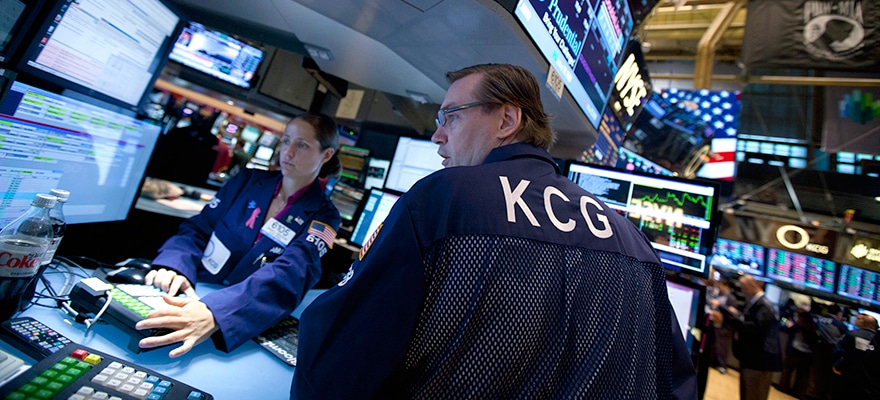
The Financial Conduct Authority's case shows that from June 2010 to September 2011, undisclosed fees and hidden mark-ups totaled $20,169,603, and associated misconduct from this merited a hefty fine to State Street UK.
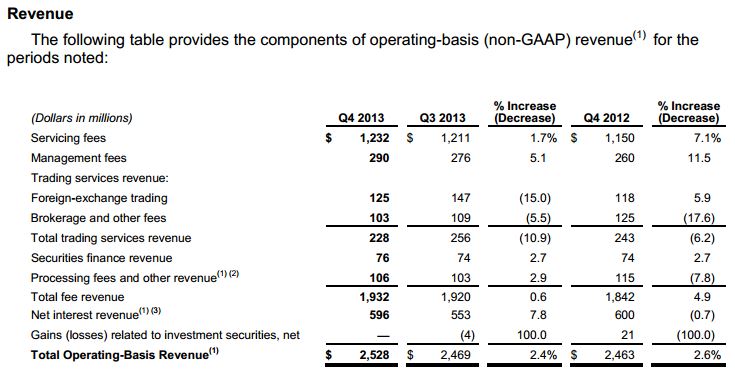
Looking at such metrics, SSGM highlighted that its new asset servicing mandatesduring the fourth quarter of 2013 had totaled $392 billion and net new assets to be managed were $5 billion, thus indicating that in the scope of the fine of its subsidiary it may only represent a small fraction of its overall business - historically speaking, when looking at assets under management (AuM) of which the firm has some $2.3 trillion, along with $27.4 trillion in custody.
Apparently, the size of the fine was determined in relation to revenues earned as a result of the overcharging, based on the program the FCA has in place for calculating such fines and encourages cooperation from firms under investigation, such as that of prior FCA cases reported by Forex Magnates concerning AML.
The complaint also noted that during the relevant time State Street UK's TM had a large market share of the TM business segment and how the lack of competition could have driven the overcharging, while the misconduct at play has since been dealt with swiftly following State Street self-reporting the matter to the regulator in 2011.
State Street Issues Statement on FCA Enforcement Notice
State Street had self-reported the event to the regulator, as described in the statement it issued today regarding the FCA enforcement notice, and as can be seen in an excerpt of the full statement, provide below:
Today brings a conclusion to FCA’s inquiry into the overcharging of six EMEA-based transition management clients in 2010 and 2011 that we self-reported in 2011. We deeply regret this matter. Over the past several years, we have worked hard to enhance our controls to address this unacceptable situation.

The FCA in its notice is critical of our business controls within the UK transition management business and our control functions in the UK at that time. We acknowledge these as historical problems and have undertaken extensive efforts to address both, including strengthening the controls, procedures and governance within our UK transition management business. In 2011, we dismissed individuals centrally involved in the overcharging of transition management clients. Their behavior was unacceptable and a significant departure from the high standards of conduct and transparency that we expect and certainly not consistent with the manner in which our employees act on behalf of clients every day. Also in 2011, we notified all transition management clients about the overcharging, only six of whom were directly affected. We continue to have an open and transparent dialogue with our transition management clients to ensure they are aware of the actions we have taken over the past several years to strengthen our controls. We believe we now have industry leading controls within our transition management business and have bolstered our control functions in the UK, broadening the depth of talent that oversees our businesses. [...]
A full copy of the State Street Statement was published on the homepage of their corporate website, and a copy of the FCA complaint is also available on the regulator's main page.
Complaint by FCA Cited Internal Communications Linking the Misconduct
While the FCA is not a price regulator, the actions surrounding the amount of the fees charged were considered to be construed as misconduct as the amounts charged were higher than what clients had already agreed to in writing, in addition to efforts noted as deliberate to conceal hidden charges . Although the findings were initially self-reported by State Street UK, this was only in response to the matter being brought to light by a customer complaint - which eventually reached senior management and prompted the firm to take action and bring the attention to the FCA.
As an example, according to an excerpt of the complaint filed by the FCA dated January 31, 2014, certain markups were added to the spread and not visible initially on the trade analysis report, and while this was noted as having been done deliberately, a client was later told, “Our trading desk in the US has erroneously applied commissions of 1 bp of yield to trades that should have gone through at zero commission.”
Commenting in the official press release from the FCA, Tracey McDermott, Director of Enforcement and Financial Crime, said:

Tracey McDermott, Director of Enforcement and Financial Crime at FCA and Executive FCA Board Member
“The findings we publish today are another example of a firm that has acted with complete disregard for the interests of its customers. State Street UK allowed a culture to develop in the UK TM business which prioritised revenue generation over the interests of its customers. State Street UK’s significant failings in culture and controls allowed deliberate overcharging to take place and to continue undetected. Their conduct has fallen far short of our expectations. Firms should be in no doubt that the spotlight will remain on wholesale conduct.”
FCA Speaks Out on Severity of Findings, Measures Implemented Already
The FCA said that State Street UK’s Transitions Management (TM) business had developed and executed a deliberate strategy to charge clients substantial markups on certain transitions in addition to the agreed management fee or commission, and these markups had not been agreed upon by the clients and were concealed from them.
The systemic weaknesses in State Street UK’s business practices and control environment around the UK TM business were so serious that the overcharging only came to light after a client notified staff that it had identified markups on certain trades that had not been agreed upon. Those responsible then incorrectly claimed both to the client and later to State Street UK’s compliance department that the charging was an inadvertent error, and arranged for a substantial rebate to be paid on that false basis. They deliberately failed to disclose the existence of further markups on other trades conducted as part of the same transition.
The FCA views State Street UK’s failings to be at the most serious end of the spectrum, as noted in the regualtor's press release. State Street UK acted as an agent to its TM clients and held itself out as being a trusted advisor. Accordingly, it breached a position of trust. Furthermore, the overcharging accounted for over a quarter of its TM revenue, said the FCA.
When the failings were uncovered, State Street UK was found to have breached three of the FCA’s Principles of Business, described by the FCA in the press release including: "It failed to treat its customers fairly; it failed to communicate with clients in a way that was clear, fair and not misleading; and it failed to take reasonable care to organise and control its affairs responsibly, with adequate risk systems."
The FCA noted that once State Street UK's senior management became aware of the issue State Street UK took action to investigate the misconduct and to implement a comprehensive programme to improve the UK TM business controls and bolster control functions, governance and culture across its UK businesses.
State Street recently received its Swap Dealer registration in December with the CFTC, as it prepares to build out that business line and following its joining of SwapClear, as reported by Forex Magnates.
Shares of State Street (STT) on the NYSE traded down 1.89% today, around the time of publication by Forex Magnates.
Looking at such metrics, SSGM highlighted that its new asset servicing mandatesduring the fourth quarter of 2013 had totaled $392 billion and net new assets to be managed were $5 billion, thus indicating that in the scope of the fine of its subsidiary it may only represent a small fraction of its overall business - historically speaking, when looking at assets under management (AuM) of which the firm has some $2.3 trillion, along with $27.4 trillion in custody.
Apparently, the size of the fine was determined in relation to revenues earned as a result of the overcharging, based on the program the FCA has in place for calculating such fines and encourages cooperation from firms under investigation, such as that of prior FCA cases reported by Forex Magnates concerning AML.
The complaint also noted that during the relevant time State Street UK's TM had a large market share of the TM business segment and how the lack of competition could have driven the overcharging, while the misconduct at play has since been dealt with swiftly following State Street self-reporting the matter to the regulator in 2011.
State Street Issues Statement on FCA Enforcement Notice
State Street had self-reported the event to the regulator, as described in the statement it issued today regarding the FCA enforcement notice, and as can be seen in an excerpt of the full statement, provide below:
Today brings a conclusion to FCA’s inquiry into the overcharging of six EMEA-based transition management clients in 2010 and 2011 that we self-reported in 2011. We deeply regret this matter. Over the past several years, we have worked hard to enhance our controls to address this unacceptable situation.
The FCA in its notice is critical of our business controls within the UK transition management business and our control functions in the UK at that time. We acknowledge these as historical problems and have undertaken extensive efforts to address both, including strengthening the controls, procedures and governance within our UK transition management business. In 2011, we dismissed individuals centrally involved in the overcharging of transition management clients. Their behavior was unacceptable and a significant departure from the high standards of conduct and transparency that we expect and certainly not consistent with the manner in which our employees act on behalf of clients every day. Also in 2011, we notified all transition management clients about the overcharging, only six of whom were directly affected. We continue to have an open and transparent dialogue with our transition management clients to ensure they are aware of the actions we have taken over the past several years to strengthen our controls. We believe we now have industry leading controls within our transition management business and have bolstered our control functions in the UK, broadening the depth of talent that oversees our businesses. [...]
A full copy of the State Street Statement was published on the homepage of their corporate website, and a copy of the FCA complaint is also available on the regulator's main page.
Complaint by FCA Cited Internal Communications Linking the Misconduct
While the FCA is not a price regulator, the actions surrounding the amount of the fees charged were considered to be construed as misconduct as the amounts charged were higher than what clients had already agreed to in writing, in addition to efforts noted as deliberate to conceal hidden charges . Although the findings were initially self-reported by State Street UK, this was only in response to the matter being brought to light by a customer complaint - which eventually reached senior management and prompted the firm to take action and bring the attention to the FCA.
As an example, according to an excerpt of the complaint filed by the FCA dated January 31, 2014, certain markups were added to the spread and not visible initially on the trade analysis report, and while this was noted as having been done deliberately, a client was later told, “Our trading desk in the US has erroneously applied commissions of 1 bp of yield to trades that should have gone through at zero commission.”
Commenting in the official press release from the FCA, Tracey McDermott, Director of Enforcement and Financial Crime, said:
Tracey McDermott, Director of Enforcement and Financial Crime at FCA and Executive FCA Board Member
“The findings we publish today are another example of a firm that has acted with complete disregard for the interests of its customers. State Street UK allowed a culture to develop in the UK TM business which prioritised revenue generation over the interests of its customers. State Street UK’s significant failings in culture and controls allowed deliberate overcharging to take place and to continue undetected. Their conduct has fallen far short of our expectations. Firms should be in no doubt that the spotlight will remain on wholesale conduct.”
FCA Speaks Out on Severity of Findings, Measures Implemented Already
The FCA said that State Street UK’s Transitions Management (TM) business had developed and executed a deliberate strategy to charge clients substantial markups on certain transitions in addition to the agreed management fee or commission, and these markups had not been agreed upon by the clients and were concealed from them.
The systemic weaknesses in State Street UK’s business practices and control environment around the UK TM business were so serious that the overcharging only came to light after a client notified staff that it had identified markups on certain trades that had not been agreed upon. Those responsible then incorrectly claimed both to the client and later to State Street UK’s compliance department that the charging was an inadvertent error, and arranged for a substantial rebate to be paid on that false basis. They deliberately failed to disclose the existence of further markups on other trades conducted as part of the same transition.
The FCA views State Street UK’s failings to be at the most serious end of the spectrum, as noted in the regualtor's press release. State Street UK acted as an agent to its TM clients and held itself out as being a trusted advisor. Accordingly, it breached a position of trust. Furthermore, the overcharging accounted for over a quarter of its TM revenue, said the FCA.
When the failings were uncovered, State Street UK was found to have breached three of the FCA’s Principles of Business, described by the FCA in the press release including: "It failed to treat its customers fairly; it failed to communicate with clients in a way that was clear, fair and not misleading; and it failed to take reasonable care to organise and control its affairs responsibly, with adequate risk systems."
The FCA noted that once State Street UK's senior management became aware of the issue State Street UK took action to investigate the misconduct and to implement a comprehensive programme to improve the UK TM business controls and bolster control functions, governance and culture across its UK businesses.
State Street recently received its Swap Dealer registration in December with the CFTC, as it prepares to build out that business line and following its joining of SwapClear, as reported by Forex Magnates.
Shares of State Street (STT) on the NYSE traded down 1.89% today, around the time of publication by Forex Magnates.
Prop Firms and Brokers Form a Perfect Synergy: One Offers Access, the Other Capital
Featured Videos
Executive Interview | Charlotte Bullock | Chief Product Officer, Bank of London | FMLS:25
In this interview, we sat down with Charlotte Bullock, Head of Product at The Bank of London, previously at SAP and now shaping product at one of the sector’s most ambitious new banking players.
Charlotte reflects on the Summit so far and talks about the culture inside fintech banks today. We look at the pressures that come with scaling, and how firms can hold onto the nimble approach that made them stand out early on.
We also cover the state of payments ahead of her appearance on the payments roundtable: the blockages financial firms face, the areas that still need fixing, and what a realistic solution looks like in 2026.
In this interview, we sat down with Charlotte Bullock, Head of Product at The Bank of London, previously at SAP and now shaping product at one of the sector’s most ambitious new banking players.
Charlotte reflects on the Summit so far and talks about the culture inside fintech banks today. We look at the pressures that come with scaling, and how firms can hold onto the nimble approach that made them stand out early on.
We also cover the state of payments ahead of her appearance on the payments roundtable: the blockages financial firms face, the areas that still need fixing, and what a realistic solution looks like in 2026.
In this interview, we sat down with Charlotte Bullock, Head of Product at The Bank of London, previously at SAP and now shaping product at one of the sector’s most ambitious new banking players.
Charlotte reflects on the Summit so far and talks about the culture inside fintech banks today. We look at the pressures that come with scaling, and how firms can hold onto the nimble approach that made them stand out early on.
We also cover the state of payments ahead of her appearance on the payments roundtable: the blockages financial firms face, the areas that still need fixing, and what a realistic solution looks like in 2026.
In this interview, we sat down with Charlotte Bullock, Head of Product at The Bank of London, previously at SAP and now shaping product at one of the sector’s most ambitious new banking players.
Charlotte reflects on the Summit so far and talks about the culture inside fintech banks today. We look at the pressures that come with scaling, and how firms can hold onto the nimble approach that made them stand out early on.
We also cover the state of payments ahead of her appearance on the payments roundtable: the blockages financial firms face, the areas that still need fixing, and what a realistic solution looks like in 2026.
In this conversation, we sit down with Drew Niv, CSO at ATFX Connect and one of the most influential figures in modern FX.
We speak about market structure, the institutional view on liquidity, and the sharp rise of prop trading, a sector Drew has been commenting on in recent months. Drew explains why he once dismissed prop trading, why his view changed, and what he now thinks the model means for brokers, clients and risk managers.
We explore subscription-fee dependency, the high reneging rate, and the long-term challenge: how brokers can build a more stable and honest version of the model. Drew also talks about the traffic advantage standalone prop firms have built and why brokers may still win in the long run if they take the right approach.
In this conversation, we sit down with Drew Niv, CSO at ATFX Connect and one of the most influential figures in modern FX.
We speak about market structure, the institutional view on liquidity, and the sharp rise of prop trading, a sector Drew has been commenting on in recent months. Drew explains why he once dismissed prop trading, why his view changed, and what he now thinks the model means for brokers, clients and risk managers.
We explore subscription-fee dependency, the high reneging rate, and the long-term challenge: how brokers can build a more stable and honest version of the model. Drew also talks about the traffic advantage standalone prop firms have built and why brokers may still win in the long run if they take the right approach.
In this conversation, we sit down with Drew Niv, CSO at ATFX Connect and one of the most influential figures in modern FX.
We speak about market structure, the institutional view on liquidity, and the sharp rise of prop trading, a sector Drew has been commenting on in recent months. Drew explains why he once dismissed prop trading, why his view changed, and what he now thinks the model means for brokers, clients and risk managers.
We explore subscription-fee dependency, the high reneging rate, and the long-term challenge: how brokers can build a more stable and honest version of the model. Drew also talks about the traffic advantage standalone prop firms have built and why brokers may still win in the long run if they take the right approach.
In this conversation, we sit down with Drew Niv, CSO at ATFX Connect and one of the most influential figures in modern FX.
We speak about market structure, the institutional view on liquidity, and the sharp rise of prop trading, a sector Drew has been commenting on in recent months. Drew explains why he once dismissed prop trading, why his view changed, and what he now thinks the model means for brokers, clients and risk managers.
We explore subscription-fee dependency, the high reneging rate, and the long-term challenge: how brokers can build a more stable and honest version of the model. Drew also talks about the traffic advantage standalone prop firms have built and why brokers may still win in the long run if they take the right approach.
In this conversation, we sit down with Drew Niv, CSO at ATFX Connect and one of the most influential figures in modern FX.
We speak about market structure, the institutional view on liquidity, and the sharp rise of prop trading, a sector Drew has been commenting on in recent months. Drew explains why he once dismissed prop trading, why his view changed, and what he now thinks the model means for brokers, clients and risk managers.
We explore subscription-fee dependency, the high reneging rate, and the long-term challenge: how brokers can build a more stable and honest version of the model. Drew also talks about the traffic advantage standalone prop firms have built and why brokers may still win in the long run if they take the right approach.
In this conversation, we sit down with Drew Niv, CSO at ATFX Connect and one of the most influential figures in modern FX.
We speak about market structure, the institutional view on liquidity, and the sharp rise of prop trading, a sector Drew has been commenting on in recent months. Drew explains why he once dismissed prop trading, why his view changed, and what he now thinks the model means for brokers, clients and risk managers.
We explore subscription-fee dependency, the high reneging rate, and the long-term challenge: how brokers can build a more stable and honest version of the model. Drew also talks about the traffic advantage standalone prop firms have built and why brokers may still win in the long run if they take the right approach.
Executive Interview | Remonda Z. Kirketerp Møller| CEO & Founder Muinmos | FMLS:25
In this interview, Remonda Z. Kirketerp Møller, founder of Muinmos, breaks down the state of AI in regtech and what responsible adoption really looks like for brokers. We talk about rising fragmentation, the pressures around compliance accuracy, and why most firms are still in the early stages of AI maturity.
Ramanda also shares insights on regulator sandboxes, shifting expectations around accountability, and the current reality of MiCA licensing and passporting in Europe.
A concise look at where compliance, onboarding, and AI-driven processes are heading next.
In this interview, Remonda Z. Kirketerp Møller, founder of Muinmos, breaks down the state of AI in regtech and what responsible adoption really looks like for brokers. We talk about rising fragmentation, the pressures around compliance accuracy, and why most firms are still in the early stages of AI maturity.
Ramanda also shares insights on regulator sandboxes, shifting expectations around accountability, and the current reality of MiCA licensing and passporting in Europe.
A concise look at where compliance, onboarding, and AI-driven processes are heading next.
In this interview, Remonda Z. Kirketerp Møller, founder of Muinmos, breaks down the state of AI in regtech and what responsible adoption really looks like for brokers. We talk about rising fragmentation, the pressures around compliance accuracy, and why most firms are still in the early stages of AI maturity.
Ramanda also shares insights on regulator sandboxes, shifting expectations around accountability, and the current reality of MiCA licensing and passporting in Europe.
A concise look at where compliance, onboarding, and AI-driven processes are heading next.
In this interview, Remonda Z. Kirketerp Møller, founder of Muinmos, breaks down the state of AI in regtech and what responsible adoption really looks like for brokers. We talk about rising fragmentation, the pressures around compliance accuracy, and why most firms are still in the early stages of AI maturity.
Ramanda also shares insights on regulator sandboxes, shifting expectations around accountability, and the current reality of MiCA licensing and passporting in Europe.
A concise look at where compliance, onboarding, and AI-driven processes are heading next.
In this interview, Remonda Z. Kirketerp Møller, founder of Muinmos, breaks down the state of AI in regtech and what responsible adoption really looks like for brokers. We talk about rising fragmentation, the pressures around compliance accuracy, and why most firms are still in the early stages of AI maturity.
Ramanda also shares insights on regulator sandboxes, shifting expectations around accountability, and the current reality of MiCA licensing and passporting in Europe.
A concise look at where compliance, onboarding, and AI-driven processes are heading next.
In this interview, Remonda Z. Kirketerp Møller, founder of Muinmos, breaks down the state of AI in regtech and what responsible adoption really looks like for brokers. We talk about rising fragmentation, the pressures around compliance accuracy, and why most firms are still in the early stages of AI maturity.
Ramanda also shares insights on regulator sandboxes, shifting expectations around accountability, and the current reality of MiCA licensing and passporting in Europe.
A concise look at where compliance, onboarding, and AI-driven processes are heading next.
In this conversation, we speak with Aydin Bonabi, CEO and co-founder of Surveill, a firm focused on fraud detection and AI-driven compliance tools for financial institutions.
We start with Aydin’s view of the Summit and the challenges brokers face as fraud tactics grow more complex. He explains how firms can stay ahead through real-time signals, data patterns, and early-stage detection.
We also talk about AI training and why compliance teams often struggle to keep models accurate, fair, and aligned with regulatory expectations. Aydin breaks down what “good” AI training looks like inside a financial environment, including the importance of clean data, domain expertise, and human oversight.
He closes with a clear message: fraud is scaling, and so must the tools that stop it.
In this conversation, we speak with Aydin Bonabi, CEO and co-founder of Surveill, a firm focused on fraud detection and AI-driven compliance tools for financial institutions.
We start with Aydin’s view of the Summit and the challenges brokers face as fraud tactics grow more complex. He explains how firms can stay ahead through real-time signals, data patterns, and early-stage detection.
We also talk about AI training and why compliance teams often struggle to keep models accurate, fair, and aligned with regulatory expectations. Aydin breaks down what “good” AI training looks like inside a financial environment, including the importance of clean data, domain expertise, and human oversight.
He closes with a clear message: fraud is scaling, and so must the tools that stop it.
In this conversation, we speak with Aydin Bonabi, CEO and co-founder of Surveill, a firm focused on fraud detection and AI-driven compliance tools for financial institutions.
We start with Aydin’s view of the Summit and the challenges brokers face as fraud tactics grow more complex. He explains how firms can stay ahead through real-time signals, data patterns, and early-stage detection.
We also talk about AI training and why compliance teams often struggle to keep models accurate, fair, and aligned with regulatory expectations. Aydin breaks down what “good” AI training looks like inside a financial environment, including the importance of clean data, domain expertise, and human oversight.
He closes with a clear message: fraud is scaling, and so must the tools that stop it.
In this conversation, we speak with Aydin Bonabi, CEO and co-founder of Surveill, a firm focused on fraud detection and AI-driven compliance tools for financial institutions.
We start with Aydin’s view of the Summit and the challenges brokers face as fraud tactics grow more complex. He explains how firms can stay ahead through real-time signals, data patterns, and early-stage detection.
We also talk about AI training and why compliance teams often struggle to keep models accurate, fair, and aligned with regulatory expectations. Aydin breaks down what “good” AI training looks like inside a financial environment, including the importance of clean data, domain expertise, and human oversight.
He closes with a clear message: fraud is scaling, and so must the tools that stop it.
In this conversation, we speak with Aydin Bonabi, CEO and co-founder of Surveill, a firm focused on fraud detection and AI-driven compliance tools for financial institutions.
We start with Aydin’s view of the Summit and the challenges brokers face as fraud tactics grow more complex. He explains how firms can stay ahead through real-time signals, data patterns, and early-stage detection.
We also talk about AI training and why compliance teams often struggle to keep models accurate, fair, and aligned with regulatory expectations. Aydin breaks down what “good” AI training looks like inside a financial environment, including the importance of clean data, domain expertise, and human oversight.
He closes with a clear message: fraud is scaling, and so must the tools that stop it.
In this conversation, we speak with Aydin Bonabi, CEO and co-founder of Surveill, a firm focused on fraud detection and AI-driven compliance tools for financial institutions.
We start with Aydin’s view of the Summit and the challenges brokers face as fraud tactics grow more complex. He explains how firms can stay ahead through real-time signals, data patterns, and early-stage detection.
We also talk about AI training and why compliance teams often struggle to keep models accurate, fair, and aligned with regulatory expectations. Aydin breaks down what “good” AI training looks like inside a financial environment, including the importance of clean data, domain expertise, and human oversight.
He closes with a clear message: fraud is scaling, and so must the tools that stop it.
Exness expands its presence in Africa: Inside our interview with Paul Margarites in Cape Town
Finance Magnates met with Paul Margarites, Exness regional commercial director for Sub-Saharan Africa, during a visit to the firm’s office opening in Cape Town. In this talk, led by Andrea Badiola Mateos, Co-CEO at Finance Magnates, Paul shares views on the South African trading space, local user behavior, mobile trends, regulation, team growth, and how Exness plans to grow in more markets across the region. @Exness
Read the article at: https://www.financemagnates.com/thought-leadership/exness-expands-its-presence-in-africa-inside-our-interview-with-paul-margarites/
#exness #financemagnates #exnesstrading #CFDtrading #tradeonline #africanews #capetown
Finance Magnates met with Paul Margarites, Exness regional commercial director for Sub-Saharan Africa, during a visit to the firm’s office opening in Cape Town. In this talk, led by Andrea Badiola Mateos, Co-CEO at Finance Magnates, Paul shares views on the South African trading space, local user behavior, mobile trends, regulation, team growth, and how Exness plans to grow in more markets across the region. @Exness
Read the article at: https://www.financemagnates.com/thought-leadership/exness-expands-its-presence-in-africa-inside-our-interview-with-paul-margarites/
#exness #financemagnates #exnesstrading #CFDtrading #tradeonline #africanews #capetown
Finance Magnates met with Paul Margarites, Exness regional commercial director for Sub-Saharan Africa, during a visit to the firm’s office opening in Cape Town. In this talk, led by Andrea Badiola Mateos, Co-CEO at Finance Magnates, Paul shares views on the South African trading space, local user behavior, mobile trends, regulation, team growth, and how Exness plans to grow in more markets across the region. @Exness
Read the article at: https://www.financemagnates.com/thought-leadership/exness-expands-its-presence-in-africa-inside-our-interview-with-paul-margarites/
#exness #financemagnates #exnesstrading #CFDtrading #tradeonline #africanews #capetown
Finance Magnates met with Paul Margarites, Exness regional commercial director for Sub-Saharan Africa, during a visit to the firm’s office opening in Cape Town. In this talk, led by Andrea Badiola Mateos, Co-CEO at Finance Magnates, Paul shares views on the South African trading space, local user behavior, mobile trends, regulation, team growth, and how Exness plans to grow in more markets across the region. @Exness
Read the article at: https://www.financemagnates.com/thought-leadership/exness-expands-its-presence-in-africa-inside-our-interview-with-paul-margarites/
#exness #financemagnates #exnesstrading #CFDtrading #tradeonline #africanews #capetown
Finance Magnates met with Paul Margarites, Exness regional commercial director for Sub-Saharan Africa, during a visit to the firm’s office opening in Cape Town. In this talk, led by Andrea Badiola Mateos, Co-CEO at Finance Magnates, Paul shares views on the South African trading space, local user behavior, mobile trends, regulation, team growth, and how Exness plans to grow in more markets across the region. @Exness
Read the article at: https://www.financemagnates.com/thought-leadership/exness-expands-its-presence-in-africa-inside-our-interview-with-paul-margarites/
#exness #financemagnates #exnesstrading #CFDtrading #tradeonline #africanews #capetown
Finance Magnates met with Paul Margarites, Exness regional commercial director for Sub-Saharan Africa, during a visit to the firm’s office opening in Cape Town. In this talk, led by Andrea Badiola Mateos, Co-CEO at Finance Magnates, Paul shares views on the South African trading space, local user behavior, mobile trends, regulation, team growth, and how Exness plans to grow in more markets across the region. @Exness
Read the article at: https://www.financemagnates.com/thought-leadership/exness-expands-its-presence-in-africa-inside-our-interview-with-paul-margarites/
#exness #financemagnates #exnesstrading #CFDtrading #tradeonline #africanews #capetown