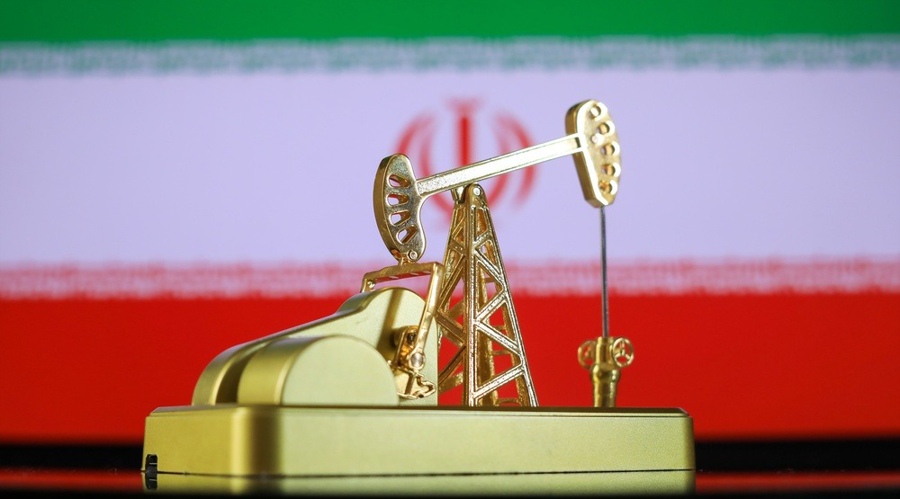
WTI crude oil settled at $112.41 per barrel on Monday, April
7, 2026, while Brent closed at $109.77, as President Trump's Tuesday night
ultimatum for Iran to reopen the Strait of Hormuz kept the market on edge. Both
benchmarks have nearly doubled since January, when WTI traded below $58, making
this the steepest year-to-date rally since 2008.
Six months ago, the oil price prediction consensus centered
on oversupply and sub-$60 crude. The effective closure of the Strait, through
which 20% of global oil supply once flowed daily, has replaced that narrative
entirely.
Goldman Sachs now calls it the largest supply shock in the
history of the global crude market, and the question facing traders is no
longer whether prices stay elevated, but how high they can go.
Follow
me on X for real-time market analysis: @ChmielDk
Why Oil Prices Are Rising?
Strait of Hormuz and the Tuesday Ultimatum
The war
between the US-Israeli coalition and Iran, which began on February 28 with
coordinated strikes on Iranian nuclear facilities, has now entered its sixth
week with no resolution in sight. Trump gave Iran until Tuesday, April 8, at 8
PM ET to reopen the Strait or face strikes on every bridge
Bridge
The bridge or liquidity bridge is an essential component for brokers that are enabling their clients to trade at interbank rates directly via a Prime Broker or a Prime-of-Prime (PoP). While market makers do not require a bridge in order to service their clients, brokers which are sending through orders to a liquidity provider or an electronic execution venue need a bridge to connect their trading platform to the interbank market.Bridges are used extensively in forex trading, specifically for Met
The bridge or liquidity bridge is an essential component for brokers that are enabling their clients to trade at interbank rates directly via a Prime Broker or a Prime-of-Prime (PoP). While market makers do not require a bridge in order to service their clients, brokers which are sending through orders to a liquidity provider or an electronic execution venue need a bridge to connect their trading platform to the interbank market.Bridges are used extensively in forex trading, specifically for Met
Read this Term and power plant in
the country. Iran rejected Washington's ceasefire proposal and submitted its
own 10-point plan, which includes a permanent end to hostilities and the
lifting of sanctions, according to Axios.
The scale
of supply destruction is historic. TD Securities estimates nearly 1 billion
barrels will be lost by the end of April, comprising approximately 600 million
barrels of crude and 350 million barrels of refined products. Ryan McKay,
senior commodity strategist at TD Securities, wrote in a note to clients that
the conflict lasting into deep April means the supply math is getting worse by
the day. Rapidan Energy projects a total net loss of 630 million barrels of oil
and products by the end of June.
Samer Hasn,
Senior Market Analyst at XS.com, noted that the continued surge comes as
markets anticipate further escalation, which threatens structural disruption to
crude oil supply chains originating in the region. He added that energy markets
are bracing for a massive supply shock as the geopolitical theater enters the
most dangerous phase of the war.
OPEC+
agreed on Sunday to boost production by 206,000 barrels per day in May, but as Finance Magnates' analysis of the
74% three-week oil price surge from March 9 established, the theoretical increase is meaningless while
the Strait remains closed and Gulf infrastructure sustains ongoing damage. Kuwait
Petroleum Corporation reported significant drone damage to several operational
facilities over the weekend. OPEC+ itself warned that repairing energy
infrastructure attacked during the conflict is costly and time-consuming.
However, there are early signs of a partial thaw. Shipping
data from S&P Global Market Intelligence showed 8 tankers transited the
Strait on Monday, up from fewer than 2 per day throughout March. That remains a
fraction of prewar volumes, but represents the first measurable improvement
since hostilities began.
Konstantinos Chrysikos, Head of Customer Relationship
Management at Kudotrade, noted that early signs of potential de-escalation have
tempered supply concerns to a degree, pushing prices down from intraday highs.
But he cautioned that underlying conditions remain fragile and vessel transit
through the Strait remains limited.
Oil Technical Analysis:
WTI Oil Price Chart at 2022 War Levels
My chart shows WTI crude has been trading since early March
within a volatility
Volatility
In finance, volatility refers to the amount of change in the rate of a financial instrument, such as commodities, currencies, or stocks, over a given time period. Essentially, volatility describes the nature of an instrument’s fluctuation; a highly volatile security equates to large fluctuations in price, and a low volatile security equates to timid fluctuations in price. Volatility is an important statistical indicator used by financial traders to assist them in developing trading systems. Trad
In finance, volatility refers to the amount of change in the rate of a financial instrument, such as commodities, currencies, or stocks, over a given time period. Essentially, volatility describes the nature of an instrument’s fluctuation; a highly volatile security equates to large fluctuations in price, and a low volatile security equates to timid fluctuations in price. Volatility is an important statistical indicator used by financial traders to assist them in developing trading systems. Trad
Read this Term channel that mirrors the price range observed during the
2022 Ukraine war spike. Based on my over 15 years of experience as an analyst
and trader, this is a structurally significant pattern.
The resistance zone at $114-$115 per barrel forms the upper
boundary of the current consolidation. WTI has tested this area for three
consecutive sessions without a decisive breakout. In 2022, this same price zone
marked the beginning of the final push toward the $130 intraday high. A
sustained close above $115 would suggest the market is repricing for a
prolonged disruption scenario rather than a near-term resolution.
The lower boundary sits at approximately $84 per barrel,
corresponding to the session lows from early March that were subsequently
retested in late March. This level coincides with the 50-day exponential moving
average, reinforcing its importance as dynamic support. As the Finance
Magnates coverage of the initial Strait of Hormuz closure from March 2
documented, the oil price gap that opened between $66 and $84 during the first
week of the conflict remains partially unfilled.
Oil WTI price technical analysis. Source: Tradingview.com
The structural dividing line between a bullish and bearish
WTI outlook sits near $70 per barrel, where the 200-day moving average
currently runs. This level also intersects with the bullish gap from the
February-March 2022 Ukraine war breakout. A retreat below the 200 MA would
require either a ceasefire or a resolution far more comprehensive than what is
currently on the table.
Level | Type | Notes |
$130 | Historical resistance | 2022 intraday high, next target if $115 breaks |
$114-$115 | Resistance zone | Current consolidation ceiling, tested 3 sessions |
$112.41 | Current price | WTI settlement, April 7, 2026 |
$84 | Support / 50 EMA | March lows, retested late March |
$70 | 200 MA / Trend line | Bullish/bearish structural dividing line |
My directional bias remains cautiously bullish as long as
price holds above the 50 EMA at $84. A breakout above $115 targets $130 and
potentially higher. However, the outcome depends less on technical patterns and
more on whether the current crisis produces a diplomatic resolution or an
escalation.
As I noted in previous Finance
Magnates oil market coverage, the fundamentals shifted the oil narrative
from oversupply to supply crisis in under five weeks, and they can shift it
back just as quickly.
Oil Price Prediction 2026: What Banks and Analysts Forecast
The institutional consensus has undergone a dramatic
revision since February. Before the conflict, Goldman Sachs projected WTI
averaging $53 per barrel in 2026. That forecast now looks like it belongs to a
different era.
Goldman Sachs, led by commodities analyst Daan Struyven,
raised its 2026 average Brent forecast to $85 per barrel on March 22, up from
$77, with the WTI forecast lifted to $79 from $72. The bank's model assumes
roughly six weeks of severely restricted Hormuz flows. For Q4 2026, Goldman's
base case sits at $71 Brent and $67 WTI, but its risk scenario, which assumes a
two-month disruption, pushes Q4 Brent to $93. Goldman has flagged a peak
scenario at $135 per barrel if the market needs to force demand destruction to
offset six months of restricted supply.
JPMorgan issued the most aggressive warning among major
banks. The bank's commodities team cautioned that Brent could overshoot toward
$150 per barrel if the Strait of Hormuz stays effectively shut into mid-May. As
the Finance
Magnates analysis of $200 oil scenarios from March 30 outlined, Macquarie
and Wood Mackenzie have sketched similar upside ranges, though the $200 level
remains an extreme tail risk rather than a base case.
The U.S. Energy Information Administration, whose updated
Short-Term Energy Outlook was due for release on April 7, projected in its
March report that Brent would remain above $95 over the next two months before
falling below $80 in Q3 and toward $70 by year-end. That forecast assumes the
Strait gradually reopens, a condition that has yet to materialize.
The futures curve tells its own story. As oil
traders increasingly turn to prediction markets for forward signals, the
Brent forward curve prices a decline to $90 by August and below $80 by
December, indicating the market's base expectation remains that the disruption
is temporary.
Source | Target | Timeframe / Notes |
JPMorgan | $150 Brent | If Hormuz closed into mid-May |
Goldman Sachs (risk) | $135 Brent | Peak, 6 months of restricted supply |
Goldman Sachs (base) | $85 avg / $71 Q4 Brent | 2026 average, assumes 6-week disruption |
EIA | $95+ near-term, $70 year-end | Assumes gradual Strait reopening |
Brent futures curve | $90 Aug / sub-$80 Dec | Market-implied, as of April 7 |
Goldman Sachs (pre-war) | $53 WTI avg | November 2025 forecast, now obsolete |
FAQ
How high can oil prices go in 2026?
JPMorgan warns Brent crude could overshoot toward $150 per
barrel if the Strait of Hormuz remains effectively closed into mid-May. Goldman
Sachs has flagged an extreme peak scenario at $135 per barrel. WTI crude
settled at $112.41 on April 7, 2026, up roughly 96% year-to-date. The outcome
depends primarily on the duration and intensity of the Iran conflict.
Why are oil prices rising so fast in 2026?
The
US-Israeli war on Iran, which began February 28, 2026, effectively closed the
Strait of Hormuz, choking off approximately 20% of global seaborne oil supply. TD
Securities estimates nearly 1 billion barrels of crude and products will be
lost by end of April. This represents the largest supply disruption in the
history of the global crude market, according to Goldman Sachs.
Will oil prices go down in 2026?
The EIA projects Brent falling below $80 per barrel by Q3
and toward $70 by year-end, assuming the Strait of Hormuz gradually reopens.
Goldman Sachs' Q4 2026 base case is $71 Brent and $67 WTI. A ceasefire deal
between the US and Iran would likely trigger a rapid decline in crude prices,
as the futures curve already prices Brent at $90 by August.
What happens to oil prices if the Strait of Hormuz reopens?
A full reopening of the Strait would remove the war premium
currently embedded in crude prices. Before the conflict, Goldman Sachs
projected WTI averaging $53 in 2026. However, analysts caution that even after
a ceasefire, infrastructure damage to Gulf production facilities means supply
normalization could take months, limiting the pace of any price decline.
What is the oil price prediction for the end of 2026?
Goldman Sachs' base case projects $71 Brent and $67 WTI by
Q4 2026. Under a risk scenario where Hormuz disruptions last two months,
Goldman sees Q4 Brent at $93. JPMorgan's pre-war outlook assumed Brent
returning to the $60 range. The EIA forecasts approximately $70 Brent by
December, contingent on resumed Strait flows and US production growth averaging
13.6 million barrels per day.
WTI crude oil settled at $112.41 per barrel on Monday, April
7, 2026, while Brent closed at $109.77, as President Trump's Tuesday night
ultimatum for Iran to reopen the Strait of Hormuz kept the market on edge. Both
benchmarks have nearly doubled since January, when WTI traded below $58, making
this the steepest year-to-date rally since 2008.
Six months ago, the oil price prediction consensus centered
on oversupply and sub-$60 crude. The effective closure of the Strait, through
which 20% of global oil supply once flowed daily, has replaced that narrative
entirely.
Goldman Sachs now calls it the largest supply shock in the
history of the global crude market, and the question facing traders is no
longer whether prices stay elevated, but how high they can go.
Follow
me on X for real-time market analysis: @ChmielDk
Why Oil Prices Are Rising?
Strait of Hormuz and the Tuesday Ultimatum
The war
between the US-Israeli coalition and Iran, which began on February 28 with
coordinated strikes on Iranian nuclear facilities, has now entered its sixth
week with no resolution in sight. Trump gave Iran until Tuesday, April 8, at 8
PM ET to reopen the Strait or face strikes on every bridge
Bridge
The bridge or liquidity bridge is an essential component for brokers that are enabling their clients to trade at interbank rates directly via a Prime Broker or a Prime-of-Prime (PoP). While market makers do not require a bridge in order to service their clients, brokers which are sending through orders to a liquidity provider or an electronic execution venue need a bridge to connect their trading platform to the interbank market.Bridges are used extensively in forex trading, specifically for Met
The bridge or liquidity bridge is an essential component for brokers that are enabling their clients to trade at interbank rates directly via a Prime Broker or a Prime-of-Prime (PoP). While market makers do not require a bridge in order to service their clients, brokers which are sending through orders to a liquidity provider or an electronic execution venue need a bridge to connect their trading platform to the interbank market.Bridges are used extensively in forex trading, specifically for Met
Read this Term and power plant in
the country. Iran rejected Washington's ceasefire proposal and submitted its
own 10-point plan, which includes a permanent end to hostilities and the
lifting of sanctions, according to Axios.
The scale
of supply destruction is historic. TD Securities estimates nearly 1 billion
barrels will be lost by the end of April, comprising approximately 600 million
barrels of crude and 350 million barrels of refined products. Ryan McKay,
senior commodity strategist at TD Securities, wrote in a note to clients that
the conflict lasting into deep April means the supply math is getting worse by
the day. Rapidan Energy projects a total net loss of 630 million barrels of oil
and products by the end of June.
Samer Hasn,
Senior Market Analyst at XS.com, noted that the continued surge comes as
markets anticipate further escalation, which threatens structural disruption to
crude oil supply chains originating in the region. He added that energy markets
are bracing for a massive supply shock as the geopolitical theater enters the
most dangerous phase of the war.
OPEC+
agreed on Sunday to boost production by 206,000 barrels per day in May, but as Finance Magnates' analysis of the
74% three-week oil price surge from March 9 established, the theoretical increase is meaningless while
the Strait remains closed and Gulf infrastructure sustains ongoing damage. Kuwait
Petroleum Corporation reported significant drone damage to several operational
facilities over the weekend. OPEC+ itself warned that repairing energy
infrastructure attacked during the conflict is costly and time-consuming.
However, there are early signs of a partial thaw. Shipping
data from S&P Global Market Intelligence showed 8 tankers transited the
Strait on Monday, up from fewer than 2 per day throughout March. That remains a
fraction of prewar volumes, but represents the first measurable improvement
since hostilities began.
Konstantinos Chrysikos, Head of Customer Relationship
Management at Kudotrade, noted that early signs of potential de-escalation have
tempered supply concerns to a degree, pushing prices down from intraday highs.
But he cautioned that underlying conditions remain fragile and vessel transit
through the Strait remains limited.
Oil Technical Analysis:
WTI Oil Price Chart at 2022 War Levels
My chart shows WTI crude has been trading since early March
within a volatility
Volatility
In finance, volatility refers to the amount of change in the rate of a financial instrument, such as commodities, currencies, or stocks, over a given time period. Essentially, volatility describes the nature of an instrument’s fluctuation; a highly volatile security equates to large fluctuations in price, and a low volatile security equates to timid fluctuations in price. Volatility is an important statistical indicator used by financial traders to assist them in developing trading systems. Trad
In finance, volatility refers to the amount of change in the rate of a financial instrument, such as commodities, currencies, or stocks, over a given time period. Essentially, volatility describes the nature of an instrument’s fluctuation; a highly volatile security equates to large fluctuations in price, and a low volatile security equates to timid fluctuations in price. Volatility is an important statistical indicator used by financial traders to assist them in developing trading systems. Trad
Read this Term channel that mirrors the price range observed during the
2022 Ukraine war spike. Based on my over 15 years of experience as an analyst
and trader, this is a structurally significant pattern.
The resistance zone at $114-$115 per barrel forms the upper
boundary of the current consolidation. WTI has tested this area for three
consecutive sessions without a decisive breakout. In 2022, this same price zone
marked the beginning of the final push toward the $130 intraday high. A
sustained close above $115 would suggest the market is repricing for a
prolonged disruption scenario rather than a near-term resolution.
The lower boundary sits at approximately $84 per barrel,
corresponding to the session lows from early March that were subsequently
retested in late March. This level coincides with the 50-day exponential moving
average, reinforcing its importance as dynamic support. As the Finance
Magnates coverage of the initial Strait of Hormuz closure from March 2
documented, the oil price gap that opened between $66 and $84 during the first
week of the conflict remains partially unfilled.
Oil WTI price technical analysis. Source: Tradingview.com
The structural dividing line between a bullish and bearish
WTI outlook sits near $70 per barrel, where the 200-day moving average
currently runs. This level also intersects with the bullish gap from the
February-March 2022 Ukraine war breakout. A retreat below the 200 MA would
require either a ceasefire or a resolution far more comprehensive than what is
currently on the table.
Level | Type | Notes |
$130 | Historical resistance | 2022 intraday high, next target if $115 breaks |
$114-$115 | Resistance zone | Current consolidation ceiling, tested 3 sessions |
$112.41 | Current price | WTI settlement, April 7, 2026 |
$84 | Support / 50 EMA | March lows, retested late March |
$70 | 200 MA / Trend line | Bullish/bearish structural dividing line |
My directional bias remains cautiously bullish as long as
price holds above the 50 EMA at $84. A breakout above $115 targets $130 and
potentially higher. However, the outcome depends less on technical patterns and
more on whether the current crisis produces a diplomatic resolution or an
escalation.
As I noted in previous Finance
Magnates oil market coverage, the fundamentals shifted the oil narrative
from oversupply to supply crisis in under five weeks, and they can shift it
back just as quickly.
Oil Price Prediction 2026: What Banks and Analysts Forecast
The institutional consensus has undergone a dramatic
revision since February. Before the conflict, Goldman Sachs projected WTI
averaging $53 per barrel in 2026. That forecast now looks like it belongs to a
different era.
Goldman Sachs, led by commodities analyst Daan Struyven,
raised its 2026 average Brent forecast to $85 per barrel on March 22, up from
$77, with the WTI forecast lifted to $79 from $72. The bank's model assumes
roughly six weeks of severely restricted Hormuz flows. For Q4 2026, Goldman's
base case sits at $71 Brent and $67 WTI, but its risk scenario, which assumes a
two-month disruption, pushes Q4 Brent to $93. Goldman has flagged a peak
scenario at $135 per barrel if the market needs to force demand destruction to
offset six months of restricted supply.
JPMorgan issued the most aggressive warning among major
banks. The bank's commodities team cautioned that Brent could overshoot toward
$150 per barrel if the Strait of Hormuz stays effectively shut into mid-May. As
the Finance
Magnates analysis of $200 oil scenarios from March 30 outlined, Macquarie
and Wood Mackenzie have sketched similar upside ranges, though the $200 level
remains an extreme tail risk rather than a base case.
The U.S. Energy Information Administration, whose updated
Short-Term Energy Outlook was due for release on April 7, projected in its
March report that Brent would remain above $95 over the next two months before
falling below $80 in Q3 and toward $70 by year-end. That forecast assumes the
Strait gradually reopens, a condition that has yet to materialize.
The futures curve tells its own story. As oil
traders increasingly turn to prediction markets for forward signals, the
Brent forward curve prices a decline to $90 by August and below $80 by
December, indicating the market's base expectation remains that the disruption
is temporary.
Source | Target | Timeframe / Notes |
JPMorgan | $150 Brent | If Hormuz closed into mid-May |
Goldman Sachs (risk) | $135 Brent | Peak, 6 months of restricted supply |
Goldman Sachs (base) | $85 avg / $71 Q4 Brent | 2026 average, assumes 6-week disruption |
EIA | $95+ near-term, $70 year-end | Assumes gradual Strait reopening |
Brent futures curve | $90 Aug / sub-$80 Dec | Market-implied, as of April 7 |
Goldman Sachs (pre-war) | $53 WTI avg | November 2025 forecast, now obsolete |
FAQ
How high can oil prices go in 2026?
JPMorgan warns Brent crude could overshoot toward $150 per
barrel if the Strait of Hormuz remains effectively closed into mid-May. Goldman
Sachs has flagged an extreme peak scenario at $135 per barrel. WTI crude
settled at $112.41 on April 7, 2026, up roughly 96% year-to-date. The outcome
depends primarily on the duration and intensity of the Iran conflict.
Why are oil prices rising so fast in 2026?
The
US-Israeli war on Iran, which began February 28, 2026, effectively closed the
Strait of Hormuz, choking off approximately 20% of global seaborne oil supply. TD
Securities estimates nearly 1 billion barrels of crude and products will be
lost by end of April. This represents the largest supply disruption in the
history of the global crude market, according to Goldman Sachs.
Will oil prices go down in 2026?
The EIA projects Brent falling below $80 per barrel by Q3
and toward $70 by year-end, assuming the Strait of Hormuz gradually reopens.
Goldman Sachs' Q4 2026 base case is $71 Brent and $67 WTI. A ceasefire deal
between the US and Iran would likely trigger a rapid decline in crude prices,
as the futures curve already prices Brent at $90 by August.
What happens to oil prices if the Strait of Hormuz reopens?
A full reopening of the Strait would remove the war premium
currently embedded in crude prices. Before the conflict, Goldman Sachs
projected WTI averaging $53 in 2026. However, analysts caution that even after
a ceasefire, infrastructure damage to Gulf production facilities means supply
normalization could take months, limiting the pace of any price decline.
What is the oil price prediction for the end of 2026?
Goldman Sachs' base case projects $71 Brent and $67 WTI by
Q4 2026. Under a risk scenario where Hormuz disruptions last two months,
Goldman sees Q4 Brent at $93. JPMorgan's pre-war outlook assumed Brent
returning to the $60 range. The EIA forecasts approximately $70 Brent by
December, contingent on resumed Strait flows and US production growth averaging
13.6 million barrels per day.