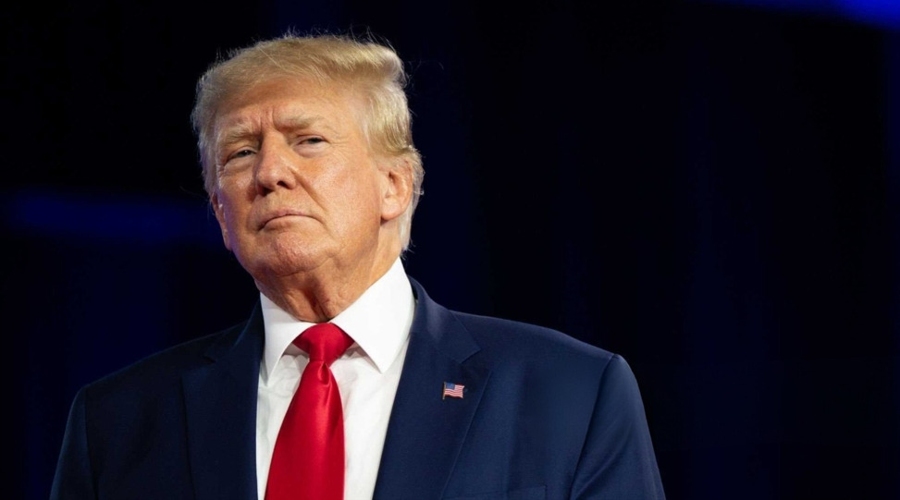
Tech bosses lauded Trump and promised massive US buildouts.
Policy access beats public distance for most Big Tech leaders despite US political divide.
Musk said he was invited, did not attend, and looked irked.
Trump received more than a healthy dose of praise.
At a worshipful State Dining Room, Big Tech courted policy access,
celebrated a lighter regulatory touch, and flashed trillion-dollar ambitions.
Elon Musk stayed away and stayed salty.
A New Courtship Ritual at Dinner
Thursday night’s White House dinner delivered a simple message from
Silicon Valley to Washington: we can play nice when it pays. Cameras rolled as
top tech figures, from those specializing in social media, artificial
intelligence (AI) and more, took turns thanking the president and talking up
American investment, an optics-perfect scene in which power met money and both
smiled for the record. The performance element was the point, and everyone hit
their mark.
Meta founder Mark Zuckerberg, Apple CEO Tim Cook, Microsoft
founder Bill Gates, OpenAI founder Sam Altman, Google CEO Sundar Pichai and
Microsoft CEO Satya Nadella, were among the attendees.
WATCH LIVE: President Trump hosts top tech CEOs at White House dinner https://t.co/5DZXKjDAJH
Mark Zuckerberg sat to the president’s right and talked about “huge
investments,” while name-checking Meta’s plan to spend at least $600
billion through 2028 on U.S. data centers and infrastructure. If regulatory
vibes stay friendly, that hyperscale budget becomes a moat. It also becomes
leverage in every conversation about energy, zoning, and tax incentives that
touch those builds.
Altman’s Trump Applause Line, Gates’ Gratitude
Open AI CEO Sam Altman praised Trump's vision (Creative Commons - TechCrunch).
OpenAI’s Sam Altman thanked Trump for being a “pro-business,
pro-innovation president,” saying, "It's a very refreshing change. ... I
think it's going to set us up for a long period of leading the world, and that
wouldn't be happening without your leadership." Bill Gates offered public
appreciation too, a genteel nod that doubles as a signal to agencies and
appropriators who will shape AI’s future. The room’s mood said the quiet part
out loud: charm the policymaker, de-risk the roadmap.
Policy Small Talk with Very Large Consequences
The choreography may be ceremonial, but the agenda is not. There’s a
need to address the raw power, and legislation, needed to power the next wave
of giant data centers, as well as the bureaucratic snags that slow grid
hookups. Those nuts-and-bolts fixes are worth far more to these companies than
any single handshake photo.
Proud to be at the White House today attending the AI Education Task Force meeting led by @FLOTUS. @AMD is proud to expand our commitment to AI Education through new AI Learning Labs and open source courses that will give students, educators and researchers hands-on experience… pic.twitter.com/qbpMEQRj0n
Tech
wants a light regulatory touch on AI. That pitch landed alongside the
reality that the current FTC chair, Andrew Ferguson, is a vocal Big Tech
critic. Translation for the dinner crowd: play nice in public, push hard in
private, and hope the referees swallow the whistle.
Musk, Invited, Still Unamused
I was invited, but unfortunately could not attend. A representative of mine will be there.
One billionaire did not attend the ball. Elon Musk said on X he was
invited, could not attend, and sent no vibes beyond the familiar posture of
wounded detachment. Given his recent season as an insider, the absence is loud.
The rest of the class showed up, smiled, and banked IOUs. Musk stayed outside,
where the applause is thinner and the leverage is smaller.
The Soft Power Math
For the CEOs, this is not about likes, it is about permissions and
plumbing. Licenses, interconnects, tax treatment, export allowances, spectrum,
visas, grid hookups, even the right to pour concrete on a tight timeline.
Public praise is the cheap down payment. The return shows up in a permitting
office, an appropriations subcommittee, or a tariff footnote that quietly
shapes who scales and who stalls. Though, not everyone among Trump's base will be pleased...
Gates and Zuckerbucks Oh hell no - President Trump hosts top tech CEOs at White House dinner. pic.twitter.com/n38sfvLLhp
Washington likes a narrative about jobs and national strength. Big Tech
can supply both, at least on paper, with eye-watering capex and patriotic
ribbon cuttings. In exchange it prefers clarity over crusades. Fewer surprise
rules, faster project approvals, friendlier interpretations from people who
answer the phone. Call it regulatory mood music. Get the key in the right,
predictable, business-friendly key and the orchestra will play louder.
The real action is always off camera. The dessert course becomes a
sidebar on energy capacity needs, chip supply chains, or the wording of an AI
safety memo. A single adjective in a federal guideline can move billions. That
is why everyone shows up polished and patient. Charm first, specifics later,
outcomes months from now. If the trade is flattery for facilitation, Silicon
Valley is already doing the math and the answer keeps coming back the same:
access compounds.
For more stories at the intersection of fintech, AI and more, follow
our Trending section.
At a worshipful State Dining Room, Big Tech courted policy access,
celebrated a lighter regulatory touch, and flashed trillion-dollar ambitions.
Elon Musk stayed away and stayed salty.
A New Courtship Ritual at Dinner
Thursday night’s White House dinner delivered a simple message from
Silicon Valley to Washington: we can play nice when it pays. Cameras rolled as
top tech figures, from those specializing in social media, artificial
intelligence (AI) and more, took turns thanking the president and talking up
American investment, an optics-perfect scene in which power met money and both
smiled for the record. The performance element was the point, and everyone hit
their mark.
Meta founder Mark Zuckerberg, Apple CEO Tim Cook, Microsoft
founder Bill Gates, OpenAI founder Sam Altman, Google CEO Sundar Pichai and
Microsoft CEO Satya Nadella, were among the attendees.
WATCH LIVE: President Trump hosts top tech CEOs at White House dinner https://t.co/5DZXKjDAJH
Mark Zuckerberg sat to the president’s right and talked about “huge
investments,” while name-checking Meta’s plan to spend at least $600
billion through 2028 on U.S. data centers and infrastructure. If regulatory
vibes stay friendly, that hyperscale budget becomes a moat. It also becomes
leverage in every conversation about energy, zoning, and tax incentives that
touch those builds.
Altman’s Trump Applause Line, Gates’ Gratitude
Open AI CEO Sam Altman praised Trump's vision (Creative Commons - TechCrunch).
OpenAI’s Sam Altman thanked Trump for being a “pro-business,
pro-innovation president,” saying, "It's a very refreshing change. ... I
think it's going to set us up for a long period of leading the world, and that
wouldn't be happening without your leadership." Bill Gates offered public
appreciation too, a genteel nod that doubles as a signal to agencies and
appropriators who will shape AI’s future. The room’s mood said the quiet part
out loud: charm the policymaker, de-risk the roadmap.
Policy Small Talk with Very Large Consequences
The choreography may be ceremonial, but the agenda is not. There’s a
need to address the raw power, and legislation, needed to power the next wave
of giant data centers, as well as the bureaucratic snags that slow grid
hookups. Those nuts-and-bolts fixes are worth far more to these companies than
any single handshake photo.
Proud to be at the White House today attending the AI Education Task Force meeting led by @FLOTUS. @AMD is proud to expand our commitment to AI Education through new AI Learning Labs and open source courses that will give students, educators and researchers hands-on experience… pic.twitter.com/qbpMEQRj0n
Tech
wants a light regulatory touch on AI. That pitch landed alongside the
reality that the current FTC chair, Andrew Ferguson, is a vocal Big Tech
critic. Translation for the dinner crowd: play nice in public, push hard in
private, and hope the referees swallow the whistle.
Musk, Invited, Still Unamused
I was invited, but unfortunately could not attend. A representative of mine will be there.
One billionaire did not attend the ball. Elon Musk said on X he was
invited, could not attend, and sent no vibes beyond the familiar posture of
wounded detachment. Given his recent season as an insider, the absence is loud.
The rest of the class showed up, smiled, and banked IOUs. Musk stayed outside,
where the applause is thinner and the leverage is smaller.
The Soft Power Math
For the CEOs, this is not about likes, it is about permissions and
plumbing. Licenses, interconnects, tax treatment, export allowances, spectrum,
visas, grid hookups, even the right to pour concrete on a tight timeline.
Public praise is the cheap down payment. The return shows up in a permitting
office, an appropriations subcommittee, or a tariff footnote that quietly
shapes who scales and who stalls. Though, not everyone among Trump's base will be pleased...
Gates and Zuckerbucks Oh hell no - President Trump hosts top tech CEOs at White House dinner. pic.twitter.com/n38sfvLLhp
Washington likes a narrative about jobs and national strength. Big Tech
can supply both, at least on paper, with eye-watering capex and patriotic
ribbon cuttings. In exchange it prefers clarity over crusades. Fewer surprise
rules, faster project approvals, friendlier interpretations from people who
answer the phone. Call it regulatory mood music. Get the key in the right,
predictable, business-friendly key and the orchestra will play louder.
The real action is always off camera. The dessert course becomes a
sidebar on energy capacity needs, chip supply chains, or the wording of an AI
safety memo. A single adjective in a federal guideline can move billions. That
is why everyone shows up polished and patient. Charm first, specifics later,
outcomes months from now. If the trade is flattery for facilitation, Silicon
Valley is already doing the math and the answer keeps coming back the same:
access compounds.
For more stories at the intersection of fintech, AI and more, follow
our Trending section.
Louis Parks has lived and worked in and around the Middle East for much of his professional career. He writes about the meeting of the tech and finance worlds.
Inside the Prediction Markets: $1.6B Institutional Inflow Meets a Federal Crackdown
Featured Videos
FP Markets Winner Spotlight 🏆 | Global Broker of the Year 2025 #Trading #Broker #Innovation #Shorts
FP Markets Winner Spotlight 🏆 | Global Broker of the Year 2025 #Trading #Broker #Innovation #Shorts
FP Markets Winner Spotlight 🏆 | Global Broker of the Year 2025 #Trading #Broker #Innovation #Shorts
FP Markets Winner Spotlight 🏆 | Global Broker of the Year 2025 #Trading #Broker #Innovation #Shorts
FP Markets takes the spotlight as Global Broker of the Year 2025 at the Finance Magnates Awards.
Martin Stoilov, Head of Client Experience, shares that trust, innovation, and people played a key role in the company’s success, supported by a strong foundation of integrity and client-centricity.
Following this milestone, FP Markets continues to focus on growth, technology investment, and its core values of transparency and excellence.
👉 Be part of FM Awards 2026: https://awards.financemagnates.com/#nominate
FP Markets takes the spotlight as Global Broker of the Year 2025 at the Finance Magnates Awards.
Martin Stoilov, Head of Client Experience, shares that trust, innovation, and people played a key role in the company’s success, supported by a strong foundation of integrity and client-centricity.
Following this milestone, FP Markets continues to focus on growth, technology investment, and its core values of transparency and excellence.
👉 Be part of FM Awards 2026: https://awards.financemagnates.com/#nominate
FP Markets takes the spotlight as Global Broker of the Year 2025 at the Finance Magnates Awards.
Martin Stoilov, Head of Client Experience, shares that trust, innovation, and people played a key role in the company’s success, supported by a strong foundation of integrity and client-centricity.
Following this milestone, FP Markets continues to focus on growth, technology investment, and its core values of transparency and excellence.
👉 Be part of FM Awards 2026: https://awards.financemagnates.com/#nominate
FP Markets takes the spotlight as Global Broker of the Year 2025 at the Finance Magnates Awards.
Martin Stoilov, Head of Client Experience, shares that trust, innovation, and people played a key role in the company’s success, supported by a strong foundation of integrity and client-centricity.
Following this milestone, FP Markets continues to focus on growth, technology investment, and its core values of transparency and excellence.
👉 Be part of FM Awards 2026: https://awards.financemagnates.com/#nominate
In this video, we review @HolaPrimeMarketsOfficial, a multi-asset forex and CFDs broker offering different account types, trading platforms, and flexible trading conditions.
We cover the broker’s overall offering, including account options, trading environment, platforms like MT4 and MT5, and additional services such as managed accounts and fast withdrawals.
Watch the full video to see if Hola Prime Markets fits your trading needs.
📣 Stay up to date with the latest in finance and trading. Follow Finance Magnates for industry news, insights, and global event coverage.
Connect with us:
🔗 LinkedIn: /financemagnates
👍 Facebook: /financemagnates
📸 Instagram: https://www.instagram.com/financemagnates
🐦 X: https://x.com/financemagnates
🎥 TikTok: https://www.tiktok.com/tag/financemagnates
▶️ YouTube: /@financemagnates_official
#HolaPrime #ForexBroker #CFDTrading #FinanceMagnates #Trading #Forex #BrokerReview
In this video, we review @HolaPrimeMarketsOfficial, a multi-asset forex and CFDs broker offering different account types, trading platforms, and flexible trading conditions.
We cover the broker’s overall offering, including account options, trading environment, platforms like MT4 and MT5, and additional services such as managed accounts and fast withdrawals.
Watch the full video to see if Hola Prime Markets fits your trading needs.
📣 Stay up to date with the latest in finance and trading. Follow Finance Magnates for industry news, insights, and global event coverage.
Connect with us:
🔗 LinkedIn: /financemagnates
👍 Facebook: /financemagnates
📸 Instagram: https://www.instagram.com/financemagnates
🐦 X: https://x.com/financemagnates
🎥 TikTok: https://www.tiktok.com/tag/financemagnates
▶️ YouTube: /@financemagnates_official
#HolaPrime #ForexBroker #CFDTrading #FinanceMagnates #Trading #Forex #BrokerReview
In this video, we review @HolaPrimeMarketsOfficial, a multi-asset forex and CFDs broker offering different account types, trading platforms, and flexible trading conditions.
We cover the broker’s overall offering, including account options, trading environment, platforms like MT4 and MT5, and additional services such as managed accounts and fast withdrawals.
Watch the full video to see if Hola Prime Markets fits your trading needs.
📣 Stay up to date with the latest in finance and trading. Follow Finance Magnates for industry news, insights, and global event coverage.
Connect with us:
🔗 LinkedIn: /financemagnates
👍 Facebook: /financemagnates
📸 Instagram: https://www.instagram.com/financemagnates
🐦 X: https://x.com/financemagnates
🎥 TikTok: https://www.tiktok.com/tag/financemagnates
▶️ YouTube: /@financemagnates_official
#HolaPrime #ForexBroker #CFDTrading #FinanceMagnates #Trading #Forex #BrokerReview
In this video, we review @HolaPrimeMarketsOfficial, a multi-asset forex and CFDs broker offering different account types, trading platforms, and flexible trading conditions.
We cover the broker’s overall offering, including account options, trading environment, platforms like MT4 and MT5, and additional services such as managed accounts and fast withdrawals.
Watch the full video to see if Hola Prime Markets fits your trading needs.
📣 Stay up to date with the latest in finance and trading. Follow Finance Magnates for industry news, insights, and global event coverage.
Connect with us:
🔗 LinkedIn: /financemagnates
👍 Facebook: /financemagnates
📸 Instagram: https://www.instagram.com/financemagnates
🐦 X: https://x.com/financemagnates
🎥 TikTok: https://www.tiktok.com/tag/financemagnates
▶️ YouTube: /@financemagnates_official
#HolaPrime #ForexBroker #CFDTrading #FinanceMagnates #Trading #Forex #BrokerReview
In this video, we review @HolaPrimeMarketsOfficial, a multi-asset forex and CFDs broker offering different account types, trading platforms, and flexible trading conditions.
We cover the broker’s overall offering, including account options, trading environment, platforms like MT4 and MT5, and additional services such as managed accounts and fast withdrawals.
Watch the full video to see if Hola Prime Markets fits your trading needs.
📣 Stay up to date with the latest in finance and trading. Follow Finance Magnates for industry news, insights, and global event coverage.
Connect with us:
🔗 LinkedIn: /financemagnates
👍 Facebook: /financemagnates
📸 Instagram: https://www.instagram.com/financemagnates
🐦 X: https://x.com/financemagnates
🎥 TikTok: https://www.tiktok.com/tag/financemagnates
▶️ YouTube: /@financemagnates_official
#HolaPrime #ForexBroker #CFDTrading #FinanceMagnates #Trading #Forex #BrokerReview
In this video, we review @HolaPrimeMarketsOfficial, a multi-asset forex and CFDs broker offering different account types, trading platforms, and flexible trading conditions.
We cover the broker’s overall offering, including account options, trading environment, platforms like MT4 and MT5, and additional services such as managed accounts and fast withdrawals.
Watch the full video to see if Hola Prime Markets fits your trading needs.
📣 Stay up to date with the latest in finance and trading. Follow Finance Magnates for industry news, insights, and global event coverage.
Connect with us:
🔗 LinkedIn: /financemagnates
👍 Facebook: /financemagnates
📸 Instagram: https://www.instagram.com/financemagnates
🐦 X: https://x.com/financemagnates
🎥 TikTok: https://www.tiktok.com/tag/financemagnates
▶️ YouTube: /@financemagnates_official
#HolaPrime #ForexBroker #CFDTrading #FinanceMagnates #Trading #Forex #BrokerReview
Hola Prime Review: What You Need to Know | Full Breakdown by Finance Magnates
Hola Prime Review: What You Need to Know | Full Breakdown by Finance Magnates
Hola Prime Review: What You Need to Know | Full Breakdown by Finance Magnates
Hola Prime Review: What You Need to Know | Full Breakdown by Finance Magnates
Hola Prime Review: What You Need to Know | Full Breakdown by Finance Magnates
Hola Prime Review: What You Need to Know | Full Breakdown by Finance Magnates
In this video, we review @HolaPrime_Global, a proprietary trading firm offering evaluation programs and performance-based payouts in simulated market environments.
We cover how the challenge model works, including account types, profit splits (up to 95%), trading rules, and what it takes to reach a funded account. You’ll also learn about available platforms like MT4, MT5, cTrader, and more, along with insights into payouts, support, and trading conditions.
Watch the full video to see if Hola Prime fits your trading style.
📣 Stay up to date with the latest in finance and trading. Follow Finance Magnates for industry news, insights, and global event coverage.
Connect with us:
🔗 LinkedIn: /financemagnates
👍 Facebook: /financemagnates
📸 Instagram: https://www.instagram.com/financemagnates
🐦 X: https://x.com/financemagnates
🎥 TikTok: https://www.tiktok.com/tag/financemagnates
▶️ YouTube: /@financemagnates_official
#HolaPrime #PropFirm #Trading #FinanceMagnates #Forex #FuturesTrading #TradingReview #PropFirmReview
In this video, we review @HolaPrime_Global, a proprietary trading firm offering evaluation programs and performance-based payouts in simulated market environments.
We cover how the challenge model works, including account types, profit splits (up to 95%), trading rules, and what it takes to reach a funded account. You’ll also learn about available platforms like MT4, MT5, cTrader, and more, along with insights into payouts, support, and trading conditions.
Watch the full video to see if Hola Prime fits your trading style.
📣 Stay up to date with the latest in finance and trading. Follow Finance Magnates for industry news, insights, and global event coverage.
Connect with us:
🔗 LinkedIn: /financemagnates
👍 Facebook: /financemagnates
📸 Instagram: https://www.instagram.com/financemagnates
🐦 X: https://x.com/financemagnates
🎥 TikTok: https://www.tiktok.com/tag/financemagnates
▶️ YouTube: /@financemagnates_official
#HolaPrime #PropFirm #Trading #FinanceMagnates #Forex #FuturesTrading #TradingReview #PropFirmReview
In this video, we review @HolaPrime_Global, a proprietary trading firm offering evaluation programs and performance-based payouts in simulated market environments.
We cover how the challenge model works, including account types, profit splits (up to 95%), trading rules, and what it takes to reach a funded account. You’ll also learn about available platforms like MT4, MT5, cTrader, and more, along with insights into payouts, support, and trading conditions.
Watch the full video to see if Hola Prime fits your trading style.
📣 Stay up to date with the latest in finance and trading. Follow Finance Magnates for industry news, insights, and global event coverage.
Connect with us:
🔗 LinkedIn: /financemagnates
👍 Facebook: /financemagnates
📸 Instagram: https://www.instagram.com/financemagnates
🐦 X: https://x.com/financemagnates
🎥 TikTok: https://www.tiktok.com/tag/financemagnates
▶️ YouTube: /@financemagnates_official
#HolaPrime #PropFirm #Trading #FinanceMagnates #Forex #FuturesTrading #TradingReview #PropFirmReview
In this video, we review @HolaPrime_Global, a proprietary trading firm offering evaluation programs and performance-based payouts in simulated market environments.
We cover how the challenge model works, including account types, profit splits (up to 95%), trading rules, and what it takes to reach a funded account. You’ll also learn about available platforms like MT4, MT5, cTrader, and more, along with insights into payouts, support, and trading conditions.
Watch the full video to see if Hola Prime fits your trading style.
📣 Stay up to date with the latest in finance and trading. Follow Finance Magnates for industry news, insights, and global event coverage.
Connect with us:
🔗 LinkedIn: /financemagnates
👍 Facebook: /financemagnates
📸 Instagram: https://www.instagram.com/financemagnates
🐦 X: https://x.com/financemagnates
🎥 TikTok: https://www.tiktok.com/tag/financemagnates
▶️ YouTube: /@financemagnates_official
#HolaPrime #PropFirm #Trading #FinanceMagnates #Forex #FuturesTrading #TradingReview #PropFirmReview
In this video, we review @HolaPrime_Global, a proprietary trading firm offering evaluation programs and performance-based payouts in simulated market environments.
We cover how the challenge model works, including account types, profit splits (up to 95%), trading rules, and what it takes to reach a funded account. You’ll also learn about available platforms like MT4, MT5, cTrader, and more, along with insights into payouts, support, and trading conditions.
Watch the full video to see if Hola Prime fits your trading style.
📣 Stay up to date with the latest in finance and trading. Follow Finance Magnates for industry news, insights, and global event coverage.
Connect with us:
🔗 LinkedIn: /financemagnates
👍 Facebook: /financemagnates
📸 Instagram: https://www.instagram.com/financemagnates
🐦 X: https://x.com/financemagnates
🎥 TikTok: https://www.tiktok.com/tag/financemagnates
▶️ YouTube: /@financemagnates_official
#HolaPrime #PropFirm #Trading #FinanceMagnates #Forex #FuturesTrading #TradingReview #PropFirmReview
In this video, we review @HolaPrime_Global, a proprietary trading firm offering evaluation programs and performance-based payouts in simulated market environments.
We cover how the challenge model works, including account types, profit splits (up to 95%), trading rules, and what it takes to reach a funded account. You’ll also learn about available platforms like MT4, MT5, cTrader, and more, along with insights into payouts, support, and trading conditions.
Watch the full video to see if Hola Prime fits your trading style.
📣 Stay up to date with the latest in finance and trading. Follow Finance Magnates for industry news, insights, and global event coverage.
Connect with us:
🔗 LinkedIn: /financemagnates
👍 Facebook: /financemagnates
📸 Instagram: https://www.instagram.com/financemagnates
🐦 X: https://x.com/financemagnates
🎥 TikTok: https://www.tiktok.com/tag/financemagnates
▶️ YouTube: /@financemagnates_official
#HolaPrime #PropFirm #Trading #FinanceMagnates #Forex #FuturesTrading #TradingReview #PropFirmReview
Axi Winner Spotlight 🏆 | Global Most Innovative Broker 2025 #Innovation #Trading #Fintech #Broker
Axi Winner Spotlight 🏆 | Global Most Innovative Broker 2025 #Innovation #Trading #Fintech #Broker
Axi Winner Spotlight 🏆 | Global Most Innovative Broker 2025 #Innovation #Trading #Fintech #Broker
Axi Winner Spotlight 🏆 | Global Most Innovative Broker 2025 #Innovation #Trading #Fintech #Broker
Axi Winner Spotlight 🏆 | Global Most Innovative Broker 2025 #Innovation #Trading #Fintech #Broker
Axi Winner Spotlight 🏆 | Global Most Innovative Broker 2025 #Innovation #Trading #Fintech #Broker
Axi takes the spotlight at the Finance Magnates Awards, winning Global Most Innovative Broker 2025.
Olivia Xenofontos and Ivanna Openko share how the team will feel: proud, motivated, and ready to keep delivering.
They also describe the night as well-organized, focused, and enjoyable for all.
👉 Be part of FM Awards 2026.
Axi takes the spotlight at the Finance Magnates Awards, winning Global Most Innovative Broker 2025.
Olivia Xenofontos and Ivanna Openko share how the team will feel: proud, motivated, and ready to keep delivering.
They also describe the night as well-organized, focused, and enjoyable for all.
👉 Be part of FM Awards 2026.
Axi takes the spotlight at the Finance Magnates Awards, winning Global Most Innovative Broker 2025.
Olivia Xenofontos and Ivanna Openko share how the team will feel: proud, motivated, and ready to keep delivering.
They also describe the night as well-organized, focused, and enjoyable for all.
👉 Be part of FM Awards 2026.
Axi takes the spotlight at the Finance Magnates Awards, winning Global Most Innovative Broker 2025.
Olivia Xenofontos and Ivanna Openko share how the team will feel: proud, motivated, and ready to keep delivering.
They also describe the night as well-organized, focused, and enjoyable for all.
👉 Be part of FM Awards 2026.
Axi takes the spotlight at the Finance Magnates Awards, winning Global Most Innovative Broker 2025.
Olivia Xenofontos and Ivanna Openko share how the team will feel: proud, motivated, and ready to keep delivering.
They also describe the night as well-organized, focused, and enjoyable for all.
👉 Be part of FM Awards 2026.
Axi takes the spotlight at the Finance Magnates Awards, winning Global Most Innovative Broker 2025.
Olivia Xenofontos and Ivanna Openko share how the team will feel: proud, motivated, and ready to keep delivering.
They also describe the night as well-organized, focused, and enjoyable for all.
👉 Be part of FM Awards 2026.
Recognition that matters.
Built on transparency.
Driven by the industry.
The Finance Magnates Awards 2026.
Nominations are now open.
🔗 https://awards.financemagnates.com/?utm_source=SM&utm_medium=social&utm_campaign=recognition-matters
Recognition that matters.
Built on transparency.
Driven by the industry.
The Finance Magnates Awards 2026.
Nominations are now open.
🔗 https://awards.financemagnates.com/?utm_source=SM&utm_medium=social&utm_campaign=recognition-matters
Recognition that matters.
Built on transparency.
Driven by the industry.
The Finance Magnates Awards 2026.
Nominations are now open.
🔗 https://awards.financemagnates.com/?utm_source=SM&utm_medium=social&utm_campaign=recognition-matters
Recognition that matters.
Built on transparency.
Driven by the industry.
The Finance Magnates Awards 2026.
Nominations are now open.
🔗 https://awards.financemagnates.com/?utm_source=SM&utm_medium=social&utm_campaign=recognition-matters
Recognition that matters.
Built on transparency.
Driven by the industry.
The Finance Magnates Awards 2026.
Nominations are now open.
🔗 https://awards.financemagnates.com/?utm_source=SM&utm_medium=social&utm_campaign=recognition-matters
Recognition that matters.
Built on transparency.
Driven by the industry.
The Finance Magnates Awards 2026.
Nominations are now open.
🔗 https://awards.financemagnates.com/?utm_source=SM&utm_medium=social&utm_campaign=recognition-matters