Global markets went into freefall as tariffs reignited fears of a full-blown trade war.
Bill Ackman is calling for a 90-day ceasefire on tariffs to avoid lasting economic damage.
Crypto is caught in the crossfire, with Bitcoin and XRP plummeting as panic spreads.
The Nikkei's in a spin, like all of us (Creative Commons, user Kakidai).
Nikkei, Sensex, Taiwan crash, Bitcoin gets crushed, Bill Ackman wants a timeout and Jim Cramer's "not going to panic". Welcome to
tariff tantrum week. Are we looking at another Black Monday?
When Tariffs Attack: From Sensex to the Nikkei and Beyond
If you logged into your brokerage app today and screamed, you weren’t
alone. Global markets were sucker-punched overnight as Donald Trump’s latest
round of tariffs sent a shockwave across Asia and beyond. The Sensex? Smashed.
The Nikkei? Nuked. The China stock market? Coughing up red candles like it
swallowed a firecracker.
Let’s start with the Sensex, India’s benchmark index, which
tanked 2,500 points in a single session—its biggest drop in over a year.
Traders are calling it the “Modi Meltdown,” but the real blame lies elsewhere.
Across the East China Sea, the Nikkei 225 collapsed by around
8%, its worst daily loss since the early days of COVID. And in China,
investors braced for what some financial pundits are already dubbing "Black
Monday 2.0."
China’s Ugly Monday: It’s All About Confidence (Or Lack Thereof)
Let’s zero in on China for a second, because if there’s one country
that hates losing face, it’s the one that just got hit with another round of
U.S. tariffs. Beijing announced 34% tariffs on all imports from the US and
stocks of Chinese companies listed in the US fell by 8.9% on Friday. The China
stock market opened to what local analysts are calling an “ugly
Monday,” with sectors like tech and exports taking the brunt of the damage.
When Donald Trump intentionally crashes the stock market, you don’t call it Black Monday. It’s Orange Monday. pic.twitter.com/LHCzYq7FN3
— Piyush Mittal 🇺🇸🇺🇦🇬🇪🇨🇦🟧🌊🌈 (@piyushmittal) April 7, 2025
Investors in Shenzhen and Shanghai are pricing in a prolonged trade
war, and the sentiment is grim. Traders are selling first, asking questions
never. Domestic confidence in the government's ability to retaliate without
blowing up the economy is dwindling fast.
And while Beijing hasn’t fired back just yet, make no mistake: a
response is coming. Whether it’s through counter-tariffs, currency devaluation,
or a strongly worded memo (written in bold font), China’s not going to sit this
one out.
And there ends our global tour, but if you’d like to Google, you’ll
find it’s happening everywhere.
Brokers Get Hit, Too
The shares of publicly traded online brokers are also taking a hit
due to the newly imposed tariffs. Taking a quick look at the numbers at the time of writing, it’s not
great reading for the likes of Robinhood (down 9.80%), NAGA (down 2.75%), XTB
(down 2.55%) and Plus 500 (down 1.14%) to name just a few.
If your business is involved in international trade, no matter the
type, it seems that Trump’s tariffs are causing absolute chaos.
Bill Ackman Calls for a Pause
Enter Bill Ackman, billionaire investor and part-time economic
lifeguard. He’s been sounding the alarm about the tariffs and is calling for a 90-day
pause to reassess the situation before the global economy gets tossed into a
blender.
Ackman warned that Trump’s tariff
policy is alienating business leaders and destabilizing markets. He didn’t
mince words either, saying the current approach will lead to “an economic
nuclear winter” and calling for a strategic timeout before this turns into a
self-inflicted recession.
The country is 100% behind the president on fixing a global system of tariffs that has disadvantaged the country. But, business is a confidence game and confidence depends on trust.
President @realDonaldTrump has elevated the tariff issue to the most important geopolitical…
Ackman’s not alone. According
to CNBC, other business leaders are quietly losing confidence in Trump’s
economic leadership. Publicly, they’re toeing the line. Privately? They’re
dusting off their crash helmets and updating their résumés for a move to
Zurich.
Bitcoin is No Safe Haven—It’s a Punching Bag
You’d think crypto would thrive in chaos, right? Wrong. Instead of
rising from the ashes like a digital phoenix, Bitcoin belly-flopped into the
trading week, plummeting
nearly 7% as Asian markets opened. According
to Bloomberg, BTC got caught in the “risk-off” firestorm and sold off with
everything else.
It gets worse. XRP shed 10% in just 24 hours, according to Investing.com,
while Binance users reported heavy liquidations and margin calls galore. Crypto
bros Tweeting "buy the dip" are now just waving a white flag.
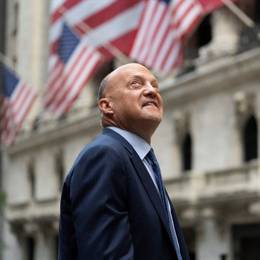
Jim Cramer, Investment Pro and Media Personality (LinkedIn).
In the midst of the madness, everyone’s favorite Cassandra, Jim Cramer –
he of “I
feel like a sucker” fame - went on CNBC to say he's “not
going to panic.” Which is exactly what someone says right before they
panic. While that might sound comforting, it’s like saying you’re not afraid of
sharks while your foot is bleeding in the water.
According to Cramer, the fundamentals are still intact, and he’s
looking for buying opportunities. Meanwhile, the rest of Wall Street is
frantically rebalancing their portfolios and adding canned food stocks to their
watchlists.
Buckle Up, It’s Going to Get Bumpy
So here we are—smack in the middle of another Trump-induced market
tantrum. Tariffs are back on the menu, crypto is crying in a corner, and even
the big-money guys like Bill Ackman are begging for a timeout. If this is a
taste of what a second Trump term looks like, investors might want to start
practicing their deep breathing exercises—or learning how to trade from a cabin
in the woods.
Nikkei, Sensex, Taiwan crash, Bitcoin gets crushed, Bill Ackman wants a timeout and Jim Cramer's "not going to panic". Welcome to
tariff tantrum week. Are we looking at another Black Monday?
When Tariffs Attack: From Sensex to the Nikkei and Beyond
If you logged into your brokerage app today and screamed, you weren’t
alone. Global markets were sucker-punched overnight as Donald Trump’s latest
round of tariffs sent a shockwave across Asia and beyond. The Sensex? Smashed.
The Nikkei? Nuked. The China stock market? Coughing up red candles like it
swallowed a firecracker.
Let’s start with the Sensex, India’s benchmark index, which
tanked 2,500 points in a single session—its biggest drop in over a year.
Traders are calling it the “Modi Meltdown,” but the real blame lies elsewhere.
Across the East China Sea, the Nikkei 225 collapsed by around
8%, its worst daily loss since the early days of COVID. And in China,
investors braced for what some financial pundits are already dubbing "Black
Monday 2.0."
China’s Ugly Monday: It’s All About Confidence (Or Lack Thereof)
Let’s zero in on China for a second, because if there’s one country
that hates losing face, it’s the one that just got hit with another round of
U.S. tariffs. Beijing announced 34% tariffs on all imports from the US and
stocks of Chinese companies listed in the US fell by 8.9% on Friday. The China
stock market opened to what local analysts are calling an “ugly
Monday,” with sectors like tech and exports taking the brunt of the damage.
When Donald Trump intentionally crashes the stock market, you don’t call it Black Monday. It’s Orange Monday. pic.twitter.com/LHCzYq7FN3
— Piyush Mittal 🇺🇸🇺🇦🇬🇪🇨🇦🟧🌊🌈 (@piyushmittal) April 7, 2025
Investors in Shenzhen and Shanghai are pricing in a prolonged trade
war, and the sentiment is grim. Traders are selling first, asking questions
never. Domestic confidence in the government's ability to retaliate without
blowing up the economy is dwindling fast.
And while Beijing hasn’t fired back just yet, make no mistake: a
response is coming. Whether it’s through counter-tariffs, currency devaluation,
or a strongly worded memo (written in bold font), China’s not going to sit this
one out.
And there ends our global tour, but if you’d like to Google, you’ll
find it’s happening everywhere.
Brokers Get Hit, Too
The shares of publicly traded online brokers are also taking a hit
due to the newly imposed tariffs. Taking a quick look at the numbers at the time of writing, it’s not
great reading for the likes of Robinhood (down 9.80%), NAGA (down 2.75%), XTB
(down 2.55%) and Plus 500 (down 1.14%) to name just a few.
If your business is involved in international trade, no matter the
type, it seems that Trump’s tariffs are causing absolute chaos.
Bill Ackman Calls for a Pause
Enter Bill Ackman, billionaire investor and part-time economic
lifeguard. He’s been sounding the alarm about the tariffs and is calling for a 90-day
pause to reassess the situation before the global economy gets tossed into a
blender.
Ackman warned that Trump’s tariff
policy is alienating business leaders and destabilizing markets. He didn’t
mince words either, saying the current approach will lead to “an economic
nuclear winter” and calling for a strategic timeout before this turns into a
self-inflicted recession.
The country is 100% behind the president on fixing a global system of tariffs that has disadvantaged the country. But, business is a confidence game and confidence depends on trust.
President @realDonaldTrump has elevated the tariff issue to the most important geopolitical…
Ackman’s not alone. According
to CNBC, other business leaders are quietly losing confidence in Trump’s
economic leadership. Publicly, they’re toeing the line. Privately? They’re
dusting off their crash helmets and updating their résumés for a move to
Zurich.
Bitcoin is No Safe Haven—It’s a Punching Bag
You’d think crypto would thrive in chaos, right? Wrong. Instead of
rising from the ashes like a digital phoenix, Bitcoin belly-flopped into the
trading week, plummeting
nearly 7% as Asian markets opened. According
to Bloomberg, BTC got caught in the “risk-off” firestorm and sold off with
everything else.
It gets worse. XRP shed 10% in just 24 hours, according to Investing.com,
while Binance users reported heavy liquidations and margin calls galore. Crypto
bros Tweeting "buy the dip" are now just waving a white flag.
Jim Cramer, Investment Pro and Media Personality (LinkedIn).
In the midst of the madness, everyone’s favorite Cassandra, Jim Cramer –
he of “I
feel like a sucker” fame - went on CNBC to say he's “not
going to panic.” Which is exactly what someone says right before they
panic. While that might sound comforting, it’s like saying you’re not afraid of
sharks while your foot is bleeding in the water.
According to Cramer, the fundamentals are still intact, and he’s
looking for buying opportunities. Meanwhile, the rest of Wall Street is
frantically rebalancing their portfolios and adding canned food stocks to their
watchlists.
Buckle Up, It’s Going to Get Bumpy
So here we are—smack in the middle of another Trump-induced market
tantrum. Tariffs are back on the menu, crypto is crying in a corner, and even
the big-money guys like Bill Ackman are begging for a timeout. If this is a
taste of what a second Trump term looks like, investors might want to start
practicing their deep breathing exercises—or learning how to trade from a cabin
in the woods.
Louis Parks has lived and worked in and around the Middle East for much of his professional career. He writes about the meeting of the tech and finance worlds.
Inside the Prediction Markets: $1.6B Institutional Inflow Meets a Federal Crackdown
Featured Videos
FP Markets Winner Spotlight 🏆 | Global Broker of the Year 2025 #Trading #Broker #Innovation #Shorts
FP Markets Winner Spotlight 🏆 | Global Broker of the Year 2025 #Trading #Broker #Innovation #Shorts
FP Markets Winner Spotlight 🏆 | Global Broker of the Year 2025 #Trading #Broker #Innovation #Shorts
FP Markets Winner Spotlight 🏆 | Global Broker of the Year 2025 #Trading #Broker #Innovation #Shorts
FP Markets takes the spotlight as Global Broker of the Year 2025 at the Finance Magnates Awards.
Martin Stoilov, Head of Client Experience, shares that trust, innovation, and people played a key role in the company’s success, supported by a strong foundation of integrity and client-centricity.
Following this milestone, FP Markets continues to focus on growth, technology investment, and its core values of transparency and excellence.
👉 Be part of FM Awards 2026: https://awards.financemagnates.com/#nominate
FP Markets takes the spotlight as Global Broker of the Year 2025 at the Finance Magnates Awards.
Martin Stoilov, Head of Client Experience, shares that trust, innovation, and people played a key role in the company’s success, supported by a strong foundation of integrity and client-centricity.
Following this milestone, FP Markets continues to focus on growth, technology investment, and its core values of transparency and excellence.
👉 Be part of FM Awards 2026: https://awards.financemagnates.com/#nominate
FP Markets takes the spotlight as Global Broker of the Year 2025 at the Finance Magnates Awards.
Martin Stoilov, Head of Client Experience, shares that trust, innovation, and people played a key role in the company’s success, supported by a strong foundation of integrity and client-centricity.
Following this milestone, FP Markets continues to focus on growth, technology investment, and its core values of transparency and excellence.
👉 Be part of FM Awards 2026: https://awards.financemagnates.com/#nominate
FP Markets takes the spotlight as Global Broker of the Year 2025 at the Finance Magnates Awards.
Martin Stoilov, Head of Client Experience, shares that trust, innovation, and people played a key role in the company’s success, supported by a strong foundation of integrity and client-centricity.
Following this milestone, FP Markets continues to focus on growth, technology investment, and its core values of transparency and excellence.
👉 Be part of FM Awards 2026: https://awards.financemagnates.com/#nominate
In this video, we review @HolaPrimeMarketsOfficial, a multi-asset forex and CFDs broker offering different account types, trading platforms, and flexible trading conditions.
We cover the broker’s overall offering, including account options, trading environment, platforms like MT4 and MT5, and additional services such as managed accounts and fast withdrawals.
Watch the full video to see if Hola Prime Markets fits your trading needs.
📣 Stay up to date with the latest in finance and trading. Follow Finance Magnates for industry news, insights, and global event coverage.
Connect with us:
🔗 LinkedIn: /financemagnates
👍 Facebook: /financemagnates
📸 Instagram: https://www.instagram.com/financemagnates
🐦 X: https://x.com/financemagnates
🎥 TikTok: https://www.tiktok.com/tag/financemagnates
▶️ YouTube: /@financemagnates_official
#HolaPrime #ForexBroker #CFDTrading #FinanceMagnates #Trading #Forex #BrokerReview
In this video, we review @HolaPrimeMarketsOfficial, a multi-asset forex and CFDs broker offering different account types, trading platforms, and flexible trading conditions.
We cover the broker’s overall offering, including account options, trading environment, platforms like MT4 and MT5, and additional services such as managed accounts and fast withdrawals.
Watch the full video to see if Hola Prime Markets fits your trading needs.
📣 Stay up to date with the latest in finance and trading. Follow Finance Magnates for industry news, insights, and global event coverage.
Connect with us:
🔗 LinkedIn: /financemagnates
👍 Facebook: /financemagnates
📸 Instagram: https://www.instagram.com/financemagnates
🐦 X: https://x.com/financemagnates
🎥 TikTok: https://www.tiktok.com/tag/financemagnates
▶️ YouTube: /@financemagnates_official
#HolaPrime #ForexBroker #CFDTrading #FinanceMagnates #Trading #Forex #BrokerReview
In this video, we review @HolaPrimeMarketsOfficial, a multi-asset forex and CFDs broker offering different account types, trading platforms, and flexible trading conditions.
We cover the broker’s overall offering, including account options, trading environment, platforms like MT4 and MT5, and additional services such as managed accounts and fast withdrawals.
Watch the full video to see if Hola Prime Markets fits your trading needs.
📣 Stay up to date with the latest in finance and trading. Follow Finance Magnates for industry news, insights, and global event coverage.
Connect with us:
🔗 LinkedIn: /financemagnates
👍 Facebook: /financemagnates
📸 Instagram: https://www.instagram.com/financemagnates
🐦 X: https://x.com/financemagnates
🎥 TikTok: https://www.tiktok.com/tag/financemagnates
▶️ YouTube: /@financemagnates_official
#HolaPrime #ForexBroker #CFDTrading #FinanceMagnates #Trading #Forex #BrokerReview
In this video, we review @HolaPrimeMarketsOfficial, a multi-asset forex and CFDs broker offering different account types, trading platforms, and flexible trading conditions.
We cover the broker’s overall offering, including account options, trading environment, platforms like MT4 and MT5, and additional services such as managed accounts and fast withdrawals.
Watch the full video to see if Hola Prime Markets fits your trading needs.
📣 Stay up to date with the latest in finance and trading. Follow Finance Magnates for industry news, insights, and global event coverage.
Connect with us:
🔗 LinkedIn: /financemagnates
👍 Facebook: /financemagnates
📸 Instagram: https://www.instagram.com/financemagnates
🐦 X: https://x.com/financemagnates
🎥 TikTok: https://www.tiktok.com/tag/financemagnates
▶️ YouTube: /@financemagnates_official
#HolaPrime #ForexBroker #CFDTrading #FinanceMagnates #Trading #Forex #BrokerReview
In this video, we review @HolaPrimeMarketsOfficial, a multi-asset forex and CFDs broker offering different account types, trading platforms, and flexible trading conditions.
We cover the broker’s overall offering, including account options, trading environment, platforms like MT4 and MT5, and additional services such as managed accounts and fast withdrawals.
Watch the full video to see if Hola Prime Markets fits your trading needs.
📣 Stay up to date with the latest in finance and trading. Follow Finance Magnates for industry news, insights, and global event coverage.
Connect with us:
🔗 LinkedIn: /financemagnates
👍 Facebook: /financemagnates
📸 Instagram: https://www.instagram.com/financemagnates
🐦 X: https://x.com/financemagnates
🎥 TikTok: https://www.tiktok.com/tag/financemagnates
▶️ YouTube: /@financemagnates_official
#HolaPrime #ForexBroker #CFDTrading #FinanceMagnates #Trading #Forex #BrokerReview
In this video, we review @HolaPrimeMarketsOfficial, a multi-asset forex and CFDs broker offering different account types, trading platforms, and flexible trading conditions.
We cover the broker’s overall offering, including account options, trading environment, platforms like MT4 and MT5, and additional services such as managed accounts and fast withdrawals.
Watch the full video to see if Hola Prime Markets fits your trading needs.
📣 Stay up to date with the latest in finance and trading. Follow Finance Magnates for industry news, insights, and global event coverage.
Connect with us:
🔗 LinkedIn: /financemagnates
👍 Facebook: /financemagnates
📸 Instagram: https://www.instagram.com/financemagnates
🐦 X: https://x.com/financemagnates
🎥 TikTok: https://www.tiktok.com/tag/financemagnates
▶️ YouTube: /@financemagnates_official
#HolaPrime #ForexBroker #CFDTrading #FinanceMagnates #Trading #Forex #BrokerReview
Hola Prime Review: What You Need to Know | Full Breakdown by Finance Magnates
Hola Prime Review: What You Need to Know | Full Breakdown by Finance Magnates
Hola Prime Review: What You Need to Know | Full Breakdown by Finance Magnates
Hola Prime Review: What You Need to Know | Full Breakdown by Finance Magnates
Hola Prime Review: What You Need to Know | Full Breakdown by Finance Magnates
Hola Prime Review: What You Need to Know | Full Breakdown by Finance Magnates
In this video, we review @HolaPrime_Global, a proprietary trading firm offering evaluation programs and performance-based payouts in simulated market environments.
We cover how the challenge model works, including account types, profit splits (up to 95%), trading rules, and what it takes to reach a funded account. You’ll also learn about available platforms like MT4, MT5, cTrader, and more, along with insights into payouts, support, and trading conditions.
Watch the full video to see if Hola Prime fits your trading style.
📣 Stay up to date with the latest in finance and trading. Follow Finance Magnates for industry news, insights, and global event coverage.
Connect with us:
🔗 LinkedIn: /financemagnates
👍 Facebook: /financemagnates
📸 Instagram: https://www.instagram.com/financemagnates
🐦 X: https://x.com/financemagnates
🎥 TikTok: https://www.tiktok.com/tag/financemagnates
▶️ YouTube: /@financemagnates_official
#HolaPrime #PropFirm #Trading #FinanceMagnates #Forex #FuturesTrading #TradingReview #PropFirmReview
In this video, we review @HolaPrime_Global, a proprietary trading firm offering evaluation programs and performance-based payouts in simulated market environments.
We cover how the challenge model works, including account types, profit splits (up to 95%), trading rules, and what it takes to reach a funded account. You’ll also learn about available platforms like MT4, MT5, cTrader, and more, along with insights into payouts, support, and trading conditions.
Watch the full video to see if Hola Prime fits your trading style.
📣 Stay up to date with the latest in finance and trading. Follow Finance Magnates for industry news, insights, and global event coverage.
Connect with us:
🔗 LinkedIn: /financemagnates
👍 Facebook: /financemagnates
📸 Instagram: https://www.instagram.com/financemagnates
🐦 X: https://x.com/financemagnates
🎥 TikTok: https://www.tiktok.com/tag/financemagnates
▶️ YouTube: /@financemagnates_official
#HolaPrime #PropFirm #Trading #FinanceMagnates #Forex #FuturesTrading #TradingReview #PropFirmReview
In this video, we review @HolaPrime_Global, a proprietary trading firm offering evaluation programs and performance-based payouts in simulated market environments.
We cover how the challenge model works, including account types, profit splits (up to 95%), trading rules, and what it takes to reach a funded account. You’ll also learn about available platforms like MT4, MT5, cTrader, and more, along with insights into payouts, support, and trading conditions.
Watch the full video to see if Hola Prime fits your trading style.
📣 Stay up to date with the latest in finance and trading. Follow Finance Magnates for industry news, insights, and global event coverage.
Connect with us:
🔗 LinkedIn: /financemagnates
👍 Facebook: /financemagnates
📸 Instagram: https://www.instagram.com/financemagnates
🐦 X: https://x.com/financemagnates
🎥 TikTok: https://www.tiktok.com/tag/financemagnates
▶️ YouTube: /@financemagnates_official
#HolaPrime #PropFirm #Trading #FinanceMagnates #Forex #FuturesTrading #TradingReview #PropFirmReview
In this video, we review @HolaPrime_Global, a proprietary trading firm offering evaluation programs and performance-based payouts in simulated market environments.
We cover how the challenge model works, including account types, profit splits (up to 95%), trading rules, and what it takes to reach a funded account. You’ll also learn about available platforms like MT4, MT5, cTrader, and more, along with insights into payouts, support, and trading conditions.
Watch the full video to see if Hola Prime fits your trading style.
📣 Stay up to date with the latest in finance and trading. Follow Finance Magnates for industry news, insights, and global event coverage.
Connect with us:
🔗 LinkedIn: /financemagnates
👍 Facebook: /financemagnates
📸 Instagram: https://www.instagram.com/financemagnates
🐦 X: https://x.com/financemagnates
🎥 TikTok: https://www.tiktok.com/tag/financemagnates
▶️ YouTube: /@financemagnates_official
#HolaPrime #PropFirm #Trading #FinanceMagnates #Forex #FuturesTrading #TradingReview #PropFirmReview
In this video, we review @HolaPrime_Global, a proprietary trading firm offering evaluation programs and performance-based payouts in simulated market environments.
We cover how the challenge model works, including account types, profit splits (up to 95%), trading rules, and what it takes to reach a funded account. You’ll also learn about available platforms like MT4, MT5, cTrader, and more, along with insights into payouts, support, and trading conditions.
Watch the full video to see if Hola Prime fits your trading style.
📣 Stay up to date with the latest in finance and trading. Follow Finance Magnates for industry news, insights, and global event coverage.
Connect with us:
🔗 LinkedIn: /financemagnates
👍 Facebook: /financemagnates
📸 Instagram: https://www.instagram.com/financemagnates
🐦 X: https://x.com/financemagnates
🎥 TikTok: https://www.tiktok.com/tag/financemagnates
▶️ YouTube: /@financemagnates_official
#HolaPrime #PropFirm #Trading #FinanceMagnates #Forex #FuturesTrading #TradingReview #PropFirmReview
In this video, we review @HolaPrime_Global, a proprietary trading firm offering evaluation programs and performance-based payouts in simulated market environments.
We cover how the challenge model works, including account types, profit splits (up to 95%), trading rules, and what it takes to reach a funded account. You’ll also learn about available platforms like MT4, MT5, cTrader, and more, along with insights into payouts, support, and trading conditions.
Watch the full video to see if Hola Prime fits your trading style.
📣 Stay up to date with the latest in finance and trading. Follow Finance Magnates for industry news, insights, and global event coverage.
Connect with us:
🔗 LinkedIn: /financemagnates
👍 Facebook: /financemagnates
📸 Instagram: https://www.instagram.com/financemagnates
🐦 X: https://x.com/financemagnates
🎥 TikTok: https://www.tiktok.com/tag/financemagnates
▶️ YouTube: /@financemagnates_official
#HolaPrime #PropFirm #Trading #FinanceMagnates #Forex #FuturesTrading #TradingReview #PropFirmReview
Axi Winner Spotlight 🏆 | Global Most Innovative Broker 2025 #Innovation #Trading #Fintech #Broker
Axi Winner Spotlight 🏆 | Global Most Innovative Broker 2025 #Innovation #Trading #Fintech #Broker
Axi Winner Spotlight 🏆 | Global Most Innovative Broker 2025 #Innovation #Trading #Fintech #Broker
Axi Winner Spotlight 🏆 | Global Most Innovative Broker 2025 #Innovation #Trading #Fintech #Broker
Axi Winner Spotlight 🏆 | Global Most Innovative Broker 2025 #Innovation #Trading #Fintech #Broker
Axi Winner Spotlight 🏆 | Global Most Innovative Broker 2025 #Innovation #Trading #Fintech #Broker
Axi takes the spotlight at the Finance Magnates Awards, winning Global Most Innovative Broker 2025.
Olivia Xenofontos and Ivanna Openko share how the team will feel: proud, motivated, and ready to keep delivering.
They also describe the night as well-organized, focused, and enjoyable for all.
👉 Be part of FM Awards 2026.
Axi takes the spotlight at the Finance Magnates Awards, winning Global Most Innovative Broker 2025.
Olivia Xenofontos and Ivanna Openko share how the team will feel: proud, motivated, and ready to keep delivering.
They also describe the night as well-organized, focused, and enjoyable for all.
👉 Be part of FM Awards 2026.
Axi takes the spotlight at the Finance Magnates Awards, winning Global Most Innovative Broker 2025.
Olivia Xenofontos and Ivanna Openko share how the team will feel: proud, motivated, and ready to keep delivering.
They also describe the night as well-organized, focused, and enjoyable for all.
👉 Be part of FM Awards 2026.
Axi takes the spotlight at the Finance Magnates Awards, winning Global Most Innovative Broker 2025.
Olivia Xenofontos and Ivanna Openko share how the team will feel: proud, motivated, and ready to keep delivering.
They also describe the night as well-organized, focused, and enjoyable for all.
👉 Be part of FM Awards 2026.
Axi takes the spotlight at the Finance Magnates Awards, winning Global Most Innovative Broker 2025.
Olivia Xenofontos and Ivanna Openko share how the team will feel: proud, motivated, and ready to keep delivering.
They also describe the night as well-organized, focused, and enjoyable for all.
👉 Be part of FM Awards 2026.
Axi takes the spotlight at the Finance Magnates Awards, winning Global Most Innovative Broker 2025.
Olivia Xenofontos and Ivanna Openko share how the team will feel: proud, motivated, and ready to keep delivering.
They also describe the night as well-organized, focused, and enjoyable for all.
👉 Be part of FM Awards 2026.
Recognition that matters.
Built on transparency.
Driven by the industry.
The Finance Magnates Awards 2026.
Nominations are now open.
🔗 https://awards.financemagnates.com/?utm_source=SM&utm_medium=social&utm_campaign=recognition-matters
Recognition that matters.
Built on transparency.
Driven by the industry.
The Finance Magnates Awards 2026.
Nominations are now open.
🔗 https://awards.financemagnates.com/?utm_source=SM&utm_medium=social&utm_campaign=recognition-matters
Recognition that matters.
Built on transparency.
Driven by the industry.
The Finance Magnates Awards 2026.
Nominations are now open.
🔗 https://awards.financemagnates.com/?utm_source=SM&utm_medium=social&utm_campaign=recognition-matters
Recognition that matters.
Built on transparency.
Driven by the industry.
The Finance Magnates Awards 2026.
Nominations are now open.
🔗 https://awards.financemagnates.com/?utm_source=SM&utm_medium=social&utm_campaign=recognition-matters
Recognition that matters.
Built on transparency.
Driven by the industry.
The Finance Magnates Awards 2026.
Nominations are now open.
🔗 https://awards.financemagnates.com/?utm_source=SM&utm_medium=social&utm_campaign=recognition-matters
Recognition that matters.
Built on transparency.
Driven by the industry.
The Finance Magnates Awards 2026.
Nominations are now open.
🔗 https://awards.financemagnates.com/?utm_source=SM&utm_medium=social&utm_campaign=recognition-matters