Ford is scaling back its EV ambitions, canceling large electric models.
The automaker plans to convert EV battery plants into energy-storage manufacturing hubs.
Hybrid and extended-range powertrains will now complement smaller, lower-cost EVs.
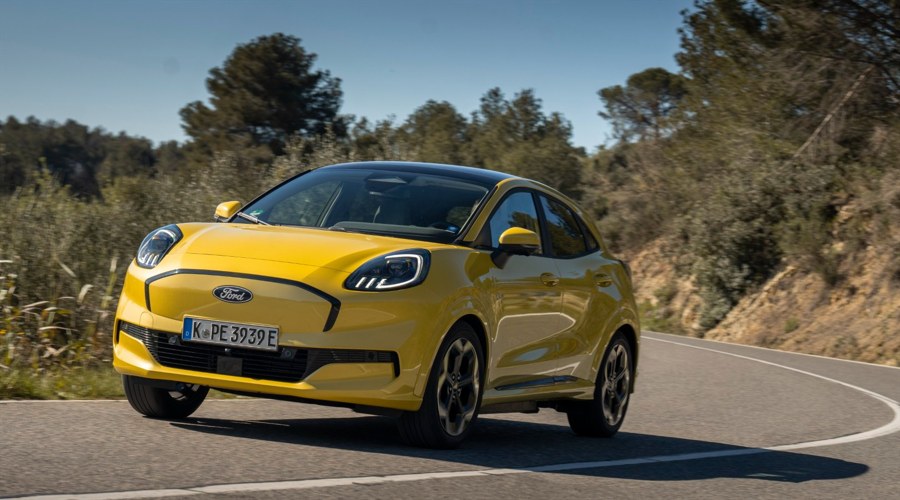
Ford will focus on smaller EVs, such as the Puma Gen-E, and hybrids (Ford).
Ford retreats from large EVs toward hybrids and energy-storage systems for AI data
centers and infrastructure in a major strategic overhaul.
The EV Retreat Begins
Ford has signaled a dramatic shift in its electrification strategy,
stepping away from big, fully electric vehicles (EVs) that have struggled to find
buyers. Though once positioned as a challenger to Tesla and the vanguard of the
electric pickup revolution, Ford is pivoting hard. The company will take a $19.5
billion hit as it scales back its EV investments, canceling several planned
electric models and rethinking its approach to electrified mobility.
A centerpiece of this retreat is the decision to discontinue big
battery-electric vehicles such as the F-150 Lightning in their current form and
other large EV plans that have failed to meet sales expectations or financial
viability.
Ford CEO Jim Farley and other executives have framed this as a customer-driven
shift, noting that demand for large EVs has collapsed while interest in
hybrids and extended-range options has grown. Farley said on Monday that the decision reflected a sharp contraction in the US EV market and a shift in buyer behavior.
“The EV market in the US went from 12% of the industry to only five, and that really, in the end, was the big decider for us,” he said.
Repurposing Battery Factories for AI-Related Energy Storage
Here’s where things get interesting. Instead of letting idle EV battery
capacity go to waste, Ford is repurposing key battery plants to build energy-storage
systems aimed at supporting artificial intelligence (AI)-related data centers and the electrical grid.
The company’s Glendale, Kentucky battery facility originally dedicated
to electric vehicle production will be transformed into a hub for large-scale
battery energy storage systems (BESS) that can serve
commercial AI data centers and infrastructure customers. Ford plans to deploy at
least 20 gigawatt-hours of storage capacity by the end of 2027, leveraging
existing industrial expertise and underutilized battery manufacturing capacity.
Ford is getting into the battery storage business.
Instead of using batteries for large EVs, Ford will repurpose that capacity to power data centers and support the electric grid.
There’s also a nod to residential applications: Ford will use other
facilities to make smaller energy-storage units for homes, rounding out a
broader portfolio of storage solutions.
A New Powertrain Mix: Hybrids, EREVs, and Affordable EVs
Ford’s retreat from heavy EV bets does not equate to abandoning
electrification entirely. Rather, it’s being pitched as a strategic realignment
toward electrified vehicles that make more financial sense for both the company
and typical buyers.
Hybrids: Vehicles combining internal combustion engines with electric
motors to improve fuel economy and lower costs.
Extended-range EVs (EREVs): Electric vehicles with onboard generators
(often gasoline engines) that recharge batteries on the go, reducing range
anxiety.
Smaller, affordable BEVs: New EVs built on Ford’s Universal EV Platform
aimed at price-sensitive segments, including a midsize electric truck for 2027.
By 2030, Ford expects roughly 50 percent of its global sales mix to
consist of hybrids, EREVs, and fully electric vehicles, compared with just 17
percent today.
Why This Matters
Market Reality Check
Ford’s pivot reflects a broader reality: sales of large, expensive EVs
have softened significantly as US federal incentives expire, material costs
remain high, and consumer preferences shift toward more flexible options.
By scaling back and taking a substantial hit where necessary, Ford is
acknowledging that the EV market’s early hype hasn’t aligned with the economic
reality of mainstream buyers. Hybrids and EREVs, while perhaps less
headline-grabbing, appeal to customers who want better fuel economy without the
compromises or cost premiums of large BEVs.
AI Data Centers and Energy Infrastructure: A New Frontier
Ford’s bold energy-storage play could turn out to be one of the most
consequential aspects of this strategy. Demand for batteries to support data
centers, utilities, and grid stabilization is surging thanks to AI growth,
electrification of industry, and renewable integration. Ford’s decision to lean
into this market uses its battery expertise in a way that might deliver higher
returns than competing in an oversupplied EV segment.
That puts the company in direct competition with established
energy-storage players and even Tesla, which has built a multi-billion-dollar
storage business from Megapacks
and related products.
Legacy Meets Reinvention
There’s a broader narrative here, too. Ford, a company that helped
usher in mass-market automobiles more than a century ago, is now reinventing
parts of its business to address the energy needs of tomorrow. Whether this bet
on energy storage pays off remains to be seen, but it’s a far cry from the
all-in EV strategy of just a few years ago.
Looking Ahead
Ford’s strategic pivot underscores the unpredictable nature of the auto
industry’s electrification journey. With underperforming EV models being
shelved, hybrids gaining traction, and new energy-storage ambitions taking
shape, the company is charting a course that blends legacy strength with
forward-looking growth sectors.
Ford retreats from large EVs toward hybrids and energy-storage systems for AI data
centers and infrastructure in a major strategic overhaul.
The EV Retreat Begins
Ford has signaled a dramatic shift in its electrification strategy,
stepping away from big, fully electric vehicles (EVs) that have struggled to find
buyers. Though once positioned as a challenger to Tesla and the vanguard of the
electric pickup revolution, Ford is pivoting hard. The company will take a $19.5
billion hit as it scales back its EV investments, canceling several planned
electric models and rethinking its approach to electrified mobility.
A centerpiece of this retreat is the decision to discontinue big
battery-electric vehicles such as the F-150 Lightning in their current form and
other large EV plans that have failed to meet sales expectations or financial
viability.
Ford CEO Jim Farley and other executives have framed this as a customer-driven
shift, noting that demand for large EVs has collapsed while interest in
hybrids and extended-range options has grown. Farley said on Monday that the decision reflected a sharp contraction in the US EV market and a shift in buyer behavior.
“The EV market in the US went from 12% of the industry to only five, and that really, in the end, was the big decider for us,” he said.
Repurposing Battery Factories for AI-Related Energy Storage
Here’s where things get interesting. Instead of letting idle EV battery
capacity go to waste, Ford is repurposing key battery plants to build energy-storage
systems aimed at supporting artificial intelligence (AI)-related data centers and the electrical grid.
The company’s Glendale, Kentucky battery facility originally dedicated
to electric vehicle production will be transformed into a hub for large-scale
battery energy storage systems (BESS) that can serve
commercial AI data centers and infrastructure customers. Ford plans to deploy at
least 20 gigawatt-hours of storage capacity by the end of 2027, leveraging
existing industrial expertise and underutilized battery manufacturing capacity.
Ford is getting into the battery storage business.
Instead of using batteries for large EVs, Ford will repurpose that capacity to power data centers and support the electric grid.
There’s also a nod to residential applications: Ford will use other
facilities to make smaller energy-storage units for homes, rounding out a
broader portfolio of storage solutions.
A New Powertrain Mix: Hybrids, EREVs, and Affordable EVs
Ford’s retreat from heavy EV bets does not equate to abandoning
electrification entirely. Rather, it’s being pitched as a strategic realignment
toward electrified vehicles that make more financial sense for both the company
and typical buyers.
Hybrids: Vehicles combining internal combustion engines with electric
motors to improve fuel economy and lower costs.
Extended-range EVs (EREVs): Electric vehicles with onboard generators
(often gasoline engines) that recharge batteries on the go, reducing range
anxiety.
Smaller, affordable BEVs: New EVs built on Ford’s Universal EV Platform
aimed at price-sensitive segments, including a midsize electric truck for 2027.
By 2030, Ford expects roughly 50 percent of its global sales mix to
consist of hybrids, EREVs, and fully electric vehicles, compared with just 17
percent today.
Why This Matters
Market Reality Check
Ford’s pivot reflects a broader reality: sales of large, expensive EVs
have softened significantly as US federal incentives expire, material costs
remain high, and consumer preferences shift toward more flexible options.
By scaling back and taking a substantial hit where necessary, Ford is
acknowledging that the EV market’s early hype hasn’t aligned with the economic
reality of mainstream buyers. Hybrids and EREVs, while perhaps less
headline-grabbing, appeal to customers who want better fuel economy without the
compromises or cost premiums of large BEVs.
AI Data Centers and Energy Infrastructure: A New Frontier
Ford’s bold energy-storage play could turn out to be one of the most
consequential aspects of this strategy. Demand for batteries to support data
centers, utilities, and grid stabilization is surging thanks to AI growth,
electrification of industry, and renewable integration. Ford’s decision to lean
into this market uses its battery expertise in a way that might deliver higher
returns than competing in an oversupplied EV segment.
That puts the company in direct competition with established
energy-storage players and even Tesla, which has built a multi-billion-dollar
storage business from Megapacks
and related products.
Legacy Meets Reinvention
There’s a broader narrative here, too. Ford, a company that helped
usher in mass-market automobiles more than a century ago, is now reinventing
parts of its business to address the energy needs of tomorrow. Whether this bet
on energy storage pays off remains to be seen, but it’s a far cry from the
all-in EV strategy of just a few years ago.
Looking Ahead
Ford’s strategic pivot underscores the unpredictable nature of the auto
industry’s electrification journey. With underperforming EV models being
shelved, hybrids gaining traction, and new energy-storage ambitions taking
shape, the company is charting a course that blends legacy strength with
forward-looking growth sectors.
Louis Parks has lived and worked in and around the Middle East for much of his professional career. He writes about the meeting of the tech and finance worlds.
Apple Removes Dorsey’s Bitchat in China Citing "Social Mobilization Rules"
Featured Videos
FP Markets Winner Spotlight 🏆 | Global Broker of the Year 2025 #Trading #Broker #Innovation #Shorts
FP Markets Winner Spotlight 🏆 | Global Broker of the Year 2025 #Trading #Broker #Innovation #Shorts
FP Markets Winner Spotlight 🏆 | Global Broker of the Year 2025 #Trading #Broker #Innovation #Shorts
FP Markets Winner Spotlight 🏆 | Global Broker of the Year 2025 #Trading #Broker #Innovation #Shorts
FP Markets takes the spotlight as Global Broker of the Year 2025 at the Finance Magnates Awards.
Martin Stoilov, Head of Client Experience, shares that trust, innovation, and people played a key role in the company’s success, supported by a strong foundation of integrity and client-centricity.
Following this milestone, FP Markets continues to focus on growth, technology investment, and its core values of transparency and excellence.
👉 Be part of FM Awards 2026: https://awards.financemagnates.com/#nominate
FP Markets takes the spotlight as Global Broker of the Year 2025 at the Finance Magnates Awards.
Martin Stoilov, Head of Client Experience, shares that trust, innovation, and people played a key role in the company’s success, supported by a strong foundation of integrity and client-centricity.
Following this milestone, FP Markets continues to focus on growth, technology investment, and its core values of transparency and excellence.
👉 Be part of FM Awards 2026: https://awards.financemagnates.com/#nominate
FP Markets takes the spotlight as Global Broker of the Year 2025 at the Finance Magnates Awards.
Martin Stoilov, Head of Client Experience, shares that trust, innovation, and people played a key role in the company’s success, supported by a strong foundation of integrity and client-centricity.
Following this milestone, FP Markets continues to focus on growth, technology investment, and its core values of transparency and excellence.
👉 Be part of FM Awards 2026: https://awards.financemagnates.com/#nominate
FP Markets takes the spotlight as Global Broker of the Year 2025 at the Finance Magnates Awards.
Martin Stoilov, Head of Client Experience, shares that trust, innovation, and people played a key role in the company’s success, supported by a strong foundation of integrity and client-centricity.
Following this milestone, FP Markets continues to focus on growth, technology investment, and its core values of transparency and excellence.
👉 Be part of FM Awards 2026: https://awards.financemagnates.com/#nominate
In this video, we review @HolaPrimeMarketsOfficial, a multi-asset forex and CFDs broker offering different account types, trading platforms, and flexible trading conditions.
We cover the broker’s overall offering, including account options, trading environment, platforms like MT4 and MT5, and additional services such as managed accounts and fast withdrawals.
Watch the full video to see if Hola Prime Markets fits your trading needs.
📣 Stay up to date with the latest in finance and trading. Follow Finance Magnates for industry news, insights, and global event coverage.
Connect with us:
🔗 LinkedIn: /financemagnates
👍 Facebook: /financemagnates
📸 Instagram: https://www.instagram.com/financemagnates
🐦 X: https://x.com/financemagnates
🎥 TikTok: https://www.tiktok.com/tag/financemagnates
▶️ YouTube: /@financemagnates_official
#HolaPrime #ForexBroker #CFDTrading #FinanceMagnates #Trading #Forex #BrokerReview
In this video, we review @HolaPrimeMarketsOfficial, a multi-asset forex and CFDs broker offering different account types, trading platforms, and flexible trading conditions.
We cover the broker’s overall offering, including account options, trading environment, platforms like MT4 and MT5, and additional services such as managed accounts and fast withdrawals.
Watch the full video to see if Hola Prime Markets fits your trading needs.
📣 Stay up to date with the latest in finance and trading. Follow Finance Magnates for industry news, insights, and global event coverage.
Connect with us:
🔗 LinkedIn: /financemagnates
👍 Facebook: /financemagnates
📸 Instagram: https://www.instagram.com/financemagnates
🐦 X: https://x.com/financemagnates
🎥 TikTok: https://www.tiktok.com/tag/financemagnates
▶️ YouTube: /@financemagnates_official
#HolaPrime #ForexBroker #CFDTrading #FinanceMagnates #Trading #Forex #BrokerReview
In this video, we review @HolaPrimeMarketsOfficial, a multi-asset forex and CFDs broker offering different account types, trading platforms, and flexible trading conditions.
We cover the broker’s overall offering, including account options, trading environment, platforms like MT4 and MT5, and additional services such as managed accounts and fast withdrawals.
Watch the full video to see if Hola Prime Markets fits your trading needs.
📣 Stay up to date with the latest in finance and trading. Follow Finance Magnates for industry news, insights, and global event coverage.
Connect with us:
🔗 LinkedIn: /financemagnates
👍 Facebook: /financemagnates
📸 Instagram: https://www.instagram.com/financemagnates
🐦 X: https://x.com/financemagnates
🎥 TikTok: https://www.tiktok.com/tag/financemagnates
▶️ YouTube: /@financemagnates_official
#HolaPrime #ForexBroker #CFDTrading #FinanceMagnates #Trading #Forex #BrokerReview
In this video, we review @HolaPrimeMarketsOfficial, a multi-asset forex and CFDs broker offering different account types, trading platforms, and flexible trading conditions.
We cover the broker’s overall offering, including account options, trading environment, platforms like MT4 and MT5, and additional services such as managed accounts and fast withdrawals.
Watch the full video to see if Hola Prime Markets fits your trading needs.
📣 Stay up to date with the latest in finance and trading. Follow Finance Magnates for industry news, insights, and global event coverage.
Connect with us:
🔗 LinkedIn: /financemagnates
👍 Facebook: /financemagnates
📸 Instagram: https://www.instagram.com/financemagnates
🐦 X: https://x.com/financemagnates
🎥 TikTok: https://www.tiktok.com/tag/financemagnates
▶️ YouTube: /@financemagnates_official
#HolaPrime #ForexBroker #CFDTrading #FinanceMagnates #Trading #Forex #BrokerReview
In this video, we review @HolaPrimeMarketsOfficial, a multi-asset forex and CFDs broker offering different account types, trading platforms, and flexible trading conditions.
We cover the broker’s overall offering, including account options, trading environment, platforms like MT4 and MT5, and additional services such as managed accounts and fast withdrawals.
Watch the full video to see if Hola Prime Markets fits your trading needs.
📣 Stay up to date with the latest in finance and trading. Follow Finance Magnates for industry news, insights, and global event coverage.
Connect with us:
🔗 LinkedIn: /financemagnates
👍 Facebook: /financemagnates
📸 Instagram: https://www.instagram.com/financemagnates
🐦 X: https://x.com/financemagnates
🎥 TikTok: https://www.tiktok.com/tag/financemagnates
▶️ YouTube: /@financemagnates_official
#HolaPrime #ForexBroker #CFDTrading #FinanceMagnates #Trading #Forex #BrokerReview
In this video, we review @HolaPrimeMarketsOfficial, a multi-asset forex and CFDs broker offering different account types, trading platforms, and flexible trading conditions.
We cover the broker’s overall offering, including account options, trading environment, platforms like MT4 and MT5, and additional services such as managed accounts and fast withdrawals.
Watch the full video to see if Hola Prime Markets fits your trading needs.
📣 Stay up to date with the latest in finance and trading. Follow Finance Magnates for industry news, insights, and global event coverage.
Connect with us:
🔗 LinkedIn: /financemagnates
👍 Facebook: /financemagnates
📸 Instagram: https://www.instagram.com/financemagnates
🐦 X: https://x.com/financemagnates
🎥 TikTok: https://www.tiktok.com/tag/financemagnates
▶️ YouTube: /@financemagnates_official
#HolaPrime #ForexBroker #CFDTrading #FinanceMagnates #Trading #Forex #BrokerReview
Hola Prime Review: What You Need to Know | Full Breakdown by Finance Magnates
Hola Prime Review: What You Need to Know | Full Breakdown by Finance Magnates
Hola Prime Review: What You Need to Know | Full Breakdown by Finance Magnates
Hola Prime Review: What You Need to Know | Full Breakdown by Finance Magnates
Hola Prime Review: What You Need to Know | Full Breakdown by Finance Magnates
Hola Prime Review: What You Need to Know | Full Breakdown by Finance Magnates
In this video, we review @HolaPrime_Global, a proprietary trading firm offering evaluation programs and performance-based payouts in simulated market environments.
We cover how the challenge model works, including account types, profit splits (up to 95%), trading rules, and what it takes to reach a funded account. You’ll also learn about available platforms like MT4, MT5, cTrader, and more, along with insights into payouts, support, and trading conditions.
Watch the full video to see if Hola Prime fits your trading style.
📣 Stay up to date with the latest in finance and trading. Follow Finance Magnates for industry news, insights, and global event coverage.
Connect with us:
🔗 LinkedIn: /financemagnates
👍 Facebook: /financemagnates
📸 Instagram: https://www.instagram.com/financemagnates
🐦 X: https://x.com/financemagnates
🎥 TikTok: https://www.tiktok.com/tag/financemagnates
▶️ YouTube: /@financemagnates_official
#HolaPrime #PropFirm #Trading #FinanceMagnates #Forex #FuturesTrading #TradingReview #PropFirmReview
In this video, we review @HolaPrime_Global, a proprietary trading firm offering evaluation programs and performance-based payouts in simulated market environments.
We cover how the challenge model works, including account types, profit splits (up to 95%), trading rules, and what it takes to reach a funded account. You’ll also learn about available platforms like MT4, MT5, cTrader, and more, along with insights into payouts, support, and trading conditions.
Watch the full video to see if Hola Prime fits your trading style.
📣 Stay up to date with the latest in finance and trading. Follow Finance Magnates for industry news, insights, and global event coverage.
Connect with us:
🔗 LinkedIn: /financemagnates
👍 Facebook: /financemagnates
📸 Instagram: https://www.instagram.com/financemagnates
🐦 X: https://x.com/financemagnates
🎥 TikTok: https://www.tiktok.com/tag/financemagnates
▶️ YouTube: /@financemagnates_official
#HolaPrime #PropFirm #Trading #FinanceMagnates #Forex #FuturesTrading #TradingReview #PropFirmReview
In this video, we review @HolaPrime_Global, a proprietary trading firm offering evaluation programs and performance-based payouts in simulated market environments.
We cover how the challenge model works, including account types, profit splits (up to 95%), trading rules, and what it takes to reach a funded account. You’ll also learn about available platforms like MT4, MT5, cTrader, and more, along with insights into payouts, support, and trading conditions.
Watch the full video to see if Hola Prime fits your trading style.
📣 Stay up to date with the latest in finance and trading. Follow Finance Magnates for industry news, insights, and global event coverage.
Connect with us:
🔗 LinkedIn: /financemagnates
👍 Facebook: /financemagnates
📸 Instagram: https://www.instagram.com/financemagnates
🐦 X: https://x.com/financemagnates
🎥 TikTok: https://www.tiktok.com/tag/financemagnates
▶️ YouTube: /@financemagnates_official
#HolaPrime #PropFirm #Trading #FinanceMagnates #Forex #FuturesTrading #TradingReview #PropFirmReview
In this video, we review @HolaPrime_Global, a proprietary trading firm offering evaluation programs and performance-based payouts in simulated market environments.
We cover how the challenge model works, including account types, profit splits (up to 95%), trading rules, and what it takes to reach a funded account. You’ll also learn about available platforms like MT4, MT5, cTrader, and more, along with insights into payouts, support, and trading conditions.
Watch the full video to see if Hola Prime fits your trading style.
📣 Stay up to date with the latest in finance and trading. Follow Finance Magnates for industry news, insights, and global event coverage.
Connect with us:
🔗 LinkedIn: /financemagnates
👍 Facebook: /financemagnates
📸 Instagram: https://www.instagram.com/financemagnates
🐦 X: https://x.com/financemagnates
🎥 TikTok: https://www.tiktok.com/tag/financemagnates
▶️ YouTube: /@financemagnates_official
#HolaPrime #PropFirm #Trading #FinanceMagnates #Forex #FuturesTrading #TradingReview #PropFirmReview
In this video, we review @HolaPrime_Global, a proprietary trading firm offering evaluation programs and performance-based payouts in simulated market environments.
We cover how the challenge model works, including account types, profit splits (up to 95%), trading rules, and what it takes to reach a funded account. You’ll also learn about available platforms like MT4, MT5, cTrader, and more, along with insights into payouts, support, and trading conditions.
Watch the full video to see if Hola Prime fits your trading style.
📣 Stay up to date with the latest in finance and trading. Follow Finance Magnates for industry news, insights, and global event coverage.
Connect with us:
🔗 LinkedIn: /financemagnates
👍 Facebook: /financemagnates
📸 Instagram: https://www.instagram.com/financemagnates
🐦 X: https://x.com/financemagnates
🎥 TikTok: https://www.tiktok.com/tag/financemagnates
▶️ YouTube: /@financemagnates_official
#HolaPrime #PropFirm #Trading #FinanceMagnates #Forex #FuturesTrading #TradingReview #PropFirmReview
In this video, we review @HolaPrime_Global, a proprietary trading firm offering evaluation programs and performance-based payouts in simulated market environments.
We cover how the challenge model works, including account types, profit splits (up to 95%), trading rules, and what it takes to reach a funded account. You’ll also learn about available platforms like MT4, MT5, cTrader, and more, along with insights into payouts, support, and trading conditions.
Watch the full video to see if Hola Prime fits your trading style.
📣 Stay up to date with the latest in finance and trading. Follow Finance Magnates for industry news, insights, and global event coverage.
Connect with us:
🔗 LinkedIn: /financemagnates
👍 Facebook: /financemagnates
📸 Instagram: https://www.instagram.com/financemagnates
🐦 X: https://x.com/financemagnates
🎥 TikTok: https://www.tiktok.com/tag/financemagnates
▶️ YouTube: /@financemagnates_official
#HolaPrime #PropFirm #Trading #FinanceMagnates #Forex #FuturesTrading #TradingReview #PropFirmReview
Axi Winner Spotlight 🏆 | Global Most Innovative Broker 2025 #Innovation #Trading #Fintech #Broker
Axi Winner Spotlight 🏆 | Global Most Innovative Broker 2025 #Innovation #Trading #Fintech #Broker
Axi Winner Spotlight 🏆 | Global Most Innovative Broker 2025 #Innovation #Trading #Fintech #Broker
Axi Winner Spotlight 🏆 | Global Most Innovative Broker 2025 #Innovation #Trading #Fintech #Broker
Axi Winner Spotlight 🏆 | Global Most Innovative Broker 2025 #Innovation #Trading #Fintech #Broker
Axi Winner Spotlight 🏆 | Global Most Innovative Broker 2025 #Innovation #Trading #Fintech #Broker
Axi takes the spotlight at the Finance Magnates Awards, winning Global Most Innovative Broker 2025.
Olivia Xenofontos and Ivanna Openko share how the team will feel: proud, motivated, and ready to keep delivering.
They also describe the night as well-organized, focused, and enjoyable for all.
👉 Be part of FM Awards 2026.
Axi takes the spotlight at the Finance Magnates Awards, winning Global Most Innovative Broker 2025.
Olivia Xenofontos and Ivanna Openko share how the team will feel: proud, motivated, and ready to keep delivering.
They also describe the night as well-organized, focused, and enjoyable for all.
👉 Be part of FM Awards 2026.
Axi takes the spotlight at the Finance Magnates Awards, winning Global Most Innovative Broker 2025.
Olivia Xenofontos and Ivanna Openko share how the team will feel: proud, motivated, and ready to keep delivering.
They also describe the night as well-organized, focused, and enjoyable for all.
👉 Be part of FM Awards 2026.
Axi takes the spotlight at the Finance Magnates Awards, winning Global Most Innovative Broker 2025.
Olivia Xenofontos and Ivanna Openko share how the team will feel: proud, motivated, and ready to keep delivering.
They also describe the night as well-organized, focused, and enjoyable for all.
👉 Be part of FM Awards 2026.
Axi takes the spotlight at the Finance Magnates Awards, winning Global Most Innovative Broker 2025.
Olivia Xenofontos and Ivanna Openko share how the team will feel: proud, motivated, and ready to keep delivering.
They also describe the night as well-organized, focused, and enjoyable for all.
👉 Be part of FM Awards 2026.
Axi takes the spotlight at the Finance Magnates Awards, winning Global Most Innovative Broker 2025.
Olivia Xenofontos and Ivanna Openko share how the team will feel: proud, motivated, and ready to keep delivering.
They also describe the night as well-organized, focused, and enjoyable for all.
👉 Be part of FM Awards 2026.
Recognition that matters.
Built on transparency.
Driven by the industry.
The Finance Magnates Awards 2026.
Nominations are now open.
🔗 https://awards.financemagnates.com/?utm_source=SM&utm_medium=social&utm_campaign=recognition-matters
Recognition that matters.
Built on transparency.
Driven by the industry.
The Finance Magnates Awards 2026.
Nominations are now open.
🔗 https://awards.financemagnates.com/?utm_source=SM&utm_medium=social&utm_campaign=recognition-matters
Recognition that matters.
Built on transparency.
Driven by the industry.
The Finance Magnates Awards 2026.
Nominations are now open.
🔗 https://awards.financemagnates.com/?utm_source=SM&utm_medium=social&utm_campaign=recognition-matters
Recognition that matters.
Built on transparency.
Driven by the industry.
The Finance Magnates Awards 2026.
Nominations are now open.
🔗 https://awards.financemagnates.com/?utm_source=SM&utm_medium=social&utm_campaign=recognition-matters
Recognition that matters.
Built on transparency.
Driven by the industry.
The Finance Magnates Awards 2026.
Nominations are now open.
🔗 https://awards.financemagnates.com/?utm_source=SM&utm_medium=social&utm_campaign=recognition-matters
Recognition that matters.
Built on transparency.
Driven by the industry.
The Finance Magnates Awards 2026.
Nominations are now open.
🔗 https://awards.financemagnates.com/?utm_source=SM&utm_medium=social&utm_campaign=recognition-matters