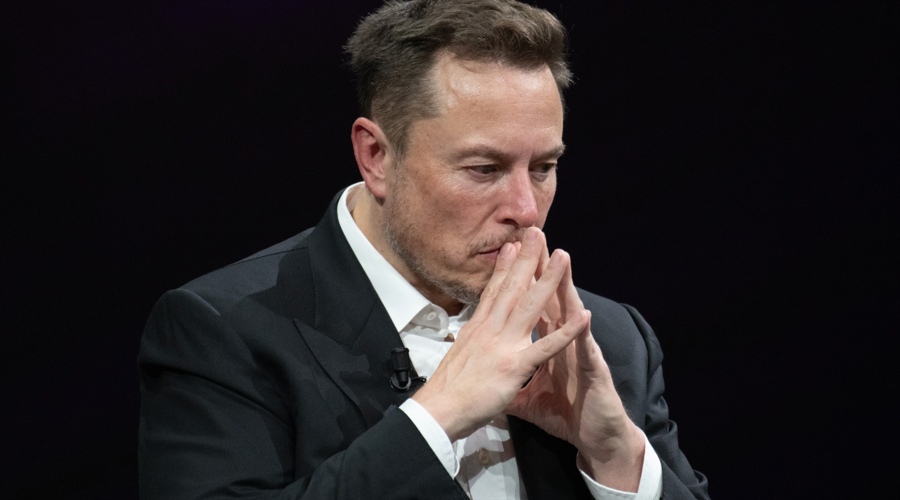
Musk exits DOGE after Tesla profits collapse and US clean energy incentives are gutted.
Tesla’s key US EV tax credits and solar incentives have been slashed in the new budget.
Tesla now faces mounting competition and a weakened US market.
Elon Musk has had a busy week.
Elon Musk leaves DOGE as Trump's budget slashes support for electric vehicles (EVs), signaling tough times ahead for Musk and Tesla.
Musk’s Washington Bromance Has Officially Gone Cold
It started with chainsaws and Cabinet meetings. It ended with budget
cuts, black eyes, and a battered bottom line. After months of cozying up to
Donald Trump’s administration—spending nearly
$300 million to elect Trump and his GOP allies—Elon Musk has finally
distanced himself from Washington’s Department of Government Efficiency (DOGE)
and its wrecking-ball agenda.
As @elonmusk officially departs his role as head of DOGE, the movement he has helped create is only just beginning.
Elon will remain an advisor to DOGE, ensuring its potential for impact remains limitless.
Musk’s brainchild, DOGE, was meant to slash government bloat. But the
four-month rampage through federal departments—cutting
over 250,000 jobs and gutting key agencies like the EPA and NOAA—sparked
public backlash and legal chaos.
Tesla, meanwhile, became collateral damage. Profits
nosedived 71%, and Musk’s personal net worth cratered
by $100 billion. Even his beloved DOGE became a political scapegoat. “DOGE
became the whipping boy for everything,” Musk lamented in a recent CBS
News interview.
But the final straw wasn’t Social Security outrage or vandalized Musk
statues. It was Trump’s latest budget—a direct attack on Tesla’s clean energy
business.
The Budget That Broke the Bromance
Trump’s new budget, recently passed by the GOP-controlled Congress,
axes the very incentives that fueled Tesla’s US success. Gone
is the $7,500 federal EV tax credit—an essential driver of Tesla demand.
Also gone: the 30% tax credits for battery storage and solar power that buoyed
Tesla’s energy division.
Elon Musk "I was disappointed to see the massive spending bill, frankly, which increases the budget deficit and undermines the work the @DOGE team is doing” pic.twitter.com/LRfaXBffwq
— Tesla Owners Silicon Valley (@teslaownersSV) May 28, 2025
In classic understatement, Musk’s team issued a
statement urging a phased rollback rather than an outright repeal: “Abruptly
ending the energy tax credits would threaten America’s energy independence and
the reliability of our grid.”
In hindsight, Musk’s Washington gambit was high-risk from the start. He
bet that backing Trump would defang regulators and grant him political cover.
In that sense, it worked—temporarily. But the cost has been steep.
The DOGE cuts turned Musk into a national punching bag. Lawsuits,
mandatory rehirings, and violent threats followed. Meanwhile, the GOP’s war on
clean energy directly undermined Tesla’s core products.
Elon Musk doesn't take full responsibility for DOGE actions. Britta Pedersen-Pool/Getty Images
Even Musk now admits things got out of hand. But, “I don’t wanna take
responsibility for everything this administration’s doing,” he says.
That attempt at distancing didn’t sit well in TrumpWorld. After Musk
publicly criticized the budget on CBS, the White House ice-out was swift. By
Friday, Musk officially exited DOGE, ending what was supposed to be a
longer-term advisory role.
Trump, ever the showman, tried to spin it at a media event: “Elon’s
really not leaving. He’s gonna be back and forth.” But the writing is on
the wall. Musk is retreating to focus on his businesses: SpaceX, Tesla, X,
Neuralink, Starlink, and others.
Can Musk Repair the Damage?
Musk’s pivot comes late. Tesla’s energy storage unit—its lone growth
bright spot—is now kneecapped by the loss of solar and battery credits. Its EV
margins will shrink as US demand weakens without incentives. And with Chinese
competitors surging, Musk faces an uphill battle to stabilize Tesla.
It's a real testament to the limits of money in politics that Elon Musk spent ~$300m minimum to elect a president and got a giant pile of tariffs, repeal of clean energy and EV credits, a crackdown on student visas, etc, etc etc along with a budget bill he openly opposes
His signature move-fast-and-break-things ethos has backfired
spectacularly in Washington. As Electrek’s
Fred Lambert dryly noted: “Musk’s backing of Trump hasn’t achieved anything
meaningful toward his stated goals.”
For now, as per the CBS interview, Musk insists DOGE will “continue as
a way of life”—whatever that means. But his focus has clearly shifted.
With Tesla’s US market on the chopping block and Musk’s DC honeymoon
over, the next chapter for the self-styled “first buddy” promises to be… well, interesting,
if nothing else.
As Musk himself put it before watching SpaceX’s latest rocket attempt: “I
can’t guarantee success, but I can guarantee excitement.”
For more stories around the edges of finance, visit our Trending pages.
Elon Musk leaves DOGE as Trump's budget slashes support for electric vehicles (EVs), signaling tough times ahead for Musk and Tesla.
Musk’s Washington Bromance Has Officially Gone Cold
It started with chainsaws and Cabinet meetings. It ended with budget
cuts, black eyes, and a battered bottom line. After months of cozying up to
Donald Trump’s administration—spending nearly
$300 million to elect Trump and his GOP allies—Elon Musk has finally
distanced himself from Washington’s Department of Government Efficiency (DOGE)
and its wrecking-ball agenda.
As @elonmusk officially departs his role as head of DOGE, the movement he has helped create is only just beginning.
Elon will remain an advisor to DOGE, ensuring its potential for impact remains limitless.
Musk’s brainchild, DOGE, was meant to slash government bloat. But the
four-month rampage through federal departments—cutting
over 250,000 jobs and gutting key agencies like the EPA and NOAA—sparked
public backlash and legal chaos.
Tesla, meanwhile, became collateral damage. Profits
nosedived 71%, and Musk’s personal net worth cratered
by $100 billion. Even his beloved DOGE became a political scapegoat. “DOGE
became the whipping boy for everything,” Musk lamented in a recent CBS
News interview.
But the final straw wasn’t Social Security outrage or vandalized Musk
statues. It was Trump’s latest budget—a direct attack on Tesla’s clean energy
business.
The Budget That Broke the Bromance
Trump’s new budget, recently passed by the GOP-controlled Congress,
axes the very incentives that fueled Tesla’s US success. Gone
is the $7,500 federal EV tax credit—an essential driver of Tesla demand.
Also gone: the 30% tax credits for battery storage and solar power that buoyed
Tesla’s energy division.
Elon Musk "I was disappointed to see the massive spending bill, frankly, which increases the budget deficit and undermines the work the @DOGE team is doing” pic.twitter.com/LRfaXBffwq
— Tesla Owners Silicon Valley (@teslaownersSV) May 28, 2025
In classic understatement, Musk’s team issued a
statement urging a phased rollback rather than an outright repeal: “Abruptly
ending the energy tax credits would threaten America’s energy independence and
the reliability of our grid.”
In hindsight, Musk’s Washington gambit was high-risk from the start. He
bet that backing Trump would defang regulators and grant him political cover.
In that sense, it worked—temporarily. But the cost has been steep.
The DOGE cuts turned Musk into a national punching bag. Lawsuits,
mandatory rehirings, and violent threats followed. Meanwhile, the GOP’s war on
clean energy directly undermined Tesla’s core products.
Elon Musk doesn't take full responsibility for DOGE actions. Britta Pedersen-Pool/Getty Images
Even Musk now admits things got out of hand. But, “I don’t wanna take
responsibility for everything this administration’s doing,” he says.
That attempt at distancing didn’t sit well in TrumpWorld. After Musk
publicly criticized the budget on CBS, the White House ice-out was swift. By
Friday, Musk officially exited DOGE, ending what was supposed to be a
longer-term advisory role.
Trump, ever the showman, tried to spin it at a media event: “Elon’s
really not leaving. He’s gonna be back and forth.” But the writing is on
the wall. Musk is retreating to focus on his businesses: SpaceX, Tesla, X,
Neuralink, Starlink, and others.
Can Musk Repair the Damage?
Musk’s pivot comes late. Tesla’s energy storage unit—its lone growth
bright spot—is now kneecapped by the loss of solar and battery credits. Its EV
margins will shrink as US demand weakens without incentives. And with Chinese
competitors surging, Musk faces an uphill battle to stabilize Tesla.
It's a real testament to the limits of money in politics that Elon Musk spent ~$300m minimum to elect a president and got a giant pile of tariffs, repeal of clean energy and EV credits, a crackdown on student visas, etc, etc etc along with a budget bill he openly opposes
His signature move-fast-and-break-things ethos has backfired
spectacularly in Washington. As Electrek’s
Fred Lambert dryly noted: “Musk’s backing of Trump hasn’t achieved anything
meaningful toward his stated goals.”
For now, as per the CBS interview, Musk insists DOGE will “continue as
a way of life”—whatever that means. But his focus has clearly shifted.
With Tesla’s US market on the chopping block and Musk’s DC honeymoon
over, the next chapter for the self-styled “first buddy” promises to be… well, interesting,
if nothing else.
As Musk himself put it before watching SpaceX’s latest rocket attempt: “I
can’t guarantee success, but I can guarantee excitement.”
For more stories around the edges of finance, visit our Trending pages.
Louis Parks has lived and worked in and around the Middle East for much of his professional career. He writes about the meeting of the tech and finance worlds.
Inside the Prediction Markets: $1.6B Institutional Inflow Meets a Federal Crackdown
Featured Videos
FP Markets Winner Spotlight 🏆 | Global Broker of the Year 2025 #Trading #Broker #Innovation #Shorts
FP Markets Winner Spotlight 🏆 | Global Broker of the Year 2025 #Trading #Broker #Innovation #Shorts
FP Markets Winner Spotlight 🏆 | Global Broker of the Year 2025 #Trading #Broker #Innovation #Shorts
FP Markets Winner Spotlight 🏆 | Global Broker of the Year 2025 #Trading #Broker #Innovation #Shorts
FP Markets takes the spotlight as Global Broker of the Year 2025 at the Finance Magnates Awards.
Martin Stoilov, Head of Client Experience, shares that trust, innovation, and people played a key role in the company’s success, supported by a strong foundation of integrity and client-centricity.
Following this milestone, FP Markets continues to focus on growth, technology investment, and its core values of transparency and excellence.
👉 Be part of FM Awards 2026: https://awards.financemagnates.com/#nominate
FP Markets takes the spotlight as Global Broker of the Year 2025 at the Finance Magnates Awards.
Martin Stoilov, Head of Client Experience, shares that trust, innovation, and people played a key role in the company’s success, supported by a strong foundation of integrity and client-centricity.
Following this milestone, FP Markets continues to focus on growth, technology investment, and its core values of transparency and excellence.
👉 Be part of FM Awards 2026: https://awards.financemagnates.com/#nominate
FP Markets takes the spotlight as Global Broker of the Year 2025 at the Finance Magnates Awards.
Martin Stoilov, Head of Client Experience, shares that trust, innovation, and people played a key role in the company’s success, supported by a strong foundation of integrity and client-centricity.
Following this milestone, FP Markets continues to focus on growth, technology investment, and its core values of transparency and excellence.
👉 Be part of FM Awards 2026: https://awards.financemagnates.com/#nominate
FP Markets takes the spotlight as Global Broker of the Year 2025 at the Finance Magnates Awards.
Martin Stoilov, Head of Client Experience, shares that trust, innovation, and people played a key role in the company’s success, supported by a strong foundation of integrity and client-centricity.
Following this milestone, FP Markets continues to focus on growth, technology investment, and its core values of transparency and excellence.
👉 Be part of FM Awards 2026: https://awards.financemagnates.com/#nominate
In this video, we review @HolaPrimeMarketsOfficial, a multi-asset forex and CFDs broker offering different account types, trading platforms, and flexible trading conditions.
We cover the broker’s overall offering, including account options, trading environment, platforms like MT4 and MT5, and additional services such as managed accounts and fast withdrawals.
Watch the full video to see if Hola Prime Markets fits your trading needs.
📣 Stay up to date with the latest in finance and trading. Follow Finance Magnates for industry news, insights, and global event coverage.
Connect with us:
🔗 LinkedIn: /financemagnates
👍 Facebook: /financemagnates
📸 Instagram: https://www.instagram.com/financemagnates
🐦 X: https://x.com/financemagnates
🎥 TikTok: https://www.tiktok.com/tag/financemagnates
▶️ YouTube: /@financemagnates_official
#HolaPrime #ForexBroker #CFDTrading #FinanceMagnates #Trading #Forex #BrokerReview
In this video, we review @HolaPrimeMarketsOfficial, a multi-asset forex and CFDs broker offering different account types, trading platforms, and flexible trading conditions.
We cover the broker’s overall offering, including account options, trading environment, platforms like MT4 and MT5, and additional services such as managed accounts and fast withdrawals.
Watch the full video to see if Hola Prime Markets fits your trading needs.
📣 Stay up to date with the latest in finance and trading. Follow Finance Magnates for industry news, insights, and global event coverage.
Connect with us:
🔗 LinkedIn: /financemagnates
👍 Facebook: /financemagnates
📸 Instagram: https://www.instagram.com/financemagnates
🐦 X: https://x.com/financemagnates
🎥 TikTok: https://www.tiktok.com/tag/financemagnates
▶️ YouTube: /@financemagnates_official
#HolaPrime #ForexBroker #CFDTrading #FinanceMagnates #Trading #Forex #BrokerReview
In this video, we review @HolaPrimeMarketsOfficial, a multi-asset forex and CFDs broker offering different account types, trading platforms, and flexible trading conditions.
We cover the broker’s overall offering, including account options, trading environment, platforms like MT4 and MT5, and additional services such as managed accounts and fast withdrawals.
Watch the full video to see if Hola Prime Markets fits your trading needs.
📣 Stay up to date with the latest in finance and trading. Follow Finance Magnates for industry news, insights, and global event coverage.
Connect with us:
🔗 LinkedIn: /financemagnates
👍 Facebook: /financemagnates
📸 Instagram: https://www.instagram.com/financemagnates
🐦 X: https://x.com/financemagnates
🎥 TikTok: https://www.tiktok.com/tag/financemagnates
▶️ YouTube: /@financemagnates_official
#HolaPrime #ForexBroker #CFDTrading #FinanceMagnates #Trading #Forex #BrokerReview
In this video, we review @HolaPrimeMarketsOfficial, a multi-asset forex and CFDs broker offering different account types, trading platforms, and flexible trading conditions.
We cover the broker’s overall offering, including account options, trading environment, platforms like MT4 and MT5, and additional services such as managed accounts and fast withdrawals.
Watch the full video to see if Hola Prime Markets fits your trading needs.
📣 Stay up to date with the latest in finance and trading. Follow Finance Magnates for industry news, insights, and global event coverage.
Connect with us:
🔗 LinkedIn: /financemagnates
👍 Facebook: /financemagnates
📸 Instagram: https://www.instagram.com/financemagnates
🐦 X: https://x.com/financemagnates
🎥 TikTok: https://www.tiktok.com/tag/financemagnates
▶️ YouTube: /@financemagnates_official
#HolaPrime #ForexBroker #CFDTrading #FinanceMagnates #Trading #Forex #BrokerReview
In this video, we review @HolaPrimeMarketsOfficial, a multi-asset forex and CFDs broker offering different account types, trading platforms, and flexible trading conditions.
We cover the broker’s overall offering, including account options, trading environment, platforms like MT4 and MT5, and additional services such as managed accounts and fast withdrawals.
Watch the full video to see if Hola Prime Markets fits your trading needs.
📣 Stay up to date with the latest in finance and trading. Follow Finance Magnates for industry news, insights, and global event coverage.
Connect with us:
🔗 LinkedIn: /financemagnates
👍 Facebook: /financemagnates
📸 Instagram: https://www.instagram.com/financemagnates
🐦 X: https://x.com/financemagnates
🎥 TikTok: https://www.tiktok.com/tag/financemagnates
▶️ YouTube: /@financemagnates_official
#HolaPrime #ForexBroker #CFDTrading #FinanceMagnates #Trading #Forex #BrokerReview
In this video, we review @HolaPrimeMarketsOfficial, a multi-asset forex and CFDs broker offering different account types, trading platforms, and flexible trading conditions.
We cover the broker’s overall offering, including account options, trading environment, platforms like MT4 and MT5, and additional services such as managed accounts and fast withdrawals.
Watch the full video to see if Hola Prime Markets fits your trading needs.
📣 Stay up to date with the latest in finance and trading. Follow Finance Magnates for industry news, insights, and global event coverage.
Connect with us:
🔗 LinkedIn: /financemagnates
👍 Facebook: /financemagnates
📸 Instagram: https://www.instagram.com/financemagnates
🐦 X: https://x.com/financemagnates
🎥 TikTok: https://www.tiktok.com/tag/financemagnates
▶️ YouTube: /@financemagnates_official
#HolaPrime #ForexBroker #CFDTrading #FinanceMagnates #Trading #Forex #BrokerReview
Hola Prime Review: What You Need to Know | Full Breakdown by Finance Magnates
Hola Prime Review: What You Need to Know | Full Breakdown by Finance Magnates
Hola Prime Review: What You Need to Know | Full Breakdown by Finance Magnates
Hola Prime Review: What You Need to Know | Full Breakdown by Finance Magnates
Hola Prime Review: What You Need to Know | Full Breakdown by Finance Magnates
Hola Prime Review: What You Need to Know | Full Breakdown by Finance Magnates
In this video, we review @HolaPrime_Global, a proprietary trading firm offering evaluation programs and performance-based payouts in simulated market environments.
We cover how the challenge model works, including account types, profit splits (up to 95%), trading rules, and what it takes to reach a funded account. You’ll also learn about available platforms like MT4, MT5, cTrader, and more, along with insights into payouts, support, and trading conditions.
Watch the full video to see if Hola Prime fits your trading style.
📣 Stay up to date with the latest in finance and trading. Follow Finance Magnates for industry news, insights, and global event coverage.
Connect with us:
🔗 LinkedIn: /financemagnates
👍 Facebook: /financemagnates
📸 Instagram: https://www.instagram.com/financemagnates
🐦 X: https://x.com/financemagnates
🎥 TikTok: https://www.tiktok.com/tag/financemagnates
▶️ YouTube: /@financemagnates_official
#HolaPrime #PropFirm #Trading #FinanceMagnates #Forex #FuturesTrading #TradingReview #PropFirmReview
In this video, we review @HolaPrime_Global, a proprietary trading firm offering evaluation programs and performance-based payouts in simulated market environments.
We cover how the challenge model works, including account types, profit splits (up to 95%), trading rules, and what it takes to reach a funded account. You’ll also learn about available platforms like MT4, MT5, cTrader, and more, along with insights into payouts, support, and trading conditions.
Watch the full video to see if Hola Prime fits your trading style.
📣 Stay up to date with the latest in finance and trading. Follow Finance Magnates for industry news, insights, and global event coverage.
Connect with us:
🔗 LinkedIn: /financemagnates
👍 Facebook: /financemagnates
📸 Instagram: https://www.instagram.com/financemagnates
🐦 X: https://x.com/financemagnates
🎥 TikTok: https://www.tiktok.com/tag/financemagnates
▶️ YouTube: /@financemagnates_official
#HolaPrime #PropFirm #Trading #FinanceMagnates #Forex #FuturesTrading #TradingReview #PropFirmReview
In this video, we review @HolaPrime_Global, a proprietary trading firm offering evaluation programs and performance-based payouts in simulated market environments.
We cover how the challenge model works, including account types, profit splits (up to 95%), trading rules, and what it takes to reach a funded account. You’ll also learn about available platforms like MT4, MT5, cTrader, and more, along with insights into payouts, support, and trading conditions.
Watch the full video to see if Hola Prime fits your trading style.
📣 Stay up to date with the latest in finance and trading. Follow Finance Magnates for industry news, insights, and global event coverage.
Connect with us:
🔗 LinkedIn: /financemagnates
👍 Facebook: /financemagnates
📸 Instagram: https://www.instagram.com/financemagnates
🐦 X: https://x.com/financemagnates
🎥 TikTok: https://www.tiktok.com/tag/financemagnates
▶️ YouTube: /@financemagnates_official
#HolaPrime #PropFirm #Trading #FinanceMagnates #Forex #FuturesTrading #TradingReview #PropFirmReview
In this video, we review @HolaPrime_Global, a proprietary trading firm offering evaluation programs and performance-based payouts in simulated market environments.
We cover how the challenge model works, including account types, profit splits (up to 95%), trading rules, and what it takes to reach a funded account. You’ll also learn about available platforms like MT4, MT5, cTrader, and more, along with insights into payouts, support, and trading conditions.
Watch the full video to see if Hola Prime fits your trading style.
📣 Stay up to date with the latest in finance and trading. Follow Finance Magnates for industry news, insights, and global event coverage.
Connect with us:
🔗 LinkedIn: /financemagnates
👍 Facebook: /financemagnates
📸 Instagram: https://www.instagram.com/financemagnates
🐦 X: https://x.com/financemagnates
🎥 TikTok: https://www.tiktok.com/tag/financemagnates
▶️ YouTube: /@financemagnates_official
#HolaPrime #PropFirm #Trading #FinanceMagnates #Forex #FuturesTrading #TradingReview #PropFirmReview
In this video, we review @HolaPrime_Global, a proprietary trading firm offering evaluation programs and performance-based payouts in simulated market environments.
We cover how the challenge model works, including account types, profit splits (up to 95%), trading rules, and what it takes to reach a funded account. You’ll also learn about available platforms like MT4, MT5, cTrader, and more, along with insights into payouts, support, and trading conditions.
Watch the full video to see if Hola Prime fits your trading style.
📣 Stay up to date with the latest in finance and trading. Follow Finance Magnates for industry news, insights, and global event coverage.
Connect with us:
🔗 LinkedIn: /financemagnates
👍 Facebook: /financemagnates
📸 Instagram: https://www.instagram.com/financemagnates
🐦 X: https://x.com/financemagnates
🎥 TikTok: https://www.tiktok.com/tag/financemagnates
▶️ YouTube: /@financemagnates_official
#HolaPrime #PropFirm #Trading #FinanceMagnates #Forex #FuturesTrading #TradingReview #PropFirmReview
In this video, we review @HolaPrime_Global, a proprietary trading firm offering evaluation programs and performance-based payouts in simulated market environments.
We cover how the challenge model works, including account types, profit splits (up to 95%), trading rules, and what it takes to reach a funded account. You’ll also learn about available platforms like MT4, MT5, cTrader, and more, along with insights into payouts, support, and trading conditions.
Watch the full video to see if Hola Prime fits your trading style.
📣 Stay up to date with the latest in finance and trading. Follow Finance Magnates for industry news, insights, and global event coverage.
Connect with us:
🔗 LinkedIn: /financemagnates
👍 Facebook: /financemagnates
📸 Instagram: https://www.instagram.com/financemagnates
🐦 X: https://x.com/financemagnates
🎥 TikTok: https://www.tiktok.com/tag/financemagnates
▶️ YouTube: /@financemagnates_official
#HolaPrime #PropFirm #Trading #FinanceMagnates #Forex #FuturesTrading #TradingReview #PropFirmReview
Axi Winner Spotlight 🏆 | Global Most Innovative Broker 2025 #Innovation #Trading #Fintech #Broker
Axi Winner Spotlight 🏆 | Global Most Innovative Broker 2025 #Innovation #Trading #Fintech #Broker
Axi Winner Spotlight 🏆 | Global Most Innovative Broker 2025 #Innovation #Trading #Fintech #Broker
Axi Winner Spotlight 🏆 | Global Most Innovative Broker 2025 #Innovation #Trading #Fintech #Broker
Axi Winner Spotlight 🏆 | Global Most Innovative Broker 2025 #Innovation #Trading #Fintech #Broker
Axi Winner Spotlight 🏆 | Global Most Innovative Broker 2025 #Innovation #Trading #Fintech #Broker
Axi takes the spotlight at the Finance Magnates Awards, winning Global Most Innovative Broker 2025.
Olivia Xenofontos and Ivanna Openko share how the team will feel: proud, motivated, and ready to keep delivering.
They also describe the night as well-organized, focused, and enjoyable for all.
👉 Be part of FM Awards 2026.
Axi takes the spotlight at the Finance Magnates Awards, winning Global Most Innovative Broker 2025.
Olivia Xenofontos and Ivanna Openko share how the team will feel: proud, motivated, and ready to keep delivering.
They also describe the night as well-organized, focused, and enjoyable for all.
👉 Be part of FM Awards 2026.
Axi takes the spotlight at the Finance Magnates Awards, winning Global Most Innovative Broker 2025.
Olivia Xenofontos and Ivanna Openko share how the team will feel: proud, motivated, and ready to keep delivering.
They also describe the night as well-organized, focused, and enjoyable for all.
👉 Be part of FM Awards 2026.
Axi takes the spotlight at the Finance Magnates Awards, winning Global Most Innovative Broker 2025.
Olivia Xenofontos and Ivanna Openko share how the team will feel: proud, motivated, and ready to keep delivering.
They also describe the night as well-organized, focused, and enjoyable for all.
👉 Be part of FM Awards 2026.
Axi takes the spotlight at the Finance Magnates Awards, winning Global Most Innovative Broker 2025.
Olivia Xenofontos and Ivanna Openko share how the team will feel: proud, motivated, and ready to keep delivering.
They also describe the night as well-organized, focused, and enjoyable for all.
👉 Be part of FM Awards 2026.
Axi takes the spotlight at the Finance Magnates Awards, winning Global Most Innovative Broker 2025.
Olivia Xenofontos and Ivanna Openko share how the team will feel: proud, motivated, and ready to keep delivering.
They also describe the night as well-organized, focused, and enjoyable for all.
👉 Be part of FM Awards 2026.
Recognition that matters.
Built on transparency.
Driven by the industry.
The Finance Magnates Awards 2026.
Nominations are now open.
🔗 https://awards.financemagnates.com/?utm_source=SM&utm_medium=social&utm_campaign=recognition-matters
Recognition that matters.
Built on transparency.
Driven by the industry.
The Finance Magnates Awards 2026.
Nominations are now open.
🔗 https://awards.financemagnates.com/?utm_source=SM&utm_medium=social&utm_campaign=recognition-matters
Recognition that matters.
Built on transparency.
Driven by the industry.
The Finance Magnates Awards 2026.
Nominations are now open.
🔗 https://awards.financemagnates.com/?utm_source=SM&utm_medium=social&utm_campaign=recognition-matters
Recognition that matters.
Built on transparency.
Driven by the industry.
The Finance Magnates Awards 2026.
Nominations are now open.
🔗 https://awards.financemagnates.com/?utm_source=SM&utm_medium=social&utm_campaign=recognition-matters
Recognition that matters.
Built on transparency.
Driven by the industry.
The Finance Magnates Awards 2026.
Nominations are now open.
🔗 https://awards.financemagnates.com/?utm_source=SM&utm_medium=social&utm_campaign=recognition-matters
Recognition that matters.
Built on transparency.
Driven by the industry.
The Finance Magnates Awards 2026.
Nominations are now open.
🔗 https://awards.financemagnates.com/?utm_source=SM&utm_medium=social&utm_campaign=recognition-matters