From simulating KYC flows to mocking order-routing logic, vibe coding is already reshaping how fintech teams build trading tools - fast, visual, and AI-assisted.
But speed isn’t safety: a 59GB data leak linked to rushed AI-built code shows why experts say every output must be “checked, checked, and checked again.”
Vibe coding
From prototyping to production, vibe coding is reshaping how financial products
are built—with speed, accessibility, and collaboration at the core.
Denis Krivolapov, Product Manager of DXcharts at Devexperts (LinkedIn).
“Vibe coding is a
simplified process of writing code using AI or LLM tools,” explains Denis
Krivolapov, Product Manager of DXcharts at Devexperts. “You don’t actually need to know a
programming language—you simply describe what you’re looking for in the AI
chat. This command is then immediately executed ... The end result feels a lot
like actual coding, with deep immersion into the problem.”
It’s often
presented as a mind shift, rather than a tooling upgrade. “Traditional
development often involves long planning cycles before
any code is written,” says Abdullah Dalgıç, Software Architect at Team Force Technologies. “Vibe coding flips that. You start
from intent, build fast using AI-assisted tools, and improve as you go. It’s not about skipping best practices but about getting to
insight faster.”
Fast,
Frictionless, and Feedback-Driven
One of the most
praised aspects of vibe coding is its ability to quickly generate working
prototypes. Whether you're a seasoned developer or a non-technical product
owner, vibe coding environments support short feedback loops and real-time
simulation—making fast iteration not only possible, but natural.
He finds a startup idea, he vibe codes it in 12h, goes viral, sells it 8 days later for $15k (could have sold it for more) and has a blast doing it (exact playbook in 37 mins) pic.twitter.com/O34E5BtBDI
Krivolapov echoes
the sentiment: “As a product manager … I’ve used vibe coding for the simplified
creation of data dashboards and automation of tasks related to developer
documentation.”
For Dalgıç, this initial
speed drives smarter collaboration. “That early momentum helps refine thinking,
test hypotheses, and unlock better discussions across product, design and
engineering. For us, it's less about
replacing development cycles, more about enriching them.”
Is
Coding Experience Still Necessary?
A common selling
point of vibe coding is its accessibility—users can create functional systems without
traditional programming experience. But experts are quick to clarify the
limits.
Tal Laitner, VP R&D, Leverate (LinkedIn).
“There’s truth to
it, but with a caveat,” notes Laitner. “You can build usable flows or models with
minimal coding background; but to build robust, maintainable systems – especially in domains like finance – you still
need someone who understands logic, edge cases, and architecture. So I’d
say vibe coding lowers the entry barrier, but it doesn’t
eliminate the need for technical understanding if the goal is scale and
reliability.”
Krivolapov agrees
that some tools require zero knowledge, like, “Lovable or Replit … while others,
such as Cursos, which is more like a next-level IDE, will require a basic
understanding of how everything works.” Dalgıç adds, “Vibe coding can
democratize starting something, but it doesn’t remove the need for expertise.”
Key
Benefits for the Financial Industry
The financial
industry is uniquely positioned to benefit from vibe coding. The sector demands
speed, agility, and compliance—all areas where vibe coding can excel.
“Vibe coding
enables faster POCs (Proof of Concept) for internal tools, simulations, and data models – all while
maintaining strong traceability,” says Laitner. “It also democratizes tool-building: analysts
or risk officers can prototype logic independently.”
Building your own Specialised AI Agent is made easy now
Watch our intern vibe coding a support agent with ease
Krivolapov highlights cost efficiency: “If you are able to build a
good-quality product with smaller investment in development, you can spend more
on marketing and user acquisition. Startups often fail because they can't, or
don't have enough time to, find a profitable source of traffic before they run
out of money. Any niche in trading is a red ocean.”
Dalgıç emphasizes
the ability to innovate rapidly: “... vibe coding helps us deliver prototypes
and test features without long lead times. It speeds up innovation while
keeping the end product compliant.”
Real-World
Applications
From internal dashboards to customer-facing products, vibe coding
is already in use across the financial ecosystem.
Krivolapov recounts: “Recently
one start-up client came to us with an example of how they integrated our open
source charting library to make it visible on their financial dashboard. They
were even able to connect their data source directly to the chart without
writing a single line of code.” At Leverate, vibe coding has been used
to mock order-routing logic or visualize risk model behavior before
implementation.
Team Force
Technologies has also seen the impact firsthand. “When launching new features,
vibe coding allows teams to create functional early versions in less time.
These versions still go through the same security checks and QA reviews; but
by starting with something concrete early on, we can refine faster and reduce
back-and-forth,”
Dalgıç says.
Apps
and Platforms
Laitner
outlines a hypothetical example of vibe coding in action: “Take a wealth
management app introducing an AI-based savings advisor. Instead of
hard-coding rules about income thresholds, life goals, and asset mix,
a vibe-coded backend could let the product manager visually define
savings logic, connect it to real-time data, and test outcomes live with dummy
profiles. Once refined, the dev team productionizes it. This allows faster
experimentation with financial guidance models, and real business users can
adjust logic with confidence.”
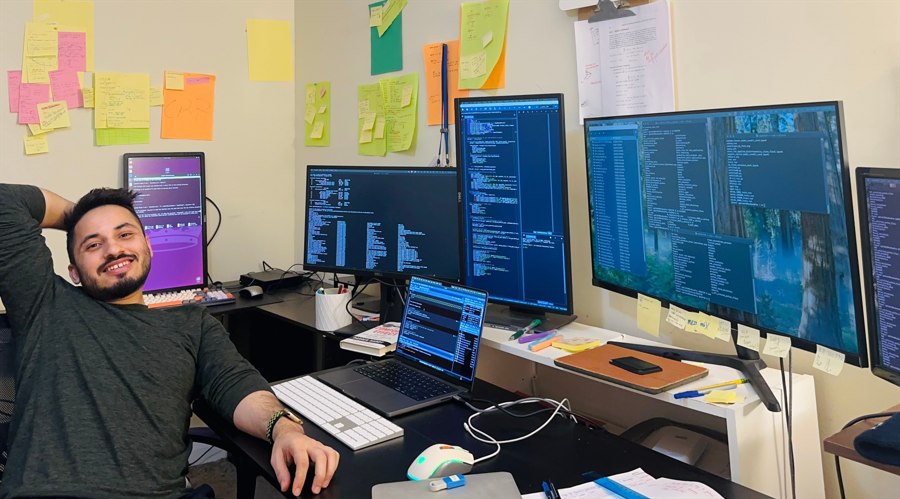
If you're not using this vibe coding setup, you’re falling behind.
Dalgıç explains
how vibe coding can be used to assist in the development of a trading platform,
“In a typical trading platform scenario, we might want to introduce
a new user-facing feature. With vibe coding, the idea can be quickly translated
into a working prototype, allowing teams to test and iterate much faster than
with traditional methods. Once validated, we gradually layer in the necessary
integrations, validations, and compliance steps,” he says.
Challenges
and Limitations
Despite its
advantages, vibe coding isn’t a silver bullet - especially when dealing with
sensitive financial data.
“Vibe coding
tools are not well suited for high-load systems or anything related to compliance
or payments,” says Krivolapov. “If you want to make important decisions based
on results produced with vibe coding, those results need to be double-checked.
As with any other AI tool, critical thinking is a must.”
Laitner agrees: “Technically,
debugging and version control can be messy. If not
well-governed, vibe-coded systems become spaghetti quickly.
Ethically, abstraction can blur responsibility – if a bad decision comes from a
block someone dragged in, who’s accountable? Also, when data-driven decisions
affect customers’ money or access to services, explainability is key – and
many vibe platforms aren’t there yet. At Leverate, we tackle these
challenges with clear governance layers, robust audit trails, and domain expert
oversight. We ensure every block of logic is both traceable and reviewable – so
innovation doesn’t come at the expense of accountability or transparency.”
Abdullah Dalgıç, Software Architect at Team Force Technologies.
Team Force
Technologies’ Dalgıç underscores this need for human oversight. “AI-generated
code is only as good as the context it’s given. In fintech, the smallest flaw
can result in compliance issues or security vulnerabilities. That’s why every output needs human review. Also, explainability
is key. If code is helping make or guide financial decisions, you need to
understand how and why it behaves the way it does. Vibe coding is a tool, not a
guarantee.”
How
to Start: Cultural Shifts and First Steps
Within any
institution, the implementation of vibe coding should start small - with isolated
use cases like internal reporting or simulations - and grow with experience and
governance. “The first step is usually picking a
small, low-risk domain - say, internal compliance reporting - and letting a
product+domain+tech trio build with a vibe tool. From there, culture
can absorb the shift. Long-term, yes - it should be part of the design system
and data strategy, especially if the goal is reusable logic blocks with audit
trails,” said Laitner.
Krivolapov adds:
“Give those who are most
interested the opportunity to use these tools first. In practice, there are
almost always people in your product or marketing teams who have already heard
about and are testing these tools on their own.”
Dalgıç stresses
that vibe coding requires a change in mentality, and that baby steps might be
needed at first, “Start small. Choose a
use case that’s isolated and non-critical, like internal tooling or
simulations. Let teams explore the workflow, then build governance and
documentation around it. Over time, update your design systems and testing
frameworks to support this more agile development rhythm. It’s not a
plug-and-play solution - it’s a cultural shift that works best when supported
from leadership to delivery.”
A
Paradigm Shift in the Making?
All three
companies agree: vibe coding becoming a serious force and more than an approach
with niche appeal. “It's already moving beyond niche,” says Laitner. “Think of how spreadsheets became
the de facto logic tool for business users. Vibe coding is on a similar path,
but more powerful. If governance, versioning, and security catch up, there's no
reason it can’t become the default way for building internal systems and
prototypes even in finance. It’s about reducing complexity without reducing control.”
After thousands of hours in Cursor, I've found the perfect workflow for vibe coding with no errors.
And no, you don't need to know anything about code.
Krivolapov
concurs: “In the future, it will be a must-have tool
for any employee in the field. It won’t be able to replace people or quickly
build projects that used to take years, but it will give them the opportunity
to solve problems faster. This will soon become a significant competitive
advantage in marketing, as the number of hypotheses that can be tested in a
given period of time will increase exponentially.”
For Dalgıç, the
reason for its potential is clear: “We believe it’s already evolving beyond
niche. As AI tools mature and teams get more comfortable integrating them, vibe
coding is becoming a legitimate way to structure early-stage development. In
regulated sectors, it won’t replace due diligence, but it will reshape how
quickly and collaboratively teams can move from problem to solution.”
The Tea App Debacle - A Word of Warning
The Tea App, a platform marketed as the “safest” space for women with
features like selfie verification and dangerous user alerts, has just suffered
a catastrophic data breach—leaking 59.3GB of private content. That includes
over 72,000 images, from selfies and driver’s licenses to location data and
private DMs. The cause? A Firebase storage bucket left completely unsecured—no
password, no encryption—exposing sensitive data to the public. And this wasn’t
the result of a sophisticated cyberattack; it was basic negligence.
The kicker ….? Developers reportedly used AI-generated code to rapidly
build the app, reportedly vibe coding, and then deployed it without proper
security reviews. A prompt like “build a dating app with selfie verification”
turned into an open database, now circulating on forums like 4chan and Reddit,
fueling doxxing, harassment, and identity theft.
Now, it’s important to note that the Tea team have released a statement
indicating that the problem
code pre-dated the widespread use of vibe coding. However, it does
highlight the importance of double-and triple-checking anything created with
AI.
This breach is more than a technical failure - it’s a betrayal of trust.
Women turned to Tea for protection and instead had their identities exposed.
The app’s viral growth allegedly came with little time for audits, and its
AI-built backend had few safeguards.
The normalization of mandatory ID uploads, rushed development, and
false promises of safety are a dangerous combination. As our experts have all stated,
everything made with AI needs to be checked and checked again.
Toward
More Human Financial Tools
As
AI becomes more embedded in financial services, vibe coding may also play a
role in bridging the empathy gap and highlighting how important humans are in
the development process. “When decision logic is transparent and editable,
empathy becomes part of the design process,” says Laitner. “A product owner can see what
the AI is doing and inject human-centered rules before it ships. If used
well, vibe coding doesn’t just accelerate delivery – it
humanizes it.”
Krivolapov put
it’s perfectly: “Coding will become a commodity, while creativity and speed will
come to the forefront.”
Coding as a
commodity and value placed on creativity and speed. The perfect combination of
AI and man?
A perfect combination, but one the outputs of which need to be checked, checked and checked again.
For more stories
of technology, AI and more from around the fringes of finance, visit our Trending pages.
From prototyping to production, vibe coding is reshaping how financial products
are built—with speed, accessibility, and collaboration at the core.
Denis Krivolapov, Product Manager of DXcharts at Devexperts (LinkedIn).
“Vibe coding is a
simplified process of writing code using AI or LLM tools,” explains Denis
Krivolapov, Product Manager of DXcharts at Devexperts. “You don’t actually need to know a
programming language—you simply describe what you’re looking for in the AI
chat. This command is then immediately executed ... The end result feels a lot
like actual coding, with deep immersion into the problem.”
It’s often
presented as a mind shift, rather than a tooling upgrade. “Traditional
development often involves long planning cycles before
any code is written,” says Abdullah Dalgıç, Software Architect at Team Force Technologies. “Vibe coding flips that. You start
from intent, build fast using AI-assisted tools, and improve as you go. It’s not about skipping best practices but about getting to
insight faster.”
Fast,
Frictionless, and Feedback-Driven
One of the most
praised aspects of vibe coding is its ability to quickly generate working
prototypes. Whether you're a seasoned developer or a non-technical product
owner, vibe coding environments support short feedback loops and real-time
simulation—making fast iteration not only possible, but natural.
He finds a startup idea, he vibe codes it in 12h, goes viral, sells it 8 days later for $15k (could have sold it for more) and has a blast doing it (exact playbook in 37 mins) pic.twitter.com/O34E5BtBDI
Krivolapov echoes
the sentiment: “As a product manager … I’ve used vibe coding for the simplified
creation of data dashboards and automation of tasks related to developer
documentation.”
For Dalgıç, this initial
speed drives smarter collaboration. “That early momentum helps refine thinking,
test hypotheses, and unlock better discussions across product, design and
engineering. For us, it's less about
replacing development cycles, more about enriching them.”
Is
Coding Experience Still Necessary?
A common selling
point of vibe coding is its accessibility—users can create functional systems without
traditional programming experience. But experts are quick to clarify the
limits.
Tal Laitner, VP R&D, Leverate (LinkedIn).
“There’s truth to
it, but with a caveat,” notes Laitner. “You can build usable flows or models with
minimal coding background; but to build robust, maintainable systems – especially in domains like finance – you still
need someone who understands logic, edge cases, and architecture. So I’d
say vibe coding lowers the entry barrier, but it doesn’t
eliminate the need for technical understanding if the goal is scale and
reliability.”
Krivolapov agrees
that some tools require zero knowledge, like, “Lovable or Replit … while others,
such as Cursos, which is more like a next-level IDE, will require a basic
understanding of how everything works.” Dalgıç adds, “Vibe coding can
democratize starting something, but it doesn’t remove the need for expertise.”
Key
Benefits for the Financial Industry
The financial
industry is uniquely positioned to benefit from vibe coding. The sector demands
speed, agility, and compliance—all areas where vibe coding can excel.
“Vibe coding
enables faster POCs (Proof of Concept) for internal tools, simulations, and data models – all while
maintaining strong traceability,” says Laitner. “It also democratizes tool-building: analysts
or risk officers can prototype logic independently.”
Building your own Specialised AI Agent is made easy now
Watch our intern vibe coding a support agent with ease
Krivolapov highlights cost efficiency: “If you are able to build a
good-quality product with smaller investment in development, you can spend more
on marketing and user acquisition. Startups often fail because they can't, or
don't have enough time to, find a profitable source of traffic before they run
out of money. Any niche in trading is a red ocean.”
Dalgıç emphasizes
the ability to innovate rapidly: “... vibe coding helps us deliver prototypes
and test features without long lead times. It speeds up innovation while
keeping the end product compliant.”
Real-World
Applications
From internal dashboards to customer-facing products, vibe coding
is already in use across the financial ecosystem.
Krivolapov recounts: “Recently
one start-up client came to us with an example of how they integrated our open
source charting library to make it visible on their financial dashboard. They
were even able to connect their data source directly to the chart without
writing a single line of code.” At Leverate, vibe coding has been used
to mock order-routing logic or visualize risk model behavior before
implementation.
Team Force
Technologies has also seen the impact firsthand. “When launching new features,
vibe coding allows teams to create functional early versions in less time.
These versions still go through the same security checks and QA reviews; but
by starting with something concrete early on, we can refine faster and reduce
back-and-forth,”
Dalgıç says.
Apps
and Platforms
Laitner
outlines a hypothetical example of vibe coding in action: “Take a wealth
management app introducing an AI-based savings advisor. Instead of
hard-coding rules about income thresholds, life goals, and asset mix,
a vibe-coded backend could let the product manager visually define
savings logic, connect it to real-time data, and test outcomes live with dummy
profiles. Once refined, the dev team productionizes it. This allows faster
experimentation with financial guidance models, and real business users can
adjust logic with confidence.”
If you're not using this vibe coding setup, you’re falling behind.
Dalgıç explains
how vibe coding can be used to assist in the development of a trading platform,
“In a typical trading platform scenario, we might want to introduce
a new user-facing feature. With vibe coding, the idea can be quickly translated
into a working prototype, allowing teams to test and iterate much faster than
with traditional methods. Once validated, we gradually layer in the necessary
integrations, validations, and compliance steps,” he says.
Challenges
and Limitations
Despite its
advantages, vibe coding isn’t a silver bullet - especially when dealing with
sensitive financial data.
“Vibe coding
tools are not well suited for high-load systems or anything related to compliance
or payments,” says Krivolapov. “If you want to make important decisions based
on results produced with vibe coding, those results need to be double-checked.
As with any other AI tool, critical thinking is a must.”
Laitner agrees: “Technically,
debugging and version control can be messy. If not
well-governed, vibe-coded systems become spaghetti quickly.
Ethically, abstraction can blur responsibility – if a bad decision comes from a
block someone dragged in, who’s accountable? Also, when data-driven decisions
affect customers’ money or access to services, explainability is key – and
many vibe platforms aren’t there yet. At Leverate, we tackle these
challenges with clear governance layers, robust audit trails, and domain expert
oversight. We ensure every block of logic is both traceable and reviewable – so
innovation doesn’t come at the expense of accountability or transparency.”
Abdullah Dalgıç, Software Architect at Team Force Technologies.
Team Force
Technologies’ Dalgıç underscores this need for human oversight. “AI-generated
code is only as good as the context it’s given. In fintech, the smallest flaw
can result in compliance issues or security vulnerabilities. That’s why every output needs human review. Also, explainability
is key. If code is helping make or guide financial decisions, you need to
understand how and why it behaves the way it does. Vibe coding is a tool, not a
guarantee.”
How
to Start: Cultural Shifts and First Steps
Within any
institution, the implementation of vibe coding should start small - with isolated
use cases like internal reporting or simulations - and grow with experience and
governance. “The first step is usually picking a
small, low-risk domain - say, internal compliance reporting - and letting a
product+domain+tech trio build with a vibe tool. From there, culture
can absorb the shift. Long-term, yes - it should be part of the design system
and data strategy, especially if the goal is reusable logic blocks with audit
trails,” said Laitner.
Krivolapov adds:
“Give those who are most
interested the opportunity to use these tools first. In practice, there are
almost always people in your product or marketing teams who have already heard
about and are testing these tools on their own.”
Dalgıç stresses
that vibe coding requires a change in mentality, and that baby steps might be
needed at first, “Start small. Choose a
use case that’s isolated and non-critical, like internal tooling or
simulations. Let teams explore the workflow, then build governance and
documentation around it. Over time, update your design systems and testing
frameworks to support this more agile development rhythm. It’s not a
plug-and-play solution - it’s a cultural shift that works best when supported
from leadership to delivery.”
A
Paradigm Shift in the Making?
All three
companies agree: vibe coding becoming a serious force and more than an approach
with niche appeal. “It's already moving beyond niche,” says Laitner. “Think of how spreadsheets became
the de facto logic tool for business users. Vibe coding is on a similar path,
but more powerful. If governance, versioning, and security catch up, there's no
reason it can’t become the default way for building internal systems and
prototypes even in finance. It’s about reducing complexity without reducing control.”
After thousands of hours in Cursor, I've found the perfect workflow for vibe coding with no errors.
And no, you don't need to know anything about code.
Krivolapov
concurs: “In the future, it will be a must-have tool
for any employee in the field. It won’t be able to replace people or quickly
build projects that used to take years, but it will give them the opportunity
to solve problems faster. This will soon become a significant competitive
advantage in marketing, as the number of hypotheses that can be tested in a
given period of time will increase exponentially.”
For Dalgıç, the
reason for its potential is clear: “We believe it’s already evolving beyond
niche. As AI tools mature and teams get more comfortable integrating them, vibe
coding is becoming a legitimate way to structure early-stage development. In
regulated sectors, it won’t replace due diligence, but it will reshape how
quickly and collaboratively teams can move from problem to solution.”
The Tea App Debacle - A Word of Warning
The Tea App, a platform marketed as the “safest” space for women with
features like selfie verification and dangerous user alerts, has just suffered
a catastrophic data breach—leaking 59.3GB of private content. That includes
over 72,000 images, from selfies and driver’s licenses to location data and
private DMs. The cause? A Firebase storage bucket left completely unsecured—no
password, no encryption—exposing sensitive data to the public. And this wasn’t
the result of a sophisticated cyberattack; it was basic negligence.
The kicker ….? Developers reportedly used AI-generated code to rapidly
build the app, reportedly vibe coding, and then deployed it without proper
security reviews. A prompt like “build a dating app with selfie verification”
turned into an open database, now circulating on forums like 4chan and Reddit,
fueling doxxing, harassment, and identity theft.
Now, it’s important to note that the Tea team have released a statement
indicating that the problem
code pre-dated the widespread use of vibe coding. However, it does
highlight the importance of double-and triple-checking anything created with
AI.
This breach is more than a technical failure - it’s a betrayal of trust.
Women turned to Tea for protection and instead had their identities exposed.
The app’s viral growth allegedly came with little time for audits, and its
AI-built backend had few safeguards.
The normalization of mandatory ID uploads, rushed development, and
false promises of safety are a dangerous combination. As our experts have all stated,
everything made with AI needs to be checked and checked again.
Toward
More Human Financial Tools
As
AI becomes more embedded in financial services, vibe coding may also play a
role in bridging the empathy gap and highlighting how important humans are in
the development process. “When decision logic is transparent and editable,
empathy becomes part of the design process,” says Laitner. “A product owner can see what
the AI is doing and inject human-centered rules before it ships. If used
well, vibe coding doesn’t just accelerate delivery – it
humanizes it.”
Krivolapov put
it’s perfectly: “Coding will become a commodity, while creativity and speed will
come to the forefront.”
Coding as a
commodity and value placed on creativity and speed. The perfect combination of
AI and man?
A perfect combination, but one the outputs of which need to be checked, checked and checked again.
For more stories
of technology, AI and more from around the fringes of finance, visit our Trending pages.
Louis Parks has lived and worked in and around the Middle East for much of his professional career. He writes about the meeting of the tech and finance worlds.
In this video, we review @HolaPrimeMarketsOfficial, a multi-asset forex and CFDs broker offering different account types, trading platforms, and flexible trading conditions.
We cover the broker’s overall offering, including account options, trading environment, platforms like MT4 and MT5, and additional services such as managed accounts and fast withdrawals.
Watch the full video to see if Hola Prime Markets fits your trading needs.
📣 Stay up to date with the latest in finance and trading. Follow Finance Magnates for industry news, insights, and global event coverage.
Connect with us:
🔗 LinkedIn: /financemagnates
👍 Facebook: /financemagnates
📸 Instagram: https://www.instagram.com/financemagnates
🐦 X: https://x.com/financemagnates
🎥 TikTok: https://www.tiktok.com/tag/financemagnates
▶️ YouTube: /@financemagnates_official
#HolaPrime #ForexBroker #CFDTrading #FinanceMagnates #Trading #Forex #BrokerReview
In this video, we review @HolaPrimeMarketsOfficial, a multi-asset forex and CFDs broker offering different account types, trading platforms, and flexible trading conditions.
We cover the broker’s overall offering, including account options, trading environment, platforms like MT4 and MT5, and additional services such as managed accounts and fast withdrawals.
Watch the full video to see if Hola Prime Markets fits your trading needs.
📣 Stay up to date with the latest in finance and trading. Follow Finance Magnates for industry news, insights, and global event coverage.
Connect with us:
🔗 LinkedIn: /financemagnates
👍 Facebook: /financemagnates
📸 Instagram: https://www.instagram.com/financemagnates
🐦 X: https://x.com/financemagnates
🎥 TikTok: https://www.tiktok.com/tag/financemagnates
▶️ YouTube: /@financemagnates_official
#HolaPrime #ForexBroker #CFDTrading #FinanceMagnates #Trading #Forex #BrokerReview
In this video, we review @HolaPrimeMarketsOfficial, a multi-asset forex and CFDs broker offering different account types, trading platforms, and flexible trading conditions.
We cover the broker’s overall offering, including account options, trading environment, platforms like MT4 and MT5, and additional services such as managed accounts and fast withdrawals.
Watch the full video to see if Hola Prime Markets fits your trading needs.
📣 Stay up to date with the latest in finance and trading. Follow Finance Magnates for industry news, insights, and global event coverage.
Connect with us:
🔗 LinkedIn: /financemagnates
👍 Facebook: /financemagnates
📸 Instagram: https://www.instagram.com/financemagnates
🐦 X: https://x.com/financemagnates
🎥 TikTok: https://www.tiktok.com/tag/financemagnates
▶️ YouTube: /@financemagnates_official
#HolaPrime #ForexBroker #CFDTrading #FinanceMagnates #Trading #Forex #BrokerReview
In this video, we review @HolaPrimeMarketsOfficial, a multi-asset forex and CFDs broker offering different account types, trading platforms, and flexible trading conditions.
We cover the broker’s overall offering, including account options, trading environment, platforms like MT4 and MT5, and additional services such as managed accounts and fast withdrawals.
Watch the full video to see if Hola Prime Markets fits your trading needs.
📣 Stay up to date with the latest in finance and trading. Follow Finance Magnates for industry news, insights, and global event coverage.
Connect with us:
🔗 LinkedIn: /financemagnates
👍 Facebook: /financemagnates
📸 Instagram: https://www.instagram.com/financemagnates
🐦 X: https://x.com/financemagnates
🎥 TikTok: https://www.tiktok.com/tag/financemagnates
▶️ YouTube: /@financemagnates_official
#HolaPrime #ForexBroker #CFDTrading #FinanceMagnates #Trading #Forex #BrokerReview
Hola Prime Review: What You Need to Know | Full Breakdown by Finance Magnates
Hola Prime Review: What You Need to Know | Full Breakdown by Finance Magnates
Hola Prime Review: What You Need to Know | Full Breakdown by Finance Magnates
Hola Prime Review: What You Need to Know | Full Breakdown by Finance Magnates
Hola Prime Review: What You Need to Know | Full Breakdown by Finance Magnates
Hola Prime Review: What You Need to Know | Full Breakdown by Finance Magnates
In this video, we review @HolaPrime_Global, a proprietary trading firm offering evaluation programs and performance-based payouts in simulated market environments.
We cover how the challenge model works, including account types, profit splits (up to 95%), trading rules, and what it takes to reach a funded account. You’ll also learn about available platforms like MT4, MT5, cTrader, and more, along with insights into payouts, support, and trading conditions.
Watch the full video to see if Hola Prime fits your trading style.
📣 Stay up to date with the latest in finance and trading. Follow Finance Magnates for industry news, insights, and global event coverage.
Connect with us:
🔗 LinkedIn: /financemagnates
👍 Facebook: /financemagnates
📸 Instagram: https://www.instagram.com/financemagnates
🐦 X: https://x.com/financemagnates
🎥 TikTok: https://www.tiktok.com/tag/financemagnates
▶️ YouTube: /@financemagnates_official
#HolaPrime #PropFirm #Trading #FinanceMagnates #Forex #FuturesTrading #TradingReview #PropFirmReview
In this video, we review @HolaPrime_Global, a proprietary trading firm offering evaluation programs and performance-based payouts in simulated market environments.
We cover how the challenge model works, including account types, profit splits (up to 95%), trading rules, and what it takes to reach a funded account. You’ll also learn about available platforms like MT4, MT5, cTrader, and more, along with insights into payouts, support, and trading conditions.
Watch the full video to see if Hola Prime fits your trading style.
📣 Stay up to date with the latest in finance and trading. Follow Finance Magnates for industry news, insights, and global event coverage.
Connect with us:
🔗 LinkedIn: /financemagnates
👍 Facebook: /financemagnates
📸 Instagram: https://www.instagram.com/financemagnates
🐦 X: https://x.com/financemagnates
🎥 TikTok: https://www.tiktok.com/tag/financemagnates
▶️ YouTube: /@financemagnates_official
#HolaPrime #PropFirm #Trading #FinanceMagnates #Forex #FuturesTrading #TradingReview #PropFirmReview
In this video, we review @HolaPrime_Global, a proprietary trading firm offering evaluation programs and performance-based payouts in simulated market environments.
We cover how the challenge model works, including account types, profit splits (up to 95%), trading rules, and what it takes to reach a funded account. You’ll also learn about available platforms like MT4, MT5, cTrader, and more, along with insights into payouts, support, and trading conditions.
Watch the full video to see if Hola Prime fits your trading style.
📣 Stay up to date with the latest in finance and trading. Follow Finance Magnates for industry news, insights, and global event coverage.
Connect with us:
🔗 LinkedIn: /financemagnates
👍 Facebook: /financemagnates
📸 Instagram: https://www.instagram.com/financemagnates
🐦 X: https://x.com/financemagnates
🎥 TikTok: https://www.tiktok.com/tag/financemagnates
▶️ YouTube: /@financemagnates_official
#HolaPrime #PropFirm #Trading #FinanceMagnates #Forex #FuturesTrading #TradingReview #PropFirmReview
In this video, we review @HolaPrime_Global, a proprietary trading firm offering evaluation programs and performance-based payouts in simulated market environments.
We cover how the challenge model works, including account types, profit splits (up to 95%), trading rules, and what it takes to reach a funded account. You’ll also learn about available platforms like MT4, MT5, cTrader, and more, along with insights into payouts, support, and trading conditions.
Watch the full video to see if Hola Prime fits your trading style.
📣 Stay up to date with the latest in finance and trading. Follow Finance Magnates for industry news, insights, and global event coverage.
Connect with us:
🔗 LinkedIn: /financemagnates
👍 Facebook: /financemagnates
📸 Instagram: https://www.instagram.com/financemagnates
🐦 X: https://x.com/financemagnates
🎥 TikTok: https://www.tiktok.com/tag/financemagnates
▶️ YouTube: /@financemagnates_official
#HolaPrime #PropFirm #Trading #FinanceMagnates #Forex #FuturesTrading #TradingReview #PropFirmReview
In this video, we review @HolaPrime_Global, a proprietary trading firm offering evaluation programs and performance-based payouts in simulated market environments.
We cover how the challenge model works, including account types, profit splits (up to 95%), trading rules, and what it takes to reach a funded account. You’ll also learn about available platforms like MT4, MT5, cTrader, and more, along with insights into payouts, support, and trading conditions.
Watch the full video to see if Hola Prime fits your trading style.
📣 Stay up to date with the latest in finance and trading. Follow Finance Magnates for industry news, insights, and global event coverage.
Connect with us:
🔗 LinkedIn: /financemagnates
👍 Facebook: /financemagnates
📸 Instagram: https://www.instagram.com/financemagnates
🐦 X: https://x.com/financemagnates
🎥 TikTok: https://www.tiktok.com/tag/financemagnates
▶️ YouTube: /@financemagnates_official
#HolaPrime #PropFirm #Trading #FinanceMagnates #Forex #FuturesTrading #TradingReview #PropFirmReview
In this video, we review @HolaPrime_Global, a proprietary trading firm offering evaluation programs and performance-based payouts in simulated market environments.
We cover how the challenge model works, including account types, profit splits (up to 95%), trading rules, and what it takes to reach a funded account. You’ll also learn about available platforms like MT4, MT5, cTrader, and more, along with insights into payouts, support, and trading conditions.
Watch the full video to see if Hola Prime fits your trading style.
📣 Stay up to date with the latest in finance and trading. Follow Finance Magnates for industry news, insights, and global event coverage.
Connect with us:
🔗 LinkedIn: /financemagnates
👍 Facebook: /financemagnates
📸 Instagram: https://www.instagram.com/financemagnates
🐦 X: https://x.com/financemagnates
🎥 TikTok: https://www.tiktok.com/tag/financemagnates
▶️ YouTube: /@financemagnates_official
#HolaPrime #PropFirm #Trading #FinanceMagnates #Forex #FuturesTrading #TradingReview #PropFirmReview
Axi Winner Spotlight 🏆 | Global Most Innovative Broker 2025 #Innovation #Trading #Fintech #Broker
Axi Winner Spotlight 🏆 | Global Most Innovative Broker 2025 #Innovation #Trading #Fintech #Broker
Axi Winner Spotlight 🏆 | Global Most Innovative Broker 2025 #Innovation #Trading #Fintech #Broker
Axi Winner Spotlight 🏆 | Global Most Innovative Broker 2025 #Innovation #Trading #Fintech #Broker
Axi Winner Spotlight 🏆 | Global Most Innovative Broker 2025 #Innovation #Trading #Fintech #Broker
Axi Winner Spotlight 🏆 | Global Most Innovative Broker 2025 #Innovation #Trading #Fintech #Broker
Axi takes the spotlight at the Finance Magnates Awards, winning Global Most Innovative Broker 2025.
Olivia Xenofontos and Ivanna Openko share how the team will feel: proud, motivated, and ready to keep delivering.
They also describe the night as well-organized, focused, and enjoyable for all.
👉 Be part of FM Awards 2026.
Axi takes the spotlight at the Finance Magnates Awards, winning Global Most Innovative Broker 2025.
Olivia Xenofontos and Ivanna Openko share how the team will feel: proud, motivated, and ready to keep delivering.
They also describe the night as well-organized, focused, and enjoyable for all.
👉 Be part of FM Awards 2026.
Axi takes the spotlight at the Finance Magnates Awards, winning Global Most Innovative Broker 2025.
Olivia Xenofontos and Ivanna Openko share how the team will feel: proud, motivated, and ready to keep delivering.
They also describe the night as well-organized, focused, and enjoyable for all.
👉 Be part of FM Awards 2026.
Axi takes the spotlight at the Finance Magnates Awards, winning Global Most Innovative Broker 2025.
Olivia Xenofontos and Ivanna Openko share how the team will feel: proud, motivated, and ready to keep delivering.
They also describe the night as well-organized, focused, and enjoyable for all.
👉 Be part of FM Awards 2026.
Axi takes the spotlight at the Finance Magnates Awards, winning Global Most Innovative Broker 2025.
Olivia Xenofontos and Ivanna Openko share how the team will feel: proud, motivated, and ready to keep delivering.
They also describe the night as well-organized, focused, and enjoyable for all.
👉 Be part of FM Awards 2026.
Axi takes the spotlight at the Finance Magnates Awards, winning Global Most Innovative Broker 2025.
Olivia Xenofontos and Ivanna Openko share how the team will feel: proud, motivated, and ready to keep delivering.
They also describe the night as well-organized, focused, and enjoyable for all.
👉 Be part of FM Awards 2026.
Recognition that matters.
Built on transparency.
Driven by the industry.
The Finance Magnates Awards 2026.
Nominations are now open.
🔗 https://awards.financemagnates.com/?utm_source=SM&utm_medium=social&utm_campaign=recognition-matters
Recognition that matters.
Built on transparency.
Driven by the industry.
The Finance Magnates Awards 2026.
Nominations are now open.
🔗 https://awards.financemagnates.com/?utm_source=SM&utm_medium=social&utm_campaign=recognition-matters
Recognition that matters.
Built on transparency.
Driven by the industry.
The Finance Magnates Awards 2026.
Nominations are now open.
🔗 https://awards.financemagnates.com/?utm_source=SM&utm_medium=social&utm_campaign=recognition-matters
Recognition that matters.
Built on transparency.
Driven by the industry.
The Finance Magnates Awards 2026.
Nominations are now open.
🔗 https://awards.financemagnates.com/?utm_source=SM&utm_medium=social&utm_campaign=recognition-matters
Recognition that matters.
Built on transparency.
Driven by the industry.
The Finance Magnates Awards 2026.
Nominations are now open.
🔗 https://awards.financemagnates.com/?utm_source=SM&utm_medium=social&utm_campaign=recognition-matters
Recognition that matters.
Built on transparency.
Driven by the industry.
The Finance Magnates Awards 2026.
Nominations are now open.
🔗 https://awards.financemagnates.com/?utm_source=SM&utm_medium=social&utm_campaign=recognition-matters
Tickmill Winner Spotlight | Broker of the Year 2025 (LATAM) 🏆 | Finance Magnates Awards #Trading
Tickmill Winner Spotlight | Broker of the Year 2025 (LATAM) 🏆 | Finance Magnates Awards #Trading
Tickmill Winner Spotlight | Broker of the Year 2025 (LATAM) 🏆 | Finance Magnates Awards #Trading
Tickmill Winner Spotlight | Broker of the Year 2025 (LATAM) 🏆 | Finance Magnates Awards #Trading
Tickmill Winner Spotlight | Broker of the Year 2025 (LATAM) 🏆 | Finance Magnates Awards #Trading
Tickmill Winner Spotlight | Broker of the Year 2025 (LATAM) 🏆 | Finance Magnates Awards #Trading
What helped Tickmill stand out this year?
In this Winner Spotlight, Johnny Khalil, Executive Director at Tickmill Europe, shares how listening closely to clients and delivering strong trading conditions made the difference.
A big thank you to the community whose support continues to drive progress every day.
👉 Think your brand has what it takes? Nominate for the 2026 Finance Magnates Awards: https://awards.financemagnates.com/#nominate
What helped Tickmill stand out this year?
In this Winner Spotlight, Johnny Khalil, Executive Director at Tickmill Europe, shares how listening closely to clients and delivering strong trading conditions made the difference.
A big thank you to the community whose support continues to drive progress every day.
👉 Think your brand has what it takes? Nominate for the 2026 Finance Magnates Awards: https://awards.financemagnates.com/#nominate
What helped Tickmill stand out this year?
In this Winner Spotlight, Johnny Khalil, Executive Director at Tickmill Europe, shares how listening closely to clients and delivering strong trading conditions made the difference.
A big thank you to the community whose support continues to drive progress every day.
👉 Think your brand has what it takes? Nominate for the 2026 Finance Magnates Awards: https://awards.financemagnates.com/#nominate
What helped Tickmill stand out this year?
In this Winner Spotlight, Johnny Khalil, Executive Director at Tickmill Europe, shares how listening closely to clients and delivering strong trading conditions made the difference.
A big thank you to the community whose support continues to drive progress every day.
👉 Think your brand has what it takes? Nominate for the 2026 Finance Magnates Awards: https://awards.financemagnates.com/#nominate
What helped Tickmill stand out this year?
In this Winner Spotlight, Johnny Khalil, Executive Director at Tickmill Europe, shares how listening closely to clients and delivering strong trading conditions made the difference.
A big thank you to the community whose support continues to drive progress every day.
👉 Think your brand has what it takes? Nominate for the 2026 Finance Magnates Awards: https://awards.financemagnates.com/#nominate
What helped Tickmill stand out this year?
In this Winner Spotlight, Johnny Khalil, Executive Director at Tickmill Europe, shares how listening closely to clients and delivering strong trading conditions made the difference.
A big thank you to the community whose support continues to drive progress every day.
👉 Think your brand has what it takes? Nominate for the 2026 Finance Magnates Awards: https://awards.financemagnates.com/#nominate