
The Stablecoin Revolution: Why Digital Dollars Are Reshaping Global Finance

Tuesday, 19/08/2025 | 12:46 GMT by Gregory Cowles
Disclaimer
  • The future of money is already here. It's just not evenly distributed yet.
stablecoin

This article was written by Gregory Cowles, Chief Strategy Officer and Co-founder, Intellistake

I've been watching digital currencies evolve since I first encountered Bitcoin years ago, but I'll be honest; nothing has captured my attention quite like what's happening with stablecoins right now. We're witnessing something that feels both inevitable and revolutionary at the same time.

As I write this, stablecoins have surpassed $220 billion in market capitalization, representing roughly 1% of the U.S. money supply. Total transfer volume hit $27.6 trillion last year, surpassing the combined volume of Visa and Mastercard transactions. But here's what really gets me excited: this is just the beginning.

The Current Uprising: More Than Just Another Crypto Story

stablecoin

What we're seeing isn't your typical cryptocurrency boom. This feels different, more substantial. The European Union's MiCA regulation came into effect in mid-2024, and in the U.S., the GENIUS Act is advancing through Congress, which would establish the first comprehensive regulatory framework for stablecoin issuers.

Vice President JD Vance became the first sitting U.S. vice president to address the bitcoin community, delivering a full-throated endorsement of crypto. When you have that level of political backing combined with major banks including JPMorgan, Bank of America and Citi in early talks to issue a unified digital dollar, you know we've moved beyond speculation into implementation.

The numbers tell a compelling story, but they don't capture the human element. In countries like Argentina, Nigeria, and Turkey, plagued recently by extreme inflation and falling exchange rates, stablecoins have grown sharply. These aren't just investment vehicles—they're becoming essential tools for economic survival.

CBDCs vs. Stablecoins: Two Very Different Visions
stablecoin

Let me be clear about something that often gets confused: Central Bank Digital Currencies (CBDCs) and stablecoins are fundamentally different beasts.

CBDCs are an extension of state authority, an evolution of existing monetary systems to the digital economy designed to give governments more direct tools for policy execution. Stablecoins, on the other hand, represent a break from it: they were born out of the crypto movement and carry its ethos of accessibility, interoperability, and financial autonomy.

The governance structures couldn't be more different. CBDCs are created, controlled, and regulated by the central bank of a country or region, while stablecoins are usually governed by private companies such as Circle or Binance.

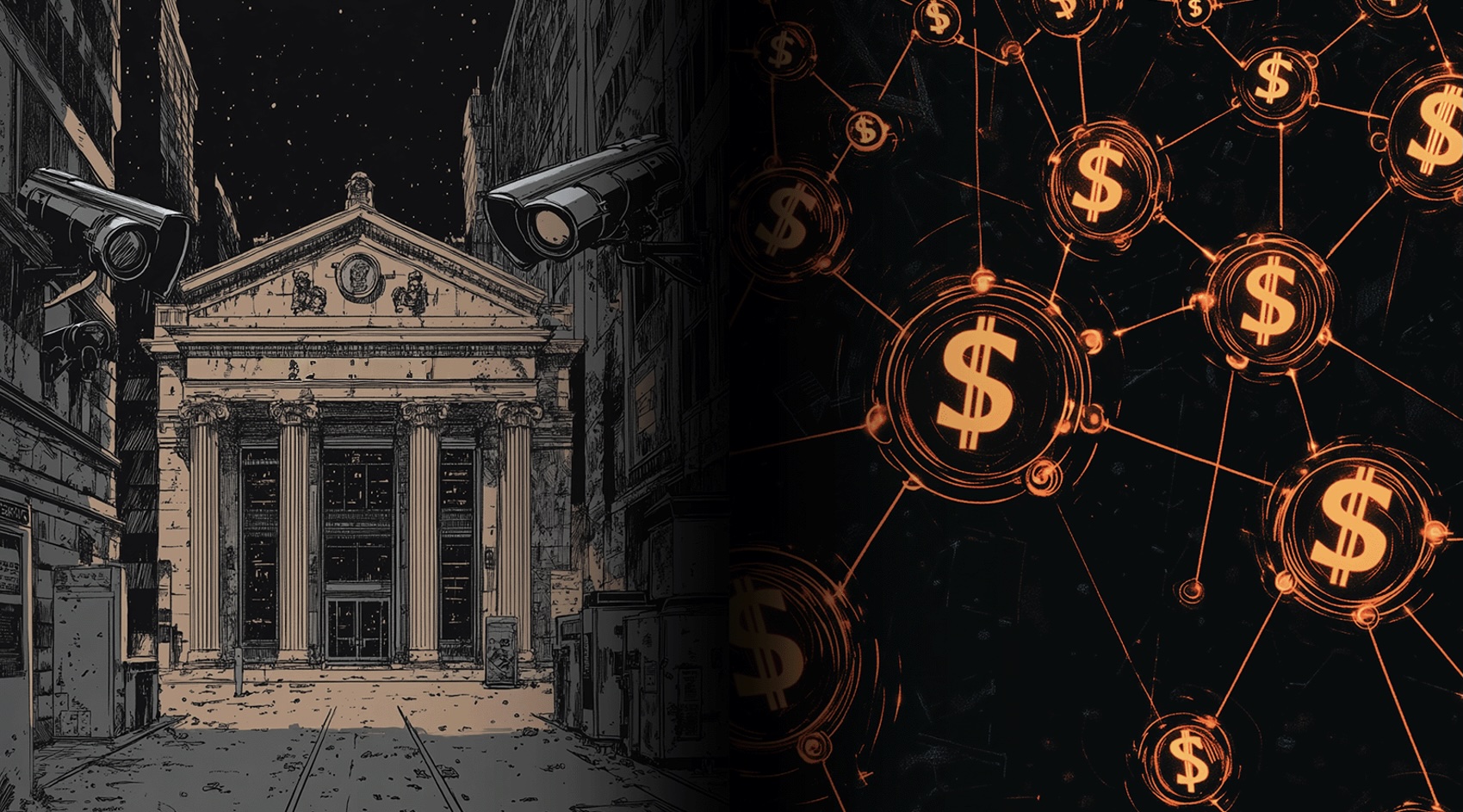
Perhaps most importantly for individual users, the privacy implications are stark. Unlike cash, which affords a high degree of anonymity, CBDC transactions—unless specifically designed otherwise—could be fully traceable by the issuing authority. This creates the potential for real-time surveillance of individuals' spending habits, associations, and location. Stablecoins, while not completely anonymous, operate on public blockchains where transactions are transparent but pseudonymous.

The Republican-led Congress and the White House oppose CBDCs, ensuring that no CBDC legislation will move forward in the United States in the foreseeable future. Meanwhile, the focus has clearly shifted toward creating a robust framework for stablecoins.

The Broken Promise of Traditional Finance

stablecoin

To understand why stablecoins matter, we need to honestly assess what's wrong with our current financial system.

Cross-Border Payment Dysfunction: International flows remain constrained by fragmented legacy rails, which rely on correspondent banking networks that introduce delays, lack transparency, and impose high FX costs. I've seen businesses wait days for what should be simple international payments, watching exchange rates fluctuate while their money sits in limbo.

Infrastructure Decay: Nearly six out of 10 banking leaders surveyed consider legacy infrastructure to be the top challenge impeding their organization's business growth. We're talking about mainframe systems from the 1960s still processing modern transactions. Since a full replacement of these core systems is often a cost-prohibitive, multi-year endeavour, some banks may "feel like hostages" to their legacy technology.

Regulatory Burden: From data security regulations to anti-money laundering (AML) rules, the compliance landscape in 2025 remains complex. Financial institutions need scalable processes and technology solutions to manage the growing compliance demands efficiently.

Exclusion and Access: Despite decades of "financial inclusion" initiatives, traditional banking still excludes massive populations. The account minimums, documentation requirements, and geographic limitations create barriers that billions simply can't overcome.

How Stablecoins Address These Fundamental Problems

stablecoin

Here's where I get inspired by the potential. Stablecoins aren't just incremental improvements; they're architectural solutions to systemic problems.

Solving the Cross-Border Nightmare: A payment from a European company to a U.S. supplier sent through SWIFT-based channels can incur fees ranging from $25 to $50, due to intermediary bank charges. Settlement may take 1–3 business days. By comparison, transferring USDC via the Solana blockchain typically costs less than $0.01 in network fees and settles in under 5 seconds.

I recently worked with a mid-cap company that was spending over $200,000 annually just on wire transfer fees for international supplier payments. By switching to stablecoins, they reduced those costs to under $5,000 while improving payment speed from 3-5 days to under an hour.

Infrastructure Modernization: Rather than trying to modernize 60-year-old mainframes, stablecoins operate on modern blockchain infrastructure built for the digital age. Why patch legacy systems when you can leapfrog entirely?

True Financial Inclusion: Tether CEO Paolo Ardoino said commodity trading firms will be "the biggest driver" of stablecoin adoption in the next five years, but I think the real driver will be global financial inclusion. Anyone with a smartphone can access stablecoins, regardless of their banking status or geographic location.

Programmable Finance: This is where things get really interesting. Smart contracts can automate complex financial operations — automated payroll, conditional payments, treasury management — without human intervention.

And here’s where AI quietly supercharges the potential. AI systems can analyze market conditions, detect fraud patterns, or predict cash flow needs, then trigger smart contract actions instantly. Imagine payroll systems that automatically adjust based on staff hours logged, or supplier payments that execute the moment AI verifies goods have reached their destination.

For treasury teams, that means less time moving numbers around and more time focusing on strategy. For businesses, it means efficiency gains that could previously only be achieved with large teams and long lead times. Stablecoins make this possible by being programmable, instantaneous, and compatible with both human and machine decision-making.

The Institutional Shift

stablecoin

What excites me most is watching institutional adoption accelerate. 86% of firms report their infrastructure is ready for stablecoin adoption, shifting the focus from pilots to execution. This isn't experimental anymore... it's operational.

Tether has already demonstrated the profitability of this model, netting $5.2 billion in the first half of 2024 after placing reserves in US Treasury bonds. The strategy is compelling: launch a regulated stablecoin, negotiate with exchanges for promotion, and earn consistent yields from fiat reserves.

The underlying business model of stablecoin issuers offers the U.S. government an innovative opportunity to financially engineer a larger base of short-term debt buyers, and extend the dollar's monetary influence worldwide. This isn't just about technology; it's about geopolitical strategy.

The Treasury Revolution

stablecoin

Let me share something I've been observing in my work with institutional clients. Stablecoins are being adopted for cross-border supplier payments in countries with poor access to banks. They can help with digitalizing trade documentation, and automate parts of treasuries.

Programmable Treasury Operations: Smart contracts can automate recurring payments and complex multi-party transactions. AI adds another layer — monitoring market conditions, adjusting liquidity allocations, and even forecasting currency needs — and can execute those adjustments via stablecoin transfers instantly.

Real-Time Settlement: The ability for tokenized cash to operate continuously, satisfy demand for instant settlement, and offer improved operational risk controls solves real-world pain points. AI can track settlement flows in real time, flag anomalies, and maintain 24/7 operational readiness without human fatigue.

Global Liquidity Management: Instead of maintaining cash balances in multiple currencies across different banks, companies can hold USD-backed stablecoins and convert at the point of transaction. With AI-driven treasury dashboards, those conversions can happen dynamically based on exchange rate trends or supplier payment priorities.

The Future: Beyond What We Can See Today

stablecoin

The applications we're seeing today are just scratching the surface — and the most transformative ones may not even be on the radar yet.

Autonomous Economic Systems: As automation advances, we’ll see more systems — both human-run and AI-driven — managing their own financial flows. Whether it’s an AI coordinating global logistics routes or a decentralized app running a micro-lending network, stablecoins give these systems a reliable, borderless currency to operate in real time, without depending on legacy bank rails.

Supply Chain Finance Revolution: Imagine payments automatically releasing as goods move through verified checkpoints, tracked by IoT sensors and confirmed by AI analysis. This could speed up trade, shrink financing gaps for smaller suppliers, and reduce fraud by ensuring only verified deliveries get paid.

Micro-Transaction Economy: With near-zero transaction costs, entirely new business models emerge. Pay-per-article journalism, per-second software subscriptions, instant digital asset rentals, even AI-generated research sold by the query — all become possible when payments are fast, precise, and globally accessible.

Global R&D and Collaboration: Stablecoins also make it easier to fund innovation across borders, whether for AI development, renewable energy, biotech, or space tech. Teams in different regions can receive direct, instant funding in a currency that holds its value, bypassing currency conversion losses and bank delays.

Cross-Chain Interoperability: As more services and applications — from AI compute marketplaces to music streaming platforms — live on decentralized networks, stablecoins can act as the universal settlement layer, moving value seamlessly between blockchains without volatility risk.

We’re heading toward a future where money is as programmable as software, able to move instantly between people, machines, and networks. Stablecoins won’t just ride that wave — they’ll be one of the forces making it possible.

Challenges and Realism

Let me be honest about the challenges. Questions around the reserves backing stablecoins have led to increased scrutiny, with regulators pushing for clearer disclosure requirements. Transparency remains an issue, particularly with some issuers' reserve practices.

Technical risks remain real. Smart contract bugs, blockchain outages, and scalability constraints could all impact adoption. Regulatory frameworks are still evolving; they're trying to balance innovation with consumer protection.

The Bottom Line

Here's what I think is happening: we're witnessing the emergence of a new financial operating system. Stablecoins have proven themselves to be a foundational tool for blockchain-hosted finance and commerce, by providing a simple yet critical financial primitive of a stable, liquid, and programmable medium of exchange.

The current financial system isn't broken by accident; it was built for a different era, when information moved slowly and trust required intermediaries. Stablecoins represent something fundamentally different: programmable money for a programmable world.

I've been in this space long enough to see multiple cycles of hype and disappointment. But this feels different. The infrastructure is maturing, regulation is clarifying, and institutional adoption is accelerating. If that rate of growth were to continue, stablecoin transactions could surpass legacy payment volumes in less than a decade.

That's not just a technological shift—it's a fundamental reorganization of how value moves through the global economy. The question isn't whether stablecoins will reshape finance. They already are. The question is whether traditional institutions will adapt quickly enough to remain relevant in a world where money moves at the speed of information.

From where I sit, I can tell you this: the future of money is already here. It's just not evenly distributed yet.

Gregory Cowles, Co-Founder & CSO at Intellistake | X | LinkedIn

Gregory brings extensive leadership experience in digital currencies and AI marketing strategies, having first engaged with Bitcoin and digital currencies in 2013. His expertise includes advising small-cap mining operations and executing impactful marketing initiatives for public companies. Over the past four years, Gregory has specialized in incubation, DeFi strategies, and successful digital currency launches, managing impressive AI and digital currency clients with portfolios valued at over $2.5 billion USD. His strategic insight positions Intellistake at the forefront of decentralized AI & finance, confidently guiding investors toward high-growth opportunities in emerging digital asset markets.

This article was written by Gregory Cowles, Chief Strategy Officer and Co-founder, Intellistake

I've been watching digital currencies evolve since I first encountered Bitcoin years ago, but I'll be honest; nothing has captured my attention quite like what's happening with stablecoins right now. We're witnessing something that feels both inevitable and revolutionary at the same time.

As I write this, stablecoins have surpassed $220 billion in market capitalization, representing roughly 1% of the U.S. money supply. Total transfer volume hit $27.6 trillion last year, surpassing the combined volume of Visa and Mastercard transactions. But here's what really gets me excited: this is just the beginning.

The Current Uprising: More Than Just Another Crypto Story

stablecoin

What we're seeing isn't your typical cryptocurrency boom. This feels different, more substantial. The European Union's MiCA regulation came into effect in mid-2024, and in the U.S., the GENIUS Act is advancing through Congress, which would establish the first comprehensive regulatory framework for stablecoin issuers.

Vice President JD Vance became the first sitting U.S. vice president to address the bitcoin community, delivering a full-throated endorsement of crypto. When you have that level of political backing combined with major banks including JPMorgan, Bank of America and Citi in early talks to issue a unified digital dollar, you know we've moved beyond speculation into implementation.

The numbers tell a compelling story, but they don't capture the human element. In countries like Argentina, Nigeria, and Turkey, plagued recently by extreme inflation and falling exchange rates, stablecoins have grown sharply. These aren't just investment vehicles—they're becoming essential tools for economic survival.

CBDCs vs. Stablecoins: Two Very Different Visions

stablecoin

Let me be clear about something that often gets confused: Central Bank Digital Currencies (CBDCs) and stablecoins are fundamentally different beasts.

CBDCs are an extension of state authority, an evolution of existing monetary systems to the digital economy designed to give governments more direct tools for policy execution. Stablecoins, on the other hand, represent a break from it: they were born out of the crypto movement and carry its ethos of accessibility, interoperability, and financial autonomy.

The governance structures couldn't be more different. CBDCs are created, controlled, and regulated by the central bank of a country or region, while stablecoins are usually governed by private companies such as Circle or Binance.

Perhaps most importantly for individual users, the privacy implications are stark. Unlike cash, which affords a high degree of anonymity, CBDC transactions—unless specifically designed otherwise—could be fully traceable by the issuing authority. This creates the potential for real-time surveillance of individuals' spending habits, associations, and location. Stablecoins, while not completely anonymous, operate on public blockchains where transactions are transparent but pseudonymous.

The Republican-led Congress and the White House oppose CBDCs, ensuring that no CBDC legislation will move forward in the United States in the foreseeable future. Meanwhile, the focus has clearly shifted toward creating a robust framework for stablecoins.

The Broken Promise of Traditional Finance

stablecoin

To understand why stablecoins matter, we need to honestly assess what's wrong with our current financial system.

Cross-Border Payment Dysfunction: International flows remain constrained by fragmented legacy rails, which rely on correspondent banking networks that introduce delays, lack transparency, and impose high FX costs. I've seen businesses wait days for what should be simple international payments, watching exchange rates fluctuate while their money sits in limbo.

Infrastructure Decay: Nearly six out of 10 banking leaders surveyed consider legacy infrastructure to be the top challenge impeding their organization's business growth. We're talking about mainframe systems from the 1960s still processing modern transactions. Since a full replacement of these core systems is often a cost-prohibitive, multi-year endeavour, some banks may "feel like hostages" to their legacy technology.

Regulatory Burden: From data security regulations to anti-money laundering (AML) rules, the compliance landscape in 2025 remains complex. Financial institutions need scalable processes and technology solutions to manage the growing compliance demands efficiently.

Exclusion and Access: Despite decades of "financial inclusion" initiatives, traditional banking still excludes massive populations. The account minimums, documentation requirements, and geographic limitations create barriers that billions simply can't overcome.

How Stablecoins Address These Fundamental Problems

stablecoin

Here's where I get inspired by the potential. Stablecoins aren't just incremental improvements; they're architectural solutions to systemic problems.

Solving the Cross-Border Nightmare: A payment from a European company to a U.S. supplier sent through SWIFT-based channels can incur fees ranging from $25 to $50, due to intermediary bank charges. Settlement may take 1–3 business days. By comparison, transferring USDC via the Solana blockchain typically costs less than $0.01 in network fees and settles in under 5 seconds.

I recently worked with a mid-cap company that was spending over $200,000 annually just on wire transfer fees for international supplier payments. By switching to stablecoins, they reduced those costs to under $5,000 while improving payment speed from 3-5 days to under an hour.

Infrastructure Modernization: Rather than trying to modernize 60-year-old mainframes, stablecoins operate on modern blockchain infrastructure built for the digital age. Why patch legacy systems when you can leapfrog entirely?

True Financial Inclusion: Tether CEO Paolo Ardoino said commodity trading firms will be "the biggest driver" of stablecoin adoption in the next five years, but I think the real driver will be global financial inclusion. Anyone with a smartphone can access stablecoins, regardless of their banking status or geographic location.

Programmable Finance: This is where things get really interesting. Smart contracts can automate complex financial operations — automated payroll, conditional payments, treasury management — without human intervention.

And here’s where AI quietly supercharges the potential. AI systems can analyze market conditions, detect fraud patterns, or predict cash flow needs, then trigger smart contract actions instantly. Imagine payroll systems that automatically adjust based on staff hours logged, or supplier payments that execute the moment AI verifies goods have reached their destination.

For treasury teams, that means less time moving numbers around and more time focusing on strategy. For businesses, it means efficiency gains that could previously only be achieved with large teams and long lead times. Stablecoins make this possible by being programmable, instantaneous, and compatible with both human and machine decision-making.

The Institutional Shift

stablecoin

What excites me most is watching institutional adoption accelerate. 86% of firms report their infrastructure is ready for stablecoin adoption, shifting the focus from pilots to execution. This isn't experimental anymore... it's operational.

Tether has already demonstrated the profitability of this model, netting $5.2 billion in the first half of 2024 after placing reserves in US Treasury bonds. The strategy is compelling: launch a regulated stablecoin, negotiate with exchanges for promotion, and earn consistent yields from fiat reserves.

The underlying business model of stablecoin issuers offers the U.S. government an innovative opportunity to financially engineer a larger base of short-term debt buyers, and extend the dollar's monetary influence worldwide. This isn't just about technology; it's about geopolitical strategy.

The Treasury Revolution

stablecoin

Let me share something I've been observing in my work with institutional clients. Stablecoins are being adopted for cross-border supplier payments in countries with poor access to banks. They can help with digitalizing trade documentation, and automate parts of treasuries.

Programmable Treasury Operations: Smart contracts can automate recurring payments and complex multi-party transactions. AI adds another layer — monitoring market conditions, adjusting liquidity allocations, and even forecasting currency needs — and can execute those adjustments via stablecoin transfers instantly.

Real-Time Settlement: The ability for tokenized cash to operate continuously, satisfy demand for instant settlement, and offer improved operational risk controls solves real-world pain points. AI can track settlement flows in real time, flag anomalies, and maintain 24/7 operational readiness without human fatigue.

Global Liquidity Management: Instead of maintaining cash balances in multiple currencies across different banks, companies can hold USD-backed stablecoins and convert at the point of transaction. With AI-driven treasury dashboards, those conversions can happen dynamically based on exchange rate trends or supplier payment priorities.

The Future: Beyond What We Can See Today

stablecoin

The applications we're seeing today are just scratching the surface — and the most transformative ones may not even be on the radar yet.

Autonomous Economic Systems: As automation advances, we’ll see more systems — both human-run and AI-driven — managing their own financial flows. Whether it’s an AI coordinating global logistics routes or a decentralized app running a micro-lending network, stablecoins give these systems a reliable, borderless currency to operate in real time, without depending on legacy bank rails.

Supply Chain Finance Revolution: Imagine payments automatically releasing as goods move through verified checkpoints, tracked by IoT sensors and confirmed by AI analysis. This could speed up trade, shrink financing gaps for smaller suppliers, and reduce fraud by ensuring only verified deliveries get paid.

Micro-Transaction Economy: With near-zero transaction costs, entirely new business models emerge. Pay-per-article journalism, per-second software subscriptions, instant digital asset rentals, even AI-generated research sold by the query — all become possible when payments are fast, precise, and globally accessible.

Global R&D and Collaboration: Stablecoins also make it easier to fund innovation across borders, whether for AI development, renewable energy, biotech, or space tech. Teams in different regions can receive direct, instant funding in a currency that holds its value, bypassing currency conversion losses and bank delays.

Cross-Chain Interoperability: As more services and applications — from AI compute marketplaces to music streaming platforms — live on decentralized networks, stablecoins can act as the universal settlement layer, moving value seamlessly between blockchains without volatility risk.

We’re heading toward a future where money is as programmable as software, able to move instantly between people, machines, and networks. Stablecoins won’t just ride that wave — they’ll be one of the forces making it possible.

Challenges and Realism

Let me be honest about the challenges. Questions around the reserves backing stablecoins have led to increased scrutiny, with regulators pushing for clearer disclosure requirements. Transparency remains an issue, particularly with some issuers' reserve practices.

Technical risks remain real. Smart contract bugs, blockchain outages, and scalability constraints could all impact adoption. Regulatory frameworks are still evolving; they're trying to balance innovation with consumer protection.

The Bottom Line

Here's what I think is happening: we're witnessing the emergence of a new financial operating system. Stablecoins have proven themselves to be a foundational tool for blockchain-hosted finance and commerce, by providing a simple yet critical financial primitive of a stable, liquid, and programmable medium of exchange.

The current financial system isn't broken by accident; it was built for a different era, when information moved slowly and trust required intermediaries. Stablecoins represent something fundamentally different: programmable money for a programmable world.

I've been in this space long enough to see multiple cycles of hype and disappointment. But this feels different. The infrastructure is maturing, regulation is clarifying, and institutional adoption is accelerating. If that rate of growth were to continue, stablecoin transactions could surpass legacy payment volumes in less than a decade.

That's not just a technological shift—it's a fundamental reorganization of how value moves through the global economy. The question isn't whether stablecoins will reshape finance. They already are. The question is whether traditional institutions will adapt quickly enough to remain relevant in a world where money moves at the speed of information.

From where I sit, I can tell you this: the future of money is already here. It's just not evenly distributed yet.

Gregory Cowles, Co-Founder & CSO at Intellistake | X | LinkedIn

Gregory brings extensive leadership experience in digital currencies and AI marketing strategies, having first engaged with Bitcoin and digital currencies in 2013. His expertise includes advising small-cap mining operations and executing impactful marketing initiatives for public companies. Over the past four years, Gregory has specialized in incubation, DeFi strategies, and successful digital currency launches, managing impressive AI and digital currency clients with portfolios valued at over $2.5 billion USD. His strategic insight positions Intellistake at the forefront of decentralized AI & finance, confidently guiding investors toward high-growth opportunities in emerging digital asset markets.

Disclaimer

Thought Leadership

!"#$%&'()*+,-./0123456789:;<=>?@ABCDEFGHIJKLMNOPQRSTUVWXYZ[\]^_`abcdefghijklmnopqrstuvwxyz{|} !"#$%&'()*+,-./0123456789:;<=>?@ABCDEFGHIJKLMNOPQRSTUVWXYZ[\]^_`abcdefghijklmnopqrstuvwxyz{|}