Tier1FX believes that regulatory change is necessary if the industry is to remain relevant
Tier1FX
We may look back to 2018 as marking a watershed year for FX brokers. Spurred by industry regulation and aimed primarily at protecting the retail investor, the market environment has altered both in scope and relevance on the supply side.
However, despite this seemingly universal stance, only a small number of participants in the FX field have actually adopted tangible measures. Amongst this small group of brokers choosing to embrace these new regulations is Tier1FX.
Tier1FX believes that regulatory change is necessary if the industry is to remain relevant and it had previously instituted tangible dealing and administrative measures towards bettering the quality of its client offering.
This represents an ongoing process of its professional commitment towardsmore transparency within its business, while evidencing a strengthening of rules to better protect its clients’ investments.
The extent to which Tier1FX marks itself apart from the rest of the field is evident from a comparison with its key competitors’ business models or OM’s.
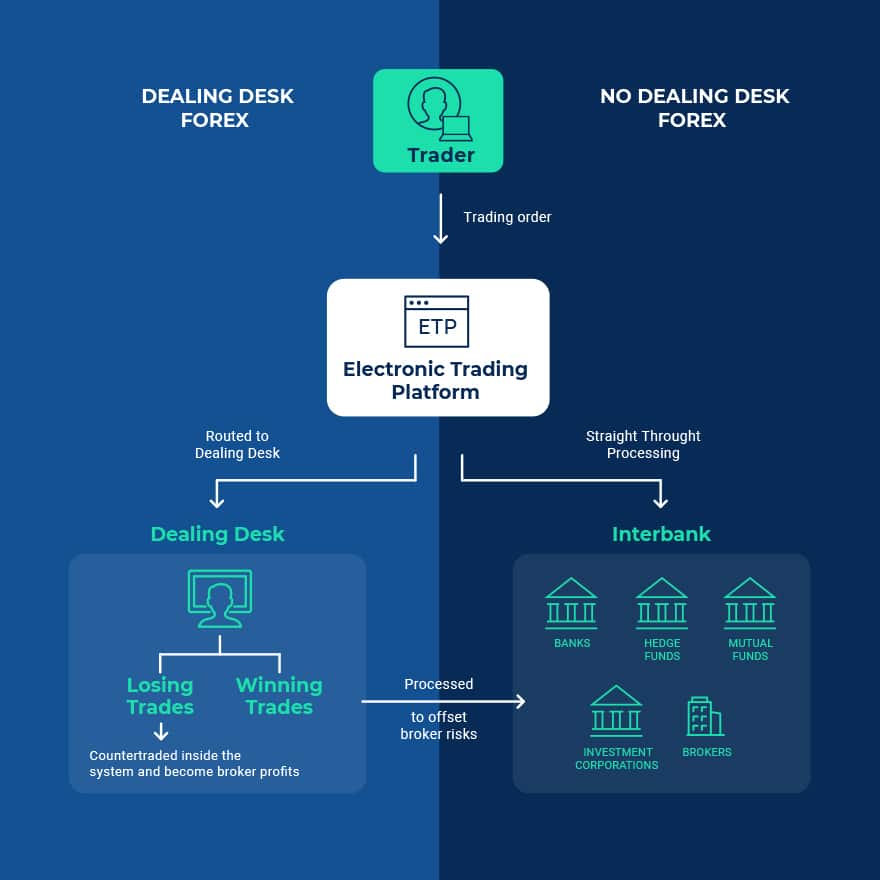
The market is populated with price quotes which are representative of the underlying market. These quotes are transmitted to the client via an electronic platform or voice medium. When the trader accepts a quote and places the order, the trade is executed with the market maker as the counterparty.
The ability however of the DD broker to identify a potential price action and the temptation to profit from it, may raise concerns about its professional impartiality. This should not read as a criticism of B-bookers generally, but the issues surrounding any alleged manipulation of prices quotes are inevitable especially during short bursts of price activity, volatility and other event driven moves.
No Dealing Desk
In comparison, no dealing desk (NDD) or direct market access (DMA) brokers provide access directly to the interbank market without passing orders through a dealing desk; therefore, removing any alleged conflict of interest and affording the trader with a better trading venue with access to deeper liquidity pools, variable spreads (never fixed), larger tradeable volumes and more competitive trading costs.
This should moreover reflect greater market transparency, improved and faster fills and, very importantly, trader anonymity.
An NDD broker generates its revenue by either charging a separate commission on trades or embedding the commission into the spread. The NDD brokers comprise of two types; straight through processing (STP) and Electronic Communications Network (ECN).
STP FX brokers send orders directly from clients to their liquidity providers (LPs) via an electronic platform. The LPs comprise rated financial institutions that provide wholesale brokerage services to eligible counterparties; Tier 1FX is an STP broker.
Tier1FX uses multiple LPs to provide a robust and deep liquidity pool for their clients. “The more liquidity providers we have the deeper the liquidity pool and hence the prospect for better execution. Our clients can trade larger market sizes without worrying about price slippage or outright rejection,” explained Sadek Baksh, Head of Global Business Development at Tier1FX.
An ECN, also referred to as an alternative trading system, allows all participants’ orders to be cross-matched directly without a ‘middle man’; therefore, traders become the counterparties to each other. Participants of an ECN can be individuals, banks, brokers and other financial institutions. Since the trades are settled directly, consequently, the cost is reduced. However, it does not mean a better price is always guaranteed.
What benefits exist for trading with NDD brokers?
The type of broker a trader will use is determined by their specific needs; there are pros and cons to each broker type.
Traders have suggested that trading with a NDD broker has allowed them to take advantage of superior fills, especially for larger trade sizes, and lower latency. This may be a result of NDD brokers investing greatly on the technology side, such co-locating and integrating directly with their LPs within advanced data centers.
According to Mr. Baksh, “The client should feel confident with their broker and trust them to provide the best trading environment possible. Tier1FX has built its reputation on putting the client first because without them, we will have no business.”
Moving forward
Generally, a successful and importantly sustainable business model is a reflection of client satisfaction. This reflects Tier1FX’s ethos that the trader needs be confident in their chosen broker, that there is every incentive to ensure the trader succeeds and does so consistently, and to dispel any concerns a trader may have to the contrary.
Tier1FX has identified with this as the necessary precursor to the growth of market acceptance and reputation within the global foreign exchange marketplace.
As an STP broker with a largely sustainable and growing client equity, Tier1FX identifies itself as the embodiment of change and of the future of the industry.
About Tier1FX
Tier1FX is a specialist provider of prime liquidity, trading and technology solutions; The group’s reputation is built on a foundation of trust, reliability and transparency. Tier1FX offers a pure and dependable DMA-STP trading venue, with no dealer intervention, where clients can trade with confidence, security and speed.
We may look back to 2018 as marking a watershed year for FX brokers. Spurred by industry regulation and aimed primarily at protecting the retail investor, the market environment has altered both in scope and relevance on the supply side.
However, despite this seemingly universal stance, only a small number of participants in the FX field have actually adopted tangible measures. Amongst this small group of brokers choosing to embrace these new regulations is Tier1FX.
Tier1FX believes that regulatory change is necessary if the industry is to remain relevant and it had previously instituted tangible dealing and administrative measures towards bettering the quality of its client offering.
This represents an ongoing process of its professional commitment towardsmore transparency within its business, while evidencing a strengthening of rules to better protect its clients’ investments.
The extent to which Tier1FX marks itself apart from the rest of the field is evident from a comparison with its key competitors’ business models or OM’s.
The market is populated with price quotes which are representative of the underlying market. These quotes are transmitted to the client via an electronic platform or voice medium. When the trader accepts a quote and places the order, the trade is executed with the market maker as the counterparty.
The ability however of the DD broker to identify a potential price action and the temptation to profit from it, may raise concerns about its professional impartiality. This should not read as a criticism of B-bookers generally, but the issues surrounding any alleged manipulation of prices quotes are inevitable especially during short bursts of price activity, volatility and other event driven moves.
No Dealing Desk
In comparison, no dealing desk (NDD) or direct market access (DMA) brokers provide access directly to the interbank market without passing orders through a dealing desk; therefore, removing any alleged conflict of interest and affording the trader with a better trading venue with access to deeper liquidity pools, variable spreads (never fixed), larger tradeable volumes and more competitive trading costs.
This should moreover reflect greater market transparency, improved and faster fills and, very importantly, trader anonymity.
An NDD broker generates its revenue by either charging a separate commission on trades or embedding the commission into the spread. The NDD brokers comprise of two types; straight through processing (STP) and Electronic Communications Network (ECN).
STP FX brokers send orders directly from clients to their liquidity providers (LPs) via an electronic platform. The LPs comprise rated financial institutions that provide wholesale brokerage services to eligible counterparties; Tier 1FX is an STP broker.
Tier1FX uses multiple LPs to provide a robust and deep liquidity pool for their clients. “The more liquidity providers we have the deeper the liquidity pool and hence the prospect for better execution. Our clients can trade larger market sizes without worrying about price slippage or outright rejection,” explained Sadek Baksh, Head of Global Business Development at Tier1FX.
An ECN, also referred to as an alternative trading system, allows all participants’ orders to be cross-matched directly without a ‘middle man’; therefore, traders become the counterparties to each other. Participants of an ECN can be individuals, banks, brokers and other financial institutions. Since the trades are settled directly, consequently, the cost is reduced. However, it does not mean a better price is always guaranteed.
What benefits exist for trading with NDD brokers?
The type of broker a trader will use is determined by their specific needs; there are pros and cons to each broker type.
Traders have suggested that trading with a NDD broker has allowed them to take advantage of superior fills, especially for larger trade sizes, and lower latency. This may be a result of NDD brokers investing greatly on the technology side, such co-locating and integrating directly with their LPs within advanced data centers.
According to Mr. Baksh, “The client should feel confident with their broker and trust them to provide the best trading environment possible. Tier1FX has built its reputation on putting the client first because without them, we will have no business.”
Moving forward
Generally, a successful and importantly sustainable business model is a reflection of client satisfaction. This reflects Tier1FX’s ethos that the trader needs be confident in their chosen broker, that there is every incentive to ensure the trader succeeds and does so consistently, and to dispel any concerns a trader may have to the contrary.
Tier1FX has identified with this as the necessary precursor to the growth of market acceptance and reputation within the global foreign exchange marketplace.
As an STP broker with a largely sustainable and growing client equity, Tier1FX identifies itself as the embodiment of change and of the future of the industry.
About Tier1FX
Tier1FX is a specialist provider of prime liquidity, trading and technology solutions; The group’s reputation is built on a foundation of trust, reliability and transparency. Tier1FX offers a pure and dependable DMA-STP trading venue, with no dealer intervention, where clients can trade with confidence, security and speed.
Hantec Financial Nominated for Most Trusted Broker at UF AWARDS APAC 2026
Featured Videos
AvaTrade to Acquire Most of FXCM; NAGA Raises $8M
AvaTrade to Acquire Most of FXCM; NAGA Raises $8M
AvaTrade to Acquire Most of FXCM; NAGA Raises $8M
AvaTrade to Acquire Most of FXCM; NAGA Raises $8M
Today’s financial news recap covers AvaTrade agrees to acquire most of FXCM, NAGA secures eight million dollars in new financing, and Wise seeks a tax settlement in the UK.
Finance Magnates Daily Recap brings you the latest news from forex and CFD brokers, fintech, payments, cryptocurrency, digital assets, trading platforms, financial regulation and global markets.
Get the key company news, executive moves, deals, regulatory updates and market developments of the day, in just a few minutes. New episodes published every weekday.
Read more: https://www.financemagnates.com
#FinanceMagnates #ForexNews #FintechNews
Today’s financial news recap covers AvaTrade agrees to acquire most of FXCM, NAGA secures eight million dollars in new financing, and Wise seeks a tax settlement in the UK.
Finance Magnates Daily Recap brings you the latest news from forex and CFD brokers, fintech, payments, cryptocurrency, digital assets, trading platforms, financial regulation and global markets.
Get the key company news, executive moves, deals, regulatory updates and market developments of the day, in just a few minutes. New episodes published every weekday.
Read more: https://www.financemagnates.com
#FinanceMagnates #ForexNews #FintechNews
Today’s financial news recap covers AvaTrade agrees to acquire most of FXCM, NAGA secures eight million dollars in new financing, and Wise seeks a tax settlement in the UK.
Finance Magnates Daily Recap brings you the latest news from forex and CFD brokers, fintech, payments, cryptocurrency, digital assets, trading platforms, financial regulation and global markets.
Get the key company news, executive moves, deals, regulatory updates and market developments of the day, in just a few minutes. New episodes published every weekday.
Read more: https://www.financemagnates.com
#FinanceMagnates #ForexNews #FintechNews
Today’s financial news recap covers AvaTrade agrees to acquire most of FXCM, NAGA secures eight million dollars in new financing, and Wise seeks a tax settlement in the UK.
Finance Magnates Daily Recap brings you the latest news from forex and CFD brokers, fintech, payments, cryptocurrency, digital assets, trading platforms, financial regulation and global markets.
Get the key company news, executive moves, deals, regulatory updates and market developments of the day, in just a few minutes. New episodes published every weekday.
Read more: https://www.financemagnates.com
#FinanceMagnates #ForexNews #FintechNews
XTB Adds Overnight US Stock Trading; Nasdaq Ventures Invests in One Trading
XTB Adds Overnight US Stock Trading; Nasdaq Ventures Invests in One Trading
XTB Adds Overnight US Stock Trading; Nasdaq Ventures Invests in One Trading
XTB Adds Overnight US Stock Trading; Nasdaq Ventures Invests in One Trading
XTB Adds Overnight US Stock Trading; Nasdaq Ventures Invests in One Trading
XTB Adds Overnight US Stock Trading; Nasdaq Ventures Invests in One Trading
Today’s financial news recap covers XTB expands overnight US stock trading, Fortrade reports higher revenue, Nasdaq backs One Trading, and Vest Labs raises 13 million dollars.
Finance Magnates Daily Recap brings you the latest news from forex and CFD brokers, fintech, payments, cryptocurrency, digital assets, trading platforms, financial regulation and global markets.
Get the key company news, executive moves, deals, regulatory updates and market developments of the day, in just a few minutes. New episodes published every weekday.
Read more: https://www.financemagnates.com
#FinanceMagnates #ForexNews #FintechNews
Today’s financial news recap covers XTB expands overnight US stock trading, Fortrade reports higher revenue, Nasdaq backs One Trading, and Vest Labs raises 13 million dollars.
Finance Magnates Daily Recap brings you the latest news from forex and CFD brokers, fintech, payments, cryptocurrency, digital assets, trading platforms, financial regulation and global markets.
Get the key company news, executive moves, deals, regulatory updates and market developments of the day, in just a few minutes. New episodes published every weekday.
Read more: https://www.financemagnates.com
#FinanceMagnates #ForexNews #FintechNews
Today’s financial news recap covers XTB expands overnight US stock trading, Fortrade reports higher revenue, Nasdaq backs One Trading, and Vest Labs raises 13 million dollars.
Finance Magnates Daily Recap brings you the latest news from forex and CFD brokers, fintech, payments, cryptocurrency, digital assets, trading platforms, financial regulation and global markets.
Get the key company news, executive moves, deals, regulatory updates and market developments of the day, in just a few minutes. New episodes published every weekday.
Read more: https://www.financemagnates.com
#FinanceMagnates #ForexNews #FintechNews
Today’s financial news recap covers XTB expands overnight US stock trading, Fortrade reports higher revenue, Nasdaq backs One Trading, and Vest Labs raises 13 million dollars.
Finance Magnates Daily Recap brings you the latest news from forex and CFD brokers, fintech, payments, cryptocurrency, digital assets, trading platforms, financial regulation and global markets.
Get the key company news, executive moves, deals, regulatory updates and market developments of the day, in just a few minutes. New episodes published every weekday.
Read more: https://www.financemagnates.com
#FinanceMagnates #ForexNews #FintechNews
Today’s financial news recap covers XTB expands overnight US stock trading, Fortrade reports higher revenue, Nasdaq backs One Trading, and Vest Labs raises 13 million dollars.
Finance Magnates Daily Recap brings you the latest news from forex and CFD brokers, fintech, payments, cryptocurrency, digital assets, trading platforms, financial regulation and global markets.
Get the key company news, executive moves, deals, regulatory updates and market developments of the day, in just a few minutes. New episodes published every weekday.
Read more: https://www.financemagnates.com
#FinanceMagnates #ForexNews #FintechNews
Today’s financial news recap covers XTB expands overnight US stock trading, Fortrade reports higher revenue, Nasdaq backs One Trading, and Vest Labs raises 13 million dollars.
Finance Magnates Daily Recap brings you the latest news from forex and CFD brokers, fintech, payments, cryptocurrency, digital assets, trading platforms, financial regulation and global markets.
Get the key company news, executive moves, deals, regulatory updates and market developments of the day, in just a few minutes. New episodes published every weekday.
Read more: https://www.financemagnates.com
#FinanceMagnates #ForexNews #FintechNews
CMC Founder Downplays Volatility Hit; Devexperts Names CEO
CMC Founder Downplays Volatility Hit; Devexperts Names CEO
CMC Founder Downplays Volatility Hit; Devexperts Names CEO
CMC Founder Downplays Volatility Hit; Devexperts Names CEO
CMC Founder Downplays Volatility Hit; Devexperts Names CEO
CMC Founder Downplays Volatility Hit; Devexperts Names CEO
Today’s financial news recap covers low volatility pressures brokers, Devexperts names a new CEO, Saxo cuts onboarding time, and OKX reaches a 25 billion dollar valuation.
Finance Magnates Daily Recap brings you the latest news from forex and CFD brokers, fintech, payments, cryptocurrency, digital assets, trading platforms, financial regulation and global markets.
Get the key company news, executive moves, deals, regulatory updates and market developments of the day, in just a few minutes. New episodes published every weekday.
Read more: https://www.financemagnates.com
#FinanceMagnates #ForexNews #FintechNews
Today’s financial news recap covers low volatility pressures brokers, Devexperts names a new CEO, Saxo cuts onboarding time, and OKX reaches a 25 billion dollar valuation.
Finance Magnates Daily Recap brings you the latest news from forex and CFD brokers, fintech, payments, cryptocurrency, digital assets, trading platforms, financial regulation and global markets.
Get the key company news, executive moves, deals, regulatory updates and market developments of the day, in just a few minutes. New episodes published every weekday.
Read more: https://www.financemagnates.com
#FinanceMagnates #ForexNews #FintechNews
Today’s financial news recap covers low volatility pressures brokers, Devexperts names a new CEO, Saxo cuts onboarding time, and OKX reaches a 25 billion dollar valuation.
Finance Magnates Daily Recap brings you the latest news from forex and CFD brokers, fintech, payments, cryptocurrency, digital assets, trading platforms, financial regulation and global markets.
Get the key company news, executive moves, deals, regulatory updates and market developments of the day, in just a few minutes. New episodes published every weekday.
Read more: https://www.financemagnates.com
#FinanceMagnates #ForexNews #FintechNews
Today’s financial news recap covers low volatility pressures brokers, Devexperts names a new CEO, Saxo cuts onboarding time, and OKX reaches a 25 billion dollar valuation.
Finance Magnates Daily Recap brings you the latest news from forex and CFD brokers, fintech, payments, cryptocurrency, digital assets, trading platforms, financial regulation and global markets.
Get the key company news, executive moves, deals, regulatory updates and market developments of the day, in just a few minutes. New episodes published every weekday.
Read more: https://www.financemagnates.com
#FinanceMagnates #ForexNews #FintechNews
Today’s financial news recap covers low volatility pressures brokers, Devexperts names a new CEO, Saxo cuts onboarding time, and OKX reaches a 25 billion dollar valuation.
Finance Magnates Daily Recap brings you the latest news from forex and CFD brokers, fintech, payments, cryptocurrency, digital assets, trading platforms, financial regulation and global markets.
Get the key company news, executive moves, deals, regulatory updates and market developments of the day, in just a few minutes. New episodes published every weekday.
Read more: https://www.financemagnates.com
#FinanceMagnates #ForexNews #FintechNews
Today’s financial news recap covers low volatility pressures brokers, Devexperts names a new CEO, Saxo cuts onboarding time, and OKX reaches a 25 billion dollar valuation.
Finance Magnates Daily Recap brings you the latest news from forex and CFD brokers, fintech, payments, cryptocurrency, digital assets, trading platforms, financial regulation and global markets.
Get the key company news, executive moves, deals, regulatory updates and market developments of the day, in just a few minutes. New episodes published every weekday.
Read more: https://www.financemagnates.com
#FinanceMagnates #ForexNews #FintechNews
Today’s financial news recap covers Trade Nation buys FXCM's UK client book, Trading 212 reports higher revenue, the CFTC's move to allow perpetual index futures.
Finance Magnates Daily Recap brings you the latest news from forex and CFD brokers, fintech, payments, cryptocurrency, digital assets, trading platforms, financial regulation and global markets.
Get the key company news, executive moves, deals, regulatory updates and market developments of the day, in just a few minutes. New episodes published every weekday.
Read more: https://www.financemagnates.com
#FinanceMagnates #ForexNews #FintechNews
Today’s financial news recap covers Trade Nation buys FXCM's UK client book, Trading 212 reports higher revenue, the CFTC's move to allow perpetual index futures.
Finance Magnates Daily Recap brings you the latest news from forex and CFD brokers, fintech, payments, cryptocurrency, digital assets, trading platforms, financial regulation and global markets.
Get the key company news, executive moves, deals, regulatory updates and market developments of the day, in just a few minutes. New episodes published every weekday.
Read more: https://www.financemagnates.com
#FinanceMagnates #ForexNews #FintechNews
Today’s financial news recap covers Trade Nation buys FXCM's UK client book, Trading 212 reports higher revenue, the CFTC's move to allow perpetual index futures.
Finance Magnates Daily Recap brings you the latest news from forex and CFD brokers, fintech, payments, cryptocurrency, digital assets, trading platforms, financial regulation and global markets.
Get the key company news, executive moves, deals, regulatory updates and market developments of the day, in just a few minutes. New episodes published every weekday.
Read more: https://www.financemagnates.com
#FinanceMagnates #ForexNews #FintechNews
Today’s financial news recap covers Trade Nation buys FXCM's UK client book, Trading 212 reports higher revenue, the CFTC's move to allow perpetual index futures.
Finance Magnates Daily Recap brings you the latest news from forex and CFD brokers, fintech, payments, cryptocurrency, digital assets, trading platforms, financial regulation and global markets.
Get the key company news, executive moves, deals, regulatory updates and market developments of the day, in just a few minutes. New episodes published every weekday.
Read more: https://www.financemagnates.com
#FinanceMagnates #ForexNews #FintechNews
Today’s financial news recap covers Trade Nation buys FXCM's UK client book, Trading 212 reports higher revenue, the CFTC's move to allow perpetual index futures.
Finance Magnates Daily Recap brings you the latest news from forex and CFD brokers, fintech, payments, cryptocurrency, digital assets, trading platforms, financial regulation and global markets.
Get the key company news, executive moves, deals, regulatory updates and market developments of the day, in just a few minutes. New episodes published every weekday.
Read more: https://www.financemagnates.com
#FinanceMagnates #ForexNews #FintechNews
Today’s financial news recap covers Trade Nation buys FXCM's UK client book, Trading 212 reports higher revenue, the CFTC's move to allow perpetual index futures.
Finance Magnates Daily Recap brings you the latest news from forex and CFD brokers, fintech, payments, cryptocurrency, digital assets, trading platforms, financial regulation and global markets.
Get the key company news, executive moves, deals, regulatory updates and market developments of the day, in just a few minutes. New episodes published every weekday.
Read more: https://www.financemagnates.com
#FinanceMagnates #ForexNews #FintechNews
Your career isn’t a linear path.
Your career isn’t a linear path.
Your career isn’t a linear path.
Your career isn’t a linear path.
Your career isn’t a linear path.
Your career isn’t a linear path.
Roles change. Career goals change. Sometimes you want a completely new challenge.
But the skills and knowledge you build along the way can stay with you and give you something to build on.
For Jeff Patterson, that continued growth is key to long-term career development.
You bring the skills. FM Academy helps you build the knowledge.
#FMAcademy #FinanceMagnates #FinanceCareers #ProfessionalDevelopment #Fintech
Roles change. Career goals change. Sometimes you want a completely new challenge.
But the skills and knowledge you build along the way can stay with you and give you something to build on.
For Jeff Patterson, that continued growth is key to long-term career development.
You bring the skills. FM Academy helps you build the knowledge.
#FMAcademy #FinanceMagnates #FinanceCareers #ProfessionalDevelopment #Fintech
Roles change. Career goals change. Sometimes you want a completely new challenge.
But the skills and knowledge you build along the way can stay with you and give you something to build on.
For Jeff Patterson, that continued growth is key to long-term career development.
You bring the skills. FM Academy helps you build the knowledge.
#FMAcademy #FinanceMagnates #FinanceCareers #ProfessionalDevelopment #Fintech
Roles change. Career goals change. Sometimes you want a completely new challenge.
But the skills and knowledge you build along the way can stay with you and give you something to build on.
For Jeff Patterson, that continued growth is key to long-term career development.
You bring the skills. FM Academy helps you build the knowledge.
#FMAcademy #FinanceMagnates #FinanceCareers #ProfessionalDevelopment #Fintech
Roles change. Career goals change. Sometimes you want a completely new challenge.
But the skills and knowledge you build along the way can stay with you and give you something to build on.
For Jeff Patterson, that continued growth is key to long-term career development.
You bring the skills. FM Academy helps you build the knowledge.
#FMAcademy #FinanceMagnates #FinanceCareers #ProfessionalDevelopment #Fintech
Roles change. Career goals change. Sometimes you want a completely new challenge.
But the skills and knowledge you build along the way can stay with you and give you something to build on.
For Jeff Patterson, that continued growth is key to long-term career development.
You bring the skills. FM Academy helps you build the knowledge.
#FMAcademy #FinanceMagnates #FinanceCareers #ProfessionalDevelopment #Fintech