A technical background is no longer a requisite for building the next big thing in the crypto space.
Most people who buy and sell cryptocurrency go to one of two places: a centralized exchange (CEX) or a decentralized exchange (DEX).
For beginners looking to buy Bitcoin or Ether, odds are they would open an account at a CEX like Binance or Coinbase — probably because of media-driven name recognition, a typical email login process, or predefined, predictable fee structures.
A study published by Cryptopedia has shown that, as of September 2020, 95% of digital asset trades are executed through CEXes. Those who are more experienced in crypto might prefer DEXes, especially if they are conscious about their privacy.
In 2021, non-custodial DEXes like Uniswap entered the mainstream: their trading volume in just January and February exceeded that of all previous years combined.
We can also see from the ratio of DEX to CEX spot trade volume that DEXes has maintained a steady level of popularity.
But there is, in fact, a third way — building a crypto exchange of your own.
HollaEx, AlphaPoint, and ChainUP offer “white-label” solutions, meaning that you don’t need to be a programmer to set up a crypto exchange. A technical background often comes in handy, but it is no longer a requisite for building the next big thing in the crypto space.
Problems with existing exchanges
For retail investors, it might not be a big deal to rely on conventional, big-name platforms. But entrepreneurs with exciting ideas in crypto and decentralized finance (DeFi) often find that existing exchanges fall short of their promises of flexibility, accessibility, and autonomy.
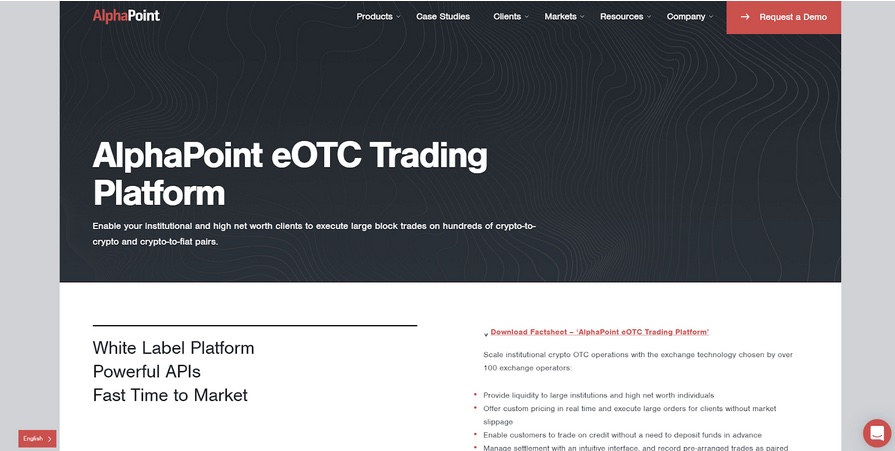
Website screenshot sourced from AlphaPoint
When you’re starting a project with its token, it might be troublesome — not to mention rather expensive — to get it listed on a popular exchange.
Not only are exorbitant listing fees a massive barrier of entry for companies, but the paperwork and administrative processes are also relatively tedious.
It is common for large CEXes to take weeks to consider a listing application, and you might not hear back from them at all.
Or, when you’re running a game company with digital goods, you might want a marketplace that is custom-made for your needs, so these offerings from CEXes are limited in that sense.
It’s a common misconception that DeFi only encapsulates financial products, but its principles also extend to other facets of blockchain applications. The whole point of DeFi is that anyone anywhere can take back control of the financial tools they use instead of being hamstrung by a middleman.
Setting up a crypto exchange
Building your exchange sounds like hard work, but nowadays, an exchange platform can be launched within minutes, as companies and individuals can use ready-made software solutions.
DIY Exchange kits are now freely available for those with the tech skills or pre-made cloud solutions that need little help
Launching a crypto exchange today is also an ideal way to capitalize on a multi-billion-dollar industry tomorrow. Crypto billionaires like Sam Bankman-Fried and Brian Armstrong built their wealth on exchanges, and more will surely follow in their footsteps.
White-label solutions for crypto exchanges help businesses step into the blockchain and digital asset space, giving them an efficient way to set up their platform with fine-grained control.
One example is the company bitHolla, which introduced the HollaEx Kit, an open-sourced platform with a set of protocols described as "exchange infrastructure in a box." It aims to be a one-stop-shop where users can set up an exchange's domain, digital assets, and fee structures.
“Exchange infrastructure in a box” - A video screenshot from YouTube about crypto exchange software HollaEX
Last year, it was ranked 34th in the Financial Times' list of America's fastest-growing companies. It provided the back-end for various Southeast Asia and Latin America exchanges, including an innovative project to tokenize real estate.
A similar provider is ChainUP, which recently celebrated its fourth anniversary. It promotes an exchange that extends to financial products beyond spot trading, such as derivatives, options, and ETFs.
Last year, it announced the integration of credit card payment systems.
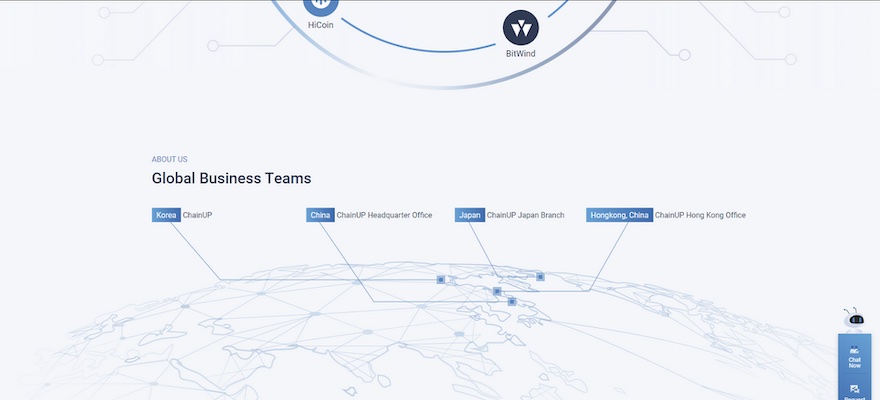
ChainUP, one of the countless “Made in China” factory-made software providers may provide local branches to specific target markets
Cost comparisons
It boils down to whether it’s more cost-effective to set up your exchange or use existing CEXes and DEXes.
The price of white-label exchange solutions might vary depending on the specifics of the business you want to build. Some estimates put the budget at around US$20,000, but that figure could easily surpass US$100,000 due to technology costs.
One exception is HollaEx, which lets you try its feature-rich toolkit for free until you’re ready to launch your marketplace, and it’s also free to download on GitHub.
It is also essential that the exchange solution fits into the evolving DeFi landscape. For example, the HollaEx network operates its exchanges using its native token, $XHT, and it activates new coins and markets and allows staking.
Every exchange built using the HollaEx Kit will have an $XHT/$USDT market and a built-in staking interface that features $XHT. In the long run, building your exchange with these toolkits will likely be more cost-effective.
You can skip the expensive process of assembling a development team, as the platform is suitable for non-developers and users without a technical background. Integrated security and technical support lead to further cost savings.
Summing up
Understandably, most crypto entrepreneurs don’t immediately think of themselves as someone who can operate their exchange. It might sound like a daunting task that requires a great deal of technical expertise and up-front costs.
But with the introduction of “exchange infrastructure in a box” toolkits, the barrier for entry has been dramatically lowered. Dependable white-label solutions with good track records can help entrepreneurs minimize risk while capitalizing on crypto’s incredible potential.
Ultimately good crypto software is about global value transfer, market accessibility, and affordability no matter the location
The best kind of white-label crypto exchange solution offers a balance between simplicity and functionality, with plenty of options for customization.
Whether you are starting an exciting cryptocurrency project, running a fintech business seeking blockchain compatibility, or operating a traditional exchange looking for an upgrade, you can now create and deploy your exchange within minutes — literally.
Most people who buy and sell cryptocurrency go to one of two places: a centralized exchange (CEX) or a decentralized exchange (DEX).
For beginners looking to buy Bitcoin or Ether, odds are they would open an account at a CEX like Binance or Coinbase — probably because of media-driven name recognition, a typical email login process, or predefined, predictable fee structures.
A study published by Cryptopedia has shown that, as of September 2020, 95% of digital asset trades are executed through CEXes. Those who are more experienced in crypto might prefer DEXes, especially if they are conscious about their privacy.
In 2021, non-custodial DEXes like Uniswap entered the mainstream: their trading volume in just January and February exceeded that of all previous years combined.
We can also see from the ratio of DEX to CEX spot trade volume that DEXes has maintained a steady level of popularity.
But there is, in fact, a third way — building a crypto exchange of your own.
HollaEx, AlphaPoint, and ChainUP offer “white-label” solutions, meaning that you don’t need to be a programmer to set up a crypto exchange. A technical background often comes in handy, but it is no longer a requisite for building the next big thing in the crypto space.
Problems with existing exchanges
For retail investors, it might not be a big deal to rely on conventional, big-name platforms. But entrepreneurs with exciting ideas in crypto and decentralized finance (DeFi) often find that existing exchanges fall short of their promises of flexibility, accessibility, and autonomy.
Website screenshot sourced from AlphaPoint
When you’re starting a project with its token, it might be troublesome — not to mention rather expensive — to get it listed on a popular exchange.
Not only are exorbitant listing fees a massive barrier of entry for companies, but the paperwork and administrative processes are also relatively tedious.
It is common for large CEXes to take weeks to consider a listing application, and you might not hear back from them at all.
Or, when you’re running a game company with digital goods, you might want a marketplace that is custom-made for your needs, so these offerings from CEXes are limited in that sense.
It’s a common misconception that DeFi only encapsulates financial products, but its principles also extend to other facets of blockchain applications. The whole point of DeFi is that anyone anywhere can take back control of the financial tools they use instead of being hamstrung by a middleman.
Setting up a crypto exchange
Building your exchange sounds like hard work, but nowadays, an exchange platform can be launched within minutes, as companies and individuals can use ready-made software solutions.
DIY Exchange kits are now freely available for those with the tech skills or pre-made cloud solutions that need little help
Launching a crypto exchange today is also an ideal way to capitalize on a multi-billion-dollar industry tomorrow. Crypto billionaires like Sam Bankman-Fried and Brian Armstrong built their wealth on exchanges, and more will surely follow in their footsteps.
White-label solutions for crypto exchanges help businesses step into the blockchain and digital asset space, giving them an efficient way to set up their platform with fine-grained control.
One example is the company bitHolla, which introduced the HollaEx Kit, an open-sourced platform with a set of protocols described as "exchange infrastructure in a box." It aims to be a one-stop-shop where users can set up an exchange's domain, digital assets, and fee structures.
“Exchange infrastructure in a box” - A video screenshot from YouTube about crypto exchange software HollaEX
Last year, it was ranked 34th in the Financial Times' list of America's fastest-growing companies. It provided the back-end for various Southeast Asia and Latin America exchanges, including an innovative project to tokenize real estate.
A similar provider is ChainUP, which recently celebrated its fourth anniversary. It promotes an exchange that extends to financial products beyond spot trading, such as derivatives, options, and ETFs.
Last year, it announced the integration of credit card payment systems.
ChainUP, one of the countless “Made in China” factory-made software providers may provide local branches to specific target markets
Cost comparisons
It boils down to whether it’s more cost-effective to set up your exchange or use existing CEXes and DEXes.
The price of white-label exchange solutions might vary depending on the specifics of the business you want to build. Some estimates put the budget at around US$20,000, but that figure could easily surpass US$100,000 due to technology costs.
One exception is HollaEx, which lets you try its feature-rich toolkit for free until you’re ready to launch your marketplace, and it’s also free to download on GitHub.
It is also essential that the exchange solution fits into the evolving DeFi landscape. For example, the HollaEx network operates its exchanges using its native token, $XHT, and it activates new coins and markets and allows staking.
Every exchange built using the HollaEx Kit will have an $XHT/$USDT market and a built-in staking interface that features $XHT. In the long run, building your exchange with these toolkits will likely be more cost-effective.
You can skip the expensive process of assembling a development team, as the platform is suitable for non-developers and users without a technical background. Integrated security and technical support lead to further cost savings.
Summing up
Understandably, most crypto entrepreneurs don’t immediately think of themselves as someone who can operate their exchange. It might sound like a daunting task that requires a great deal of technical expertise and up-front costs.
But with the introduction of “exchange infrastructure in a box” toolkits, the barrier for entry has been dramatically lowered. Dependable white-label solutions with good track records can help entrepreneurs minimize risk while capitalizing on crypto’s incredible potential.
Ultimately good crypto software is about global value transfer, market accessibility, and affordability no matter the location
The best kind of white-label crypto exchange solution offers a balance between simplicity and functionality, with plenty of options for customization.
Whether you are starting an exciting cryptocurrency project, running a fintech business seeking blockchain compatibility, or operating a traditional exchange looking for an upgrade, you can now create and deploy your exchange within minutes — literally.
Hantec Financial Nominated for Most Trusted Broker at UF AWARDS APAC 2026
Featured Videos
AvaTrade to Acquire Most of FXCM; NAGA Raises $8M
AvaTrade to Acquire Most of FXCM; NAGA Raises $8M
AvaTrade to Acquire Most of FXCM; NAGA Raises $8M
AvaTrade to Acquire Most of FXCM; NAGA Raises $8M
Today’s financial news recap covers AvaTrade agrees to acquire most of FXCM, NAGA secures eight million dollars in new financing, and Wise seeks a tax settlement in the UK.
Finance Magnates Daily Recap brings you the latest news from forex and CFD brokers, fintech, payments, cryptocurrency, digital assets, trading platforms, financial regulation and global markets.
Get the key company news, executive moves, deals, regulatory updates and market developments of the day, in just a few minutes. New episodes published every weekday.
Read more: https://www.financemagnates.com
#FinanceMagnates #ForexNews #FintechNews
Today’s financial news recap covers AvaTrade agrees to acquire most of FXCM, NAGA secures eight million dollars in new financing, and Wise seeks a tax settlement in the UK.
Finance Magnates Daily Recap brings you the latest news from forex and CFD brokers, fintech, payments, cryptocurrency, digital assets, trading platforms, financial regulation and global markets.
Get the key company news, executive moves, deals, regulatory updates and market developments of the day, in just a few minutes. New episodes published every weekday.
Read more: https://www.financemagnates.com
#FinanceMagnates #ForexNews #FintechNews
Today’s financial news recap covers AvaTrade agrees to acquire most of FXCM, NAGA secures eight million dollars in new financing, and Wise seeks a tax settlement in the UK.
Finance Magnates Daily Recap brings you the latest news from forex and CFD brokers, fintech, payments, cryptocurrency, digital assets, trading platforms, financial regulation and global markets.
Get the key company news, executive moves, deals, regulatory updates and market developments of the day, in just a few minutes. New episodes published every weekday.
Read more: https://www.financemagnates.com
#FinanceMagnates #ForexNews #FintechNews
Today’s financial news recap covers AvaTrade agrees to acquire most of FXCM, NAGA secures eight million dollars in new financing, and Wise seeks a tax settlement in the UK.
Finance Magnates Daily Recap brings you the latest news from forex and CFD brokers, fintech, payments, cryptocurrency, digital assets, trading platforms, financial regulation and global markets.
Get the key company news, executive moves, deals, regulatory updates and market developments of the day, in just a few minutes. New episodes published every weekday.
Read more: https://www.financemagnates.com
#FinanceMagnates #ForexNews #FintechNews
XTB Adds Overnight US Stock Trading; Nasdaq Ventures Invests in One Trading
XTB Adds Overnight US Stock Trading; Nasdaq Ventures Invests in One Trading
XTB Adds Overnight US Stock Trading; Nasdaq Ventures Invests in One Trading
XTB Adds Overnight US Stock Trading; Nasdaq Ventures Invests in One Trading
XTB Adds Overnight US Stock Trading; Nasdaq Ventures Invests in One Trading
XTB Adds Overnight US Stock Trading; Nasdaq Ventures Invests in One Trading
Today’s financial news recap covers XTB expands overnight US stock trading, Fortrade reports higher revenue, Nasdaq backs One Trading, and Vest Labs raises 13 million dollars.
Finance Magnates Daily Recap brings you the latest news from forex and CFD brokers, fintech, payments, cryptocurrency, digital assets, trading platforms, financial regulation and global markets.
Get the key company news, executive moves, deals, regulatory updates and market developments of the day, in just a few minutes. New episodes published every weekday.
Read more: https://www.financemagnates.com
#FinanceMagnates #ForexNews #FintechNews
Today’s financial news recap covers XTB expands overnight US stock trading, Fortrade reports higher revenue, Nasdaq backs One Trading, and Vest Labs raises 13 million dollars.
Finance Magnates Daily Recap brings you the latest news from forex and CFD brokers, fintech, payments, cryptocurrency, digital assets, trading platforms, financial regulation and global markets.
Get the key company news, executive moves, deals, regulatory updates and market developments of the day, in just a few minutes. New episodes published every weekday.
Read more: https://www.financemagnates.com
#FinanceMagnates #ForexNews #FintechNews
Today’s financial news recap covers XTB expands overnight US stock trading, Fortrade reports higher revenue, Nasdaq backs One Trading, and Vest Labs raises 13 million dollars.
Finance Magnates Daily Recap brings you the latest news from forex and CFD brokers, fintech, payments, cryptocurrency, digital assets, trading platforms, financial regulation and global markets.
Get the key company news, executive moves, deals, regulatory updates and market developments of the day, in just a few minutes. New episodes published every weekday.
Read more: https://www.financemagnates.com
#FinanceMagnates #ForexNews #FintechNews
Today’s financial news recap covers XTB expands overnight US stock trading, Fortrade reports higher revenue, Nasdaq backs One Trading, and Vest Labs raises 13 million dollars.
Finance Magnates Daily Recap brings you the latest news from forex and CFD brokers, fintech, payments, cryptocurrency, digital assets, trading platforms, financial regulation and global markets.
Get the key company news, executive moves, deals, regulatory updates and market developments of the day, in just a few minutes. New episodes published every weekday.
Read more: https://www.financemagnates.com
#FinanceMagnates #ForexNews #FintechNews
Today’s financial news recap covers XTB expands overnight US stock trading, Fortrade reports higher revenue, Nasdaq backs One Trading, and Vest Labs raises 13 million dollars.
Finance Magnates Daily Recap brings you the latest news from forex and CFD brokers, fintech, payments, cryptocurrency, digital assets, trading platforms, financial regulation and global markets.
Get the key company news, executive moves, deals, regulatory updates and market developments of the day, in just a few minutes. New episodes published every weekday.
Read more: https://www.financemagnates.com
#FinanceMagnates #ForexNews #FintechNews
Today’s financial news recap covers XTB expands overnight US stock trading, Fortrade reports higher revenue, Nasdaq backs One Trading, and Vest Labs raises 13 million dollars.
Finance Magnates Daily Recap brings you the latest news from forex and CFD brokers, fintech, payments, cryptocurrency, digital assets, trading platforms, financial regulation and global markets.
Get the key company news, executive moves, deals, regulatory updates and market developments of the day, in just a few minutes. New episodes published every weekday.
Read more: https://www.financemagnates.com
#FinanceMagnates #ForexNews #FintechNews
CMC Founder Downplays Volatility Hit; Devexperts Names CEO
CMC Founder Downplays Volatility Hit; Devexperts Names CEO
CMC Founder Downplays Volatility Hit; Devexperts Names CEO
CMC Founder Downplays Volatility Hit; Devexperts Names CEO
CMC Founder Downplays Volatility Hit; Devexperts Names CEO
CMC Founder Downplays Volatility Hit; Devexperts Names CEO
Today’s financial news recap covers low volatility pressures brokers, Devexperts names a new CEO, Saxo cuts onboarding time, and OKX reaches a 25 billion dollar valuation.
Finance Magnates Daily Recap brings you the latest news from forex and CFD brokers, fintech, payments, cryptocurrency, digital assets, trading platforms, financial regulation and global markets.
Get the key company news, executive moves, deals, regulatory updates and market developments of the day, in just a few minutes. New episodes published every weekday.
Read more: https://www.financemagnates.com
#FinanceMagnates #ForexNews #FintechNews
Today’s financial news recap covers low volatility pressures brokers, Devexperts names a new CEO, Saxo cuts onboarding time, and OKX reaches a 25 billion dollar valuation.
Finance Magnates Daily Recap brings you the latest news from forex and CFD brokers, fintech, payments, cryptocurrency, digital assets, trading platforms, financial regulation and global markets.
Get the key company news, executive moves, deals, regulatory updates and market developments of the day, in just a few minutes. New episodes published every weekday.
Read more: https://www.financemagnates.com
#FinanceMagnates #ForexNews #FintechNews
Today’s financial news recap covers low volatility pressures brokers, Devexperts names a new CEO, Saxo cuts onboarding time, and OKX reaches a 25 billion dollar valuation.
Finance Magnates Daily Recap brings you the latest news from forex and CFD brokers, fintech, payments, cryptocurrency, digital assets, trading platforms, financial regulation and global markets.
Get the key company news, executive moves, deals, regulatory updates and market developments of the day, in just a few minutes. New episodes published every weekday.
Read more: https://www.financemagnates.com
#FinanceMagnates #ForexNews #FintechNews
Today’s financial news recap covers low volatility pressures brokers, Devexperts names a new CEO, Saxo cuts onboarding time, and OKX reaches a 25 billion dollar valuation.
Finance Magnates Daily Recap brings you the latest news from forex and CFD brokers, fintech, payments, cryptocurrency, digital assets, trading platforms, financial regulation and global markets.
Get the key company news, executive moves, deals, regulatory updates and market developments of the day, in just a few minutes. New episodes published every weekday.
Read more: https://www.financemagnates.com
#FinanceMagnates #ForexNews #FintechNews
Today’s financial news recap covers low volatility pressures brokers, Devexperts names a new CEO, Saxo cuts onboarding time, and OKX reaches a 25 billion dollar valuation.
Finance Magnates Daily Recap brings you the latest news from forex and CFD brokers, fintech, payments, cryptocurrency, digital assets, trading platforms, financial regulation and global markets.
Get the key company news, executive moves, deals, regulatory updates and market developments of the day, in just a few minutes. New episodes published every weekday.
Read more: https://www.financemagnates.com
#FinanceMagnates #ForexNews #FintechNews
Today’s financial news recap covers low volatility pressures brokers, Devexperts names a new CEO, Saxo cuts onboarding time, and OKX reaches a 25 billion dollar valuation.
Finance Magnates Daily Recap brings you the latest news from forex and CFD brokers, fintech, payments, cryptocurrency, digital assets, trading platforms, financial regulation and global markets.
Get the key company news, executive moves, deals, regulatory updates and market developments of the day, in just a few minutes. New episodes published every weekday.
Read more: https://www.financemagnates.com
#FinanceMagnates #ForexNews #FintechNews
Today’s financial news recap covers Trade Nation buys FXCM's UK client book, Trading 212 reports higher revenue, the CFTC's move to allow perpetual index futures.
Finance Magnates Daily Recap brings you the latest news from forex and CFD brokers, fintech, payments, cryptocurrency, digital assets, trading platforms, financial regulation and global markets.
Get the key company news, executive moves, deals, regulatory updates and market developments of the day, in just a few minutes. New episodes published every weekday.
Read more: https://www.financemagnates.com
#FinanceMagnates #ForexNews #FintechNews
Today’s financial news recap covers Trade Nation buys FXCM's UK client book, Trading 212 reports higher revenue, the CFTC's move to allow perpetual index futures.
Finance Magnates Daily Recap brings you the latest news from forex and CFD brokers, fintech, payments, cryptocurrency, digital assets, trading platforms, financial regulation and global markets.
Get the key company news, executive moves, deals, regulatory updates and market developments of the day, in just a few minutes. New episodes published every weekday.
Read more: https://www.financemagnates.com
#FinanceMagnates #ForexNews #FintechNews
Today’s financial news recap covers Trade Nation buys FXCM's UK client book, Trading 212 reports higher revenue, the CFTC's move to allow perpetual index futures.
Finance Magnates Daily Recap brings you the latest news from forex and CFD brokers, fintech, payments, cryptocurrency, digital assets, trading platforms, financial regulation and global markets.
Get the key company news, executive moves, deals, regulatory updates and market developments of the day, in just a few minutes. New episodes published every weekday.
Read more: https://www.financemagnates.com
#FinanceMagnates #ForexNews #FintechNews
Today’s financial news recap covers Trade Nation buys FXCM's UK client book, Trading 212 reports higher revenue, the CFTC's move to allow perpetual index futures.
Finance Magnates Daily Recap brings you the latest news from forex and CFD brokers, fintech, payments, cryptocurrency, digital assets, trading platforms, financial regulation and global markets.
Get the key company news, executive moves, deals, regulatory updates and market developments of the day, in just a few minutes. New episodes published every weekday.
Read more: https://www.financemagnates.com
#FinanceMagnates #ForexNews #FintechNews
Today’s financial news recap covers Trade Nation buys FXCM's UK client book, Trading 212 reports higher revenue, the CFTC's move to allow perpetual index futures.
Finance Magnates Daily Recap brings you the latest news from forex and CFD brokers, fintech, payments, cryptocurrency, digital assets, trading platforms, financial regulation and global markets.
Get the key company news, executive moves, deals, regulatory updates and market developments of the day, in just a few minutes. New episodes published every weekday.
Read more: https://www.financemagnates.com
#FinanceMagnates #ForexNews #FintechNews
Today’s financial news recap covers Trade Nation buys FXCM's UK client book, Trading 212 reports higher revenue, the CFTC's move to allow perpetual index futures.
Finance Magnates Daily Recap brings you the latest news from forex and CFD brokers, fintech, payments, cryptocurrency, digital assets, trading platforms, financial regulation and global markets.
Get the key company news, executive moves, deals, regulatory updates and market developments of the day, in just a few minutes. New episodes published every weekday.
Read more: https://www.financemagnates.com
#FinanceMagnates #ForexNews #FintechNews
Your career isn’t a linear path.
Your career isn’t a linear path.
Your career isn’t a linear path.
Your career isn’t a linear path.
Your career isn’t a linear path.
Your career isn’t a linear path.
Roles change. Career goals change. Sometimes you want a completely new challenge.
But the skills and knowledge you build along the way can stay with you and give you something to build on.
For Jeff Patterson, that continued growth is key to long-term career development.
You bring the skills. FM Academy helps you build the knowledge.
#FMAcademy #FinanceMagnates #FinanceCareers #ProfessionalDevelopment #Fintech
Roles change. Career goals change. Sometimes you want a completely new challenge.
But the skills and knowledge you build along the way can stay with you and give you something to build on.
For Jeff Patterson, that continued growth is key to long-term career development.
You bring the skills. FM Academy helps you build the knowledge.
#FMAcademy #FinanceMagnates #FinanceCareers #ProfessionalDevelopment #Fintech
Roles change. Career goals change. Sometimes you want a completely new challenge.
But the skills and knowledge you build along the way can stay with you and give you something to build on.
For Jeff Patterson, that continued growth is key to long-term career development.
You bring the skills. FM Academy helps you build the knowledge.
#FMAcademy #FinanceMagnates #FinanceCareers #ProfessionalDevelopment #Fintech
Roles change. Career goals change. Sometimes you want a completely new challenge.
But the skills and knowledge you build along the way can stay with you and give you something to build on.
For Jeff Patterson, that continued growth is key to long-term career development.
You bring the skills. FM Academy helps you build the knowledge.
#FMAcademy #FinanceMagnates #FinanceCareers #ProfessionalDevelopment #Fintech
Roles change. Career goals change. Sometimes you want a completely new challenge.
But the skills and knowledge you build along the way can stay with you and give you something to build on.
For Jeff Patterson, that continued growth is key to long-term career development.
You bring the skills. FM Academy helps you build the knowledge.
#FMAcademy #FinanceMagnates #FinanceCareers #ProfessionalDevelopment #Fintech
Roles change. Career goals change. Sometimes you want a completely new challenge.
But the skills and knowledge you build along the way can stay with you and give you something to build on.
For Jeff Patterson, that continued growth is key to long-term career development.
You bring the skills. FM Academy helps you build the knowledge.
#FMAcademy #FinanceMagnates #FinanceCareers #ProfessionalDevelopment #Fintech