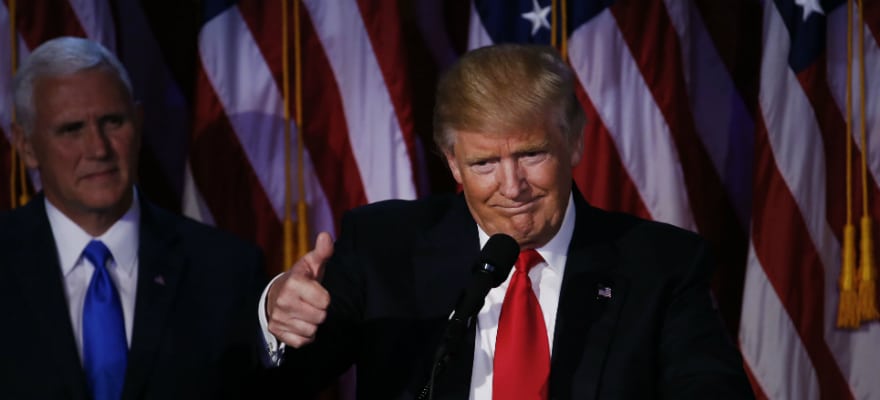
With the US election fast approaching, we’ve been considering the effect it will have on the global markets, and asking ourselves why?
Why do elections have such a hold on the markets, and what effect can we expect them to have on trading this upcoming election?
Politics & Markets: The Ties that Bind
Politics and economy have been bosom buddies for centuries. A quick walk down history lane reveals that even before the digitized financial markets we know existed, the word ‘politics’ was linked to the word ‘economy’.
Political-economy originated in the 18th-century, from the study of moral philosophy.
By the 19th century, people were referring to the study of political-economies as simply economics.
Economics began morphing into the study of predictive, mathematical analysis models, but even as these changes in the field were continuing, the bond between politics and economy was strong and still is today.
Politicians everywhere in the world have the power to make policy decisions that affect markets and industries.
And it goes without saying that presidents, parties, and politicians are all affected by the economy’s performance, especially during elections.
Historically, when the economy is up, people tend to vote for the same candidate or party in office. When times are tough, they will tend to cast their vote for a change.
Similarly, markets are still affected by the politicians who take office and the short and longer-term impacts of their policies.
Economics today may sound like it’s its own area of expertise, and so is politics, but the two are still inextricably linked.
Political scientists may theorize by examining political events and economists may make predictions by examining economic issues.
Still, many scholars correctly insist on approaching both social and economic policy by taking political-economies, and their relationship, into account.
How to Trade during Elections
Seeing as political-economies are still alive and well, it is smart to look at elections through the lens of the economy, and economy from the political lens.
Traders and investors who make money on the financial markets do so by observing market patterns and trends and use them to try to predict if prices and market value are going up or down in the short or long term.
This is especially true during elections, although, with the Volatility
Volatility
In finance, volatility refers to the amount of change in the rate of a financial instrument, such as commodities, currencies, or stocks, over a given time period. Essentially, volatility describes the nature of an instrument’s fluctuation; a highly volatile security equates to large fluctuations in price, and a low volatile security equates to timid fluctuations in price. Volatility is an important statistical indicator used by financial traders to assist them in developing trading systems. Trad
Read this Term, predictions get harder to make.
A good way to decide on the investments is to make it look at market patterns and trends in relation to a variety of factors:
- Policies: What economic policies the candidates are proposing and what effect will they have on the markets
- Public sentiment: Which candidate is the favorite, and what’s the likeliness of one of the candidates to win over the other
- Party performance: Likeliness of one party to win over the other
- Past election statistics: Analysing past elections and their effect on the markets
One approach is to invest in industries that may benefit from upcoming policy changes. Take the case described by LPL senior market strategist Ryan Detrick.
In Nov 2016, with the Dow’s “nine-day losing streak directly ahead of the election”, the price of copper—which investors viewed as a “President Trump infrastructure play”—increased for a record 14 days in a row.
And that is why at Axiory we’re watching the upcoming US election so closely. There are opportunities to benefit from market volatility by making smart trading decisions.
Follow up on the elections and prepare your Risk Management
Risk Management
One of the most common terms utilized by brokers, risk management refers to the practice of identifying potential risks in advance. Most commonly, this also involves the analysis of risk and the undertaking of precautionary steps to both mitigate and prevent for such risk.Such efforts are essential for brokers and venues in the finance industry, given the potential for fallout in the face of unforeseen events or crises. Given a more tightly regulated environment across nearly every asset class,
Read this Term strategy with Axiory.
Disclaimer: The content of this article is sponsored and does not represent the opinions of Finance Magnates.
With the US election fast approaching, we’ve been considering the effect it will have on the global markets, and asking ourselves why?
Why do elections have such a hold on the markets, and what effect can we expect them to have on trading this upcoming election?
Politics & Markets: The Ties that Bind
Politics and economy have been bosom buddies for centuries. A quick walk down history lane reveals that even before the digitized financial markets we know existed, the word ‘politics’ was linked to the word ‘economy’.
Political-economy originated in the 18th-century, from the study of moral philosophy.
By the 19th century, people were referring to the study of political-economies as simply economics.
Economics began morphing into the study of predictive, mathematical analysis models, but even as these changes in the field were continuing, the bond between politics and economy was strong and still is today.
Politicians everywhere in the world have the power to make policy decisions that affect markets and industries.
And it goes without saying that presidents, parties, and politicians are all affected by the economy’s performance, especially during elections.
Historically, when the economy is up, people tend to vote for the same candidate or party in office. When times are tough, they will tend to cast their vote for a change.
Similarly, markets are still affected by the politicians who take office and the short and longer-term impacts of their policies.
Economics today may sound like it’s its own area of expertise, and so is politics, but the two are still inextricably linked.
Political scientists may theorize by examining political events and economists may make predictions by examining economic issues.
Still, many scholars correctly insist on approaching both social and economic policy by taking political-economies, and their relationship, into account.
How to Trade during Elections
Seeing as political-economies are still alive and well, it is smart to look at elections through the lens of the economy, and economy from the political lens.
Traders and investors who make money on the financial markets do so by observing market patterns and trends and use them to try to predict if prices and market value are going up or down in the short or long term.
This is especially true during elections, although, with the Volatility
Volatility
In finance, volatility refers to the amount of change in the rate of a financial instrument, such as commodities, currencies, or stocks, over a given time period. Essentially, volatility describes the nature of an instrument’s fluctuation; a highly volatile security equates to large fluctuations in price, and a low volatile security equates to timid fluctuations in price. Volatility is an important statistical indicator used by financial traders to assist them in developing trading systems. Trad
Read this Term, predictions get harder to make.
A good way to decide on the investments is to make it look at market patterns and trends in relation to a variety of factors:
- Policies: What economic policies the candidates are proposing and what effect will they have on the markets
- Public sentiment: Which candidate is the favorite, and what’s the likeliness of one of the candidates to win over the other
- Party performance: Likeliness of one party to win over the other
- Past election statistics: Analysing past elections and their effect on the markets
One approach is to invest in industries that may benefit from upcoming policy changes. Take the case described by LPL senior market strategist Ryan Detrick.
In Nov 2016, with the Dow’s “nine-day losing streak directly ahead of the election”, the price of copper—which investors viewed as a “President Trump infrastructure play”—increased for a record 14 days in a row.
And that is why at Axiory we’re watching the upcoming US election so closely. There are opportunities to benefit from market volatility by making smart trading decisions.
Follow up on the elections and prepare your Risk Management
Risk Management
One of the most common terms utilized by brokers, risk management refers to the practice of identifying potential risks in advance. Most commonly, this also involves the analysis of risk and the undertaking of precautionary steps to both mitigate and prevent for such risk.Such efforts are essential for brokers and venues in the finance industry, given the potential for fallout in the face of unforeseen events or crises. Given a more tightly regulated environment across nearly every asset class,
Read this Term strategy with Axiory.
Disclaimer: The content of this article is sponsored and does not represent the opinions of Finance Magnates.