But that doesn’t mean its time for banks, brokers and hedge funds to admit defeat.
The crypto sector is fresh, agile and dynamic while the financial sector is stuck in some old and not necessarily positive habits. In this article, we’re taking a fresh look at content marketing for financial services and asking - how do you measure up?
What do internet users want?
Storytelling
A typical consumer can process up to 100,000 words a day. They don’t want bland content but a story that’s going to capture their imagination.
KPMG’s ‘We Shape History’ campaign, for instance, was designed to amplify the company’s history of doing great work and making a difference, not only for clients but for society.
Top tip: Help users visualise what you are trying to say. Like the pictures in a storybook, visual stimuli evoke emotions and allow people to fully understand the message you’re trying to communicate.
Video
5 billion videos are watched on YouTube every single day. 100 million hours of video are watched on Facebook each week. And with 86% of online marketers using video content, it’s important not to be left behind.
Web users love it and in the finance world it can be used to clarify more difficult subjects such as crypto trading or blockchain initiatives. As you can see, YouTube video explainers regarding blockchain have garnered millions of views.
Top tip: As 85% of videos on Facebook are watched without sound, your key messages must also be understood with the volume down. That means overlaying basic text for those silent feed scrollers.
Authentic social media
Consumers are savvy. They can see straight past fake testimonials and non-genuine social posts. Be authentic online, go behind the scenes and humanise your brand. If one of your USPs is that you’re “transparent” or “honest” you should be showing it.
Top tip: ‘Go live’ with influential figureheads from your business. This is particularly important for ICOs who need to confirm their legitimacy amid a sea of scams or brands that have suffered from bad PR.
What don’t they want?
Pushy banner ads
1 billion web users across the globe will block ads over the next few years. And while a study by The McCarthy Group reported that 47% of millennials couldn’t live without the internet, they don’t want to be disturbed by irrelevant content.
In fact, the average click-through rate for banners according to Google is just 0.06% while 25% of the population now use Ad Blockers.
Salesy social media
Social media community engagement activities like quizzes, polls, infographics, giveaways and videos work. Repeated messages telling your community to “BUY NOW” or drumming home your USPS are boring. The more you rely solely on pushy sales messages, the more likely you are to be unfollowed, or worse still, blocked!
No online customer service
Today, more than 30% of customers expect live chat on your website. For customers that visit your website on a mobile device, this number is as high as 62%. Your traders and investors also want fast responses on social media with 39% of social media complainers expecting a reply within sixty minutes.
Yet the average response time from businesses is five hours. The telephone call centre isn’t dead yet, but brokers need their support staff to be online now more than ever before.
How do you measure up so far?
Award yourself 1 point for every ‘Yes’ answer
We create at least one blog per week
We tweet every day and respond to client tweets swiftly
We are actively creating engaging videos for our channels
Our traders can contact our team via social media and receive a response within 60 minutes.
We place content on channels other than our own
We have a 3% or more organic engagement on Facebook (based on page count)
We have an education centre which we continually populate
We monitor our online reputation
We have published thought leaders within our organisation
So how can you gain consumer loyalty and impress followers without getting on their nerves? Firstly, you must know your target audience and address them to show you care and that you’re tuned in to your consumers.
You must also know the stats as this will influencer your marketing strategy. For instance, if you target millennials or are running an isolated campaign, it’s important to know that:
57% of millennials state they are willing to view sponsored content from a brand if it includes authentic personalities and is entertaining and useful.
87% do approve product placements in videos e.g. when an influencer demonstrates a product or shouts out to a sponsor.
From these stats, you can garner the importance of celebrity influence.
Embrace influencer marketing for the finance sector
Influencer marketing for the finance sector is becoming increasingly popular. There are two main influencer types each with their own benefits and limitations: macro and micro.
Macro influencers:
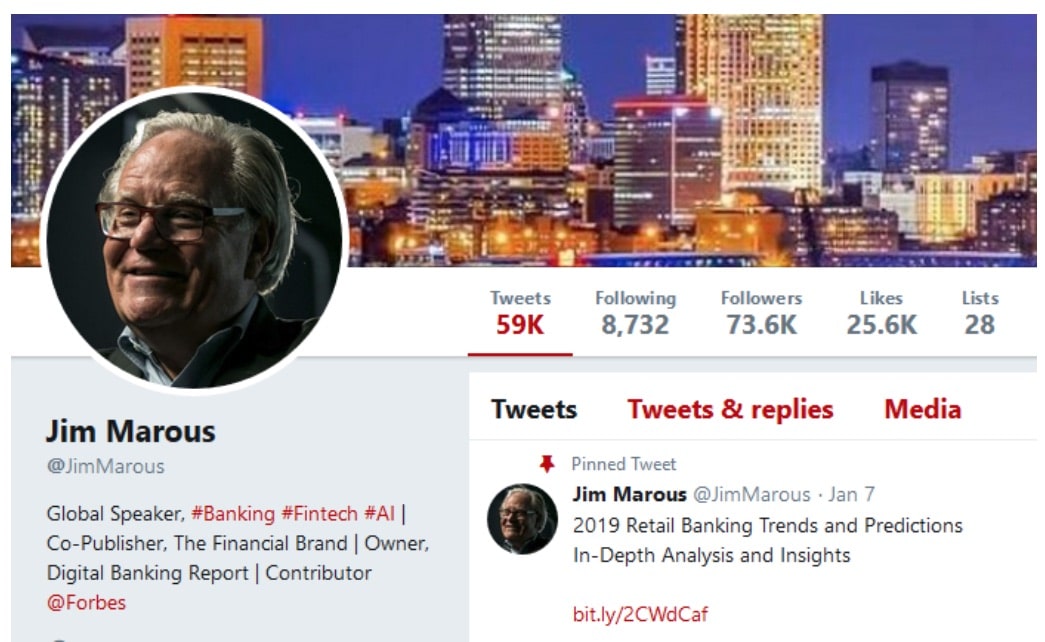
Macro influencers have a huge following, usually around 100k. They’re the industry big-wigs such as fintech guru Jim Marous and blockchain expert Tiffany Hayden.
Then there’s micro influencers who tend to have around 10k followers but are usually way better at boosting engagement and providing a more personalised influencer approach.
The latter often focus on niche topics with micro influencers including ICON project founder Min Kim, Bitcoin trader Jamie Redman and Bitcoin entrepreneur Lawrence Nehum.
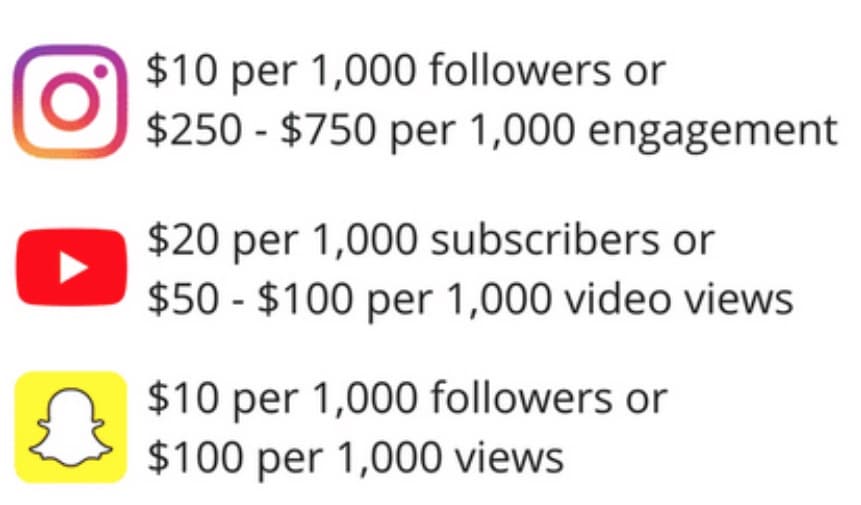
While macro influencers can be great for brand outreach, they’re expensive and you’ll need a decent budget.
To contact influencers and build a report that should garner interest from your followers, you can do a range of things such as:
Tagging them on Twitter
Commenting on relevant articles or topics
Becoming a thought leader to attract organic attention from like-minded individuals
Therefore, if you want to get noticed, you must become a go-to resource for those who value your products and services. If your platform is centred around crypto trading, wouldn’t it be cool to create a crypto hub packed with useful stats and information? As well as the latest platform updates, news and tools?
Search engines love fresh, good quality content and you’ll also garner a loyal following who will keep coming back for more. Remember 94% of readers share information they think will be valuable to others. So, be sure to include a host of easy-to-read stats, key takeaways and easy sharing options.
Keep Up with All the Latest Trends
Content is relevant. It’s a great way to connect with your target audience, but what’s fashionable for the year ahead? Well, content trends are based largely around consumer sentiment. For instance:
Snackable content is hugely popular
Snackable content is popular as it catches people’s attention without being long or dull. This could be in the form of short, sharp social media posts. Or it could be video teasers of less than 10 seconds long.
Facebook’s video on demand service Watch, for instance, is predicted by analysts to bring in a whopping $12 billion in sales by 2020 as people dip in and out of accessible content that’s interesting to them. Shorter and lighter content is also helping Facebook to differentiate themselves from other platforms.
AR/AI innovations
Users want to be taken on a journey. A journey that will catapult them from the norm and give them an experience to remember. Many finance companies are testing augmented reality or automated technology to smoothen customer service.
Automated help desks are one example of how the finance industry is trying to address problems quickly and hassle-free while reducing calls to their customer care centre.
CitiBank’s holographic workstation for financial trading introduces ‘mixed reality’ to the finance sector. The idea is to help traders interpret data by using a combination of 2D and 3D data presentations. Microsoft’s holographic headset, HoloLens, is used to let traders view 3D images.
Medium
Is your finance brand on medium? If not, this is another great avenue to explore regarding content marketing. The platform has 60 million monthly readers. It’s broken down into categories making finance related content easy to find. Top writers include Daniel Jeffries, a blockchain/crypto enthusiast with a following of over 41,000 and Michael K. Spencer.
Reputation Management
So, you’ve controlled the content on your site, but what about everywhere else? Your brand is what people say when you’re not there which is why it’s important to streamline your content marketing strategy across multiple channels.
Brands are working hard to shine online. And you should too. This means making sure what you write on LinkedIn matches up with your site portfolio.
It also means focussing on genuine user generated content. No fake reviews written in-house. Also, if you do face backlash. Deal with it head on. Deleting negative feedback can lead to further fury. Once the issues have been dealt with, you can work on producing great content that will eventually bury the bad.
Content Marketing for financial services can be so much better than it is right now. Don’t you agree? Get your content marketing on track with Contentworks.
Disclaimer: The content of this article is sponsored and does not represent the opinions of Finance Magnates.
But that doesn’t mean its time for banks, brokers and hedge funds to admit defeat.
The crypto sector is fresh, agile and dynamic while the financial sector is stuck in some old and not necessarily positive habits. In this article, we’re taking a fresh look at content marketing for financial services and asking - how do you measure up?
What do internet users want?
Storytelling
A typical consumer can process up to 100,000 words a day. They don’t want bland content but a story that’s going to capture their imagination.
KPMG’s ‘We Shape History’ campaign, for instance, was designed to amplify the company’s history of doing great work and making a difference, not only for clients but for society.
Top tip: Help users visualise what you are trying to say. Like the pictures in a storybook, visual stimuli evoke emotions and allow people to fully understand the message you’re trying to communicate.
Video
5 billion videos are watched on YouTube every single day. 100 million hours of video are watched on Facebook each week. And with 86% of online marketers using video content, it’s important not to be left behind.
Web users love it and in the finance world it can be used to clarify more difficult subjects such as crypto trading or blockchain initiatives. As you can see, YouTube video explainers regarding blockchain have garnered millions of views.
Top tip: As 85% of videos on Facebook are watched without sound, your key messages must also be understood with the volume down. That means overlaying basic text for those silent feed scrollers.
Authentic social media
Consumers are savvy. They can see straight past fake testimonials and non-genuine social posts. Be authentic online, go behind the scenes and humanise your brand. If one of your USPs is that you’re “transparent” or “honest” you should be showing it.
Top tip: ‘Go live’ with influential figureheads from your business. This is particularly important for ICOs who need to confirm their legitimacy amid a sea of scams or brands that have suffered from bad PR.
What don’t they want?
Pushy banner ads
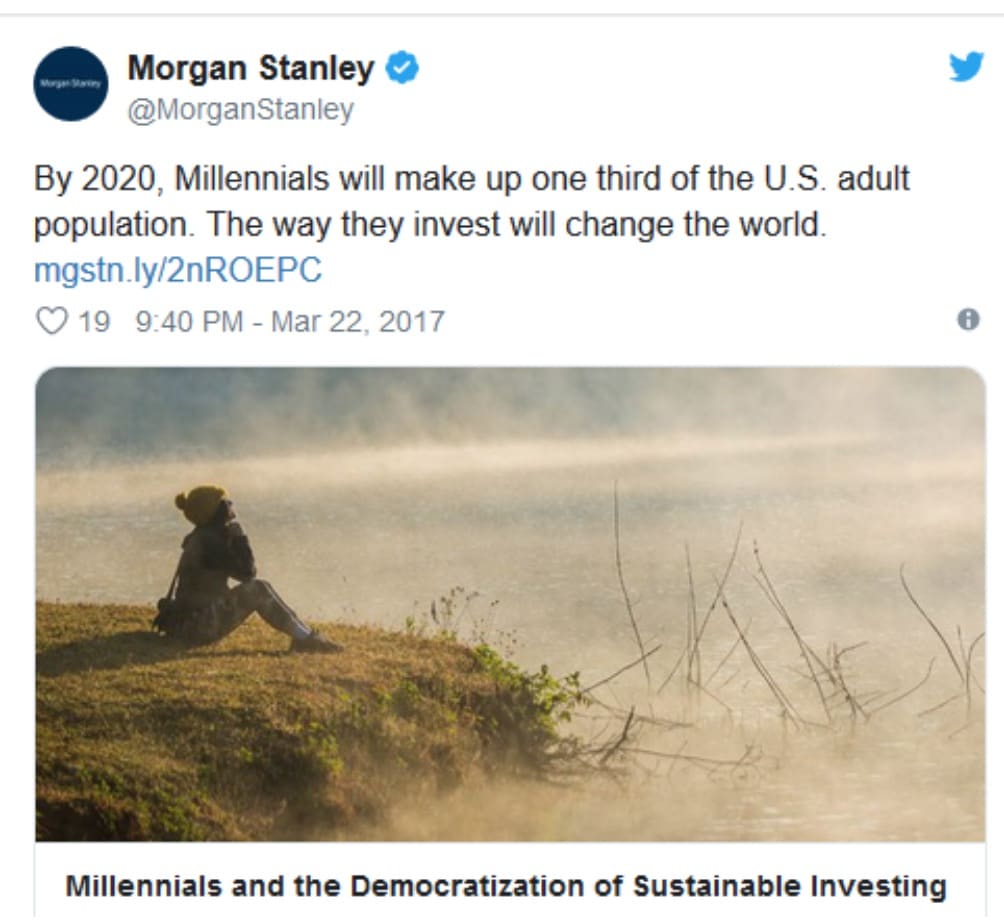
1 billion web users across the globe will block ads over the next few years. And while a study by The McCarthy Group reported that 47% of millennials couldn’t live without the internet, they don’t want to be disturbed by irrelevant content.
In fact, the average click-through rate for banners according to Google is just 0.06% while 25% of the population now use Ad Blockers.
Salesy social media
Social media community engagement activities like quizzes, polls, infographics, giveaways and videos work. Repeated messages telling your community to “BUY NOW” or drumming home your USPS are boring. The more you rely solely on pushy sales messages, the more likely you are to be unfollowed, or worse still, blocked!
No online customer service
Today, more than 30% of customers expect live chat on your website. For customers that visit your website on a mobile device, this number is as high as 62%. Your traders and investors also want fast responses on social media with 39% of social media complainers expecting a reply within sixty minutes.
Yet the average response time from businesses is five hours. The telephone call centre isn’t dead yet, but brokers need their support staff to be online now more than ever before.
How do you measure up so far?
Award yourself 1 point for every ‘Yes’ answer
We create at least one blog per week
We tweet every day and respond to client tweets swiftly
We are actively creating engaging videos for our channels
Our traders can contact our team via social media and receive a response within 60 minutes.
We place content on channels other than our own
We have a 3% or more organic engagement on Facebook (based on page count)
We have an education centre which we continually populate
We monitor our online reputation
We have published thought leaders within our organisation
So how can you gain consumer loyalty and impress followers without getting on their nerves? Firstly, you must know your target audience and address them to show you care and that you’re tuned in to your consumers.
You must also know the stats as this will influencer your marketing strategy. For instance, if you target millennials or are running an isolated campaign, it’s important to know that:
57% of millennials state they are willing to view sponsored content from a brand if it includes authentic personalities and is entertaining and useful.
87% do approve product placements in videos e.g. when an influencer demonstrates a product or shouts out to a sponsor.
From these stats, you can garner the importance of celebrity influence.
Embrace influencer marketing for the finance sector
Influencer marketing for the finance sector is becoming increasingly popular. There are two main influencer types each with their own benefits and limitations: macro and micro.
Macro influencers:
Macro influencers have a huge following, usually around 100k. They’re the industry big-wigs such as fintech guru Jim Marous and blockchain expert Tiffany Hayden.
Then there’s micro influencers who tend to have around 10k followers but are usually way better at boosting engagement and providing a more personalised influencer approach.
The latter often focus on niche topics with micro influencers including ICON project founder Min Kim, Bitcoin trader Jamie Redman and Bitcoin entrepreneur Lawrence Nehum.
While macro influencers can be great for brand outreach, they’re expensive and you’ll need a decent budget.
To contact influencers and build a report that should garner interest from your followers, you can do a range of things such as:
Tagging them on Twitter
Commenting on relevant articles or topics
Becoming a thought leader to attract organic attention from like-minded individuals
Therefore, if you want to get noticed, you must become a go-to resource for those who value your products and services. If your platform is centred around crypto trading, wouldn’t it be cool to create a crypto hub packed with useful stats and information? As well as the latest platform updates, news and tools?
Search engines love fresh, good quality content and you’ll also garner a loyal following who will keep coming back for more. Remember 94% of readers share information they think will be valuable to others. So, be sure to include a host of easy-to-read stats, key takeaways and easy sharing options.
Keep Up with All the Latest Trends
Content is relevant. It’s a great way to connect with your target audience, but what’s fashionable for the year ahead? Well, content trends are based largely around consumer sentiment. For instance:
Snackable content is hugely popular
Snackable content is popular as it catches people’s attention without being long or dull. This could be in the form of short, sharp social media posts. Or it could be video teasers of less than 10 seconds long.
Facebook’s video on demand service Watch, for instance, is predicted by analysts to bring in a whopping $12 billion in sales by 2020 as people dip in and out of accessible content that’s interesting to them. Shorter and lighter content is also helping Facebook to differentiate themselves from other platforms.
AR/AI innovations
Users want to be taken on a journey. A journey that will catapult them from the norm and give them an experience to remember. Many finance companies are testing augmented reality or automated technology to smoothen customer service.
Automated help desks are one example of how the finance industry is trying to address problems quickly and hassle-free while reducing calls to their customer care centre.
CitiBank’s holographic workstation for financial trading introduces ‘mixed reality’ to the finance sector. The idea is to help traders interpret data by using a combination of 2D and 3D data presentations. Microsoft’s holographic headset, HoloLens, is used to let traders view 3D images.
Medium
Is your finance brand on medium? If not, this is another great avenue to explore regarding content marketing. The platform has 60 million monthly readers. It’s broken down into categories making finance related content easy to find. Top writers include Daniel Jeffries, a blockchain/crypto enthusiast with a following of over 41,000 and Michael K. Spencer.
Reputation Management
So, you’ve controlled the content on your site, but what about everywhere else? Your brand is what people say when you’re not there which is why it’s important to streamline your content marketing strategy across multiple channels.
Brands are working hard to shine online. And you should too. This means making sure what you write on LinkedIn matches up with your site portfolio.
It also means focussing on genuine user generated content. No fake reviews written in-house. Also, if you do face backlash. Deal with it head on. Deleting negative feedback can lead to further fury. Once the issues have been dealt with, you can work on producing great content that will eventually bury the bad.
Content Marketing for financial services can be so much better than it is right now. Don’t you agree? Get your content marketing on track with Contentworks.
Disclaimer: The content of this article is sponsored and does not represent the opinions of Finance Magnates.
Hantec Financial Nominated for Most Trusted Broker at UF AWARDS APAC 2026
Featured Videos
AvaTrade to Acquire Most of FXCM; NAGA Raises $8M
AvaTrade to Acquire Most of FXCM; NAGA Raises $8M
AvaTrade to Acquire Most of FXCM; NAGA Raises $8M
AvaTrade to Acquire Most of FXCM; NAGA Raises $8M
Today’s financial news recap covers AvaTrade agrees to acquire most of FXCM, NAGA secures eight million dollars in new financing, and Wise seeks a tax settlement in the UK.
Finance Magnates Daily Recap brings you the latest news from forex and CFD brokers, fintech, payments, cryptocurrency, digital assets, trading platforms, financial regulation and global markets.
Get the key company news, executive moves, deals, regulatory updates and market developments of the day, in just a few minutes. New episodes published every weekday.
Read more: https://www.financemagnates.com
#FinanceMagnates #ForexNews #FintechNews
Today’s financial news recap covers AvaTrade agrees to acquire most of FXCM, NAGA secures eight million dollars in new financing, and Wise seeks a tax settlement in the UK.
Finance Magnates Daily Recap brings you the latest news from forex and CFD brokers, fintech, payments, cryptocurrency, digital assets, trading platforms, financial regulation and global markets.
Get the key company news, executive moves, deals, regulatory updates and market developments of the day, in just a few minutes. New episodes published every weekday.
Read more: https://www.financemagnates.com
#FinanceMagnates #ForexNews #FintechNews
Today’s financial news recap covers AvaTrade agrees to acquire most of FXCM, NAGA secures eight million dollars in new financing, and Wise seeks a tax settlement in the UK.
Finance Magnates Daily Recap brings you the latest news from forex and CFD brokers, fintech, payments, cryptocurrency, digital assets, trading platforms, financial regulation and global markets.
Get the key company news, executive moves, deals, regulatory updates and market developments of the day, in just a few minutes. New episodes published every weekday.
Read more: https://www.financemagnates.com
#FinanceMagnates #ForexNews #FintechNews
Today’s financial news recap covers AvaTrade agrees to acquire most of FXCM, NAGA secures eight million dollars in new financing, and Wise seeks a tax settlement in the UK.
Finance Magnates Daily Recap brings you the latest news from forex and CFD brokers, fintech, payments, cryptocurrency, digital assets, trading platforms, financial regulation and global markets.
Get the key company news, executive moves, deals, regulatory updates and market developments of the day, in just a few minutes. New episodes published every weekday.
Read more: https://www.financemagnates.com
#FinanceMagnates #ForexNews #FintechNews
XTB Adds Overnight US Stock Trading; Nasdaq Ventures Invests in One Trading
XTB Adds Overnight US Stock Trading; Nasdaq Ventures Invests in One Trading
XTB Adds Overnight US Stock Trading; Nasdaq Ventures Invests in One Trading
XTB Adds Overnight US Stock Trading; Nasdaq Ventures Invests in One Trading
XTB Adds Overnight US Stock Trading; Nasdaq Ventures Invests in One Trading
XTB Adds Overnight US Stock Trading; Nasdaq Ventures Invests in One Trading
Today’s financial news recap covers XTB expands overnight US stock trading, Fortrade reports higher revenue, Nasdaq backs One Trading, and Vest Labs raises 13 million dollars.
Finance Magnates Daily Recap brings you the latest news from forex and CFD brokers, fintech, payments, cryptocurrency, digital assets, trading platforms, financial regulation and global markets.
Get the key company news, executive moves, deals, regulatory updates and market developments of the day, in just a few minutes. New episodes published every weekday.
Read more: https://www.financemagnates.com
#FinanceMagnates #ForexNews #FintechNews
Today’s financial news recap covers XTB expands overnight US stock trading, Fortrade reports higher revenue, Nasdaq backs One Trading, and Vest Labs raises 13 million dollars.
Finance Magnates Daily Recap brings you the latest news from forex and CFD brokers, fintech, payments, cryptocurrency, digital assets, trading platforms, financial regulation and global markets.
Get the key company news, executive moves, deals, regulatory updates and market developments of the day, in just a few minutes. New episodes published every weekday.
Read more: https://www.financemagnates.com
#FinanceMagnates #ForexNews #FintechNews
Today’s financial news recap covers XTB expands overnight US stock trading, Fortrade reports higher revenue, Nasdaq backs One Trading, and Vest Labs raises 13 million dollars.
Finance Magnates Daily Recap brings you the latest news from forex and CFD brokers, fintech, payments, cryptocurrency, digital assets, trading platforms, financial regulation and global markets.
Get the key company news, executive moves, deals, regulatory updates and market developments of the day, in just a few minutes. New episodes published every weekday.
Read more: https://www.financemagnates.com
#FinanceMagnates #ForexNews #FintechNews
Today’s financial news recap covers XTB expands overnight US stock trading, Fortrade reports higher revenue, Nasdaq backs One Trading, and Vest Labs raises 13 million dollars.
Finance Magnates Daily Recap brings you the latest news from forex and CFD brokers, fintech, payments, cryptocurrency, digital assets, trading platforms, financial regulation and global markets.
Get the key company news, executive moves, deals, regulatory updates and market developments of the day, in just a few minutes. New episodes published every weekday.
Read more: https://www.financemagnates.com
#FinanceMagnates #ForexNews #FintechNews
Today’s financial news recap covers XTB expands overnight US stock trading, Fortrade reports higher revenue, Nasdaq backs One Trading, and Vest Labs raises 13 million dollars.
Finance Magnates Daily Recap brings you the latest news from forex and CFD brokers, fintech, payments, cryptocurrency, digital assets, trading platforms, financial regulation and global markets.
Get the key company news, executive moves, deals, regulatory updates and market developments of the day, in just a few minutes. New episodes published every weekday.
Read more: https://www.financemagnates.com
#FinanceMagnates #ForexNews #FintechNews
Today’s financial news recap covers XTB expands overnight US stock trading, Fortrade reports higher revenue, Nasdaq backs One Trading, and Vest Labs raises 13 million dollars.
Finance Magnates Daily Recap brings you the latest news from forex and CFD brokers, fintech, payments, cryptocurrency, digital assets, trading platforms, financial regulation and global markets.
Get the key company news, executive moves, deals, regulatory updates and market developments of the day, in just a few minutes. New episodes published every weekday.
Read more: https://www.financemagnates.com
#FinanceMagnates #ForexNews #FintechNews
CMC Founder Downplays Volatility Hit; Devexperts Names CEO
CMC Founder Downplays Volatility Hit; Devexperts Names CEO
CMC Founder Downplays Volatility Hit; Devexperts Names CEO
CMC Founder Downplays Volatility Hit; Devexperts Names CEO
CMC Founder Downplays Volatility Hit; Devexperts Names CEO
CMC Founder Downplays Volatility Hit; Devexperts Names CEO
Today’s financial news recap covers low volatility pressures brokers, Devexperts names a new CEO, Saxo cuts onboarding time, and OKX reaches a 25 billion dollar valuation.
Finance Magnates Daily Recap brings you the latest news from forex and CFD brokers, fintech, payments, cryptocurrency, digital assets, trading platforms, financial regulation and global markets.
Get the key company news, executive moves, deals, regulatory updates and market developments of the day, in just a few minutes. New episodes published every weekday.
Read more: https://www.financemagnates.com
#FinanceMagnates #ForexNews #FintechNews
Today’s financial news recap covers low volatility pressures brokers, Devexperts names a new CEO, Saxo cuts onboarding time, and OKX reaches a 25 billion dollar valuation.
Finance Magnates Daily Recap brings you the latest news from forex and CFD brokers, fintech, payments, cryptocurrency, digital assets, trading platforms, financial regulation and global markets.
Get the key company news, executive moves, deals, regulatory updates and market developments of the day, in just a few minutes. New episodes published every weekday.
Read more: https://www.financemagnates.com
#FinanceMagnates #ForexNews #FintechNews
Today’s financial news recap covers low volatility pressures brokers, Devexperts names a new CEO, Saxo cuts onboarding time, and OKX reaches a 25 billion dollar valuation.
Finance Magnates Daily Recap brings you the latest news from forex and CFD brokers, fintech, payments, cryptocurrency, digital assets, trading platforms, financial regulation and global markets.
Get the key company news, executive moves, deals, regulatory updates and market developments of the day, in just a few minutes. New episodes published every weekday.
Read more: https://www.financemagnates.com
#FinanceMagnates #ForexNews #FintechNews
Today’s financial news recap covers low volatility pressures brokers, Devexperts names a new CEO, Saxo cuts onboarding time, and OKX reaches a 25 billion dollar valuation.
Finance Magnates Daily Recap brings you the latest news from forex and CFD brokers, fintech, payments, cryptocurrency, digital assets, trading platforms, financial regulation and global markets.
Get the key company news, executive moves, deals, regulatory updates and market developments of the day, in just a few minutes. New episodes published every weekday.
Read more: https://www.financemagnates.com
#FinanceMagnates #ForexNews #FintechNews
Today’s financial news recap covers low volatility pressures brokers, Devexperts names a new CEO, Saxo cuts onboarding time, and OKX reaches a 25 billion dollar valuation.
Finance Magnates Daily Recap brings you the latest news from forex and CFD brokers, fintech, payments, cryptocurrency, digital assets, trading platforms, financial regulation and global markets.
Get the key company news, executive moves, deals, regulatory updates and market developments of the day, in just a few minutes. New episodes published every weekday.
Read more: https://www.financemagnates.com
#FinanceMagnates #ForexNews #FintechNews
Today’s financial news recap covers low volatility pressures brokers, Devexperts names a new CEO, Saxo cuts onboarding time, and OKX reaches a 25 billion dollar valuation.
Finance Magnates Daily Recap brings you the latest news from forex and CFD brokers, fintech, payments, cryptocurrency, digital assets, trading platforms, financial regulation and global markets.
Get the key company news, executive moves, deals, regulatory updates and market developments of the day, in just a few minutes. New episodes published every weekday.
Read more: https://www.financemagnates.com
#FinanceMagnates #ForexNews #FintechNews
Today’s financial news recap covers Trade Nation buys FXCM's UK client book, Trading 212 reports higher revenue, the CFTC's move to allow perpetual index futures.
Finance Magnates Daily Recap brings you the latest news from forex and CFD brokers, fintech, payments, cryptocurrency, digital assets, trading platforms, financial regulation and global markets.
Get the key company news, executive moves, deals, regulatory updates and market developments of the day, in just a few minutes. New episodes published every weekday.
Read more: https://www.financemagnates.com
#FinanceMagnates #ForexNews #FintechNews
Today’s financial news recap covers Trade Nation buys FXCM's UK client book, Trading 212 reports higher revenue, the CFTC's move to allow perpetual index futures.
Finance Magnates Daily Recap brings you the latest news from forex and CFD brokers, fintech, payments, cryptocurrency, digital assets, trading platforms, financial regulation and global markets.
Get the key company news, executive moves, deals, regulatory updates and market developments of the day, in just a few minutes. New episodes published every weekday.
Read more: https://www.financemagnates.com
#FinanceMagnates #ForexNews #FintechNews
Today’s financial news recap covers Trade Nation buys FXCM's UK client book, Trading 212 reports higher revenue, the CFTC's move to allow perpetual index futures.
Finance Magnates Daily Recap brings you the latest news from forex and CFD brokers, fintech, payments, cryptocurrency, digital assets, trading platforms, financial regulation and global markets.
Get the key company news, executive moves, deals, regulatory updates and market developments of the day, in just a few minutes. New episodes published every weekday.
Read more: https://www.financemagnates.com
#FinanceMagnates #ForexNews #FintechNews
Today’s financial news recap covers Trade Nation buys FXCM's UK client book, Trading 212 reports higher revenue, the CFTC's move to allow perpetual index futures.
Finance Magnates Daily Recap brings you the latest news from forex and CFD brokers, fintech, payments, cryptocurrency, digital assets, trading platforms, financial regulation and global markets.
Get the key company news, executive moves, deals, regulatory updates and market developments of the day, in just a few minutes. New episodes published every weekday.
Read more: https://www.financemagnates.com
#FinanceMagnates #ForexNews #FintechNews
Today’s financial news recap covers Trade Nation buys FXCM's UK client book, Trading 212 reports higher revenue, the CFTC's move to allow perpetual index futures.
Finance Magnates Daily Recap brings you the latest news from forex and CFD brokers, fintech, payments, cryptocurrency, digital assets, trading platforms, financial regulation and global markets.
Get the key company news, executive moves, deals, regulatory updates and market developments of the day, in just a few minutes. New episodes published every weekday.
Read more: https://www.financemagnates.com
#FinanceMagnates #ForexNews #FintechNews
Today’s financial news recap covers Trade Nation buys FXCM's UK client book, Trading 212 reports higher revenue, the CFTC's move to allow perpetual index futures.
Finance Magnates Daily Recap brings you the latest news from forex and CFD brokers, fintech, payments, cryptocurrency, digital assets, trading platforms, financial regulation and global markets.
Get the key company news, executive moves, deals, regulatory updates and market developments of the day, in just a few minutes. New episodes published every weekday.
Read more: https://www.financemagnates.com
#FinanceMagnates #ForexNews #FintechNews
Your career isn’t a linear path.
Your career isn’t a linear path.
Your career isn’t a linear path.
Your career isn’t a linear path.
Your career isn’t a linear path.
Your career isn’t a linear path.
Roles change. Career goals change. Sometimes you want a completely new challenge.
But the skills and knowledge you build along the way can stay with you and give you something to build on.
For Jeff Patterson, that continued growth is key to long-term career development.
You bring the skills. FM Academy helps you build the knowledge.
#FMAcademy #FinanceMagnates #FinanceCareers #ProfessionalDevelopment #Fintech
Roles change. Career goals change. Sometimes you want a completely new challenge.
But the skills and knowledge you build along the way can stay with you and give you something to build on.
For Jeff Patterson, that continued growth is key to long-term career development.
You bring the skills. FM Academy helps you build the knowledge.
#FMAcademy #FinanceMagnates #FinanceCareers #ProfessionalDevelopment #Fintech
Roles change. Career goals change. Sometimes you want a completely new challenge.
But the skills and knowledge you build along the way can stay with you and give you something to build on.
For Jeff Patterson, that continued growth is key to long-term career development.
You bring the skills. FM Academy helps you build the knowledge.
#FMAcademy #FinanceMagnates #FinanceCareers #ProfessionalDevelopment #Fintech
Roles change. Career goals change. Sometimes you want a completely new challenge.
But the skills and knowledge you build along the way can stay with you and give you something to build on.
For Jeff Patterson, that continued growth is key to long-term career development.
You bring the skills. FM Academy helps you build the knowledge.
#FMAcademy #FinanceMagnates #FinanceCareers #ProfessionalDevelopment #Fintech
Roles change. Career goals change. Sometimes you want a completely new challenge.
But the skills and knowledge you build along the way can stay with you and give you something to build on.
For Jeff Patterson, that continued growth is key to long-term career development.
You bring the skills. FM Academy helps you build the knowledge.
#FMAcademy #FinanceMagnates #FinanceCareers #ProfessionalDevelopment #Fintech
Roles change. Career goals change. Sometimes you want a completely new challenge.
But the skills and knowledge you build along the way can stay with you and give you something to build on.
For Jeff Patterson, that continued growth is key to long-term career development.
You bring the skills. FM Academy helps you build the knowledge.
#FMAcademy #FinanceMagnates #FinanceCareers #ProfessionalDevelopment #Fintech