Why the $4 Trillion FX Swaps Market Still Relies on Phone Trading

Monday, 21/09/2026 | 15:30 GMT by Tanya Chepkova
  • Trading venues are adding pre-trade credit checks, while LSEG is considering a clearing solution whose structure and launch date remain undisclosed.
  • Only 56% of FX swaps trade electronically, compared with 71% of spot transactions, as bilateral credit limits complicate anonymous order matching.
London Stock Exchange (Shutterstock)
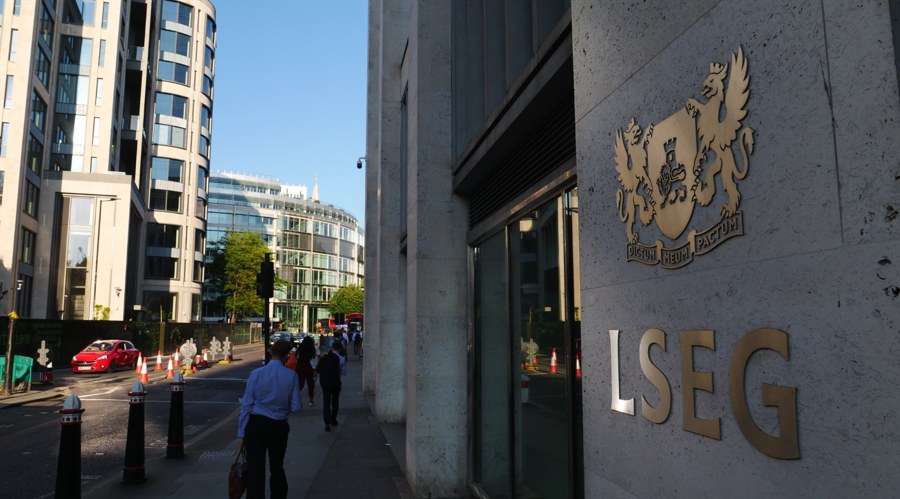
The logo of LSEG on a building (Shutterstock)

Years of technological advances in electronic execution have largely passed the FX swaps market by. A significant share of this roughly $4 trillion-a-day market still relies on traders and voice brokers.

London's trading industry is coming home!

According to Bank for International Settlements data, around 56% of FX swaps are traded electronically, compared with about 71% of spot transactions. The difference reflects structural features that make swaps harder to automate.

A spot currency transaction has one settlement date, while an FX swap combines two linked exchanges on different dates. Banks must price both legs and account for the exposure that remains until the second settlement.

Even when two dealers agree on a price, the trade cannot proceed unless they have sufficient bilateral credit capacity. Large or customised transactions create further complications, as traders may prefer to negotiate liquidity directly and limit the market impact of placing a large order electronically.

Platforms Automate Credit Checks

Market-structure consultancy Positive Sum Associates said at least three venues are developing dealer-to-dealer FX swaps platforms with pre-trade credit controls.

Deutsche Börse-owned 360T expects activity on its electronic swaps platform to increase over the coming year. Working with CobaltFX, it has introduced a model that estimates potential future exposure and verifies available credit before matching orders.

Its SUN platform combines an electronic limit order book with bilateral credit controls and can be accessed through either a graphical interface or an API.

LSEG is taking a similar approach on its FX Matching service, where only 10% of FX swap activity was conducted through APIs in 2025. In May, the company removed brokerage fees for swaps with maturities of one month or longer.

Following a pilot with four banks, LSEG is now working to introduce firm pre-trade credit checks into its central limit order book.

Clearing Offers Another Approach

Pre-trade checks allow platforms to determine whether two dealers have enough capacity under their existing bilateral credit limits.

Central clearing would change the structure of that exposure by placing a central counterparty between them and managing the risk through a common margin framework.

LSEG is planning an FX swaps clearing solution, Bloomberg reported. The company has not publicly disclosed how it would work, when it could launch or whether it would cover deliverable FX swaps.

The limits of electronic execution are already visible on the buy side. UBS Asset Management told the publication that it can execute swaps electronically in major currencies for amounts of up to $500 million.

Larger trades generally return to voice execution, where traders can identify available liquidity and counterparties with sufficient credit capacity without placing the full order in the market.

Neither the current platform changes nor LSEG’s still-undefined clearing plan provides a timetable for a broader shift away from voice trading.

Years of technological advances in electronic execution have largely passed the FX swaps market by. A significant share of this roughly $4 trillion-a-day market still relies on traders and voice brokers.

London's trading industry is coming home!

According to Bank for International Settlements data, around 56% of FX swaps are traded electronically, compared with about 71% of spot transactions. The difference reflects structural features that make swaps harder to automate.

A spot currency transaction has one settlement date, while an FX swap combines two linked exchanges on different dates. Banks must price both legs and account for the exposure that remains until the second settlement.

Even when two dealers agree on a price, the trade cannot proceed unless they have sufficient bilateral credit capacity. Large or customised transactions create further complications, as traders may prefer to negotiate liquidity directly and limit the market impact of placing a large order electronically.

Platforms Automate Credit Checks

Market-structure consultancy Positive Sum Associates said at least three venues are developing dealer-to-dealer FX swaps platforms with pre-trade credit controls.

Deutsche Börse-owned 360T expects activity on its electronic swaps platform to increase over the coming year. Working with CobaltFX, it has introduced a model that estimates potential future exposure and verifies available credit before matching orders.

Its SUN platform combines an electronic limit order book with bilateral credit controls and can be accessed through either a graphical interface or an API.

LSEG is taking a similar approach on its FX Matching service, where only 10% of FX swap activity was conducted through APIs in 2025. In May, the company removed brokerage fees for swaps with maturities of one month or longer.

Following a pilot with four banks, LSEG is now working to introduce firm pre-trade credit checks into its central limit order book.

Clearing Offers Another Approach

Pre-trade checks allow platforms to determine whether two dealers have enough capacity under their existing bilateral credit limits.

Central clearing would change the structure of that exposure by placing a central counterparty between them and managing the risk through a common margin framework.

LSEG is planning an FX swaps clearing solution, Bloomberg reported. The company has not publicly disclosed how it would work, when it could launch or whether it would cover deliverable FX swaps.

The limits of electronic execution are already visible on the buy side. UBS Asset Management told the publication that it can execute swaps electronically in major currencies for amounts of up to $500 million.

Larger trades generally return to voice execution, where traders can identify available liquidity and counterparties with sufficient credit capacity without placing the full order in the market.

Neither the current platform changes nor LSEG’s still-undefined clearing plan provides a timetable for a broader shift away from voice trading.

About the Author: Tanya Chepkova
Tanya Chepkova
  • 479 Articles
  • 3 Followers
About the Author: Tanya Chepkova
Tanya Chepkova is a News Editor at Finance Magnates with more than 16 years of experience in financial journalism, covering forex, crypto, and digital asset markets. Her work spans daily industry reporting and data-driven, long-form explainers focused on market structure, trading models, and regulatory shifts. Before joining Finance Magnates, she led the editorial team of a cryptocurrency-focused media outlet for six years. Her reporting combines analytical depth with clear storytelling, with particular attention to how structural changes in trading, stablecoin infrastructure, and emerging products such as prediction markets reshape the broader financial ecosystem. She covers global developments and provides additional insight into CIS markets. Areas of Coverage: Crypto and digital asset markets Prediction markets Stablecoins and cross-border payments Industry analysis and long-form explainers
  • 479 Articles
  • 3 Followers

More from the Author

Institutional FX

!"#$%&'()*+,-./0123456789:;<=>?@ABCDEFGHIJKLMNOPQRSTUVWXYZ[\]^_`abcdefghijklmnopqrstuvwxyz{|} !"#$%&'()*+,-./0123456789:;<=>?@ABCDEFGHIJKLMNOPQRSTUVWXYZ[\]^_`abcdefghijklmnopqrstuvwxyz{|}