As a result of that, it’s often tempting to view the whole industry as belonging to the realm of spivs and wideboys. But the truth is there are actually companies out there, using blockchain technology, that may be set to shake up parts of the financial services industry.
One such firm is Cobalt. Founded in 2015, the company aims to revamp the FX world’s post-trade processes. By using blockchain, the firm claims that it can do what all good, new technology should do - simplify a process and reduce costs.
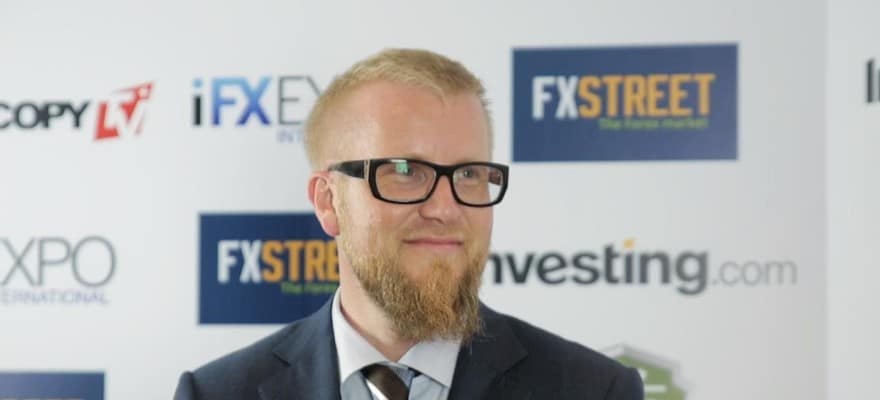
To get a better idea of what Cobalt has been up to and how it plans on achieving what it claims it can do, we spoke to Darren Coote, a former Managing Director in Lloyds and UBS' FX divisions, who joined the firm in September of this year.
Can you give a brief overview of what Cobalt does and why it's an improvement on prior non-blockchain systems?
Cobalt provides the FX market with a new post-trade infrastructure, an area which has been neglected and failed to keep pace with developments in fast flowing trading spaces. Today’s post-trade service providers rely on cumbersome, manual processes and old tech, leading to higher costs for market participants. In their current setup, they pose significant operational and systemic risk to the FX market.
Cobalt takes a fresh approach to financial infrastructure and has been developed to replace current middle and back office systems which are disorderly, inefficient, risk-laden and costly. It delivers a shared back and middle office infrastructure using a combination of an immutable shared ledger and low latency technology to significantly reduce post-trade cost and risk for the financial markets.
By creating a shared view of trade data, Cobalt frees up back and middle office resources from multiple layers of reconciliation; creating one immutable record of FX transactions from which to provide multiple services. Cobalt’s private network dramatically reduces risk and post-trade costs for financial market participants by up to 80 per cent.
There is a lot of hype surrounding blockchain and DLT with new firms, particularly in the financial services sector where new solutions and PoCs are revealed almost every day. Despite this hype, in its original form, blockchain has a number of issues, specifically regarding throughput, processing consumption and deployment, which render it inappropriate for parts of the financial infrastructure.
Darren Coote, Managing Director, Cobalt
For example, public permissionless blockchains, such as that used to verify Bitcoin transactions, were developed to enable a transfer of value between unknown and untrusted counterparties. This is very different to the private, trusted and heavily regulated networks in which banks operate and trade.
Those interested in the space should look towards companies that have a solution to a genuine problem. A lot of firms create a blockchain solution and then look for a problem to solve, rather than the other way around. Some even say they can solve hundreds of problems. Being successful doesn’t just rely on the technology; it relies on being focused on the problem, not getting distracted from what you’re good at and running a business properly.
Besides the processes that Cobalt deals with, what other areas of the trading cycle do you think blockchain could be useful for?
Having worked at a number of large institutions, I’ve seen first-hand how they operate and it’s clear that legacy infrastructure and technology are slowing things down. This problem is not just limited to the banks too. It’s particularly rife in current post-trade service providers and their old tech poses significant operational and systemic risk.
Aside from what Cobalt is doing, we believe the appropriate parts of blockchain technology can tackle cumbersome, manual processes which exist in the likes of clearing and regulatory reporting and also improve security.
A favourite buzzword for blockchain enthusiasts is 'decentralisation.’ When is decentralising actually a useful tool or feature to offer clients?
I think it’s more important to look at the shared ledger aspect of blockchain, rather than decentralisation. By sharing one, immutable golden record, the technology can save time, money and resources for firms in almost every industry. This is the real useful part of blockchain.
How hard has it been to convince banks to adopt your technology?
The difficulty hasn’t been in convincing financial institutions to adopt our technology. We developed our technology in conjunction with the FX market and some of the largest participants have committed to go live on our network when we launch later this year.
They all understand the problems associated with post-trade FX and recognise that it’s in their interest to tackle this. They have also seen in the beta environment that we can save them 80 percent of their risk and post-trade costs.
The main difficulty lies in onboarding. It is getting a lot more difficult for fintechs to pass the strict vendor risk management and compliance requirements at banks. We’re at a point now when current incumbent vendors wouldn’t actually meet these requirements, so it is quite difficult. Fortunately, we are at a stage when we can meet the strictest requirements necessary and so onboarding has become an easier process for us.
Do you foresee problems for blockchain firms, who want financial institutions to adopt their technology, when many of those institutions seem uncertain about the technology and are also burdened with legacy systems?
I would say that one of the main problems for blockchain firms a few years ago was a lack of understanding at financial institutions and banks. However, this has changed and it’s clear a lot more people are aware of its potential and know how it works.
There is also widespread understanding about the issues with legacy technology. Every bank and financial institution wants the best tech available but often they are limited by their own existing technology.
At Cobalt, we ensure financial institutions can onboard our technology as easily as possible. For example, we have recently gone live with BT Radianz which gives us direct access to the largest participants in the market. Providing the scale and reach we need on tap to help us achieve our goal of reengineering the FX market.
Why is blockchain necessary for Cobalt’s solution to work - could non-blockchain technology not just have been used instead?
The main components of blockchain are a distributed network, hashing and the ability to provide a single version of a transaction with multiple perspectives. We took these components and created our own shared ledger technology, which we have combined with low latency technology and enterprise grade security to build Cobalt’s unique solution
The current technology in the post-trade FX space is old, disorderly and leads to significant amounts of duplication. Any solution in this space needs to be able to offer financial institutions significant savings and reduce risk. It needs to offer a high data throughput, high-speed synchronisation and low operational costs. We reviewed many different types of technology and blockchain which we found to be inappropriate for our use case. However, there were some parts which we knew would work well.
As a result of that, it’s often tempting to view the whole industry as belonging to the realm of spivs and wideboys. But the truth is there are actually companies out there, using blockchain technology, that may be set to shake up parts of the financial services industry.
One such firm is Cobalt. Founded in 2015, the company aims to revamp the FX world’s post-trade processes. By using blockchain, the firm claims that it can do what all good, new technology should do - simplify a process and reduce costs.
To get a better idea of what Cobalt has been up to and how it plans on achieving what it claims it can do, we spoke to Darren Coote, a former Managing Director in Lloyds and UBS' FX divisions, who joined the firm in September of this year.
Can you give a brief overview of what Cobalt does and why it's an improvement on prior non-blockchain systems?
Cobalt provides the FX market with a new post-trade infrastructure, an area which has been neglected and failed to keep pace with developments in fast flowing trading spaces. Today’s post-trade service providers rely on cumbersome, manual processes and old tech, leading to higher costs for market participants. In their current setup, they pose significant operational and systemic risk to the FX market.
Cobalt takes a fresh approach to financial infrastructure and has been developed to replace current middle and back office systems which are disorderly, inefficient, risk-laden and costly. It delivers a shared back and middle office infrastructure using a combination of an immutable shared ledger and low latency technology to significantly reduce post-trade cost and risk for the financial markets.
By creating a shared view of trade data, Cobalt frees up back and middle office resources from multiple layers of reconciliation; creating one immutable record of FX transactions from which to provide multiple services. Cobalt’s private network dramatically reduces risk and post-trade costs for financial market participants by up to 80 per cent.
There is a lot of hype surrounding blockchain and DLT with new firms, particularly in the financial services sector where new solutions and PoCs are revealed almost every day. Despite this hype, in its original form, blockchain has a number of issues, specifically regarding throughput, processing consumption and deployment, which render it inappropriate for parts of the financial infrastructure.
Darren Coote, Managing Director, Cobalt
For example, public permissionless blockchains, such as that used to verify Bitcoin transactions, were developed to enable a transfer of value between unknown and untrusted counterparties. This is very different to the private, trusted and heavily regulated networks in which banks operate and trade.
Those interested in the space should look towards companies that have a solution to a genuine problem. A lot of firms create a blockchain solution and then look for a problem to solve, rather than the other way around. Some even say they can solve hundreds of problems. Being successful doesn’t just rely on the technology; it relies on being focused on the problem, not getting distracted from what you’re good at and running a business properly.
Besides the processes that Cobalt deals with, what other areas of the trading cycle do you think blockchain could be useful for?
Having worked at a number of large institutions, I’ve seen first-hand how they operate and it’s clear that legacy infrastructure and technology are slowing things down. This problem is not just limited to the banks too. It’s particularly rife in current post-trade service providers and their old tech poses significant operational and systemic risk.
Aside from what Cobalt is doing, we believe the appropriate parts of blockchain technology can tackle cumbersome, manual processes which exist in the likes of clearing and regulatory reporting and also improve security.
A favourite buzzword for blockchain enthusiasts is 'decentralisation.’ When is decentralising actually a useful tool or feature to offer clients?
I think it’s more important to look at the shared ledger aspect of blockchain, rather than decentralisation. By sharing one, immutable golden record, the technology can save time, money and resources for firms in almost every industry. This is the real useful part of blockchain.
How hard has it been to convince banks to adopt your technology?
The difficulty hasn’t been in convincing financial institutions to adopt our technology. We developed our technology in conjunction with the FX market and some of the largest participants have committed to go live on our network when we launch later this year.
They all understand the problems associated with post-trade FX and recognise that it’s in their interest to tackle this. They have also seen in the beta environment that we can save them 80 percent of their risk and post-trade costs.
The main difficulty lies in onboarding. It is getting a lot more difficult for fintechs to pass the strict vendor risk management and compliance requirements at banks. We’re at a point now when current incumbent vendors wouldn’t actually meet these requirements, so it is quite difficult. Fortunately, we are at a stage when we can meet the strictest requirements necessary and so onboarding has become an easier process for us.
Do you foresee problems for blockchain firms, who want financial institutions to adopt their technology, when many of those institutions seem uncertain about the technology and are also burdened with legacy systems?
I would say that one of the main problems for blockchain firms a few years ago was a lack of understanding at financial institutions and banks. However, this has changed and it’s clear a lot more people are aware of its potential and know how it works.
There is also widespread understanding about the issues with legacy technology. Every bank and financial institution wants the best tech available but often they are limited by their own existing technology.
At Cobalt, we ensure financial institutions can onboard our technology as easily as possible. For example, we have recently gone live with BT Radianz which gives us direct access to the largest participants in the market. Providing the scale and reach we need on tap to help us achieve our goal of reengineering the FX market.
Why is blockchain necessary for Cobalt’s solution to work - could non-blockchain technology not just have been used instead?
The main components of blockchain are a distributed network, hashing and the ability to provide a single version of a transaction with multiple perspectives. We took these components and created our own shared ledger technology, which we have combined with low latency technology and enterprise grade security to build Cobalt’s unique solution
The current technology in the post-trade FX space is old, disorderly and leads to significant amounts of duplication. Any solution in this space needs to be able to offer financial institutions significant savings and reduce risk. It needs to offer a high data throughput, high-speed synchronisation and low operational costs. We reviewed many different types of technology and blockchain which we found to be inappropriate for our use case. However, there were some parts which we knew would work well.
Singapore Independent Wealth Sector Has Less Than 10% Market Share, but Vast Room for Growth
Featured Videos
FP Markets Winner Spotlight 🏆 | Global Broker of the Year 2025 #Trading #Broker #Innovation #Shorts
FP Markets Winner Spotlight 🏆 | Global Broker of the Year 2025 #Trading #Broker #Innovation #Shorts
FP Markets Winner Spotlight 🏆 | Global Broker of the Year 2025 #Trading #Broker #Innovation #Shorts
FP Markets Winner Spotlight 🏆 | Global Broker of the Year 2025 #Trading #Broker #Innovation #Shorts
FP Markets takes the spotlight as Global Broker of the Year 2025 at the Finance Magnates Awards.
Martin Stoilov, Head of Client Experience, shares that trust, innovation, and people played a key role in the company’s success, supported by a strong foundation of integrity and client-centricity.
Following this milestone, FP Markets continues to focus on growth, technology investment, and its core values of transparency and excellence.
👉 Be part of FM Awards 2026: https://awards.financemagnates.com/#nominate
FP Markets takes the spotlight as Global Broker of the Year 2025 at the Finance Magnates Awards.
Martin Stoilov, Head of Client Experience, shares that trust, innovation, and people played a key role in the company’s success, supported by a strong foundation of integrity and client-centricity.
Following this milestone, FP Markets continues to focus on growth, technology investment, and its core values of transparency and excellence.
👉 Be part of FM Awards 2026: https://awards.financemagnates.com/#nominate
FP Markets takes the spotlight as Global Broker of the Year 2025 at the Finance Magnates Awards.
Martin Stoilov, Head of Client Experience, shares that trust, innovation, and people played a key role in the company’s success, supported by a strong foundation of integrity and client-centricity.
Following this milestone, FP Markets continues to focus on growth, technology investment, and its core values of transparency and excellence.
👉 Be part of FM Awards 2026: https://awards.financemagnates.com/#nominate
FP Markets takes the spotlight as Global Broker of the Year 2025 at the Finance Magnates Awards.
Martin Stoilov, Head of Client Experience, shares that trust, innovation, and people played a key role in the company’s success, supported by a strong foundation of integrity and client-centricity.
Following this milestone, FP Markets continues to focus on growth, technology investment, and its core values of transparency and excellence.
👉 Be part of FM Awards 2026: https://awards.financemagnates.com/#nominate
In this video, we review @HolaPrimeMarketsOfficial, a multi-asset forex and CFDs broker offering different account types, trading platforms, and flexible trading conditions.
We cover the broker’s overall offering, including account options, trading environment, platforms like MT4 and MT5, and additional services such as managed accounts and fast withdrawals.
Watch the full video to see if Hola Prime Markets fits your trading needs.
📣 Stay up to date with the latest in finance and trading. Follow Finance Magnates for industry news, insights, and global event coverage.
Connect with us:
🔗 LinkedIn: /financemagnates
👍 Facebook: /financemagnates
📸 Instagram: https://www.instagram.com/financemagnates
🐦 X: https://x.com/financemagnates
🎥 TikTok: https://www.tiktok.com/tag/financemagnates
▶️ YouTube: /@financemagnates_official
#HolaPrime #ForexBroker #CFDTrading #FinanceMagnates #Trading #Forex #BrokerReview
In this video, we review @HolaPrimeMarketsOfficial, a multi-asset forex and CFDs broker offering different account types, trading platforms, and flexible trading conditions.
We cover the broker’s overall offering, including account options, trading environment, platforms like MT4 and MT5, and additional services such as managed accounts and fast withdrawals.
Watch the full video to see if Hola Prime Markets fits your trading needs.
📣 Stay up to date with the latest in finance and trading. Follow Finance Magnates for industry news, insights, and global event coverage.
Connect with us:
🔗 LinkedIn: /financemagnates
👍 Facebook: /financemagnates
📸 Instagram: https://www.instagram.com/financemagnates
🐦 X: https://x.com/financemagnates
🎥 TikTok: https://www.tiktok.com/tag/financemagnates
▶️ YouTube: /@financemagnates_official
#HolaPrime #ForexBroker #CFDTrading #FinanceMagnates #Trading #Forex #BrokerReview
In this video, we review @HolaPrimeMarketsOfficial, a multi-asset forex and CFDs broker offering different account types, trading platforms, and flexible trading conditions.
We cover the broker’s overall offering, including account options, trading environment, platforms like MT4 and MT5, and additional services such as managed accounts and fast withdrawals.
Watch the full video to see if Hola Prime Markets fits your trading needs.
📣 Stay up to date with the latest in finance and trading. Follow Finance Magnates for industry news, insights, and global event coverage.
Connect with us:
🔗 LinkedIn: /financemagnates
👍 Facebook: /financemagnates
📸 Instagram: https://www.instagram.com/financemagnates
🐦 X: https://x.com/financemagnates
🎥 TikTok: https://www.tiktok.com/tag/financemagnates
▶️ YouTube: /@financemagnates_official
#HolaPrime #ForexBroker #CFDTrading #FinanceMagnates #Trading #Forex #BrokerReview
In this video, we review @HolaPrimeMarketsOfficial, a multi-asset forex and CFDs broker offering different account types, trading platforms, and flexible trading conditions.
We cover the broker’s overall offering, including account options, trading environment, platforms like MT4 and MT5, and additional services such as managed accounts and fast withdrawals.
Watch the full video to see if Hola Prime Markets fits your trading needs.
📣 Stay up to date with the latest in finance and trading. Follow Finance Magnates for industry news, insights, and global event coverage.
Connect with us:
🔗 LinkedIn: /financemagnates
👍 Facebook: /financemagnates
📸 Instagram: https://www.instagram.com/financemagnates
🐦 X: https://x.com/financemagnates
🎥 TikTok: https://www.tiktok.com/tag/financemagnates
▶️ YouTube: /@financemagnates_official
#HolaPrime #ForexBroker #CFDTrading #FinanceMagnates #Trading #Forex #BrokerReview
In this video, we review @HolaPrimeMarketsOfficial, a multi-asset forex and CFDs broker offering different account types, trading platforms, and flexible trading conditions.
We cover the broker’s overall offering, including account options, trading environment, platforms like MT4 and MT5, and additional services such as managed accounts and fast withdrawals.
Watch the full video to see if Hola Prime Markets fits your trading needs.
📣 Stay up to date with the latest in finance and trading. Follow Finance Magnates for industry news, insights, and global event coverage.
Connect with us:
🔗 LinkedIn: /financemagnates
👍 Facebook: /financemagnates
📸 Instagram: https://www.instagram.com/financemagnates
🐦 X: https://x.com/financemagnates
🎥 TikTok: https://www.tiktok.com/tag/financemagnates
▶️ YouTube: /@financemagnates_official
#HolaPrime #ForexBroker #CFDTrading #FinanceMagnates #Trading #Forex #BrokerReview
In this video, we review @HolaPrimeMarketsOfficial, a multi-asset forex and CFDs broker offering different account types, trading platforms, and flexible trading conditions.
We cover the broker’s overall offering, including account options, trading environment, platforms like MT4 and MT5, and additional services such as managed accounts and fast withdrawals.
Watch the full video to see if Hola Prime Markets fits your trading needs.
📣 Stay up to date with the latest in finance and trading. Follow Finance Magnates for industry news, insights, and global event coverage.
Connect with us:
🔗 LinkedIn: /financemagnates
👍 Facebook: /financemagnates
📸 Instagram: https://www.instagram.com/financemagnates
🐦 X: https://x.com/financemagnates
🎥 TikTok: https://www.tiktok.com/tag/financemagnates
▶️ YouTube: /@financemagnates_official
#HolaPrime #ForexBroker #CFDTrading #FinanceMagnates #Trading #Forex #BrokerReview
Hola Prime Review: What You Need to Know | Full Breakdown by Finance Magnates
Hola Prime Review: What You Need to Know | Full Breakdown by Finance Magnates
Hola Prime Review: What You Need to Know | Full Breakdown by Finance Magnates
Hola Prime Review: What You Need to Know | Full Breakdown by Finance Magnates
Hola Prime Review: What You Need to Know | Full Breakdown by Finance Magnates
Hola Prime Review: What You Need to Know | Full Breakdown by Finance Magnates
In this video, we review @HolaPrime_Global, a proprietary trading firm offering evaluation programs and performance-based payouts in simulated market environments.
We cover how the challenge model works, including account types, profit splits (up to 95%), trading rules, and what it takes to reach a funded account. You’ll also learn about available platforms like MT4, MT5, cTrader, and more, along with insights into payouts, support, and trading conditions.
Watch the full video to see if Hola Prime fits your trading style.
📣 Stay up to date with the latest in finance and trading. Follow Finance Magnates for industry news, insights, and global event coverage.
Connect with us:
🔗 LinkedIn: /financemagnates
👍 Facebook: /financemagnates
📸 Instagram: https://www.instagram.com/financemagnates
🐦 X: https://x.com/financemagnates
🎥 TikTok: https://www.tiktok.com/tag/financemagnates
▶️ YouTube: /@financemagnates_official
#HolaPrime #PropFirm #Trading #FinanceMagnates #Forex #FuturesTrading #TradingReview #PropFirmReview
In this video, we review @HolaPrime_Global, a proprietary trading firm offering evaluation programs and performance-based payouts in simulated market environments.
We cover how the challenge model works, including account types, profit splits (up to 95%), trading rules, and what it takes to reach a funded account. You’ll also learn about available platforms like MT4, MT5, cTrader, and more, along with insights into payouts, support, and trading conditions.
Watch the full video to see if Hola Prime fits your trading style.
📣 Stay up to date with the latest in finance and trading. Follow Finance Magnates for industry news, insights, and global event coverage.
Connect with us:
🔗 LinkedIn: /financemagnates
👍 Facebook: /financemagnates
📸 Instagram: https://www.instagram.com/financemagnates
🐦 X: https://x.com/financemagnates
🎥 TikTok: https://www.tiktok.com/tag/financemagnates
▶️ YouTube: /@financemagnates_official
#HolaPrime #PropFirm #Trading #FinanceMagnates #Forex #FuturesTrading #TradingReview #PropFirmReview
In this video, we review @HolaPrime_Global, a proprietary trading firm offering evaluation programs and performance-based payouts in simulated market environments.
We cover how the challenge model works, including account types, profit splits (up to 95%), trading rules, and what it takes to reach a funded account. You’ll also learn about available platforms like MT4, MT5, cTrader, and more, along with insights into payouts, support, and trading conditions.
Watch the full video to see if Hola Prime fits your trading style.
📣 Stay up to date with the latest in finance and trading. Follow Finance Magnates for industry news, insights, and global event coverage.
Connect with us:
🔗 LinkedIn: /financemagnates
👍 Facebook: /financemagnates
📸 Instagram: https://www.instagram.com/financemagnates
🐦 X: https://x.com/financemagnates
🎥 TikTok: https://www.tiktok.com/tag/financemagnates
▶️ YouTube: /@financemagnates_official
#HolaPrime #PropFirm #Trading #FinanceMagnates #Forex #FuturesTrading #TradingReview #PropFirmReview
In this video, we review @HolaPrime_Global, a proprietary trading firm offering evaluation programs and performance-based payouts in simulated market environments.
We cover how the challenge model works, including account types, profit splits (up to 95%), trading rules, and what it takes to reach a funded account. You’ll also learn about available platforms like MT4, MT5, cTrader, and more, along with insights into payouts, support, and trading conditions.
Watch the full video to see if Hola Prime fits your trading style.
📣 Stay up to date with the latest in finance and trading. Follow Finance Magnates for industry news, insights, and global event coverage.
Connect with us:
🔗 LinkedIn: /financemagnates
👍 Facebook: /financemagnates
📸 Instagram: https://www.instagram.com/financemagnates
🐦 X: https://x.com/financemagnates
🎥 TikTok: https://www.tiktok.com/tag/financemagnates
▶️ YouTube: /@financemagnates_official
#HolaPrime #PropFirm #Trading #FinanceMagnates #Forex #FuturesTrading #TradingReview #PropFirmReview
In this video, we review @HolaPrime_Global, a proprietary trading firm offering evaluation programs and performance-based payouts in simulated market environments.
We cover how the challenge model works, including account types, profit splits (up to 95%), trading rules, and what it takes to reach a funded account. You’ll also learn about available platforms like MT4, MT5, cTrader, and more, along with insights into payouts, support, and trading conditions.
Watch the full video to see if Hola Prime fits your trading style.
📣 Stay up to date with the latest in finance and trading. Follow Finance Magnates for industry news, insights, and global event coverage.
Connect with us:
🔗 LinkedIn: /financemagnates
👍 Facebook: /financemagnates
📸 Instagram: https://www.instagram.com/financemagnates
🐦 X: https://x.com/financemagnates
🎥 TikTok: https://www.tiktok.com/tag/financemagnates
▶️ YouTube: /@financemagnates_official
#HolaPrime #PropFirm #Trading #FinanceMagnates #Forex #FuturesTrading #TradingReview #PropFirmReview
In this video, we review @HolaPrime_Global, a proprietary trading firm offering evaluation programs and performance-based payouts in simulated market environments.
We cover how the challenge model works, including account types, profit splits (up to 95%), trading rules, and what it takes to reach a funded account. You’ll also learn about available platforms like MT4, MT5, cTrader, and more, along with insights into payouts, support, and trading conditions.
Watch the full video to see if Hola Prime fits your trading style.
📣 Stay up to date with the latest in finance and trading. Follow Finance Magnates for industry news, insights, and global event coverage.
Connect with us:
🔗 LinkedIn: /financemagnates
👍 Facebook: /financemagnates
📸 Instagram: https://www.instagram.com/financemagnates
🐦 X: https://x.com/financemagnates
🎥 TikTok: https://www.tiktok.com/tag/financemagnates
▶️ YouTube: /@financemagnates_official
#HolaPrime #PropFirm #Trading #FinanceMagnates #Forex #FuturesTrading #TradingReview #PropFirmReview
Axi Winner Spotlight 🏆 | Global Most Innovative Broker 2025 #Innovation #Trading #Fintech #Broker
Axi Winner Spotlight 🏆 | Global Most Innovative Broker 2025 #Innovation #Trading #Fintech #Broker
Axi Winner Spotlight 🏆 | Global Most Innovative Broker 2025 #Innovation #Trading #Fintech #Broker
Axi Winner Spotlight 🏆 | Global Most Innovative Broker 2025 #Innovation #Trading #Fintech #Broker
Axi Winner Spotlight 🏆 | Global Most Innovative Broker 2025 #Innovation #Trading #Fintech #Broker
Axi Winner Spotlight 🏆 | Global Most Innovative Broker 2025 #Innovation #Trading #Fintech #Broker
Axi takes the spotlight at the Finance Magnates Awards, winning Global Most Innovative Broker 2025.
Olivia Xenofontos and Ivanna Openko share how the team will feel: proud, motivated, and ready to keep delivering.
They also describe the night as well-organized, focused, and enjoyable for all.
👉 Be part of FM Awards 2026.
Axi takes the spotlight at the Finance Magnates Awards, winning Global Most Innovative Broker 2025.
Olivia Xenofontos and Ivanna Openko share how the team will feel: proud, motivated, and ready to keep delivering.
They also describe the night as well-organized, focused, and enjoyable for all.
👉 Be part of FM Awards 2026.
Axi takes the spotlight at the Finance Magnates Awards, winning Global Most Innovative Broker 2025.
Olivia Xenofontos and Ivanna Openko share how the team will feel: proud, motivated, and ready to keep delivering.
They also describe the night as well-organized, focused, and enjoyable for all.
👉 Be part of FM Awards 2026.
Axi takes the spotlight at the Finance Magnates Awards, winning Global Most Innovative Broker 2025.
Olivia Xenofontos and Ivanna Openko share how the team will feel: proud, motivated, and ready to keep delivering.
They also describe the night as well-organized, focused, and enjoyable for all.
👉 Be part of FM Awards 2026.
Axi takes the spotlight at the Finance Magnates Awards, winning Global Most Innovative Broker 2025.
Olivia Xenofontos and Ivanna Openko share how the team will feel: proud, motivated, and ready to keep delivering.
They also describe the night as well-organized, focused, and enjoyable for all.
👉 Be part of FM Awards 2026.
Axi takes the spotlight at the Finance Magnates Awards, winning Global Most Innovative Broker 2025.
Olivia Xenofontos and Ivanna Openko share how the team will feel: proud, motivated, and ready to keep delivering.
They also describe the night as well-organized, focused, and enjoyable for all.
👉 Be part of FM Awards 2026.
Recognition that matters.
Built on transparency.
Driven by the industry.
The Finance Magnates Awards 2026.
Nominations are now open.
🔗 https://awards.financemagnates.com/?utm_source=SM&utm_medium=social&utm_campaign=recognition-matters
Recognition that matters.
Built on transparency.
Driven by the industry.
The Finance Magnates Awards 2026.
Nominations are now open.
🔗 https://awards.financemagnates.com/?utm_source=SM&utm_medium=social&utm_campaign=recognition-matters
Recognition that matters.
Built on transparency.
Driven by the industry.
The Finance Magnates Awards 2026.
Nominations are now open.
🔗 https://awards.financemagnates.com/?utm_source=SM&utm_medium=social&utm_campaign=recognition-matters
Recognition that matters.
Built on transparency.
Driven by the industry.
The Finance Magnates Awards 2026.
Nominations are now open.
🔗 https://awards.financemagnates.com/?utm_source=SM&utm_medium=social&utm_campaign=recognition-matters
Recognition that matters.
Built on transparency.
Driven by the industry.
The Finance Magnates Awards 2026.
Nominations are now open.
🔗 https://awards.financemagnates.com/?utm_source=SM&utm_medium=social&utm_campaign=recognition-matters
Recognition that matters.
Built on transparency.
Driven by the industry.
The Finance Magnates Awards 2026.
Nominations are now open.
🔗 https://awards.financemagnates.com/?utm_source=SM&utm_medium=social&utm_campaign=recognition-matters