And as with those two technologies, it seems that everyone is now trying to tack ‘blockchain’ on to whatever product or service they are offering to prove to clients, current or prospective, that they are ahead of the curve.
But, as was pointed out at the recent Israel Blockchain Summit, over 90 percent of blockchain start-ups have already failed. So, amidst all the hype and bloviation, how does one sort the wheat from the chaff?
As we try to answer that question, we’ll be focusing only on the foreign exchange (FX) market. Blockchain has an array of different uses, whether it be supply chain tracking or identity verification, but, for our readers, FX is almost certain to be the area most pertinent to their day-to-day work.
Keeping that in mind, we can start by looking at three of the major firms that are offering, or have deployed, blockchain technology for FX-related purposes.
Santander, Cobalt, and CLS
Perhaps the most notable company in this regard is Santander, if only because its blockchain service is offered to retail clients. In
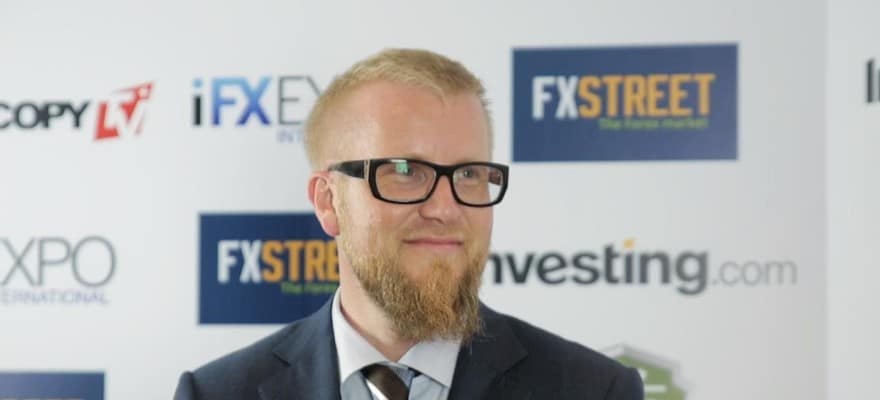
Cobalt Co-Founder, Adrian Patten
April of this year, the Spanish firm became the first bank to put blockchain into action by launching Santander One Pay FX.
That service allows users to make international money payments and transfers - often instantaneously. Users can access the service via a simple mobile application and can see the conversion rate before they send money or make a payment.
By creating a single, shared view of a transaction, the company claims it can reduce post-trade costs by 80 percent. The company does this by eliminating expenses incurred via licensing fees, ticketing charges, and staff costs.
Lastly, there is CLS. The settlement services provider has been unveiling various blockchain projects for the past couple of years.
Most notably, the company has developed a payment netting service using blockchain technology in conjunction with IBM, an American technology company.
Figuring out the results
As they are all reasonably new, gauging the success of these services is difficult. It is also hard to compare them. One Santander retail client is going to bring in a tiny fraction of the amount that an institutional client would pay to use Cobalt’s solutions.
Finance Magnates reached out to Santander, but the company wouldn’t confirm how many users One Pay FX has. The bank’s app, on the android app-store, does have over a million downloads.
Cobalt, which is yet to be fully functional, looks like it is going to be onboarding some big names in the institutional space in the coming months. Speaking to Finance Magnates, Patten noted that the firm, which is backed by Citibank, has already received commitments from companies to adopt its blockchain system when it goes live.
“We developed our technology in conjunction with the FX market,” said Patten, “and some of the largest participants have committed to go live on our network when we launch later this year.”
Conversely, and though the firm continues to voice its support for the technology, CLS’ blockchain system appears to not have been particularly well received. Reporting by Financial News this July indicated that many of the firm’s clients have expressed security concerns regarding the new service and have continued to use its old, non-blockchain one.
Blockchain - not for the risk averse
In many ways, that behavior echoes claims made by the company itself regarding the adoptability of blockchain technology. A report written by subject-experts at both IBM and CLS, which was published last year, examined banks’ risk-averse and cautious approach to blockchain.
Noting “the gaping chasm” between the attitudes of FinTech firms and regulated banks, the authors said that:
“The most difficult change for banks [when using blockchain technology] may be adopting a new attitude toward risk that includes the use of innovative practices to address it.”
Other industry insiders have made similar points. Speaking on a webinar this October, Richard Crook, who was Head of Emerging Technology at RBS, said that he decided to move to blockchain firm Chorum because the pace of change in the banking world, with regard to blockchain, is “glacial.”
Firms operating in the blockchain space, that are fearful of financial institutions opposition to their technology, do have past precedents to comfort them. Technologies that we now regard as common place, whether it be cloud computing or the internet, were also regarded with some suspicion by financial institutions when they first came on the scene.
“10 or 15 years ago you would have struggled to convince any CEO to store data on the cloud,” said Yoav Intrator, Head of JP Morgan’s Israel Technology Center, at the Israel Blockchain Summit. “Now more than 50 percent of financial institutions are using that technology. Progress takes time.”
Research from intelligence firm MarketsandMarkets indicates that “progress” will see the blockchain industry valued at $7.68 billion in 2022. Others - more optimistically - have estimated that it will be worth around $60 billion by 2024.
Problem solvers
As that growth occurs, sorting blockchain firms that are likely to succeed from those that will fail comes down to problem-solving. Companies that simply add the word ‘blockchain’ to their service offering aren’t going to last long. Conversely, firms that provide a useful product will succeed.
Mario Singh, CEO, Fullerton Markets
“If I were to use an analogy of a cup of water where the water is the content and the cup is the context – blockchain is the context or the platform of communication,” said Fullerton Markets CEO Mario Singh. “Innovation or value is the content. To have blockchain without solving any real issues is putting the cart before the horse.”
So where does that leave the blockchain industry as it pertains to FX? As with the market as a whole, it seems that patience, something sorely lacking in this fast-moving world of ours, is required.
“The world expects blockchain to be ready now,” said Ran Goldi, First Digital Assets Group’s CEO, in a recent report issued by his company. “‘Why are there still hacks? Why is Bitcoin so volatile?’ Things take time. Evolution is slow. The internet took almost 25 years to go mainstream. Blockchain is less than 10 years old.”
As Goldi’s comments suggest, there is a huge amount of pressure on blockchain companies to start working miracles immediately. People should leave the sensationalist headlines aside and start looking at what problems, in the long-term, blockchain technology might solve.
With regard to success, the answer is straightforward. Companies that provide value and solve problems using the technology are likely to do well. Wideboys who slap ‘blockchain’ on to their products will not.
Filtering out those wideboys, however, will take a few years. In the meanwhile, sit back and let the corp-speak dogs do their barking, as they have with ‘AI’ and ‘big data.’ It won’t be long before you see what works and what doesn’t and who succeeds and who fails.
And as with those two technologies, it seems that everyone is now trying to tack ‘blockchain’ on to whatever product or service they are offering to prove to clients, current or prospective, that they are ahead of the curve.
But, as was pointed out at the recent Israel Blockchain Summit, over 90 percent of blockchain start-ups have already failed. So, amidst all the hype and bloviation, how does one sort the wheat from the chaff?
As we try to answer that question, we’ll be focusing only on the foreign exchange (FX) market. Blockchain has an array of different uses, whether it be supply chain tracking or identity verification, but, for our readers, FX is almost certain to be the area most pertinent to their day-to-day work.
Keeping that in mind, we can start by looking at three of the major firms that are offering, or have deployed, blockchain technology for FX-related purposes.
Santander, Cobalt, and CLS
Perhaps the most notable company in this regard is Santander, if only because its blockchain service is offered to retail clients. In
Cobalt Co-Founder, Adrian Patten
April of this year, the Spanish firm became the first bank to put blockchain into action by launching Santander One Pay FX.
That service allows users to make international money payments and transfers - often instantaneously. Users can access the service via a simple mobile application and can see the conversion rate before they send money or make a payment.
By creating a single, shared view of a transaction, the company claims it can reduce post-trade costs by 80 percent. The company does this by eliminating expenses incurred via licensing fees, ticketing charges, and staff costs.
Lastly, there is CLS. The settlement services provider has been unveiling various blockchain projects for the past couple of years.
Most notably, the company has developed a payment netting service using blockchain technology in conjunction with IBM, an American technology company.
Figuring out the results
As they are all reasonably new, gauging the success of these services is difficult. It is also hard to compare them. One Santander retail client is going to bring in a tiny fraction of the amount that an institutional client would pay to use Cobalt’s solutions.
Finance Magnates reached out to Santander, but the company wouldn’t confirm how many users One Pay FX has. The bank’s app, on the android app-store, does have over a million downloads.
Cobalt, which is yet to be fully functional, looks like it is going to be onboarding some big names in the institutional space in the coming months. Speaking to Finance Magnates, Patten noted that the firm, which is backed by Citibank, has already received commitments from companies to adopt its blockchain system when it goes live.
“We developed our technology in conjunction with the FX market,” said Patten, “and some of the largest participants have committed to go live on our network when we launch later this year.”
Conversely, and though the firm continues to voice its support for the technology, CLS’ blockchain system appears to not have been particularly well received. Reporting by Financial News this July indicated that many of the firm’s clients have expressed security concerns regarding the new service and have continued to use its old, non-blockchain one.
Blockchain - not for the risk averse
In many ways, that behavior echoes claims made by the company itself regarding the adoptability of blockchain technology. A report written by subject-experts at both IBM and CLS, which was published last year, examined banks’ risk-averse and cautious approach to blockchain.
Noting “the gaping chasm” between the attitudes of FinTech firms and regulated banks, the authors said that:
“The most difficult change for banks [when using blockchain technology] may be adopting a new attitude toward risk that includes the use of innovative practices to address it.”
Other industry insiders have made similar points. Speaking on a webinar this October, Richard Crook, who was Head of Emerging Technology at RBS, said that he decided to move to blockchain firm Chorum because the pace of change in the banking world, with regard to blockchain, is “glacial.”
Firms operating in the blockchain space, that are fearful of financial institutions opposition to their technology, do have past precedents to comfort them. Technologies that we now regard as common place, whether it be cloud computing or the internet, were also regarded with some suspicion by financial institutions when they first came on the scene.
“10 or 15 years ago you would have struggled to convince any CEO to store data on the cloud,” said Yoav Intrator, Head of JP Morgan’s Israel Technology Center, at the Israel Blockchain Summit. “Now more than 50 percent of financial institutions are using that technology. Progress takes time.”
Research from intelligence firm MarketsandMarkets indicates that “progress” will see the blockchain industry valued at $7.68 billion in 2022. Others - more optimistically - have estimated that it will be worth around $60 billion by 2024.
Problem solvers
As that growth occurs, sorting blockchain firms that are likely to succeed from those that will fail comes down to problem-solving. Companies that simply add the word ‘blockchain’ to their service offering aren’t going to last long. Conversely, firms that provide a useful product will succeed.
Mario Singh, CEO, Fullerton Markets
“If I were to use an analogy of a cup of water where the water is the content and the cup is the context – blockchain is the context or the platform of communication,” said Fullerton Markets CEO Mario Singh. “Innovation or value is the content. To have blockchain without solving any real issues is putting the cart before the horse.”
So where does that leave the blockchain industry as it pertains to FX? As with the market as a whole, it seems that patience, something sorely lacking in this fast-moving world of ours, is required.
“The world expects blockchain to be ready now,” said Ran Goldi, First Digital Assets Group’s CEO, in a recent report issued by his company. “‘Why are there still hacks? Why is Bitcoin so volatile?’ Things take time. Evolution is slow. The internet took almost 25 years to go mainstream. Blockchain is less than 10 years old.”
As Goldi’s comments suggest, there is a huge amount of pressure on blockchain companies to start working miracles immediately. People should leave the sensationalist headlines aside and start looking at what problems, in the long-term, blockchain technology might solve.
With regard to success, the answer is straightforward. Companies that provide value and solve problems using the technology are likely to do well. Wideboys who slap ‘blockchain’ on to their products will not.
Filtering out those wideboys, however, will take a few years. In the meanwhile, sit back and let the corp-speak dogs do their barking, as they have with ‘AI’ and ‘big data.’ It won’t be long before you see what works and what doesn’t and who succeeds and who fails.
Binance Launches Retail AI Assistant, Repackages Existing Trading Tools
Featured Videos
AvaTrade to Acquire Most of FXCM; NAGA Raises $8M
AvaTrade to Acquire Most of FXCM; NAGA Raises $8M
AvaTrade to Acquire Most of FXCM; NAGA Raises $8M
AvaTrade to Acquire Most of FXCM; NAGA Raises $8M
Today’s financial news recap covers AvaTrade agrees to acquire most of FXCM, NAGA secures eight million dollars in new financing, and Wise seeks a tax settlement in the UK.
Finance Magnates Daily Recap brings you the latest news from forex and CFD brokers, fintech, payments, cryptocurrency, digital assets, trading platforms, financial regulation and global markets.
Get the key company news, executive moves, deals, regulatory updates and market developments of the day, in just a few minutes. New episodes published every weekday.
Read more: https://www.financemagnates.com
#FinanceMagnates #ForexNews #FintechNews
Today’s financial news recap covers AvaTrade agrees to acquire most of FXCM, NAGA secures eight million dollars in new financing, and Wise seeks a tax settlement in the UK.
Finance Magnates Daily Recap brings you the latest news from forex and CFD brokers, fintech, payments, cryptocurrency, digital assets, trading platforms, financial regulation and global markets.
Get the key company news, executive moves, deals, regulatory updates and market developments of the day, in just a few minutes. New episodes published every weekday.
Read more: https://www.financemagnates.com
#FinanceMagnates #ForexNews #FintechNews
Today’s financial news recap covers AvaTrade agrees to acquire most of FXCM, NAGA secures eight million dollars in new financing, and Wise seeks a tax settlement in the UK.
Finance Magnates Daily Recap brings you the latest news from forex and CFD brokers, fintech, payments, cryptocurrency, digital assets, trading platforms, financial regulation and global markets.
Get the key company news, executive moves, deals, regulatory updates and market developments of the day, in just a few minutes. New episodes published every weekday.
Read more: https://www.financemagnates.com
#FinanceMagnates #ForexNews #FintechNews
Today’s financial news recap covers AvaTrade agrees to acquire most of FXCM, NAGA secures eight million dollars in new financing, and Wise seeks a tax settlement in the UK.
Finance Magnates Daily Recap brings you the latest news from forex and CFD brokers, fintech, payments, cryptocurrency, digital assets, trading platforms, financial regulation and global markets.
Get the key company news, executive moves, deals, regulatory updates and market developments of the day, in just a few minutes. New episodes published every weekday.
Read more: https://www.financemagnates.com
#FinanceMagnates #ForexNews #FintechNews
XTB Adds Overnight US Stock Trading; Nasdaq Ventures Invests in One Trading
XTB Adds Overnight US Stock Trading; Nasdaq Ventures Invests in One Trading
XTB Adds Overnight US Stock Trading; Nasdaq Ventures Invests in One Trading
XTB Adds Overnight US Stock Trading; Nasdaq Ventures Invests in One Trading
XTB Adds Overnight US Stock Trading; Nasdaq Ventures Invests in One Trading
XTB Adds Overnight US Stock Trading; Nasdaq Ventures Invests in One Trading
Today’s financial news recap covers XTB expands overnight US stock trading, Fortrade reports higher revenue, Nasdaq backs One Trading, and Vest Labs raises 13 million dollars.
Finance Magnates Daily Recap brings you the latest news from forex and CFD brokers, fintech, payments, cryptocurrency, digital assets, trading platforms, financial regulation and global markets.
Get the key company news, executive moves, deals, regulatory updates and market developments of the day, in just a few minutes. New episodes published every weekday.
Read more: https://www.financemagnates.com
#FinanceMagnates #ForexNews #FintechNews
Today’s financial news recap covers XTB expands overnight US stock trading, Fortrade reports higher revenue, Nasdaq backs One Trading, and Vest Labs raises 13 million dollars.
Finance Magnates Daily Recap brings you the latest news from forex and CFD brokers, fintech, payments, cryptocurrency, digital assets, trading platforms, financial regulation and global markets.
Get the key company news, executive moves, deals, regulatory updates and market developments of the day, in just a few minutes. New episodes published every weekday.
Read more: https://www.financemagnates.com
#FinanceMagnates #ForexNews #FintechNews
Today’s financial news recap covers XTB expands overnight US stock trading, Fortrade reports higher revenue, Nasdaq backs One Trading, and Vest Labs raises 13 million dollars.
Finance Magnates Daily Recap brings you the latest news from forex and CFD brokers, fintech, payments, cryptocurrency, digital assets, trading platforms, financial regulation and global markets.
Get the key company news, executive moves, deals, regulatory updates and market developments of the day, in just a few minutes. New episodes published every weekday.
Read more: https://www.financemagnates.com
#FinanceMagnates #ForexNews #FintechNews
Today’s financial news recap covers XTB expands overnight US stock trading, Fortrade reports higher revenue, Nasdaq backs One Trading, and Vest Labs raises 13 million dollars.
Finance Magnates Daily Recap brings you the latest news from forex and CFD brokers, fintech, payments, cryptocurrency, digital assets, trading platforms, financial regulation and global markets.
Get the key company news, executive moves, deals, regulatory updates and market developments of the day, in just a few minutes. New episodes published every weekday.
Read more: https://www.financemagnates.com
#FinanceMagnates #ForexNews #FintechNews
Today’s financial news recap covers XTB expands overnight US stock trading, Fortrade reports higher revenue, Nasdaq backs One Trading, and Vest Labs raises 13 million dollars.
Finance Magnates Daily Recap brings you the latest news from forex and CFD brokers, fintech, payments, cryptocurrency, digital assets, trading platforms, financial regulation and global markets.
Get the key company news, executive moves, deals, regulatory updates and market developments of the day, in just a few minutes. New episodes published every weekday.
Read more: https://www.financemagnates.com
#FinanceMagnates #ForexNews #FintechNews
Today’s financial news recap covers XTB expands overnight US stock trading, Fortrade reports higher revenue, Nasdaq backs One Trading, and Vest Labs raises 13 million dollars.
Finance Magnates Daily Recap brings you the latest news from forex and CFD brokers, fintech, payments, cryptocurrency, digital assets, trading platforms, financial regulation and global markets.
Get the key company news, executive moves, deals, regulatory updates and market developments of the day, in just a few minutes. New episodes published every weekday.
Read more: https://www.financemagnates.com
#FinanceMagnates #ForexNews #FintechNews
CMC Founder Downplays Volatility Hit; Devexperts Names CEO
CMC Founder Downplays Volatility Hit; Devexperts Names CEO
CMC Founder Downplays Volatility Hit; Devexperts Names CEO
CMC Founder Downplays Volatility Hit; Devexperts Names CEO
CMC Founder Downplays Volatility Hit; Devexperts Names CEO
CMC Founder Downplays Volatility Hit; Devexperts Names CEO
Today’s financial news recap covers low volatility pressures brokers, Devexperts names a new CEO, Saxo cuts onboarding time, and OKX reaches a 25 billion dollar valuation.
Finance Magnates Daily Recap brings you the latest news from forex and CFD brokers, fintech, payments, cryptocurrency, digital assets, trading platforms, financial regulation and global markets.
Get the key company news, executive moves, deals, regulatory updates and market developments of the day, in just a few minutes. New episodes published every weekday.
Read more: https://www.financemagnates.com
#FinanceMagnates #ForexNews #FintechNews
Today’s financial news recap covers low volatility pressures brokers, Devexperts names a new CEO, Saxo cuts onboarding time, and OKX reaches a 25 billion dollar valuation.
Finance Magnates Daily Recap brings you the latest news from forex and CFD brokers, fintech, payments, cryptocurrency, digital assets, trading platforms, financial regulation and global markets.
Get the key company news, executive moves, deals, regulatory updates and market developments of the day, in just a few minutes. New episodes published every weekday.
Read more: https://www.financemagnates.com
#FinanceMagnates #ForexNews #FintechNews
Today’s financial news recap covers low volatility pressures brokers, Devexperts names a new CEO, Saxo cuts onboarding time, and OKX reaches a 25 billion dollar valuation.
Finance Magnates Daily Recap brings you the latest news from forex and CFD brokers, fintech, payments, cryptocurrency, digital assets, trading platforms, financial regulation and global markets.
Get the key company news, executive moves, deals, regulatory updates and market developments of the day, in just a few minutes. New episodes published every weekday.
Read more: https://www.financemagnates.com
#FinanceMagnates #ForexNews #FintechNews
Today’s financial news recap covers low volatility pressures brokers, Devexperts names a new CEO, Saxo cuts onboarding time, and OKX reaches a 25 billion dollar valuation.
Finance Magnates Daily Recap brings you the latest news from forex and CFD brokers, fintech, payments, cryptocurrency, digital assets, trading platforms, financial regulation and global markets.
Get the key company news, executive moves, deals, regulatory updates and market developments of the day, in just a few minutes. New episodes published every weekday.
Read more: https://www.financemagnates.com
#FinanceMagnates #ForexNews #FintechNews
Today’s financial news recap covers low volatility pressures brokers, Devexperts names a new CEO, Saxo cuts onboarding time, and OKX reaches a 25 billion dollar valuation.
Finance Magnates Daily Recap brings you the latest news from forex and CFD brokers, fintech, payments, cryptocurrency, digital assets, trading platforms, financial regulation and global markets.
Get the key company news, executive moves, deals, regulatory updates and market developments of the day, in just a few minutes. New episodes published every weekday.
Read more: https://www.financemagnates.com
#FinanceMagnates #ForexNews #FintechNews
Today’s financial news recap covers low volatility pressures brokers, Devexperts names a new CEO, Saxo cuts onboarding time, and OKX reaches a 25 billion dollar valuation.
Finance Magnates Daily Recap brings you the latest news from forex and CFD brokers, fintech, payments, cryptocurrency, digital assets, trading platforms, financial regulation and global markets.
Get the key company news, executive moves, deals, regulatory updates and market developments of the day, in just a few minutes. New episodes published every weekday.
Read more: https://www.financemagnates.com
#FinanceMagnates #ForexNews #FintechNews
Today’s financial news recap covers Trade Nation buys FXCM's UK client book, Trading 212 reports higher revenue, the CFTC's move to allow perpetual index futures.
Finance Magnates Daily Recap brings you the latest news from forex and CFD brokers, fintech, payments, cryptocurrency, digital assets, trading platforms, financial regulation and global markets.
Get the key company news, executive moves, deals, regulatory updates and market developments of the day, in just a few minutes. New episodes published every weekday.
Read more: https://www.financemagnates.com
#FinanceMagnates #ForexNews #FintechNews
Today’s financial news recap covers Trade Nation buys FXCM's UK client book, Trading 212 reports higher revenue, the CFTC's move to allow perpetual index futures.
Finance Magnates Daily Recap brings you the latest news from forex and CFD brokers, fintech, payments, cryptocurrency, digital assets, trading platforms, financial regulation and global markets.
Get the key company news, executive moves, deals, regulatory updates and market developments of the day, in just a few minutes. New episodes published every weekday.
Read more: https://www.financemagnates.com
#FinanceMagnates #ForexNews #FintechNews
Today’s financial news recap covers Trade Nation buys FXCM's UK client book, Trading 212 reports higher revenue, the CFTC's move to allow perpetual index futures.
Finance Magnates Daily Recap brings you the latest news from forex and CFD brokers, fintech, payments, cryptocurrency, digital assets, trading platforms, financial regulation and global markets.
Get the key company news, executive moves, deals, regulatory updates and market developments of the day, in just a few minutes. New episodes published every weekday.
Read more: https://www.financemagnates.com
#FinanceMagnates #ForexNews #FintechNews
Today’s financial news recap covers Trade Nation buys FXCM's UK client book, Trading 212 reports higher revenue, the CFTC's move to allow perpetual index futures.
Finance Magnates Daily Recap brings you the latest news from forex and CFD brokers, fintech, payments, cryptocurrency, digital assets, trading platforms, financial regulation and global markets.
Get the key company news, executive moves, deals, regulatory updates and market developments of the day, in just a few minutes. New episodes published every weekday.
Read more: https://www.financemagnates.com
#FinanceMagnates #ForexNews #FintechNews
Today’s financial news recap covers Trade Nation buys FXCM's UK client book, Trading 212 reports higher revenue, the CFTC's move to allow perpetual index futures.
Finance Magnates Daily Recap brings you the latest news from forex and CFD brokers, fintech, payments, cryptocurrency, digital assets, trading platforms, financial regulation and global markets.
Get the key company news, executive moves, deals, regulatory updates and market developments of the day, in just a few minutes. New episodes published every weekday.
Read more: https://www.financemagnates.com
#FinanceMagnates #ForexNews #FintechNews
Today’s financial news recap covers Trade Nation buys FXCM's UK client book, Trading 212 reports higher revenue, the CFTC's move to allow perpetual index futures.
Finance Magnates Daily Recap brings you the latest news from forex and CFD brokers, fintech, payments, cryptocurrency, digital assets, trading platforms, financial regulation and global markets.
Get the key company news, executive moves, deals, regulatory updates and market developments of the day, in just a few minutes. New episodes published every weekday.
Read more: https://www.financemagnates.com
#FinanceMagnates #ForexNews #FintechNews
Your career isn’t a linear path.
Your career isn’t a linear path.
Your career isn’t a linear path.
Your career isn’t a linear path.
Your career isn’t a linear path.
Your career isn’t a linear path.
Roles change. Career goals change. Sometimes you want a completely new challenge.
But the skills and knowledge you build along the way can stay with you and give you something to build on.
For Jeff Patterson, that continued growth is key to long-term career development.
You bring the skills. FM Academy helps you build the knowledge.
#FMAcademy #FinanceMagnates #FinanceCareers #ProfessionalDevelopment #Fintech
Roles change. Career goals change. Sometimes you want a completely new challenge.
But the skills and knowledge you build along the way can stay with you and give you something to build on.
For Jeff Patterson, that continued growth is key to long-term career development.
You bring the skills. FM Academy helps you build the knowledge.
#FMAcademy #FinanceMagnates #FinanceCareers #ProfessionalDevelopment #Fintech
Roles change. Career goals change. Sometimes you want a completely new challenge.
But the skills and knowledge you build along the way can stay with you and give you something to build on.
For Jeff Patterson, that continued growth is key to long-term career development.
You bring the skills. FM Academy helps you build the knowledge.
#FMAcademy #FinanceMagnates #FinanceCareers #ProfessionalDevelopment #Fintech
Roles change. Career goals change. Sometimes you want a completely new challenge.
But the skills and knowledge you build along the way can stay with you and give you something to build on.
For Jeff Patterson, that continued growth is key to long-term career development.
You bring the skills. FM Academy helps you build the knowledge.
#FMAcademy #FinanceMagnates #FinanceCareers #ProfessionalDevelopment #Fintech
Roles change. Career goals change. Sometimes you want a completely new challenge.
But the skills and knowledge you build along the way can stay with you and give you something to build on.
For Jeff Patterson, that continued growth is key to long-term career development.
You bring the skills. FM Academy helps you build the knowledge.
#FMAcademy #FinanceMagnates #FinanceCareers #ProfessionalDevelopment #Fintech
Roles change. Career goals change. Sometimes you want a completely new challenge.
But the skills and knowledge you build along the way can stay with you and give you something to build on.
For Jeff Patterson, that continued growth is key to long-term career development.
You bring the skills. FM Academy helps you build the knowledge.
#FMAcademy #FinanceMagnates #FinanceCareers #ProfessionalDevelopment #Fintech