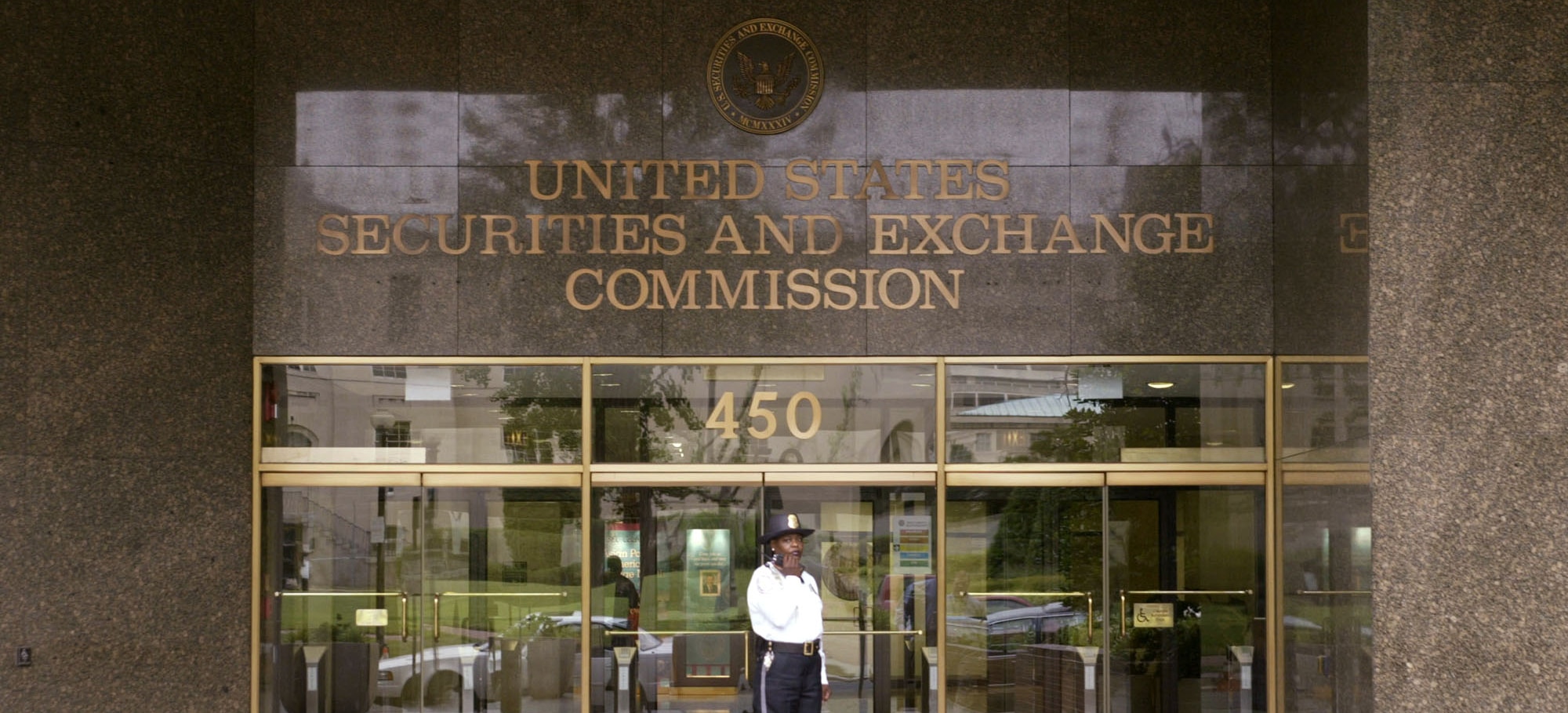
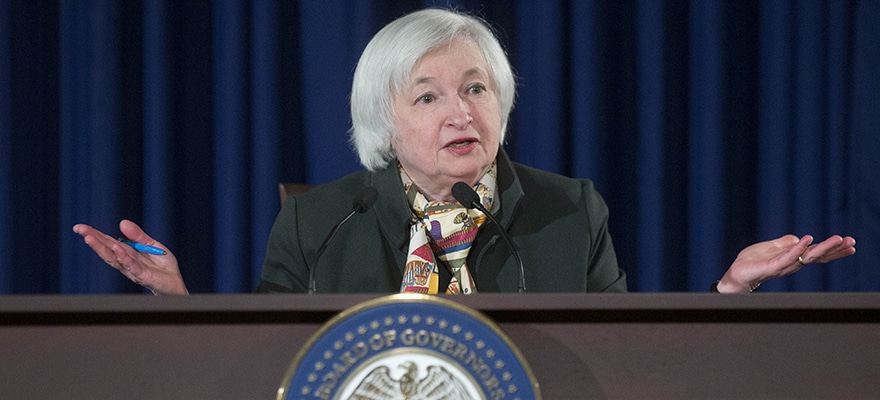
The Securities and Exchange Commission has voted 3-2 in favour of a new ruling that requires listed firms to produce pay ratios.
Bloomberg
In line with the growing regulatory trend to hold individuals to account, the U.S. Securities and Exchange Commission (SEC) has adopted a new ruling that will require listed firms to effectively disclose the salaries of their CEOs and other high-ranking executives.
With a vote on the final version of the rule having taken place today, the five-member Commission voted 3-2, with the panel’s two GOP members opposing the measure.
The new rule requires companies to provide investors with a ratio outlining the disparity in pay between the median salary and the executives in question.
The Dodd-Frank Act sought to shed light on this murky phenomenon, requiring clear, concise and understandable disclosure about compensation, amidst concerns that the disparity in pay between rank-and-file employees and the top dogs is disproportionately high.
While there is room for flexibility in terms of how firms may calculate the median salary – firms will be allowed to exclude up to 5% of overseas workers’ salaries – industry groups remain concerned, with a legal battle likely to ensue.
Republican SEC Commissioner Daniel Gallagher described the pay-ratio rule as a “textbook example” of “social policy masquerading as disclosure requirements,” which are helping encourage companies to stay private, according to the Wall Street Journal.
Moreover, trade groups and the U.S. Chamber of Commerce have further argued against the potential ruling, stating that the ratio does not paint an accurate picture and is open to misinterpretation.
Countering the conservatives, SEC Democratic Commissioner Kara Stein remarked: "Pay ratio disclosure should provide a valuable piece of information to investors and others in the marketplace.
As investors increasingly focus on corporate governance and executive compensation issues at public companies, the pay ratio disclosure will provide another metric that is useful on many fronts, such as say‐on‐pay votes.”
The move echoes recommendations coming out of the UK’s Fair and Effective Markets Review, which Bank of England Governor Carney hopes to establish as industry-wide best-practice. The recommendations sought to “raise standards, professionalism and accountability of individuals."
Companies will have to start reporting the new pay ratio disclosures in the first fiscal year beginning on or after January 1, 2017.
In line with the growing regulatory trend to hold individuals to account, the U.S. Securities and Exchange Commission (SEC) has adopted a new ruling that will require listed firms to effectively disclose the salaries of their CEOs and other high-ranking executives.
With a vote on the final version of the rule having taken place today, the five-member Commission voted 3-2, with the panel’s two GOP members opposing the measure.
The new rule requires companies to provide investors with a ratio outlining the disparity in pay between the median salary and the executives in question.
The Dodd-Frank Act sought to shed light on this murky phenomenon, requiring clear, concise and understandable disclosure about compensation, amidst concerns that the disparity in pay between rank-and-file employees and the top dogs is disproportionately high.
While there is room for flexibility in terms of how firms may calculate the median salary – firms will be allowed to exclude up to 5% of overseas workers’ salaries – industry groups remain concerned, with a legal battle likely to ensue.
Republican SEC Commissioner Daniel Gallagher described the pay-ratio rule as a “textbook example” of “social policy masquerading as disclosure requirements,” which are helping encourage companies to stay private, according to the Wall Street Journal.
Moreover, trade groups and the U.S. Chamber of Commerce have further argued against the potential ruling, stating that the ratio does not paint an accurate picture and is open to misinterpretation.
Countering the conservatives, SEC Democratic Commissioner Kara Stein remarked: "Pay ratio disclosure should provide a valuable piece of information to investors and others in the marketplace.
As investors increasingly focus on corporate governance and executive compensation issues at public companies, the pay ratio disclosure will provide another metric that is useful on many fronts, such as say‐on‐pay votes.”
The move echoes recommendations coming out of the UK’s Fair and Effective Markets Review, which Bank of England Governor Carney hopes to establish as industry-wide best-practice. The recommendations sought to “raise standards, professionalism and accountability of individuals."
Companies will have to start reporting the new pay ratio disclosures in the first fiscal year beginning on or after January 1, 2017.
Singapore Independent Wealth Sector Has Less Than 10% Market Share, but Vast Room for Growth
FP Markets Winner Spotlight 🏆 | Global Broker of the Year 2025 #Trading #Broker #Innovation #Shorts
FP Markets Winner Spotlight 🏆 | Global Broker of the Year 2025 #Trading #Broker #Innovation #Shorts
FP Markets takes the spotlight as Global Broker of the Year 2025 at the Finance Magnates Awards.
Martin Stoilov, Head of Client Experience, shares that trust, innovation, and people played a key role in the company’s success, supported by a strong foundation of integrity and client-centricity.
Following this milestone, FP Markets continues to focus on growth, technology investment, and its core values of transparency and excellence.
👉 Be part of FM Awards 2026: https://awards.financemagnates.com/#nominate
FP Markets takes the spotlight as Global Broker of the Year 2025 at the Finance Magnates Awards.
Martin Stoilov, Head of Client Experience, shares that trust, innovation, and people played a key role in the company’s success, supported by a strong foundation of integrity and client-centricity.
Following this milestone, FP Markets continues to focus on growth, technology investment, and its core values of transparency and excellence.
👉 Be part of FM Awards 2026: https://awards.financemagnates.com/#nominate
In this video, we review @HolaPrimeMarketsOfficial, a multi-asset forex and CFDs broker offering different account types, trading platforms, and flexible trading conditions.
We cover the broker’s overall offering, including account options, trading environment, platforms like MT4 and MT5, and additional services such as managed accounts and fast withdrawals.
Watch the full video to see if Hola Prime Markets fits your trading needs.
📣 Stay up to date with the latest in finance and trading. Follow Finance Magnates for industry news, insights, and global event coverage.
Connect with us:
🔗 LinkedIn: /financemagnates
👍 Facebook: /financemagnates
📸 Instagram: https://www.instagram.com/financemagnates
🐦 X: https://x.com/financemagnates
🎥 TikTok: https://www.tiktok.com/tag/financemagnates
▶️ YouTube: /@financemagnates_official
#HolaPrime #ForexBroker #CFDTrading #FinanceMagnates #Trading #Forex #BrokerReview
In this video, we review @HolaPrimeMarketsOfficial, a multi-asset forex and CFDs broker offering different account types, trading platforms, and flexible trading conditions.
We cover the broker’s overall offering, including account options, trading environment, platforms like MT4 and MT5, and additional services such as managed accounts and fast withdrawals.
Watch the full video to see if Hola Prime Markets fits your trading needs.
📣 Stay up to date with the latest in finance and trading. Follow Finance Magnates for industry news, insights, and global event coverage.
Connect with us:
🔗 LinkedIn: /financemagnates
👍 Facebook: /financemagnates
📸 Instagram: https://www.instagram.com/financemagnates
🐦 X: https://x.com/financemagnates
🎥 TikTok: https://www.tiktok.com/tag/financemagnates
▶️ YouTube: /@financemagnates_official
#HolaPrime #ForexBroker #CFDTrading #FinanceMagnates #Trading #Forex #BrokerReview
Hola Prime Review: What You Need to Know | Full Breakdown by Finance Magnates
Hola Prime Review: What You Need to Know | Full Breakdown by Finance Magnates
In this video, we review @HolaPrime_Global, a proprietary trading firm offering evaluation programs and performance-based payouts in simulated market environments.
We cover how the challenge model works, including account types, profit splits (up to 95%), trading rules, and what it takes to reach a funded account. You’ll also learn about available platforms like MT4, MT5, cTrader, and more, along with insights into payouts, support, and trading conditions.
Watch the full video to see if Hola Prime fits your trading style.
📣 Stay up to date with the latest in finance and trading. Follow Finance Magnates for industry news, insights, and global event coverage.
Connect with us:
🔗 LinkedIn: /financemagnates
👍 Facebook: /financemagnates
📸 Instagram: https://www.instagram.com/financemagnates
🐦 X: https://x.com/financemagnates
🎥 TikTok: https://www.tiktok.com/tag/financemagnates
▶️ YouTube: /@financemagnates_official
#HolaPrime #PropFirm #Trading #FinanceMagnates #Forex #FuturesTrading #TradingReview #PropFirmReview
In this video, we review @HolaPrime_Global, a proprietary trading firm offering evaluation programs and performance-based payouts in simulated market environments.
We cover how the challenge model works, including account types, profit splits (up to 95%), trading rules, and what it takes to reach a funded account. You’ll also learn about available platforms like MT4, MT5, cTrader, and more, along with insights into payouts, support, and trading conditions.
Watch the full video to see if Hola Prime fits your trading style.
📣 Stay up to date with the latest in finance and trading. Follow Finance Magnates for industry news, insights, and global event coverage.
Connect with us:
🔗 LinkedIn: /financemagnates
👍 Facebook: /financemagnates
📸 Instagram: https://www.instagram.com/financemagnates
🐦 X: https://x.com/financemagnates
🎥 TikTok: https://www.tiktok.com/tag/financemagnates
▶️ YouTube: /@financemagnates_official
#HolaPrime #PropFirm #Trading #FinanceMagnates #Forex #FuturesTrading #TradingReview #PropFirmReview
Axi Winner Spotlight 🏆 | Global Most Innovative Broker 2025 #Innovation #Trading #Fintech #Broker
Axi Winner Spotlight 🏆 | Global Most Innovative Broker 2025 #Innovation #Trading #Fintech #Broker
Axi takes the spotlight at the Finance Magnates Awards, winning Global Most Innovative Broker 2025.
Olivia Xenofontos and Ivanna Openko share how the team will feel: proud, motivated, and ready to keep delivering.
They also describe the night as well-organized, focused, and enjoyable for all.
👉 Be part of FM Awards 2026.
Axi takes the spotlight at the Finance Magnates Awards, winning Global Most Innovative Broker 2025.
Olivia Xenofontos and Ivanna Openko share how the team will feel: proud, motivated, and ready to keep delivering.
They also describe the night as well-organized, focused, and enjoyable for all.
👉 Be part of FM Awards 2026.
Recognition that matters.
Built on transparency.
Driven by the industry.
The Finance Magnates Awards 2026.
Nominations are now open.
🔗 https://awards.financemagnates.com/?utm_source=SM&utm_medium=social&utm_campaign=recognition-matters
Recognition that matters.
Built on transparency.
Driven by the industry.
The Finance Magnates Awards 2026.
Nominations are now open.
🔗 https://awards.financemagnates.com/?utm_source=SM&utm_medium=social&utm_campaign=recognition-matters