>
LME Confirmed as New Metals Ringmaster as Market Rigging Fears Take Benchmarking Digital
Tuesday,21/10/2014|05:38GMTby
George Tchetvertakov
With palladium and platinum price 'fixing' shifting to the LME in December, is benchmark manipulation likely to be curbed or compounded? Any system or solution is only as good as its wielder.
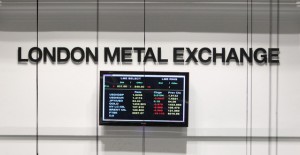
The London Metals Exchange (LME), owned by Hong Kong Exchanges and Clearing Ltd (HKEx) has been confirmed as the new ringmaster of the platinum and palladium price fixing process. The LME's electronic order submission process is replacing the previous system of vocal conference calls conducted by 4 counter-parties, twice per day. A similar conference call method is used to 'fix' Gold prices and was previously used to set Silver prices until July of this year when the CME Group and Thomson Reuters won a tender to shift Silver benchmarking onto electronic platforms.
After going through a Request-For-Proposal (RFP) process begun in July 2014 by the 'tongue-twistingly' named 'London Platinum and Palladium Fixing Company Limited' (LPPFCL), the LME was deemed to have the best-and-final offer. Currently, the LPPFCL is comprised of 4 large financial juggernauts (BASF Metals, Goldman Sachs, HSBC Holdings and Standard Bank) that conduct the benchmarking by contributing quotes as part of the daily fixing of platinum and palladium prices.
The same modus operandi is used to fix gold prices each day. However, given the market manipulation revelations that have revealed market abusive behaviour in almost all benchmarks including interest rates (LIBOR), Foreign Exchange (London 4pm fix), interest-rate swaps (ISDAfix) and metals (Gold and Silver fixes), the decision was made to shift responsibility for platinum and palladium from the LPPFCL to a third party. The LBMA's 'old-boy' styled system of conference calls, nods and winks is gradually entering the digital age, one commodity at a time.
Change is Good
According to LME Head of Business Development, Matthew Chamberlain in an interview with Reuters, "The new pricing process will be run via bespoke platform LMEbullion, which is an electronic version of the current round-by-round fixing process". Adding, "It was fairly clear that what the banks wanted was the electronic version of what happens at the moment but with the addition of a lot of audit and reporting and compliance features".
The digitised bidding and order process facilitated by LMEbullion will give participants greater flexibility in how they submit their bids and offers by allowing pauses to recalculate overall interest, multiple opportunities to amend orders and more clarity of what other participants are doing.

Matthew Chamberlain, LME Head of Business Development
Last year the CFTC launched an investigation into complaints from bulk aluminium buyers such Coca-Cola and MillerCoors LLC about artificially extended waiting/delivery times and suspected tampering of perceived inventory space to maximise storage fee revenue.
Various aluminium consumers have complained that Wall Street banks, including Goldman Sachs and major commodity merchants like Glencore Plc currently engage in the lucrative practise of building up aluminium stocks, charging rent to store the metal and delivering it only at a limited rate.
You Can't Help But Wonder
With such flagrancy again in plain view, it wouldn’t be surprising if inventory information was shared and used to anticipate aluminium price fluctuations. Aluminium price manipulation amongst a select few oligopolised market participants is not a far cry from FX, LIBOR, ISDAfix, Mortgages and Equities. Many other markets have been plied to far greater degrees. If rigging works in one market it makes one wonder whether similar techniques were not used to derive a winning strategy in other markets too.
Over in the United States, HKEx and its merry band of subsidiaries were named as co-defendants in class action lawsuits regarding alleged “anti-competitive and monopolistic behaviour in connection with aluminium metal warehousing” last year. In August 2014, the LME avoided all charges and alleged claims on “sovereign immunity grounds”. As they say, innocent until proven guilty – in this case it seems the LME is innocent because guilt was not an option on sovereign immunity grounds. Therefore the LME does not operate monopolistically in aluminium warehousing. Sovereign immunity status is the equivalent of holy water in the financial markets.
Furthermore, there is more litigation in the pipeline. Lawsuits in connection with zinc metal warehousing are still pending in the US. In view of the recent developments in the aluminium warehousing cases, the District Court has decided to put the zinc metal warehousing cases on hold until 30 days after the District Court makes a decision on aluminium warehousing.
With HKEx and its troop of trading venues embroiled in several metals court cases, the case for LME taking over responsibility from the LPPFCL could not be more shaky.
The Digital Brick Road
If inferencing from the impact of digital platforms on trading activity such as open-outcry pits and telephone trading, the digitisation of the benchmarking process opens the door for computerised features that allow for automation and synchronisation with other parts of the participant's wider business. CFO's and Risk Managers are likely to rejoice.
However, with any wholesale change, there could be drawbacks as well as advantages. Although digital platforms offer a host of logistical features, they also help a potential market manipulator to distance themselves from the actual manipulative behaviour. Whereas conference calls have witnesses and recorded statements, digital platforms can be automated and any collusive behaviour blamed on faulty circuits. Just recently, the Australian regulator, ASIC published its concerns regarding exponential technological innovation and the digitisation of financial services in a Strategic Outlook.
One of the major reasons for moving various benchmark processes to digital platforms was to curb existing or future potential price fixing. Market manipulation will presumably be avoided by delegating the majority of the process to automated algorithms which are tamper proof to be sure. It is the seeming assumption of regulators that bankers are able to exchange sensitive information via chat rooms but not sophisticated enough to collaborate on a slice of computer code.
Digital Not Analogue
LMEbullion is at an advanced stage of development and will be ready for live operation on 1st December 2014 according to the LME.
Does going digital reduce the propensity for market manipulation? The answer it seems is maybe. Any tool can be used in the right or the wrong way. If the LME’s systems are implemented with an honest intention, the outcome will be greater transparency and better price clarity in metals markets given that technology facilitates it.
On the other hand, if systems are used with a dishonest intention, market manipulation becomes easier and harder to trace with digital platforms given that technology facilitates it. To contrast a comparative parallel, pro-gun advocates say guns don’t kill people, people do. Likewise, one could argue that in financial markets, it’s not technology that distorts/clarifies markets, people do.
There will often be times when a non-standard situation occurs that Leads
Leads
Leads or lead generation are an essential component of marketing and powerful tool by brokers. In its simplest form, leads can be defined as the outreach of customer interest or enquiry into products or services, most often associated with brokerages.These can be created for purposes such as list building, e-newsletter list acquisition, or for sales leads. Amongst marketers, such lists are one of their most important assets and instrumental to sales.There are a variety of methods for generating
Read this Term to illiquid market conditions in metals markets. In such cases, the current fixing process as prescribed by the LPPFCL and LPPM proposes: "Where there is no market, [the opening price will be] where the Chair reasonably perceives the market price to be. The Chair will identify the level of the opening price at all times by exercising his/her expert judgement in good faith".
For the time being, until the LME formally takes over administration of platinum and palladium fixing later this year, palladium and platinum market participants must to some extent rely on the good old-fashioned human touch.
The London Metals Exchange (LME), owned by Hong Kong Exchanges and Clearing Ltd (HKEx) has been confirmed as the new ringmaster of the platinum and palladium price fixing process. The LME's electronic order submission process is replacing the previous system of vocal conference calls conducted by 4 counter-parties, twice per day. A similar conference call method is used to 'fix' Gold prices and was previously used to set Silver prices until July of this year when the CME Group and Thomson Reuters won a tender to shift Silver benchmarking onto electronic platforms.
After going through a Request-For-Proposal (RFP) process begun in July 2014 by the 'tongue-twistingly' named 'London Platinum and Palladium Fixing Company Limited' (LPPFCL), the LME was deemed to have the best-and-final offer. Currently, the LPPFCL is comprised of 4 large financial juggernauts (BASF Metals, Goldman Sachs, HSBC Holdings and Standard Bank) that conduct the benchmarking by contributing quotes as part of the daily fixing of platinum and palladium prices.
The same modus operandi is used to fix gold prices each day. However, given the market manipulation revelations that have revealed market abusive behaviour in almost all benchmarks including interest rates (LIBOR), Foreign Exchange (London 4pm fix), interest-rate swaps (ISDAfix) and metals (Gold and Silver fixes), the decision was made to shift responsibility for platinum and palladium from the LPPFCL to a third party. The LBMA's 'old-boy' styled system of conference calls, nods and winks is gradually entering the digital age, one commodity at a time.
Change is Good
According to LME Head of Business Development, Matthew Chamberlain in an interview with Reuters, "The new pricing process will be run via bespoke platform LMEbullion, which is an electronic version of the current round-by-round fixing process". Adding, "It was fairly clear that what the banks wanted was the electronic version of what happens at the moment but with the addition of a lot of audit and reporting and compliance features".
The digitised bidding and order process facilitated by LMEbullion will give participants greater flexibility in how they submit their bids and offers by allowing pauses to recalculate overall interest, multiple opportunities to amend orders and more clarity of what other participants are doing.
Matthew Chamberlain, LME Head of Business Development
Last year the CFTC launched an investigation into complaints from bulk aluminium buyers such Coca-Cola and MillerCoors LLC about artificially extended waiting/delivery times and suspected tampering of perceived inventory space to maximise storage fee revenue.
Various aluminium consumers have complained that Wall Street banks, including Goldman Sachs and major commodity merchants like Glencore Plc currently engage in the lucrative practise of building up aluminium stocks, charging rent to store the metal and delivering it only at a limited rate.
You Can't Help But Wonder
With such flagrancy again in plain view, it wouldn’t be surprising if inventory information was shared and used to anticipate aluminium price fluctuations. Aluminium price manipulation amongst a select few oligopolised market participants is not a far cry from FX, LIBOR, ISDAfix, Mortgages and Equities. Many other markets have been plied to far greater degrees. If rigging works in one market it makes one wonder whether similar techniques were not used to derive a winning strategy in other markets too.
Over in the United States, HKEx and its merry band of subsidiaries were named as co-defendants in class action lawsuits regarding alleged “anti-competitive and monopolistic behaviour in connection with aluminium metal warehousing” last year. In August 2014, the LME avoided all charges and alleged claims on “sovereign immunity grounds”. As they say, innocent until proven guilty – in this case it seems the LME is innocent because guilt was not an option on sovereign immunity grounds. Therefore the LME does not operate monopolistically in aluminium warehousing. Sovereign immunity status is the equivalent of holy water in the financial markets.
Furthermore, there is more litigation in the pipeline. Lawsuits in connection with zinc metal warehousing are still pending in the US. In view of the recent developments in the aluminium warehousing cases, the District Court has decided to put the zinc metal warehousing cases on hold until 30 days after the District Court makes a decision on aluminium warehousing.
With HKEx and its troop of trading venues embroiled in several metals court cases, the case for LME taking over responsibility from the LPPFCL could not be more shaky.
The Digital Brick Road
If inferencing from the impact of digital platforms on trading activity such as open-outcry pits and telephone trading, the digitisation of the benchmarking process opens the door for computerised features that allow for automation and synchronisation with other parts of the participant's wider business. CFO's and Risk Managers are likely to rejoice.
However, with any wholesale change, there could be drawbacks as well as advantages. Although digital platforms offer a host of logistical features, they also help a potential market manipulator to distance themselves from the actual manipulative behaviour. Whereas conference calls have witnesses and recorded statements, digital platforms can be automated and any collusive behaviour blamed on faulty circuits. Just recently, the Australian regulator, ASIC published its concerns regarding exponential technological innovation and the digitisation of financial services in a Strategic Outlook.
One of the major reasons for moving various benchmark processes to digital platforms was to curb existing or future potential price fixing. Market manipulation will presumably be avoided by delegating the majority of the process to automated algorithms which are tamper proof to be sure. It is the seeming assumption of regulators that bankers are able to exchange sensitive information via chat rooms but not sophisticated enough to collaborate on a slice of computer code.
Digital Not Analogue
LMEbullion is at an advanced stage of development and will be ready for live operation on 1st December 2014 according to the LME.
Does going digital reduce the propensity for market manipulation? The answer it seems is maybe. Any tool can be used in the right or the wrong way. If the LME’s systems are implemented with an honest intention, the outcome will be greater transparency and better price clarity in metals markets given that technology facilitates it.
On the other hand, if systems are used with a dishonest intention, market manipulation becomes easier and harder to trace with digital platforms given that technology facilitates it. To contrast a comparative parallel, pro-gun advocates say guns don’t kill people, people do. Likewise, one could argue that in financial markets, it’s not technology that distorts/clarifies markets, people do.
There will often be times when a non-standard situation occurs that Leads
Leads
Leads or lead generation are an essential component of marketing and powerful tool by brokers. In its simplest form, leads can be defined as the outreach of customer interest or enquiry into products or services, most often associated with brokerages.These can be created for purposes such as list building, e-newsletter list acquisition, or for sales leads. Amongst marketers, such lists are one of their most important assets and instrumental to sales.There are a variety of methods for generating
Read this Term to illiquid market conditions in metals markets. In such cases, the current fixing process as prescribed by the LPPFCL and LPPM proposes: "Where there is no market, [the opening price will be] where the Chair reasonably perceives the market price to be. The Chair will identify the level of the opening price at all times by exercising his/her expert judgement in good faith".
For the time being, until the LME formally takes over administration of platinum and palladium fixing later this year, palladium and platinum market participants must to some extent rely on the good old-fashioned human touch.
Prediction Markets Go Institutional as Galaxy Digital Moves Event Trading to the OTC Swap Market
Featured Videos
FM Daily Brief – 9 June 2026
Today’s Tuesday, the 9th of June 2026, and these are our main stories: eToro’s customer assets climbed back above $20 billion, Prop trading model in prediction markets, and Leverate launched a new AI assistant for brokers and traders.
War Stories: Lessons from 20 Years in Markets (the pain, the pitfalls and the profits)
The trades that taught me the most aren't the ones that worked. They're the ones that didn't — or the ones I almost caught and didn't have the nerve to ride. In this session, I'll tell you about the Brexit miss, the SNB shocker that nearly handed me a 5400% return, the BoJ surprise that punched me in the gut, and a few wins along the way. Each story carries a lesson, but the lessons aren't the point. Everyone who trades long enough collects a portfolio of moments like these; what separates the people who stay in the game is what they do with them.
The Engine and the Fuel: How AI & Data Drives African Future
If AI is the engine, data is the fuel. Without quality, accessible data, AI cannot work well; and without the right mindset, data remains just numbers instead of insight. In this session, leading experts will explore how AI and data are democratizing opportunities for businesses and personal growth. Discover practical ways to make AI accessible today, anticipate its transformative impact on African markets, and learn actionable steps to prepare for what's next. Let's talk about:
-How AI and data drive business efficiency and innovation in trading and fintech
-AI tools to elevate trading or business strategies
-How to access and maximise the power of data and AI
-Emerging AI and data trends in Africa and their economic ripple effects
If AI is the engine, data is the fuel. Without quality, accessible data, AI cannot work well; and without the right mindset, data remains just numbers instead of insight. In this session, leading experts will explore how AI and data are democratizing opportunities for businesses and personal growth. Discover practical ways to make AI accessible today, anticipate its transformative impact on African markets, and learn actionable steps to prepare for what's next. Let's talk about:
-How AI and data drive business efficiency and innovation in trading and fintech
-AI tools to elevate trading or business strategies
-How to access and maximise the power of data and AI
-Emerging AI and data trends in Africa and their economic ripple effects
If AI is the engine, data is the fuel. Without quality, accessible data, AI cannot work well; and without the right mindset, data remains just numbers instead of insight. In this session, leading experts will explore how AI and data are democratizing opportunities for businesses and personal growth. Discover practical ways to make AI accessible today, anticipate its transformative impact on African markets, and learn actionable steps to prepare for what's next. Let's talk about:
-How AI and data drive business efficiency and innovation in trading and fintech
-AI tools to elevate trading or business strategies
-How to access and maximise the power of data and AI
-Emerging AI and data trends in Africa and their economic ripple effects
If AI is the engine, data is the fuel. Without quality, accessible data, AI cannot work well; and without the right mindset, data remains just numbers instead of insight. In this session, leading experts will explore how AI and data are democratizing opportunities for businesses and personal growth. Discover practical ways to make AI accessible today, anticipate its transformative impact on African markets, and learn actionable steps to prepare for what's next. Let's talk about:
-How AI and data drive business efficiency and innovation in trading and fintech
-AI tools to elevate trading or business strategies
-How to access and maximise the power of data and AI
-Emerging AI and data trends in Africa and their economic ripple effects
If AI is the engine, data is the fuel. Without quality, accessible data, AI cannot work well; and without the right mindset, data remains just numbers instead of insight. In this session, leading experts will explore how AI and data are democratizing opportunities for businesses and personal growth. Discover practical ways to make AI accessible today, anticipate its transformative impact on African markets, and learn actionable steps to prepare for what's next. Let's talk about:
-How AI and data drive business efficiency and innovation in trading and fintech
-AI tools to elevate trading or business strategies
-How to access and maximise the power of data and AI
-Emerging AI and data trends in Africa and their economic ripple effects
If AI is the engine, data is the fuel. Without quality, accessible data, AI cannot work well; and without the right mindset, data remains just numbers instead of insight. In this session, leading experts will explore how AI and data are democratizing opportunities for businesses and personal growth. Discover practical ways to make AI accessible today, anticipate its transformative impact on African markets, and learn actionable steps to prepare for what's next. Let's talk about:
-How AI and data drive business efficiency and innovation in trading and fintech
-AI tools to elevate trading or business strategies
-How to access and maximise the power of data and AI
-Emerging AI and data trends in Africa and their economic ripple effects
Inside My Best Trade with Jimmy Moyaha
Most market post-mortems describe what happened to prices. Few describe what happened in the trading room while the position was open: the entry conviction, the moments that tested it, and the exit decision that closed the book.
This session brings one seasoned trader to the stage for an unfiltered account of the position that still defines how they think about markets.
Attendees will walk away with:
-A first-hand account of how a conviction trade is built, from thesis and entry through position management and exit
-Understanding of what turns a market observation into a live position, and what holds it when conditions shift
-Insight into how timing, execution quality, and market structure shaped the final result
-Perspective on what the trade revealed about edge, risk tolerance, and when to hold through a position moving against you
-Clarity on what separates a well-built trade from a well-timed one
Most market post-mortems describe what happened to prices. Few describe what happened in the trading room while the position was open: the entry conviction, the moments that tested it, and the exit decision that closed the book.
This session brings one seasoned trader to the stage for an unfiltered account of the position that still defines how they think about markets.
Attendees will walk away with:
-A first-hand account of how a conviction trade is built, from thesis and entry through position management and exit
-Understanding of what turns a market observation into a live position, and what holds it when conditions shift
-Insight into how timing, execution quality, and market structure shaped the final result
-Perspective on what the trade revealed about edge, risk tolerance, and when to hold through a position moving against you
-Clarity on what separates a well-built trade from a well-timed one
Most market post-mortems describe what happened to prices. Few describe what happened in the trading room while the position was open: the entry conviction, the moments that tested it, and the exit decision that closed the book.
This session brings one seasoned trader to the stage for an unfiltered account of the position that still defines how they think about markets.
Attendees will walk away with:
-A first-hand account of how a conviction trade is built, from thesis and entry through position management and exit
-Understanding of what turns a market observation into a live position, and what holds it when conditions shift
-Insight into how timing, execution quality, and market structure shaped the final result
-Perspective on what the trade revealed about edge, risk tolerance, and when to hold through a position moving against you
-Clarity on what separates a well-built trade from a well-timed one
Most market post-mortems describe what happened to prices. Few describe what happened in the trading room while the position was open: the entry conviction, the moments that tested it, and the exit decision that closed the book.
This session brings one seasoned trader to the stage for an unfiltered account of the position that still defines how they think about markets.
Attendees will walk away with:
-A first-hand account of how a conviction trade is built, from thesis and entry through position management and exit
-Understanding of what turns a market observation into a live position, and what holds it when conditions shift
-Insight into how timing, execution quality, and market structure shaped the final result
-Perspective on what the trade revealed about edge, risk tolerance, and when to hold through a position moving against you
-Clarity on what separates a well-built trade from a well-timed one
Most market post-mortems describe what happened to prices. Few describe what happened in the trading room while the position was open: the entry conviction, the moments that tested it, and the exit decision that closed the book.
This session brings one seasoned trader to the stage for an unfiltered account of the position that still defines how they think about markets.
Attendees will walk away with:
-A first-hand account of how a conviction trade is built, from thesis and entry through position management and exit
-Understanding of what turns a market observation into a live position, and what holds it when conditions shift
-Insight into how timing, execution quality, and market structure shaped the final result
-Perspective on what the trade revealed about edge, risk tolerance, and when to hold through a position moving against you
-Clarity on what separates a well-built trade from a well-timed one
Most market post-mortems describe what happened to prices. Few describe what happened in the trading room while the position was open: the entry conviction, the moments that tested it, and the exit decision that closed the book.
This session brings one seasoned trader to the stage for an unfiltered account of the position that still defines how they think about markets.
Attendees will walk away with:
-A first-hand account of how a conviction trade is built, from thesis and entry through position management and exit
-Understanding of what turns a market observation into a live position, and what holds it when conditions shift
-Insight into how timing, execution quality, and market structure shaped the final result
-Perspective on what the trade revealed about edge, risk tolerance, and when to hold through a position moving against you
-Clarity on what separates a well-built trade from a well-timed one
Agentic Inequality: Democratizing Financial Access Through AI & Blockchain
As crypto and CFD trading continue to expand across Africa, access to advanced tools and market insights remains uneven. This session explores how AI and blockchain can bridge that gap by empowering informal traders and underserved communities to participate more effectively in digital financial markets. The discussion will focus on practical applications of technology to improve accessibility, education, and investment outcomes in both formal and informal sectors.
In this discussion, we will explore:
-The role of AI in democratizing access to trading tools, insights, and strategy development
-How crypto and blockchain can enable broader participation beyond traditional financial systems
-Addressing access barriers: infrastructure, education, and affordability in underserved communities
-Opportunities for brokers and platforms to tap into the informal trading economy
As crypto and CFD trading continue to expand across Africa, access to advanced tools and market insights remains uneven. This session explores how AI and blockchain can bridge that gap by empowering informal traders and underserved communities to participate more effectively in digital financial markets. The discussion will focus on practical applications of technology to improve accessibility, education, and investment outcomes in both formal and informal sectors.
In this discussion, we will explore:
-The role of AI in democratizing access to trading tools, insights, and strategy development
-How crypto and blockchain can enable broader participation beyond traditional financial systems
-Addressing access barriers: infrastructure, education, and affordability in underserved communities
-Opportunities for brokers and platforms to tap into the informal trading economy
As crypto and CFD trading continue to expand across Africa, access to advanced tools and market insights remains uneven. This session explores how AI and blockchain can bridge that gap by empowering informal traders and underserved communities to participate more effectively in digital financial markets. The discussion will focus on practical applications of technology to improve accessibility, education, and investment outcomes in both formal and informal sectors.
In this discussion, we will explore:
-The role of AI in democratizing access to trading tools, insights, and strategy development
-How crypto and blockchain can enable broader participation beyond traditional financial systems
-Addressing access barriers: infrastructure, education, and affordability in underserved communities
-Opportunities for brokers and platforms to tap into the informal trading economy
As crypto and CFD trading continue to expand across Africa, access to advanced tools and market insights remains uneven. This session explores how AI and blockchain can bridge that gap by empowering informal traders and underserved communities to participate more effectively in digital financial markets. The discussion will focus on practical applications of technology to improve accessibility, education, and investment outcomes in both formal and informal sectors.
In this discussion, we will explore:
-The role of AI in democratizing access to trading tools, insights, and strategy development
-How crypto and blockchain can enable broader participation beyond traditional financial systems
-Addressing access barriers: infrastructure, education, and affordability in underserved communities
-Opportunities for brokers and platforms to tap into the informal trading economy
As crypto and CFD trading continue to expand across Africa, access to advanced tools and market insights remains uneven. This session explores how AI and blockchain can bridge that gap by empowering informal traders and underserved communities to participate more effectively in digital financial markets. The discussion will focus on practical applications of technology to improve accessibility, education, and investment outcomes in both formal and informal sectors.
In this discussion, we will explore:
-The role of AI in democratizing access to trading tools, insights, and strategy development
-How crypto and blockchain can enable broader participation beyond traditional financial systems
-Addressing access barriers: infrastructure, education, and affordability in underserved communities
-Opportunities for brokers and platforms to tap into the informal trading economy
As crypto and CFD trading continue to expand across Africa, access to advanced tools and market insights remains uneven. This session explores how AI and blockchain can bridge that gap by empowering informal traders and underserved communities to participate more effectively in digital financial markets. The discussion will focus on practical applications of technology to improve accessibility, education, and investment outcomes in both formal and informal sectors.
In this discussion, we will explore:
-The role of AI in democratizing access to trading tools, insights, and strategy development
-How crypto and blockchain can enable broader participation beyond traditional financial systems
-Addressing access barriers: infrastructure, education, and affordability in underserved communities
-Opportunities for brokers and platforms to tap into the informal trading economy
