The controversial write-off of CHF 15 billion AT1 bonds resulted in a one-off profit.
However, the adjusted results showed a loss of CHF 1.3 billion.
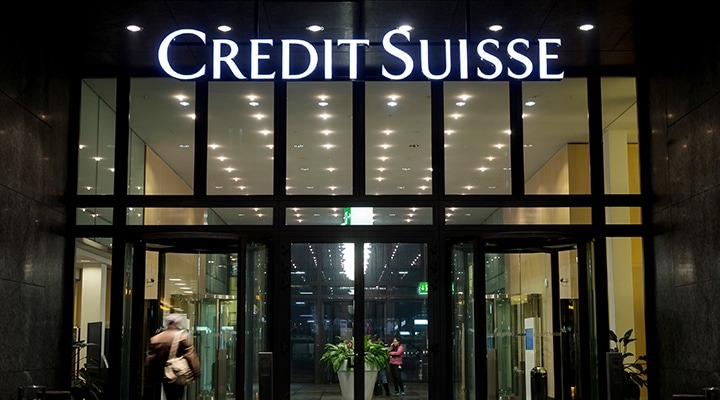
Credit Suisse
Credit
Suisse has announced its Q1 2023 financial results, highlighting a pre-tax
income of CHF 12.8 billion ($14.1 billion) and a CET1 capital ratio of 20.3%.
The quarter was marked by growing challenges, primarily stemming from the
planned merger with UBS Group AG, which was revealed in March.
Credit Suisse Sees Significant
Asset Outflows
The bank's
performance during the quarter was significantly impacted by a CHF 15 billion
write-down in Additional Tier 1 (AT1) capital notes, ordered by the Swiss
Financial Market Supervisory Authority (FINMA) in light of the impending
merger.
Nonetheless,
the adjusted results reveal that the company's net revenue reached CHF 2.8
billion, representing a decline of 40% compared to the same period in 2022.
Additionally, the final adjusted pre-tax loss amounted to CHF 1.3 billion,
witnessing an increase of CHF 300 million compared to Q4 2022.
Credit
Suisse's problems resulted in substantial asset and deposit outflows, with
impacted assets under management (AuM) of CHF 1.3 billion. Deposit outflows
represented 57% of the quarter's Wealth Management and Swiss Bank net asset
outflows. It means that during the three-month period ending in March, it
experienced a net outflow of assets worth more than CHF 61 billion.
The
strongest outflow of assets was observed in Wealth Management, amounting to 9%
of the AuM reported in the previous quarter. Adjusted revenues for the division
decreased by 33% year-over-year, and its adjusted pre-tax loss was CHF 115
million.
Restated adjusted pre-tax Wealth Management income or loss QoQ in CHF million. Source: Credit Suisse
Credit Suisse Cuts
Employment and Abandons Acquisition of the Klein Group
Despite the
turbulence surrounding the merger, "Credit Suisse is taking proactive
measures to protect its client franchise, manage risks and facilitate
operational stability," the company commented in the quarterly report. The
bank is making headway on cost transformation programs and risk reduction
initiatives following a review of its financial plans.
In the
Special Purpose Group (SPG), the bank has successfully reduced asset equivalent
exposures by approximately USD 48 billion since Q3 2022, amounting to more than
85% of the targeted reduction of USD 55 billion. This significant reduction has
positively impacted SPG and its related financing businesses.
Additionally, the
Non-Core Unit (NCU) has seen substantial reductions in Risk Weighted
Assets (RWA) and leverage exposure, with a decrease of approximately USD 4
billion and USD 14 billion, respectively, since Q4 2022. These reductions
demonstrate Credit Suisse's commitment to optimizing its balance sheet and
minimizing risk.
In terms of
cost actions, the bank has made notable progress on its cost transformation
program, with adjusted operating expenses in Q1 2023 dropping by 6%
year-over-year. This decrease is attributed to lower general and administrative
expenses and a reduction in compensation and benefits. Furthermore, Credit
Suisse has achieved a reduction of 9% in its workforce since Q3 2022, contributing to
its cost-saving efforts.
Credit
Suisse announced job cuts as early as January and continued with them in March.
The process accelerated this month when news of the UBS takeover emerged. The
bank has decided that a total of 36,000 jobs will need to be cut across both
units.
Lastly, in
light of the recently announced merger with UBS Group AG, Credit Suisse Group
AG and M. Klein & Co LLC have mutually agreed to terminate the acquisition
of The Klein Group, LLC (the investment banking business of M. Klein & Co.
LLC). The decision to acquire Klein was announced in February when Credit
Suisse reported CHF 7.3 billion annual loss.
Credit
Suisse has announced its Q1 2023 financial results, highlighting a pre-tax
income of CHF 12.8 billion ($14.1 billion) and a CET1 capital ratio of 20.3%.
The quarter was marked by growing challenges, primarily stemming from the
planned merger with UBS Group AG, which was revealed in March.
Credit Suisse Sees Significant
Asset Outflows
The bank's
performance during the quarter was significantly impacted by a CHF 15 billion
write-down in Additional Tier 1 (AT1) capital notes, ordered by the Swiss
Financial Market Supervisory Authority (FINMA) in light of the impending
merger.
Nonetheless,
the adjusted results reveal that the company's net revenue reached CHF 2.8
billion, representing a decline of 40% compared to the same period in 2022.
Additionally, the final adjusted pre-tax loss amounted to CHF 1.3 billion,
witnessing an increase of CHF 300 million compared to Q4 2022.
Credit
Suisse's problems resulted in substantial asset and deposit outflows, with
impacted assets under management (AuM) of CHF 1.3 billion. Deposit outflows
represented 57% of the quarter's Wealth Management and Swiss Bank net asset
outflows. It means that during the three-month period ending in March, it
experienced a net outflow of assets worth more than CHF 61 billion.
The
strongest outflow of assets was observed in Wealth Management, amounting to 9%
of the AuM reported in the previous quarter. Adjusted revenues for the division
decreased by 33% year-over-year, and its adjusted pre-tax loss was CHF 115
million.
Restated adjusted pre-tax Wealth Management income or loss QoQ in CHF million. Source: Credit Suisse
Credit Suisse Cuts
Employment and Abandons Acquisition of the Klein Group
Despite the
turbulence surrounding the merger, "Credit Suisse is taking proactive
measures to protect its client franchise, manage risks and facilitate
operational stability," the company commented in the quarterly report. The
bank is making headway on cost transformation programs and risk reduction
initiatives following a review of its financial plans.
In the
Special Purpose Group (SPG), the bank has successfully reduced asset equivalent
exposures by approximately USD 48 billion since Q3 2022, amounting to more than
85% of the targeted reduction of USD 55 billion. This significant reduction has
positively impacted SPG and its related financing businesses.
Additionally, the
Non-Core Unit (NCU) has seen substantial reductions in Risk Weighted
Assets (RWA) and leverage exposure, with a decrease of approximately USD 4
billion and USD 14 billion, respectively, since Q4 2022. These reductions
demonstrate Credit Suisse's commitment to optimizing its balance sheet and
minimizing risk.
In terms of
cost actions, the bank has made notable progress on its cost transformation
program, with adjusted operating expenses in Q1 2023 dropping by 6%
year-over-year. This decrease is attributed to lower general and administrative
expenses and a reduction in compensation and benefits. Furthermore, Credit
Suisse has achieved a reduction of 9% in its workforce since Q3 2022, contributing to
its cost-saving efforts.
Credit
Suisse announced job cuts as early as January and continued with them in March.
The process accelerated this month when news of the UBS takeover emerged. The
bank has decided that a total of 36,000 jobs will need to be cut across both
units.
Lastly, in
light of the recently announced merger with UBS Group AG, Credit Suisse Group
AG and M. Klein & Co LLC have mutually agreed to terminate the acquisition
of The Klein Group, LLC (the investment banking business of M. Klein & Co.
LLC). The decision to acquire Klein was announced in February when Credit
Suisse reported CHF 7.3 billion annual loss.
Damian Chmiel is a Senior Analyst & Editor at Finance Magnates with more than 15 years of experience in the CFD and online trading industry. Active as both a trader and journalist since 2010, he focuses on broker coverage, fintech innovation, and regulatory developments across Europe, the Middle East, and Asia.
His work includes interviews with C-level leaders at major brokerages and fintech platforms, as well as co-authoring Finance Magnates’ quarterly industry benchmarking reports. Damian’s reporting is data-driven, market-aware, and grounded in direct industry engagement. His analysis and commentary have also been cited by external media outlets, including Investing.com, Binance, The Asset, Stockhead, and Dispatch.
Education:
MA in Finance and Accounting, Cracow University of Economics
MetaTrader 5 Brokers Gain Direct Access to Vantage Liquidity via MetaQuotes’ Ultency
FP Markets Winner Spotlight 🏆 | Global Broker of the Year 2025 #Trading #Broker #Innovation #Shorts
FP Markets Winner Spotlight 🏆 | Global Broker of the Year 2025 #Trading #Broker #Innovation #Shorts
FP Markets takes the spotlight as Global Broker of the Year 2025 at the Finance Magnates Awards.
Martin Stoilov, Head of Client Experience, shares that trust, innovation, and people played a key role in the company’s success, supported by a strong foundation of integrity and client-centricity.
Following this milestone, FP Markets continues to focus on growth, technology investment, and its core values of transparency and excellence.
👉 Be part of FM Awards 2026: https://awards.financemagnates.com/#nominate
FP Markets takes the spotlight as Global Broker of the Year 2025 at the Finance Magnates Awards.
Martin Stoilov, Head of Client Experience, shares that trust, innovation, and people played a key role in the company’s success, supported by a strong foundation of integrity and client-centricity.
Following this milestone, FP Markets continues to focus on growth, technology investment, and its core values of transparency and excellence.
👉 Be part of FM Awards 2026: https://awards.financemagnates.com/#nominate
In this video, we review @HolaPrimeMarketsOfficial, a multi-asset forex and CFDs broker offering different account types, trading platforms, and flexible trading conditions.
We cover the broker’s overall offering, including account options, trading environment, platforms like MT4 and MT5, and additional services such as managed accounts and fast withdrawals.
Watch the full video to see if Hola Prime Markets fits your trading needs.
📣 Stay up to date with the latest in finance and trading. Follow Finance Magnates for industry news, insights, and global event coverage.
Connect with us:
🔗 LinkedIn: /financemagnates
👍 Facebook: /financemagnates
📸 Instagram: https://www.instagram.com/financemagnates
🐦 X: https://x.com/financemagnates
🎥 TikTok: https://www.tiktok.com/tag/financemagnates
▶️ YouTube: /@financemagnates_official
#HolaPrime #ForexBroker #CFDTrading #FinanceMagnates #Trading #Forex #BrokerReview
In this video, we review @HolaPrimeMarketsOfficial, a multi-asset forex and CFDs broker offering different account types, trading platforms, and flexible trading conditions.
We cover the broker’s overall offering, including account options, trading environment, platforms like MT4 and MT5, and additional services such as managed accounts and fast withdrawals.
Watch the full video to see if Hola Prime Markets fits your trading needs.
📣 Stay up to date with the latest in finance and trading. Follow Finance Magnates for industry news, insights, and global event coverage.
Connect with us:
🔗 LinkedIn: /financemagnates
👍 Facebook: /financemagnates
📸 Instagram: https://www.instagram.com/financemagnates
🐦 X: https://x.com/financemagnates
🎥 TikTok: https://www.tiktok.com/tag/financemagnates
▶️ YouTube: /@financemagnates_official
#HolaPrime #ForexBroker #CFDTrading #FinanceMagnates #Trading #Forex #BrokerReview
Hola Prime Review: What You Need to Know | Full Breakdown by Finance Magnates
Hola Prime Review: What You Need to Know | Full Breakdown by Finance Magnates
In this video, we review @HolaPrime_Global, a proprietary trading firm offering evaluation programs and performance-based payouts in simulated market environments.
We cover how the challenge model works, including account types, profit splits (up to 95%), trading rules, and what it takes to reach a funded account. You’ll also learn about available platforms like MT4, MT5, cTrader, and more, along with insights into payouts, support, and trading conditions.
Watch the full video to see if Hola Prime fits your trading style.
📣 Stay up to date with the latest in finance and trading. Follow Finance Magnates for industry news, insights, and global event coverage.
Connect with us:
🔗 LinkedIn: /financemagnates
👍 Facebook: /financemagnates
📸 Instagram: https://www.instagram.com/financemagnates
🐦 X: https://x.com/financemagnates
🎥 TikTok: https://www.tiktok.com/tag/financemagnates
▶️ YouTube: /@financemagnates_official
#HolaPrime #PropFirm #Trading #FinanceMagnates #Forex #FuturesTrading #TradingReview #PropFirmReview
In this video, we review @HolaPrime_Global, a proprietary trading firm offering evaluation programs and performance-based payouts in simulated market environments.
We cover how the challenge model works, including account types, profit splits (up to 95%), trading rules, and what it takes to reach a funded account. You’ll also learn about available platforms like MT4, MT5, cTrader, and more, along with insights into payouts, support, and trading conditions.
Watch the full video to see if Hola Prime fits your trading style.
📣 Stay up to date with the latest in finance and trading. Follow Finance Magnates for industry news, insights, and global event coverage.
Connect with us:
🔗 LinkedIn: /financemagnates
👍 Facebook: /financemagnates
📸 Instagram: https://www.instagram.com/financemagnates
🐦 X: https://x.com/financemagnates
🎥 TikTok: https://www.tiktok.com/tag/financemagnates
▶️ YouTube: /@financemagnates_official
#HolaPrime #PropFirm #Trading #FinanceMagnates #Forex #FuturesTrading #TradingReview #PropFirmReview
Axi Winner Spotlight 🏆 | Global Most Innovative Broker 2025 #Innovation #Trading #Fintech #Broker
Axi Winner Spotlight 🏆 | Global Most Innovative Broker 2025 #Innovation #Trading #Fintech #Broker
Axi takes the spotlight at the Finance Magnates Awards, winning Global Most Innovative Broker 2025.
Olivia Xenofontos and Ivanna Openko share how the team will feel: proud, motivated, and ready to keep delivering.
They also describe the night as well-organized, focused, and enjoyable for all.
👉 Be part of FM Awards 2026.
Axi takes the spotlight at the Finance Magnates Awards, winning Global Most Innovative Broker 2025.
Olivia Xenofontos and Ivanna Openko share how the team will feel: proud, motivated, and ready to keep delivering.
They also describe the night as well-organized, focused, and enjoyable for all.
👉 Be part of FM Awards 2026.
Recognition that matters.
Built on transparency.
Driven by the industry.
The Finance Magnates Awards 2026.
Nominations are now open.
🔗 https://awards.financemagnates.com/?utm_source=SM&utm_medium=social&utm_campaign=recognition-matters
Recognition that matters.
Built on transparency.
Driven by the industry.
The Finance Magnates Awards 2026.
Nominations are now open.
🔗 https://awards.financemagnates.com/?utm_source=SM&utm_medium=social&utm_campaign=recognition-matters