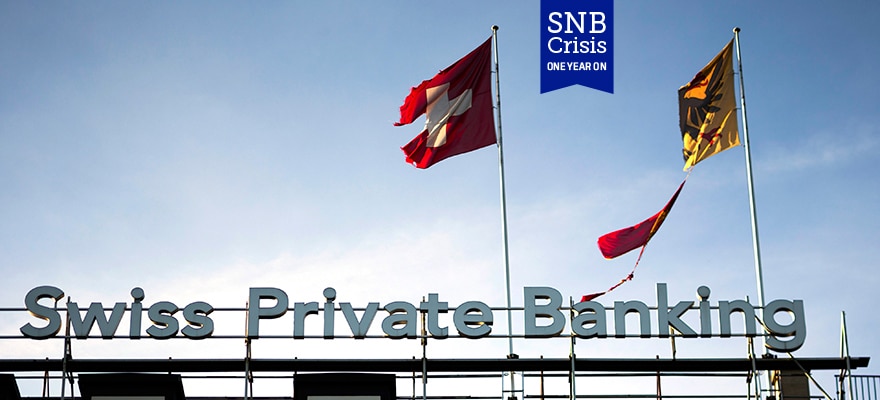
Last year's surprise SNB action has left lasting impacts on the FX community, but have any risk management lessons been learned?
(Photo: Bloomberg)
“There are certain events in markets that stick in your memory, a bit like remembering where you were when Elvis died, although I was too young to remember that one,” said Simon Smith, Chief Economist at FxPro.
But he does remember where he was on that fateful day of 1/15: in the office reading headlines with a sense of disbelief.
It was not a fun day, he added, particularly as firms started going under. FxPro suffered losses in the range of several million dollars, according to a source speaking to the Wall Street Journal.
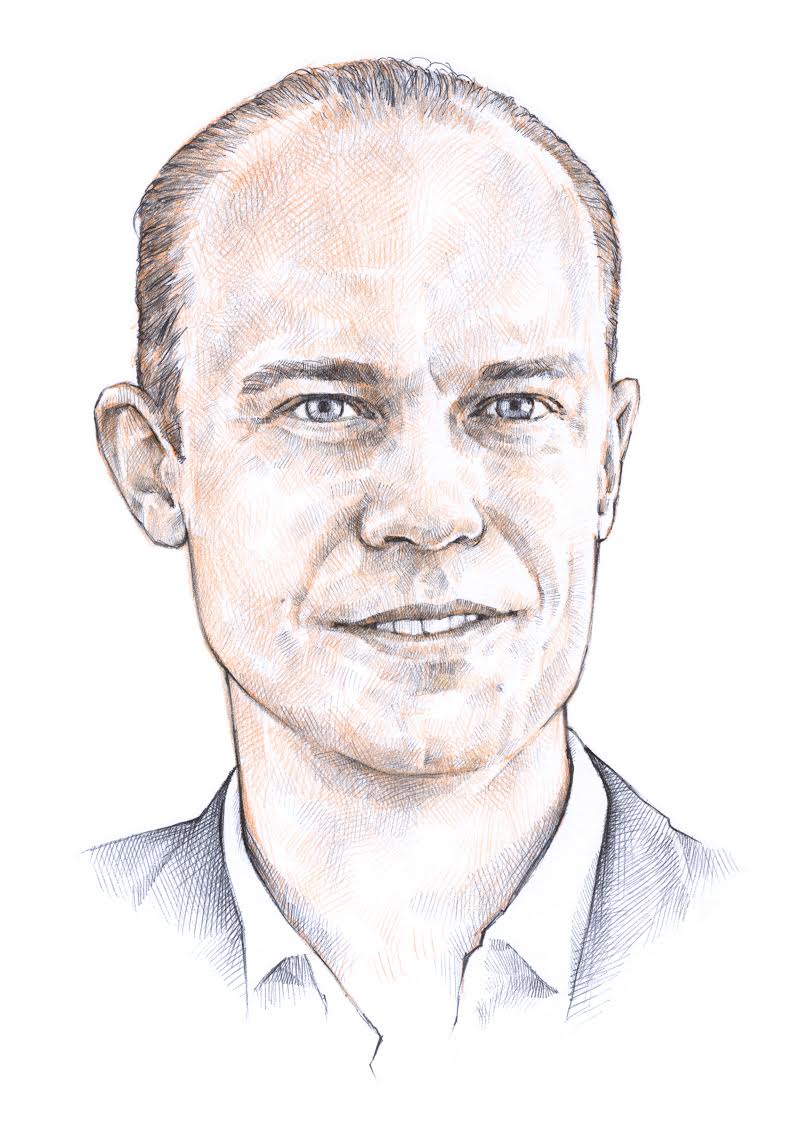
Simon Smith, Chief Economist, FxPro
“The cap on the Swiss franc was such a cornerstone of (the Swiss National Bank’s) monetary policy,” said Smith. “We suffered a negative financial impact from adhering to our negative balance protection policy, but that is well behind us now.”
(Smith declined to comment on the WSJ’s estimate).
FXCM was one of the firms making headlines when clients started racking up losses in the hundreds of millions of dollars, and ultimately required a bail out to the tune of $300 million from Leucadia. A few months later, the broker released detailed data on what it called the “SNB Flash Crash”. In the UK, Alpari became insolvent.
...the first reaction was: there is no way, this is not real...
The aftershocks hit FX brokers across the world, and asset managers did not escape unscathed either. US-based Everest Capital became one of the highest profile casualties when it closed an $830 million fund.
“When I saw the charts, the first reaction was: there is no way, this is not real, this is a data spike,” said Andreas Clenow, Chief Investment Officer at ACIES, an asset manager based in Zurich with some $300 million in AuM.
“The intraday move was over 30% in major a currency in a day. I am not sure if that ever happened before in a major Western currency,” Clenow said. “We had been spending a year and half thinking, of course it is going to happen, they’re going to break it, these things always break.”
From a purely standard, mathematical, trend following point of view, using futures products, a system would have flagged three positions: short the euro contract, short the franc, short the RF contract (EUR/CHF).
“Mathematically that’s what the model will show you, but you have to wonder if the manager, even a quant manager, has any sort of rational critical questioning of their own models,” said Clenow. “It didn’t make any sense – the euro and swissie future had an enormous correlation because they were de facto pegged.”
The point at which people went wrong, he added, is trusting the short term volatility analytics, which were based on artificial political constructs. Instead, managers should be looking at long-term volatility, the size of peak volatility, and stress testing. In other words, figuring out what could happen if volatility goes back to highs of the past, and putting a cap on position sizes based on analyzing those factors.
For our industry, it’s no doubt made it harder for new entrants in terms of set-up costs...
That, of course, means not making huge profits if a sudden unexpected move goes in a favorable direction, but that’s just part of effective risk management, Clenow noted.
After the shock, it took days to a few weeks until banks adapted their risk management, according to the Swiss Bankers Association, referring to comments made by its members. Considering the importance of the SNB’s move, this was very quick, said a spokesperson for SBA.
Lasting impacts
A less obvious impact, noted ACIES' Clenow, is that a lot of investment products are denominated in US dollars, and therefore pay out fees in that currency.
Another issue has been higher hedging costs for banks, punctuating a consolidation trend as Switzerland’s financial centre faces international competition and pressure on margins.
Maxime Botteron, Economist, Credit Suisse
Moreover, the directly increased costs of the SNB’s move for the banks became harder to bear with regards to the introduction of negative interest rates at the end of 2014.
“We understand that the SNB acts in a very difficult environment. However, there are measures that are necessary and possible to ease the situation for the financial centre, (such as) reducing costs of regulation, reducing tax burdens etc,” the spokesperson said.
In the aftermath of its shock move, the SNB received a great deal of criticism from the financial sector.
Maxime Botteron, Economist at Credit Suisse, said that it’s become difficult to trust what the SNB’s next steps will be, as just a few days before removing the floor, the central bank’s former Vice Chairman, Jean-Pierre Danthine, made statements that it would be kept in place. The assumption was that it would remain until the end of 2015, or maybe even throughout 2016.
“This changed all of our assumptions that we had, and forced us to revise forecasts,” Botteron said. “The implication for asset allocation is more uncertain than it used to be, at least on the Swiss franc and Swiss monetary policy.”
One of the reasons the SNB was enforcing the EUR/CHF floor in the first place related to capital flows into Switzerland. That inflow originated from cross border lending activities – foreign banks and investors putting cash in Swiss banks or foreign branches in Switzerland, as well as Swiss investors selling bonds in euros and repatriating capital back to Switzerland.
Lasting is always a dangerous word
Botteron noted that after all is said and done, there has not been a reversal of this trend. “We see a large stock of excess capital in Switzerland, which is why our FX strategists don’t expect any depreciation of the Swiss franc against the euro.”
There’s also been a concerted push by the SNB on institutional investors to go abroad, but there doesn’t seem to be any sign of that happening. To avoid paying negative interest rates, pension funds in particular have reduced deposits on bank accounts and increased investment in real estate. In other words, explained Botteron, negative interest rates have had an impact on the asset allocation of pension funds, but this has not translated into more outflows based on Credit Suisse’s data.
“We don’t have the trigger for normalization, or reversal of this capital inflow,” he added.
Lasting lessons
One year on, some lasting impacts have managed to hang on. What’s most important, said FxPro’s Simon Smith, is to be adaptable, both to events and the changing environment.
“It was clear before the SNB decision that the landscape was changing in terms of the prime brokerage business for banks. They were already either pulling out entirely in some areas, or placing more costs and margin requirements on clients as a result of the increased regulatory constraints they were under,” he said.
But it’s also a question of how much the initial reaction remains in place, or both systems and people forget, Simon added.
Clenow echoed this sentiment when asked what the lasting lessons are: “Lasting is always a dangerous word. Unless you actually had your money in one of these funds that lost 80% in January last year, give it a couple of years and people will forget about it.”
“There are certain events in markets that stick in your memory, a bit like remembering where you were when Elvis died, although I was too young to remember that one,” said Simon Smith, Chief Economist at FxPro.
But he does remember where he was on that fateful day of 1/15: in the office reading headlines with a sense of disbelief.
It was not a fun day, he added, particularly as firms started going under. FxPro suffered losses in the range of several million dollars, according to a source speaking to the Wall Street Journal.
Simon Smith, Chief Economist, FxPro
“The cap on the Swiss franc was such a cornerstone of (the Swiss National Bank’s) monetary policy,” said Smith. “We suffered a negative financial impact from adhering to our negative balance protection policy, but that is well behind us now.”
(Smith declined to comment on the WSJ’s estimate).
FXCM was one of the firms making headlines when clients started racking up losses in the hundreds of millions of dollars, and ultimately required a bail out to the tune of $300 million from Leucadia. A few months later, the broker released detailed data on what it called the “SNB Flash Crash”. In the UK, Alpari became insolvent.
...the first reaction was: there is no way, this is not real...
The aftershocks hit FX brokers across the world, and asset managers did not escape unscathed either. US-based Everest Capital became one of the highest profile casualties when it closed an $830 million fund.
“When I saw the charts, the first reaction was: there is no way, this is not real, this is a data spike,” said Andreas Clenow, Chief Investment Officer at ACIES, an asset manager based in Zurich with some $300 million in AuM.
“The intraday move was over 30% in major a currency in a day. I am not sure if that ever happened before in a major Western currency,” Clenow said. “We had been spending a year and half thinking, of course it is going to happen, they’re going to break it, these things always break.”
From a purely standard, mathematical, trend following point of view, using futures products, a system would have flagged three positions: short the euro contract, short the franc, short the RF contract (EUR/CHF).
“Mathematically that’s what the model will show you, but you have to wonder if the manager, even a quant manager, has any sort of rational critical questioning of their own models,” said Clenow. “It didn’t make any sense – the euro and swissie future had an enormous correlation because they were de facto pegged.”
The point at which people went wrong, he added, is trusting the short term volatility analytics, which were based on artificial political constructs. Instead, managers should be looking at long-term volatility, the size of peak volatility, and stress testing. In other words, figuring out what could happen if volatility goes back to highs of the past, and putting a cap on position sizes based on analyzing those factors.
For our industry, it’s no doubt made it harder for new entrants in terms of set-up costs...
That, of course, means not making huge profits if a sudden unexpected move goes in a favorable direction, but that’s just part of effective risk management, Clenow noted.
After the shock, it took days to a few weeks until banks adapted their risk management, according to the Swiss Bankers Association, referring to comments made by its members. Considering the importance of the SNB’s move, this was very quick, said a spokesperson for SBA.
Lasting impacts
A less obvious impact, noted ACIES' Clenow, is that a lot of investment products are denominated in US dollars, and therefore pay out fees in that currency.
Another issue has been higher hedging costs for banks, punctuating a consolidation trend as Switzerland’s financial centre faces international competition and pressure on margins.
Maxime Botteron, Economist, Credit Suisse
Moreover, the directly increased costs of the SNB’s move for the banks became harder to bear with regards to the introduction of negative interest rates at the end of 2014.
“We understand that the SNB acts in a very difficult environment. However, there are measures that are necessary and possible to ease the situation for the financial centre, (such as) reducing costs of regulation, reducing tax burdens etc,” the spokesperson said.
In the aftermath of its shock move, the SNB received a great deal of criticism from the financial sector.
Maxime Botteron, Economist at Credit Suisse, said that it’s become difficult to trust what the SNB’s next steps will be, as just a few days before removing the floor, the central bank’s former Vice Chairman, Jean-Pierre Danthine, made statements that it would be kept in place. The assumption was that it would remain until the end of 2015, or maybe even throughout 2016.
“This changed all of our assumptions that we had, and forced us to revise forecasts,” Botteron said. “The implication for asset allocation is more uncertain than it used to be, at least on the Swiss franc and Swiss monetary policy.”
One of the reasons the SNB was enforcing the EUR/CHF floor in the first place related to capital flows into Switzerland. That inflow originated from cross border lending activities – foreign banks and investors putting cash in Swiss banks or foreign branches in Switzerland, as well as Swiss investors selling bonds in euros and repatriating capital back to Switzerland.
Lasting is always a dangerous word
Botteron noted that after all is said and done, there has not been a reversal of this trend. “We see a large stock of excess capital in Switzerland, which is why our FX strategists don’t expect any depreciation of the Swiss franc against the euro.”
There’s also been a concerted push by the SNB on institutional investors to go abroad, but there doesn’t seem to be any sign of that happening. To avoid paying negative interest rates, pension funds in particular have reduced deposits on bank accounts and increased investment in real estate. In other words, explained Botteron, negative interest rates have had an impact on the asset allocation of pension funds, but this has not translated into more outflows based on Credit Suisse’s data.
“We don’t have the trigger for normalization, or reversal of this capital inflow,” he added.
Lasting lessons
One year on, some lasting impacts have managed to hang on. What’s most important, said FxPro’s Simon Smith, is to be adaptable, both to events and the changing environment.
“It was clear before the SNB decision that the landscape was changing in terms of the prime brokerage business for banks. They were already either pulling out entirely in some areas, or placing more costs and margin requirements on clients as a result of the increased regulatory constraints they were under,” he said.
But it’s also a question of how much the initial reaction remains in place, or both systems and people forget, Simon added.
Clenow echoed this sentiment when asked what the lasting lessons are: “Lasting is always a dangerous word. Unless you actually had your money in one of these funds that lost 80% in January last year, give it a couple of years and people will forget about it.”
GTC Prime Adds Centroid Bridge as Multi-Asset Liquidity Distribution Channel
Featured Videos
AvaTrade to Acquire Most of FXCM; NAGA Raises $8M
AvaTrade to Acquire Most of FXCM; NAGA Raises $8M
AvaTrade to Acquire Most of FXCM; NAGA Raises $8M
AvaTrade to Acquire Most of FXCM; NAGA Raises $8M
Today’s financial news recap covers AvaTrade agrees to acquire most of FXCM, NAGA secures eight million dollars in new financing, and Wise seeks a tax settlement in the UK.
Finance Magnates Daily Recap brings you the latest news from forex and CFD brokers, fintech, payments, cryptocurrency, digital assets, trading platforms, financial regulation and global markets.
Get the key company news, executive moves, deals, regulatory updates and market developments of the day, in just a few minutes. New episodes published every weekday.
Read more: https://www.financemagnates.com
#FinanceMagnates #ForexNews #FintechNews
Today’s financial news recap covers AvaTrade agrees to acquire most of FXCM, NAGA secures eight million dollars in new financing, and Wise seeks a tax settlement in the UK.
Finance Magnates Daily Recap brings you the latest news from forex and CFD brokers, fintech, payments, cryptocurrency, digital assets, trading platforms, financial regulation and global markets.
Get the key company news, executive moves, deals, regulatory updates and market developments of the day, in just a few minutes. New episodes published every weekday.
Read more: https://www.financemagnates.com
#FinanceMagnates #ForexNews #FintechNews
Today’s financial news recap covers AvaTrade agrees to acquire most of FXCM, NAGA secures eight million dollars in new financing, and Wise seeks a tax settlement in the UK.
Finance Magnates Daily Recap brings you the latest news from forex and CFD brokers, fintech, payments, cryptocurrency, digital assets, trading platforms, financial regulation and global markets.
Get the key company news, executive moves, deals, regulatory updates and market developments of the day, in just a few minutes. New episodes published every weekday.
Read more: https://www.financemagnates.com
#FinanceMagnates #ForexNews #FintechNews
Today’s financial news recap covers AvaTrade agrees to acquire most of FXCM, NAGA secures eight million dollars in new financing, and Wise seeks a tax settlement in the UK.
Finance Magnates Daily Recap brings you the latest news from forex and CFD brokers, fintech, payments, cryptocurrency, digital assets, trading platforms, financial regulation and global markets.
Get the key company news, executive moves, deals, regulatory updates and market developments of the day, in just a few minutes. New episodes published every weekday.
Read more: https://www.financemagnates.com
#FinanceMagnates #ForexNews #FintechNews
XTB Adds Overnight US Stock Trading; Nasdaq Ventures Invests in One Trading
XTB Adds Overnight US Stock Trading; Nasdaq Ventures Invests in One Trading
XTB Adds Overnight US Stock Trading; Nasdaq Ventures Invests in One Trading
XTB Adds Overnight US Stock Trading; Nasdaq Ventures Invests in One Trading
XTB Adds Overnight US Stock Trading; Nasdaq Ventures Invests in One Trading
XTB Adds Overnight US Stock Trading; Nasdaq Ventures Invests in One Trading
Today’s financial news recap covers XTB expands overnight US stock trading, Fortrade reports higher revenue, Nasdaq backs One Trading, and Vest Labs raises 13 million dollars.
Finance Magnates Daily Recap brings you the latest news from forex and CFD brokers, fintech, payments, cryptocurrency, digital assets, trading platforms, financial regulation and global markets.
Get the key company news, executive moves, deals, regulatory updates and market developments of the day, in just a few minutes. New episodes published every weekday.
Read more: https://www.financemagnates.com
#FinanceMagnates #ForexNews #FintechNews
Today’s financial news recap covers XTB expands overnight US stock trading, Fortrade reports higher revenue, Nasdaq backs One Trading, and Vest Labs raises 13 million dollars.
Finance Magnates Daily Recap brings you the latest news from forex and CFD brokers, fintech, payments, cryptocurrency, digital assets, trading platforms, financial regulation and global markets.
Get the key company news, executive moves, deals, regulatory updates and market developments of the day, in just a few minutes. New episodes published every weekday.
Read more: https://www.financemagnates.com
#FinanceMagnates #ForexNews #FintechNews
Today’s financial news recap covers XTB expands overnight US stock trading, Fortrade reports higher revenue, Nasdaq backs One Trading, and Vest Labs raises 13 million dollars.
Finance Magnates Daily Recap brings you the latest news from forex and CFD brokers, fintech, payments, cryptocurrency, digital assets, trading platforms, financial regulation and global markets.
Get the key company news, executive moves, deals, regulatory updates and market developments of the day, in just a few minutes. New episodes published every weekday.
Read more: https://www.financemagnates.com
#FinanceMagnates #ForexNews #FintechNews
Today’s financial news recap covers XTB expands overnight US stock trading, Fortrade reports higher revenue, Nasdaq backs One Trading, and Vest Labs raises 13 million dollars.
Finance Magnates Daily Recap brings you the latest news from forex and CFD brokers, fintech, payments, cryptocurrency, digital assets, trading platforms, financial regulation and global markets.
Get the key company news, executive moves, deals, regulatory updates and market developments of the day, in just a few minutes. New episodes published every weekday.
Read more: https://www.financemagnates.com
#FinanceMagnates #ForexNews #FintechNews
Today’s financial news recap covers XTB expands overnight US stock trading, Fortrade reports higher revenue, Nasdaq backs One Trading, and Vest Labs raises 13 million dollars.
Finance Magnates Daily Recap brings you the latest news from forex and CFD brokers, fintech, payments, cryptocurrency, digital assets, trading platforms, financial regulation and global markets.
Get the key company news, executive moves, deals, regulatory updates and market developments of the day, in just a few minutes. New episodes published every weekday.
Read more: https://www.financemagnates.com
#FinanceMagnates #ForexNews #FintechNews
Today’s financial news recap covers XTB expands overnight US stock trading, Fortrade reports higher revenue, Nasdaq backs One Trading, and Vest Labs raises 13 million dollars.
Finance Magnates Daily Recap brings you the latest news from forex and CFD brokers, fintech, payments, cryptocurrency, digital assets, trading platforms, financial regulation and global markets.
Get the key company news, executive moves, deals, regulatory updates and market developments of the day, in just a few minutes. New episodes published every weekday.
Read more: https://www.financemagnates.com
#FinanceMagnates #ForexNews #FintechNews
CMC Founder Downplays Volatility Hit; Devexperts Names CEO
CMC Founder Downplays Volatility Hit; Devexperts Names CEO
CMC Founder Downplays Volatility Hit; Devexperts Names CEO
CMC Founder Downplays Volatility Hit; Devexperts Names CEO
CMC Founder Downplays Volatility Hit; Devexperts Names CEO
CMC Founder Downplays Volatility Hit; Devexperts Names CEO
Today’s financial news recap covers low volatility pressures brokers, Devexperts names a new CEO, Saxo cuts onboarding time, and OKX reaches a 25 billion dollar valuation.
Finance Magnates Daily Recap brings you the latest news from forex and CFD brokers, fintech, payments, cryptocurrency, digital assets, trading platforms, financial regulation and global markets.
Get the key company news, executive moves, deals, regulatory updates and market developments of the day, in just a few minutes. New episodes published every weekday.
Read more: https://www.financemagnates.com
#FinanceMagnates #ForexNews #FintechNews
Today’s financial news recap covers low volatility pressures brokers, Devexperts names a new CEO, Saxo cuts onboarding time, and OKX reaches a 25 billion dollar valuation.
Finance Magnates Daily Recap brings you the latest news from forex and CFD brokers, fintech, payments, cryptocurrency, digital assets, trading platforms, financial regulation and global markets.
Get the key company news, executive moves, deals, regulatory updates and market developments of the day, in just a few minutes. New episodes published every weekday.
Read more: https://www.financemagnates.com
#FinanceMagnates #ForexNews #FintechNews
Today’s financial news recap covers low volatility pressures brokers, Devexperts names a new CEO, Saxo cuts onboarding time, and OKX reaches a 25 billion dollar valuation.
Finance Magnates Daily Recap brings you the latest news from forex and CFD brokers, fintech, payments, cryptocurrency, digital assets, trading platforms, financial regulation and global markets.
Get the key company news, executive moves, deals, regulatory updates and market developments of the day, in just a few minutes. New episodes published every weekday.
Read more: https://www.financemagnates.com
#FinanceMagnates #ForexNews #FintechNews
Today’s financial news recap covers low volatility pressures brokers, Devexperts names a new CEO, Saxo cuts onboarding time, and OKX reaches a 25 billion dollar valuation.
Finance Magnates Daily Recap brings you the latest news from forex and CFD brokers, fintech, payments, cryptocurrency, digital assets, trading platforms, financial regulation and global markets.
Get the key company news, executive moves, deals, regulatory updates and market developments of the day, in just a few minutes. New episodes published every weekday.
Read more: https://www.financemagnates.com
#FinanceMagnates #ForexNews #FintechNews
Today’s financial news recap covers low volatility pressures brokers, Devexperts names a new CEO, Saxo cuts onboarding time, and OKX reaches a 25 billion dollar valuation.
Finance Magnates Daily Recap brings you the latest news from forex and CFD brokers, fintech, payments, cryptocurrency, digital assets, trading platforms, financial regulation and global markets.
Get the key company news, executive moves, deals, regulatory updates and market developments of the day, in just a few minutes. New episodes published every weekday.
Read more: https://www.financemagnates.com
#FinanceMagnates #ForexNews #FintechNews
Today’s financial news recap covers low volatility pressures brokers, Devexperts names a new CEO, Saxo cuts onboarding time, and OKX reaches a 25 billion dollar valuation.
Finance Magnates Daily Recap brings you the latest news from forex and CFD brokers, fintech, payments, cryptocurrency, digital assets, trading platforms, financial regulation and global markets.
Get the key company news, executive moves, deals, regulatory updates and market developments of the day, in just a few minutes. New episodes published every weekday.
Read more: https://www.financemagnates.com
#FinanceMagnates #ForexNews #FintechNews
Today’s financial news recap covers Trade Nation buys FXCM's UK client book, Trading 212 reports higher revenue, the CFTC's move to allow perpetual index futures.
Finance Magnates Daily Recap brings you the latest news from forex and CFD brokers, fintech, payments, cryptocurrency, digital assets, trading platforms, financial regulation and global markets.
Get the key company news, executive moves, deals, regulatory updates and market developments of the day, in just a few minutes. New episodes published every weekday.
Read more: https://www.financemagnates.com
#FinanceMagnates #ForexNews #FintechNews
Today’s financial news recap covers Trade Nation buys FXCM's UK client book, Trading 212 reports higher revenue, the CFTC's move to allow perpetual index futures.
Finance Magnates Daily Recap brings you the latest news from forex and CFD brokers, fintech, payments, cryptocurrency, digital assets, trading platforms, financial regulation and global markets.
Get the key company news, executive moves, deals, regulatory updates and market developments of the day, in just a few minutes. New episodes published every weekday.
Read more: https://www.financemagnates.com
#FinanceMagnates #ForexNews #FintechNews
Today’s financial news recap covers Trade Nation buys FXCM's UK client book, Trading 212 reports higher revenue, the CFTC's move to allow perpetual index futures.
Finance Magnates Daily Recap brings you the latest news from forex and CFD brokers, fintech, payments, cryptocurrency, digital assets, trading platforms, financial regulation and global markets.
Get the key company news, executive moves, deals, regulatory updates and market developments of the day, in just a few minutes. New episodes published every weekday.
Read more: https://www.financemagnates.com
#FinanceMagnates #ForexNews #FintechNews
Today’s financial news recap covers Trade Nation buys FXCM's UK client book, Trading 212 reports higher revenue, the CFTC's move to allow perpetual index futures.
Finance Magnates Daily Recap brings you the latest news from forex and CFD brokers, fintech, payments, cryptocurrency, digital assets, trading platforms, financial regulation and global markets.
Get the key company news, executive moves, deals, regulatory updates and market developments of the day, in just a few minutes. New episodes published every weekday.
Read more: https://www.financemagnates.com
#FinanceMagnates #ForexNews #FintechNews
Today’s financial news recap covers Trade Nation buys FXCM's UK client book, Trading 212 reports higher revenue, the CFTC's move to allow perpetual index futures.
Finance Magnates Daily Recap brings you the latest news from forex and CFD brokers, fintech, payments, cryptocurrency, digital assets, trading platforms, financial regulation and global markets.
Get the key company news, executive moves, deals, regulatory updates and market developments of the day, in just a few minutes. New episodes published every weekday.
Read more: https://www.financemagnates.com
#FinanceMagnates #ForexNews #FintechNews
Today’s financial news recap covers Trade Nation buys FXCM's UK client book, Trading 212 reports higher revenue, the CFTC's move to allow perpetual index futures.
Finance Magnates Daily Recap brings you the latest news from forex and CFD brokers, fintech, payments, cryptocurrency, digital assets, trading platforms, financial regulation and global markets.
Get the key company news, executive moves, deals, regulatory updates and market developments of the day, in just a few minutes. New episodes published every weekday.
Read more: https://www.financemagnates.com
#FinanceMagnates #ForexNews #FintechNews
Your career isn’t a linear path.
Your career isn’t a linear path.
Your career isn’t a linear path.
Your career isn’t a linear path.
Your career isn’t a linear path.
Your career isn’t a linear path.
Roles change. Career goals change. Sometimes you want a completely new challenge.
But the skills and knowledge you build along the way can stay with you and give you something to build on.
For Jeff Patterson, that continued growth is key to long-term career development.
You bring the skills. FM Academy helps you build the knowledge.
#FMAcademy #FinanceMagnates #FinanceCareers #ProfessionalDevelopment #Fintech
Roles change. Career goals change. Sometimes you want a completely new challenge.
But the skills and knowledge you build along the way can stay with you and give you something to build on.
For Jeff Patterson, that continued growth is key to long-term career development.
You bring the skills. FM Academy helps you build the knowledge.
#FMAcademy #FinanceMagnates #FinanceCareers #ProfessionalDevelopment #Fintech
Roles change. Career goals change. Sometimes you want a completely new challenge.
But the skills and knowledge you build along the way can stay with you and give you something to build on.
For Jeff Patterson, that continued growth is key to long-term career development.
You bring the skills. FM Academy helps you build the knowledge.
#FMAcademy #FinanceMagnates #FinanceCareers #ProfessionalDevelopment #Fintech
Roles change. Career goals change. Sometimes you want a completely new challenge.
But the skills and knowledge you build along the way can stay with you and give you something to build on.
For Jeff Patterson, that continued growth is key to long-term career development.
You bring the skills. FM Academy helps you build the knowledge.
#FMAcademy #FinanceMagnates #FinanceCareers #ProfessionalDevelopment #Fintech
Roles change. Career goals change. Sometimes you want a completely new challenge.
But the skills and knowledge you build along the way can stay with you and give you something to build on.
For Jeff Patterson, that continued growth is key to long-term career development.
You bring the skills. FM Academy helps you build the knowledge.
#FMAcademy #FinanceMagnates #FinanceCareers #ProfessionalDevelopment #Fintech
Roles change. Career goals change. Sometimes you want a completely new challenge.
But the skills and knowledge you build along the way can stay with you and give you something to build on.
For Jeff Patterson, that continued growth is key to long-term career development.
You bring the skills. FM Academy helps you build the knowledge.
#FMAcademy #FinanceMagnates #FinanceCareers #ProfessionalDevelopment #Fintech