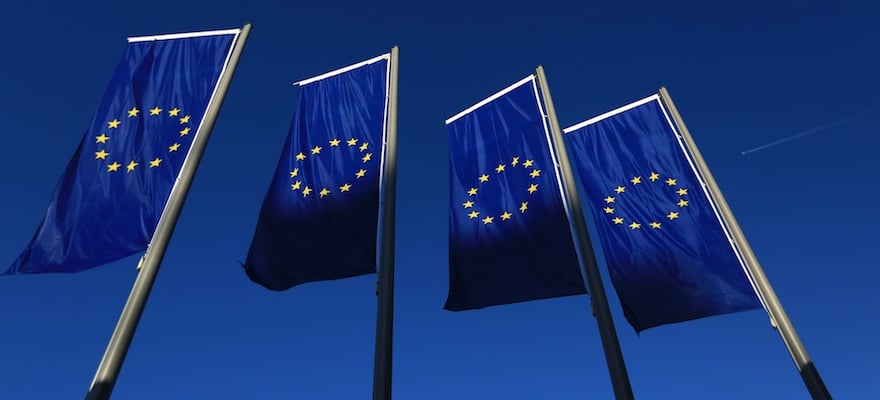
Increased transparency and new regulations could come at a cost.
Bloomberg
MiFID II continues to loom heading into year’s end, with many seeing the implementation of the regulations as a double-edged sword. For the financial services industry, the new legislation will herald unprecedented Compliance measures and rules for venues. The new rules could also lead to the loss of thousands of jobs in the industry.
The primary directive of MiFID II will be to support greater transparency across derivatives and futures markets, among others. The reporting or disclosure of additional components, such as research spending, are also expected to help improve these measures. What is unclear however is how industry venues will react to this new regime, and what the consequences will be in terms of spending, personnel, and trading volumes.
Bloomberg
Job losses
It is plausible to assume that the launch of any new regulatory regime will create short-term turmoil and periods of adjustments. However, the most immediate may be the gutting of research spending from banks. According to the McKinsey & Co. study, new regulations in Europe stifling free research will lead to the axing of hundreds of analyst jobs as banks plan to trim upwards of $1.2 billion in research spending.
This estimate was echoed in a survey from Greenwich Associates, which also saw a 7 percent drop in commission spending for European firms and 5 percent for US ones. Perhaps more problematic is the ability of US firms to sell research to their European clients given new the constraints, per a Bloomberg report.
Given the impact of demand and a premium for publicly disclosed research, the number of asset managers may also take a hit with MiFID II’s implementation this coming January. This may be the case in Europe, with southern Europe perhaps feeling the worst of this impact. Additionally, portfolio managers will be facing additional barriers, namely in regard to their classification as ‘product distributors’.
Bloomberg
London not feeling the love
In terms of trade volumes, the one locale poised to lose the most business is London. After last month’s round of exodus plans announced by lenders in the UK capital due to Brexit, the city could cede business to other global hubs. One reason for this is to avoid having to deal with multiple regulatory regimes, a problem for many firms.
While many European venues, particularly in the derivatives industry, have been hoping for a delay regarding MiFID II, it seems unlikely that the date of January 3 2018 will be moved. Rather, venues are forced to step up their efforts towards compliance with the new laws, with some banks even toying with the notion of making MiFID II their global standard.
MiFID II continues to loom heading into year’s end, with many seeing the implementation of the regulations as a double-edged sword. For the financial services industry, the new legislation will herald unprecedented Compliance measures and rules for venues. The new rules could also lead to the loss of thousands of jobs in the industry.
The primary directive of MiFID II will be to support greater transparency across derivatives and futures markets, among others. The reporting or disclosure of additional components, such as research spending, are also expected to help improve these measures. What is unclear however is how industry venues will react to this new regime, and what the consequences will be in terms of spending, personnel, and trading volumes.
Bloomberg
Job losses
It is plausible to assume that the launch of any new regulatory regime will create short-term turmoil and periods of adjustments. However, the most immediate may be the gutting of research spending from banks. According to the McKinsey & Co. study, new regulations in Europe stifling free research will lead to the axing of hundreds of analyst jobs as banks plan to trim upwards of $1.2 billion in research spending.
This estimate was echoed in a survey from Greenwich Associates, which also saw a 7 percent drop in commission spending for European firms and 5 percent for US ones. Perhaps more problematic is the ability of US firms to sell research to their European clients given new the constraints, per a Bloomberg report.
Given the impact of demand and a premium for publicly disclosed research, the number of asset managers may also take a hit with MiFID II’s implementation this coming January. This may be the case in Europe, with southern Europe perhaps feeling the worst of this impact. Additionally, portfolio managers will be facing additional barriers, namely in regard to their classification as ‘product distributors’.
Bloomberg
London not feeling the love
In terms of trade volumes, the one locale poised to lose the most business is London. After last month’s round of exodus plans announced by lenders in the UK capital due to Brexit, the city could cede business to other global hubs. One reason for this is to avoid having to deal with multiple regulatory regimes, a problem for many firms.
While many European venues, particularly in the derivatives industry, have been hoping for a delay regarding MiFID II, it seems unlikely that the date of January 3 2018 will be moved. Rather, venues are forced to step up their efforts towards compliance with the new laws, with some banks even toying with the notion of making MiFID II their global standard.
Singapore Independent Wealth Sector Has Less Than 10% Market Share, but Vast Room for Growth
FP Markets Winner Spotlight 🏆 | Global Broker of the Year 2025 #Trading #Broker #Innovation #Shorts
FP Markets Winner Spotlight 🏆 | Global Broker of the Year 2025 #Trading #Broker #Innovation #Shorts
FP Markets takes the spotlight as Global Broker of the Year 2025 at the Finance Magnates Awards.
Martin Stoilov, Head of Client Experience, shares that trust, innovation, and people played a key role in the company’s success, supported by a strong foundation of integrity and client-centricity.
Following this milestone, FP Markets continues to focus on growth, technology investment, and its core values of transparency and excellence.
👉 Be part of FM Awards 2026: https://awards.financemagnates.com/#nominate
FP Markets takes the spotlight as Global Broker of the Year 2025 at the Finance Magnates Awards.
Martin Stoilov, Head of Client Experience, shares that trust, innovation, and people played a key role in the company’s success, supported by a strong foundation of integrity and client-centricity.
Following this milestone, FP Markets continues to focus on growth, technology investment, and its core values of transparency and excellence.
👉 Be part of FM Awards 2026: https://awards.financemagnates.com/#nominate
In this video, we review @HolaPrimeMarketsOfficial, a multi-asset forex and CFDs broker offering different account types, trading platforms, and flexible trading conditions.
We cover the broker’s overall offering, including account options, trading environment, platforms like MT4 and MT5, and additional services such as managed accounts and fast withdrawals.
Watch the full video to see if Hola Prime Markets fits your trading needs.
📣 Stay up to date with the latest in finance and trading. Follow Finance Magnates for industry news, insights, and global event coverage.
Connect with us:
🔗 LinkedIn: /financemagnates
👍 Facebook: /financemagnates
📸 Instagram: https://www.instagram.com/financemagnates
🐦 X: https://x.com/financemagnates
🎥 TikTok: https://www.tiktok.com/tag/financemagnates
▶️ YouTube: /@financemagnates_official
#HolaPrime #ForexBroker #CFDTrading #FinanceMagnates #Trading #Forex #BrokerReview
In this video, we review @HolaPrimeMarketsOfficial, a multi-asset forex and CFDs broker offering different account types, trading platforms, and flexible trading conditions.
We cover the broker’s overall offering, including account options, trading environment, platforms like MT4 and MT5, and additional services such as managed accounts and fast withdrawals.
Watch the full video to see if Hola Prime Markets fits your trading needs.
📣 Stay up to date with the latest in finance and trading. Follow Finance Magnates for industry news, insights, and global event coverage.
Connect with us:
🔗 LinkedIn: /financemagnates
👍 Facebook: /financemagnates
📸 Instagram: https://www.instagram.com/financemagnates
🐦 X: https://x.com/financemagnates
🎥 TikTok: https://www.tiktok.com/tag/financemagnates
▶️ YouTube: /@financemagnates_official
#HolaPrime #ForexBroker #CFDTrading #FinanceMagnates #Trading #Forex #BrokerReview
Hola Prime Review: What You Need to Know | Full Breakdown by Finance Magnates
Hola Prime Review: What You Need to Know | Full Breakdown by Finance Magnates
In this video, we review @HolaPrime_Global, a proprietary trading firm offering evaluation programs and performance-based payouts in simulated market environments.
We cover how the challenge model works, including account types, profit splits (up to 95%), trading rules, and what it takes to reach a funded account. You’ll also learn about available platforms like MT4, MT5, cTrader, and more, along with insights into payouts, support, and trading conditions.
Watch the full video to see if Hola Prime fits your trading style.
📣 Stay up to date with the latest in finance and trading. Follow Finance Magnates for industry news, insights, and global event coverage.
Connect with us:
🔗 LinkedIn: /financemagnates
👍 Facebook: /financemagnates
📸 Instagram: https://www.instagram.com/financemagnates
🐦 X: https://x.com/financemagnates
🎥 TikTok: https://www.tiktok.com/tag/financemagnates
▶️ YouTube: /@financemagnates_official
#HolaPrime #PropFirm #Trading #FinanceMagnates #Forex #FuturesTrading #TradingReview #PropFirmReview
In this video, we review @HolaPrime_Global, a proprietary trading firm offering evaluation programs and performance-based payouts in simulated market environments.
We cover how the challenge model works, including account types, profit splits (up to 95%), trading rules, and what it takes to reach a funded account. You’ll also learn about available platforms like MT4, MT5, cTrader, and more, along with insights into payouts, support, and trading conditions.
Watch the full video to see if Hola Prime fits your trading style.
📣 Stay up to date with the latest in finance and trading. Follow Finance Magnates for industry news, insights, and global event coverage.
Connect with us:
🔗 LinkedIn: /financemagnates
👍 Facebook: /financemagnates
📸 Instagram: https://www.instagram.com/financemagnates
🐦 X: https://x.com/financemagnates
🎥 TikTok: https://www.tiktok.com/tag/financemagnates
▶️ YouTube: /@financemagnates_official
#HolaPrime #PropFirm #Trading #FinanceMagnates #Forex #FuturesTrading #TradingReview #PropFirmReview
Axi Winner Spotlight 🏆 | Global Most Innovative Broker 2025 #Innovation #Trading #Fintech #Broker
Axi Winner Spotlight 🏆 | Global Most Innovative Broker 2025 #Innovation #Trading #Fintech #Broker
Axi takes the spotlight at the Finance Magnates Awards, winning Global Most Innovative Broker 2025.
Olivia Xenofontos and Ivanna Openko share how the team will feel: proud, motivated, and ready to keep delivering.
They also describe the night as well-organized, focused, and enjoyable for all.
👉 Be part of FM Awards 2026.
Axi takes the spotlight at the Finance Magnates Awards, winning Global Most Innovative Broker 2025.
Olivia Xenofontos and Ivanna Openko share how the team will feel: proud, motivated, and ready to keep delivering.
They also describe the night as well-organized, focused, and enjoyable for all.
👉 Be part of FM Awards 2026.
Recognition that matters.
Built on transparency.
Driven by the industry.
The Finance Magnates Awards 2026.
Nominations are now open.
🔗 https://awards.financemagnates.com/?utm_source=SM&utm_medium=social&utm_campaign=recognition-matters
Recognition that matters.
Built on transparency.
Driven by the industry.
The Finance Magnates Awards 2026.
Nominations are now open.
🔗 https://awards.financemagnates.com/?utm_source=SM&utm_medium=social&utm_campaign=recognition-matters