The origins of this dilemma stem from several years ago, with rising labor costs in Europe’s financial capital, London, incurring mounting costs for European lenders. This trend was most clearly seen across trading desks, back office, and IT roles over the past few years, many of which were the first roles to be axed as lenders embarked on various ‘fix-it’ plans.
Banks have always vied for top-tier talent, with leaders such as Deutsche Bank, Credit Suisse, Barclays, and Standard Chartered swapping industry specialists and veterans like clockwork. The ability to secure or retain leading talent across trading desks helped give some banks an edge over the past decade, though they have seemed to be in gradual decline since the global financial crisis.
Bloomberg
Mid to late 2015 proved to be a trying time for many banks, and coincided with the launching of several restructuring plans. Many of the industry’s biggest players, i.e. Deutsche Bank, Standard Chartered and others, made a series of announcements in a bid to help calm shareholders, ultimately ushering in comprehensive plans to restore profitability.
These plans focused mostly on job cuts, which mainly affected the aforementioned sectors, with IT roles being the hardest hit in the UK. The epicenter for these job cuts has been London, though many other regions in the country have also seen a steady uptick in layoffs recently.
Deutsche Bank’s ambitious plan to axe over 35,000 employees globally represented the most extreme instance of this agenda, while many other lenders unveiled plans that while slightly smaller in scale, were no less ambitious. Ultimately, strategies revolved around a combination of goals, ranging from reduced headcount to transformations of retail strategies, into a more digitized banking approach.
While the process is ongoing, the early results do not bode well for lenders, many of which have been forced to double down on these plans, or increase the scope of their initial agenda. Other lenders have opted to relocate portions of their operations or trading desks to other regions entirely, mainly Asia.
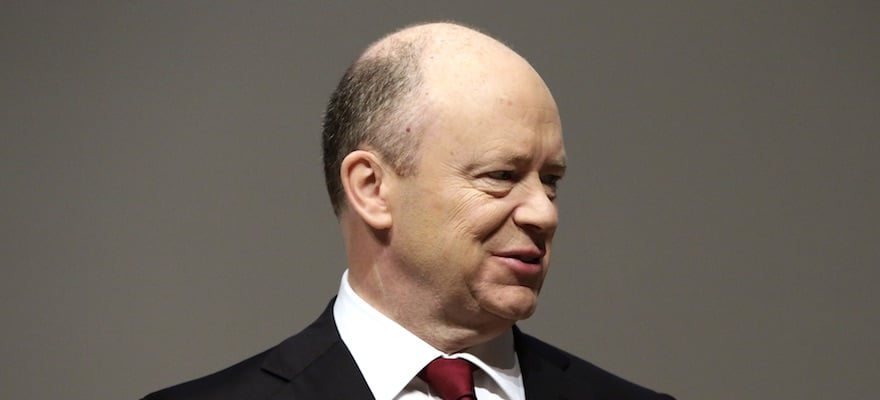
Bloomberg: Deutsche Bank CEO John Cryan
Employee Retention Issues?
Over a year into the cost-cutting strategies, banks have still been facing dire straits, with shareholders losing confidence rapidly. This has led to many CEOs taking a more vocal and direct approach in alleviating these concerns, especially on the heels of disappointing quarterly earnings reports.
One element that has received considerable attention in 2017 is the issue of bonuses, long since a key factor in helping peel away talent from rival groups. However, bonuses now for top-level talent is not even the issue, rather comprehensive bonus pools available for entire companies.
2017 has seen two diverging strategies thus far, with Deutsche Bank and Credit Suisse taking alternative approaches to address issues of profitability and retention. Deutsche Bank earlier this year opted to cut its bonus pool by 80 percent. The measures are slated to affect roughly 100,000 staff globally.
Moreover, others at the group will instead receive a special long-term incentive that is dictated by the bank’s performance – this option is available on a more limited basis to around 5,000 staff members.
Credit Suisse is taking a different approach altogether, namely on the heels of its recent $2.4 billion loss in 2016. The lender expanded its bonus pool by 6.0 percent in 2017, part of its plan to keep much of its talent in house at a time when others are jumping ship for greener pastures.
It is likely that other banks will follow suit in 2017 though the upcoming Brexit fallout could certainty influence this decision-making, especially at a time when banks are looking to set up shop beyond the UK.
Post-Brexit Strategy
European lenders were dealt a blow earlier this year when Theresa May’s comments virtually extinguished any hope of passporting rights with Europe, long since one of the strongest incentives for operating out of the UK. With the UK slated for a schism with Continental Europe, many banks have begun mulling an exit strategy.
Bloomberg
To date, Frankfurt and Dublin have emerged as the two most likely options, though each presents its own sort of logistical difficulties – more likely rather is the fact that there is not another city with the financial scope and caliber of London that can be readily replicated in such a short time.
Others have pointed to Amsterdam as a dark horse candidate in the race to become the next European banking capital. Still, other lenders are looking beyond Europe altogether, moving operations to Asia, which is still seen as a strong growth nexus at a time when most European lenders are closing branches.
As the UK drifts closer to Brexit, many lenders will have their hands forced, which should cause an even greater movement of personnel in the country. Presently, there is more talk than action though this could heat up by the end of the year.
The origins of this dilemma stem from several years ago, with rising labor costs in Europe’s financial capital, London, incurring mounting costs for European lenders. This trend was most clearly seen across trading desks, back office, and IT roles over the past few years, many of which were the first roles to be axed as lenders embarked on various ‘fix-it’ plans.
Banks have always vied for top-tier talent, with leaders such as Deutsche Bank, Credit Suisse, Barclays, and Standard Chartered swapping industry specialists and veterans like clockwork. The ability to secure or retain leading talent across trading desks helped give some banks an edge over the past decade, though they have seemed to be in gradual decline since the global financial crisis.
Bloomberg
Mid to late 2015 proved to be a trying time for many banks, and coincided with the launching of several restructuring plans. Many of the industry’s biggest players, i.e. Deutsche Bank, Standard Chartered and others, made a series of announcements in a bid to help calm shareholders, ultimately ushering in comprehensive plans to restore profitability.
These plans focused mostly on job cuts, which mainly affected the aforementioned sectors, with IT roles being the hardest hit in the UK. The epicenter for these job cuts has been London, though many other regions in the country have also seen a steady uptick in layoffs recently.
Deutsche Bank’s ambitious plan to axe over 35,000 employees globally represented the most extreme instance of this agenda, while many other lenders unveiled plans that while slightly smaller in scale, were no less ambitious. Ultimately, strategies revolved around a combination of goals, ranging from reduced headcount to transformations of retail strategies, into a more digitized banking approach.
While the process is ongoing, the early results do not bode well for lenders, many of which have been forced to double down on these plans, or increase the scope of their initial agenda. Other lenders have opted to relocate portions of their operations or trading desks to other regions entirely, mainly Asia.
Bloomberg: Deutsche Bank CEO John Cryan
Employee Retention Issues?
Over a year into the cost-cutting strategies, banks have still been facing dire straits, with shareholders losing confidence rapidly. This has led to many CEOs taking a more vocal and direct approach in alleviating these concerns, especially on the heels of disappointing quarterly earnings reports.
One element that has received considerable attention in 2017 is the issue of bonuses, long since a key factor in helping peel away talent from rival groups. However, bonuses now for top-level talent is not even the issue, rather comprehensive bonus pools available for entire companies.
2017 has seen two diverging strategies thus far, with Deutsche Bank and Credit Suisse taking alternative approaches to address issues of profitability and retention. Deutsche Bank earlier this year opted to cut its bonus pool by 80 percent. The measures are slated to affect roughly 100,000 staff globally.
Moreover, others at the group will instead receive a special long-term incentive that is dictated by the bank’s performance – this option is available on a more limited basis to around 5,000 staff members.
Credit Suisse is taking a different approach altogether, namely on the heels of its recent $2.4 billion loss in 2016. The lender expanded its bonus pool by 6.0 percent in 2017, part of its plan to keep much of its talent in house at a time when others are jumping ship for greener pastures.
It is likely that other banks will follow suit in 2017 though the upcoming Brexit fallout could certainty influence this decision-making, especially at a time when banks are looking to set up shop beyond the UK.
Post-Brexit Strategy
European lenders were dealt a blow earlier this year when Theresa May’s comments virtually extinguished any hope of passporting rights with Europe, long since one of the strongest incentives for operating out of the UK. With the UK slated for a schism with Continental Europe, many banks have begun mulling an exit strategy.
Bloomberg
To date, Frankfurt and Dublin have emerged as the two most likely options, though each presents its own sort of logistical difficulties – more likely rather is the fact that there is not another city with the financial scope and caliber of London that can be readily replicated in such a short time.
Others have pointed to Amsterdam as a dark horse candidate in the race to become the next European banking capital. Still, other lenders are looking beyond Europe altogether, moving operations to Asia, which is still seen as a strong growth nexus at a time when most European lenders are closing branches.
As the UK drifts closer to Brexit, many lenders will have their hands forced, which should cause an even greater movement of personnel in the country. Presently, there is more talk than action though this could heat up by the end of the year.
Singapore Independent Wealth Sector Has Less Than 10% Market Share, but Vast Room for Growth
Featured Videos
FP Markets Winner Spotlight 🏆 | Global Broker of the Year 2025 #Trading #Broker #Innovation #Shorts
FP Markets Winner Spotlight 🏆 | Global Broker of the Year 2025 #Trading #Broker #Innovation #Shorts
FP Markets Winner Spotlight 🏆 | Global Broker of the Year 2025 #Trading #Broker #Innovation #Shorts
FP Markets Winner Spotlight 🏆 | Global Broker of the Year 2025 #Trading #Broker #Innovation #Shorts
FP Markets takes the spotlight as Global Broker of the Year 2025 at the Finance Magnates Awards.
Martin Stoilov, Head of Client Experience, shares that trust, innovation, and people played a key role in the company’s success, supported by a strong foundation of integrity and client-centricity.
Following this milestone, FP Markets continues to focus on growth, technology investment, and its core values of transparency and excellence.
👉 Be part of FM Awards 2026: https://awards.financemagnates.com/#nominate
FP Markets takes the spotlight as Global Broker of the Year 2025 at the Finance Magnates Awards.
Martin Stoilov, Head of Client Experience, shares that trust, innovation, and people played a key role in the company’s success, supported by a strong foundation of integrity and client-centricity.
Following this milestone, FP Markets continues to focus on growth, technology investment, and its core values of transparency and excellence.
👉 Be part of FM Awards 2026: https://awards.financemagnates.com/#nominate
FP Markets takes the spotlight as Global Broker of the Year 2025 at the Finance Magnates Awards.
Martin Stoilov, Head of Client Experience, shares that trust, innovation, and people played a key role in the company’s success, supported by a strong foundation of integrity and client-centricity.
Following this milestone, FP Markets continues to focus on growth, technology investment, and its core values of transparency and excellence.
👉 Be part of FM Awards 2026: https://awards.financemagnates.com/#nominate
FP Markets takes the spotlight as Global Broker of the Year 2025 at the Finance Magnates Awards.
Martin Stoilov, Head of Client Experience, shares that trust, innovation, and people played a key role in the company’s success, supported by a strong foundation of integrity and client-centricity.
Following this milestone, FP Markets continues to focus on growth, technology investment, and its core values of transparency and excellence.
👉 Be part of FM Awards 2026: https://awards.financemagnates.com/#nominate
In this video, we review @HolaPrimeMarketsOfficial, a multi-asset forex and CFDs broker offering different account types, trading platforms, and flexible trading conditions.
We cover the broker’s overall offering, including account options, trading environment, platforms like MT4 and MT5, and additional services such as managed accounts and fast withdrawals.
Watch the full video to see if Hola Prime Markets fits your trading needs.
📣 Stay up to date with the latest in finance and trading. Follow Finance Magnates for industry news, insights, and global event coverage.
Connect with us:
🔗 LinkedIn: /financemagnates
👍 Facebook: /financemagnates
📸 Instagram: https://www.instagram.com/financemagnates
🐦 X: https://x.com/financemagnates
🎥 TikTok: https://www.tiktok.com/tag/financemagnates
▶️ YouTube: /@financemagnates_official
#HolaPrime #ForexBroker #CFDTrading #FinanceMagnates #Trading #Forex #BrokerReview
In this video, we review @HolaPrimeMarketsOfficial, a multi-asset forex and CFDs broker offering different account types, trading platforms, and flexible trading conditions.
We cover the broker’s overall offering, including account options, trading environment, platforms like MT4 and MT5, and additional services such as managed accounts and fast withdrawals.
Watch the full video to see if Hola Prime Markets fits your trading needs.
📣 Stay up to date with the latest in finance and trading. Follow Finance Magnates for industry news, insights, and global event coverage.
Connect with us:
🔗 LinkedIn: /financemagnates
👍 Facebook: /financemagnates
📸 Instagram: https://www.instagram.com/financemagnates
🐦 X: https://x.com/financemagnates
🎥 TikTok: https://www.tiktok.com/tag/financemagnates
▶️ YouTube: /@financemagnates_official
#HolaPrime #ForexBroker #CFDTrading #FinanceMagnates #Trading #Forex #BrokerReview
In this video, we review @HolaPrimeMarketsOfficial, a multi-asset forex and CFDs broker offering different account types, trading platforms, and flexible trading conditions.
We cover the broker’s overall offering, including account options, trading environment, platforms like MT4 and MT5, and additional services such as managed accounts and fast withdrawals.
Watch the full video to see if Hola Prime Markets fits your trading needs.
📣 Stay up to date with the latest in finance and trading. Follow Finance Magnates for industry news, insights, and global event coverage.
Connect with us:
🔗 LinkedIn: /financemagnates
👍 Facebook: /financemagnates
📸 Instagram: https://www.instagram.com/financemagnates
🐦 X: https://x.com/financemagnates
🎥 TikTok: https://www.tiktok.com/tag/financemagnates
▶️ YouTube: /@financemagnates_official
#HolaPrime #ForexBroker #CFDTrading #FinanceMagnates #Trading #Forex #BrokerReview
In this video, we review @HolaPrimeMarketsOfficial, a multi-asset forex and CFDs broker offering different account types, trading platforms, and flexible trading conditions.
We cover the broker’s overall offering, including account options, trading environment, platforms like MT4 and MT5, and additional services such as managed accounts and fast withdrawals.
Watch the full video to see if Hola Prime Markets fits your trading needs.
📣 Stay up to date with the latest in finance and trading. Follow Finance Magnates for industry news, insights, and global event coverage.
Connect with us:
🔗 LinkedIn: /financemagnates
👍 Facebook: /financemagnates
📸 Instagram: https://www.instagram.com/financemagnates
🐦 X: https://x.com/financemagnates
🎥 TikTok: https://www.tiktok.com/tag/financemagnates
▶️ YouTube: /@financemagnates_official
#HolaPrime #ForexBroker #CFDTrading #FinanceMagnates #Trading #Forex #BrokerReview
In this video, we review @HolaPrimeMarketsOfficial, a multi-asset forex and CFDs broker offering different account types, trading platforms, and flexible trading conditions.
We cover the broker’s overall offering, including account options, trading environment, platforms like MT4 and MT5, and additional services such as managed accounts and fast withdrawals.
Watch the full video to see if Hola Prime Markets fits your trading needs.
📣 Stay up to date with the latest in finance and trading. Follow Finance Magnates for industry news, insights, and global event coverage.
Connect with us:
🔗 LinkedIn: /financemagnates
👍 Facebook: /financemagnates
📸 Instagram: https://www.instagram.com/financemagnates
🐦 X: https://x.com/financemagnates
🎥 TikTok: https://www.tiktok.com/tag/financemagnates
▶️ YouTube: /@financemagnates_official
#HolaPrime #ForexBroker #CFDTrading #FinanceMagnates #Trading #Forex #BrokerReview
In this video, we review @HolaPrimeMarketsOfficial, a multi-asset forex and CFDs broker offering different account types, trading platforms, and flexible trading conditions.
We cover the broker’s overall offering, including account options, trading environment, platforms like MT4 and MT5, and additional services such as managed accounts and fast withdrawals.
Watch the full video to see if Hola Prime Markets fits your trading needs.
📣 Stay up to date with the latest in finance and trading. Follow Finance Magnates for industry news, insights, and global event coverage.
Connect with us:
🔗 LinkedIn: /financemagnates
👍 Facebook: /financemagnates
📸 Instagram: https://www.instagram.com/financemagnates
🐦 X: https://x.com/financemagnates
🎥 TikTok: https://www.tiktok.com/tag/financemagnates
▶️ YouTube: /@financemagnates_official
#HolaPrime #ForexBroker #CFDTrading #FinanceMagnates #Trading #Forex #BrokerReview
Hola Prime Review: What You Need to Know | Full Breakdown by Finance Magnates
Hola Prime Review: What You Need to Know | Full Breakdown by Finance Magnates
Hola Prime Review: What You Need to Know | Full Breakdown by Finance Magnates
Hola Prime Review: What You Need to Know | Full Breakdown by Finance Magnates
Hola Prime Review: What You Need to Know | Full Breakdown by Finance Magnates
Hola Prime Review: What You Need to Know | Full Breakdown by Finance Magnates
In this video, we review @HolaPrime_Global, a proprietary trading firm offering evaluation programs and performance-based payouts in simulated market environments.
We cover how the challenge model works, including account types, profit splits (up to 95%), trading rules, and what it takes to reach a funded account. You’ll also learn about available platforms like MT4, MT5, cTrader, and more, along with insights into payouts, support, and trading conditions.
Watch the full video to see if Hola Prime fits your trading style.
📣 Stay up to date with the latest in finance and trading. Follow Finance Magnates for industry news, insights, and global event coverage.
Connect with us:
🔗 LinkedIn: /financemagnates
👍 Facebook: /financemagnates
📸 Instagram: https://www.instagram.com/financemagnates
🐦 X: https://x.com/financemagnates
🎥 TikTok: https://www.tiktok.com/tag/financemagnates
▶️ YouTube: /@financemagnates_official
#HolaPrime #PropFirm #Trading #FinanceMagnates #Forex #FuturesTrading #TradingReview #PropFirmReview
In this video, we review @HolaPrime_Global, a proprietary trading firm offering evaluation programs and performance-based payouts in simulated market environments.
We cover how the challenge model works, including account types, profit splits (up to 95%), trading rules, and what it takes to reach a funded account. You’ll also learn about available platforms like MT4, MT5, cTrader, and more, along with insights into payouts, support, and trading conditions.
Watch the full video to see if Hola Prime fits your trading style.
📣 Stay up to date with the latest in finance and trading. Follow Finance Magnates for industry news, insights, and global event coverage.
Connect with us:
🔗 LinkedIn: /financemagnates
👍 Facebook: /financemagnates
📸 Instagram: https://www.instagram.com/financemagnates
🐦 X: https://x.com/financemagnates
🎥 TikTok: https://www.tiktok.com/tag/financemagnates
▶️ YouTube: /@financemagnates_official
#HolaPrime #PropFirm #Trading #FinanceMagnates #Forex #FuturesTrading #TradingReview #PropFirmReview
In this video, we review @HolaPrime_Global, a proprietary trading firm offering evaluation programs and performance-based payouts in simulated market environments.
We cover how the challenge model works, including account types, profit splits (up to 95%), trading rules, and what it takes to reach a funded account. You’ll also learn about available platforms like MT4, MT5, cTrader, and more, along with insights into payouts, support, and trading conditions.
Watch the full video to see if Hola Prime fits your trading style.
📣 Stay up to date with the latest in finance and trading. Follow Finance Magnates for industry news, insights, and global event coverage.
Connect with us:
🔗 LinkedIn: /financemagnates
👍 Facebook: /financemagnates
📸 Instagram: https://www.instagram.com/financemagnates
🐦 X: https://x.com/financemagnates
🎥 TikTok: https://www.tiktok.com/tag/financemagnates
▶️ YouTube: /@financemagnates_official
#HolaPrime #PropFirm #Trading #FinanceMagnates #Forex #FuturesTrading #TradingReview #PropFirmReview
In this video, we review @HolaPrime_Global, a proprietary trading firm offering evaluation programs and performance-based payouts in simulated market environments.
We cover how the challenge model works, including account types, profit splits (up to 95%), trading rules, and what it takes to reach a funded account. You’ll also learn about available platforms like MT4, MT5, cTrader, and more, along with insights into payouts, support, and trading conditions.
Watch the full video to see if Hola Prime fits your trading style.
📣 Stay up to date with the latest in finance and trading. Follow Finance Magnates for industry news, insights, and global event coverage.
Connect with us:
🔗 LinkedIn: /financemagnates
👍 Facebook: /financemagnates
📸 Instagram: https://www.instagram.com/financemagnates
🐦 X: https://x.com/financemagnates
🎥 TikTok: https://www.tiktok.com/tag/financemagnates
▶️ YouTube: /@financemagnates_official
#HolaPrime #PropFirm #Trading #FinanceMagnates #Forex #FuturesTrading #TradingReview #PropFirmReview
In this video, we review @HolaPrime_Global, a proprietary trading firm offering evaluation programs and performance-based payouts in simulated market environments.
We cover how the challenge model works, including account types, profit splits (up to 95%), trading rules, and what it takes to reach a funded account. You’ll also learn about available platforms like MT4, MT5, cTrader, and more, along with insights into payouts, support, and trading conditions.
Watch the full video to see if Hola Prime fits your trading style.
📣 Stay up to date with the latest in finance and trading. Follow Finance Magnates for industry news, insights, and global event coverage.
Connect with us:
🔗 LinkedIn: /financemagnates
👍 Facebook: /financemagnates
📸 Instagram: https://www.instagram.com/financemagnates
🐦 X: https://x.com/financemagnates
🎥 TikTok: https://www.tiktok.com/tag/financemagnates
▶️ YouTube: /@financemagnates_official
#HolaPrime #PropFirm #Trading #FinanceMagnates #Forex #FuturesTrading #TradingReview #PropFirmReview
In this video, we review @HolaPrime_Global, a proprietary trading firm offering evaluation programs and performance-based payouts in simulated market environments.
We cover how the challenge model works, including account types, profit splits (up to 95%), trading rules, and what it takes to reach a funded account. You’ll also learn about available platforms like MT4, MT5, cTrader, and more, along with insights into payouts, support, and trading conditions.
Watch the full video to see if Hola Prime fits your trading style.
📣 Stay up to date with the latest in finance and trading. Follow Finance Magnates for industry news, insights, and global event coverage.
Connect with us:
🔗 LinkedIn: /financemagnates
👍 Facebook: /financemagnates
📸 Instagram: https://www.instagram.com/financemagnates
🐦 X: https://x.com/financemagnates
🎥 TikTok: https://www.tiktok.com/tag/financemagnates
▶️ YouTube: /@financemagnates_official
#HolaPrime #PropFirm #Trading #FinanceMagnates #Forex #FuturesTrading #TradingReview #PropFirmReview
Axi Winner Spotlight 🏆 | Global Most Innovative Broker 2025 #Innovation #Trading #Fintech #Broker
Axi Winner Spotlight 🏆 | Global Most Innovative Broker 2025 #Innovation #Trading #Fintech #Broker
Axi Winner Spotlight 🏆 | Global Most Innovative Broker 2025 #Innovation #Trading #Fintech #Broker
Axi Winner Spotlight 🏆 | Global Most Innovative Broker 2025 #Innovation #Trading #Fintech #Broker
Axi Winner Spotlight 🏆 | Global Most Innovative Broker 2025 #Innovation #Trading #Fintech #Broker
Axi Winner Spotlight 🏆 | Global Most Innovative Broker 2025 #Innovation #Trading #Fintech #Broker
Axi takes the spotlight at the Finance Magnates Awards, winning Global Most Innovative Broker 2025.
Olivia Xenofontos and Ivanna Openko share how the team will feel: proud, motivated, and ready to keep delivering.
They also describe the night as well-organized, focused, and enjoyable for all.
👉 Be part of FM Awards 2026.
Axi takes the spotlight at the Finance Magnates Awards, winning Global Most Innovative Broker 2025.
Olivia Xenofontos and Ivanna Openko share how the team will feel: proud, motivated, and ready to keep delivering.
They also describe the night as well-organized, focused, and enjoyable for all.
👉 Be part of FM Awards 2026.
Axi takes the spotlight at the Finance Magnates Awards, winning Global Most Innovative Broker 2025.
Olivia Xenofontos and Ivanna Openko share how the team will feel: proud, motivated, and ready to keep delivering.
They also describe the night as well-organized, focused, and enjoyable for all.
👉 Be part of FM Awards 2026.
Axi takes the spotlight at the Finance Magnates Awards, winning Global Most Innovative Broker 2025.
Olivia Xenofontos and Ivanna Openko share how the team will feel: proud, motivated, and ready to keep delivering.
They also describe the night as well-organized, focused, and enjoyable for all.
👉 Be part of FM Awards 2026.
Axi takes the spotlight at the Finance Magnates Awards, winning Global Most Innovative Broker 2025.
Olivia Xenofontos and Ivanna Openko share how the team will feel: proud, motivated, and ready to keep delivering.
They also describe the night as well-organized, focused, and enjoyable for all.
👉 Be part of FM Awards 2026.
Axi takes the spotlight at the Finance Magnates Awards, winning Global Most Innovative Broker 2025.
Olivia Xenofontos and Ivanna Openko share how the team will feel: proud, motivated, and ready to keep delivering.
They also describe the night as well-organized, focused, and enjoyable for all.
👉 Be part of FM Awards 2026.
Recognition that matters.
Built on transparency.
Driven by the industry.
The Finance Magnates Awards 2026.
Nominations are now open.
🔗 https://awards.financemagnates.com/?utm_source=SM&utm_medium=social&utm_campaign=recognition-matters
Recognition that matters.
Built on transparency.
Driven by the industry.
The Finance Magnates Awards 2026.
Nominations are now open.
🔗 https://awards.financemagnates.com/?utm_source=SM&utm_medium=social&utm_campaign=recognition-matters
Recognition that matters.
Built on transparency.
Driven by the industry.
The Finance Magnates Awards 2026.
Nominations are now open.
🔗 https://awards.financemagnates.com/?utm_source=SM&utm_medium=social&utm_campaign=recognition-matters
Recognition that matters.
Built on transparency.
Driven by the industry.
The Finance Magnates Awards 2026.
Nominations are now open.
🔗 https://awards.financemagnates.com/?utm_source=SM&utm_medium=social&utm_campaign=recognition-matters
Recognition that matters.
Built on transparency.
Driven by the industry.
The Finance Magnates Awards 2026.
Nominations are now open.
🔗 https://awards.financemagnates.com/?utm_source=SM&utm_medium=social&utm_campaign=recognition-matters
Recognition that matters.
Built on transparency.
Driven by the industry.
The Finance Magnates Awards 2026.
Nominations are now open.
🔗 https://awards.financemagnates.com/?utm_source=SM&utm_medium=social&utm_campaign=recognition-matters