Lower volatility impacts the use of hedging programs.
But, FX rate complacency has potential to cost corporates dear.
Risk management
A recent survey undertaken on behalf of MillTechFX suggested that many CFOs, treasurers and other senior finance decision-makers don’t have a clear strategy for mitigating FX risk. While 69% of respondents stated that their bottom lines were affected by domestic currency volatility, the proportion hedging their currency risk descended from 89% in 2022 to 70%, and there was also a fall in the average hedge ratio.
Hedging skeptics may have been emboldened by the results of Kyriba’s first quarter currency impact report. It revealed a notable decline of 27% in adverse currency effects experienced by North American companies in Q1 2023 when compared to the previous three-month period.
Corporates Are Willing to Accept FX Risks
Sander de Vries, the Head of the Financial Risk Management advisory practice at Zanders, suggested that for corporations capable of absorbing FX rates fluctuations and willing to accept this risk, it can be logical to leave exposures open. This allows them to allocate scarce treasury resources to more value-adding activities.
“Needless to say, for corporates that can only absorb FX shocks to a limited extent, a strict currency management approach is key,” he stated. “Scaling down hedging programmes by betting on favourable currency pair movements will increase net FX risk and thereby the potential negative financial impact.”
Helen Kane, the Risk & Exposure Fellow at GTreasury, observed that currency hedge programmes at public companies are slow to react to market changes.
“They are instead hedging, for example, simply because it is the third Wednesday of the third month,” she said. “As central bank policies diverge, I expect we will see private companies evaluating the yield curve while public companies do the same old monthly roll, unaware or just indifferent to their cost saving opportunities.”
Helen Kane, Risk & Exposure Fellow at GTreasury
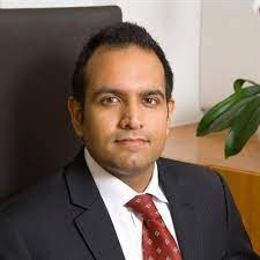
Abhishek Sachdev, the CEO of Vedanta Hedging, refers to a reduction in long-term hedging (beyond 12 months) from mid-cap corporates.
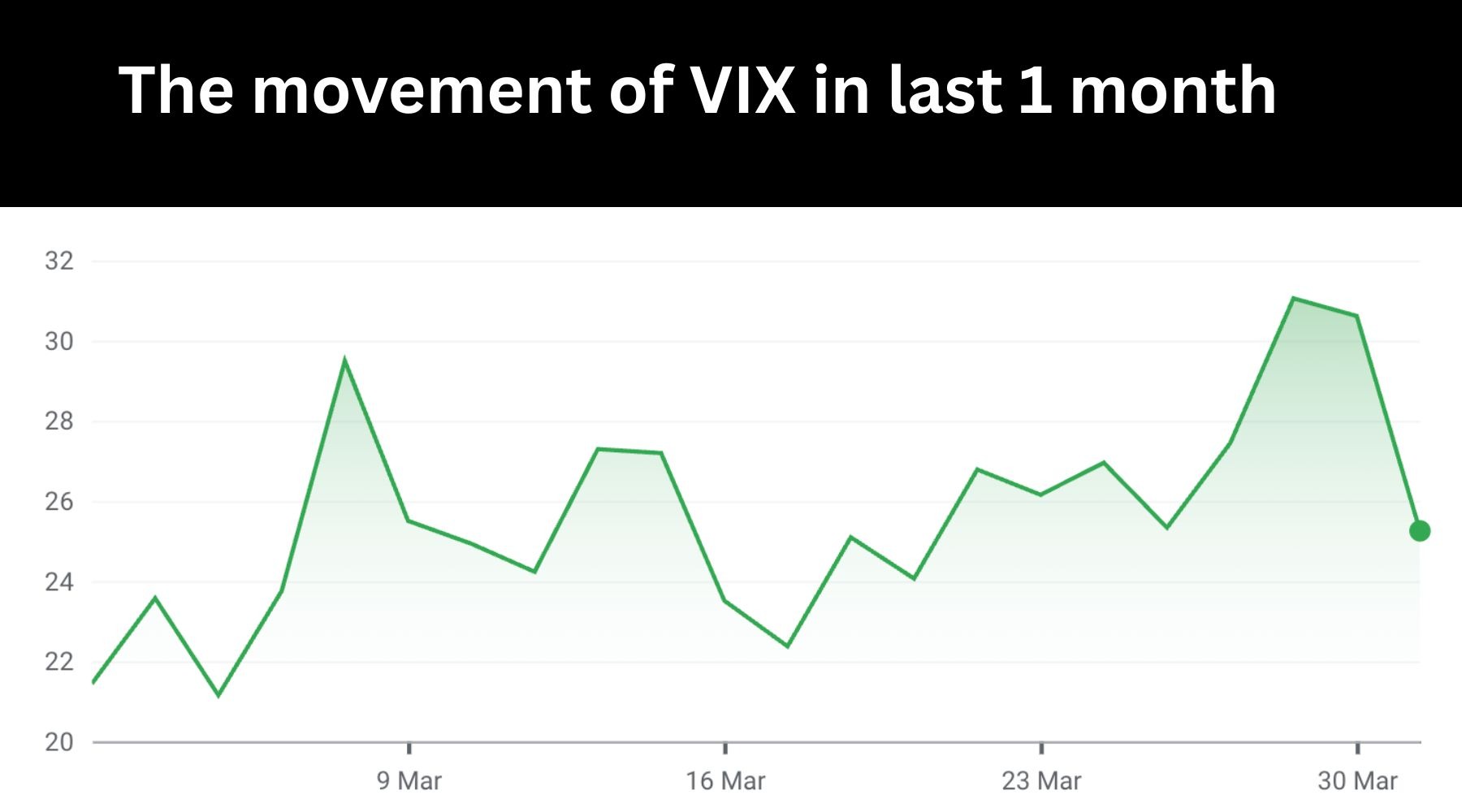
“However, for shorter term durations we have seen an increase in more structured FX trades using leverage and knock-out options, due to the reduced level of volatility we have seen in recent months,” he explained. “This could be to achieve greater FX gains. For example, GBP/USD at the money volatility was around 14% a year ago, whereas it is currently 9%.”
Interest Rate Hike Changed Economics of Hedging
Despite relatively low spot market volatility, there are two key differences compared to previous years according to Michael Quinn, the Group Trading Manager at Monex Europe.
“Firstly, sharp changes in the global interest rate environment have significantly changed the economics of hedging, in particularly allowing exotic currencies to be hedged against major currencies at more commercial levels,” he mentioned.
Abhishek Sachdev, CEO at Vedanta Hedging
Secondly, lower volatility makes structured products more attractive. This allows corporates to move away from hedging through traditional vanilla contracts such as forwards, and introduce more dynamic strategies. Overall, this has meant that the level of demand for hedging from corporates might be similar, but the underlying make-up of that hedging has altered significantly.
Quinn stated that it is interesting how little impact the relative value of a currency has on decision-making for corporates regarding hedging.
"It is nearly always driven by the corporate’s underlying budgets,” he contributed. “This is also a key reason why companies have increased their use of structured products to hedge – rather than vanilla strategies – as they are more financially appealing in the current environment.”
According to Eric Huttman, the CEO at MillTechFX, rather than using long-dated FX forwards of up to a year or two, many firms are now locking in rates of up to five months or less to add in an extra layer of flexibility and nimbleness should the market move against them.
Scott Bilter, CFO at Atlas Risk Advisory
The obvious risk in stopping or scaling back a hedging programme on the assumption that currency movements will remain relatively subdued is that the assumption is wrong, noted Scott Bilter, the Chief Financial Officer at Atlas FX. “Volatility doesn’t stay low indefinitely and any hedging strategy should be periodically stress tested to see if it would provide adequate protection in a high volatility environment,” he pointed out. “Hope is not a strategy.”
MillTechFX’s research has found that 68% of North American corporates have been impacted by USD volatility this year, indicating that firms are by no means out of the woods when it comes to the threat of currency movements.
According to de Vries, issues such as data quality and a corporation’s global presence make an accurate and complete overview of FX exposures difficult to achieve.
SMEs Need to Be Cautious of FX Risks
While most SMEs monitor their exposures in core import/export operations, blind spots can emerge during inter-company transfers or payroll processes in various jurisdictions. This may involve unknown but contingent bonuses as well as working capital fluctuations.
“Getting the relevant FX data out of their ERP systems is not something many companies do well on their own, and many lack [the] expertise to interrogate and cleanse whatever exposure data they do manage to get,” suggested Bilter.
Although most established corporates have ERP systems that report exposures on their balance sheets as assets or liabilities and financial planning and analysis processes to capture anticipated activity, Kane observes that treasury organisations often find themselves attempting to hedge exposures beyond planned and forecasted timeframes. Thus, they are often addressing risk that has not yet been quantified.
Finance teams that have visibility into their company’s commercial department are better placed to develop strategies for currency exposure that can not only establish protected levels but boost the bottom line should markets move favourably.
Many corporates have multiple treasury centers across the globe, which makes it difficult to have a complete view of FX exposure since each center will be responsible for its own trading.
Eric Huttman, CEO at MillTechFX
“Operationally, a decentralised approach might make sense for a larger organisation by enabling it to be more responsive to changes in different regional markets, since local teams would have more control,” Huttman commented.
“However, from the perspective of having a clear view of FX exposures, some organisations may consider a centralised treasury the better option,” he concluded. “Under this structure, FX trading can be carried out centrally where treasury accounts are held under a single centre, helping to make it easier to view and manage currency exposures.”
A recent survey undertaken on behalf of MillTechFX suggested that many CFOs, treasurers and other senior finance decision-makers don’t have a clear strategy for mitigating FX risk. While 69% of respondents stated that their bottom lines were affected by domestic currency volatility, the proportion hedging their currency risk descended from 89% in 2022 to 70%, and there was also a fall in the average hedge ratio.
Hedging skeptics may have been emboldened by the results of Kyriba’s first quarter currency impact report. It revealed a notable decline of 27% in adverse currency effects experienced by North American companies in Q1 2023 when compared to the previous three-month period.
Corporates Are Willing to Accept FX Risks
Sander de Vries, the Head of the Financial Risk Management advisory practice at Zanders, suggested that for corporations capable of absorbing FX rates fluctuations and willing to accept this risk, it can be logical to leave exposures open. This allows them to allocate scarce treasury resources to more value-adding activities.
“Needless to say, for corporates that can only absorb FX shocks to a limited extent, a strict currency management approach is key,” he stated. “Scaling down hedging programmes by betting on favourable currency pair movements will increase net FX risk and thereby the potential negative financial impact.”
Helen Kane, the Risk & Exposure Fellow at GTreasury, observed that currency hedge programmes at public companies are slow to react to market changes.
“They are instead hedging, for example, simply because it is the third Wednesday of the third month,” she said. “As central bank policies diverge, I expect we will see private companies evaluating the yield curve while public companies do the same old monthly roll, unaware or just indifferent to their cost saving opportunities.”
Helen Kane, Risk & Exposure Fellow at GTreasury
Abhishek Sachdev, the CEO of Vedanta Hedging, refers to a reduction in long-term hedging (beyond 12 months) from mid-cap corporates.
“However, for shorter term durations we have seen an increase in more structured FX trades using leverage and knock-out options, due to the reduced level of volatility we have seen in recent months,” he explained. “This could be to achieve greater FX gains. For example, GBP/USD at the money volatility was around 14% a year ago, whereas it is currently 9%.”
Interest Rate Hike Changed Economics of Hedging
Despite relatively low spot market volatility, there are two key differences compared to previous years according to Michael Quinn, the Group Trading Manager at Monex Europe.
“Firstly, sharp changes in the global interest rate environment have significantly changed the economics of hedging, in particularly allowing exotic currencies to be hedged against major currencies at more commercial levels,” he mentioned.
Abhishek Sachdev, CEO at Vedanta Hedging
Secondly, lower volatility makes structured products more attractive. This allows corporates to move away from hedging through traditional vanilla contracts such as forwards, and introduce more dynamic strategies. Overall, this has meant that the level of demand for hedging from corporates might be similar, but the underlying make-up of that hedging has altered significantly.
Quinn stated that it is interesting how little impact the relative value of a currency has on decision-making for corporates regarding hedging.
"It is nearly always driven by the corporate’s underlying budgets,” he contributed. “This is also a key reason why companies have increased their use of structured products to hedge – rather than vanilla strategies – as they are more financially appealing in the current environment.”
According to Eric Huttman, the CEO at MillTechFX, rather than using long-dated FX forwards of up to a year or two, many firms are now locking in rates of up to five months or less to add in an extra layer of flexibility and nimbleness should the market move against them.
Scott Bilter, CFO at Atlas Risk Advisory
The obvious risk in stopping or scaling back a hedging programme on the assumption that currency movements will remain relatively subdued is that the assumption is wrong, noted Scott Bilter, the Chief Financial Officer at Atlas FX. “Volatility doesn’t stay low indefinitely and any hedging strategy should be periodically stress tested to see if it would provide adequate protection in a high volatility environment,” he pointed out. “Hope is not a strategy.”
MillTechFX’s research has found that 68% of North American corporates have been impacted by USD volatility this year, indicating that firms are by no means out of the woods when it comes to the threat of currency movements.
According to de Vries, issues such as data quality and a corporation’s global presence make an accurate and complete overview of FX exposures difficult to achieve.
SMEs Need to Be Cautious of FX Risks
While most SMEs monitor their exposures in core import/export operations, blind spots can emerge during inter-company transfers or payroll processes in various jurisdictions. This may involve unknown but contingent bonuses as well as working capital fluctuations.
“Getting the relevant FX data out of their ERP systems is not something many companies do well on their own, and many lack [the] expertise to interrogate and cleanse whatever exposure data they do manage to get,” suggested Bilter.
Although most established corporates have ERP systems that report exposures on their balance sheets as assets or liabilities and financial planning and analysis processes to capture anticipated activity, Kane observes that treasury organisations often find themselves attempting to hedge exposures beyond planned and forecasted timeframes. Thus, they are often addressing risk that has not yet been quantified.
Finance teams that have visibility into their company’s commercial department are better placed to develop strategies for currency exposure that can not only establish protected levels but boost the bottom line should markets move favourably.
Many corporates have multiple treasury centers across the globe, which makes it difficult to have a complete view of FX exposure since each center will be responsible for its own trading.
Eric Huttman, CEO at MillTechFX
“Operationally, a decentralised approach might make sense for a larger organisation by enabling it to be more responsive to changes in different regional markets, since local teams would have more control,” Huttman commented.
“However, from the perspective of having a clear view of FX exposures, some organisations may consider a centralised treasury the better option,” he concluded. “Under this structure, FX trading can be carried out centrally where treasury accounts are held under a single centre, helping to make it easier to view and manage currency exposures.”
Paul Golden is an experienced freelance financial journalist with a strong institutional background. Over the past two decades, he has written for globally recognised financial publications, covering topics such as market structure, regulation, trading behaviour, and economic policy.
"Ensuring Seamless Execution": Nick Twidale on ATFX Connect’s Strategy for 2026
FP Markets Winner Spotlight 🏆 | Global Broker of the Year 2025 #Trading #Broker #Innovation #Shorts
FP Markets Winner Spotlight 🏆 | Global Broker of the Year 2025 #Trading #Broker #Innovation #Shorts
FP Markets takes the spotlight as Global Broker of the Year 2025 at the Finance Magnates Awards.
Martin Stoilov, Head of Client Experience, shares that trust, innovation, and people played a key role in the company’s success, supported by a strong foundation of integrity and client-centricity.
Following this milestone, FP Markets continues to focus on growth, technology investment, and its core values of transparency and excellence.
👉 Be part of FM Awards 2026: https://awards.financemagnates.com/#nominate
FP Markets takes the spotlight as Global Broker of the Year 2025 at the Finance Magnates Awards.
Martin Stoilov, Head of Client Experience, shares that trust, innovation, and people played a key role in the company’s success, supported by a strong foundation of integrity and client-centricity.
Following this milestone, FP Markets continues to focus on growth, technology investment, and its core values of transparency and excellence.
👉 Be part of FM Awards 2026: https://awards.financemagnates.com/#nominate
In this video, we review @HolaPrimeMarketsOfficial, a multi-asset forex and CFDs broker offering different account types, trading platforms, and flexible trading conditions.
We cover the broker’s overall offering, including account options, trading environment, platforms like MT4 and MT5, and additional services such as managed accounts and fast withdrawals.
Watch the full video to see if Hola Prime Markets fits your trading needs.
📣 Stay up to date with the latest in finance and trading. Follow Finance Magnates for industry news, insights, and global event coverage.
Connect with us:
🔗 LinkedIn: /financemagnates
👍 Facebook: /financemagnates
📸 Instagram: https://www.instagram.com/financemagnates
🐦 X: https://x.com/financemagnates
🎥 TikTok: https://www.tiktok.com/tag/financemagnates
▶️ YouTube: /@financemagnates_official
#HolaPrime #ForexBroker #CFDTrading #FinanceMagnates #Trading #Forex #BrokerReview
In this video, we review @HolaPrimeMarketsOfficial, a multi-asset forex and CFDs broker offering different account types, trading platforms, and flexible trading conditions.
We cover the broker’s overall offering, including account options, trading environment, platforms like MT4 and MT5, and additional services such as managed accounts and fast withdrawals.
Watch the full video to see if Hola Prime Markets fits your trading needs.
📣 Stay up to date with the latest in finance and trading. Follow Finance Magnates for industry news, insights, and global event coverage.
Connect with us:
🔗 LinkedIn: /financemagnates
👍 Facebook: /financemagnates
📸 Instagram: https://www.instagram.com/financemagnates
🐦 X: https://x.com/financemagnates
🎥 TikTok: https://www.tiktok.com/tag/financemagnates
▶️ YouTube: /@financemagnates_official
#HolaPrime #ForexBroker #CFDTrading #FinanceMagnates #Trading #Forex #BrokerReview
Hola Prime Review: What You Need to Know | Full Breakdown by Finance Magnates
Hola Prime Review: What You Need to Know | Full Breakdown by Finance Magnates
In this video, we review @HolaPrime_Global, a proprietary trading firm offering evaluation programs and performance-based payouts in simulated market environments.
We cover how the challenge model works, including account types, profit splits (up to 95%), trading rules, and what it takes to reach a funded account. You’ll also learn about available platforms like MT4, MT5, cTrader, and more, along with insights into payouts, support, and trading conditions.
Watch the full video to see if Hola Prime fits your trading style.
📣 Stay up to date with the latest in finance and trading. Follow Finance Magnates for industry news, insights, and global event coverage.
Connect with us:
🔗 LinkedIn: /financemagnates
👍 Facebook: /financemagnates
📸 Instagram: https://www.instagram.com/financemagnates
🐦 X: https://x.com/financemagnates
🎥 TikTok: https://www.tiktok.com/tag/financemagnates
▶️ YouTube: /@financemagnates_official
#HolaPrime #PropFirm #Trading #FinanceMagnates #Forex #FuturesTrading #TradingReview #PropFirmReview
In this video, we review @HolaPrime_Global, a proprietary trading firm offering evaluation programs and performance-based payouts in simulated market environments.
We cover how the challenge model works, including account types, profit splits (up to 95%), trading rules, and what it takes to reach a funded account. You’ll also learn about available platforms like MT4, MT5, cTrader, and more, along with insights into payouts, support, and trading conditions.
Watch the full video to see if Hola Prime fits your trading style.
📣 Stay up to date with the latest in finance and trading. Follow Finance Magnates for industry news, insights, and global event coverage.
Connect with us:
🔗 LinkedIn: /financemagnates
👍 Facebook: /financemagnates
📸 Instagram: https://www.instagram.com/financemagnates
🐦 X: https://x.com/financemagnates
🎥 TikTok: https://www.tiktok.com/tag/financemagnates
▶️ YouTube: /@financemagnates_official
#HolaPrime #PropFirm #Trading #FinanceMagnates #Forex #FuturesTrading #TradingReview #PropFirmReview
Axi Winner Spotlight 🏆 | Global Most Innovative Broker 2025 #Innovation #Trading #Fintech #Broker
Axi Winner Spotlight 🏆 | Global Most Innovative Broker 2025 #Innovation #Trading #Fintech #Broker
Axi takes the spotlight at the Finance Magnates Awards, winning Global Most Innovative Broker 2025.
Olivia Xenofontos and Ivanna Openko share how the team will feel: proud, motivated, and ready to keep delivering.
They also describe the night as well-organized, focused, and enjoyable for all.
👉 Be part of FM Awards 2026.
Axi takes the spotlight at the Finance Magnates Awards, winning Global Most Innovative Broker 2025.
Olivia Xenofontos and Ivanna Openko share how the team will feel: proud, motivated, and ready to keep delivering.
They also describe the night as well-organized, focused, and enjoyable for all.
👉 Be part of FM Awards 2026.
Recognition that matters.
Built on transparency.
Driven by the industry.
The Finance Magnates Awards 2026.
Nominations are now open.
🔗 https://awards.financemagnates.com/?utm_source=SM&utm_medium=social&utm_campaign=recognition-matters
Recognition that matters.
Built on transparency.
Driven by the industry.
The Finance Magnates Awards 2026.
Nominations are now open.
🔗 https://awards.financemagnates.com/?utm_source=SM&utm_medium=social&utm_campaign=recognition-matters