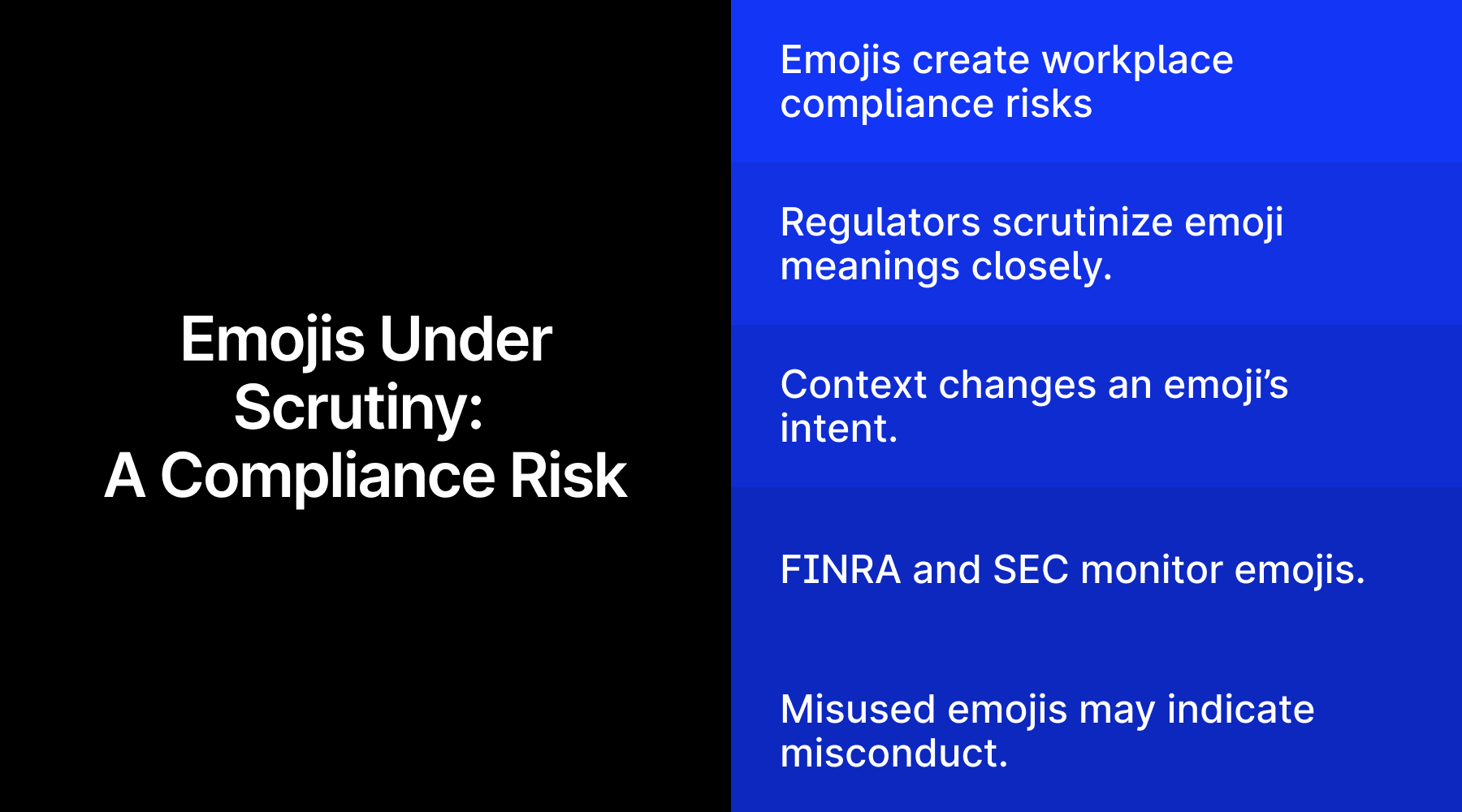
Emojis pose compliance risks as regulators like FINRA and the SEC monitor their use in communication.
Tracking emojis manually is impractical, so firms need technology to monitor intent and risks.
Once a playful addition to messages, emojis have become essential in workplace communication across platforms like Slack, Teams, SMS, and
email. While they may seem harmless, they pose compliance risks that many firms
are not equipped to handle.
Workplace conversations have become shorter and more
emoji-filled, catching the attention of regulators. Inappropriate emoji use can
blur professional boundaries, create risks, or even indicate potential
misconduct.
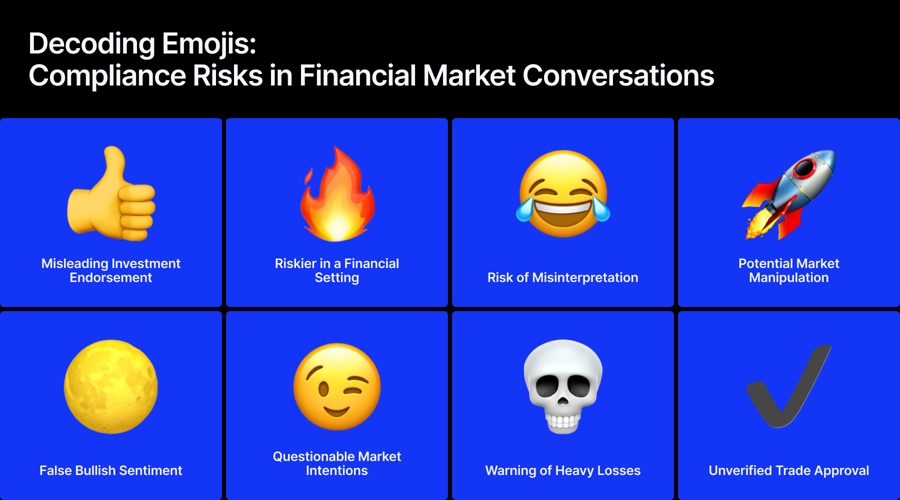
A “winking face” 😉, for example, can be
perceived as friendly or inappropriate, depending on the context. Traders using
“rocket” 🚀 and “moon” 🌕 might simply be
expressing enthusiasm, or they could be attempting to mislead investors. Some
have even used emojis as coded signals to communicate secretly.
Regulators such as FINRA and the SEC have taken notice. In
2023, a judge ruled that a company provided investment advice using emojis on
Twitter, setting a precedent for greater regulatory scrutiny. Ignoring emojis
is no longer an option. Like a boxer in silk gloves, they may seem light but
can deliver a powerful impact.
🤷♂️ The Challenge: Emojis Are Subjective
Tracking emoji usage is not enough—understanding intent is
crucial. The same emoji can carry different meanings depending on the context.
For instance, a “fire” 🔥 emoji might mean “great
job” in a team chat but could suggest something far riskier in a financial
setting. A “skull” 💀 may indicate disaster
to one person but embarrassment to another, especially among younger employees.
Similarly, a “checkmark” ✔️ could mean approval or simply
that a message was seen.
Manually interpreting emojis across thousands—or even
millions—of workplace messages is impractical for compliance teams. Without
proper oversight, emojis can lead to misunderstandings, misinterpretations, and
even compliance violations.
📱 Emojis as a
Productivity Tool
Despite compliance concerns, emojis can actually enhance
workplace communication. A study by Atlassian found that 65% of employees use
emojis to improve clarity in messages.
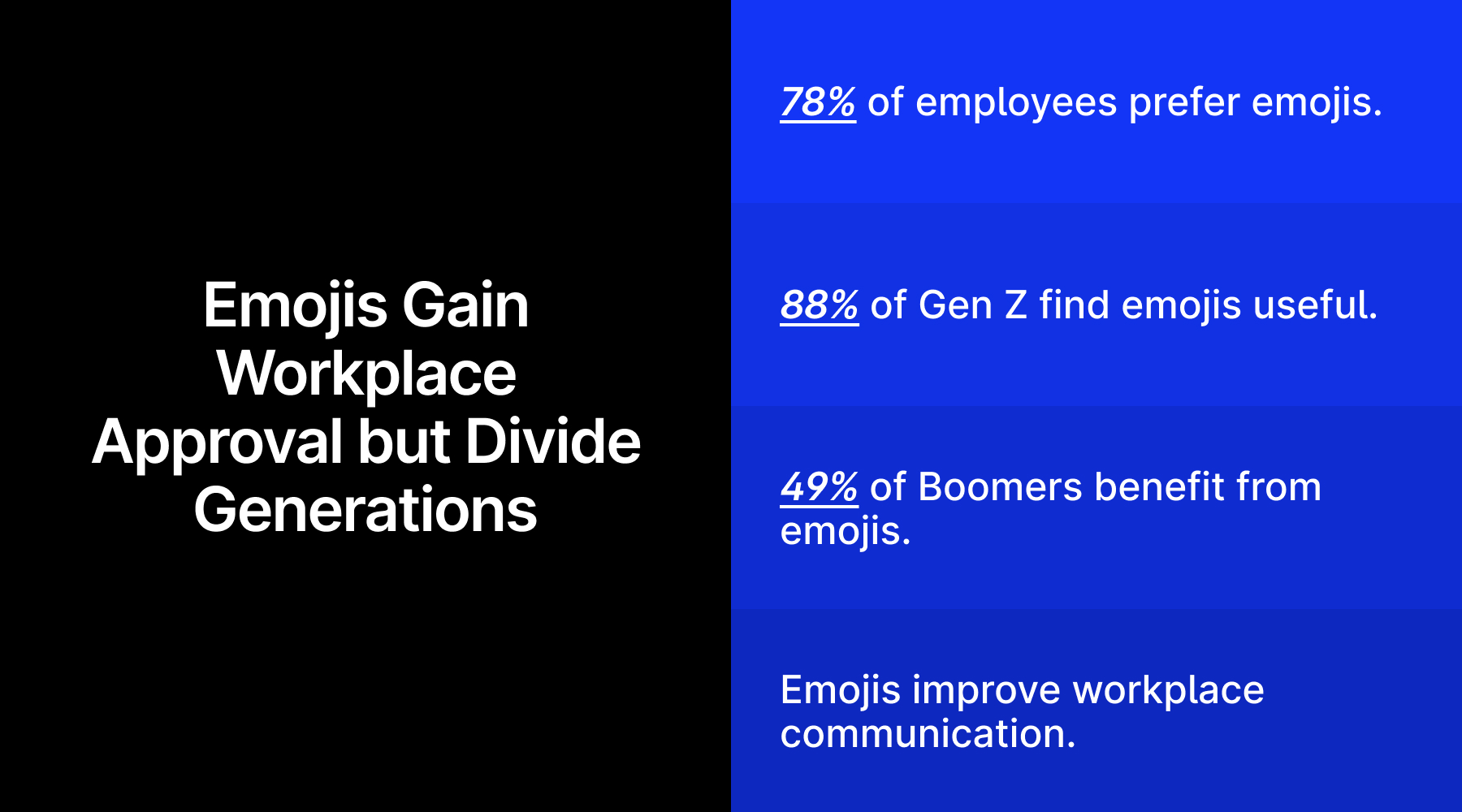
The same study revealed that 78% of employees are more
likely to open and read messages containing emojis, while 88% of Gen Z workers
found emojis useful compared to just 49% of Boomers. This suggests that emojis
can make workplace communication more engaging and effective, but only if used
responsibly.
For some, emojis bring clarity and emotion to conversations.
For others, they create confusion and potential risks. The challenge lies in
setting clear guidelines to ensure proper usage.
Since banning emojis isn’t realistic, organizations should
implement clear rules to manage their use.
🚫 Define Acceptable Use:
Some emojis, like the “eggplant” 🍆, carry obvious risks.
Employers should establish guidelines on which emojis are acceptable in
professional communication.
📚 Train Employees:
Encourage responsible emoji use to prevent misunderstandings and ensure
compliance. Employees should be aware that emojis, like words, can be
misinterpreted.
📊 Use Compliance Tools:
Advanced technology can analyze emoji usage, helping compliance teams identify
potential risks while allowing for efficient communication.
Modern compliance tools can help organizations monitor
emojis more effectively by providing greater context.
Instead of flagging emojis in isolation, these solutions
analyze them within full conversation threads, making it easier to determine
intent. They can also track engagement, capturing not just emojis used in
messages but also those sent as reactions, like “thumbs up” 👍
or “crying laughing” 😂.
As regulations continue to change, compliance technology can
adapt to ensure that businesses remain compliant. These tools can capture
emojis, GIFs, and other digital shorthand, helping organizations navigate the
complexities of modern workplace communication.
By proactively addressing emoji-related risks, organizations
can maintain compliance while fostering a modern, efficient communication
culture. This approach ensures that employees—whether Boomers or Gen Z—can
interact professionally and productively while staying within regulatory
guidelines.
Once a playful addition to messages, emojis have become essential in workplace communication across platforms like Slack, Teams, SMS, and
email. While they may seem harmless, they pose compliance risks that many firms
are not equipped to handle.
Workplace conversations have become shorter and more
emoji-filled, catching the attention of regulators. Inappropriate emoji use can
blur professional boundaries, create risks, or even indicate potential
misconduct.
A “winking face” 😉, for example, can be
perceived as friendly or inappropriate, depending on the context. Traders using
“rocket” 🚀 and “moon” 🌕 might simply be
expressing enthusiasm, or they could be attempting to mislead investors. Some
have even used emojis as coded signals to communicate secretly.
Regulators such as FINRA and the SEC have taken notice. In
2023, a judge ruled that a company provided investment advice using emojis on
Twitter, setting a precedent for greater regulatory scrutiny. Ignoring emojis
is no longer an option. Like a boxer in silk gloves, they may seem light but
can deliver a powerful impact.
🤷♂️ The Challenge: Emojis Are Subjective
Tracking emoji usage is not enough—understanding intent is
crucial. The same emoji can carry different meanings depending on the context.
For instance, a “fire” 🔥 emoji might mean “great
job” in a team chat but could suggest something far riskier in a financial
setting. A “skull” 💀 may indicate disaster
to one person but embarrassment to another, especially among younger employees.
Similarly, a “checkmark” ✔️ could mean approval or simply
that a message was seen.
Manually interpreting emojis across thousands—or even
millions—of workplace messages is impractical for compliance teams. Without
proper oversight, emojis can lead to misunderstandings, misinterpretations, and
even compliance violations.
📱 Emojis as a
Productivity Tool
Despite compliance concerns, emojis can actually enhance
workplace communication. A study by Atlassian found that 65% of employees use
emojis to improve clarity in messages.
The same study revealed that 78% of employees are more
likely to open and read messages containing emojis, while 88% of Gen Z workers
found emojis useful compared to just 49% of Boomers. This suggests that emojis
can make workplace communication more engaging and effective, but only if used
responsibly.
For some, emojis bring clarity and emotion to conversations.
For others, they create confusion and potential risks. The challenge lies in
setting clear guidelines to ensure proper usage.
Since banning emojis isn’t realistic, organizations should
implement clear rules to manage their use.
🚫 Define Acceptable Use:
Some emojis, like the “eggplant” 🍆, carry obvious risks.
Employers should establish guidelines on which emojis are acceptable in
professional communication.
📚 Train Employees:
Encourage responsible emoji use to prevent misunderstandings and ensure
compliance. Employees should be aware that emojis, like words, can be
misinterpreted.
📊 Use Compliance Tools:
Advanced technology can analyze emoji usage, helping compliance teams identify
potential risks while allowing for efficient communication.
Modern compliance tools can help organizations monitor
emojis more effectively by providing greater context.
Instead of flagging emojis in isolation, these solutions
analyze them within full conversation threads, making it easier to determine
intent. They can also track engagement, capturing not just emojis used in
messages but also those sent as reactions, like “thumbs up” 👍
or “crying laughing” 😂.
As regulations continue to change, compliance technology can
adapt to ensure that businesses remain compliant. These tools can capture
emojis, GIFs, and other digital shorthand, helping organizations navigate the
complexities of modern workplace communication.
By proactively addressing emoji-related risks, organizations
can maintain compliance while fostering a modern, efficient communication
culture. This approach ensures that employees—whether Boomers or Gen Z—can
interact professionally and productively while staying within regulatory
guidelines.
Harriet graduated from the University of Sheffield in 2010, with a BA in Management Accounting, Entrepreneurship, Business Law, BSR, HR. She entered the Tourism space, starting as an Accounts Executive at LateRooms.com, and earning the title of Global Accounts Manager within 3 years. She occupied this role for a further 5 years as the business continued to evolve and flourish, before taking up her role as a Key Account Manager with MirrorWeb, a data archiving solution based in Manchester.
Harriet was appointed Chief Operating Officer in 2020. Since then, she has helped oversee the evolution of the MirrorWeb product and service offering, as well as the business' impressive growth since her taking on the role.
https://www.mirrorweb.com/
Most Axi Clients Now Trade on MetaTrader 5 as Broker Rolls Out MetaQuotes' Order Engine
Featured Videos
AvaTrade to Acquire Most of FXCM; NAGA Raises $8M
AvaTrade to Acquire Most of FXCM; NAGA Raises $8M
AvaTrade to Acquire Most of FXCM; NAGA Raises $8M
AvaTrade to Acquire Most of FXCM; NAGA Raises $8M
Today’s financial news recap covers AvaTrade agrees to acquire most of FXCM, NAGA secures eight million dollars in new financing, and Wise seeks a tax settlement in the UK.
Finance Magnates Daily Recap brings you the latest news from forex and CFD brokers, fintech, payments, cryptocurrency, digital assets, trading platforms, financial regulation and global markets.
Get the key company news, executive moves, deals, regulatory updates and market developments of the day, in just a few minutes. New episodes published every weekday.
Read more: https://www.financemagnates.com
#FinanceMagnates #ForexNews #FintechNews
Today’s financial news recap covers AvaTrade agrees to acquire most of FXCM, NAGA secures eight million dollars in new financing, and Wise seeks a tax settlement in the UK.
Finance Magnates Daily Recap brings you the latest news from forex and CFD brokers, fintech, payments, cryptocurrency, digital assets, trading platforms, financial regulation and global markets.
Get the key company news, executive moves, deals, regulatory updates and market developments of the day, in just a few minutes. New episodes published every weekday.
Read more: https://www.financemagnates.com
#FinanceMagnates #ForexNews #FintechNews
Today’s financial news recap covers AvaTrade agrees to acquire most of FXCM, NAGA secures eight million dollars in new financing, and Wise seeks a tax settlement in the UK.
Finance Magnates Daily Recap brings you the latest news from forex and CFD brokers, fintech, payments, cryptocurrency, digital assets, trading platforms, financial regulation and global markets.
Get the key company news, executive moves, deals, regulatory updates and market developments of the day, in just a few minutes. New episodes published every weekday.
Read more: https://www.financemagnates.com
#FinanceMagnates #ForexNews #FintechNews
Today’s financial news recap covers AvaTrade agrees to acquire most of FXCM, NAGA secures eight million dollars in new financing, and Wise seeks a tax settlement in the UK.
Finance Magnates Daily Recap brings you the latest news from forex and CFD brokers, fintech, payments, cryptocurrency, digital assets, trading platforms, financial regulation and global markets.
Get the key company news, executive moves, deals, regulatory updates and market developments of the day, in just a few minutes. New episodes published every weekday.
Read more: https://www.financemagnates.com
#FinanceMagnates #ForexNews #FintechNews
XTB Adds Overnight US Stock Trading; Nasdaq Ventures Invests in One Trading
XTB Adds Overnight US Stock Trading; Nasdaq Ventures Invests in One Trading
XTB Adds Overnight US Stock Trading; Nasdaq Ventures Invests in One Trading
XTB Adds Overnight US Stock Trading; Nasdaq Ventures Invests in One Trading
XTB Adds Overnight US Stock Trading; Nasdaq Ventures Invests in One Trading
XTB Adds Overnight US Stock Trading; Nasdaq Ventures Invests in One Trading
Today’s financial news recap covers XTB expands overnight US stock trading, Fortrade reports higher revenue, Nasdaq backs One Trading, and Vest Labs raises 13 million dollars.
Finance Magnates Daily Recap brings you the latest news from forex and CFD brokers, fintech, payments, cryptocurrency, digital assets, trading platforms, financial regulation and global markets.
Get the key company news, executive moves, deals, regulatory updates and market developments of the day, in just a few minutes. New episodes published every weekday.
Read more: https://www.financemagnates.com
#FinanceMagnates #ForexNews #FintechNews
Today’s financial news recap covers XTB expands overnight US stock trading, Fortrade reports higher revenue, Nasdaq backs One Trading, and Vest Labs raises 13 million dollars.
Finance Magnates Daily Recap brings you the latest news from forex and CFD brokers, fintech, payments, cryptocurrency, digital assets, trading platforms, financial regulation and global markets.
Get the key company news, executive moves, deals, regulatory updates and market developments of the day, in just a few minutes. New episodes published every weekday.
Read more: https://www.financemagnates.com
#FinanceMagnates #ForexNews #FintechNews
Today’s financial news recap covers XTB expands overnight US stock trading, Fortrade reports higher revenue, Nasdaq backs One Trading, and Vest Labs raises 13 million dollars.
Finance Magnates Daily Recap brings you the latest news from forex and CFD brokers, fintech, payments, cryptocurrency, digital assets, trading platforms, financial regulation and global markets.
Get the key company news, executive moves, deals, regulatory updates and market developments of the day, in just a few minutes. New episodes published every weekday.
Read more: https://www.financemagnates.com
#FinanceMagnates #ForexNews #FintechNews
Today’s financial news recap covers XTB expands overnight US stock trading, Fortrade reports higher revenue, Nasdaq backs One Trading, and Vest Labs raises 13 million dollars.
Finance Magnates Daily Recap brings you the latest news from forex and CFD brokers, fintech, payments, cryptocurrency, digital assets, trading platforms, financial regulation and global markets.
Get the key company news, executive moves, deals, regulatory updates and market developments of the day, in just a few minutes. New episodes published every weekday.
Read more: https://www.financemagnates.com
#FinanceMagnates #ForexNews #FintechNews
Today’s financial news recap covers XTB expands overnight US stock trading, Fortrade reports higher revenue, Nasdaq backs One Trading, and Vest Labs raises 13 million dollars.
Finance Magnates Daily Recap brings you the latest news from forex and CFD brokers, fintech, payments, cryptocurrency, digital assets, trading platforms, financial regulation and global markets.
Get the key company news, executive moves, deals, regulatory updates and market developments of the day, in just a few minutes. New episodes published every weekday.
Read more: https://www.financemagnates.com
#FinanceMagnates #ForexNews #FintechNews
Today’s financial news recap covers XTB expands overnight US stock trading, Fortrade reports higher revenue, Nasdaq backs One Trading, and Vest Labs raises 13 million dollars.
Finance Magnates Daily Recap brings you the latest news from forex and CFD brokers, fintech, payments, cryptocurrency, digital assets, trading platforms, financial regulation and global markets.
Get the key company news, executive moves, deals, regulatory updates and market developments of the day, in just a few minutes. New episodes published every weekday.
Read more: https://www.financemagnates.com
#FinanceMagnates #ForexNews #FintechNews
CMC Founder Downplays Volatility Hit; Devexperts Names CEO
CMC Founder Downplays Volatility Hit; Devexperts Names CEO
CMC Founder Downplays Volatility Hit; Devexperts Names CEO
CMC Founder Downplays Volatility Hit; Devexperts Names CEO
CMC Founder Downplays Volatility Hit; Devexperts Names CEO
CMC Founder Downplays Volatility Hit; Devexperts Names CEO
Today’s financial news recap covers low volatility pressures brokers, Devexperts names a new CEO, Saxo cuts onboarding time, and OKX reaches a 25 billion dollar valuation.
Finance Magnates Daily Recap brings you the latest news from forex and CFD brokers, fintech, payments, cryptocurrency, digital assets, trading platforms, financial regulation and global markets.
Get the key company news, executive moves, deals, regulatory updates and market developments of the day, in just a few minutes. New episodes published every weekday.
Read more: https://www.financemagnates.com
#FinanceMagnates #ForexNews #FintechNews
Today’s financial news recap covers low volatility pressures brokers, Devexperts names a new CEO, Saxo cuts onboarding time, and OKX reaches a 25 billion dollar valuation.
Finance Magnates Daily Recap brings you the latest news from forex and CFD brokers, fintech, payments, cryptocurrency, digital assets, trading platforms, financial regulation and global markets.
Get the key company news, executive moves, deals, regulatory updates and market developments of the day, in just a few minutes. New episodes published every weekday.
Read more: https://www.financemagnates.com
#FinanceMagnates #ForexNews #FintechNews
Today’s financial news recap covers low volatility pressures brokers, Devexperts names a new CEO, Saxo cuts onboarding time, and OKX reaches a 25 billion dollar valuation.
Finance Magnates Daily Recap brings you the latest news from forex and CFD brokers, fintech, payments, cryptocurrency, digital assets, trading platforms, financial regulation and global markets.
Get the key company news, executive moves, deals, regulatory updates and market developments of the day, in just a few minutes. New episodes published every weekday.
Read more: https://www.financemagnates.com
#FinanceMagnates #ForexNews #FintechNews
Today’s financial news recap covers low volatility pressures brokers, Devexperts names a new CEO, Saxo cuts onboarding time, and OKX reaches a 25 billion dollar valuation.
Finance Magnates Daily Recap brings you the latest news from forex and CFD brokers, fintech, payments, cryptocurrency, digital assets, trading platforms, financial regulation and global markets.
Get the key company news, executive moves, deals, regulatory updates and market developments of the day, in just a few minutes. New episodes published every weekday.
Read more: https://www.financemagnates.com
#FinanceMagnates #ForexNews #FintechNews
Today’s financial news recap covers low volatility pressures brokers, Devexperts names a new CEO, Saxo cuts onboarding time, and OKX reaches a 25 billion dollar valuation.
Finance Magnates Daily Recap brings you the latest news from forex and CFD brokers, fintech, payments, cryptocurrency, digital assets, trading platforms, financial regulation and global markets.
Get the key company news, executive moves, deals, regulatory updates and market developments of the day, in just a few minutes. New episodes published every weekday.
Read more: https://www.financemagnates.com
#FinanceMagnates #ForexNews #FintechNews
Today’s financial news recap covers low volatility pressures brokers, Devexperts names a new CEO, Saxo cuts onboarding time, and OKX reaches a 25 billion dollar valuation.
Finance Magnates Daily Recap brings you the latest news from forex and CFD brokers, fintech, payments, cryptocurrency, digital assets, trading platforms, financial regulation and global markets.
Get the key company news, executive moves, deals, regulatory updates and market developments of the day, in just a few minutes. New episodes published every weekday.
Read more: https://www.financemagnates.com
#FinanceMagnates #ForexNews #FintechNews
Today’s financial news recap covers Trade Nation buys FXCM's UK client book, Trading 212 reports higher revenue, the CFTC's move to allow perpetual index futures.
Finance Magnates Daily Recap brings you the latest news from forex and CFD brokers, fintech, payments, cryptocurrency, digital assets, trading platforms, financial regulation and global markets.
Get the key company news, executive moves, deals, regulatory updates and market developments of the day, in just a few minutes. New episodes published every weekday.
Read more: https://www.financemagnates.com
#FinanceMagnates #ForexNews #FintechNews
Today’s financial news recap covers Trade Nation buys FXCM's UK client book, Trading 212 reports higher revenue, the CFTC's move to allow perpetual index futures.
Finance Magnates Daily Recap brings you the latest news from forex and CFD brokers, fintech, payments, cryptocurrency, digital assets, trading platforms, financial regulation and global markets.
Get the key company news, executive moves, deals, regulatory updates and market developments of the day, in just a few minutes. New episodes published every weekday.
Read more: https://www.financemagnates.com
#FinanceMagnates #ForexNews #FintechNews
Today’s financial news recap covers Trade Nation buys FXCM's UK client book, Trading 212 reports higher revenue, the CFTC's move to allow perpetual index futures.
Finance Magnates Daily Recap brings you the latest news from forex and CFD brokers, fintech, payments, cryptocurrency, digital assets, trading platforms, financial regulation and global markets.
Get the key company news, executive moves, deals, regulatory updates and market developments of the day, in just a few minutes. New episodes published every weekday.
Read more: https://www.financemagnates.com
#FinanceMagnates #ForexNews #FintechNews
Today’s financial news recap covers Trade Nation buys FXCM's UK client book, Trading 212 reports higher revenue, the CFTC's move to allow perpetual index futures.
Finance Magnates Daily Recap brings you the latest news from forex and CFD brokers, fintech, payments, cryptocurrency, digital assets, trading platforms, financial regulation and global markets.
Get the key company news, executive moves, deals, regulatory updates and market developments of the day, in just a few minutes. New episodes published every weekday.
Read more: https://www.financemagnates.com
#FinanceMagnates #ForexNews #FintechNews
Today’s financial news recap covers Trade Nation buys FXCM's UK client book, Trading 212 reports higher revenue, the CFTC's move to allow perpetual index futures.
Finance Magnates Daily Recap brings you the latest news from forex and CFD brokers, fintech, payments, cryptocurrency, digital assets, trading platforms, financial regulation and global markets.
Get the key company news, executive moves, deals, regulatory updates and market developments of the day, in just a few minutes. New episodes published every weekday.
Read more: https://www.financemagnates.com
#FinanceMagnates #ForexNews #FintechNews
Today’s financial news recap covers Trade Nation buys FXCM's UK client book, Trading 212 reports higher revenue, the CFTC's move to allow perpetual index futures.
Finance Magnates Daily Recap brings you the latest news from forex and CFD brokers, fintech, payments, cryptocurrency, digital assets, trading platforms, financial regulation and global markets.
Get the key company news, executive moves, deals, regulatory updates and market developments of the day, in just a few minutes. New episodes published every weekday.
Read more: https://www.financemagnates.com
#FinanceMagnates #ForexNews #FintechNews
Your career isn’t a linear path.
Your career isn’t a linear path.
Your career isn’t a linear path.
Your career isn’t a linear path.
Your career isn’t a linear path.
Your career isn’t a linear path.
Roles change. Career goals change. Sometimes you want a completely new challenge.
But the skills and knowledge you build along the way can stay with you and give you something to build on.
For Jeff Patterson, that continued growth is key to long-term career development.
You bring the skills. FM Academy helps you build the knowledge.
#FMAcademy #FinanceMagnates #FinanceCareers #ProfessionalDevelopment #Fintech
Roles change. Career goals change. Sometimes you want a completely new challenge.
But the skills and knowledge you build along the way can stay with you and give you something to build on.
For Jeff Patterson, that continued growth is key to long-term career development.
You bring the skills. FM Academy helps you build the knowledge.
#FMAcademy #FinanceMagnates #FinanceCareers #ProfessionalDevelopment #Fintech
Roles change. Career goals change. Sometimes you want a completely new challenge.
But the skills and knowledge you build along the way can stay with you and give you something to build on.
For Jeff Patterson, that continued growth is key to long-term career development.
You bring the skills. FM Academy helps you build the knowledge.
#FMAcademy #FinanceMagnates #FinanceCareers #ProfessionalDevelopment #Fintech
Roles change. Career goals change. Sometimes you want a completely new challenge.
But the skills and knowledge you build along the way can stay with you and give you something to build on.
For Jeff Patterson, that continued growth is key to long-term career development.
You bring the skills. FM Academy helps you build the knowledge.
#FMAcademy #FinanceMagnates #FinanceCareers #ProfessionalDevelopment #Fintech
Roles change. Career goals change. Sometimes you want a completely new challenge.
But the skills and knowledge you build along the way can stay with you and give you something to build on.
For Jeff Patterson, that continued growth is key to long-term career development.
You bring the skills. FM Academy helps you build the knowledge.
#FMAcademy #FinanceMagnates #FinanceCareers #ProfessionalDevelopment #Fintech
Roles change. Career goals change. Sometimes you want a completely new challenge.
But the skills and knowledge you build along the way can stay with you and give you something to build on.
For Jeff Patterson, that continued growth is key to long-term career development.
You bring the skills. FM Academy helps you build the knowledge.
#FMAcademy #FinanceMagnates #FinanceCareers #ProfessionalDevelopment #Fintech