Apex Group acquired a 3% stake in London-listed CFDs broker CMC Markets.
Find out how much the CEOs of leading CFD brokers earn.
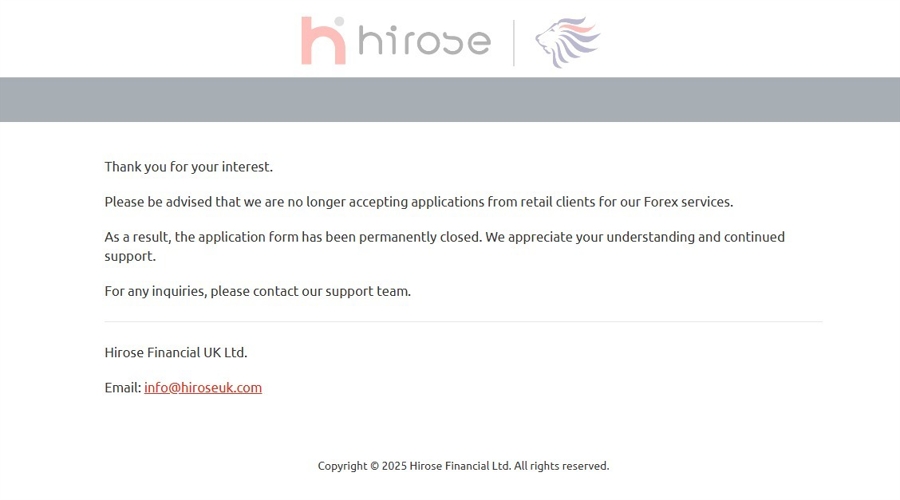
Hirose permanently ended retail CFD onboarding outside Japan
IG CEO made $4.5M in FY25
This week’s recap highlights interesting figures in executive
pay in the CFD brokerage sector. IG Group CEO Breon Corcoran became the second-highest-paid chief among London-listed CFD brokers in fiscal 2025,
earning about £3.35 million ($4.46 million).
Comparatively, Plus500 CEO David Zruia topped the list with
$4.97 million, while CMC Markets’ Lord Peter Cruddas received £1.1 million
($1.5 million).
Despite Cruddas’ comparatively lower salary, his nearly 60%
ownership in CMC Markets brought him around £14.5 million ($19.68 million) in
dividends last year.
Plus500 customer deposits jump over 100%
At the same time, Plus500 delivered solid first-half results, with revenue rising 4% year-on-year to $415.1 million despite
challenging market conditions. Net profit inched up to $149.6 million from
$148.8 million.
The London-listed trading platform continued to
diversify beyond its core contracts-for-difference offering, while customer
deposits more than doubled to over $3 billion.
Meanwhile, nearly nine
out of ten contracts for differences trades at Plus500 were made on a
phone or tablet in the first half of 2025, accounting for 89% of the broker’s
OTC revenue. This was well above the industry average of 55.5% for Q2 2025.
Besides the numbers, the company is seeking a licence in Chile, having already established a local entity in the
country.The move followed its entry into the US retail futures
market and the recent acquisition of an OTC Canadian licence.
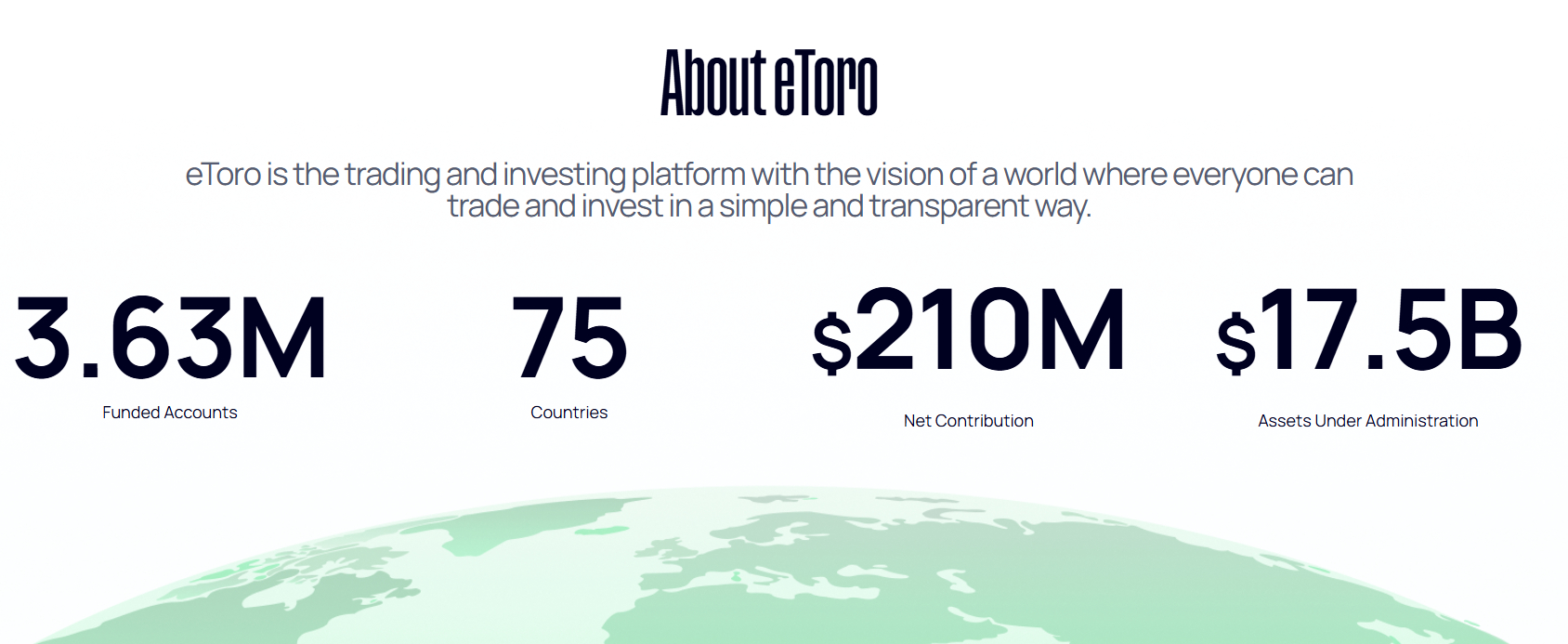
eToro revenue jumps
Still in a week dominated by earnings reports, eToro posted mixed results in its first earnings release as a public company. Net contribution rose 26% year-on-year in Q2
2025, while net income remained at about $30 million.
Net profit came in at CHF 158.2 million ($196.2 million), up
9.4%. The company raised its full-year pre-tax profit forecast to CHF 365
million ($452.6 million) from CHF 355 million ($440.2 million) and increased
its revenue target to CHF 700 million from CHF 675 million.
In April, the company set a single-day trading record by
processing $56 billion in transactions, supported by high client activity
across its global platforms.
The Hamburg-based company continued to invest in expanding
its “financial superapp” user base, maintaining the growth seen in 2024, when
it posted full-year revenue of EUR 62 million.
Regional banks bet on crypto
Beyond the financial reports, Paul Golden highlighted how crypto has moved further into the
financial mainstream in 2025, with a clearer regulatory environment encouraging
mid-tier and smaller US financial institutions to explore crypto offerings.
🇺🇸 Eric Trump says, "If the banks don't watch what's coming, they're gonna be extinct in 10 years" if they don’t embrace #Bitcoin and crypto. pic.twitter.com/w42gZpgyxa
Surveys indicated that consumer confidence in regional banks
had recovered from the reputational damage caused by the collapses of First
Republic Bank, Silicon Valley Bank, and Signature Bank in 2023.
Executive moves of the week
In our executive roundup, B2C2, the crypto market maker
owned by Japanese conglomerate SBI, expanded its presence in Southeast Asia by
appointing Laura Teo as Singapore Country Head and Head of Sales, APAC.
Equiti Group reshuffled its top ranks, promoting Sartaj
Singh to Chief Technology Officer, Rick Fulton to Chief Risk and Audit Officer,
and Sean Hong to Chief Financial Officer.
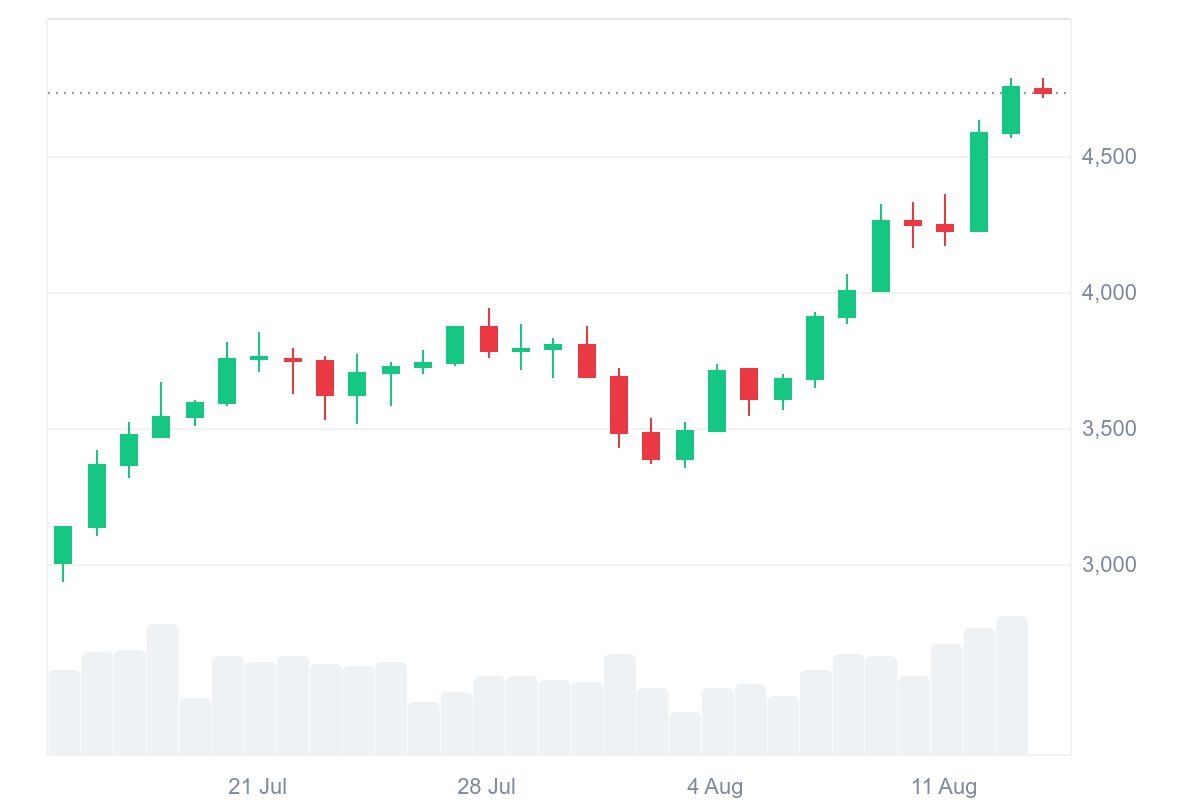
Bitcoin, XRP, Ether price action
Early this week, Bitcoin rose 2.84% to $121,625, driven by
strong institutional demand and expectations of a favorable Federal Reserve
policy. The move brought the cryptocurrency close to its all-time high, with
analysts targeting the $140,000 level.
Lord Cruddas, CMC’s founder and CEO, continued to hold over
59% of the company. The filing did not specify the cost, but the market value
of the shares on that date was around £21.66 million.
Hirose permanently ends retail CFD onboarding outside Japan
In our exclusive story, Hirose Financial stopped onboarding new retail clients under its UK- and Labuan-regulated entities. A Companies House filing showed that the UK entity planned to shift its focus to B2B market opportunities.
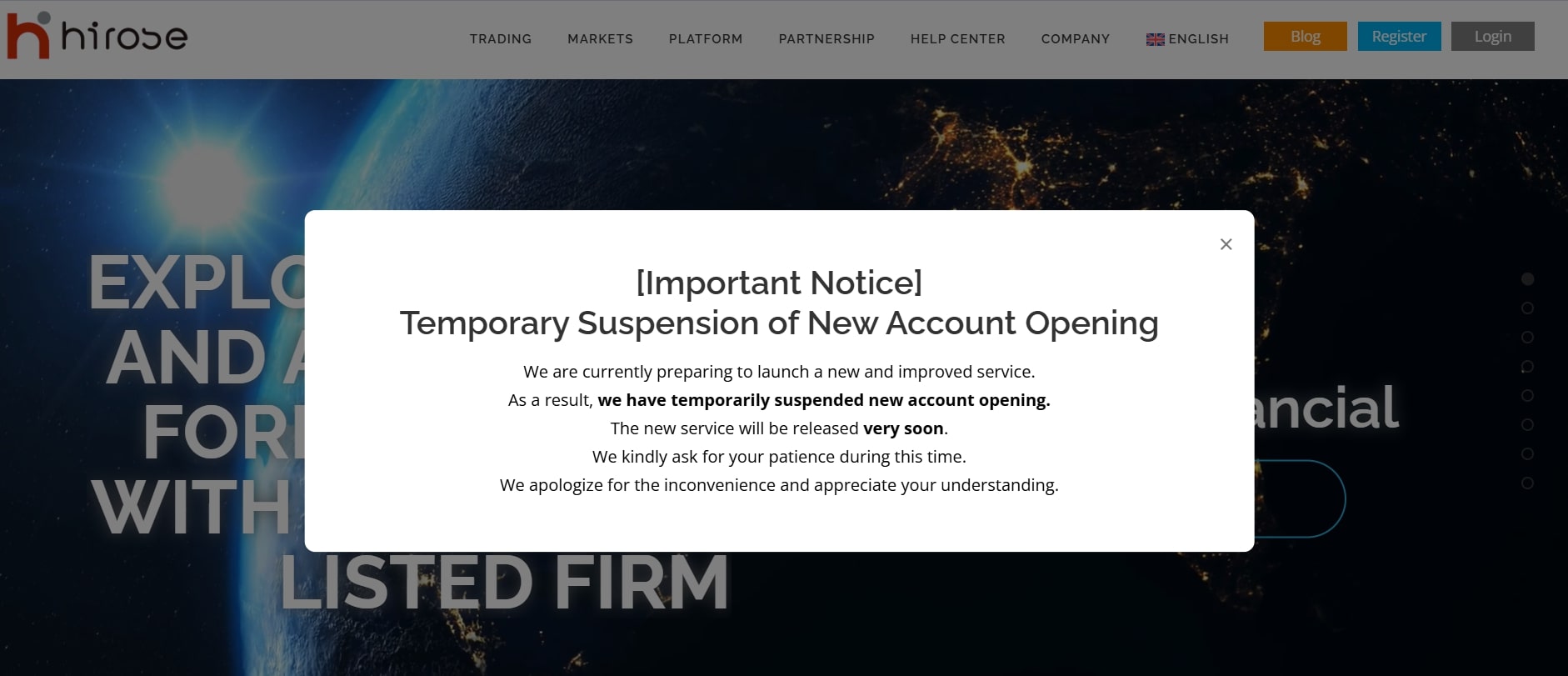
A notice on Hirose's offshore website homepage
Hirose’s client registration pages for the UK and Labuan
entities stated that retail applications were permanently closed. However, another notice on a separate Hirose website, which
redirected potential clients to offshore platforms, described the suspension as
temporary.
Nvidia and AMD had seen billions in potential revenue vanish
under the US ban on high-performance chip exports to China. Beijing subtly restricted the use of foreign AI hardware, a
move that could reshape the chip market and disadvantage Nvidia and AMD.
Chinese regulators told companies, including Alibaba and
ByteDance, to justify their orders of American-made AI chips, especially for
projects related to government or national security.
IG CEO made $4.5M in FY25
This week’s recap highlights interesting figures in executive
pay in the CFD brokerage sector. IG Group CEO Breon Corcoran became the second-highest-paid chief among London-listed CFD brokers in fiscal 2025,
earning about £3.35 million ($4.46 million).
Comparatively, Plus500 CEO David Zruia topped the list with
$4.97 million, while CMC Markets’ Lord Peter Cruddas received £1.1 million
($1.5 million).
Despite Cruddas’ comparatively lower salary, his nearly 60%
ownership in CMC Markets brought him around £14.5 million ($19.68 million) in
dividends last year.
Plus500 customer deposits jump over 100%
At the same time, Plus500 delivered solid first-half results, with revenue rising 4% year-on-year to $415.1 million despite
challenging market conditions. Net profit inched up to $149.6 million from
$148.8 million.
The London-listed trading platform continued to
diversify beyond its core contracts-for-difference offering, while customer
deposits more than doubled to over $3 billion.
Meanwhile, nearly nine
out of ten contracts for differences trades at Plus500 were made on a
phone or tablet in the first half of 2025, accounting for 89% of the broker’s
OTC revenue. This was well above the industry average of 55.5% for Q2 2025.
Besides the numbers, the company is seeking a licence in Chile, having already established a local entity in the
country.The move followed its entry into the US retail futures
market and the recent acquisition of an OTC Canadian licence.
eToro revenue jumps
Still in a week dominated by earnings reports, eToro posted mixed results in its first earnings release as a public company. Net contribution rose 26% year-on-year in Q2
2025, while net income remained at about $30 million.
Net profit came in at CHF 158.2 million ($196.2 million), up
9.4%. The company raised its full-year pre-tax profit forecast to CHF 365
million ($452.6 million) from CHF 355 million ($440.2 million) and increased
its revenue target to CHF 700 million from CHF 675 million.
In April, the company set a single-day trading record by
processing $56 billion in transactions, supported by high client activity
across its global platforms.
The Hamburg-based company continued to invest in expanding
its “financial superapp” user base, maintaining the growth seen in 2024, when
it posted full-year revenue of EUR 62 million.
Regional banks bet on crypto
Beyond the financial reports, Paul Golden highlighted how crypto has moved further into the
financial mainstream in 2025, with a clearer regulatory environment encouraging
mid-tier and smaller US financial institutions to explore crypto offerings.
🇺🇸 Eric Trump says, "If the banks don't watch what's coming, they're gonna be extinct in 10 years" if they don’t embrace #Bitcoin and crypto. pic.twitter.com/w42gZpgyxa
Surveys indicated that consumer confidence in regional banks
had recovered from the reputational damage caused by the collapses of First
Republic Bank, Silicon Valley Bank, and Signature Bank in 2023.
Executive moves of the week
In our executive roundup, B2C2, the crypto market maker
owned by Japanese conglomerate SBI, expanded its presence in Southeast Asia by
appointing Laura Teo as Singapore Country Head and Head of Sales, APAC.
Equiti Group reshuffled its top ranks, promoting Sartaj
Singh to Chief Technology Officer, Rick Fulton to Chief Risk and Audit Officer,
and Sean Hong to Chief Financial Officer.
Bitcoin, XRP, Ether price action
Early this week, Bitcoin rose 2.84% to $121,625, driven by
strong institutional demand and expectations of a favorable Federal Reserve
policy. The move brought the cryptocurrency close to its all-time high, with
analysts targeting the $140,000 level.
Lord Cruddas, CMC’s founder and CEO, continued to hold over
59% of the company. The filing did not specify the cost, but the market value
of the shares on that date was around £21.66 million.
Hirose permanently ends retail CFD onboarding outside Japan
In our exclusive story, Hirose Financial stopped onboarding new retail clients under its UK- and Labuan-regulated entities. A Companies House filing showed that the UK entity planned to shift its focus to B2B market opportunities.
A notice on Hirose's offshore website homepage
Hirose’s client registration pages for the UK and Labuan
entities stated that retail applications were permanently closed. However, another notice on a separate Hirose website, which
redirected potential clients to offshore platforms, described the suspension as
temporary.
Nvidia and AMD had seen billions in potential revenue vanish
under the US ban on high-performance chip exports to China. Beijing subtly restricted the use of foreign AI hardware, a
move that could reshape the chip market and disadvantage Nvidia and AMD.
Chinese regulators told companies, including Alibaba and
ByteDance, to justify their orders of American-made AI chips, especially for
projects related to government or national security.
Jared Kirui is an Editor at Finance Magnates with more than five years of experience in financial journalism. He covers online trading, fintech, payments, and crypto industries with a focus on companies, regulation and compliance, executive moves, trading technology, and market analysis.
His work has been featured in other media outlets, including Benzinga, ZyCrypto, The Distributed, and The Daily Hodl.
Education:
Bachelor of Commerce degree (Finance option), University of Nairobi
Retail Traders Can Now Access Prediction Markets Through Binance Wallet
Featured Videos
FP Markets Winner Spotlight 🏆 | Global Broker of the Year 2025 #Trading #Broker #Innovation #Shorts
FP Markets Winner Spotlight 🏆 | Global Broker of the Year 2025 #Trading #Broker #Innovation #Shorts
FP Markets Winner Spotlight 🏆 | Global Broker of the Year 2025 #Trading #Broker #Innovation #Shorts
FP Markets Winner Spotlight 🏆 | Global Broker of the Year 2025 #Trading #Broker #Innovation #Shorts
FP Markets takes the spotlight as Global Broker of the Year 2025 at the Finance Magnates Awards.
Martin Stoilov, Head of Client Experience, shares that trust, innovation, and people played a key role in the company’s success, supported by a strong foundation of integrity and client-centricity.
Following this milestone, FP Markets continues to focus on growth, technology investment, and its core values of transparency and excellence.
👉 Be part of FM Awards 2026: https://awards.financemagnates.com/#nominate
FP Markets takes the spotlight as Global Broker of the Year 2025 at the Finance Magnates Awards.
Martin Stoilov, Head of Client Experience, shares that trust, innovation, and people played a key role in the company’s success, supported by a strong foundation of integrity and client-centricity.
Following this milestone, FP Markets continues to focus on growth, technology investment, and its core values of transparency and excellence.
👉 Be part of FM Awards 2026: https://awards.financemagnates.com/#nominate
FP Markets takes the spotlight as Global Broker of the Year 2025 at the Finance Magnates Awards.
Martin Stoilov, Head of Client Experience, shares that trust, innovation, and people played a key role in the company’s success, supported by a strong foundation of integrity and client-centricity.
Following this milestone, FP Markets continues to focus on growth, technology investment, and its core values of transparency and excellence.
👉 Be part of FM Awards 2026: https://awards.financemagnates.com/#nominate
FP Markets takes the spotlight as Global Broker of the Year 2025 at the Finance Magnates Awards.
Martin Stoilov, Head of Client Experience, shares that trust, innovation, and people played a key role in the company’s success, supported by a strong foundation of integrity and client-centricity.
Following this milestone, FP Markets continues to focus on growth, technology investment, and its core values of transparency and excellence.
👉 Be part of FM Awards 2026: https://awards.financemagnates.com/#nominate
In this video, we review @HolaPrimeMarketsOfficial, a multi-asset forex and CFDs broker offering different account types, trading platforms, and flexible trading conditions.
We cover the broker’s overall offering, including account options, trading environment, platforms like MT4 and MT5, and additional services such as managed accounts and fast withdrawals.
Watch the full video to see if Hola Prime Markets fits your trading needs.
📣 Stay up to date with the latest in finance and trading. Follow Finance Magnates for industry news, insights, and global event coverage.
Connect with us:
🔗 LinkedIn: /financemagnates
👍 Facebook: /financemagnates
📸 Instagram: https://www.instagram.com/financemagnates
🐦 X: https://x.com/financemagnates
🎥 TikTok: https://www.tiktok.com/tag/financemagnates
▶️ YouTube: /@financemagnates_official
#HolaPrime #ForexBroker #CFDTrading #FinanceMagnates #Trading #Forex #BrokerReview
In this video, we review @HolaPrimeMarketsOfficial, a multi-asset forex and CFDs broker offering different account types, trading platforms, and flexible trading conditions.
We cover the broker’s overall offering, including account options, trading environment, platforms like MT4 and MT5, and additional services such as managed accounts and fast withdrawals.
Watch the full video to see if Hola Prime Markets fits your trading needs.
📣 Stay up to date with the latest in finance and trading. Follow Finance Magnates for industry news, insights, and global event coverage.
Connect with us:
🔗 LinkedIn: /financemagnates
👍 Facebook: /financemagnates
📸 Instagram: https://www.instagram.com/financemagnates
🐦 X: https://x.com/financemagnates
🎥 TikTok: https://www.tiktok.com/tag/financemagnates
▶️ YouTube: /@financemagnates_official
#HolaPrime #ForexBroker #CFDTrading #FinanceMagnates #Trading #Forex #BrokerReview
In this video, we review @HolaPrimeMarketsOfficial, a multi-asset forex and CFDs broker offering different account types, trading platforms, and flexible trading conditions.
We cover the broker’s overall offering, including account options, trading environment, platforms like MT4 and MT5, and additional services such as managed accounts and fast withdrawals.
Watch the full video to see if Hola Prime Markets fits your trading needs.
📣 Stay up to date with the latest in finance and trading. Follow Finance Magnates for industry news, insights, and global event coverage.
Connect with us:
🔗 LinkedIn: /financemagnates
👍 Facebook: /financemagnates
📸 Instagram: https://www.instagram.com/financemagnates
🐦 X: https://x.com/financemagnates
🎥 TikTok: https://www.tiktok.com/tag/financemagnates
▶️ YouTube: /@financemagnates_official
#HolaPrime #ForexBroker #CFDTrading #FinanceMagnates #Trading #Forex #BrokerReview
In this video, we review @HolaPrimeMarketsOfficial, a multi-asset forex and CFDs broker offering different account types, trading platforms, and flexible trading conditions.
We cover the broker’s overall offering, including account options, trading environment, platforms like MT4 and MT5, and additional services such as managed accounts and fast withdrawals.
Watch the full video to see if Hola Prime Markets fits your trading needs.
📣 Stay up to date with the latest in finance and trading. Follow Finance Magnates for industry news, insights, and global event coverage.
Connect with us:
🔗 LinkedIn: /financemagnates
👍 Facebook: /financemagnates
📸 Instagram: https://www.instagram.com/financemagnates
🐦 X: https://x.com/financemagnates
🎥 TikTok: https://www.tiktok.com/tag/financemagnates
▶️ YouTube: /@financemagnates_official
#HolaPrime #ForexBroker #CFDTrading #FinanceMagnates #Trading #Forex #BrokerReview
In this video, we review @HolaPrimeMarketsOfficial, a multi-asset forex and CFDs broker offering different account types, trading platforms, and flexible trading conditions.
We cover the broker’s overall offering, including account options, trading environment, platforms like MT4 and MT5, and additional services such as managed accounts and fast withdrawals.
Watch the full video to see if Hola Prime Markets fits your trading needs.
📣 Stay up to date with the latest in finance and trading. Follow Finance Magnates for industry news, insights, and global event coverage.
Connect with us:
🔗 LinkedIn: /financemagnates
👍 Facebook: /financemagnates
📸 Instagram: https://www.instagram.com/financemagnates
🐦 X: https://x.com/financemagnates
🎥 TikTok: https://www.tiktok.com/tag/financemagnates
▶️ YouTube: /@financemagnates_official
#HolaPrime #ForexBroker #CFDTrading #FinanceMagnates #Trading #Forex #BrokerReview
In this video, we review @HolaPrimeMarketsOfficial, a multi-asset forex and CFDs broker offering different account types, trading platforms, and flexible trading conditions.
We cover the broker’s overall offering, including account options, trading environment, platforms like MT4 and MT5, and additional services such as managed accounts and fast withdrawals.
Watch the full video to see if Hola Prime Markets fits your trading needs.
📣 Stay up to date with the latest in finance and trading. Follow Finance Magnates for industry news, insights, and global event coverage.
Connect with us:
🔗 LinkedIn: /financemagnates
👍 Facebook: /financemagnates
📸 Instagram: https://www.instagram.com/financemagnates
🐦 X: https://x.com/financemagnates
🎥 TikTok: https://www.tiktok.com/tag/financemagnates
▶️ YouTube: /@financemagnates_official
#HolaPrime #ForexBroker #CFDTrading #FinanceMagnates #Trading #Forex #BrokerReview
Hola Prime Review: What You Need to Know | Full Breakdown by Finance Magnates
Hola Prime Review: What You Need to Know | Full Breakdown by Finance Magnates
Hola Prime Review: What You Need to Know | Full Breakdown by Finance Magnates
Hola Prime Review: What You Need to Know | Full Breakdown by Finance Magnates
Hola Prime Review: What You Need to Know | Full Breakdown by Finance Magnates
Hola Prime Review: What You Need to Know | Full Breakdown by Finance Magnates
In this video, we review @HolaPrime_Global, a proprietary trading firm offering evaluation programs and performance-based payouts in simulated market environments.
We cover how the challenge model works, including account types, profit splits (up to 95%), trading rules, and what it takes to reach a funded account. You’ll also learn about available platforms like MT4, MT5, cTrader, and more, along with insights into payouts, support, and trading conditions.
Watch the full video to see if Hola Prime fits your trading style.
📣 Stay up to date with the latest in finance and trading. Follow Finance Magnates for industry news, insights, and global event coverage.
Connect with us:
🔗 LinkedIn: /financemagnates
👍 Facebook: /financemagnates
📸 Instagram: https://www.instagram.com/financemagnates
🐦 X: https://x.com/financemagnates
🎥 TikTok: https://www.tiktok.com/tag/financemagnates
▶️ YouTube: /@financemagnates_official
#HolaPrime #PropFirm #Trading #FinanceMagnates #Forex #FuturesTrading #TradingReview #PropFirmReview
In this video, we review @HolaPrime_Global, a proprietary trading firm offering evaluation programs and performance-based payouts in simulated market environments.
We cover how the challenge model works, including account types, profit splits (up to 95%), trading rules, and what it takes to reach a funded account. You’ll also learn about available platforms like MT4, MT5, cTrader, and more, along with insights into payouts, support, and trading conditions.
Watch the full video to see if Hola Prime fits your trading style.
📣 Stay up to date with the latest in finance and trading. Follow Finance Magnates for industry news, insights, and global event coverage.
Connect with us:
🔗 LinkedIn: /financemagnates
👍 Facebook: /financemagnates
📸 Instagram: https://www.instagram.com/financemagnates
🐦 X: https://x.com/financemagnates
🎥 TikTok: https://www.tiktok.com/tag/financemagnates
▶️ YouTube: /@financemagnates_official
#HolaPrime #PropFirm #Trading #FinanceMagnates #Forex #FuturesTrading #TradingReview #PropFirmReview
In this video, we review @HolaPrime_Global, a proprietary trading firm offering evaluation programs and performance-based payouts in simulated market environments.
We cover how the challenge model works, including account types, profit splits (up to 95%), trading rules, and what it takes to reach a funded account. You’ll also learn about available platforms like MT4, MT5, cTrader, and more, along with insights into payouts, support, and trading conditions.
Watch the full video to see if Hola Prime fits your trading style.
📣 Stay up to date with the latest in finance and trading. Follow Finance Magnates for industry news, insights, and global event coverage.
Connect with us:
🔗 LinkedIn: /financemagnates
👍 Facebook: /financemagnates
📸 Instagram: https://www.instagram.com/financemagnates
🐦 X: https://x.com/financemagnates
🎥 TikTok: https://www.tiktok.com/tag/financemagnates
▶️ YouTube: /@financemagnates_official
#HolaPrime #PropFirm #Trading #FinanceMagnates #Forex #FuturesTrading #TradingReview #PropFirmReview
In this video, we review @HolaPrime_Global, a proprietary trading firm offering evaluation programs and performance-based payouts in simulated market environments.
We cover how the challenge model works, including account types, profit splits (up to 95%), trading rules, and what it takes to reach a funded account. You’ll also learn about available platforms like MT4, MT5, cTrader, and more, along with insights into payouts, support, and trading conditions.
Watch the full video to see if Hola Prime fits your trading style.
📣 Stay up to date with the latest in finance and trading. Follow Finance Magnates for industry news, insights, and global event coverage.
Connect with us:
🔗 LinkedIn: /financemagnates
👍 Facebook: /financemagnates
📸 Instagram: https://www.instagram.com/financemagnates
🐦 X: https://x.com/financemagnates
🎥 TikTok: https://www.tiktok.com/tag/financemagnates
▶️ YouTube: /@financemagnates_official
#HolaPrime #PropFirm #Trading #FinanceMagnates #Forex #FuturesTrading #TradingReview #PropFirmReview
In this video, we review @HolaPrime_Global, a proprietary trading firm offering evaluation programs and performance-based payouts in simulated market environments.
We cover how the challenge model works, including account types, profit splits (up to 95%), trading rules, and what it takes to reach a funded account. You’ll also learn about available platforms like MT4, MT5, cTrader, and more, along with insights into payouts, support, and trading conditions.
Watch the full video to see if Hola Prime fits your trading style.
📣 Stay up to date with the latest in finance and trading. Follow Finance Magnates for industry news, insights, and global event coverage.
Connect with us:
🔗 LinkedIn: /financemagnates
👍 Facebook: /financemagnates
📸 Instagram: https://www.instagram.com/financemagnates
🐦 X: https://x.com/financemagnates
🎥 TikTok: https://www.tiktok.com/tag/financemagnates
▶️ YouTube: /@financemagnates_official
#HolaPrime #PropFirm #Trading #FinanceMagnates #Forex #FuturesTrading #TradingReview #PropFirmReview
In this video, we review @HolaPrime_Global, a proprietary trading firm offering evaluation programs and performance-based payouts in simulated market environments.
We cover how the challenge model works, including account types, profit splits (up to 95%), trading rules, and what it takes to reach a funded account. You’ll also learn about available platforms like MT4, MT5, cTrader, and more, along with insights into payouts, support, and trading conditions.
Watch the full video to see if Hola Prime fits your trading style.
📣 Stay up to date with the latest in finance and trading. Follow Finance Magnates for industry news, insights, and global event coverage.
Connect with us:
🔗 LinkedIn: /financemagnates
👍 Facebook: /financemagnates
📸 Instagram: https://www.instagram.com/financemagnates
🐦 X: https://x.com/financemagnates
🎥 TikTok: https://www.tiktok.com/tag/financemagnates
▶️ YouTube: /@financemagnates_official
#HolaPrime #PropFirm #Trading #FinanceMagnates #Forex #FuturesTrading #TradingReview #PropFirmReview
Axi Winner Spotlight 🏆 | Global Most Innovative Broker 2025 #Innovation #Trading #Fintech #Broker
Axi Winner Spotlight 🏆 | Global Most Innovative Broker 2025 #Innovation #Trading #Fintech #Broker
Axi Winner Spotlight 🏆 | Global Most Innovative Broker 2025 #Innovation #Trading #Fintech #Broker
Axi Winner Spotlight 🏆 | Global Most Innovative Broker 2025 #Innovation #Trading #Fintech #Broker
Axi Winner Spotlight 🏆 | Global Most Innovative Broker 2025 #Innovation #Trading #Fintech #Broker
Axi Winner Spotlight 🏆 | Global Most Innovative Broker 2025 #Innovation #Trading #Fintech #Broker
Axi takes the spotlight at the Finance Magnates Awards, winning Global Most Innovative Broker 2025.
Olivia Xenofontos and Ivanna Openko share how the team will feel: proud, motivated, and ready to keep delivering.
They also describe the night as well-organized, focused, and enjoyable for all.
👉 Be part of FM Awards 2026.
Axi takes the spotlight at the Finance Magnates Awards, winning Global Most Innovative Broker 2025.
Olivia Xenofontos and Ivanna Openko share how the team will feel: proud, motivated, and ready to keep delivering.
They also describe the night as well-organized, focused, and enjoyable for all.
👉 Be part of FM Awards 2026.
Axi takes the spotlight at the Finance Magnates Awards, winning Global Most Innovative Broker 2025.
Olivia Xenofontos and Ivanna Openko share how the team will feel: proud, motivated, and ready to keep delivering.
They also describe the night as well-organized, focused, and enjoyable for all.
👉 Be part of FM Awards 2026.
Axi takes the spotlight at the Finance Magnates Awards, winning Global Most Innovative Broker 2025.
Olivia Xenofontos and Ivanna Openko share how the team will feel: proud, motivated, and ready to keep delivering.
They also describe the night as well-organized, focused, and enjoyable for all.
👉 Be part of FM Awards 2026.
Axi takes the spotlight at the Finance Magnates Awards, winning Global Most Innovative Broker 2025.
Olivia Xenofontos and Ivanna Openko share how the team will feel: proud, motivated, and ready to keep delivering.
They also describe the night as well-organized, focused, and enjoyable for all.
👉 Be part of FM Awards 2026.
Axi takes the spotlight at the Finance Magnates Awards, winning Global Most Innovative Broker 2025.
Olivia Xenofontos and Ivanna Openko share how the team will feel: proud, motivated, and ready to keep delivering.
They also describe the night as well-organized, focused, and enjoyable for all.
👉 Be part of FM Awards 2026.
Recognition that matters.
Built on transparency.
Driven by the industry.
The Finance Magnates Awards 2026.
Nominations are now open.
🔗 https://awards.financemagnates.com/?utm_source=SM&utm_medium=social&utm_campaign=recognition-matters
Recognition that matters.
Built on transparency.
Driven by the industry.
The Finance Magnates Awards 2026.
Nominations are now open.
🔗 https://awards.financemagnates.com/?utm_source=SM&utm_medium=social&utm_campaign=recognition-matters
Recognition that matters.
Built on transparency.
Driven by the industry.
The Finance Magnates Awards 2026.
Nominations are now open.
🔗 https://awards.financemagnates.com/?utm_source=SM&utm_medium=social&utm_campaign=recognition-matters
Recognition that matters.
Built on transparency.
Driven by the industry.
The Finance Magnates Awards 2026.
Nominations are now open.
🔗 https://awards.financemagnates.com/?utm_source=SM&utm_medium=social&utm_campaign=recognition-matters
Recognition that matters.
Built on transparency.
Driven by the industry.
The Finance Magnates Awards 2026.
Nominations are now open.
🔗 https://awards.financemagnates.com/?utm_source=SM&utm_medium=social&utm_campaign=recognition-matters
Recognition that matters.
Built on transparency.
Driven by the industry.
The Finance Magnates Awards 2026.
Nominations are now open.
🔗 https://awards.financemagnates.com/?utm_source=SM&utm_medium=social&utm_campaign=recognition-matters